 |
Greetings and Happy New Year,
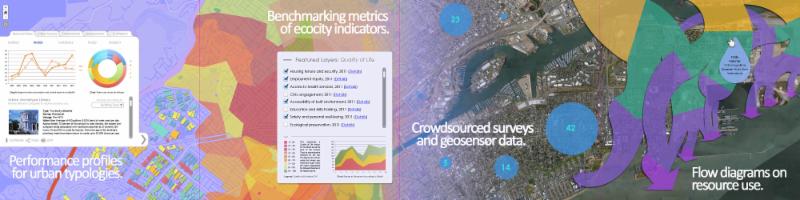
The foundation for our work going forward will continue to be anchored in Ecocity Standards defining and describing universal conditions for an ecologically-restorative human civilization. Supporting the progression towards cities in balance with human and natural systems is our flagship educational resource, the EcoCompass, along with Urbinsight (under development), our online city assessment and visualization tool enabling cities and citizens to map their course towards ecocity conditions.
We'll similarly be working under the United Nations Environment Program's Global Initiative for Resource Efficient Cities by helping to promote research on resource efficiency and sustainable consumption and production, and by providing technical expertise and capacity building for ecological city design and citizen participation.
In short, we're helping cities and citizens usher in the Ecozoic Era, the geologic epoch when humans live in a mutually enhancing relationship with Earth. Along with our partners, we plan to highlight our progress, successes and challenges at Habitat III, the United Nations Conference on Housing and Sustainable Urban Development in Quito, Ecuador, from 17-20 October, 2016.
We're looking forward to keeping you updated and informed via this newsletter and our companion online journal.
As we build, so shall we live,
Kirstin Miller, Executive Director
Keeper of the International Ecocity Conference Series, Ecocity Builders is a non-profit organization dedicated to reshaping cities, towns and villages for long-term health of human and natural systems.
 Ecocity Builders 339 15th Street, Suite 208
Oakland CA 94612 USA
|
|
|
|
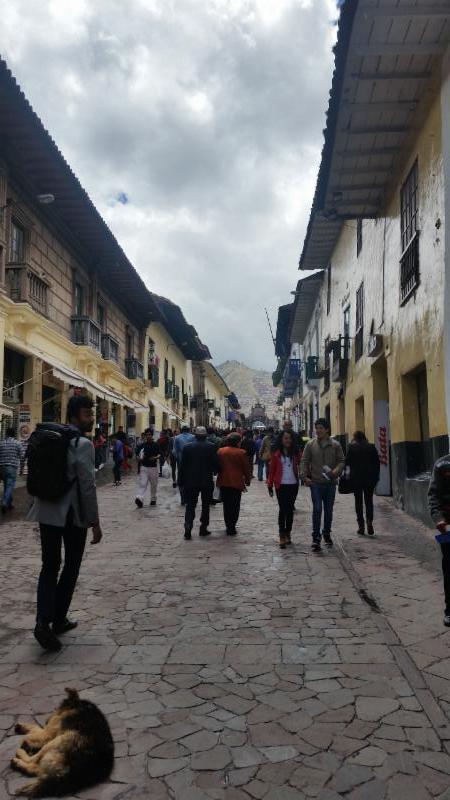
Ecocity Builders traveled to Cusco, Peru in December for the Secondary Cities Project. Mapping and technical lead Ashoka Finely is pictured (left). |
|
|
The Anthropocene vs. the Ecozoic
|
by Richard Register
Founder and Emissary, Ecocity Builders
What about the long-term vision, not just for ecocities, necessary to any healthy vision of the future, but the longest term vision? For that we have to look to evolution.
Most of you readers of our newsletter have no doubt noticed the banner heading under the name of the newsletter, name first: Ecocities Emerging. Great name - I think Kirstin Miller our Executive Director and Editor of the publication came up with it. The phrase immediately below the newsletter's name was not casually arrived at. It is: "To support the transition to the Ecozoic Era." It implies a time when humanity recognizes we are part of the ecological web of life on the planet and implies also that with that awareness and growing knowledge of biology and ecology we will, hopefully someday, learn to live "in balance with nature," also known as: "Stop trashing the place, damn it!" Give nature a chance as well as peace. But how to accomplish that?
We all know human beings have irreversibly altered the course of evolution starting off with the enormous number of extinctions our ancestors caused. The process began slowly tens of thousands of years ago, inadvertently building up to a relentless wave of destruction by sheer hunting for food and materials for clothing, tools and shelter. Plus, rather more sensitively, objects of art. Around when early humans developed archery and atlatls with their lever arm to accelerate long, thin arrow-like projectiles called "darts" much farther than anyone could throw a spear, the rate of killing off our fellow travelers on planet Earth became seriously extinctionistic, if one might coin a term, as our population began to grow beyond its earlier carrying capacity. Except that when crossing that carrying capacity barrier, we didn't die back, we sacrificed others.
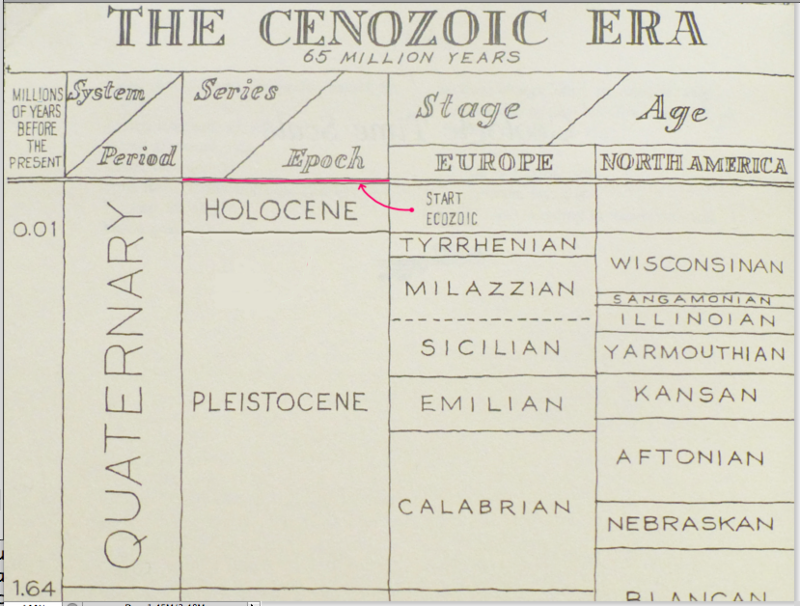
The sliver of time called the start of the Anthropocene or
Ecozoic in bright red pink
(Credit: Annals of the Former World by John McPhee, Farrar, Straus and Giroux, New York, 1981 - 1998)
|
|
|
Germany opens the first 3 miles of a 60-mile bicycle superhighway
|
by Cat Distasio
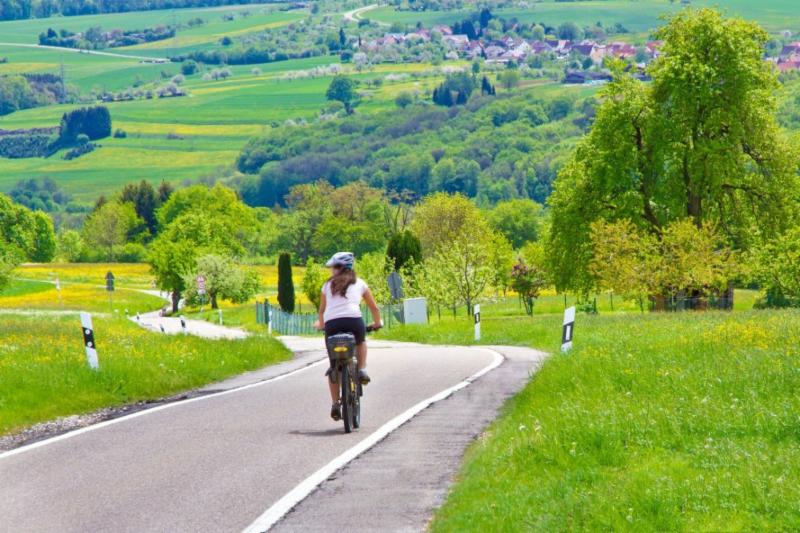
Move over, bike lanes. Move wayyyy over. Germany put its pedals where its mouth is and opened its first bicycle-only highway, a three-mile stretch of protected roadway that is closed to cars and other motor vehicles. Unlike a traditional bike lane, which is separated only by paint on the asphalt, a bicycle highway is an entirely separate roadway where cyclists can zoom along on their merry way without worrying about car traffic at all.
Germany's bicycle highway is just getting started. The existing three-mile stretch will be expanded to provide over 60 miles of car-free bike travel. The bicycle highway is intended mostly as a benefit tocommuting cyclists, so the route will connect 10 western cities including Duisburg, Bochum, and Hamm as well as four universities. Disused railroad tracks will be transformed into wide bike-only roadways in the Ruhr industrial region, making the most of existing infrastructure. A regional development group working on the project, RVR, conducted a use study and determined the new bike highway should take 50,000 cars off the road each day, since nearly two million people live within two kilometers (1.24 miles) of the route.
Images via Shutterstock
|
|
Ecocity Insights
Reflecting on Responsible Materials and Sand
|

by Jennie Moore
Director of Sustainable Development and Environmental Stewardship, School of Construction and the Environment, British Columbia Institute of Technology
The Bio-Geophysical Conditions for Ecocity Standards include "Responsible Resources/Materials." This includes careful stewardship of scarce resources whether they be renewable or non-renewable. It may seem counter-intuitive to put sand in this category. Sand, one of the world's ubiquitous materials, is actually becoming a scarce resource. Sand is the main ingredient in glass and also important in making concrete. Demand for sand has grown with population and global development to the point that it commands a premium in world markets for construction materials. Compounding this challenge is the fact that the natural flow of sand is obstructed by large hydro dams. Starting with erosion of rocks in mountainous terrain, sand is carried in streams and rivers to deltas where it is pushed along shorelines to form beaches. However, most of the world's major rivers today are dammed. In the USA, 80% of that country's rivers do not flow freely to the sea. These dams block the natural flow of sand, compounding challenges of shoreline erosion. To learn more about why sand is becoming a
I also recommend the educational video Sand Wars: www.sand-wars.com that provides a synopsis of the issues.
|
|
|
Founded in 1992, Ecocity Builders is a nonprofit organization dedicated to reshaping cities for the long-term health of human and natural systems.
 |
|
PRINCIPAL SPONSOR OF THE ECOCITY STANDARDS INITIATIVE
|
|
Additional Partners and Sponsors
|
|
SAVE THE DATE
Ecocity World Summit 2017 Melbourne
|
|
Become a Member of Ecocity Builders
|
|
Ecocity Builders members receive benefits including
discounts to all Ecocity World Summits and access to special events. Membership is affordable and easy.
|

Spaces are still available for individuals and groups at the CoLab.
Click Here 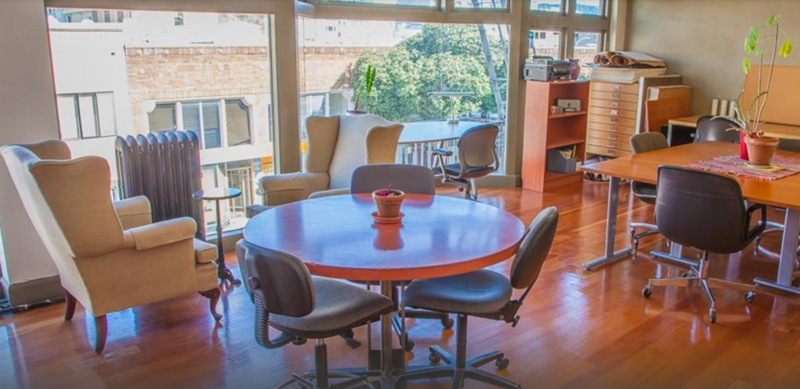
|
|
Ecocity Global Spotlight
Sustainable stories and highlights
|
|
Eco-cities: Creating a Common Language
Since the world woke up to the fact that the majority of the world's population already lives in cities, it has been proclaimed that all cities should be built as eco-cities in order to improve the well-being and health of the whole world. In the past, cities have been planned, if at all, for all kinds of reasons: for military use, as marketplaces, for the glory of the rulers, or for the well-being of citizens. Now, with the concept of the eco- city, planners give priority to citizens' quality of life, and that of future generations.
What can the world learn from Växjö, Europe's self-styled greenest city?
Within minutes of meeting the mayor of Europe's self-proclaimed greenest city, it is clear where he draws much of his inspiration from.
It's not just the fact that 61-year-old Bo Frank is wearing a black Beatles T-shirt and has a Beatles badge pinned to the lapel of his jacket. When he shows me into his office on the ground floor of Växjö city hall, Fab Four memorabilia is everywhere you look - along with photos of Sweden's king and queen, Barack Obama, and a black-and-white sketch of himself with long hair and a flowered shirt from when he was first elected to Växjö (pronounced Veck-Ruh) city council 41 years ago.
New maps show Melbourne's unused rooftops are ripe for greening
In these days of hand-wringing over the "Manhattanisation" of Melbourne it is easy to forget there is still quite a lot of space in the city - it just doesn't happen to be at ground level.
In new maps produced by Melbourne council every rooftop in the city has been assessed to determine the available space for greening projects, such as gardens, cool roofs and solar panel installations.
|
|
|
|
|
|
|