Greetings, 

Our economy continues to rely on massive inputs of cheap resources to create conditions for growth and stability. With the world's population now exceeding 7 billion and with 3 billion more middle-class consumers expected by 2030, our collective demand for ecological resources and the services they provide is unsustainable. In fact we're already in "overshoot" - meaning we're drawing down the Earth's natural capital faster than it can replenish. 

Making a comeback from its last popular appearance in the 1970s, the concept of the circular economy is capturing attention again as a way of decoupling growth from resource constraints. There are various schools of thought that carry the circular economy label however in general they share the following principles:
  • Waste does not exit - biological and technical components of a product are designed by intention to fit within a materials cycle designed for disassembly and repurposing
  • Diversity is strength - modularity, versatility and adaptiveness should be prioritized in a fast evolving world
  • Energy must come from renewable sources - any system should ultimately aim to run on 'current sunshine' and generate energy through renewable sources
  • Systems thinking - the ability to understand how things influence one another within a whole. 
A recent report by the Ellen MacArthur Foundation, the McKinsey Center for Business and Environment and SUN (Stiftungsfonds für Umweltökonomie und Nachhaltigkeit) presents a vision of how the circular economy could look for three of Europe's most resource-intensive basic needs: food, mobility, and the built environment, which together account for 60% of household costs. 

Key findings include:
  • A circular economy could result in overall benefits of €1.8 trillion by 2030, or twice the benefits seen on the current development path (€0.9 trillion)
  • Compared to the current development path, the cost of time lost to congestion would decrease by 16% by 2030, and close to 60% by 2050
  • Carbon dioxide emissions would halve by 2030, relative to today's levels (48% reduction of carbon dioxide emissions by 2030 across the three basic needs studied, or 84% by 2050)
  • Primary material consumption measured by car and construction materials, real estate land, synthetic fertilizer, pesticides, agricultural water use, fuels, and non-renewable electricity could drop 32% by 2030 and 53% by 2050, compared with today
Business as usual is not a sustainable proposition. If we are to move past the wasteful linear economy towards a no-waste economic system we'll need to adapt the drivers of our economies - our cities and lifestyles - to fit. The ecocity model is perfectly aligned to operate under the foundational principles of the circular economy. 

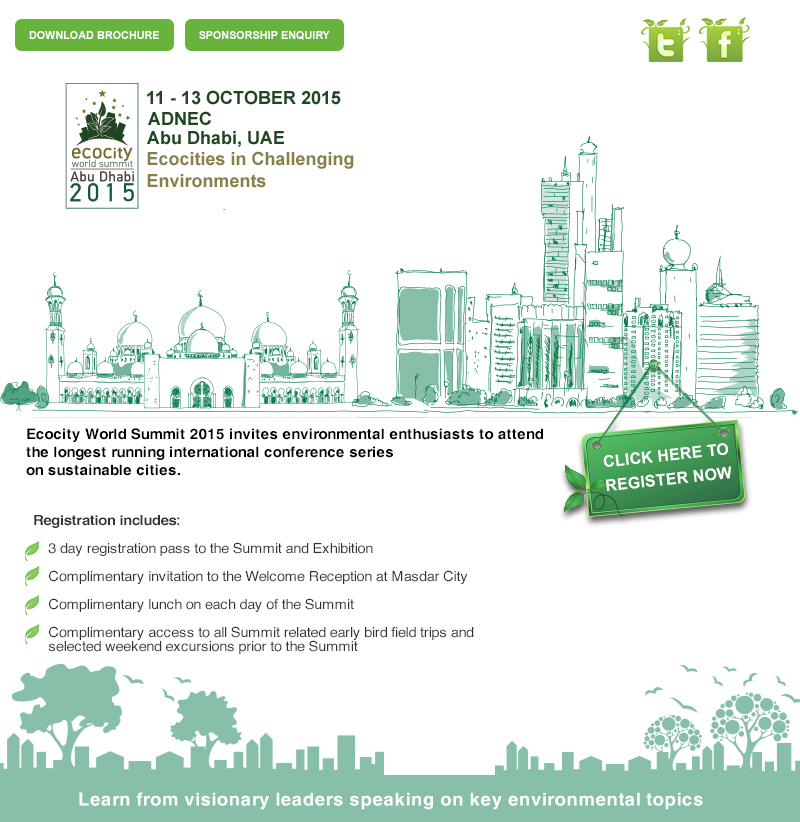
The upcoming October 11-13 meeting of the ecocity movement in Abu Dhabi, Ecocity World Summit 2015, will further align and strengthen awareness and actions towards the very promising social, environmental and economic implications of ecocities.    

I invite you to join us in October to learn, share and renew our commitments to creating a world in much healthier balance with both people and nature.    

As we build, so shall we live, 
signature, white


Kirstin Miller, Executive Director


Keeper of the International Ecocity Conference Series, Ecocity Builders is a non-profit organization dedicated to reshaping cities, towns and villages for long-term health of human and natural systems.

sm.ecb


Ecocity Builders 
339 15th Street, Suite 208
Oakland CA 94612 USA
Register now for Ecocity World Summit 2015

Exploring Ecocity Standards through Ecocity World Summit 2015

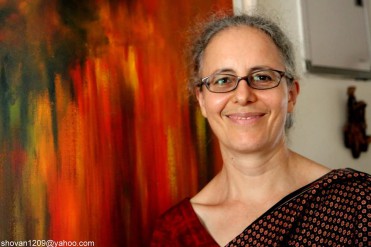
Dr. Jennie Moore, Director of Sustainable Development and Environmental Stewardship, British Colombia Institute of Technology, will be a presenter and workshop facilitator at Ecocity World Summit 2015 in Abu Dhabi. 

jenniem

The world of Ecocity practitioners will once again converge this fall at the biannual Ecocity World Summit. The Ecocity World Summit 2015 will be held October 11-13 in Abu Dhabi (http://www.ecocityworldsummit.com/index.php).

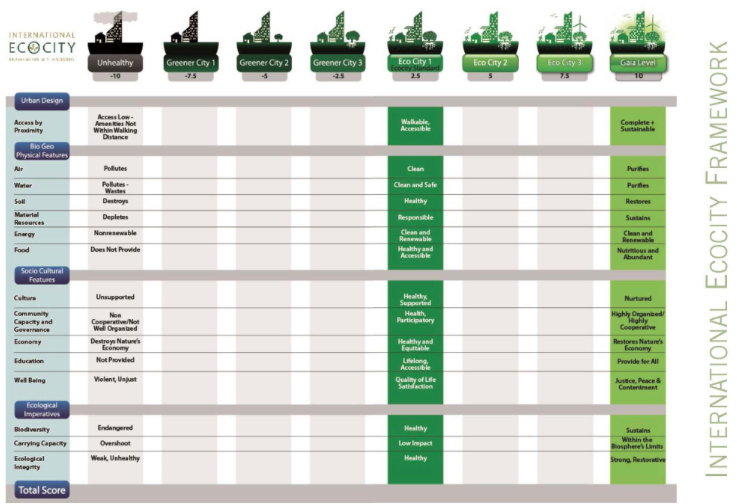
Participants will have an opportunity to learn about and contribute to the International Ecocity Framework and Standards, also known simply as "Ecocity Standards" (www.ecocitystandards.org). These have been under development for many years and have also been featured at past world summit events (e.g., 2011 in Montreal, Canada and 2013 in Nantes, France).

The ultimate goal of developing Ecocity Standards is to enable cities to assess whether they operate in balance with nature and to help inform and track progress towards this goal. With a recent proliferation of urban sustainability indicators and standards (Joss 2012), distinguishing what actually constitutes an ecocity is important now more than ever.

The conference themes at Ecocity World Summit 2015 are: 
i) urban design for liveability and resilience,
ii) urban systems, footprints and metabolism,
iii) social systems that facilitate ecocities, and
iv) cities in balance with nature

These themes loosely reflect the four categories of conditions that comprise the Ecocity Standards:
i) urban design characteristics,
ii) bio-geophysical conditions,
iii) socio-cultural features, and
iv) ecological imperatives


What distinguishes the Ecocity Standards from most other urban sustainability assessment initiatives is a focus on the total urban ecosystem area that is essential to the city's operation (http://www.ecocitystandards.org/ecocity/).
Most assessment initiatives focus on the physical entity of the city, defined by its geographic boundary. However, this omits the ecologically productive ecosystem area(s) that lay outside the city that are needed to supply the energy and resources and absorb the wastes associated with the daily livelihoods of urban dwellers. Therefore, a defining feature of the Ecocity Standards work is that it views the city in its bioregional and global ecological context. This means that some of the conditions within the Ecocity Standards are context specific and some are universally applicable.

For example, all people who live within global ecological carrying capacity, defined as one-planet living for the Ecocity 1 level, have an ecological footprint that is no larger than 1.7 global hectares per capita (WWF 2014). This is a universally applicable standard. However, the amount of water each person consumes is determined by how much water is available within their city's specific water shed. This is a context specific standard. Although clean and safe water remains an important condition, the amount of water that can be consumed per capita is determined largely by the quantity of freshwater that can be accessed without reliance on chemicals and fossil fuels (e.g., for treatment and conveyance) and without negatively impacting the immediate biological needs of indigenous flora and fauna. (For more information see p. 10/12 of the IEFS Brochure for description of the Clean and Safe Water condition and p. 32/34 for the Earth's Carrying Capacity condition: http://www.ecocitystandards.org/brochure/). 

This year's Ecocity World Summit conference also features a workshop dedicated to the ongoing development of the indicators and targets that establish the standard of measurement in all fifteen conditions comprising the Ecocity 1 Level. The focus is on confirming the indicators and targets (i.e. the measureable data comprising the standard) for each of the fifteen conditions. Anyone interested in advancing this work is encouraged to come to the conference or join the conversation online through Ecocity Builders social media or posting responses to this Ecocity Insight post via the Ecocities Emerging e-newsletter website.

References:
Joss, S. ed. (2012) Tomorrow's City Today: Eco-City Indicators, Standards & Frameworks. Bellagio Conference Report. London: University of Westminster.
WWF (2014) Living Planet Report: Species and Spaces, People and Places. Gland, CH: World Wide Fund for Nature. Available online at: http://wwf.panda.org/about_our_earth/all_publications/living_planet_report/


 
Ecocity World Summit 2015 Speaker Profile

Debra Efroymson

Debra is Regional Director of the Canadian NGO HealthBridge. She has been living in Asia since 1994, working on reproductive health, tobacco control, gender issues, and liveable cities. She is the co-founder of the local NGO Work for a Better Bangladesh and of the Institute of Wellbeing, also in Dhaka. 
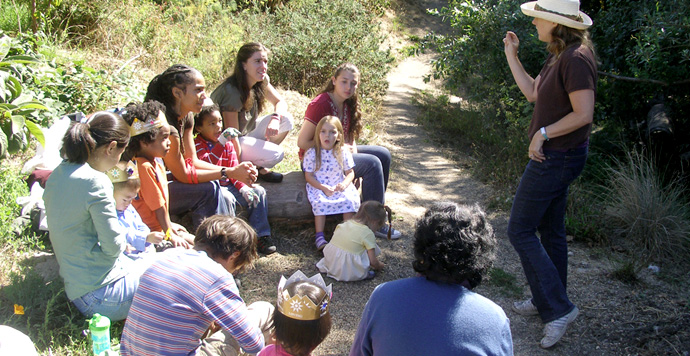
When I first heard the concept, I thought it was nonsensical-of course cities are dirty, polluted places! Then, after starting to read Richard Register's books on the topic, I became completely entranced. Of course it makes perfect sense that cities, our biggest creation, should support rather than destroy nature. Of course there are all sorts of untapped possibilities, or ones that are being explored in some places and are directly applicable elsewhere. The whole idea of designing out cities to be in harmony with nature and culture is incredibly invigorating and inspiring! While in my work I focus mostly on transport and public spaces, I'm also very interested in urban agriculture and issues of water and eco-sanitation...and finally in how our understanding of economics facilitates or impedes our ability to move towards ecocities.

Creativity can be taught - Cities are teachers
by Richard Register, Founder, Ecocity Builders

You may have noticed a kind of tag line we feature prominently in this newsletter: "As we build so shall we live." We could add, the way we live determines a great deal about how we build. If we insist on driving we get sprawl. If we insist on walking we get (if available or if we can get it built) vital cozy worlds with many options of social and economic life close at hand. Live and build and live and build and live, around and around in a circle. The connection is intimate - and important to notice and consider when planning future development. Our environments speak to us of the intent of those who built them, what they cared about, what they promoted, what they delivered to us to help or hinder, influences permeating our societies, changing our natural and agricultural environments.

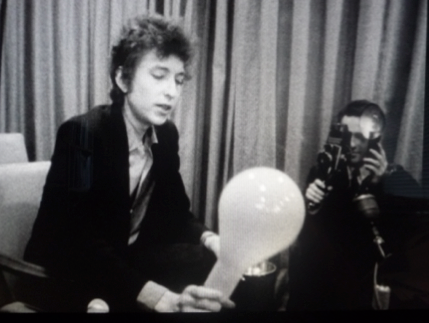
Light bulb: symbol for good idea! When Richard met Bob Dylan it was back stage at the Santa Monica Civic Auditorium and Dylan had just got this light bulb from a lighting man at the auditorium - and liked it enough to take it with him to London, where he is seen here in his movie "Don't Look Back" with it a couple days later. They met because of No War Toys, introduced by Dylan's friend and agent Billy James.

Car Free Journey
Pittsburgh: Part 1
by Steve Atlas


Are you looking for a car free getaway in a city that isn't overcrowded or very expensive to visit? Then, we have a great idea for you. Visit the city that we are spotlighting this month.
 
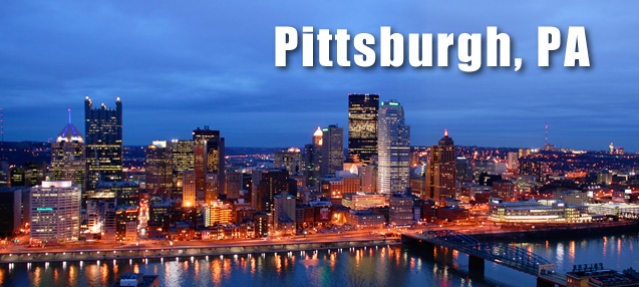
Our car free journey this month (and next month) is Pittsburgh, PA. The city is very walkable, with protected bike lanes on several major streets and a public transportation system that includes buses and light rail. It has also been rated as one of the most livable cities in the United States. When you add cultural attractions, performing arts, and several professional sports teams, you find a world class city worth an extended visit. Join me as we begin our car-free journey to Pittsburgh.
 
Read on
 
In this issue
:: Ecoccity World Summit
:: Exploring Ecocity Standards
:: Debra Efroymson at ECWS 2015
:: Cities Teach Creativity
ECB logo
Founded in 1992, Ecocity Builders is a nonprofit organization dedicated to reshaping cities for the long-term health of human and natural systems.
 

ecocityphoto

PRINCIPAL SPONSOR OF THE INTERNATIONAL ECOCITY FRAMEWORK AND STANDARDS

bcit logo

Additional Partners and Sponsors


iclei


UNISDR
eye on earth
UN Habitat
 
OAS.jpg


Spaces are still available for individuals and groups at the CoLab. Click here.

Become a member of Ecocity Builders   


Ecocity Builders members receive benefits including discounts to all Ecocity World Summits and access to special events. Membership is affordable and easy.


Ecocity Global Spotlight
Sustainable stories and highlights

This 'artificial leaf' could be the cleanest, most efficient source of renewable energy on Earth
Through biomimicry, researchers have developed an "artificial leaf". Could this be the cleanest form of energy yet?
Read More

Using Bikes to Improve Mobility in Rio de Janeiro's Favelas
Biking is an essential mode of transport in Favelas surrounding Rio de Janeiro with 57% of all trips in the region being made by bike. A project has been developed to promote cycling in these Favelas.

Universities will now have access to mobile solar generators for free
California based DC Solar Freedom has put together a program that will give millions of dollars worth of solar equipment to universities. 


Masdar is Abu Dhabi's multi-faceted renewable energy company with a mission to invest, incubate and establish a commercially viable new-energy industry in Abu Dhabi and around the world. Masdar also plays an important role in extending Abu Dhabi's energy leadership beyond hydrocarbons, thereby supporting economic diversification and human capital development.. The company serves as a link between today's fossil-fuel economy and the energy economy of the future.


Masdar is a sponsor of Ecocity World Summit 2015 and will be hosting a tour and gala reception for delegates at Masdar City.
Join Our Mailing List!