Register now for Ecocity World Summit 2015  |
|
Ecocity World Summit Profile: Dr. Sahar Attia
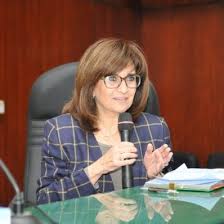
Dr. Sahar Attia, Professor at the Faculty of Engineering at Cairo University, will be presenting and participating at Ecocity World Summit 2015 in Abu Dhabi
The first time I was introduced to the original concept of the Ecocity was in the early eighties in a postgraduate course entitled "Urban Ecology", taught by one of our greatest environmentalists in Egypt, Prof. Bahaa Bakry. He conveyed to all of his students, including myself, the understanding of the importance of Ecology and the relationship between the citizen, nature and architecture. Since architecture and planning are the interpretation of citizens' culture, these basics were essential for understanding the evolution of the concept.
What is interesting is the relationship between urban ecology concerns -later developed into the Ecocity concept- and the city as a product, especially in developing countries. In fact, although governments now are more aware of the importance of the concept, conditions are still worsening in many cities. In addition, although environmentalists and planners are now speaking the same language, using the same terminologies, and aspiring for the same goals, still the urban product is not providing healthy, and safe urban environments.
Read More
|
Ecocity World Summit Profile: Dr. Jennie Moore 
Dr. Jennie Moore, Director of Sustainable Development and Environmental Stewardship, British Colombia Institute of Technology, will be a presenter and workshop facilitator at Ecocity World Summit 2015 in Abu Dhabi.
1. What do you find most interesting about the Ecocity concept (cities in balance with nature and culture)?
What interests me most about the Ecocity concept is that humanity's survival depends on learning how to live in balance with nature. With half of the global population already living in cities and up to two-thirds of the global population predicted to live in cities by the year 2050, how we design, build and manage our cities becomes critically important. Cities can help people live more efficiently in terms of energy and materials demanded, where high density and effective use of space enable people to meet their needs efficiently. However, this requires a conscious effort on the part of city builders and urban residents to utilize the resources available to them in a prudent manner. If we understand that cities are a nexus of consumption relying on the energy and material resources gathered from a vast hinterland, then we can better manage our use of those resources in order to conserve them and steward the urban-rural connection, upon which city dwellers depend for survival.
|
Two for us Locals - Rising Tides and Bay Bridge Steel 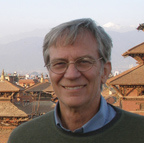
By Richard Register, Founder & Emissary, Ecocity Builders
I'm a local. With the exception of a few million migratory folks with their animals and those recently displaced by war, poverty, expanding deserts and flooded valleys, we all are, somewhere. My local "somewhere" is Oakland, California and north as far as Berkeley and Albany where is located our beautiful Codornices Creek Daylighting, Orchard and Native Species Project. It dug down under and rose up over what used to be a parking lot. It is a one block long dream come true (with a lot of work). It is enjoying, as I write, its 20th anniversary. Yesterday in fact, June 27, the pot luck picnic for the creek was celebrated on site, with the first deer I've ever seen there passing through, many close encounters with the resident Anna's hummingbird, numerous visits by tiger swallowtail and viceroy butterflies all presided over by dozens of trees grown up to be over forty feet high. Then there is the burbling creek where 20 years ago it was buried in a concrete tube under an asphalt slab and deserted dead end of 9th Street. I've been more "international" than local for the last ten or twelve years, however. Somehow I actually get paid "over there" whereas in the US, not so much. Something about the love affair with the automobile and my support for the pedestrian ecocity. Then there is my opposition to the supposedly better car. The actually better car would be the one downsized radically in weight, speed, energy consumed and hazard to life and limb, the bicycle-environment-compatible vehicle usually called the "cart," electric generally since gasoline ones sound something like a chainsaw held up close to your ear. They have the noisy ones, but shouldn't, down in the car-free town of Avalon on Catalina Island, Southern California. (Fortunately most are quiet electrics though.) Then, to keep the car companies alive and thriving - we don't want millions of people to lose their jobs - build lots of those little carts and upsize from "cars" to the efficient, clean, sociable, romantic even, streetcar. But recently, two new local developments caught my attention all in the same week: an article in the June 5 San Francisco Chronicle headlined "Bay fill may be a defense as sea levels rise." Shocking! Filling even part of the Bay? |
Car Free Journey: Halifax, Nova Scotia
By Steve Atlas
In this month's column, we'll travel to the Canadian maritime province of Nova Scotia, and its capital city: Halifax. Halifax prides itself on its walkability. Since so many of us enjoy walking, and summer is the best season to visit eastern Canada, our July 2015 Car Free Journey column spotlights Halifax. What's Special about Halifax? Halifax's marketing organization and meeting and convention bureau extends a special welcome to visitors who don't want to drive. Here are some of Halifax's special benefits for visitors who want a car free vacation:
- Halifax has a compact downtown core with many major attractions within walking distance of one another. The wooden boardwalk in downtown Halifax runs for over 3 km. It passes three major museums, the Halifax Seaport Farmers' Market, restaurants and shops, community spaces, public art installations, and includes panoramic harbor views.
- Halifax has a walk score of 70 and is classified as "very walkable" according to Walkscore.com.
- Getting across the harbor to Dartmouth, Nova Scotia, means taking a ride on the longest-running saltwater ferry service in North America and enjoying unobstructed views of the Halifax waterfront.
Read More |
|
Become a member of Ecocity Builders
Ecocity Builders members receive benefits including discounts to all Ecocity World Summits and access to special events. Membership is affordable and easy.
|
|
Ecocity Global Spotlight
Sustainable stories and highlights
'Innovative' housing with rooftop farms set for Southside Berkeley
A 77-unit mixed-use housing development was recently approved in Berkley. Intensive rooftop farms - which are intended to be visible from the street - are planned above 16 of the 18 building volumes.
New EPA report reveals the 180 billion dollar cost of climate change
The EPA recently released a report that stresses unification of countries in reducing emissions and taking action against climate change.
90 percent of US could live on food grown entirely within 100 miles
A new study demonstrates the huge potential in eating locally. "Elliott Campbell's research is making an important contribution to the national conversation on local food systems," said author Michael Pollan.
|
|
Founded in 1992, Ecocity Builders is a nonprofit organization dedicated to reshaping cities for the long-term health of human and natural systems.

|
 Spaces are still available for individuals and groups at the CoLab. Click here.  |
|