|
Ecocities Emerging
To support humanity's transition into the Ecozoic Era
|
Ecocity Builders
June 2013
| |
|
Greetings,
Ecocity Builders' President Richard Register is currently in the country of Bhutan helping their government think through a strategy for sustainable development based on ecocity design principles and Bhutan's assessment of Gross National Happiness - an attempt to measure quality of life in more holistic terms then the economic indicator of gross domestic product (GDP). Please see the related article in this edition of the newsletter for more details about this important consultancy with Bhutan.
I recently attended the Emerging Sustainable Cities Initiative hosted by the Energy and Climate Partnership of the Americas and the Organization of American States, in Antigua, Guatemala where I presented the Ecocity-Ecocitizen framework for sustainable development and geo-design based on the International Ecocity Framework and Standards initiative.
Ecocity Builders is looking to build the next phase of this initiative with those who have a real interest in helping cities develop sustainably and increase citizens' quality of life while protecting and building natural and social capital as a means to address long term sustainability and independence. In order to be sustainable, a city, town, village, region, or country must maintain and build their stocks of natural, social, human, manufactured and financial capital assets rather than contribute to their depletion or degradation.
The consequences of imbalance caused by looking at development on any scale and in any region from the perspective of a single 'capital' are severe, and building any one at the expense of the others will eventually lead to a position where further development becomes impossible. To ignore a full accounting is both irresponsible and reprehensible at this point.
Please note that Ecocity World Summit 2013 is now open for early bird registration. We will be convening in beautiful Nantes, France, September 25-27th with an expected 2,000 delegates from around the world. Keynote speakers include members of the European Commission, Richard Register, President of Ecocity Builders, Rob Hopkins, Co-founder of Transition Network, IPPC climatologist Jean Jouzel, Delphine Batho, French Minister of Energy, Sustainability and Achiem Steiner, Executive Director of UNEP. In addition to the plenary sessions you will find a full program with 100 selected sessions to choose from contributed by ecocity practitioners from all over the world. Please see more information and links in this edition of Ecocities Emerging. And don't forget to renew your membership to Ecocity Builders -- among other benefits, you receive a substantial nonprofit discount to the conference.
With warm regards,

Kirstin Miller Executive, Director

Keeper of the International Ecocity Conference Series
Ecocity Builders is a non-profit organization dedicated to reshaping cities, towns and villages for long-term health of human and natural systems. Ecocity Builders 339 15th Street, Suite 208 Oakland CA 94612 USA www.ecocitybuilders.org www.ecocitystandards.org
 Thank you to our major supporters: British Columbia Institute of Technology - School of Construction and the Environment; Helen and William Mazer Foundation; Novatek; The California Endowment and our patron members and long time supporters. Your on-going support is crucial for helping to build the healthy city of the future.
|
|
|
Ecocity Updates
News, events and announcements
 | | Thimphu, Bhutan |
June
Richard Register is in Bhutan advising the government on strategy for developing a new ecocity that ties to Bhutan's cultural identity and priorities for placing people and their happiness over profit and consumerism.
July 7-9, 2013
INTERSOLAR NORTH AMERICA - San Fracisco
Ecocity Builders is teaming up with Intersolar to design the "Green City" session at this year's Intersolar North America Conference. Executive Director Kirstin Miller will present on "Ecocity Standards and Green Cities".
September 25-27 2013
Ecocity World Summit, also known as the International Ecocity Conference, was the first and the now longest running conference for ecological city design, development and functioning.
For over twenty years we have been the vanguard conference on urban problems and solutions in relation to climate change, renewable energy, bicycle and transit infrastructure, environmentally healthy architecture and city design. We are also leaders in issues of democratic participation in the decision making that plans and develops cities, changes them for the better, and confronts the difficult issues of our time in terms of how we live in our built communities.
Past International Ecocity Conferences
|
|
Ecocity Builders Participates in the meeting of the
Sustainable Communities in Central America and the Caribbean Initiative of the Organization of American States
Over the past 3 decades, the Americas has become the most urbanized region in the world, resulting in serious challenges for social and economic infrastructure, especially housing and transportation, as well as for the quality of human health and the health of the environment.
Against this background, City Mayors, development planners and civil society representatives met on June 2 and 3 at Centro de Formación de la Cooperación Española in Antigua, Guatemala, under the auspices of the Organization of American States (OAS) to share ideas, experiences and best practices on ways to build functional cities in the Americas.  | | Central Plaza, Antigua Guatemala photo: Kirstin Miller |
The meetings are part of the Sustainable Communities in Central America and the Caribbean initiative which was launched in 2012 with support from the Government of the United States of America. The meeting on June 2 involved representatives of 14 non-governmental organizations from 10 countries who received $50,000 grants to execute innovative demonstration projects at the community level within the framework of the Energy and Climate Partnership of the Americas (ECPA). Each grantee presented highlights on progress made so far, challenges encountered, and opportunities for replicating or moving project to scale.  | |
Eduardo Rivera Pérez, Municipal President of Puebla, México talks with Sherry Tross, Executive Secretary for Integral Development of the Organization of American States. Photo: Kirstin Miller
|
On June 3, a Public Roundtable was held which provided an opportunity for policymakers, NGO representatives, and the private sector to exchange lessons learned and best practices for implementing and scaling-up of sustainable cities demonstration projects. The Opening Ceremony of the Roundtable was addressed by H.E. Marcia Roxana Sobenes García, Minister of Environment and Natural Resources of Guatemala; Excellency José Miguel Insulza, Secretary-General of the Organization of the American States (OAS); and Excellency Carmen Lomellin, Ambassador, and Permanent Representative of the U.S. to the OAS. A feature of the Roundtable was be a Mayors Panel moderated by V. Sherry Tross Executive Secretary for Integral Development of the GS/OAS, which addressed the theme: Portrait of a Sustainable City. Speakers included the Hon. Eduardo Rivera Pérez, Municipal President of Puebla, México, the Hon. José Antonio Coro García, Mayor of the Municipality of Santa Catarina Pinula, Guatemala and Dr. Ricardo José Manager of the World Urban Forum and representative of the municipal government of Medellin. The roundtable focused on priority areas for cooperation on sustainable development in the Americas in the run-up to the 7th World Urban Forum in Medellin in 2014. 
The organization of American States, or the OAS, is a continental organization founded on 30 April 1948 for the purposes of regional solidarity and cooperation among its member states.
|
|
Designing ecocities for Bhutan's Gross National Happiness project.
by Naomi Grunditz, Ecocity Builders
Ecocity Builders' President Richard Register is on the road again, this time he is in Bhutan meeting with government officials about building ecocities in Panbang, a province of Zhemgang.
Bhutan is a small Buddhist county nestled in the Eastern crags of the Himalayas, commonly overshadowed in the news by its neighbors Tibet, Burma, China and India. Bhutan is most commonly known for its policy of Gross National Happiness (GHN), a metric introduced by King Jigme Khesar Namgyel Wangchuckn and used to measure the well-being of its citizens and guide the development of government policy. The four pillars of GNH are the promotion of sustainable development, preservation and promotion of cultural values, conservation of the natural environment, and establishment of good governance.
The GNH measures reflect Bhutan's Buddhist foundations which emphasize the need for spiritual and moral development to coincide with material development. Bhutan is cautious about modernization, and justly so. Most countries have embraced the luxuries of modernity while degrading precious traditional values and our connection to nature.
 | | Jigme Khesar Namgyel Wangchuck, King of Bhutan |
King Wangchuck broke with his father's legacy and has opened Bhutan to modern changes little by little (Television appeared for the first time in 1999), hoping to adopt the benefits of new technology while avoiding the evils. The results are mixed - crime, materialism and dissatisfaction are rising, but not to the rates of most other countries. Some educated Bhutanese returning from educations in the West seek to lead the country in a unique blend of Buddhist values and Western practices.
For example, for every tree cut down they plant three new ones and claim to be the only country with proven negative CO2 production, that is, they absorb more CO2 out of the atmosphere than they put into it. Notably, English has been adopted as the universal language in Bhutan and is taught in the all free school system there (financed largely by sale of electricity from hydropower to India), a testament to the seriousness of their careful opening to modern ideas and ways.
Bhutan faces the enormous challenge of engaging reasonable change without being overwhelmed by the two gigantic countries on either side: China and India, India being their closest development partner to date. China crushed Buddhist Tibet and India ousted the Buddhist government of Sikkim, leaving Bhutan as the last country in the region with a King and traditional Tantric Buddhist religion at its core. At the same time, the King instituted a parliamentary system and has granted increasing legislative and administrative powers to a growing to date ever more democratic government.
The concept of the ecocity blends well with the philosophy of Bhutan. An ecocity is an opportunity to balance modern technology with these traditional values, blending simplicity and convergance to nature with infrastructure to support modern conveniences such as sanitation and electricity. Bhutan's proposed ecocity will be situated near the south edge kingdom, north of the Gangiatic plane, and south of the foothills of the Himalayas. The idea is to build a leading city for "education, sport and eco-tourism" with an eye to bringing their GNH (Gross National Happiness) theme together with the leading ecocity project in the world.
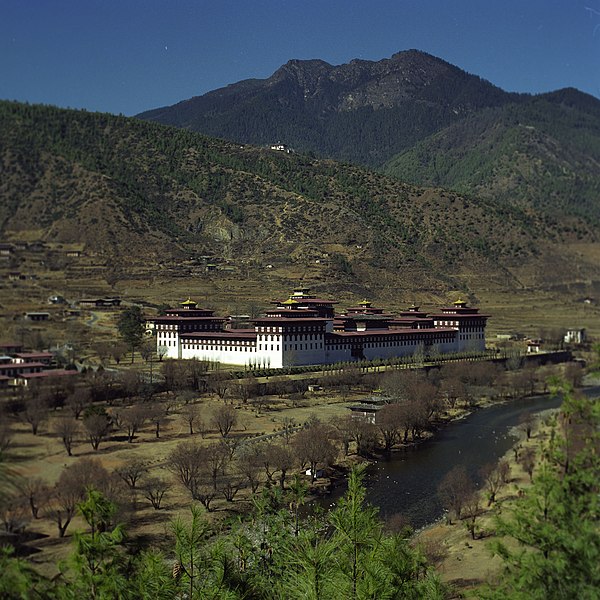 | | Tashichho Dzong, a Buddhist monastery and seat of the Druk Desi, the head of Bhutan's civil government. Court. Wikimedia Commons. |
Richard's vision is to take seriously the notion that happiness is a higher goal than maximum materialist consumption. It seems unthinkable that the general happiness and well-being of a people is not the highest priority indicator of their wealth. Yet Bhutan is the only country to explicitly say so. For the rest of us, the generation of paper and electronic numbers continues to be the applauded standard of well-being. We are left with other numbers to suggest the failings of our own gross national happiness: rising rates of disease, hospitalization, divorce, drug use and more.
Says Richard, "If we can design and build the sustainable city for a happy future - it would be such a large chunk of the solution, who could ask for anything more?"
|
 ECOCITY INSIGHTS
by Jennie Moore, Director, Sustainable Development and Environmental Stewardship, British Columbia Institute of Technology
IEFS PRINCIPLE OF RESPONSIBLE RESOURCES AND MATERIALS The International Ecocity Framework and Standards Initiative (IEFS) is a project of Ecocity Builders and the IEFS Advisory Committee, funded in part by the BCIT's School of Construction and the Environment.
Cities concentrate people. This has a positive benefit in terms of enabling people to access services more efficiently. However, by virtue of concentrating people, cities also concentrate consumption of resources and materials. Residents of the world's industrialized economies account for only 20% of the global population, but consume approximately 80% of global resources including: aluminium (85%), paper (81%), iron and steel (80%), and lumber (76%) (Young and Sachs, 1994).
The International Ecocity Framework and Standards (IEFS) calls for the city's renewable and non-renewable resources to be sourced, allocated, managed and recycled responsibly and equitably, and without adversely affecting human health or the resilience of ecosystems. Furthermore, it calls for most resources/materials to be primarily sourced from within the bioregion.
The ecological footprint of high-income/high-consuming cities is approximately 200 times their physical land area (Rees 1996). This means that the amount of land required to produce all the resources consumed in these cities is 200-300 times greater than the physical space the city actually occupies. If one excludes food and energy from this estimate, the amount of goods consumed and the resources required to produce them along with the materials used to physically construct the city requires an ecosystem area, assuming global average bio-productivity, of approximately 43 times the cities physical size. Of this amount, approximately half is attributed to the consumption of goods and half is attributed to the materials used to construct the city (Rees and Moore forthcoming). The latter may seem surprisingly low considering how much materials are used to build cities. However, it is important to consider the duration of the material's life once incorporated in the construction of the city. Whereas most goods are consumed and discarded within the year they are purchased, the buildings and infrastructure (i.e. the built environment) of the city typically lasts for 50 to 75 years, if not longer.
To achieve the IEFS principle of responsible resources/materials requires a focus on both the type and amount of goods we consume as well as the way we build and maintain our cities. Manufacturing processes associated with the production of just five products: paper, plastics, chemicals and metals account for 71% of USA toxic emissions (Young and Sachs, 1994). Paper and metal products enjoy high recycle rates in many industrialized economies, but the process remains energy intensive and some products, such as many plastics, can only be down-cycled not recycled. This means that decisions about what we consume and the durability and capacity for reuse of what we consume are important aspects of responsible resource/materials use.
Decisions about what materials to use in city-building are also important from both the perspective of the functioning of the city, and its impact on local and global ecosystems. For example, local governments in high-income cities are typically the largest users of concrete for municipal infrastructure, including roads and sidewalks. For every tonne of concrete produced, one tonne of greenhouse gas emissions is also produced as part of the cement manufacturing process.
Sustainable cities use materials responsibly. This means building durable cities that will last a long time, and that allow for the flexible use and reconfiguration of spaces. It also means avoiding materials that produce or use toxic substances in their manufacturing. Cities that make use of locally available materials reduce the need for importing foreign substance and support locally appropriate building technologies that enable people to access these locally available materials to construct their own residences. Appropriate technologies that match supply of materials to demand for services is also an important strategy. For example, not all urban surfaces need to be paved. Maximizing green spaces and using alternatives such as stone pebbles to line heavily trodden paths can provide similar surface integrity to concrete.
References
Rees, W.E. 1996. Revisiting Carrying Capacity: Area-Based Indicators of Sustainability, Population and Environment, Vol. 17, No. 3.
Young, J. and A. Sachs. 1994. The Next Efficiency Revolution: Creating a Sustainable Materials Economy. Worldwatch Paper 121. Washington DC: Worldwatch Institute. (http://www.worldwatch.org/bookstore/publication/worldwatch-paper-121-next-efficiency-revolution-creating-sustainable-materials)
British Columbia Institute of Technology School of Construction and the Environment is Lead Sponsor of the International Ecocity Framework and Standards Initiative 
|
|
Car Free Journey
By Steve Atlas

Martha's Vineyard Island: Part 2
by David Waight
Ready for a getaway?
Martha's Vineyard Island may just be the perfect end of the winter getaway. A popular summer resort, famous for its many beaches, it is also a good choice in the Spring and Fall before the crowds arrive or after they leave.
Temperatures may or may not be warm enough to swim during the Spring or Fall, so if swimming is essential, you should plan your visit in the summer (Memorial Day to Labor Day). If temperatures don't allow for swimming during your visit, the beaches can still be enjoyable. Walking along the beaches, some stretching for miles, provides spectacular ocean views, abundant nature or the opportunity to just relax.
In addition to beaches, activities of all types are plentiful - historic towns, hiking, bicycling, water sports of various types, farms, nature, lighthouses, shopping and spectacularly scenic vistas and these are just some of what you will find.
Most importantly, visiting Martha's Vineyard doesn't require driving. The Martha's Vineyard Transit Authority (VTA) offers bus service to most of the island. A comprehensive network of bike trails and numerous bike rental shops offer another car-free way to enjoy your visit.
 | |
adventure.nationalgeographic.com
|
Getting There
"The Vineyard" is connected to the mainland by numerous ferry services from points in Massachusetts and Rhode Island as well as air service from Hyannis on Cape Cod and other cities in the Northeast. Check each ferry service's web-site for bus and train connections.
Smart Guide - Car-free travel guide to Cape Cod and Martha's Vineyard and Nantucket Islands, including bicycle information.
Steamship Authority - Year round to Vineyard Haven from Woods Hole. Seasonal service to Oak Bluffs. 508-693-9130
HyLine Cruises - To Oak Bluffs seasonally from Hyannis MA. 800-492-8082
READ ON
|
|
 | |
Ecocity World Summit 2013
September 25-27
|
Ecocity World Summit
is the international forum... - for innovators and pioneers, designers and planners, policy makers and administrators, professionals and business people, environmentalists and developers, teachers and students;
- of sustainable cities, towns and villages of the future;
- from theory to the application of all things related to the ecological city
5 themes - Reducing the environmental footprint
- Addressing energy challenges
- Organizing and systems
- Strengthening solidarity and participation
- Mobilizing enabling factors
Early registration is now underway for the Summit Conference and there are numerous benefits to signing up early. Visit the Ecocity Summit website to register.
Members of Ecocity Builders receive the special nonprofit rate - you will need to get a proof of up-to-date membership to present when you arrive at the conference.
Update your membership: |
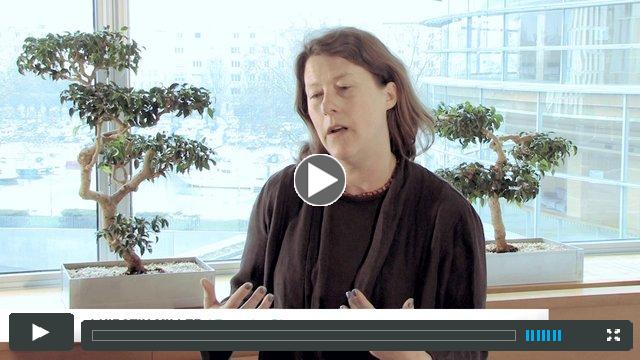 | |
Ecocity World Summit Pre-Interview with Kirstin Miller, Ecocity Builders' Executive Director
|
|
|
ECOCITY WORLD SUMMIT KEYNOTE SPEAKERS
 Janez Potočnik
 serves as European Commissioner for Environment. He was formerly Slovenia's Minister for European Affairs. Potočnik believes in the development of an information society to create prosperity. He aims to develop the European Research Area (ERA), a system of scientific research programmes integrating the scientific resources of the European Union. Since its inception in 2000, the structure has been concentrated on multinational cooperation in the fields of medical, environmental, industrial, and socioeconomic research.
 Delphine Batho
 is France's Minister of Ecology, Sustainable Development, and Energy. The Ministry is responsible for State Environmental Policy (Preservation of Biodiversity, Climate Kyoto Protocol Application, Environmental Control of industries, etc.), Transportation (air, road, railway and sea regulation departments), Sea, and Housing Policy.
 Richard Register
Ecocity theoretician, author, hands-on and policy project instigator, international lecturer and consultant, Richard Register is considered to be the pioneer of the ecocity movement, with 40 years of experience advocating for cities that facilitate humanity's creative and compassionate evolution while contributing to the health of the planet. His book, "Ecocities - Rebuilding Cities in Balance with Nature," is course material in design, planning and architecture schools. Richard is the founder of International Ecocity Conference Series, also known as Ecocity World Summit, the world's premiere and longest running conference series on the subject of ecological cities, towns and villages. He argues that "cities are the largest systems that humans build, and we can build them to contribute to humanity's creative and compassionate evolution on a healthy planet, in exciting and rewarding built communities from the village scale to the city scale."
 Cecile Duflot
Cécile Duflot is Minister of Territorial Equality and Housing in the Ayrault Cabinet. Until June 2012, she was Party Secretary of Europe Ecology - The Greens, a position she held from November 2006 and was, with Jean-Luc Bennahmias, the only Green leader to have served two consecutive terms. During her first term, she worked to establish Europe Écologie for the European Elections of 2009. In 2010, she was named by Foreign Policy magazine to its list of top global thinkers, for taking Green mainstream.
 Rob Hopkins Rob Hopkins Rob Hopkins is the founder of the Transition movement, a radically hopeful and community-driven approach to creating societies independent of fossil fuel. Transition communities have started up projects in areas of food, transport, energy, education, housing, waste, arts etc. as small-scale local responses to the global challenges of climate change, economic hardship and shrinking supplies of cheap energy. Together, these small-scale responses make up something much bigger, and help show the way forward for governments, business and the rest of us. Hopkins is the author of The Transition Handbook: From oil dependency to local resilience (2008), and The Transition Companion (2011). He was the winner of the 2008 Schumacher Award, is an Ashoka Fellow, served 3 years as a Trustee of the Soil Association, and was named by the Independent as one of the UK's top 100 environmentalists.
 Ronan Dantec
 is Senator of Loire-Atlantique. He is former Vice President of Nantes Metropole and Deputy Mayor at the city of Nantes for Environment and Sustainable Development. Dantec is the chair of the EUROCITIES Working Group on Climate Change. In that position he initiated the EUROCITIES declaration. Dantec advocates for a territorial (regional) approach for cities in developing countries, with coherent actions in transport policies, water and waste management and urban planning. "A consistent territorial approach is the condition of efficient actions against climate change. As such, cities will tomorrow have the possibility to find new incomes for their climate actions through CDM and the Green Fund for Climate."
 Patrick Viveret
Idealist, indignant, Patrick Viveret is a philosopher and essayist on global justice issues. Viveret is aware that we are now at the conjunction of two worlds, "the former, which will soon disappear, and the new, which is slow to appear," he argues for an entry in the age of a "happy sobriety." How? Change three key things: air (a key environmental challenge), area (have a new conception of the territory) and age (beginning of a new historical epoch). Viveret is co-founder of an annual international meeting entitled "dialogues humanity." This event, held in Lyon every year since 2003, opens a dialogue on humanity and its future, reflects together on solutions for a fairer and more sustainable future and a more just world.
 Jean Jouzel
 is a French glaciologist and climatologist. He is a world renowned specialist in major climatic shifts based on his analysis of Antarctic and Greenland ice. He received with Claude Lorius the CNRS gold medal, the highest French scientific award. A devoted laboratory scientist, Jouzel belongs to that community of scientists who are convinced - and concerned - by the extent of the problem posed by the rising concentrations of green-house gases associated with human activities and the urgent need to analyze all its facets. Acutely aware of the "extreme complexity" of "the thermal machine that is our planet, a system controlled by a large number of interactions between various reservoirs (the atmosphere, oceans, hydrosphere, biosphere, etc.) that have an impact over a very wide range of time scales (from one day to thousands of years) and spaces (from local and regional to a global scale)", Jouzel nevertheless takes pains to stress "the advances and discoveries that have been achieved" in his field over the last ten years, as well as "the contributions of paleo-data" to the debate on the evolution of the future climate: "an understanding of past climates will enable us to essentially situate current variations in a broader context."
 Achim Steiner
 is UNEP Executive Director and Under-Secretary-General of the United Nations. Before joining UNEP, Mr. Steiner served as Director General of the International Union for Conservation of Nature (IUCN) from 2001 to 2006, and prior to that as Secretary General of the World Commission on Dams. His professional career has included assignments with governmental, non-governmental and international organizations in different parts of the world including India, Pakistan, Germany, Zimbabwe, USA, Vietnam, South Africa, Switzerland and Kenya. He worked both at grassroots level as well as at the highest levels of international policy-making to address the interface between environmental sustainability, social equity and economic development. Mr. Steiner has BA from the University of Oxford as well as an MA from the University of London with specialization in development economics, regional planning, and international development and environment policy. He also studied at the German Development Institute in Berlin as well as the Harvard Business School.
 Joseph Roig
Joesph Roig is Secretary General of UCLG (United Cities and Local Governments), an umbrella organisation for cities, local governments and municipal associations throughout the world. United Cities and Local Governments was founded in 2004, when the existing local government organisations - the International Union of Local Authorities (IULA), the United Towns Organisations (UTO) and Metropolis - united their respective global networks of cities and national associations of local governments in a single organisation (FCMU). United Cities and Local Governments' headquarters, the World Secretariat, is based in Barcelona, Spain. UCLG is the largest local government organisation in the world and understands itself as the united voice and world advocate of democratic local self-government, de facto representing over half the world's population. The cities and association members of UCLG are present in over 120 UN Member States across seven world regions.
 David Cadman
Since March 2007, David Cadman has served as President of the international organization 'ICLEI - Local Governments for Sustainability' an international organization of nearly 1000 local governments who have made a commitment to sustainability. In this function he heads the ICLEI Executive Committee, representing the organization to other international bodies. He has been serving as a Councillor at the City of Vancouver BC, Canada since 2004, and has been awarded the UN Peace Medal and UN 50th Anniversary Medal. A social and environmental activist, Cadman is a member of Coalition of Progressive Electors.
 Fabrice Bonnifet
 is the Sustainability Director & QSE (Quality, Safety and Environment) of the Bouygues Group. He leads and coordinates the sustainable development strategy of the Group and participates in support of responsible purchasing, eco-design, and implementation of collaborative information systems. Bonnifet is also Vice-Chairman of the Board of Directors of Sustainable Development (C3D) and Director of The Shift Project.
 Philippe de Fontaine Vive Curtaz
Philippe de FONTAINE VIVE CURTAZ is Vice-President of the European Investment Bank (EIB). On the EIB's Management Committee, his responsibilities include borrowing and treasury policies, the Bank's capital market activities, and financing operations in France and under the Facility for Euro-Mediterranean Investment and Partnership (FEMIP). Before arriving at the EIB, Mr de Fontaine Vive pursued his career at the French Treasury, most recently as Director of the State and Economy Financing Department.
|
Is your city interested in hosting the next Ecocity World Summit?
We now invite expressions of interest from cities and organizations wishing to bid for hosting the next International Ecocity Conference after the event planned for Nantes, France, September 25 through 27, 2013.
We seek conference hosts who agree that we need both bottom up and top down approaches to solving our urban and environmental problems and that the same applies to approaches for the content of the conferences, that the particulars down to the personal and local level effect the global, climate and biosphere level and vice versa, good policy working its way down to the benefit of everyone at the "grass roots" as well. We have been, from the first conference on to the present, a conference series with a very international, multi-cultural and social justice oriented set of events. We have held conferences on all continents except Antarctica. To receive an information packet on how to apply to host the next Ecocity World Summit, please email Conference Correspondent Richard Register, ecocity@igc.org and cc Ecocity Builders' Executive Director Kirstin Miller, kirstin@ecocitybuilders.org  |

Ecocities: using creativity to express our future urban needs
SE: What's an ecocity and where can I find one?
Richard Register: There are many cities in the world that have various pieces of the ecocity in place. They are pretty inspiring in many cases, but I don't know of a city where all the pieces yet come together. Villages often have all the essential elements of an ecocity-type pedestrian structure. For example, you'll find that the old villages and small towns in Europe have work, education, residence, services, entertainment, and transportation elements at a scale where these pedestrian environments work pretty well. However, with fossil fuels enabling cars and trucks going vast distances, cities have spread out all over the place and become fractured.
So there's no real full-on ecocity that I know of, but there are places that have the core of what was close to an ecocity before they became embedded in today's automobile infrastructure. Zermatt, Switzerland, which has nothing but little golf carts that mix with pedestrians quite nicely - they don't run over people and kill them like cars do - is one example. Venice is another. Avalon on California's Catalina Island, where only a few collectors' cars are allowed. I don't even know if it's so much of an ecocity, but it's just a lot more pleasant than most places. It's a tiny town, and everyone is close together.
In Changwon, South Korea, where I'm on the international board of advisors, they have what's called the City 7 project that does get quite a few of the pieces of an ecocity together. When I say that I mean that work, living, and education aspects are placed in close proximity so you can get to everything by foot or bicycle, and for longer distances you have public transit. The City 7 project is pretty exemplary, heading in the right direction. It has housing, hotels, conference centers, all sorts of shops, movie theaters, clothing stores, bars, cafes, rooftop gardens, lots of plants. Nothing native and no food plants, so you're missing that, and the buildings don't have any kind of logical relationship to views or sun angles, but if you added those elements in you'd pretty much have an ecocity fractal, a fraction of a total ecocity in one place.
SE: You've been drawing up ecocity designs for over 40 years. How did you get into it?
RR: I met Paolo Soleri on a hitchhiking trip in 1965, even before he started his experimental town Arcosanti, and his ideas made so much sense. The city can't be scattered all over the place like a sheet of paper. It has to be like a living organism, much more three dimensional. Since the city is a complex living organism, constantly growing, changing, disintegrating, and re-forming, it has many parallels with normal living organisms. If it's compact and three dimensional like the European compact city where people can walk around easily, then it's well on its way. But you can take it much further, the way Paolo did, like single structure cities, a whole city in a single building. Not an enclosed block but rather a lattice work of living, breathing air and light penetrating, bridges between buildings, and rooftop gardens.
In 1973 he came out with his book (The Bridge between Matter & Spirit Is Matter Becoming Spirit: The Arcology of Paolo Soleri), in which he said that the city has to miniaturize itself and implode to a center where a lot of things are going on close together. That way you don't need a lot of energy to get to where the information, the people, the tools, and the ideas are. It all needs to be close together. He also said that cars are a big problem, pointing out that places like Los Angeles - where I was living at the time - basically consisted of a bunch of little buildings and was totally flat. He said that this was a problem, that while it may look like just a bunch of buildings this was in fact an absolutely gigantic, unprecedented infrastructure with miles of pipes per person for water and sewage and wires for gas and electricity, and asphalt and concrete for all the streets and drivers. A quarter of your whole house is for your car and the driveway is ten times wider than your sidewalk. He thought that was crazy, and I thought he was right on. So that shaped my thinking.
The other thing was that I'd always liked dinosaurs, paleontology, cosmology and such. Paolo pointed out that there's a pattern throughout evolution towards miniaturization and complexification. Gas clouds condense and new things start happening. Stars explode and throw out heavy metals that never existed before. Those elements congregate and through chemical reactions they form up in much smaller areas called planets within which life emerges, and within that life consciousness evolves. So there's a pattern of miniaturization and complexification throughout the entire cosmos, and here you see cities going in the exact opposite direction, spreading out, requiring more and more material, more and more energy, more and more time, money, and everything to accomplish specific functions in your life.
To me this seemed like really powerful stuff. I was making sculptures at the time because I love tactile art. So I started making sculpture for temperature ranges, vibrations, surface texture, resiliency, moisture and dryness, because there are all these things you can feel and nobody is developing an aesthetic expression of it. I was having an enormously good time making tactile sculpture, but at one point I thought, well this is fun but the world is falling apart, cities are growing rapidly, covering agricultural land and burning up our fossil fuels. I've got to apply this to real life problems.
SE: What role do you think art and creativity can play in inspiring and facilitating ecocity design?
RR: If you try to figure out what it means to evolve into a more fulfilling human future, individually, as a society, and as a species, the best I know how to do that is through compassion and creativity. Creativity of course is smack in the middle of the arts, and as a teen and in my twenties I wanted to do nothing but tactile art. But it's about the content and the message, what it means to be alive on this planet. A lot of artists get there, but you have to have a discipline of some sort, something to hold your style together and help communicate.
If you want art with meaning, it needs to connect with two things: the eternal-the laws of the universe, ecology, biology, and things that emerge in evolution-and the human heart-our capacity to feel for each other and be compassionate. I think Marshall McLuhan misses the point when he says "the medium is the message." No, it's not. What's the content here? Are you going to build a society that's damaging the planet or are you going to build a society that's advancing human creativity? What are you actually going to be doing with your art? You can't just toss out whatever you want to express, it has to actually connect with society, with other people's feelings and how they organize things.
SE: Like someone sitting on a zoning committee with a creative mind? How do we get to that?
RR: Well, those folks need the language, and the language is really scantily developed. Part of that language is visual language, which is why I draw so many pictures. Being creative also helps if you want to enjoy your work and be inspired to collaborate. If you can't figure out a way to enjoy this struggle - and it really is a struggle - with your comrades and friends, how can it work? And if you don't have the experience of working together, you can't magnify things. I think that's where art comes in, but it's almost too subtle to even talk about. It's about how we fit in the world, and artists create all kinds of possibilities for precious and wonderful ideas, because they're open-minded.
|


Founded in 1992, Ecocity Builders is a nonprofit organization dedicated to reshaping cities for the long-term health of human and natural systems.
www.ecocitybuilders.org
|
|
|
|
|
PRINCIPAL SPONSOR OF THE INTERNATIONAL ECOCITY FRAMEWORK AND STANDARDS
|
|
|
|
|





