|
Let me start out this newsletter by saying, "Give me a thick-skinned horse any day of the week, and we'll get the job done. What job? Any job that needs to be done!" Having made that clear, today I've decided to tackle the subject of being thin-skinned versus thick-skinned. Being thin-skinned or thick-skinned is a subject that most experienced horse owners know pretty well, having probably identified one of these traits in one or more of their horses over the years. Of course, being thin-skinned or thick-skinned can apply to people, as well. At the very least, it's a provocative subject, and one that many people in ministry don't want to talk about or touch with a 10 foot pole lest they "offend" someone. Back in the early 1800's and the days of circuit riders, traveling preachers weren't nearly as concerned about offending people. Why? They had a job to do, and it was a job they took seriously.
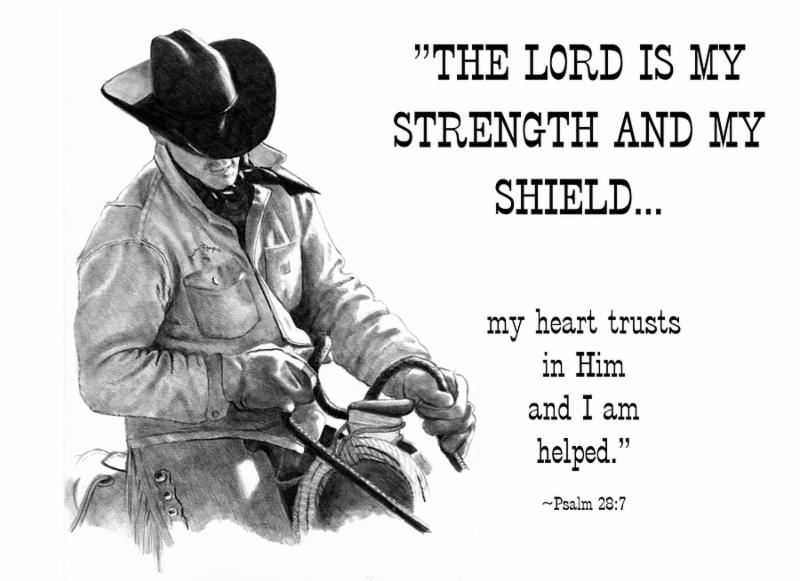
With a good horse, a Bible in his pocket, and often a rifle strapped to his saddle, the circuit rider was an individual who was more concerned about pleasing God than pleasing people. That meant that he had to be a thick-skinned soul, to say the least, and unafraid to preach the truth, the whole truth, and nothing but the truth. Let's be real here, be it a circuit preacher of olden days, or a modern day pulpit minister, you simply can't preach the truth unless you have thick-skin. And that in itself can be problematic. You see, most people don't want a thick-skinned preacher telling them the truth. Perhaps that's why circuit riders understood early on the importance of always riding a fast horse. To all the wonderful thick-skinned ministers and preachers out there that I call friends, call me if you should feel the need for speed. I've got a horse just for you!
A FEW FACTS ABOUT
EARLY CIRCUIT RIDERS
Circuit Riders were thick-skinned individuals who weren't afraid to look you in the eye and tell you the truth. They also weren't afraid to preach about the reality of heaven and hell, and often did.
According to Wikipedia, Circuit Riders were originally Methodist clergy in the early years of America who were assigned to travel horseback around geographic territories to minister to settlers and even organized congregations. Circuit Riders (also known as saddlebag preachers) originated as a way to get the gospel out to the people where they were. It took a thick-skinned individual to venture out into highways and byways to share the gospel, and all the more so when they encountered folks who didn't want to hear it! Sending out Circuit Riders was also a way to grow the denominational Methodist church. It proved to be quite successful. In 1784, there were 14,986 members of the Methodist church. By 1839, there were 3557 Circuit Rider preachers, 5856 local preachers, and the number of Methodist members grew to 749,216. One of the most well-known Circuit Rider's was Tennessee's Governor, William "Parson" Brownlow. He began riding and preaching in the 1820's, and quickly gained notoriety for clashing with the Baptist and Presbyterian missionaries in the southern Appalachian regions.
DANGED IF YOU DO -
DANGED IF YOU DON'T
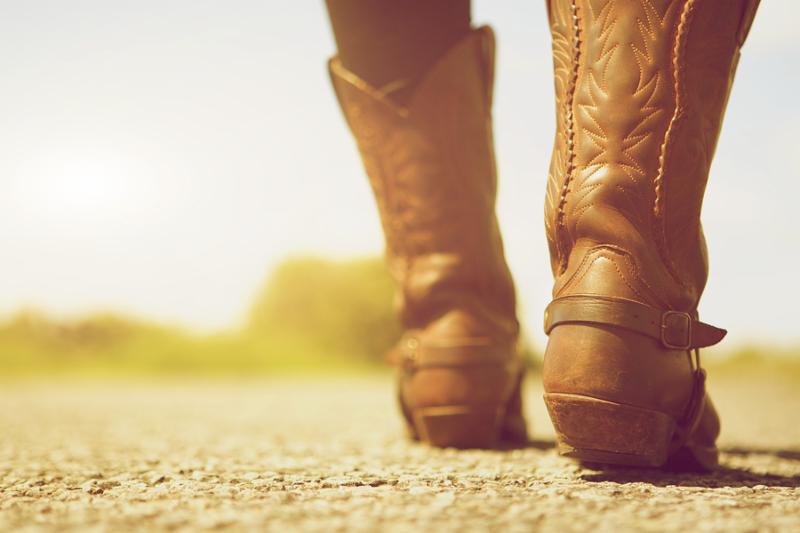
My idea of a great pair of Sunday-Go-To-Meetin' shoes. Over the years, I've discovered that thin-skinned people never know just what to make of a minister in cowboy boots. They wonder, should they be offended? Is this proper? On the other hand, thick-skinned people just knock the dust off their hats and say, "Yahoo and Hallelujah!" I love, love, love thick-skinned people!
When it comes to being a minister today who chooses to speak the truth, you're often danged if you do, and danged if you don't. If I've gotta be danged, I'd sure nuf' rather be danged for ministering the truth, and most of the good preachers and ministers I know feel the same. Having said that, let's just get down to it. When it comes to people, you've usually got two kinds. Those that are thin-skinned, and those that are thick-skinned. I'll go ahead and confess up-front so you don't have to wonder (as if you have to at this point), I don't get on very well with thin-skinned horses, or thin-skinned people. Why? Well, just for starters...
Thin-skinned horses, like thin-skinned people are usually easily spooked, rattled, provoked, and even angered if you push the wrong button. They tend to look for an offense, and rarely can you please them. A good example of a thin-skinned horse is the one that you have to tip-toe around. A simple example might be the horse who acts perfectly "sane" one minute, and the next minute, he is jumping out of his skin because you touched his sensitive ears. A thin-skinned wanta' be leader will quickly apologize to the horse with a promise to never touch his sensitive ears again. Hey, I'm just saying. Tighten that cinch and let's ride on...
A good example of a thin-skinned person is the one that acts "sane" one minute then blows a gasket the next minute and decides to leave the church because the Pastor actually had the thick-skinned guts to preach about sin! The difference here is, you can usually train a thin-skinned horse to have thicker-skin and get over his ear-shyness, etc., making him a pretty darn good horse in the long run. As for thin-skinned people, it's not always so simple. Suffice to say, I learned a valuable lesson years ago from one of my favorite preachers while living in Atlanta on how to handle thin-skinned people who are always threatening to leave the church. Sometimes the best thing you can do is just help them pack their bags, politely hold the church door wide open for them, and pray it doesn't hit 'em on their way out! Alright, don't get your halo in a tizzy, or write me no nasty letters. I have a delete button, too, ya know!
Did I mention that I love thick-skinned people? I really do. Why? Besides the simple fact that they just make life easier for all of us, I come from a long line of thick-skinned folks. My ancestors (on daddy's side) came here (America) from Europe, and initially ended up in the harsh back country of Kentucky and Tennessee. It was a tough life. In addition to the rough terrain, at the age of nine, my grandmother took over the responsibility of raising all her siblings after the death of her parents. The years passed and they did what they had to do in order to raise their families. The men often worked in the coal mines, and the women did much of the labor on their farms. One of grandma's brothers, named John, became a fiery preacher and evangelist. I can remember, as a little girl, making the drive with my parents from Tennessee to Kentucky just to visit him and his wife, Mary, almost every weekend.
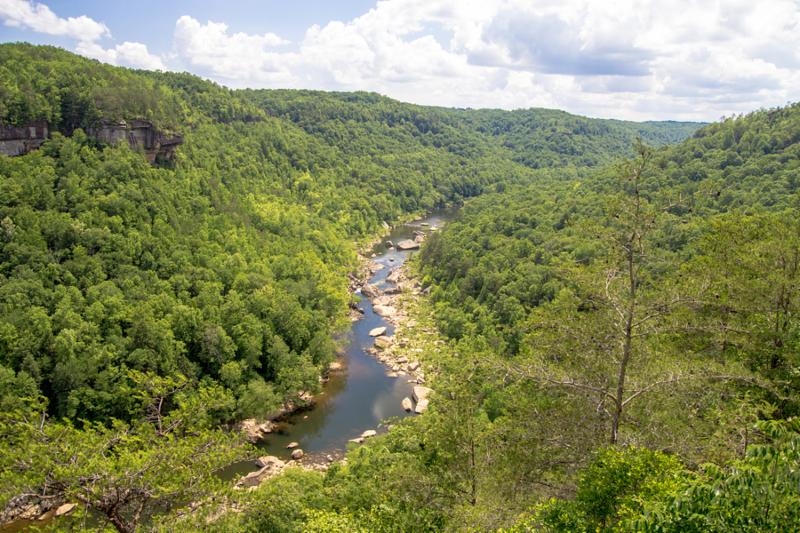
My ancestors came here from Europe and settled in Kentucky and Tennessee. This picture is of the Big South Fork National Recreation Area that encompasses more than 125,000 acres and straddles the Kentucky and Tennessee border near where my people settled and honed out a life and a living. Only the thick-skinned survived, and it shaped how they saw their world and trained their children. By the way, today Big South Fork is home to some of the best trail riding campgrounds and adventures in the world.
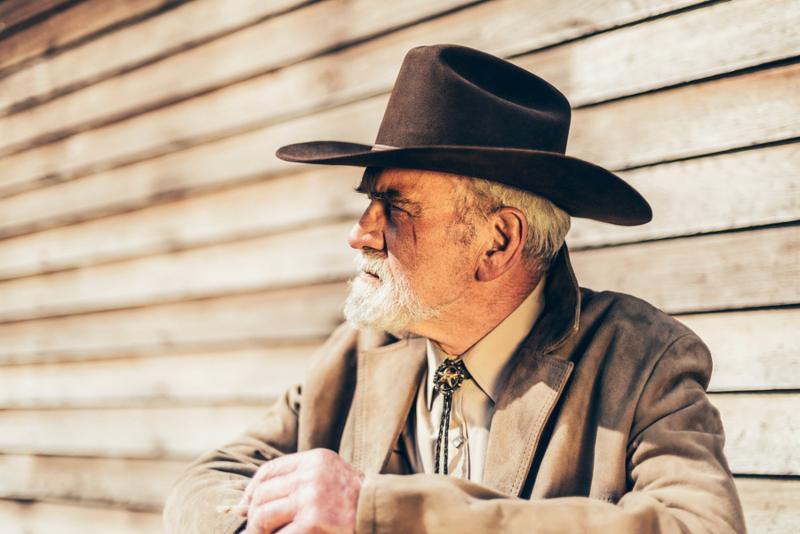
Uncle John was always a sharp dressed man, and considered by many to be a great preacher. He looked and dressed like a character actor out of the movie "Tombstone" starring Kurt Russell, and I admit, as a little girl I was smitten with his old-west charm and charisma. Oftentimes, he would ask me a question such as, "And how are you doing today?" I would start to answer, but before my lips could form the words, Uncle John would go into a sermon about how we all must repent and accept Jesus if we want to go to heaven. An hour later, he would look at me with his piercing brown eyes that peered out of tiny metal frames and ask another question, "Do you want to go to heaven or do you want to go to hell?" That was always the question that demanded a thick-skinned answer.
If there was any thin-skin lurking beneath the surface of my, well, my child-like skin, Uncle John's booming, no-nonsense voice cut through it like a sharp butter knife slicing through one of grandpa's country cathead biscuits! Looking out of the corner of my eye, grandma was always standing somewhere close like the rock of Gibralter, her arms tightly folded, and staring straight at me. Looking back at Uncle John, I would always quickly blurt out my answer without so much as a blink, "I want to go to heaven!" Then, as I always did, I turned to watch the stern look on grandma's face as it melted into a smile, a small smile, yes, but a smile, nonetheless. Her weather-worn face told the whole story. She knew that I'd grow up one day to be a lot like her, and perhaps, even a bit like Uncle John. And she knew I would need thick-skin for such a destiny. She was right, and indeed, today I am a chip off the old block.
A Word To The Wise...
There Is No Such Thing
As A Thin-Skinned Leader In
A HORSE HERD
In every horse herd, there is a standard of hierarchy. That hierarchy always begins and ends with thick-skinned leadership.
Although we often allow thin-skinned people to hold us captive by their behavior because we fear making matters worse, horses have an entirely different way of handling the situation. In every horse herd, there is a standard of hierarchy, and that hierarchy begins and ends with thick-skinned leadership and no nonsense. To the horse who must lead, it isn't personal. It's simply his duty, his life, his calling. Here's an important point. Thick-skinned leadership does not mean the absence of a tender-heart. It does, however, mean the presence of a standard that must be respected.
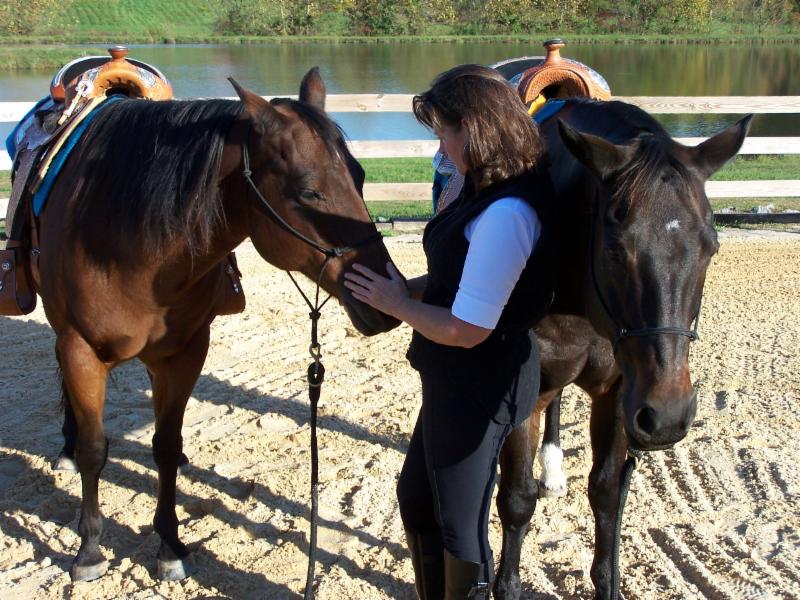
My quarter horse, Samson, is an excellent example of leadership with a tender heart. Although he is the unquestionable leader of his herd, you might say that he rules and reigns with a heart full of mercy that is always evident in how he deals with his pasture buddies. In other words, he moves the herd when and where he wants, but he does so with sensitivity and without losing his authority or leadership. He is never mean or cruel, but he is serious. When he says "go", he means "go". No doubt, strong leadership with a tender heart is an anointing that every true leader must possess. It assures not only the confidence of others, but it wins their loyalty, as well. Okay, time to get this pony rode...
Remember, leadership within a herd never belongs to a thin-skinned horse. Why? They have neither the calling, the heart, the inner strength, nor the stomach for the job. This also holds true when it comes to "delegating" leadership to others. If you delegate a specific job to someone who doesn't have the thick-skin required to carry out the role, then you have invited trouble down the trail. The only question is whether the trouble will come sooner or later. You can avoid trouble by recognizing the inherent qualities of thin-skinned versus thick-skinned people. Suffice to say, skip the trouble and never give authority to a thin-skinned person. Don't even entertain the idea! So, how can you recognize the right person for a leadership job? Thick-skinned people will esteem and respect your authority even when singled out for correction. On the other hand, a thin-skinned person will be offended.
Think about this, a person who is willing and able to come under authority is better able to understand and wield the correct kind of authority over others. Make sense? You bet those Sunday church-going cowboy boots, it does! For those who have witnessed horse herd behavior, the mantle of leadership that lies upon the Alpha horse is tangible enough to be felt by anyone. He is a thick-skinned horse with a confidence that isn't easily spooked, rattled, provoked, angered, or offended. Finally, give me a thick-skinned horse any day of the week, and we'll get the job done! What job? You guessed it. Any job that needs to be done!
|