|
Before we get to the heart of this message about "choosing the right thing", lets take a few minutes and talk about horses. Hopefully, the horse-sense I share with you today will help shed some light on this rarely discussed subject. I also hope that this teaching will be a constant reminder to all of us that choosing to do the right thing, even when it's difficult, is always easier in the long run than when we choose to do the wrong thing. Now, tighten up that cinch and lets get started.
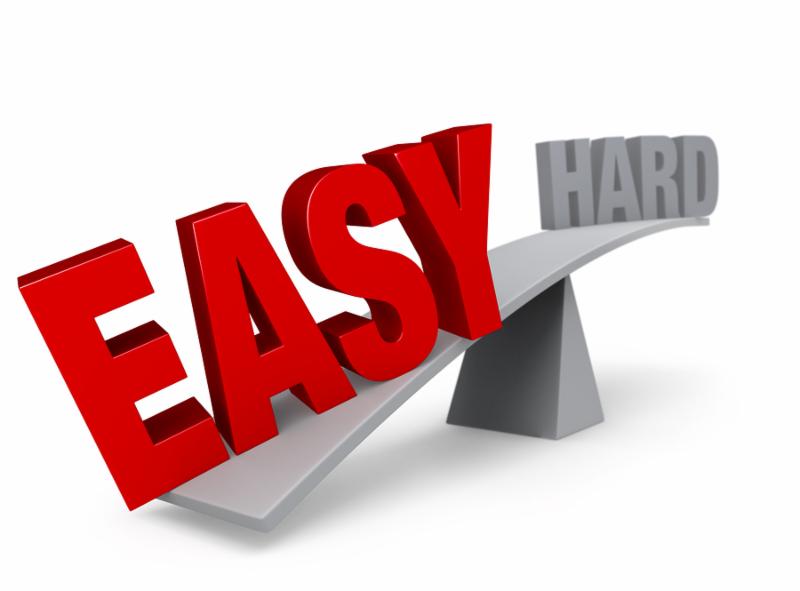
When it comes to training horses, there's a popular saying that I've learned to live by. It goes something like this, "Make the right thing easy for the horse, and the wrong thing hard." Why do I live by this saying? I've learned that most horses don't want any trouble. For the most part, horses are a "peace-seeking" animal. They're pretty content to just eat all day, take a few cat naps, hang out with their pasture buddies, and dot the landscape with road apples. In other words, they don't go around looking for trouble. Strangely enough, about the only time there seems to be any trouble out of our horses is when we put a halter and lead rope on them, and actually require something from them. You know the kind of "something" I'm talking about. Something like "doing the right thing" instead of just the opposite which is "doing the wrong thing".
When we're training a horse and we make the right thing easy and the wrong thing hard, we're "working with the horse" and his natural inclinations to "seek out peace". This type of horse training method is "a good deal" for the horse once he figures out what's going on, and what's expected of him. And the smart ones always figure it out. The fact that we allow the horse to be uncomfortable when he does the wrong thing (the wrong action or behavior) is the very thing that causes him to seek out and search for the right thing (the right action or behavior). Okay, we're on to something now, so let's keep moving...
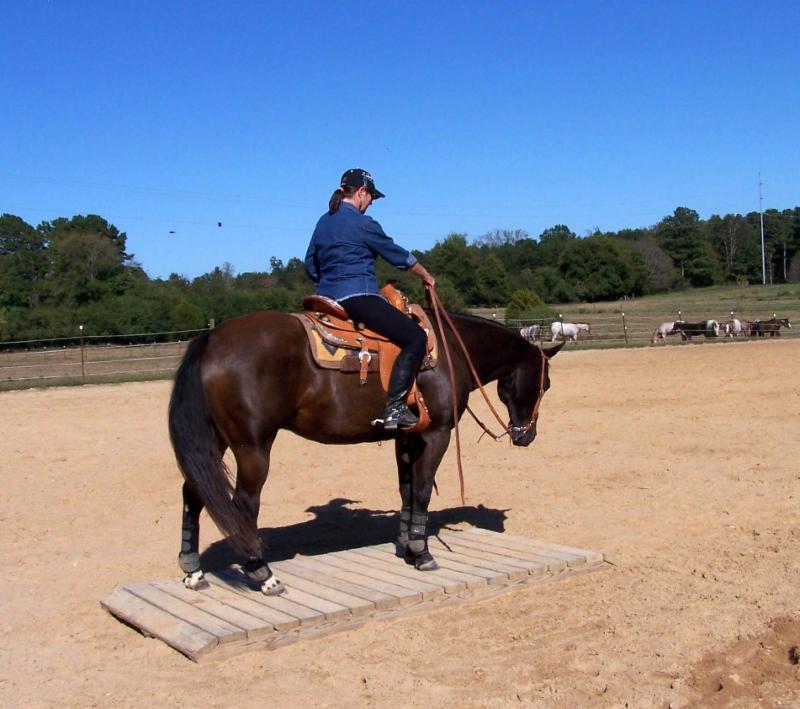
When I ask my horse to step up on the wooden obstacle and he does so, I immediately release all pressure and allow him to stand there and relax. The release of pressure is his reward of peace, and it lets him know that he did the right thing.
Unlike a dog (a predator) who is always motivated to do the right thing in order to gain our approval (a show of affection or a pat on his head), a horse (a prey animal) is only motivated to do the right thing in order to obtain or get a release from pressure. To a horse, the release of pressure is equivalent to the reward of peace. In other words, when he does the right thing, we let him alone, and he has peace.
So, how do I use this knowledge when working with horses? When my horse does the wrong thing (i.e. the wrong action or behavior), I allow him to "encounter pressure or run into pressure". We'll talk more about pressure later in this teaching. For now, suffice to say that whenever my horse does the right thing (i.e. the right action or behavior), I instantly reward him for his effort with the release of pressure. The release of pressure is something a horse values. Why? Horses just want to be left alone. They don't want trouble. And when pressure is released, the reward for the horse is peace. If a horse is smart, he'll soon learn to seek out the right thing in order to attain these two important things - a release of pressure, and peace. Now let's go a little further down the trail and talk about humans.
Some folks have a highly-tuned sensitivity when it comes to right and wrong. It's not something they appear to have to think alot about. In other words, they seem to be smarter than the average bear, and pretty adept at choosing the right thing over the wrong thing most of the time. But for others, well, not so much. Why the difference? That's a question that people, especially parents, have been asking themselves since the beginning of time. I'm sure Adam and Eve scratched their heads more than once in despair as they tried to wrap their brains around the fact that their sons, Cain and Abel, were very different from one another. How can that be? After all, these sons grew up the same - same place, same time, same teachings, same parents, and yet, they were markedly different. One son chose the right thing, while the other son chose the wrong thing. It's an amazing story, and you can check it out in Genesis 4: 1 - 16.
Simply doing the right thing, and especially when faced with a difficult choice, can be an internal struggle for many people, even within close-knit families. For people who are faith-less, or without any moral compass or standard, it is almost certain that choosing the wrong thing will always trump choosing the right thing. However, those who are born-again and filled with the Holy Spirit can also struggle with doing the right thing from time to time. The difference is, those who are in Christ are without excuse! When it comes to Christians, it is the "conviction" of the Holy Spirit in our life that reminds and compels us to do the right thing.
Note that I used the word conviction and not the word condemnation. Why? The Holy Spirit does not condemn us. The bible says in Romans 8: 1, "Therefore, there is now no condemnation for those who are in Christ Jesus." However, when Jesus spoke to His disciples, He told them that, after his death and resurrection, God would send the Holy Spirit to be a comforter and to walk along side them. But there was more to the Holy Spirit. Jesus also told them that the Holy Spirit would bring conviction. In John 16: 8, we're told, "And when he comes, he will convict the world of its sin, and of God's righteousness, and of the coming judgement." The same conviction that we, as Christians, feel when we do wrong can be felt by unbelievers, as well. The difference
for the believer is that once we feel convicted of our sin (choosing the wrong thing as opposed to the right thing), we should feel compelled to change! Nevertheless, the choice still belongs to us.
CHOICES, CHOICES, CHOICES!
"Do not be deceived: God cannot be mocked. A man reaps what he sows."
(Galatians 6: 7, NIV)
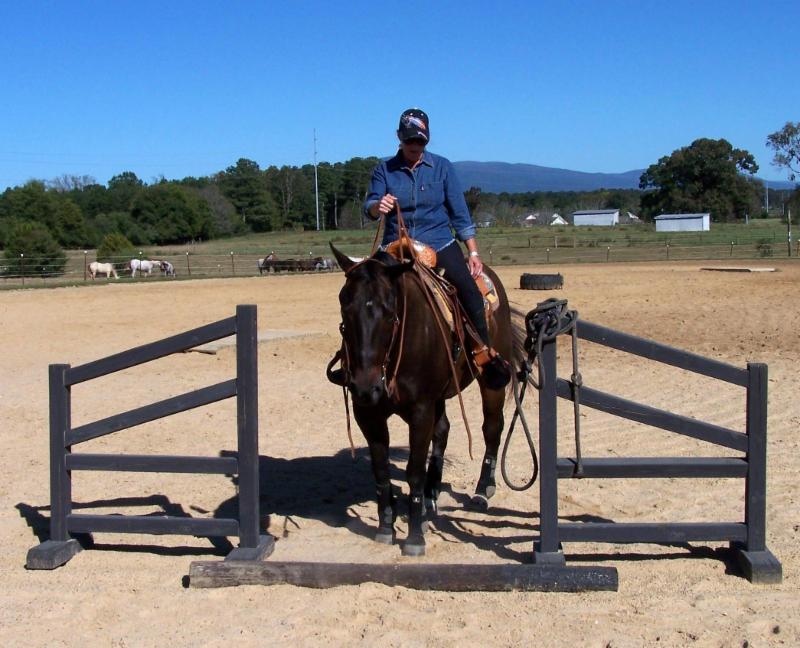
Although I have lined Samson's body up correctly and have positioned him perfectly to walk through the gate, the choice is still his. He can do the right thing, or he can literally "turn tail" and take off in the opposite direction. The choice is his, and so are the consequences that go along with his choice.
So, what happens when we continually choose the wrong thing instead of the right thing? The answer is as varied as the choices we make. But make no mistake about it - for every action, there are always consequences. God's Word says that we should not be deceived into thinking otherwise. No matter how much time has gone by, we always reap exactly what we sow. And if we sow seeds to the wrong thing, we will undoubtedly reap the consequences and "feel the pressure". Again, allow me to explain it from a horse's view.
As my horse's Alpha (leader, or first), I take responsibility to guide him in the direction I want him to go. That being said, does he always "choose" to go in the direction that I guide him? In other words, does he always do the right thing? Unfortunately, the answer is no. So, what do I do when he chooses to do the wrong thing as opposed to the right thing? Do I bring out a two by four and beat my horse? Of course not! Do I punish him by allowing him to starve? Absolutely not! Do I abandon him? Never! So, what do I do? I allow my horse to run into pressure. In other words, I allow my horse to experience the consequences of his actions. Yep, time to tighten the old proverbial cinch once again, and pick up the pace...
CONSEQUENCES?
YOU CAN COUNT ON IT!
"Why do you keep on saying that I am your Lord, when you refuse to do what I say?"
(Luke 6: 46)
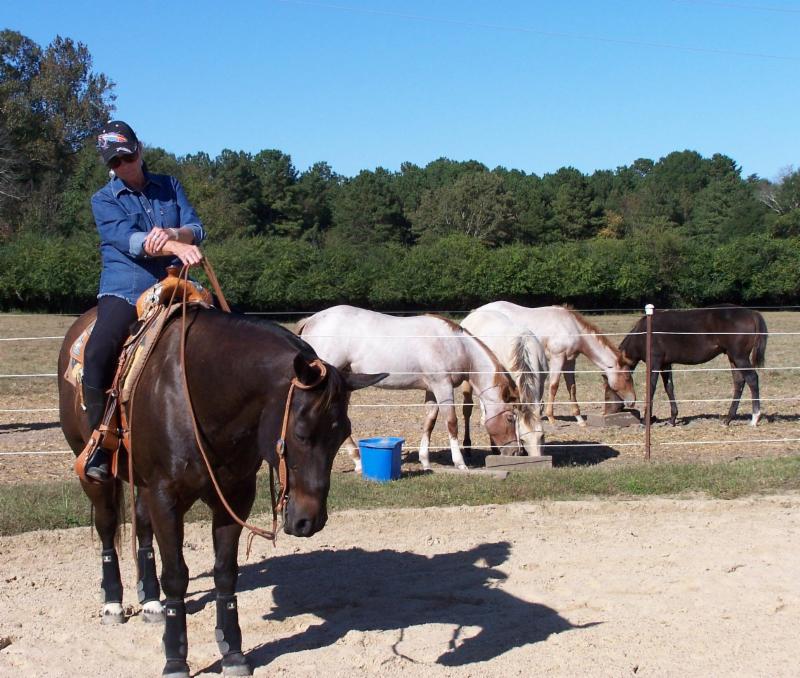
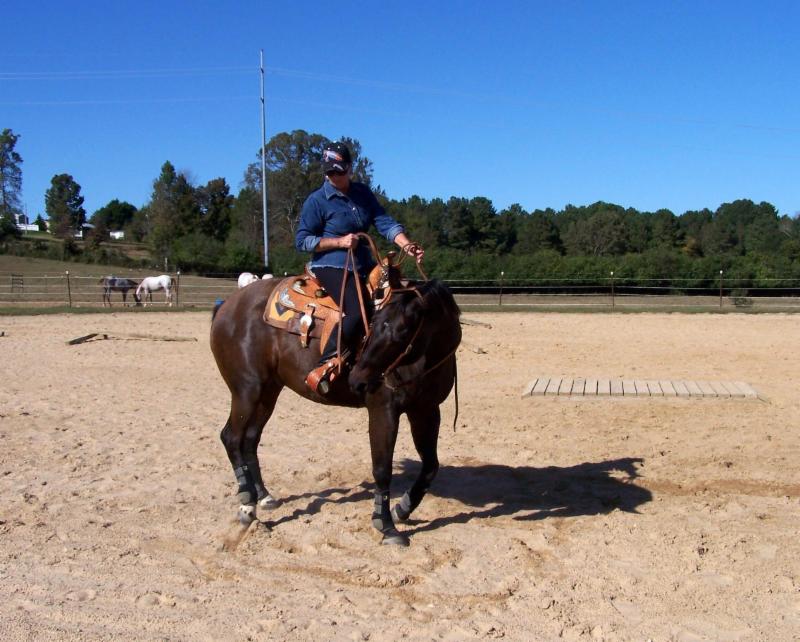
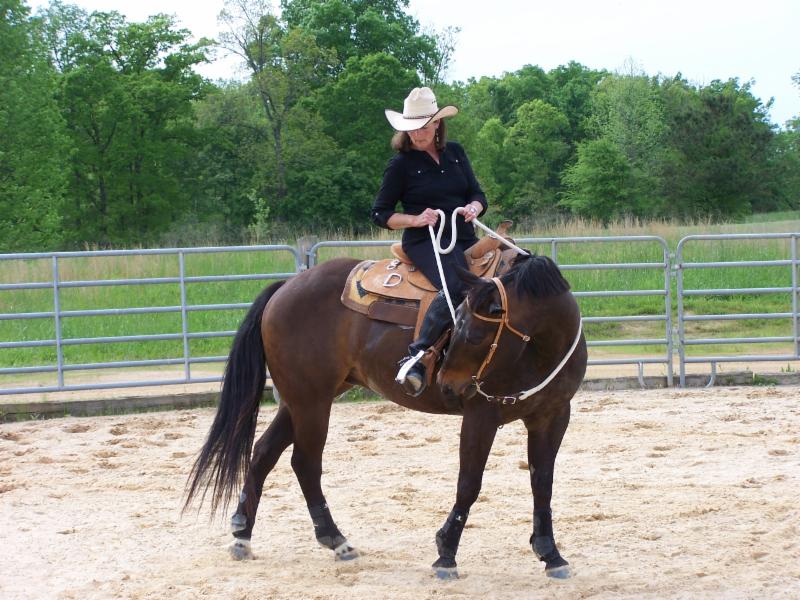
Before I can teach my horse anything, I have to establish who I am in our relationship. And furthermore, he has to believe it! I establish that I am the Alpha (leader, or first) in our relationship by getting his attention off of the herd, and onto me where it belongs. How do I do that? I do it with as little pressure as needed, but with as much pressure as necessary. In this picture, I am bringing my leg and heels close to Samson's side in order to create slight pressure. This is his first reminder to lower his head, stop looking at the herd, and get his attention back on me.
Before I can teach my horse anything, I have to establish who I am in our relationship. Note that I didn't say that I have to establish who my horse is. I know who my horse is. What is crucial is that he knows who I am. I am the Alpha in our relationship. And there is only room for one Alpha. Although people often struggle with submitting to an Alpha personality or leader, horses are born understanding the need for an Alpha in their life. Horses are prey animals, and it is only through their instinctual as well as learned understanding of "hierarchy within the herd" that they are able to flourish and survive. If my horse believes that I am who I say I am, in other words, that I am the Alpha in our relationship, then he will feel compelled to obey me, and do the right thing. However, just like with people, sometimes horses need a little help to encourage them to do the right thing. That's where pressure and consequences come in.
Whenever my horse is faced with a difficult choice (to obey or not obey), I help him to do the right thing by making the right thing easy, and the wrong thing hard. By making the right thing easy and the wrong thing hard, I'm able to communicate with my horse by allowing him to experience the consequences of his own actions. One of the best incentives in the world for helping us "choose right over wrong" is the promise of consequences! And what are consequences? Pressure, pressure, and more pressure! As my horse's Alpha/leader, I can create pressure, or better yet, I can simply allow my horse to run directly into pressure that he, himself, creates. Let me explain.
A simple example of pressure that I might create is when I press my leg or spur closer to my horse's side in order to get his attention, direct his movement, or block his movement from going in the opposite direction. On the other hand, an example of allowing my horse to run into his own pressure can be demonstrated when I lunge my horse on the circle. First, I lift the lead rope that is attached to his halter and ask him to move off in a specific direction. Let's suppose that my horse decides he doesn't want to go in that particular direction, and instead, he quickly backs up or rears. He may do this out of fear, or even out of rebellion or defiance. Either case, the consequences are the same. Because of his wrong actions, my horse quickly finds himself at the end of a "too tight for comfort" lead rope. Am I the one putting pressure on the lead rope? Nope, the horse is the one putting pressure on the lead rope as a consequence of his own actions. His own actions cause him to run directly into negative or bad pressure that he, himself, is causing by pulling on the lead rope. Such actions are pretty typical when working with horses, and define the prey nature of the horse. However, such actions can also define the nature of people. Such is the human condition.
THE HUMAN CONDITION
"For I do not do the good I want, but the evil I do not want is what I keep on doing."
(Romans 7: 19)
In this picture, I'm "pressuring" Samson with my right foot in order to get him to move left, or away from the pressure. Horses are smart, and they don't like pressure. Hence, it's much easier to teach a horse to move away from pressure rather than towards pressure. Unfortunately, people often seek out pressure, even when they don't know why!
The Apostle Paul was a smart man with an incredible insight into the human condition, including his own. When he taught God's Word, he didn't do so as one who considers himself to be smarter than everyone else. Rather, Paul taught about a perfect God, and he did it with humility and an understanding of his own weaknesses and humanity. I suppose you could say that Paul knew how to keep it real. And keeping it real is what God wants you and me to do. Most of us want to do the right thing, but we often end up doing just the opposite. When all is said and done, we may not fully understand why we make bad choices, but none of us have trouble understanding the pressure and consequences that come as a direct result of those choices.
Having said that, perhaps life really is all about our choices. Wait a minute, can life really be boiled down to such a simplistic viewpoint? Sort of, perhaps, maybe. If you're asking me, I think our choices can determine whether or not we fulfill our destiny here on earth. Lets face it, people (and yes, horses, too) have a will of their own. God made us that way because He wanted us to have the freedom to make our own choices each and every day. But here's the deal - along with the freedom to make our own choices comes the responsibility for those choices. In the long run, I suppose we could all use a little more horse-sense. Why? Every good horse trainer knows to make the right thing easy, and the wrong thing hard. Turns out, it's a pretty good deal for the horse. It's a pretty good deal for people, too, once they figure it out. And of course, the smart ones always do!
|