|
Years ago, Barbara Mandrell sang the words, "I was country when country wasn't cool". It could have been my theme song. Why? I was born country. I grew up in Tennessee in the foothills of the Smoky Mountains, and yes, I was raised on fried chicken, collard greens, and cornbread. Before I came along, my daddy had been a coal miner in Kentucky (Loretta ain't got nothing on me). After he met my mom (a blue collar seamstress working in a factory churning out uniforms for the military), dad decided to leave the coal mines and find a less demanding job as a welder. Meanwhile, my Grandma (dad's mom) was the Pentecostal matriarch of our family and as tough an old woman as I ever knew. She held our family together with prayer, a strict, no-nonsense attitude, and a hickory-switch to back her words up when necessary.
Fortunately, I never got "switched", but I dang near came close a time or two. Truth is, I was smart enough to hide whenever I knew I had done something wrong, at least until the dust settled. "Alright, little girl, it's time to come out from wherever you're hiding." I could always hear Grandma's stern voice as she searched for me from room to room. Finally, she would stop at the edge of the old, four-poster bed. From my tiny crawl space beneath, I held my breath. I could hear the long hickory switch as she tapped it endlessly against her lace-up, Sunday-Go-To-Meetin' black leather shoes. Then, as if she could read my thoughts, Grandma would remind me, "You can hide from me, but you can't hide from God. He's closer than you think!" Growing up, it took me years to realize that God was close to me, but He didn't own a hickory stick. In fact, He knew every rotten, lousy thing I'd ever done, and it hadn't changed how He loved me one bit!
Have you ever seen those words on your car's side mirror that says, "Objects may be closer than they appear"? Although the cars behind you seem small and far away, in actuality, they are very close. Of course, depending on our eye, we all see things differently. But here's the clincher. How we see things determines how we respond to those things. Let's start out by taking a brief look at how the horse sees his world, then we'll go a little deeper.
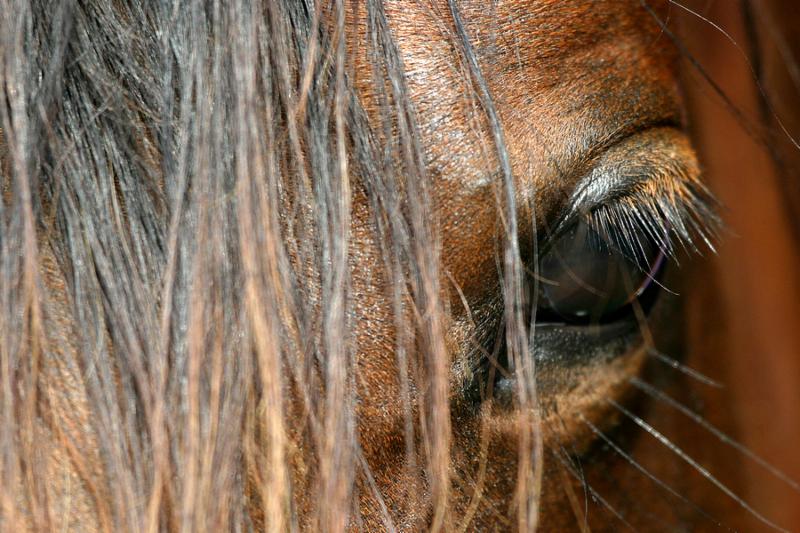
The horse has two very distinct and different ways of seeing the world - quite literally. We've covered this in a past newsletter, but it's worth repeating. The horse has binocular vision and he also has monocular vision. When a horse is using his binocular vision, his ears are often pricked forward. When a horse's ears are pricked forward, he is looking straight ahead, or into the distance. On the other hand, when a horse is using his monocular vision, he is seeing things on his right and left side separately and independently from one another. When a horse twitches his ears, often moving them quickly back and forth, he is using his monocular vision, and the rider should be aware. Many an ear twitch has been the pre-cursor to a seemingly sudden "spook". Let me give you an example...
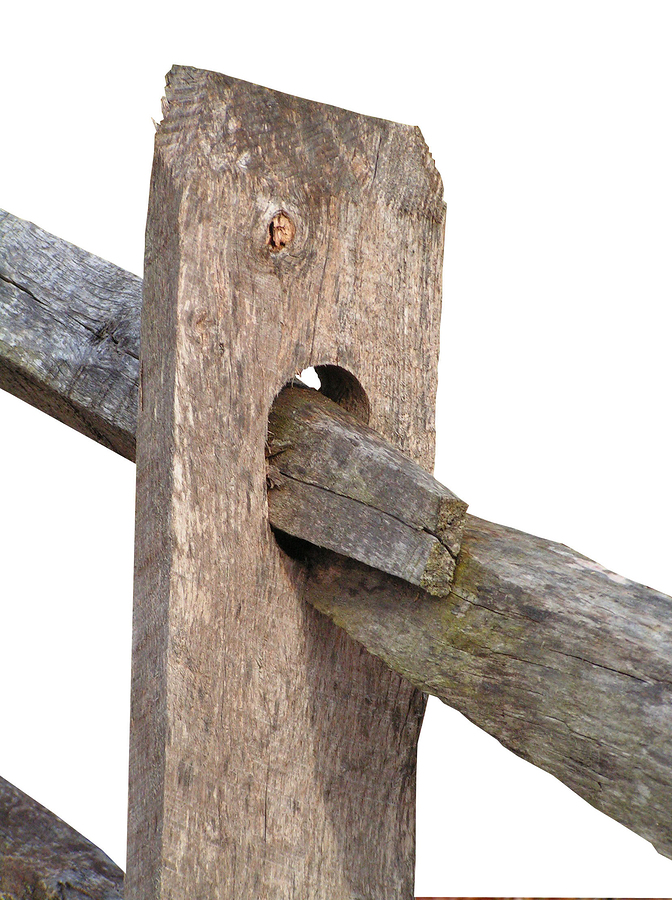
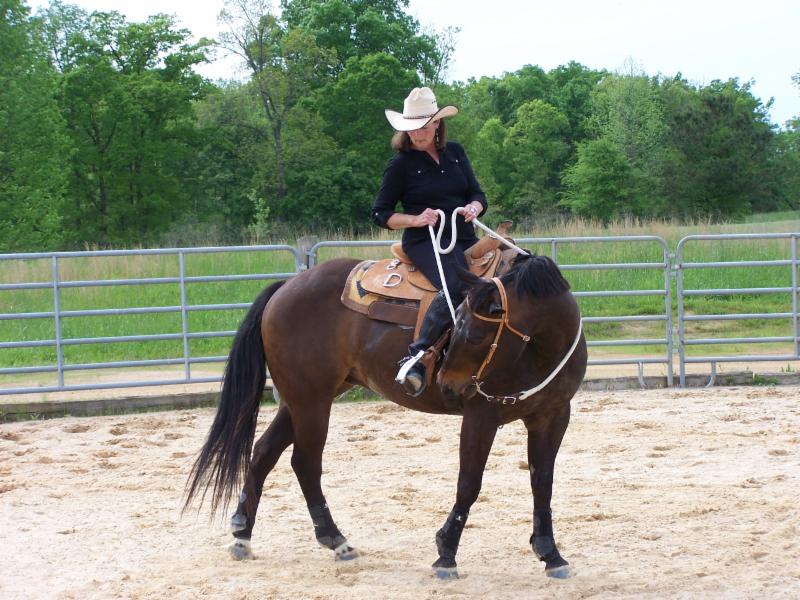
You are riding your horse past a fence post and he sees it clearly out of his left eye - no problem. As you pass the fence post, it comes back into his view, but this time the view of the post appears over the horse's opposite shoulder. Using his monocular vision, the horse now sees the fence post out of his right eye, instead of his left eye. He spooks at the sight of the fence post and acts as though he has never seen it before. In fact, he hasn't! Because of his monocular vision, what the horse knows or recognizes on one side does not translate to the other side. That is the reason why we have to train a horse from "both sides"! Now let's go deeper and talk about you and me, and how we "see" Jesus.
How do you see Jesus?
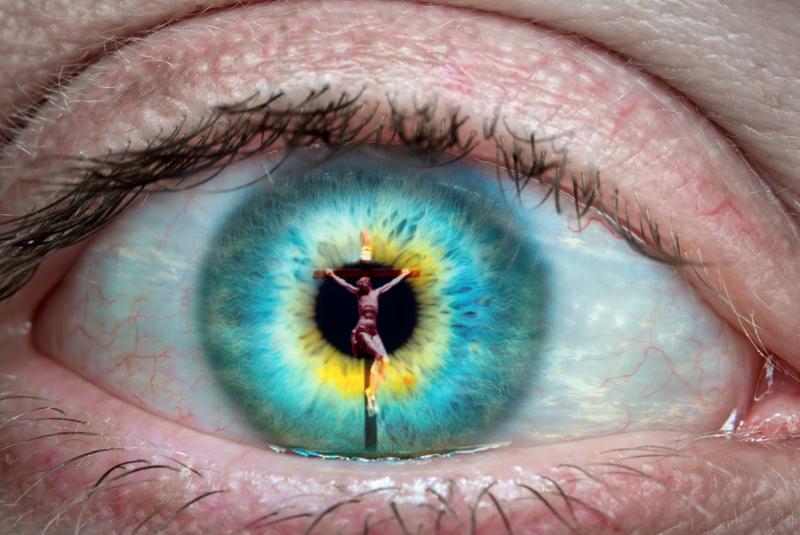
If you were to ask one hundred people how they see (perceive) Jesus, you would probably get one hundred different answers. Why? People see Jesus differently. Some see Jesus as a little baby lying in a manger while others see Him dying on the cross. How you see Jesus determines how you respond to Him. The Bible makes clear that although Jesus was once a baby lying in a manger, and He once hung on a cross between two thieves, that is not who Jesus is today. Today, Jesus is the King of Kings and the Lord of Lords (Revelation 19: 16). The Bible also tells us that Jesus' work is complete, and He is now seated at the right hand of the Father (God).
"Who then is the one who condemns? No one. Christ Jesus who died - more than that, who was raised to life - is at the right hand of God and is also interceding for us."
(Romans 8: 34, NIV)
When Jesus took His last breath on the cross, He declared, "It is finished." The Bible says that Jesus then rose from the dead on the third day, and after appearing to His disciples, He ascended into heaven. So, how should we see Jesus today? We should see Jesus as our Lord who is seated at the right hand of the Father (God) where He is continually making intercession for us! And what does the word "intercession" really mean? It means to intervene on the behalf of another; to petition or make conciliation on behalf of someone else. Let's go further. If Jesus is now seated at the right hand of the Father, then how can people really see and recognize Jesus today? They can see Jesus by looking at you and me. As born-again children of God, we are to be "living examples" of Jesus Christ to the world. That is why we are called Christians. To be a Christian means to be Christ-like in all that we say and do. It also means that we are to be Jesus' eyes, His ears, His hands, and His feet to the world. Why? We are the "body" of Christ - we are the Church! When the world looks at the Church, they should be able to clearly "see" Jesus for who He is. Yes, Jesus is love, mercy, compassion, and forgiveness, but He is more. Jesus' name is Immanuel (which means God with us). When we represent Jesus to the world, they should see and recognize the truth. God is closer than we think!
|