|
|
|
The Money Making Power of Licensing
October 2013 Issue
|
|
Greetings!
Welcome to the October issue of the Licensing 4 Profits newsletter.
What makes a character property a licensing success? Learn more in this months Leveraging IP article, where we discuss some of the characteristics that can make it a successful property.
Intellectual property are important business assets and should be a key part of your business plan. In our Strategy Session article, we review how you can leverage your IP to attract investors and fund your start-up business.
If you missed last months webinar event on How to Use Licensing to Increase Your Business Value, you can view the replay here. Discover why IP is your most important business asset, how licensing IP increases revenue and company value, and why IP is now a key component of selling or buying a business.
An important compliance clause in a licensing agreement is the Royalty Audit. This clause gives the IP owner (licensor) the right to check the licensee's books and records to verify the accuracy of their sales and royalty reports. Learn more about Royalty Audits in this months Key Terms and Conditions article.
Check out the Video Licensing Lesson to find out how to Build a Bigger Pie with licensing.
In This Month in IP History, learn what the ball point pen, sugar, and hand held video games have in common.
We conclude with the question, "Can I learn how to make money licensing any kind of intellectual property?"
Enjoy!

|
|
Leveraging IP: The Formula for Success
 What makes a character property a licensing success? There is no specific formula, but there are a number of characteristics that can make it a successful property. The first is characters and a storyline that resonates well with the viewer. In the case of kids, it lets them extend the characters into their own play activities, such as dressing up like the characters, or recreating the storyline in some form, such as collecting the characters. Exposure is one of the most important things that makes a character licenseable. Movies and TV shows are concentrated marketing that exposes the characters to millions of viewers. It drives the potential for a big merchandise hit because these forms of media generate significant consumer exposure. The internet and digital technologies such as virtual worlds, online games, apps and social media sites offer options to traditional media for creating market recognition. The viewer needs to have an emotional connection with the character. They are able to create a bond between themselves and the character. A good example of this is Snoopy. People relate to his alter egos and hidden talents, or Homer Simpson and his perpetual mid life crises. Does the character share an interest with the viewer? This could range from planes and trains to fashion and make-up. The character itself can even become the object of association - for example, people who like cute/whimsical may be drawn to licensed characters such as Miffy, or kids who like trains are attracted to Thomas. It really helps if the character is loving, nice and witty - all the same reasons why you may choose to be friends with a person. Successful characters such as Winnie the Pooh, is crying out to be loved, which is its main appeal. While nothing is a sure thing, keeping these characteristics in mind when licensing a character property offers the best possibility for success at retail. |
|
Strategy Session: Is IP Licensing in Your Business Plan?
 Intellectual property are important business assets and should be a key part of your business plan. To attract investors, a business plan must include information on the potential demand for the products or services, advantages over its competitors, and the steps taken to protect the proprietary IP rights. It should focus on how the company plans to protect, manage and leverage its intellectual property assets for business success.
For many businesses, intellectual property is the foundation of their competitive advantage and success. This includes confidential business information such as details of production, inventions, and technical, financial and marketing know-how. It's essential to clearly communicate to investors that the startup has taken the necessary steps to secure its IP. Depending on the nature of the IP, if disclosed in the business plan, then steps should be taken to provide the business plan under a non-disclosure agreement. Business plans are a crucial tool for approaching investors. Because IP provides your enterprise competitive advantages and increases its value, it is necessary to let investors know about your IP assets by integrating them into your business plan. Sophisticated investors look for a sustainable competitive advantage when evaluating a business as a potential investment. Licensing others to use your IP also can fuel the growth of your start-up business. Licensing is the tool to leverage OPR - other peoples resources. Your startup business can get the benefit of your licensee's manufacturing and distribution facilities, and/or sales and marketing efforts without having to spend the time and money to develop them on your own. Licensing is a powerful tool for leveraging IP assets, and you can generate significant ongoing revenue to help grow your business using it. Your approach to making the most of your IP can be a significant factor when potential investors and/or co-venturers consider investing in your company. Licensing can serve a real purpose in your efforts to fund your business. You maintain a competitive advantage while at the same time making money by permitting others to use your IP. |
|
|
Feel free to pass this newsletter along to friends and associates. You can visit www.licensingcg.com to view other free reports and presentations. If you are interested in learning about our consulting services, please contact us at (646) 395-9572 or email info@licensingcg.com.
Best Regards,

Rand Brenner
President & CEO
Licensing Consulting Group
About Rand Brenner
Rand has licensed some of the biggest Hollywood blockbusters, including "Batman" and the "Mighty Morphin Power Rangers", both of which generated billions of dollars in worldwide merchandise sales. His career included executive positions at Saban Entertainment and Warner Bros Consumer Products where he developed numerous licensing and promotional deals with Fortune 1000 companies.
Rand Brenner is the President & CEO of Licensing Consulting Group, a full service intellectual property management company. LCG provides IP management, strategy consulting, and property representation. For more information, please visit our website or send an email to info@licensingcg.com.
|
|
|
Video Licensing Lesson
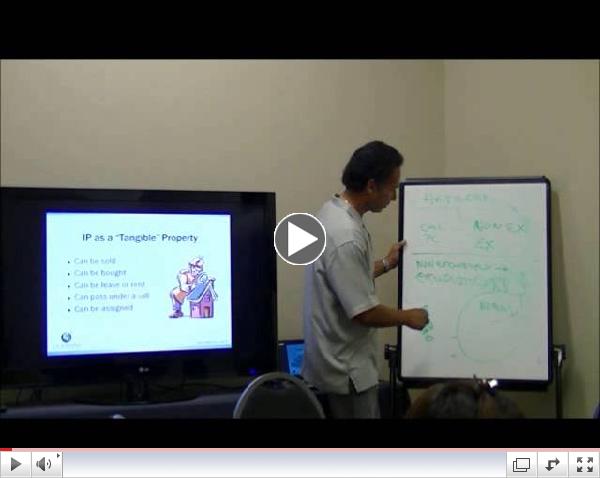 | |
Licensing Builds a Bigger Pie
|
|
Join Our Mailing List!
Sign up for our newsletter and get the free Special Report: Finding Your Hidden IP Assets
|
Free Webinar: How to Use IP Licensing to Increase Your Business Value

Join me and Mitch Axelrod, co-founder of the IP Licensing Academy, for an exciting discussion on how to use your IP to significantly multiply your business value. Discover why IP is your most important business asset, how licensing IP increases revenue and company value, and why IP is now a key component of buying or selling a business.
Click Here to View the Webinar
About the IP Licensing Academy
Whether you are new to the IP money making game, or an operating business that's ready to leverage your IP assets, the IP Licensing Academy gives you the expertise, knowledge and resources to successfully transform your IP into money making licensing deals.
Visit the website and get the free "Licensing Essentials" audio seminar. Find out why IP is the next big money making opportunity.
|
|
Key Terms & Conditions - Royalty Audits
An important compliance clause in a licensing agreement is the Royalty Audit. This clause gives the IP owner (licensor) the right to check the licensee's books and records to verify the accuracy of their sales and royalty reports.
Most licensing agreements require the licensee to keep their records for at least 5 years. The IP owner will want the right to audit the licensee at least once a year. Audits are at the licensor's expense, unless, for instance, a discrepancy is discovered which is greater than a certain percent of reported royalties (i.e. 5%). In that case, the licensee would pay for the audit.
The IP owner should also limit the advance notice required for the audit - giving too long a notice gives the licensee time to cover up any shortages.
Don't overlook the importance of this clause in your licensing agreements. And keep in mind, when doing a royalty audit, it's best to work with a professional firm that specializes in these types of audits.
When preparing or reviewing a licensing agreement, it's always best to seek qualified legal advice before you sign anything.
|
Interview with Corporate Valuation Advisors.
Interview with Jonathan Sobel, an IP attorney with the firm of Sobel Feller.
|
This Month in IP History
- 1888 A patent for a ballpoint pen was received by John Loud.
- 1901 Domino Sugar was trademark registered.
- 1992 Nintendo of America copyright registered the configuration of its handheld game machine.
Source:About.com |
|
Licensing4Profits Store
 IP Business Builder - The strategic use of intellectual property can substantially enhance the business development and competitiveness of your business from product development to product design from service delivery to marketing, and from raising financial resources to expanding your business internationally. Click here for more details. IP Business Builder - The strategic use of intellectual property can substantially enhance the business development and competitiveness of your business from product development to product design from service delivery to marketing, and from raising financial resources to expanding your business internationally. Click here for more details.
|
Ask Rand Brenner
Q: Can I learn how to make money licensing any kind of intellectual property?
A: Yes, just about anyone can make money with intellectual property if you learn the licensing process. There are many kinds of IP - patents, trademarks, copyrights, trade secrets and know-how - and all of these can be monetized through licensing.
There are a number of ways that intellectual property can be used to make money. If you are a start-up company, you can use licensing to generate revenues with your own IP. Or you can use licensing to get rights to make and sell products or services using someone elses IP.
You don't have to own IP to make money with it. You can be an agent or deal finder and help IP owners to license it to third party marketers. Or you can acquire the master licensing rights to an IP, sublicense it to other companies and make money from the royalties paid by the sublicensees.
Another way is to find unused or old IP that, when combined with something else, can create a new licensing opportunity. For example, you could find some IP owners that have unused consumer products or software that can be bundled and licensed into new distribution channels or territories.
Once you master the licensing skill set, there is no limit to the IP money making opportunities that you can create.
G ot a question about licensing? Send an email to askrandbrenner@licensing4profits.com. You'll get an answer to your question which will be included in a future issue of this newsletter.
|
|
|
|
|
|
|
|
The information in this newsletter is presented by Licensing Consulting Group as a service to the subscribers. Although the author attempts to keep this information current and accurate, he makes no warranty or guarantee that it is correct, complete or up-to-date. This newsletter may contain links or be linked to other web sites not maintained by Licensing Consulting Group. The author makes no representations, express or implied, with respect to the materials and information provided on any third-party web site linked to this newsletter, including any representations as to the accuracy, timeliness, reliability or completeness of any material or information on such linked site. Inclusion of a link in this newsletter to another web site does not imply recommendation, approval or endorsement by the author of the linked site.
|
|
|


