|
|
|
The Money Making Power of Intellectual Property
December 2012 Issue
|
|
Greetings!
Welcome to the December issue of Licensing4Profits. Many small businesses overlook their hidden intellectual property assets, and in this month's Licensing Strategy:Finding Your Hidden IP Assets, we discuss what to look for and how to do a quick IP assessment. If your are a knowledge based service business, licensing may not be the first thing that comes to mind when considering how to increase your business. In our next article, Leveraging IP: Licensing Your Expertise, we discuss five big benefits to licensing your expertise. In this month's Video Licensing Lesson, we discuss the tangible rights of IP and what they are, and how you can use them in licensing agreements. Next up in Key Terms & Conditions, we review the importance of the Quality Control clause in protecting the IP by specifying a quality standard that must be met by the licensee. Learn what Mark Twain, Volkswagen and "Star Trek" have in common in This Month in IP History. We also take a look at one of the most well know holiday IP's that is claimed by a diverse group of users without the need for royalty payments. This month's free Licensing Webinar: How to Use Social Media to License Your IP will show you how to use social media to accelerate your licensing activities. And we conclude the year with this month's licensing question "How does one decide if they should sell their intellectual property out right versus just licensing it?"
Happy Holidays and a prosperous New Year!

|
Strategy Session:
Finding Your Hidden (Intellectual Property) Assets
 Many small businesses overlook the significant financial impact of their hidden (intangible) assets. In fact, many businesses fail to identify their intellectual assets. Most of these hidden assets are intellectual property - both in registered formats such as patents, trademarks, and copyrights, as well as non registered forms such as organizational designs, marketing systems, corporate knowledge, employees skills, know how, organizational culture and customer satisfaction.
How do you identify your IP assets? Here are a few things to look at:
Your business IP includes more than just your technology or invention. It also includes invention, know-how, expertise, etc., relating to business subjects such as management and operations, marketing and sales...the things that identify your business and differentiate it from your competitors.
Does your business provide solutions? If your business solves a problem, you have created a potential IP asset. If you have solved a problem in connection to your business, it's likely that your competitors face the same problem. And that solution is also part of your business IP.
Your company's visibility in the form of trademarks and trade dress combined with it's reputation and goodwill are all part of your IP. Often overlooked are the written materials and artwork relating to or created for the business - works of authorship and artistic expression.
Here is a tip for doing a quick assessment of your hidden IP assets. One of the best ways to recognize your intellectual property is to make a list. Five categories that you should consider dividing these intellectual property assets into include the following:
- Marketing-related ( i.e. trademarks, trade names, trade dress, and internet domain names)
- Customer-related (i.e. customer lists, order or production backlog, customer contracts and related customer relationships)
- Artistic-related (i.e. theatrical, musical, printed, and video)
- Contract-based (i.e. advertising, construction, management, service or supply contracts, lease/royalty/franchise agreements, construction permits, broadcast and resource rights)
- Technology-based (i.e. patented technology, computer software, unpatented technology, databases, trade secrets, such as secret formulas, processes, recipes).
A company's intellectual property can have many applications or be useful in many different markets regardless of its core business area. The key is looking at your intellectual property in a new way. IP can be packaged and commercialized in its own right, and moved into the market to generate a new revenue stream. And in today's global marketplace, new opportunities to convert IP into revenue can be done without cannibalizing existing markets.
|
|
Leveraging IP: Licensing Your Expertise
Licensing may not be the first word that comes to mind when you're considering how to increase your business, particularly if your niche is a knowledge based service business - coach, consultant, trainer, speaker or some other kind of specialist and you have devised and developed your own methods, processes and procedures.
Creating a license based on your expertise (otherwise known as know-how) can be a very lucrative revenue stream. Professional expertise businesses who create licenses based on their processes, systems, and procedures can increase their profitability without adding to their workload.
Here are five big benefits to licensing your expertise.
1. More Work Than One Office Can Handle
If you are finding that new clients are waiting longer for your services, it may be time to consider licensing your expertise. Rather than lose these clients to a competitor who can see them quickly, why not funnel them to one of your licensees? That way you continue to profit from the relationship, without adding more to an already overloaded schedule.
2. Geographical Challenges
Getting referral business is great as long as you can deliver your services. But often times, distance can be a limiting factor on where you can go to deliver your services. Licensing can be the ideal solution when customers want your services yet are further afield than you're able to travel. By creating licenses, you can expand your geographic range, creating a far larger footprint than you'd be able to on your own.
3.Time Limitations
As a service provider, you only have so many hours in a day. Your options for increasing your business are limited by the amount of time you are available. If you're having real trouble meeting all of your professional obligations and keeping a good balance of family and personal time, it may be time to consider how you can make your business more efficient. Licensing is one tool that you can use to capitalize on the finite number of hours in the day.
4. Desire to Increase Profitability
If your goal is to increase revenues and profitability, but the challenge is having the time or capacity to do so, then licensing is your opportunity. License arrangements vary: some expertise based businesses sell licenses to use their information, others enter into ongoing arrangements allowing licensees to use the name, logo, and methodologies they've created in return for a periodic royalty fee. Depending on your type of expertise, understanding how to develop and manage a licensing program will help you realize more profit.
5. Interest from Would Be Licensees
Interest from would-be licensees is a great signal that you may be ready to license. Sometimes others are in a better position to see the opportunities that we're blind to: either because we're too close to our own businesses or just too busy to notice the profit waiting to be realized.
Be cautious at this point: just because someone has expressed interest in entering a license agreement with you doesn't mean they're the ideal person to represent your brand. Knowing the right way to create a license relationship is the critical to making your licensing program profitable.
|
|
|
Feel free to pass this newsletter along to friends and associates. You can visit www.licensingcg.com to view other free reports and presentations. If you are interested in learning about our consulting services and coaching programs, please contact us at (646) 395-9572 or email info@licensingcg.com.
Best Regards,

Rand Brenner
President & CEO
Licensing Consulting Group
About Rand Brenner
Rand has licensed some of the biggest Hollywood blockbusters, including "Batman" and the "Mighty Morphin Power Rangers", both of which generated billions of dollars in worldwide merchandise sales. His career included executive positions at Saban Entertainment and Warner Bros Consumer Products where he developed numerous licensing and promotional deals with Fortune 1000 companies.
Rand Brenner is the President & CEO of Licensing Consulting Group, a full service intellectual property management company. LCG provides IP management, strategy consulting, and property representation. For more information, please visit our website or send an email to info@licensingcg.com.
|
|
|
Video Licensing Lesson 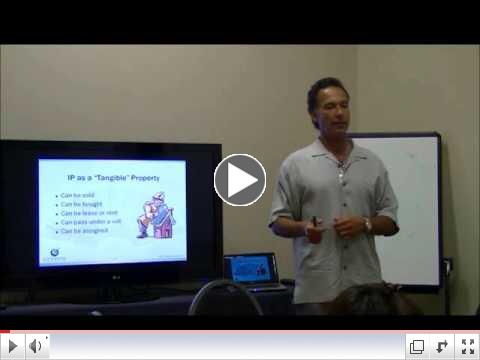 | IP-Intangible Asset
with Tangible Rights |
|
Join Our Mailing List!
Sign up for our newsletter and download a free copy of Introduction to Licensing Part 1: Making Money with Intellectual Property.

|
|
Key Terms & Conditions - Quality Control
Quality control terms are critical in any intellectual property (IP) license agreement. Quality controls protect the IP owner's reputation by specifying certain minimum quality standards must be met by the licensee; standards that customers (business or consumer) rely on in making their purchasing decisions. Following are some of the key issues that are covered under the quality control clause: - The quality of products or services offered by the licensee are at least as good as that of the licensor (IP owner).
- Strict guidelines on how to use the IP, particularly if it is a trademark.
- The licensor approval of any and all related packaging and advertising materials.
- Depending on the IP, the licensor may want approval rights at various stages, including initial plans and specifications, production mock-ups and final production runs.
The goal is to provide the licensor with sufficient control over the quality of the products or services and, at the same time, allow the licensee to operate their business without interference by the licensor. When preparing or reviewing a licensing agreement, it's always best to seek qualified legal advice before you sign anything. |
This Month in IP History - 1871 - Mark Twain received the first of his three patents for suspenders.
- 1955 - The car Volkswagen was trademark registered.
- 1966 - The words from the theme song for "Star Trek", were copyright registered.
Source:About.com
Holiday IP - Santa Claus

"Santa" is claimed by a diverse group of interests without the need to pay royalties, endorsements, or franchise fees. Santa Claus®, in typed form, is the registered trademark of The Topps Company. S. Claus® is also protected. Stylized Santa Claus® trademarks are owned by Selecta Klemm GmbH & Co. KG in Germany, as well as a company in the United Kingdom. The city of Rovaniemi in Finland has claimed The Official Hometown of Santa Claus® as a service mark for advertising and tour promotion purposes. The University of Santa Claus® trains people to act like Santa Claus. A Canadian company holds a service mark for Santavision.TV®, which offers a webcast exhibit where children can talk to Santa Claus via the Internet. "Claus.Com"® is a registered trademark. A stylized service mark, Santa's Town A Texas Christmas Village®, is owned by Santa's Wonderland Corporation. A Kentucky company holds the service mark, Santa's Hotline®. "HO HO HO®" is owned by a Georgia company. A company offers human resource materials under the service mark, Leadership Secrets of Santa Claus®. Coca Cola® has a trademarked image of Santa drinking a bottle of its soda. A circular seal with scalloped edges bearing the phrase, The Official Seal of Santa's Workshop® is also a protected trademark.
source: http://www.mfrpc.com/
|
|
License Your Expertise: The 90 Day Cash Flow Creator
NEW UPDATED VERSION FOR 2013
If you are a consultant, coach, speaker or trainer or some other kind of knowledge specialist and you have developed your own methods, process or procedures (otherwise known as know-how), you may be missing out on the opportunity to earn more from your expertise. For example, if you have your own information specialist training course, consulting method or coaching aid, it can probably be turned into a product that can be licensed to others. License Your Expertise will teach you how to leverage your expertise, and give you the tools, strategies and secrets that are the framework to building a money making licensing program.
Click here for more information and to buy this product. Order before Jan. 1st 2013 and receive a 25% discount. Enter code LYE1212.
|
Licensing Webinar - How to use Social Media to License Your Intellectual Property Find out how social media can accelerate your licensing activities by collaborating on various social media sites such as Linkedin, Google+ and Facebook.
Here are some of the topics that will be covered during this webinar: - How to connect with the marketers and companies looking for IP to license i.e. agents, manufacturers, marketers and others.
- Understanding the different type of social networking communities (web sites, search engines, blogs and others) and how to use them the right way,
- Strategies to advertise and promote your licensing opportunity that costs virtually nothing and reaches an extensive group of prospective licensees.
- How to get free publicity, send tweets about your licensing opportunities, and build licensing followers,
- How to put it all together in a social media licensing campaign.
Social media is a way to quickly build a network with potential licensees, chat with business owners, and keep abreast of licensing opportunities for your intellectual property. But social media is only worthwhile if it's effective, and knowing how to use social media to promote your licensing opportunities is essential to making it all work. To view this webinar,click here or use this link -http://wp.me/P2LywD-4d.
|
Ask Rand Brenner
Q: How does one decide if they should sell their intellectual property out right versus just licensing it?
A: One of the biggest challenges you have in selling your intellectual property out right is understanding how much it's worth.
A lot depends on what you have done to commercialize your IP. If it's been in the market and has a track record of sales, you can develop a value based on future projected sales. On the other hand, if you have not yet commercialized your IP, meaning generated some sales, then you may not be able to determine a reasonable value.
Licensing is an option to selling an IP. It's a strategy that can be used to build IP value. In fact, licensing can be the beginning stage to ultimately selling an IP. At some point, if your IP and licensees become successful, the IP value increases which in turn leads to a higher selling price.
Got a question about licensing? Send an email to askrandbrenner@ licensing4profits.com. You'll get an answer to your question which will be included in a future issue of this newsletter.
|
|
Latest Blog Postings
More articles available at |
|
|
|
|
|
|
|
The information in this newsletter is presented by Licensing Consulting Group as a service to the subscribers. Although the author attempts to keep this information current and accurate, he makes no warranty or guarantee that it is correct, complete or up-to-date. This newsletter may contain links or be linked to other web sites not maintained by Licensing Consulting Group. The author makes no representations, express or implied, with respect to the materials and information provided on any third-party web site linked to this newsletter, including any representations as to the accuracy, timeliness, reliability or completeness of any material or information on such linked site. Inclusion of a link in this newsletter to another web site does not imply recommendation, approval or endorsement by the author of the linked site.
|
|
|


