|
|
|
The Money Making Power of Intellectual Property
November 2012 Issue
|
|
Greetings!
Welcome to the November issue of Licensing4Profits.. What is the right type of legal entity to own your IP? Learn about one option in this months Licensing Strategy: The IP Holding Company, which discusses why creating a separate entity, solely for the purpose of owning your IP, can be one of the best ways of protecting, managing and exploiting an IP. New options are devloping for licensing IP, and in our next article, Leveraging IP: The Intellectual Property Exchange, we take a look at the world's first financial exchange focused solely on intellectual property rights. Find out your IP IQ by playing the IP Armor Game. Identify the correct form of IP rights for each invention and you can breakthrough the market walls to business success. In this month's Video Licensing Lesson, we discuss the tangible rights of IP and what they are, and how you can use them in licensing agreements. Next up in Key Terms & Conditions, we review the Grant of License clause and two of the most common ways the IP owner(licensor) can grant rights to the IP buyer(licensee). Our next article, This Month in IP History, find out what the washing machine, Elmers Glue and "The 10 Commandments" have in common (and a traditional Thanksgiving holiday IP). We conclude with this months licensing question "What's the best way to approach companies about licensing a product?"
Enjoy!

|
|
Strategy Session: The IP Holding Company
 Creating a separate entity, solely for the purpose of owning your intellectual property, can be one of the best way to protect, manage and exploit an IP. Intellectual Property Holding Companies typically handle important IP functions such as filings, assignments, marketing and licensing business opportunities. These types of activities are sometimes better managed in an entity which is not part of the main operating business, especially if there are a significant number of intelllectual properties to manage. Creating a separate entity, solely for the purpose of owning your intellectual property, can be one of the best way to protect, manage and exploit an IP. Intellectual Property Holding Companies typically handle important IP functions such as filings, assignments, marketing and licensing business opportunities. These types of activities are sometimes better managed in an entity which is not part of the main operating business, especially if there are a significant number of intelllectual properties to manage.
The structure of an IPHC is fairly simple. An IP owner forms a corporation (parent company) and creates another subsidiary corporation (the IPHC). The IP is created by or transferred to the IPHC. The IPHC enters into license agreements with the parent company and/or other non-related companies who agree to pay the IPHC royalties in exchange for an exclusive or non-exclusive right to use the intellectual property.
The two biggest benefits of IPHC's are tax related and protection from liability claims. There are a number of states (Nevada and Deleware are two examples) and countries (i.e. Switzerland, Holland and Ireland) that are tax havens for intangible income (i.e. royalty revenues generated by an IP). In the case of the US, if the IPHC is set up in one of these states, the income from the IP is not subject to state taxes. The second benefit is to shield your intellectual property (assets) from litigation or a financial disaster that impacts your operating company.
Here's a quick example of how an IPHC might work. You invented a new widget and created a new business entity, "XYZ Widgets Marketing LLC" to make and sell the widgets. You then form a second company, XYZ Intellectual Holdings, LLC" ( in Nevada or Deleware), that owns your IP assets. Royalties are paid to XYZ IPHC who receives the tax benefits. If litigation is filed against the XYZ Widgets Marketing LLC and it goes bankrupt, the IPHC enables you to keep your IP intact and continue to benefit from the ongoing licensing revenues.
Keep in mind that, in the US, state and federal government is looking for ways to increase tax revenue, and one of the initiatives underway in many states is closing this tax benefit. Whether the Intellectual Property Holding Company is right for you will depend on your situation, and consulting with qualified legal or accounting professionals is the best way to make that decision.
|
|
Leveraging IP: The Intellectual Property Exchange
The latest development besides one-on-one deals and patent auctions is IPXI (http://www.ipxi.com/), the Intellectual Property Exchange International Inc. It is the world's first financial exchange focused solely on intellectual property rights. IPXI revolutionizes the way patents are licensed and traded by allowing companies to buy and sell patent rights as units.
These "unit license rights" can be bought and sold like shares. For example, one unit license right grants an organization a one-time right to use that particular technology on a single product. If a car manufacturing company wishes to use that technology in 50,000 cars, they purchase 50,000 unit license rights at the market price.
The concept especially benefits smaller companies with modest budgets by creating a simpler, faster and cheaper method to obtain IP rights. IPXI's approach does not work for all types of intellectual property. For example, it does not allow exclusive licensing, but should make it easier for companies to make money from their inventions.
|
|
Test Your IP IQ: Play the IP Armor Game
The first step before launching any new intellectual property is to protect it with the right kind of IP Armor (Rights).
Here's a quick game to test your knowledge about IP rights. The goal of the game is to correctly identify the IP rights for different types of intellectual property and break into the market before time runs out. Choose the correct type of IP right (patent, trademark, copyright or design) and watch it break down the market walls. A wrong choice will cost you time. Reach level three and your IP is a business success (if only it was that easy).
Click the image above or use this link (http://www.ipo.gov.uk/whyuse/armour.htm) to play the IP Armor Game.
Source: www.ipo.gov.uk
|
|
|
Feel free to pass this newsletter along to friends and associates. You can visit www.licensingcg.com to view other free reports and presentations. If you are interested in learning about our consulting services and coaching programs, please contact us at (646) 395-9572 or email info@licensingcg.com.
Best Regards,

Rand Brenner
President & CEO
Licensing Consulting Group
About Rand Brenner
Rand has licensed some of the biggest Hollywood blockbusters, including "Batman" and the "Mighty Morphin Power Rangers", both of which generated billions of dollars in worldwide merchandise sales. His career included executive positions at Saban Entertainment and Warner Bros Consumer Products where he developed numerous licensing and promotional deals with Fortune 1000 companies.
Rand Brenner is the President & CEO of Licensing Consulting Group, a full service intellectual property management company. LCG provides IP management, strategy consulting, and property representation. For more information, please visit our website or send an email to info@licensingcg.com.
|
|
|
Video Licensing Lesson 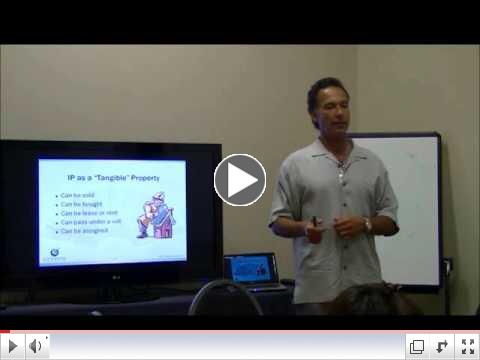 | IP-Intangible Asset
with Tangible Rights |
|
Join Our Mailing List!
Sign up for our newsletter and download a free copy of Introduction to Licensing Part 1: Making Money with Intellectual Property.

|
|
Key Terms & Conditions - Grant of License
The grant clause is an important clause in any intellectual property license agreement. It specifies "who gets what". The object of the grant clause is to grant permission to the licensee to use certain intellectual property rights of the licensor. Two of the most common ways (otherwise known as "scope of license") the IP owner (licensor) can grant rights to the IP buyer (licensee) are exclusive and non-exclusive. - Exclusive License: The licensee is the only party that can use the rights granted
- Non-Exclusive License: The IP owner (licensor) can license the same rights to other licensees.
Some of the terms included in the grant of license include: - All or part of the rights (ex: to manufacture, distribute and sell)
- Field of Use (ex: limited to the style or size of the product)
- Territory Limitations ( ex: country, region or specific distribution channel)
When preparing or reviewing a licensing agreement, it's always best to seek quailified legal advice before you sign anything. |
This Month in IP History - 1894 - Mildred Lord was granted a patent for a washing machine.
- 1952 - ELMER'S glue was trademark registered.
- 1956 - Cecile B Demille's "The Ten Commandments" was copyright registered.
Thanksgiving Day IP

Source:About.com
|
|
Licensing Success Coaching Program
 Is licensing right for your intellectual property or business? How long will it take to prepare your IP for licensing? What kind of costs should you expect? These are just a few of the questions that are answered when you become a member of the Licensing Success Coaching Program. Licensing Coaching can accelerate your path to success and save you tens-of-thousands of dollars and years of wasted time. From helping you overcome fear and develop the proper IP mindset to forming key licensing relationships, the advice and direction in the Licensing Success Coaching Program is priceless.
|
Featured Licensing Webinar - How to License Your Product to DRTV Marketers The direct response television or infomercial industry offers an ideal space for many independent inventors to license their products. The DRTV industry is enormous, estimated to generate over 2 trillion dollars worldwide. And it's grown even larger and more prosperous during the economic recession.
During this webinar, you will learn:- 5 Reasons Why You Should License to a DRTV Marketer vs. Doing it Yourself
- The Key Benefits of Licensing to a DRTV Marketer
- The 10 Key DRTV Success Factors
- 3 Things You Must do to Get a DRTV Licensing Deal
- The 2 Biggest Mistakes and How to Avoid Them
- What You Should Know About Working with DRTV Marketers
- How to Negotiate a DRTV Licensing Deal that Works for You
To view this webinar,click here or use this link -http://tinyurl.com/8hkwhl2.
|
Ask Rand Brenner
Q: How does one approach or pursue a company to have them license a product?
A: The first step is to do your homework. You should research your potential licensees and find out about their producs and services. You want to make sure your IP fits their business model.
The next step is to contact the companies. The best way to do this is to contact someone you know at the company or get an introduction. It's important to find out who the right person is to contact and send the information.
A second approach is using the internet to connect with your target licensees. Information about your licensing opportunity can be posted on websites and discussed in forums. The goal is is to engage with potential licensees who are interested in your IP.
A third way to meet potential licensees is at a tradeshow. You can meet the sales people and you can talk to them to find out if your IP is something that they might be interested in licensing. If so, they may provide you with the name of who to contact at the company to discuss your licensing opportunity.
Got a question about licensing? Send an email to askrandbrenner@ licensing4profits.com. You'll get an answer to your question which will be included in a future issue of this newsletter.
|
|
Latest Blog Postings
More articles available at |
|
|
|
|
|
|
|
The information in this newsletter is presented by Licensing Consulting Group as a service to the subscribers. Although the author attempts to keep this information current and accurate, he makes no warranty or guarantee that it is correct, complete or up-to-date. This newsletter may contain links or be linked to other web sites not maintained by Licensing Consulting Group. The author makes no representations, express or implied, with respect to the materials and information provided on any third-party web site linked to this newsletter, including any representations as to the accuracy, timeliness, reliability or completeness of any material or information on such linked site. Inclusion of a link in this newsletter to another web site does not imply recommendation, approval or endorsement by the author of the linked site.
|
|
|


