So you'll be happy to know that I'm actually learning some stuff at seminary, and even better, I've actually remembered some of it longer than the few weeks between when I learn it and the time I need to recall it for a paper or exam. One of my favorite things that I've learned so far actually came up as a topic, as many good things often do, outside of class while having a drink with one of my professors and a few other students. My professor was excitedly sharing with us that the seminary had received a grant for this year to start incorporating science into the seminary's curriculum and her hope was to find a place in one of her courses to discuss quantum physics, as she believes there are a great many connections between this field and the study of theology. She continued by highlighting several recent studies that seemed to have proven the theory of quantum entanglement non-locality.
Now, I know I'm treading into slightly dangerous territory here as there are a fair amount of scientists in this congregation, and there are also a fair amount of folks who have no experience with quantum physics at all, and I want to make sure I'm not alienating anyone, so I'll do my best to walk the middle ground in my limited understanding here, but feel free to ask questions and correct my misunderstandings after the service.
As I understand the basic theory, particles that were once connected and are then separated still retain some memory or sense of that connection. Physicists have speculated on this theory for quite some time, Einstein amongst them, and it was recently proven to some extent when some physicists were able to separate two particles, take one of those particles across to the other side of the world, and when an act was performed on the particle that remained, the previously connected particle on the other side of the world, without any direct action performed on it, reacted in a similar manner to its previous partner particle.
The implications of these studies are incredibly widespread, opening doors to deep space communication, particle teleportation, delving deeper into the relationship between space and time, and exploring subatomic connections between organic materials and living creatures. Along this logic, there's a reason why we empathize with others when they express emotions, why we have physical reactions when others are in pain, and why we know what love means even though we can't always adequately express it with words.
I tell you all of this because I believe that the apostle Paul may have actually been a quantum physicist before the field really even existed. Through his letters to various upstart Christian communities, Paul frequently delves into abstract relationships of how members of the body of Christ are connected over long distances through space and time, bonded together through the work of the Holy Spirit and the self-revelation of God through the self-sacrifice of God incarnate in Jesus Christ.
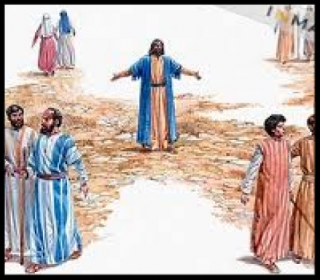
In Paul's letter to the Galatians that we heard from earlier, Paul writes to a community that he started in Galatia, and apparently since he left a group of "false prophets" has moved in on that territory spreading a "false gospel", claiming that in order to be true members of the community they must remain true to the law of the Torah and be circumcised. Paul combats this assertion by claiming that circumcision or non-circumcision doesn't really matter as they only regard the flesh, and only serve to boost up the false prophets in their selfish boasting that they were able to convince so many to follow their teachings. As Paul states, "they are nothing who think they are something, and they deceive themselves." What truly matters, as Paul puts forth, is whatever regards Christ and the new creation that comes about when we die to Sin and are made alive in God. This is accomplished through our baptism wherein we are actually taken outside of space and time and are co-crucified with Christ on the cross, sharing in that death, and later to be made new when we join in the final in-breaking of the kingdom of God in our physical death and the resurrection of our spiritual bodies. Paul derives this sense of community in the Spirit from the work and teachings of Jesus, like what we see in the gospel today, when Jesus sends out seventy disciples in his name to spread the gospel and states that "whoever listens to you listens to me, and whoever rejects you rejects me, and whoever rejects me rejects the one who sent me". We are united with God and with each other.
One of the tricks in all of this, though, whether it be with particles that are quantumly entangled or members of the body of Christ connected through space and time is that we don't always get to choose who we're connected to, and my guess is that the majority of us, if not all of us, are connected with individuals in our lives with whom we wish we could disconnect. The musical duo, The Civil Wars, have a fantastically biting song on their last album that embodies this, entitled, "I wish you were the one that got away." Connections are not always good or fruitful, and some may cause us pain or anger. I will confess that I had a somewhat visceral reaction to Kim Davis, the county clerk who refused to give out marriage licenses to same-gender couples based on her personal religious convictions, as I obviously have a different understanding of God's sense of love, identity, and creation, but somewhere along the line I had to very begrudgingly admit that in some capacity Kim Davis' salvation is wrapped up with mine. Like it or not, I am connected to her even though I don't agree with her and I've never met her in person. There are most likely people in your lives and even in this congregation with whom you disagree or butt heads with on occasion, yet you are connected to them through your baptism and the body of Christ.
Part of the human condition is that we don't exist as solitary islands. At the very least we are a loosely connected archipelago, and at very most we are a Pangea. There is risk in being connected because, much like the separated particles and much like the Galatian community of Paul, we have to be open to be changed by these connections. For far too long now, we as the church have spent a great deal of time and effort to connect with those outside our walls by attempting to bring them in and make them change to become like us, rather than risking a shift in our own identity by going outside and being changed by those whom we encounter.
There is danger in the world, seemingly now at a highly elevated level. As Jesus explicitly warns in his commission of the seventy, "I am sending you out like lambs into the midst of wolves." There is great fear about who surrounds us, particularly those who look and speak and act differently than us, and what their reality and perception might mean for our own lives, and ultimately the fear of being changed drives our timidity and resistance in connecting with "the others" in our lives. It's destabilizing to feel like we are not in control of our own destiny and identity, it's destabilizing to constantly live in flux not knowing who or what is around the corner, and it's incredibly destabilizing to live in uncertainty and doubt about whether what we believe and profess as the church is real and true.
And yet, there is a remarkable sense of freedom that comes with being destabilized. Destabilization is often necessary in order to open the door for new developments and progress; stability and comfort generally don't serve the same function. Progress is also usually messy and there's freedom in the fact that we don't have to know it all, we don't have to get it perfect or absolutely right all the time. We're going to be confused and make mistakes and falter in our connections with others.
And that's o.k.
When Jesus commissions the seventy he sends them out in pairs. When Paul formed a new church in Galatia it was not a church with just one member. This is why we are church in the first place; we exist in community with each other. The original greek that has been translated as "church" literally means the "assembly" or the "gathering", that is, the people; not a building or steeple or cathedral. God became incarnate and self-sacrificed in order to justify us, to enable us to live in right relationships with God and with each other because God knows that we can't do that on our own. Through our baptism we are bonded with the Spirit of God, and as is written later in 2 Timothy, this is not a spirit of cowardice or timidity, but a spirit of power and love and self-discipline. Whether or not we like who we are connected to in the body of Christ or through our subatomic particles, we are stronger because of these connections because we are not alone. In this sense we have the opportunity to be changed, to expand our worldview, and to more fully know and be known by our siblings in humanity, our fellow members of the body of Christ, and by a God who is merciful and gracious, slow to anger, and abounding in steadfast love and faithfulness.