 |
|
 |
 |
 |
 |
 |
 |
 |
 |
 |
| |
5 Ways to Keep Your Brain at its Peak!
|
|
|
 |
 |
 |
 |
 |
 |
 |
 |
 |
 |
 |
 |
 |
 |
 |
 |
 |
 |
|
For those of you who haven't experienced one of the LighterLife Programmes, this might seem an odd topic for a newsletter from a "weight loss" business. However, those of you who have been, or are, members of LighterLife will know why brain health and activity is vital when it comes to losing and maintaining weight.
 What you do is directly related to how you think. If your brain is fatigued and generally under par it is less likely to be receptive to changing the way it thinks and that in turn will ensure that behaviours don't change. Why? Because it takes less thought to carry on doing something that is familiar such as over eating and over drinking and more thought to change to a healthier way of being.
So, how can you keep your brain function at an optimum level of health and therefore make changing unhelpful thoughts that bit easier?
SLEEP!
 Good quality sleep is very important for the brain. Ideally, 7-8 hours are needed every night. Why, because deep sleep is not only relaxing and refreshing but studies have found that during deep sleep the brain can "clean out" any unwanted debris and allow memory and learning to increase. In sleep, the brain is able to sort through experiences without being influenced by the things around it when the body is awake. Learning and memory are increased. Good quality sleep is very important for the brain. Ideally, 7-8 hours are needed every night. Why, because deep sleep is not only relaxing and refreshing but studies have found that during deep sleep the brain can "clean out" any unwanted debris and allow memory and learning to increase. In sleep, the brain is able to sort through experiences without being influenced by the things around it when the body is awake. Learning and memory are increased.
Lack of sleep also increases the risk of false memories - such as "when I overeat/drink I feel better". Really?? Do you still think that afterwards or the next time you get on the scales or try to fit into your favourite outfit?
MODERATE EXERCISE HUGELY IMPROVES BRAIN FUNCTION
 Exercise increases learning, memory and an interest in activities. It decreases stress, reduces blood pressure, decreases diabetes, obesity, degenerative brain disease, stroke, inflammation and mood and anxiety disorders. Pretty good results from just a 20 minute brisk walk every day isn't it? Yes that's right, you don't need to join a gym and engage in hours of high level exercise to get the above results - you just need to go for a walk (or swim) regularly (ideally 3 times a week) for at least 20 minutes at a time and keep on doing it, to get the above effects on the brain.
STOP EATING RUBBISH!
 Everyone knows good food is good for the body - but did you realise how important it is for the brain?
The brain weighs around 3lbs and has 400 miles of blood vessels and uses 20% of all our body's energy, so, therefore, needs quite a lot of good quality nutrients to keep going at an optimum level. If you are on the LighterLife Programme, no problem, you are already getting 100% of the nutrition that your body and brain needs every day without having to put a lot of thought into it, however, if you are not on the Programme - read on!
Processed foods (i.e. food that has been through a manufacturers process and no longer looks like it did when it came out of the ground, off the tree, out of the sea, off the animal, etc) have chemicals and additives that waste brain energy and can trigger hormonal reactions that can harm the brain. These foods can clog the arteries and cause small strokes and lead to vascular dementia. Basically, if it has a label, avoid it.
 On the other hand, many fruits, vegetables, grains, beans and pulses have very beneficial effects in helping to clean debris from the brain. They have been shown to provide the brain with many vitamins and minerals as well as antioxidants and can help make you feel calmer, happier and more energetic. On the other hand, many fruits, vegetables, grains, beans and pulses have very beneficial effects in helping to clean debris from the brain. They have been shown to provide the brain with many vitamins and minerals as well as antioxidants and can help make you feel calmer, happier and more energetic.
Cut Down on Sugar
This is something that seems to be the latest popular topic for the media, which is good news.
The brain only eats glucose and only small amounts of glucose are needed to increase learning capacity. However, eating a lot of refined sugar rapidly gives the body too much to handle and triggers massive hormonal responses that can, eventually, harm the brain.
Natural sugar from fruit gives a much smaller amount of high quality sugar from a matrix of fibre and other substances. The breakdown and absorption of that sugar occurs very slowly and therefore does not trigger the hormones that can negatively affect the brain. However, it is still sugar so ideally only eat one portion of fruit a day, e.g. one large piece of fruit such as an Orange or a small handful of smaller fruits such as grapes.
Complex carbohydrates (those from the whole grain found in Oats, Rye or Pumpernickel bread etc) release glucose slowly providing the glucose at a healthy rate. These foods are low on the Glycaemic Index and a full education on that is given during the Management Phases of the Programme which shows you how to eat healthily to maintain your new weight.
Not all Fats are to be Avoided
The body needs foods from each of the food groups every day which is why diets that eliminate a particular food group should be avoided.
Healthy fats (Omega oils) are vital to help the brain build and repair its cells. These are found in eggs, oily fish, seeds, nuts to name a few.
It's also important to eat high quality protein found in fish, white meat i.e. chicken, grains such as Quinoa and legumes. Try to avoid red meat as your choice of protein because of the amount of saturated fat found in even the leanest of red meat.
Green Tea and Black tea have both been linked with an improvement in working memory as have sage and rosemary.
All essential vitamins and minerals are critical for good brain health but in particular magnesium, lysine, B vitamins and zinc. Zinc is found in pumpkin seeds, liver, nuts and peas. B vitamins are in kale, chard, spinach and other dark leafy greens.
Again, if you are on the LighterLife Programme you are already getting all your essential vitamins and minerals every day with the foodpacks, but starting to get familiar with healthy eating now is a good idea as it will aid your learning when you get to the Management Phases and then the weight maintaining phase.
USE IT OR LOSE IT!
 Brains thrive on mental activity. Research shows that those who regularly use their brains for complex activity have less brain degeneration and dementia. Brains thrive on mental activity. Research shows that those who regularly use their brains for complex activity have less brain degeneration and dementia.
The more meaningful an activity the more of the brain is affected as it affects both the emotional as well as the learning parts of the brain. More brain activity can also boost your immune system (vital during winter), reduce stress and boost feelings of happiness.
Best activities for brain health are: any work that really interests you and requires concentration - even better if it involves helping others. Meditation, helps train concentration and the conscious use of the brain, learning a new language, music, gardening, crafts and sewing, learning dance routines and competitive sport, games such as crossword puzzles, chess, sudoku to name but a few.
ANIMALS AND THE GREAT OUTDOORS
 There are great mental benefits to relationships with pets and exposure to nature. Think of how you felt the last time you watched a beautiful sunset, heard the sounds of the ocean or a babbling brook or cuddled your pet? For those of you who are on, or who have been on, one of the Programmes, have you ever wondered why I play an ambient DVD of a scene from nature, or a crackling fire in my counselling room? It's not only to relax and calm it's to stimulate your brain as well to enable you to be more receptive to the counselling that is going to take place. See, I do think about these things....... There are great mental benefits to relationships with pets and exposure to nature. Think of how you felt the last time you watched a beautiful sunset, heard the sounds of the ocean or a babbling brook or cuddled your pet? For those of you who are on, or who have been on, one of the Programmes, have you ever wondered why I play an ambient DVD of a scene from nature, or a crackling fire in my counselling room? It's not only to relax and calm it's to stimulate your brain as well to enable you to be more receptive to the counselling that is going to take place. See, I do think about these things.......
Walking whilst being mindful of the scenes of nature around you has positive effects on brain health - it's like a mental cleansing. Studies have shown that patients recovering from illness have been found to recover faster when they can see nature from their window. Children have less stress when there are plants in and around their houses. Other studies show better self control, decreased aggression and less depression after exposure to nature. People with dementia and agitation have been helped by sitting in a garden.
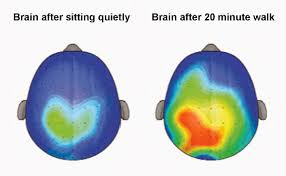 A study used a mobile "brain-wave" machine where people were connected to a brain wave measuring device with a computer in a backpack. When walking in the woods, the brain waves shows dramatic reductions in frustration and findings similar to that of meditation. This study also showed a reduction in brain fatigue. A study used a mobile "brain-wave" machine where people were connected to a brain wave measuring device with a computer in a backpack. When walking in the woods, the brain waves shows dramatic reductions in frustration and findings similar to that of meditation. This study also showed a reduction in brain fatigue.
So, in summary, to help keep your brain in the peak of good health and stimulate your memory to increase learning and feelings of well being do the following 5 things:
1. Get a good nights sleep,
2. Eat a healthy diet, or, join one of the LighterLife Programmes and let us do that for you, whilst you lose weight quickly and safely - double win!!
3. Include moderate regular exercise into your week
4. Engage in regular meaningful complex mental activity
5. Get out into the great outdoors more and "expose" yourself to nature and, if you have one, interact more with your pet.
Taken from the Blog, Human Brain, Neuronal Plasticity by Jon Lieff, MD.
LighterLife is genuinely different. It isn't a miracle, it isn't new (we've been around for over 20 years now) but it is tried, tested, well established, successful and has thousands of happy, slim, healthy clients. Also, in an industry that isn't regulated, we have chosen to be regulated by the National Institute of Health and Clinical Excellence (NICE) to further prove our professionalism and commitment to the health and safety of clients.
Why don't you come and meet me and investigate whether or not it could be the thing for you? Give me a call on 01509 234433 or email me at debbie.ford@lighterlifecounsellor.com or text on 07860 017700 (text only, this is not a mobile phone no.) and I'd be delighted to meet you and tell you more about the Programmes we offer in a relaxed environment with absolutely no "hard sell" involved, I promise, and you could start the journey to a NEW you!
I look forward to meeting you. Best wishes,
Debbie Ford
LighterLife
By confirming your subscription you're granting LighterLife permission to email you. You can revoke permission to mail to your email address at any time using the Safe Unsubscribe link found at the bottom of every email.
|
|
|
|
 |
|
 |
|
 |
 |
 |
 |
 |
 |
 |
 |
 |
|
|
|