|
|
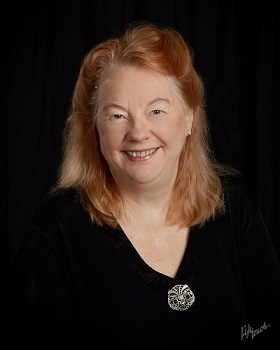
Mark your calendars to hear OWL President Margaret Huyck on "Women's Media Center Live with Robin Morgan." The interview will be broadcast Dec. 4
in national syndication (and on WBAI in New York). The program as a podcast posts this Past guests on the show have included Marlo Thomas, Billie Jean King, Gwen Ifill, and Amy Schumer.
Giving Tuesday -- a powerful reminder of the world of good we can do, and the world of wrong that needs righting. Please consider supporting OWL, and its vision of a society where women are financially secure and able to live long, healthy and independent lives.
New retirement planning tool from CFPB helps determine how your age when you claim benefits affects your Social Security.
Consumer Reports has tips on finding the best prescription drug prices, including a comparison chart of several generic drug costs at retail stores.
What award-winning millennials learned by designing for seniors: first-hand research is key, as is making products for how users see themselves.
Older women with stronger legs have better cognitive health, according to a new study in the journal Gerontology.
Just in time for cold and flu season, a new study finds the average human sneeze expels a high-velocity cloud that can contaminate a room in minutes.
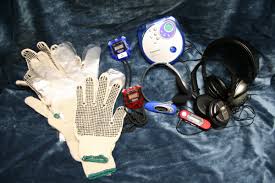
Virtual dementia tour helps caregivers, family feel more empathy toward sufferers; the program uses gloves and other materials to alter senses and perception, simulating the day-to-day experiences of people with dementia and Alzheimer's.
|
|
|
|
|
It's Our Time.
Latest Huffington Post Article from OWL Executive Director Bobbie Brinegar
There are plenty of predictions and theories about the 2016 presidential election that won't be answered until votes are cast -- but there's one thing we do know: Women will have a major impact on the outcome.
We are already making history. For the first time, two women are contenders for their party's nomination; one is a front-runner. No matter what your political persuasion, it's a milestone to be celebrated.
Knowing this, campaigns are targeting early ads toward women-- touting how well the candidates know us and how much they've supported or will support the issues we care about. It's a golden opportunity for us to engage with them and call for proposals that address the persistent challenges we face.
And there's reason to believe that in 2016, the candidate that succeeds in doing this will be our next president.
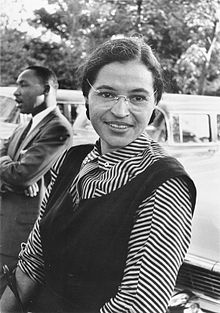
Remembering the Real Rosa Parks
Too many of us are taught a sanitized version of the Rosa Parks story, that she was an "accidental activist," who just happened to be too tired to give up her seat on the bus that day.
The real story is more complex, and more interesting.
"People always say that I didn't give up my seat because I was tired, but that isn't true," she wrote in her autobiography. "I was not tired physically, or no more tired than I usually was at the end of a working day. I was not old, although some people have an image of me as being old then. I was forty-two. No, the only tired I was, was tired of giving in."
The fact is that Rosa Parks was a longtime activist, fiercely committed to ending injustice. When she married Raymond Parks in 1932, she said he was the first man she considered radical enough to marry.
We also seldom remember the rest of her story - the move with her husband to Detroit to find work because they couldn't find employment in Montgomery, and the ensuing five decades she fought racism in the North.
When Parks died in 2005, she was the first woman and only the third non-U.S. government official to lie in honor at the Capitol Rotunda.
Great Recession Causes
Spike in Older Women's Unemployment
It's no surprise that the recession caused a surge in unemployment. But new research from the Federal Reserve Bank of St. Louis finds that there are significant differences in the incidence and duration of unemployment by age and gender.
One particularly disturbing finding: long-term unemployment increased disproportionately for older women. In fact, the long-term unemployment to unemployment ratio for women 65 and up moved from a low pre-recession rate of 14 percent to a post-recession rate of 50 percent, overtaking the numbers for men of the same age.
|
|
|
|
|
|
"If liberty means anything at all, it means the right to tell people what they do not want to hear."
|
What makes OWL unique is our sharp focus. We are the only national organization that works solely on the economic security and quality of life issues impacting women 40+, who account for almost one-quarter of the U.S. population. Our vision is of a society where women are financially secure and able to live long, healthy and independent lives. Nonpartisan, pragmatic and focused on solutions, OWL makes sure the challenges specific to this demographic are heard and understood when policy is being made.
|
|
|
|
|