|
|
|
Occupational Dog Bite Safety Newsletter | Bulli Ray
|
|
| Training Employees To Protect Themselves
From Dog Attacks!
|
December
2015
|
Fact: There currently are 83.3 million dogs in the USA, which are kept by 56.7 million households. |
|
|
HAPPY HOLIDAYS FROM BULLIRAY! 
Don't Miss Out!
|
|
Dangerous Dog Laws Blog
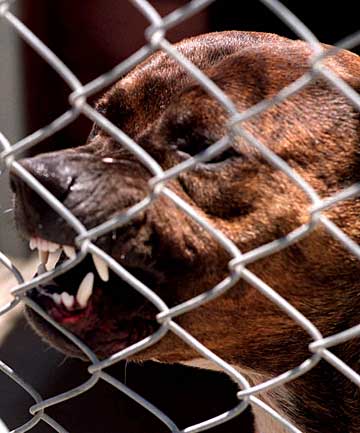
A dog may be classified as a dangerous dog if they have ever attacked or caused any harm or injury to another person or animal without warrant. In addition, a dog may even be labeled dangerous if there is behavior exhibited that suggests the risk or probability of a future attack is high. Each state in the U.S. utilizes different classifications to determine whether a dog is deemed to be dangerous, as well as having different sets of regulations in these cases that must be followed by dog owners. Once a dog has been deemed dangerous, owners are often required to meet certain criteria to include muzzling, spay or neutering, and may also require evaluation by a certified behavioral expert. Owners may also be required to maintain supervision of the dog by someone eighteen years of age or older when the dog is in public.
In some instances humane confinement may also be deemed necessary. Humane confinement requires providing shelter for a dog that consists of an incased concrete slab with a six-foot fence and roof that prevents the dog from ever having a chance to escape.
These regulations often make it very difficult for the owner, which may lead to the surrendering of the dog. It is incredibly important to note that each dog needs to be individually evaluated on a case-by-case basis. Each and every case is different, as well as the circumstances behind what may have caused the dogs aggressive behavior. It is not one particular type or breed of dog that should be viewed as dangerous. Ask any employee who works out in the field and they will testify they are attacked or experience aggressive behavior by a wide variety of dog breeds. Read more...
Written by: Ashley Klawitter & Mitzi Robinson
|
|
|
|
|
|
Contact us today to be included!
- December 10 WCCP Holiday Conference Tampa, FL
- January 6 Pinellas County Clearwater, FL
- February 23 to 25 Train the Trainer Course Tampa, FL
- February 26 ASSE Regional IV Tampa, FL
- March 14 to 18 Ameren Corp Illinois
- April 4 to 8 Ameren Corp Illinois
- May 17 to 19 UGI Safety Expo Reading ,PA
- June 1 PG&E Safety Day Santa Cruz, CA
- June 29 ASSE Conference in Atlanta, GA
|
Breed of the Month: Alaskan Malamute
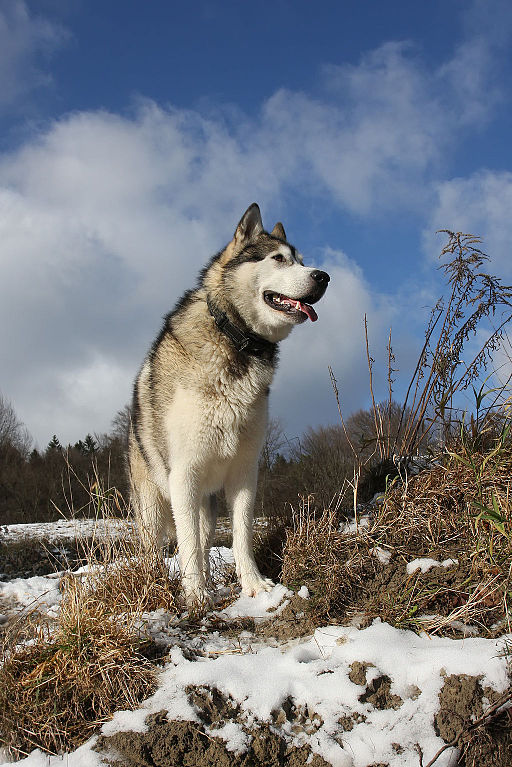 The Alaskan Malamute is a large breed of dog originally bred for hauling heavy freight because of their strength and endurance, and later an Alaskan sled dog. They are similar to other arctic breeds, like the Greenland dog, Canadian Eskimo Dog, the Siberian Husky and the Samoyed. The Alaskan Malamute is a large breed of dog originally bred for hauling heavy freight because of their strength and endurance, and later an Alaskan sled dog. They are similar to other arctic breeds, like the Greenland dog, Canadian Eskimo Dog, the Siberian Husky and the Samoyed.
History:
In some accounts, the Alaskan Malamute is described as a descendant of dogs of the Mahlemut group of Inupiat in upper western Alaska. These dogs had a prominent role with their human companions - as a utilitarian dog, working, hunting, and living alongside humans.
The dogs were renowned for their excellent hunting abilities and were used to hunt large predators such as bears. They also aided their owners in finding seals by alerting to seal blow holes. The interdependent relationship between the Mahlemut and their dogs fostered prosperity among both and enabled them to flourish in the in
hospitable land above the Arctic Circle.
For a brief period during the Klondike Gold Rush of 1896, the Malamute and other sled dogs became extremely valuable to recently landed prospectors and settlers, and were frequently crossbred with imported breeds. This was often an attempt to improve the type, or to make up for how few true Malamutes were available to purchase.
Colors and Coats:
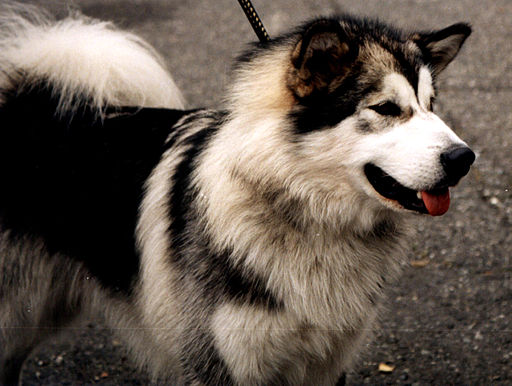
The coat of the Alaskan Malamute is a double coat. The undercoat has an oily and woolly texture . The outer guard coat is coarse and stands off the body.
The usual colors are various shades of gray and white, sable and white, black and white, seal and white, red and white, or solid white. There are a wide range of markings in the breed including face markings, blazes, a splash at the nape of the neck, and a collar or half collar.
Life span:
Up to 15 years
Weight:
75-100 pounds
|
 |
|
Have questions?
Contact Bulli Ray Dog Bite Prevention Company!
We can help you with your Dog Bite prevention program!
________________
Mitzi Robinson
President - Founder 
mrobinson@bulliray.com
________________
Cynthia Ballenger
Operations Manager
cballenger@bulliray.com
888-777-3647
www.bulliray.com
|
|
|
|
|
|
|
|