| Newsletter | December 5, 2013 |
|
|
|
|
|
|
Welcome to the Policetraining.net Newsletter
In this issue we continue to bring you important training topics of current interest.
Thanks for subscribing, and please forward this along to a law enforcement collegue you think may benefit.
|
|
- Sponsored By - |  |
|
|
|
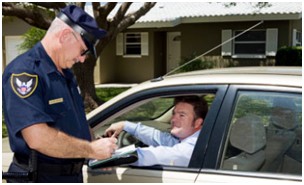
Five Steps to Safer Stops
By Richard Nance
Most patrol officers conduct traffic stops so frequently that it doesn't require much conscious thought. After recognizing a violation or suspicious circumstance to warrant an enforcement or investigative stop, the officer radios in the location and license plate number and activates the emergency lights. Once the violator vehicle has pulled over, the officer parks and exits the patrol vehicle to approach the driver. It is at this point, when it seems that the driver is compliant, that we tend to let our guard down-sometimes with tragic consequences.
Adherence to basic officer safety protocols is the key to maintaining the tactical advantage. Here are five of the most common tactical errors I see officers commit from the initial approach to the issuance of a citation.
|
~~~~~~~~~ A Message From Our Sponsor ~~~~~~~~~
Earn your Bachelor of Science (BS) in Criminal Justice or Master of Science (MS) in Criminal Justice from the online college that awards more credit for police, military, and other law enforcement training than other schools. These programs are 100% online, so you can earn a criminal justice degree while you earn a living. Choose from a variety of concentrations, such as: administration of criminal justice; homeland security; homeland security and emergency management; and law enforcement and public safety. Transfer up to 116 credits toward your Bachelor of Science in Criminal Justice, or up to 15 credits toward your Master of Science in Criminal Justice. Regionally accredited and nonprofit. Get your free program guide.
learn more >
~~~~~~~~~~~~~~~~~~~~~~~~~~~~~
|
|
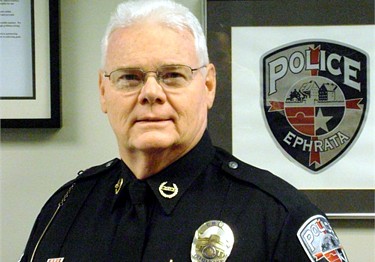
Learn Your Weak Skill, Then Fix It
Avoiding weak areas and enabling poor tactics will eventually show itself and imperil your mission
By William Harvey
Reprinted from Police Magazine
One of the best personality-based questions to ask an officer hoping to promote to the next rank is, "What is your greatest weakness as a law enforcement officer?" The follow-up question is, "What are you doing to address this?"
At promotional tests, this question is asked to see if you have the ability to know your weakness and the courage to admit to it. After this, what are you doing to prevent this from harming your performance? Some of the quick-witted ones will say that they are a bad speller but they bought a new dictionary. Very funny. What is your greatest weakness in evaluating your knowledge, skills, and abilities?
|
|
~~~~~~~~~~~~~ A Message From Our Sponsor ~~~~~~~~~~~~~

American Military University is a leading online education provider to the law enforcement community, offering more than 87 different undergraduate and graduate degree programs in areas beyond criminal justice, such as intelligence studies, homeland security, emergency and disaster management, public administration, and management. AMU maintains active education partnerships with the National Fraternal Order of Police, FBI National Academy, Los Angeles County Sheriff's Department, Los Angeles Police Department, and Southern Police Institute. If education is an incentive or requirement within your department, contact AMU today to find out if your academy or in-service training qualifies you for credits that may place you closer than you think toward earning your degree.
~~~~~~~~~~~~~~~~~~~~~~~~~~~~~~~~~~~~~~~~~~~~
|

Lessons Shared: Police Chiefs Who Have Made the Transition to Emergency Management
By Leischen Stelter
The roles and responsibilities of law enforcement are constantly shifting. During the last year, I heard from numerous police officials tasked with emergency management responsibilities, sometimes in addition to their normal duties. This happens because either there's no one else to do it (or rather no money to pay someone to do it), or they find it's a natural transition since their role as chief has already connected them with many city officials.
In this article, hear from a 27-year law enforcement veteran who is now the Director of Emergency Management for Salt Lake City, Utah who referred to his transition to emergency management as: "Baptism by fire." While he admits there was a steep learning curve, he also offers some great advice for those who may be considering (or being forced) to make the shift to emergency management responsibilities:
.
|

The Bait Question in the Age of Computer Technology
Know your target audience. Who are your most important customers, clients or prospects, and why? Know what is important to them and address their needs in your newsletter each month. Include a photo to make your newsletter even more appealing. Inserting a link in your article lets you track which topics attract the most interest. The bait question is one of the oldest behavior provoking questions. It is a specialized question designed to introduce the possibility of incriminating evidence during an interview in an effort to entice the suspect to change an earlier response. Consider that a young girl was abducted and forced into a vehicle. After several hours the abductor released her on a country road several miles from town. The investigation leads to a suspect who is presently on probation for a similar abduction. Furthermore, the suspect's vehicle fits the general description of the vehicle described by the victim. During the course of the suspect's interview the investigator may ask the following bait question:
I: "Joe, we are in the process of dusting the inside of your car for fingerprints. Certainly we will find your prints as well as fingerprints from friends or relatives who have been in your car recently. Is there any reason we will find that young girl's fingerprints in your car? (Pause) I'm not saying that you abducted her or forced her in any way. Perhaps she asked you for a ride and, being a nice guy, you gave her a ride somewhere. That would explain why we would find her fingerprints inside your car."
article continues >
|
View a list of law enforcement training offered throughout the country.
|
|
|
|
|