HALF PRICE FLACs
| 
| |
All FLACs of this release 50% off for one week only
WAGNER
Die Walküre, Act 1
Lotte Lehmann
Lauritz Melchior
Emanuel List
Vienna Philharmonic
Bruno Walter
CLASSIC REVIEW
There are a few recordings that almost all serious collectors, listeners, and critics would probably agree belong in a "classical hall of fame," and this is one of them. In Pristine Audio's restoration it sounds better than it ever has.
The performance needs little commentary; it has been written about since its initial release back in 1935. Each individual element-soprano, tenor, bass, conductor, orchestra-is sensational. Together, they make for a remarkable whole. Walter's impassioned, dramatic conducting and the orchestra's playing with total commitment are certainly central to the impact of the performance. But no less important are the individual performances of the three singers. Because Lauritz Melchior was able to soar over the Wagnerian orchestra, and because he occasionally had rhythmic problems, it is easy to mischaracterize him as a trumpet-like Heldentenor with resonance where others have brains. But that is emphatically not the case, as his many recorded performances prove. In this case, he sings with sensitivity, astonishing variety of color and dynamic shading, and utter conviction and passion. It is impossible for me to imagine a finer Siegmund. The same can be said of Lotte Lehmann's Sieglinde, as she digs into the part and creates a complete character while pouring out glorious tone. I had forgotten how solid and menacing Emanuel List's Hunding was, an extremely powerful performance. The sweep of the whole is something we rarely get on any recording, and how they managed it at a time when long works were recorded in four-minute segments is beyond belief.
I compared Pristine's new restoration to an old Angel "Great Recordings of the Century" LP, and to the best previous CD transfer I knew, Mark Obert-Thorn's on Naxos. Doing an A-B comparison of the opening, one hears the difference immediately-Naxos's orchestral sound is darker, warmer; Pristine's has a bit more bite and clarity. Which is preferable could be as much a matter of the taste of the listener as anything else. But once the voices come in, I find a more lifelike quality to Pristine's transfer-more presence, more face, to the singing. I compared both in small sections, and then listened from beginning to end to each one. As much as I admire Obert-Thorn's work, and I do very deeply, I found the new Pristine transfer to have much more impact and to engage me more fully throughout. Pristine makes it available as a CD or a download, and provides minimal notes.
Henry Fogel
FANFARE May/June 2010
ALL FLAC DOWNLOADS OF THIS RELEASE ARE HALF PRICE FOR ONE WEEK: PACO 024
NB. Offer does not apply to CDs or MP3 downloads
|
LATEST REVIEW
| Fanfare
May/June 2013
Beethoven Centennial Volume 1
by James Miller
"They are truly deserving of the designation "historic" and I look forward to the rest of the series."

| |
In 1927, the British Columbia recording company marked the Beethoven centennial by issuing the first electrical recordings of his nine symphonies. In another 14 years, these recordings will have been recorded as close to the year of Beethoven's death as they are to us. Pristine Audio will eventually reissue new transfers of all these historic recordings. These were not, however, the first recordings of Beethoven symphonies. Quite a few go back even further. According to Mark Obert-Thorn, who is responsible for these excellent transfers, "All of the Beethoven symphonies were recorded multiple times complete, acoustically. Claude G. Arnold's discography of acoustic orchestral recordings (The Orchestra on Record, 1896-1926) lists nine pages of them...Frieder Weissmann came closest to doing a complete cycle; his lacked only the Seventh and the final movement of the Ninth (which was recorded with Eduard Mörike conducting the Ode to Joy)." Appropriately enough, the first CD in Pristine's reissue contains Beethoven's first two symphonies, which still carry traces of the 18th century with them. Malcolm Sargent once suggested that, if Beethoven's symphonies had come down to us without numbers or dates, one could probably place the First, Second, and Ninth Symphonies in their proper places but putting the rest in sequence would be difficult. It seems to be generally assumed that musical performances were more "expressive" and "free-wheeling" or just plain eccentric a century ago. There is, to be sure, some recorded evidence of this, but my guess would be "it depends." Some conductors undoubtedly were more individualistic and self-indulgent than those we are accustomed to hearing but you may be sure that there were many virtuous straight-arrows who were less willing to inflict their personalities on the music. There were also, no doubt, a considerable number of hacks.
Georg (later "George") Henschel was born in Germany but lived most of his career in the English-speaking world and was eventually knighted. Oddly, for a conductor, his principal instrument was his baritone voice but he could play the piano well enough to accompany himself and did, on several recordings. He was a friend of Brahms and wrote a memoir of his friendship with the composer. When Henschel was born, in 1854, Brahms was 20 years old and Beethoven had been dead for only 27 years. Can you remember events that took place 27 years ago, in 1986? Chernobyl? Iran-Contra? The space-shuttle Challenger exploding? Bill Buckner's unfortunate misadventure? Is it really that long ago? It is possible that Henschel was the oldest conductor of any celebrity to make an electrical recording. His contemporaries, Robert Kajanus (1856-1933), Max Fiedler (1859-1939), and Karl Muck (1859-1940) also made some. Artur Nikisch (1855-1922) only lived long enough to make some acousticals. Interestingly, three of them, Nikisch, Fiedler, and Muck, eventually followed Henschel as music directors of the Boston Symphony Orchestra, of which he was the very first one. A photograph of Henschel and the orchestra reveals a peculiarity of the seating arrangement: the basses and cellos are divided, with half on the orchestra's extreme left, behind the violins, and half on the extreme right. Brahms reputedly approved of this setup.
Henschel's performance of the First Symphony is a fairly leisurely one; he doesn't feel a need for urgency in the Allegro con brio first movement but the tempo is a comfortable one and what I assume to be a smaller-than-usual orchestra mitigates any feeling of heaviness. Likewise, he observes the Andante cantabile of the second movement but minimizes the con moto. The effect is quite pleasant; in fact, the whole performance has a relaxed lightness that I found quite enjoyable. The Minuet is more-or-less conventional, and perhaps his Allegro molto e vivace is fast enough but not particularly urgent and the orchestra certainly plays well enough. Can we infer anything about 19th-century performance practices from this recording? I doubt it. Incidentally, he observes all the repeats, which did not always happen on 78s, whether for musical or practical reasons. Unhappily, this is his only recording as a conductor though he lived until 1934. I wonder how he would have done a Brahms symphony.
On the other hand, Thomas Beecham, while he adheres to convention in the Second Symphony's Scherzo, ignores the first movement's exposition repeat. Beecham's moderately paced introduction leaves one unprepared for the way he takes off at the outset of the Allegro con brio. I think I can say with the utmost sobriety that this is the fastest performance of the movement you are likely to hear. As Obert-Thorn writes, the performance "threatens to go off the rails." The playing of the strings is astonishingly accurate and nearly unanimous though, inevitably, some of the fast passagework is a bit blurred. He dispatches the movement in 7:28! The rest of the performance, at least, resembles his two very good subsequent ones from 1936 and 1957. Was he trying to squeeze the first movement onto two sides? Given that the original "78" rpm recording (it was actually recorded at a speed of 84.4 rpm!) uses four discs, I don't see the necessity. Perhaps it was merely a momentary eccentricity, like the pauses he makes before and after the Trio in the Scherzo. Henry Wood's supple and intense Leonore Overture No. 3 serves as a nice bonus. Given the age of these pioneering recordings, I was pleasantly surprised at how good they sounded.
I once lived next to a switching yard with the occasional rumble and squeal of train wheels going on all day; the only time I would notice it was when I had a visitor who would ask something to the effect of "How can you stand all that noise?" The rest of the time I was oblivious to it. Although the producer issues a warning that these early electricals were inherently noisy, it's no big deal. I had no problem with it at all and found myself quite absorbed in the performances. Obviously, they do not compete with the best modern ones (though I really enjoyed Henschel's First Symphony), but they are truly deserving of the designation "historic" and I look forward to the rest of the series, which will line up as follows: No. 3 (Henry Wood), No. 4 (Hamilton Harty), and the rest (Felix Weingartner).
|

|
|
CONTENTS
| |
This Week Happy 200th birthday, Richard Wagner!
Help! Jascha Spivakovsky: recordings wanted
Furtwängler The Ring Complete: Götterdämmerung
PADA Pablo Casals plays Bach, Prades 1950, Part 2
|
Furtwängler's finest Ring Cycle: La Scala, 1950
Happy 200th birthday, Wagner!
This Week's Release
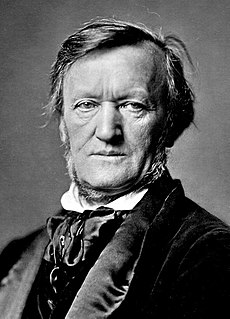 | | Wagner |
Well, we made it! Just in time for Richard Wagner's 200th birthday, which is next Wednesday, 22th May 2013, we've completed our remastering of one of the greatest recordings of Wagner's magnum opus, the Ring Cycle, with this week's release of the final opera, Götterdämmerung. It's a monumental work on its own, even at Furtwängler's swift pace here, nearly 20 minutes shorter than his 1953 RAI Radio version, and it certainly takes some preparation where remastering is concerned. Just opening the master file in my main restoration suite takes a full minute. A minor tweak to the equalisation takes a little longer. But start doing something major, like a pass of noise reduction, and we're looking at a wait of nearly five hours for the processing to finish! It's something you want to get right first time around - and make sure there's a back-up, just in case you change your mind... Actually I did run a process like this to try and reduce the hiss - overnight I'm happy to say - which I abandoned once I'd checked through the results. Of the four operas this one had perhaps slightly higher tape hiss levels, but I was keen to retain as much fine treble details as possible, and found that even a minor tweak too far was detrimental to the sound. Getting the balance right wasn't easy, but I think I've found it. Unlike the previous three recordings, there are few other problems here. I've pulled out or reduced a lot of coughs, though it's never usually possible to remove them all. Overall, then, I think anyone who likes this kind of thing will love this recording. Wagner may not be everyone's cup of tea, but many would argue that he doesn't get much better than this. The unbeatable combination of Furtwängler and Flagstad alone have prompted huge praise over the years - but take a read of this, from the late Alan Blyth's 1976 Gramophone review of the original Murray Hill LP release of this Ring, a set of discs described to me as being like listening to recording made from putting a microphone up to a telephone in the lobby of the concert hall: "Legends when closely investigated do not always live up to their reputations; not so with this Furtwängler-Scala Ring. Snippets heard on 'pirated' records in wretched sound had not prepared me for the glory of the whole. Indeed I will go as far as to say that this is simply the greatest performance of the whole cycle I have ever heard. It is emphatically not for those who require perfect sound, even less for those who object to audience coughs (the Italians sometimes seem unforgivably inattentive to the aural feast they are receiving), abrupt tape joins, changes of sound level, insensitive side-changes, audible prompts, even the occasional missed entry. It is for anyone who can overcome and forget these fallibilities and hear a conductor at the peak of his powers delivering interpretations of a lifetime... Flagstad's complete Brünnhilde is at last preserved for posterity. Modi and Varnay in the immediately succeeding generation may have extracted more intense responses from the text and so conveyed more of Brünnhilde's anguish, as in the passage just before Wotan's, Narration and in much of Götterdämmerung, but neither they nor anyone since, even Nilsson, could match the sheer vocal ease and lyrical beauty of Flagstad's singing as exemplified in the passage "Der diese Liebe" in the final scene of Walküre. Furtwängler, on this and other evidence, seemed to draw from her a more ready response to words, a more eloquent manner of phrasing, and that is apparent throughout..." One can only wonder how Mr. Blyth would have responded to the present release - of course he was reviewing the performances, and not the sound quality, but surely in this music as much as any, and perhaps more than most, the fullest and clearest sound quality possible is essential in order to experience the full impact of the Ring. Certainly word seems to be spreading with respect to the instalments released thus far. I received an e-mail from BBC Radio 3's senior producer at CD Review a few days before my Spanish break which read: "I gather from Rob Cowan that you have done an amazing sound restitution job on the famous Furtwangler La Scala Ring. I would love to include that in a big Wagner review I am fixing for June 8th. Is there any chance you could put a set of CDs + info in the post to me. It seems from the website that the Gotterdammerung isn't out yet - when is that due - do you have an advance copy?"
I had to reply that I was still working on finalising Götterdämmerung - but this did spur me on to getting the remastering finished in time to get copies off last Tuesday, albeit with only draft artwork for the final opera. Earlier this week I was sent this follow-up message: "They finally arrived. Blast you, I'm not getting any work done - I can't stop listening. You've done a great job. The brass is especially exciting..."
Funnily enough I sometimes have the same problem - I'm trying to type this whilst listening to the second act, which keeps on distracting me! Anyway, if you're in the vicinity of a British radio receiver - or an Internet connection - on Saturday 8th June, do take a listen to CD Review's Wagner special. There's bound to be plenty more of interest - but I'll be fascinated to hear what they say about this Ring! Virtual Box Sets - Save 10% on the full Ring
As before we're offering "virtual" box sets of the Ring Cycle at a discount of 10% over the individual opera prices. I say virtual as we don't actually have a box to put them in, and the majority we expect to sell will be downloads rather than CDs! You can find full details of these and order them from any of the four pages dedicated to the Ring operas on our website - and I suggest you start here, on the new Götterdämmerung page. Note that at the time of writing we're still in the process of transferring the mammoth 24-bit set to our servers, a transfer hindered by the decision earlier this morning of our router to update its firmware, thus resetting all our ongoing uploads. Barring line drops we expect the 24-bit box-set to be online at some point over the weekend. Next Week
Next week we celebrate another major musical centenary - that of the first performance of Stravinsky's revolutionary, riot-inducing The Rite of Spring, which took place on 29 May, 1913. Unheard on CD since Pearl's 1988 release, and ignored by EMI and others in major retrospective releases, we're restoring Stravinsky's own 1929 Paris recording to the catalogue thanks to some wonderful new transfers of this, and his 1928 recording of his Firebird Suite, by Mark Obert-Thorn. Perhaps one reason why these two major historical recordings have been regularly passed over by EMI, both of which came out on Columbia 78s, was the major pitch instability issues which ran through both, with enough wow to make you feel somewhat seasick. When even a Mark Obert-Thorn finds it impossible to fix this at source you know it's bad. Happily between us we do now have a cure, and right now I'm carefully running Mark's completed masters through Capstan software to almost literally iron out the continual ups and downs than run through both the Rite and the Firebird. Bizarre to think that nobody's heard these vital recordings with any kind of pitch stability since Stravinsky laid down his baton some 84 years ago and more... Mark's written a guest editorial on the subject, which you'll find here next week. We'll also have more from Bruno Walter - his 1961 Bruckner 7 with the Columbia Symphony Orchestra, which sounds particularly fine, and is unlikely to induce any feeling of sea-sickness!
Jascha Spivakovsky (1896 - 1970) - call-out for recordings Russian-born pianist Jascha Spivakovsky was the older brother of renowned violinist Tossy Spivakovsky. Hailed as a child prodigy at the age of four, he began giving concerts at seven and rapidly rose to world fame for his golden tone, crystal technique and interpretive mastery over a massive repertoire.
 |
[L-R] Tossy Spivakovsky, Jascha Spivakovsky, Edmund Kurtz
|
Unlike Tossy, Jascha's brilliance at the keyboard wasn't captured in studio recordings; what survives are private recordings held by the family and recordings of the many broadcasts he made around the world. Jascha's son and grandson are busy trying to locate as many recordings as possible that have survived, be they tapes, acetate discs, or other formats, with the intention of making the best of them available to the public. Of particular interest is a wartime broadcast of Beethoven's Emperor Concerto with the BBC Scottish Orchestra which exists in a poor-quality short-wave radio recording, but may well be preserved in better quality in someone's attic. But there may be much more than this - they simply don't know. If you know of any recordings (or other interesting material), either in your own collection or which may be available to you of Jascha Spivakovsky, please get in touch and I'll pass the details on to his family so they can compare notes, or you can contact Mark Spivakovsky directly (Jascha's grandson) at this e-mail address: edenspivak@hotmail.comYou can read more about Jascha here. I hope in due course we'll be able to offer examples of his fabulous playing at the Pristine Classical website, and there's a book about him due to be published soon. I've heard a small amount of his playing, and it's very special indeed. Who knows, perhaps he might become a household name once again? Andrew Rose
17 May 2013
|

|
Furtwängler's 1950 Ring Cycle Part 4: Götterdämmerung
"This is simply the greatest performance of the whole cycle I have ever heard" - Gramophone

WAGNER
Götterdämmerung
Brünnhilde Kirsten Flagstad
Siegfried Max Lorenz
Hagen Ludwig Weber
Alberich Alois Pernerstorfer
Gunther Josef Herrmann
Gutrune Hilde Konetzni
Waltraute Elisabeth Höngen
Woglinde Magda Gabory
Wellgunde Margherita Kenney
Floßhilde Sieglinde Wagner
1st Norne Margret Weth-Falke
2nd Norne Margherita Kenney
3rd Norne Hilde Konetzni
Orchestra e Coro del Teatro alla Scala di Milano
Wilhelm Furtwängler
Recorded 1950
Producer and Audio Restoration Engineer:
Andrew Rose
Web page: PACO 093 Short Notes "Legends when closely investigated do not always live up to their reputations; not so with this Furtwängler-Scala Ring. Snippets heard on 'pirated' records in wretched sound had not prepared me for the glory of the whole. Indeed I will go as far as to say that this is simply the greatest performance of the whole cycle I have ever heard."
- Alan Blyth, Gramophone, 1976
Wednesday, 22nd May is Richard Wagner's 200th birthday, and Pristine Classical has marked it in style with the completion of one of our finest remasterings yet, and one of the greatest operatic recordings of all time: Furtwängler's incredible 1950 Ring, recorded live at La Scala, Milan, some 63 years ago.
When the review above was written, the operas heard by Alan Blyth were later described "as if they were coming from a phone left off the hook in La Scala's lobby". No so today - full, vivid, and with astonishing clarity, they are truly magnificent. If you've missed this series you can now buy the complete Ring with a 10% discount. Notes On this recording
As with the previous three operas in this Ring Cycle, Götterdämmerung has responded remarkably to the Pristine XR remastering treatment, with a sound that's full, rich, clear and bright. In this instance tape hiss is very slightly higher than in the other operas, though at a level the listener will soon cease to notice. I felt that any further noise reduction would prove too distructive to the wonderfully clear delivery of the soloists heard throughout the opera. Unlike the others in this Ring there are no technical lapses, and sound quality is thus even throughout. Those listening to a FLAC download will appreciate no mid-scene gap in the first act - continuity can be reconstructed with the CDs, which do not fade out or in at this crucial join point. This recording has been pitched using residual mains electrical hum indicators, which indicate a performance pitch of A4=447Hz.
Andrew Rose
Review: First LP release, 1976
Legends when closely investigated do not always live up to their reputations; not so with this Furtwängler-Scala Ring. Snippets heard on 'pirated' records in wretched sound had not prepared me for the glory of the whole. Indeed I will go as far as to say that this is simply the greatest performance of the whole cycle I have ever heard. It is emphatically not for those who require perfect sound, even less for those who object to audience coughs (the Italians sometimes seem unforgivably inattentive to the aural feast they are receiving), abrupt tape joins, changes of sound level, insensitive side-changes, audible prompts, even the occasional missed entry. It is for anyone who can overcome and forget these fallibilities and hear a conductor at the peak of his powers delivering interpretations of a lifetime.
Ah, I can hear someone asking, but haven't we already a perfectly adequate Furtwängler Ring (HMV mono RLS702, 9/72) in better sound from Rome three years later? Indeed we do have that radio performance which is already an improvement over what Furtwängler achieved in the studio (where, as many eyewitnesses will tell you, he was never entirely himself), but he was at his most inspired only in the theatre. The incandescence of his conducting right from the announcement of the gold motif in the opening scene of Rheingold through to the nobility of the Immolation is unforgettable. That, and his command of Wagner's unendliche melodie, heard at its most potent throughout the first act and final scene of Die Walküre, are the crux of Furtwängler's art. They are enhanced by the wonderfully refulgent sound he seemed able to draw from any orchestra. The Scala players, much more accomplished than their colleagues of Rome Radio, enable him to knit together scenes with unerring breadth at fundamentally fast speeds, here quicker than those in either the Rome performance or in his Bayreuth Ring in 1936.
His approach was at once romantic and tragic, elemental and profound. As DC said in reviewing the previous set: there is "his ability to make the music surge, or seethe, or melt, so that one had left the world of semiquavers altogether"- although nobody is in fact more apt at making Wagner's semiquavers tell than Furtwängler-"and is swept up in a great spiritual experience". What was true on that occasion is even more so in this theatre reading. You can hear it in the glowing outburst after Freia is saved, in the "sehr ausdrucksvoll" passage just before the Walsüngs arrive in Act 2, in the whole of the Waltraute scene in Götterdämmerung, and, of course, in the Funeral March and Immolation, where he is joined by Flagstad in an inspired account of the familiar music, both artists in the words of the old Record Guide in discussing their 1952 HMV version "magnificently at one in realizing the spaciousness and melodic richness of Wagner's immense peroration". Incidentally, I wish someone would make available again the 1948 78 rpm version (HMV DBG792-4, 12/48), in some ways the most magnificent immolation of all.
Flagstad's complete Brünnhilde is at last preserved for posterity. Modi and Varnay in the immediately succeeding generation may have extracted more intense responses from the text and so conveyed more of Brünnhilde's anguish, as in the passage just before Wotan's Narration and in much of Götterdämmerung, but neither they nor anyone since, even Nilsson, could match the sheer vocal ease and lyrical beauty of Flagstad's singing as exemplified in the passage "Der diese Liebe" in the final scene of Walküre. Furtwängler, on this and other evidence, seemed to draw from her a more ready response to words, a more eloquent manner of phrasing, and that is apparent throughout, nowhere more so than at "Oh, Siegfried! Dein war ich von je!" in Siegfried.
Most of the other major roles are taken here by Germans, and that leads to the inestimable advantage of clear, idiomatic enunciation of the text. There is more to it than that. Most of the artists concerned were admired by Furtwängler, who obviously favoured singers who relished their words and especially their consonants. Take Rheingold. The veteran Joachim Saltier, who is the Loge, had not the most ingratiating voice but his intelligent, unusually accurate account of the role precisely fits the description of the character as the Ring's sole intellectual. Those used to Neidlinger's powerful Alberich may at first be disconcerted by Pernerstorfer's less dominating portrayal, but again he sings the notes as written rather than hamming them, and does much by clever understatement. Hongen, not the steadiest of Frickas, again wins me over by her touching utterance, so moving at "Wotan, gemahl". Ludwig Weber brings a Lieder singer's colouring of tone to Fasolt's music, and is a formidable antagonist for Frantz's precise Wotan, another interpretation enlivened by being heard as it were in the theatre. All these support, in a sense, what is happening in the orchestra : the piercing semiquavers as the gold is stolen, the solemnity of horns, English and French, as love is abjured, the bleak thundering of the Giants' motif, the string expansiveness in Loge's Narration, the sheer evil energy of Alberich's exultation in the third scene.
In Walküre, Gunther Treptow sings simply the Siegmund of one's dreams, a real Heldentenor in the possession of an intelligent mind and an obviously inspired soul who is forgiven one or two vocal fluffs no doubt caused by being carried away in the inspiration of the moment. Konetzni is in much surer form than in the Rome performance, an eager partner for this Siegmund. The heightened responses in the whole of the last scene of Act I could not possibly be kindled in the studio. Act 2 is perhaps a little less remarkable, a moving Todesverkündigung apart, but in Act 3 a whizzing "Ride of the Valkyries" leads into a splendid final scene, furious Wotan being turned to sympathy by Flagstad's eloquence.
Siegfried was not supposed to be Furtwängler's opera, but he docs marvels with all voices of nature music that pervade this score, and the elemental, driving energy of the forging music. The musical signs at the recollection of the Walsüngs woe in Act I, could hardly be more moving, the closing duet more ecstatic. His Siegfried is the youthful-sounding, heroic Svanholm, so poetic in the Forest Murmurs. He inevitably tires towards the end of the work. Markwort is not such an accurate or precise a Mime as Patzak, but in his deft characterization avoids Stolze's exaggerations. Josef Herrmann, the Wanderer, has the timbre of a true Heldenbariton. His performance is impressive for its line, unforced, absolutely steady tone and superb diction. Hongen's Erda is admirable for the same qualities as her Fricka, but her greatest performance comes as Waltraute in Götterdämmerung, remarkable for its urgency and gravity of utterance.
This final opera is distinguished by Max Lorenz's eager, young-sounding (remarkable when you consider he was nearly fifty at the time) Siegfried, and a kind of ecstatic wonder in his third-act Narrative. Weber's plausible, but rather roughly sung Hagen, Herrmann's virile Gunther, Konetzni's comely Gutrune, and good Norns all positively second Flagstad's glorious Brünnhilde. The Scala chorus suggest raw energy without resorting to coarseness.
In summing up, I must again emphasize the technical faults of the recording. Against that can be set a very natural balance between voice and orchestra, and the absence of any distortion, even though, to get the cycle on eleven discs, some sides are more than 40 minutes long. Those who already have a studio-produced set, or who are collecting the Goodall English Ring, may like to invest in this Scala performance as being complementary to the other. In some shops it is available at a good deal less than the recommended price. As such it is an unrepeatable bargain that for the perceptive listener will be a source of constant enlightenment and inspiration, even if it at the same time belittles some of its more pretentious rivals.
A.B., Gramophone, October1976
MP3 Sample Act 2: Long excerpt
Listen
Download purchase links:
Ambient Stereo MP3
Mono 16-bit FLAC
Ambient Stereo 16-bit FLAC
Ambient Stereo 24-bit FLAC
CD purchase links and all other information:
PACO 093 - webpage at Pristine Classical
|
Pablo Casals plays Bach
 | | Pablo Casals |
PADA Exclusives
Streamed MP3s you can also download
J.S. BACH
Gamba Sonata No. 2 in D, BWV1028
Pablo Casals cello
Paul Baumgartner piano
Recorded 6 June 1950
l'église St. Pierre, Prades, France
Prades Festival, 1950
Issued as Columbia ML-4349
This transfer by Dr. John Duffy
Over 500 PADA Exclusives recordings are available for high-quality streamed listening and free 224kbps MP3 download to all subscribers. PADA Exclusives are not available on CD and are additional to our main catalogue.  Subscriptions start from €1 per week for PADA Exclusives only listening and download access. A full subscription to PADA Premium gets you all this plus unlimited streamed listening access to all Pristine Classical recordings for just €10 per month, with a free 1 week introductory trial. Subscriptions start from €1 per week for PADA Exclusives only listening and download access. A full subscription to PADA Premium gets you all this plus unlimited streamed listening access to all Pristine Classical recordings for just €10 per month, with a free 1 week introductory trial.
|
|


