HALF PRICE FLACs
| 
| |
All FLACs of this release 50% off for one week only
MENGELBERG
Beethoven
Brahms
First Symphonies
Concertgebouw Orchestra
1940
CLASSIC REVIEW
These performances have been previously available on other labels, often with confusingly different dates attributed: e.g., the Beethoven on Music & Arts, dated 4/14/1940; the Brahms on Lys, dated 12/13/1940. But they're certainly the same performances, easily verifiable by a quick spot-check of details. The AVRO radio recordings were very good for their time, and the question is how these new Pristine transfers measure up to previous releases. The appetite is whetted by Andrew Rose's high claims for his XR remastering's yielding "extended sections ... where we've been able to present a true full-frequency, 20-20,000 Hz frequency response, coupled with a dynamic range more befitting of a 1960s or 1970s analog recording-sound quality which is quite astonishing for its age. ... One will rarely get closer to hearing a 1940 concert than this." By and large, Rose's claims are justified: The sound does indeed leap from the speakers with a visceral, colorful tangibility far surpassing any previous remasterings I've heard. So if you have these performances in previous incarnations and are wondering if the new purchase is warranted, the answer is an emphatic yes.
The performances are vintage Mengelberg: a fiery, Classical approach that was decades ahead of its time in its radically light, pungent textures, hand-in-hand with a penchant for extremes of tempo modification that have earned him (wrongly, I think) his reputation for ultra-romantic subjectivity. The Beethoven is one of the most characterful performances of this symphony I've ever heard, dispatched with rare brio and often a Rossini-like bubble, a miracle of rhythmic pointing and nuanced subtlety; dynamics are differentiated with fine-tuned precision (e.g., the light, airy single forte at bars 69 ff. in the first movement-compare Toscanini's brutal assault here). Contrary to received wisdom, Mengelberg's tempo flexibility was often at the service of articulating formal structure rather than subjective expression. Consider, for example, the purely musical rationale for his various tempo modifications in the first-movement exposition: to accentuate the chromatic drama at bars 17-19, heighten the form-defining rhetorical gestures at bars 69 ff., and dramatize the modal contrast at bars 77 ff. (Interestingly, his 1930 studio recording with the NYPO [Biddulph] is much smoother, with less pronounced tempo manipulation.) There is an almost incredible level of attention to detail (in the closing-section material of the Andante, hear how persuasively he shapes the delicate violin triplets [bars 54 ff.] through subtly differentiated accents and note-lengths); yet always with the larger purpose in mind (e.g., in the Menuetto, the immensely powerful effect of long, supple phrasing in a single breath). Unusually for its time, the outer-movement repeats are both observed (though not in the Andante).
Comparison with two live NBC versions from the previous year is instructive: Toscanini (Music & Arts or Naxos) is brightly lit and hard-driven, with little of Mengelberg's subtlety; Walter, on the other hand (Arbiter), intriguingly comes across as a "missing link" between the Italian and the Dutchman, marrying the bright, highly charged NBC sound to a surprising degree of tempo flexibility.
In the Brahms, the first-movement introduction has enormous plasticity of ebb and flow at an uncommonly brisk tempo for its time (like Stokowski and Weingartner, he didn't take un poco sostenuto to mean slow). The Allegro is characterized by a fanatical precision and rigor: Mengelberg invests the scherzando main theme with a "swung" rhythmic lift in common with other conductors-Walter (VPO, 1937/Opus Kura), Weingartner (LSO, 1939/EMI or Centaur), and Abendroth (BPO, 1941/Tahra); but none of these approach Mengelberg's ferocious bite. Projection of phrase structure is set in high relief by an "organ stop" edge to the wind choirs (Stokowski achieves a similar sculpted clarity in his Philadelphia version of 1936, available on Andante). In the exposition, the variation in tempo between primary and secondary material is extreme, the latter slowing down to near-immobility in the horn/clarinet dialogue, bars 149 ff. (interesting to hear the young Karajan emulating the Concertgebouw/Mengelberg tradition of tempo modification in his 1943 version with the orchestra [DG Collector's Edition]-but not very successfully, with surprisingly flaccid orchestral response).
The Andante is taken very moderately (at 10: 15, a halfway house between the speedy Toscanini at 8:39 [NBC, 1940/Music & Arts] and the very slow Walter at 12:57), and with an unusually solemn, sacramental quality. The autumnal third movement has more tension and point than usual, the B-Major Trio taken with a dashing, clipped precision that is quite unlike any other conductor. The finale is notable for its obsessive clarity-hear the extraordinarily sharp focus of the hocket-like passage for divided violins in the introduction (bars 24 ff.); the punctilious, indeed rather didactic, phrase articulation in the main theme; or the climax at bars 279 ff., delivered with an overwhelming ferocity and whiplash precision. But equally remarkable is its expressive spontaneity, from the amazingly vocal horn solo in the introduction to the soloistically singing massed strings in the second group. Compared to the first movement, the tempo range is surprisingly narrow.
Altogether exceptional, and I eagerly anticipate further Pristine releases of Mengelberg's radio recordings.
BOYD POMEROY
FANFARE MAGAZINE
NOV/DEC 2010
ALL FLAC DOWNLOADS OF THIS RELEASE ARE HALF PRICE FOR ONE WEEK: PASC 221
NB. Offer does not apply to CDs or MP3 downloads
|
NEW REVIEW
|
MusicWeb International
29 January 2013
Callas sings Lucia
by John Sheppard
"For admirers of Callas or Donizetti this newly minted set is more than ever an essential part of their collections."
 It would be all too easy, especially at a time when recordings of Donizetti operas seem to be issued at an ever-increasing rate, often performed in editions much closer to the composer's text than we have on these discs, to regard Callas's first studio recording of Lucia di Lammermoor as essentially more of historical than musical interest. After all, she made a later studio recording (1959) and there are many live recordings of her in the role, including a much-praised version under Karajan in Berlin from 1955. Despite all of this to me this is the performance that shows that Donizetti was a great dramatic composer but whose music requires a particularly imaginative and sympathetic approach from the performers for this to be apparent.
I have known this recording for many years but have not listened to it for some time. Largely that was because of my memory of a particularly unatmospheric recording quality which reduced the impact of what was obviously an immensely exciting performance. Pristine have once again performed technical wonders which I do not begin to understand but which have turned this ugly duckling into the most radiant of swans. What was always worth hearing despite some discomfort is now simply a joy to hear from beginning to end, encouraging the listener to forget any concerns over recording balance or the brutal and wholly unnecessary cuts and simply to enjoy what still seems an almost perfect cast. The three main characters all sing with total dramatic and musical conviction. Understandably the packaging is dominated by the name of Callas but in reality the contributions of Gobbi and Di Stefano are of equal importance, all singing with real urgency and imagination. The other roles are perhaps more routine, even Raffaele Arié as Raimondo but Serafin's wonderfully flexible and understanding conducting disguises any small weaknesses in the cast. Although Karajan's Berlin performance is often praised I find it at times exaggerated in comparison with Serafin's equally positive but more idiomatic and less self-conscious approach.
One result of the disgraceful cuts in Lucia is that the set is able also to include Callas's first commercial recordings. Here too Pristine manage to make them much less uncomfortable for the listener although I have not changed my view that these are essentially of interest in showing how far Callas managed to travel later as an artist than for their own intrinsic merits.
As usual with Pristine Audio there are no texts or translations, but these are easily obtainable elsewhere and it would be a pity if this put anyone off buying it. For admirers of Callas or Donizetti this set has always been an essential part of their collections, and in this newly minted form that is more than ever the case.
|
NEW REVIEW
|
MusicWeb International
12 February 2013
Furtwängler's Beethoven Symphonies
by Michael Cookson
"Pristine Audio has done a marvellous job with these Beethoven transfers which should prove indispensable for Furtwängler admirers."
 This pair of Beethoven releases conducted by Wilhelm Furtwängler is from the Pristine Audio label who specialise in the restoration and re-mastering of historic recordings. Restoration engineer Andrew Rose has carried out the XR re-mastering. In the booklet notes Rose explains in some detail the variable quality of the material he had to work with. As far as I know these performances have been all released previously on other labels and I know three of the five performances. Bearing in mind the real historic significance of the Furtwängler performances my criterion for judging success is being able to enjoy them without the sound quality intruding too much.
Furtwängler is widely accepted as being one of the greatest conductors of the twentieth-century. He left a fascinating and substantial audio legacy including a substantial number of live events that are cherished by a large and enthusiastic group of devotees. Much has been written about the sheer individuality of Furtwängler's interpretations. There is the sheer beauty of the sound that he demands, his innate sense of the music's structure, the incredible energy produced and the remarkable emotional intensity generated. Furtwängler's conducting has a sense of spontaneity and I am often surprised at his fluctuating tempi and bold dynamics. Whether or not his idiosyncrasies are invasive will be very much down to personal choice.
It might prove useful to have some context for these recordings. Furtwängler is best known for his association with the BPO whom he first conducted in December 1917; however he had long associations with several other orchestras that are often forgotten. In 1922 he succeeded Artur Nikisch as principal conductor of the BPO serving in Berlin until his death in 1954, a tenure that was interrupted between the years 1945-47. The BPO was almost certainly the world's most famous orchestra, and probably still is and right through the Second World War they served as the cultural flagship of Hitler's Third Reich. Blacklisted by the Nazis and fearing arrest Furtwängler fled to Switzerland in February 1945 a few months before the end of the war. During his absence Leo Borchard who was Moscow born of German parents, an obvious favourite of the occupying Russian forces, was appointed to the post. After only a few months Borchard with the orchestra was fatally shot by an American sentry after a misunderstanding at a Berlin check-point. Romania Sergiu Celibidache became an intermediate appointment as principal conductor and was in effect keeping the seat warm until Furtwängler was allowed to return to the BPO. After his successful de-Nazification process in December 1946 Furtwängler, who was extremely popular with the majority of the players, was cleared to return. He began conducting his first concerts in May 1947 returning officially as the orchestra's principal conductor in 1950 and remaining until his death in 1954.
Furtwängler was active too as a conductor in Vienna conducting there as early as 1918 with the Wiener Symphoniker and then in 1919 with the Tonkünstler-Orchester. Furtwängler's close association with the VPO began in 1922 when he conducted the orchestra for the first time. He succeeded Felix Weingartner as the regular conductor of the subscription concerts from 1927/30. When the VPO ceased their single subscription concert conductor system Furtwängler in effect became the main conductor serving from 1933 to 1945, and again from 1947 to 1954. Furtwängler had fixtures with the VPO on more than 500 occasions until August 1954; shortly before he died in November that year.
The first disc Pristine Audio PACD 355 has him conducting the BPO in Beethoven's Symphony No. 1, Op. 2, and the VPO in the Symphony No.2, Op. 36 and Leonora Overture No.3, Op.72b.
The Symphony No. 1 was recorded live at the Titania Palast cinema, Berlin. The reason for the choice of a cinema in which to hold their concerts is an interesting one. On the night of the 29-30 January 1944 the home of the BPO the (alte) Philharmonie onBernburger Straße, Berlin was destroyed in a six hour Allied bombing raid. After this the BPO was forced to use a variety of temporary venues. Miraculously the Titania Palast cinema in Berlin remained unscathed throughout the bombing, and became their principal concert hall for number of years. On a visit to Berlin back in September I noticed that the Titania Palast still exists today as multiplex cinema.
Furtwängler played the same programme at the Titania Palast on 19-20 September 1954. This live recording of the Symphony No. 1 is from the first of those two concerts. The concert on 20 September turned out to be Furtwängler's last ever appearance on the concert stage. This was 'big band' Beethoven with Furtwängler presiding over a weighty and commanding performance. The deep resonance of the low strings typically underpins the playing with a rich tonal power. Furtwängler's forceful reading of the restless Menuetto was strikingly direct. Forthright and jubilant the assured drama of the Finale left an intensely satisfying impression. After becoming accustomed to the bright sound quality I hardly felt distracted from the performance. I noted that no applause was left in at the end of any of the five works featured on these two discs.
The Symphony No.2 with the touring VPO was recorded live on the 3 October 1948 at the Royal Albert Hall, London. This was Furtwängler's only known recording of the Symphony No.2 and was discovered as late as 1979. Using often furious speeds in the opening movement Furtwängler mixes a rich palette that splendidly displays the glories of the Vienna orchestra. An uplifting picture of Alpine vistas is revealed in the Larghetto and there's a frequently mischievous Scherzo. There's a fresh and squally quality to the joyous yet frequently tempestuous Finale. From 1948 this is the oldest recording on the two releases and presents the most challenging sonics. My ears soon became attuned to the sound quality.
The Leonora Overture No.3 was recorded by Furtwängler and the VPO under studio conditions on 18 October 1953 at the Musikvereinssaal, Vienna. This highly charged and distinctive interpretation is overflows with exhilaration. No problems whatsoever with the sound. It comes over splendidly for its sixty years.
The second disc on Pristine Audio PASC 359 comprises Furtwängler's recordings of symphonies 6 with the VPO and 8 with the BPO.
He recorded this uplifting and very beautiful Pastoral with the VPO under studio conditions at the Musikvereinssaal, Vienna on 24-25 September and 1 October 1952. The judiciously controlled opening movement entitled 'Awakening of cheerful feelings upon arrival in the country' evokes long and warm summer days in the countryside. Relatively unforced and affectionate the Andante 'By the brook' is followed by the gloriously appealing Allegro 'Happy gathering of country folk' notable for the woodwind and brass figures. The fourth movement Allegro 'Thunderstorm;Storm' is powerful and unsettling - almost frightening in its intensity. The Allegretto: Finale 'Shepherds' song; cheerful and thankful feelings after the storm' is splendidly atmospheric, conveying a captivating sense of redemption. The studio sound felt satisfying providing no real distraction from the music-making.
For Symphony No. 8 Furtwängler conducts the BPO live at the Titania Palast, Berlin on 14 April 1953. There is a powerful and deeply resonant feel to the opening of the first movement Allegro vivace e con brio. I was able to visualise a magnificent Alpine scene as if viewing from a snow-capped mountain peak. Neither a Scherzo nor a slow movement, the second movement is good-humoured and joyous yet a sense of volatility is never far away. The surprisingly weighty Menuetto seems to strive for a stately character without achieving complete success. The complex Finale with its lengthy and mighty Coda is highly charged and swells with optimism. I can report good sound quality with nothing to divert the attention too much.
Pristine Audio has done a marvellous job with these Beethoven transfers which should prove indispensable for Furtwängler admirers.
|

|
|
CONTENTS
| |
This Week A quick preview
Digital The ongoing revolution in the home
Callas Cavalleria Rusticana - one before Tosca
Mengelberg New York short recordings, 1928-30
PADA Bartók plays his 6 Dances in Bulgarian Rhythm
|
Kindle this, iPod that: the ongoing digital revolution
Winners and losers?
This Week Preview
This week we have two new releases. Mark Obert-Thorn returns again to the recordings made by Willem Mengelberg, this time looking at a series of shorter pieces he recorded in the years 1928-1930 with the Philharmonic-Symphony Orchestra of New York and released on the Victor label. 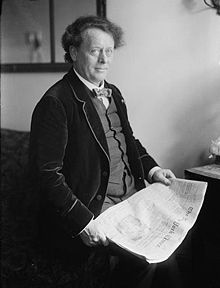 As befits a compilation drawn largely from single-disc releases (only two recordings spanned more than two 78rpm sides) there's quite a diverse range of music to be heard from no less than 10 composers. More than half of the music presented here is unique in Mengelberg's discography, and only one piece was re-recorded as heard here. All in all it makes for a real collector's delight. Meanwhile I've returned to the early studio recordings of Maria Callas, whose career with EMI began in 1953 with the recording of no less than five operas. The middle one was the shortest: Mascagni's Cavalleria Rusticana, which has the unusual honour of being the first album to be released in Britain with one LP side left deliberately blank, with the opera spanning three sides. The Gramophone reviewer of the day cheekily almost goes as far as recommending purchasing just the cheaper second LP, a this is, in his view, where the music really gets warmed up. A couple of week's ago a copy-and-paste error resulted in a review of the Callas opera which preceded this in the recording studio (and here at Pristine) going somewhat astray (see below for a second attempt!). But one passage from this MusicWeb International review of Lucia di Lammermoor is worth highlighting here, too:  "I have known this recording for many years but have not listened to it for some time. Largely that was because of my memory of a particularly unatmospheric recording quality which reduced the impact of what was obviously an immensely exciting performance. Pristine have once again performed technical wonders which I do not begin to understand but which have turned this ugly duckling into the most radiant of swans. What was always worth hearing despite some discomfort is now simply a joy to hear from beginning to end, encouraging the listener to forget any concerns over recording balance..." For reasons perhaps lost to history the early Callas/EMI opera recordings switched from one venue to another before getting settled in regularly at the Teatro alla Scala, and perhaps that goes somewhere to explain why, here again, the original sound quality of this recording was less than brilliant. Happily, though, enough was captured by EMI's tape recordings to enable an XR remastering to really bring the whole thing to life and inject a sense of realism and colour into the proceedings that's sorely lacking even on EMI's most recent reissues. The Gramophone's reviewer in 1954 felt that Callas "makes the Easter Hymn sound as one had forgotten it could sound". I venture to suggest that this XR remastering makes Callas's Cavalleria Rusticana sound as one always wished it could sound... Digital gains, analogue losses?
 Recently I watched the movie Robot And Frank, set in an undefined near-future, where (amongst other things) the library where the ageing protagonist visits regularly in his local town (and where, in a digital age, nobody seems much bothered about actual paper books) is being closed down, the books moved out, and the place remodelled for the digital age. It acts as a kind of metaphor for Frank himself, whose memory is failing him, and whose son arranges a robot "helper" to look after him. It has moments of comedy and pathos, and whilst not the greatest thing ever to come out of Hollywood, is worth a look. It got me thinking about where we are right now, and how quickly the analogue world is being transformed into a digital one. (I'm going to do a little rather difficult jiggery-pokery here in lumping CDs into an analogue world of books and records - it would be more accurate to talk about hard media and soft media perhaps, but let's stick to the common shorthand for now.) Just a couple of weeks ago Apple announced that one Phillip Lüpke, of Germany, had bought the 25 billionth track from its iTunes download store, which launched in the US a couple of months under a decade ago. The lucky Herr Lüpke has been given a €10,000 gift voucher to spend on iTunes music downloads as a reward, something I promise we'll do when we reach our 25,000,000,000th download, sometime in the 25th Century. (Hold me to it...)  | | E. J. Moeran |
2003 doesn't seem that long ago. I travelled every day by train into the BBC studios in London, usually listening to MP3s on one of the earliest bulky-but-portable CD players that was also capable of reading MP3 data discs, thus allowing me to carry the complete musical works of E. J. Moeran in my shoulder bag without developing a stoop. Of course all those recordings had begun life on regular CDs (or from the BBC's recording archive), and I'd had to encode them to MP3 myself. The idea of being able to actually buy a download legally was almost laughable back then - the format was synonymous with illegality and piracy, when Napster and Limewire and heaven-knows-what-other early file-sharing systems came and went before iTunes started up. If I wasn't writing at the time, or doing the crossword, I'd be spending my train journeys reading a book. There were a couple of decent book stores on the 15 minute walk to London's Victoria station from my place of work, and these were regular stop-offs. If anything I was weighed down most by books - little could be worse than being caught out by the end of a book with 50 minutes of rail journey still to go, only to find the next one is a dud. So I usually had a couple of spares just in case. 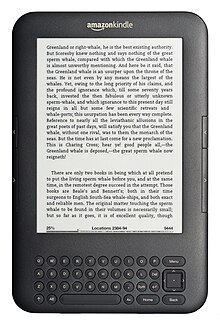 | | Kindle |
Today my reading takes place on a Kindle. Living in a rural French village and reading (generally) in English, this makes a lot of sense. Yet I still find it hard to say goodbye to a real book, even those which have been gathering dust on unvisited bookshelves at home for years. For some reason, throwing books away (or donating them to charity) goes against my instincts far more strongly than does disposing of CDs. Perhaps it has something to do with the longer history behind books, the images of book burning, and the suppression of forbidden texts since the dawn of printing. Or perhaps it's because a favourite CD is an ongoing thing, listened to over and over, whereas a book tends to be a one-off experience that only a view of the spine on a shelf reminds you of. But I admit I'm a total Kindle convert. No great surprise - I like my gadgets. But get this: my wife goes regularly to a ladies' book club. A couple of years ago this would have been an entirely on-paper, real-books sort of group, but, one by one, they've all succumbed to the delights of the digital alternatives. And by and large, unless there's a very good instance where the printed page is better (colour photos, large page formats), very few people I know seem to have the slightest inclination to go back to paper. A book seems such a bulky, cumbersome thing after a Kindle, and a book collection for holiday reading can easily use up a good proportion of the pathetic amount of baggage allowance that's now standard on short-haul flights.  | | Mark Obert-Thorn and his 78s |
In many respects the shift from paper to Kindle (for which read any electronic reading device) is much easier than the move from CD to a fully digital, media-free music collection. You finish a (real) book and when you start the next one, it's on a Kindle rather than on a page, et voila - you're now digital, book-wise. The book you just finished goes back on the shelf with the others, and unless you get the urge to read it again in a few years, there it will stay. Music doesn't work like that, though film and TV often do (unless you like to watch the same movies over and over again - I know I don't, with a very small handful of notable exceptions, just as with books). So perhaps the best way to "go digital" with music is to start gradually. Put together a replay system which allows you equal access to hard media - CDs, tapes, records - and soft media, stored on a hard drive. It strikes me this remains the sticking point for many: the new music exists on a laptop or an iPod or a PC that's not connected to the hi-fi, which is where the CD player, the nice amplifier, and the expensive floor-standers deliver fine sound. Crossing this line, getting those downloads from your hard drive to your living room, is the crucial step forward in what may well be a much slower changeover than some may think - though something like the Arcam rBlink Bluetooth DAC might be the first stage for some here, allowing you to "beam" music from your laptop, iPad, or smartphone to your hi-fi without wires, could be the first step to breaking the analogue chain. But, as with the Kindle and books, the chances are that once you have a new digital replay system of some description in place, and you've started to build up a reasonable-sized library of digital recordings, the merits of ease-of-access and instant availability - coupled with potentially better sound quality - start to win you over. Then, finally, the day comes when you realise it's been a long time since you actually played a CD, and you have to decide whether you want to keep them on public view or reclaim the space, just as you may have decided a few years ago with your vinyl collection, or even before that, your shellac. And I'm not even going to go into those racks of cassettes I used to have... Andrew Rose
15 February 2013
 | | A major vinyl collection! (Late British DJ John Peel at home with his discs) |
|

|
"She makes the Easter Hymn sound as one had forgotten it could sound" - Gramophone
Maria Callas in stunning form in this entirely revitalised, XR-remastered Cavalleria Rusticana

Recorded 1953
Producer and Audio Restoration Engineer:
Andrew Rose
Maria Callas - Santuzza
Giuseppe di Stefano - Tiruddi
Rolando Panerai - Alfio
Anna Maria Canali - Lola
Ebe Ticozzi - Mamma Lucia
Chorus and Orchestra of La Scala, Milan
Chorus Master Vittore Veneziani
Conductor Tullio Serafin
Web page: PACO 088 Short Notes "What I think instantly strikes you is that in the rather conventional opening passage of Santuzza's distress you seem to be hearing the music sung for the first time. Callas is an exceptional artist in this creative artistry if in nothing else ... here in page after page of this durable favourite, the music comes at you characterised, experienced and weighted with an artistry wholly out of the ordinary ... she makes the solo "Voi lo sapete" deeply affecting, and the quarrel hair-raising and with the superb amplitude of Maestro Serafin's conception, she makes the Easter Hymn sound as one had forgotten it could sound."
- The Gramophone, 1954
Maria Callas's third EMI opera, recorded in Milan in the summer of 1953, jumps back to life in this remarkable new remastering from Pristine. What was a rather dull, drab-sounding relic from the early fifties comes alive with an immediacy that's breathtaking. And when it's Callas that you're hearing, you know it's going to be something really special. Notes On this recording For Maria Callas's studio career, 1953 set out a working pattern which must have been deemed successful enough for it to be followed in 1954 in almost exactly the same manner. She recorded five full operas for EMI in both 1953 and 1954, and in each case the "middle" recording was a shorter, single-act work. Appropriately enough, the two shorter works in question are frequently linked together: Leoncavallo's Pagliacci, recorded in June 1954, and the present recording of Mascagni's Cavalleria Rusticana, made in June and August, 1953. Three of the soloists appear on both recordings, together with the La Scala orchestra and chorus under Serafin. Yet although they were later paired in reissue format, the two were originally released separately, with Cavalleria Rusticana being possibly the first British LP issue to span three sides, with the fourth side left blank and the second disc sold at a lower price.
As with other recordings Callas made in 1953 there was much to be done to improve sound quality. What began as a dull, flat, lifeless recording has, following XR remastering at the assiduous use of the acoustic properties of one of the world's finest opera houses, totally blossomed. Indeed, in side-by-side comparison it's hard to believe the former could possibly have led to the latter. I've done my best to contain occasional peak distortion in the very loudest sections (this is also apparent on EMI's CD issues so I assume is inherent in the master recording itself). This aside, this Cavalleria now bcecomes a wonderful, glowing artefact, a particularly fine recording.
Andrew Rose
Review UK LP release Before discussing the artistic merits of this latest and third LP Cavalleria Rusticana, note the price. Here is Cav. all on its own on three sides, two discs, which means that 33CXS1182 is the first single-sided LP to be issued in this country. People with mixed feelings, noting that the price is appropriately lower, may also regret that the fourth side is not, in fact, an operatic recital by Callas! It may be recalled that this is the case with the Decca Cav., except that there the artist is Del Monaco, which is another story. My view is that the decision not to "inflict" a filler on us shows good sense and is a lead by Columbia which I trust will be followed.
If you bought the second record on its own you would still hear a sizeable portion of an opera which is, so to say, a late starter. Side two starts with the Easter Hymn and side three with Santuzza, after the row at the church door, turning to Alfio and in vulgar parlance "spilling the beans"; followed by Alfio's vow of vengeance, intermezzo, chorus, men's quarrel and Di Stefano's powerful "Addio alia madre". But what I think instantly strikes you is that in the rather conventional opening passage of Santuzza's distress you seem to be hearing the music sung for the first time. Callas is an exceptional artist in this creative artistry if in nothing else. Elena Nicolai (Decca) makes it sound very ordinary; "just another of Santuzza's tearful moments". Milanov (H.M.V.) sings it most touchingly, with a couple of really beautiful high notes. Whether Callas's interpretation strikes you as "beautiful" or not, it is arresting. Just as in her Lucia, whatever the shortcomings, she suddenly caused you to hear some phrase like "Alfin son tuo" at the opening of the Mad Scene where one had hardly noticed it before, so here in page after page of this durable favourite, the music comes at you characterised, experienced and weighted with an artistry wholly out of the ordinary. Against this you must reckon that quite a number of the notes, in an uneven scale, are overloaded, ill-placed or pinched, with an unpredictable or hooty quality. To ignore these may be easier for some people than others, but to deny them in the wish to canonize a superlative artist and raise her above all criticism seems to me impossible. Enough that she makes the solo "Voi lo sapete" deeply affecting, and the quarrel hair-raising and with the superb amplitude of Maestro Serafin's conception, she makes the Easter Hymn sound as one had forgotten it could sound. The tempi are on the slow side by some reckonings, but there is nothing scamped or slapdash about the performance, no suggestion of a bawling match. The chorus are not perfect and the baritone is rather a crude singer. Otherwise the only matter in question is whether Di Stefano is superior as Turiddu to Björling (H.M.V.). He has a natural advantage over the Swede in his ringing and clear enunciation of the Italian text. And though he is not always so stylish or so musical a singer as Björling, he scores several t imes; e.g. right at the start, the Siciliana is more poetically sung - it is Björling's poorest moment; and the Italian's pathos is more elemental. It is finally a matter of personal taste whether you prefer this new version to the H.M.V. It is way ahead of the Decca.
P.H-W., The Gramophone, October 1954
MP3 Sample Highlights
Listen
Download purchase links:
Ambient Stereo MP3
Mono 16-bit FLAC
Ambient Stereo 16-bit FLAC
Ambient Stereo 24-bit FLAC
CD purchase links and all other information:
PACO 088 - webpage at Pristine Classical
|
Mengelberg in New York: an arresting pot-pourri collection of recordings
Mark Obert-Thorn compiles a diverse collection of superb studio performances from 1928-30

MENGELBERG
in New York, 1928-30
Overtures & Short Works by J.C. Bach J.S. Bach Beethoven Handel Humperdinck Meyebeer Mendelssohn Mozart Saint-Saëns Wagner
Recorded 1928-30
Producer and Audio Restoration Engineer:
Mark Obert-Thorn
Philharmonic-Symphony Orchestra of New York
Willem Mengelberg conductor
Web page: PASC 378 Short Notes Another superb compilation prepared for Pristine by Mark Obert-Thorn brings together ten gems from the baton of Willem Mengelberg. A real collector's delight! Notes On this recording The present volume offers a wide range of Mengelberg's repertoire, from the Baroque, Classical and Romantic eras in the one- or two-disc releases of overtures and short works that were a staple of the 78 rpm era. Some of them Mengelberg had previously recorded acoustically with the New York Philharmonic (Mendelssohn and Saint-Saëns), while others had already received electrical recordings with his other orchestra, the Concertgebouw in Amsterdam (the Beethoven and the first two movements only of the J. C. Bach). However, aside from re-recording the Beethoven and J. S. Bach items (the latter in a different arrangement), Mengelberg never returned to the other works in the studio, making the bulk of these selections unique to his discography.
The earliest recording featured here is the Wagner, done at the tail end of Mengelberg's sessions for Ein Heldenleben in December, 1928. Much of the rest of the present release was done over two days' worth of sessions the following month. The remaining items were recorded a year later, along with his recordings of the Beethoven First and Eroica Symphonies just before he left New York, never to return.
The sources used for the present transfers were vinyl test pressings for the Handel; American Victor "Z" pressings for the J. S. Bach, J. C. Bach, Mendelssohn and Meyerbeer items; and pre-war Victor "Gold" label pressings for the remainder. The discs have a comparatively high degree of hiss inherent in the original recordings, present even on the quietest sources. In addition, the 1930 recordings were made with reduced forces in Liederkranz Hall, a smaller and presumably cheaper-to-rent venue than Carnegie, which RCA used for the orchestra after the onset of the Depression late in 1929. I have added a small amount of digital reverberation to these acoustically dry sides in order to better integrate the sound with the remaining items.
Mark Obert-Thorn
MP3 Sample Wagner & Saint-Saëns
Listen
Download purchase links:
Mono MP3
Mono 16-bit FLAC
CD purchase links and all other information:
PASC 378 - webpage at Pristine Classical
|
Bartók plays Bartók
 | | Bartók |
PADA Exclusives
Streamed MP3s you can also download
Bartók
Six Dances in Bulgarian Rhythm
(from Mikrokosmos)
Béla Bartók piano
Recorded at the World Broadcasting Center, New York, on 29 April 1940
This transfer by Dr. John Duffy
Additional pitch stabilisation & remastering by Andrew Rose
Over 500 PADA Exclusives recordings are available for high-quality streamed listening and free 224kbps MP3 download to all subscribers. PADA Exclusives are not available on CD and are additional to our main catalogue.  Subscriptions start from €1 per week for PADA Exclusives only listening and download access. A full subscription to PADA Premium gets you all this plus unlimited streamed listening access to all Pristine Classical recordings for just €10 per month, with a free 1 week introductory trial. Subscriptions start from €1 per week for PADA Exclusives only listening and download access. A full subscription to PADA Premium gets you all this plus unlimited streamed listening access to all Pristine Classical recordings for just €10 per month, with a free 1 week introductory trial.
|
|


