HALF PRICE FLACs
| 
| |
All FLACs of this release 50% off for one week only
MENGELBERG
Mahler 4, 1939
Jo Vincent, Soprano
Concertgebouw Orchestra
CLASSIC REVIEW
The question of what is valid in art and what is not will forever be a question of personal taste and what one personally considers valid; and nowhere is it more varied, or more hotly contested, than in musical art. What works for listener A will sound like mere noise to listener B. All we as reviewers can do, or hope to do, is to describe what we hear, say how we react, and whether or not we find it valid.
This famous performance, which I have to admit I have just now heard for the first time, is a case in point. The archival remains of a live performance given at the Concertgebouw on November 12, 1939, it was proposed by its conductor to be an accurate replica of the way the composer himself had conducted it in 1904. In that year, Mengelberg invited Mahler to perform a special concert in which he conducted this work twice on both halves of the program. Mengelberg took copious notes in his score and later replicated the performance in the presence of Mahler, who supposedly proclaimed that it was as if he himself were on the podium. Yet the numerous and widely varied tempo changes and dramatic accents, not marked in the score as such, have led many arbiters over the years to deny the authenticity of Mengelberg's claim.
Let us examine the evidence, pro and con. Against it:
* * Mahler's score, highly detailed, contains no markings suggesting such an extreme treatment of the music.
* * The piano roll recording of the last movement of this symphony left us by Mahler himself does not even contain as much rubato or as many tempo fluctuations as there are in this performance.
* * Neither Bruno Walter nor Otto Klemperer, Mahler's two youngest disciples, ever conducted the Fourth like this.
* * Mengelberg was known to exaggerate what he felt the composer wanted in a score, and often italicized phrases in a way not marked in the score.
Now, let us examine the evidence in favor of it:
* * Piano rolls, even Welte-Mignon rolls of the type Mahler recorded, were really only accurate in capturing a steady tempo. The Welte rolls captured touch and nuance better than conventional rolls, but only within a steady tempo choice.
* * Mengelberg's other "italicized" performances, e.g., his Beethoven symphonies, are nowhere as mannered as this.
* * Neither Walter nor Klemperer ever disavowed the interpretation on this recording as being not authentic.
* * Klemperer recalled that, on his deathbed, Mahler told him that he wished that Mengelberg was going to conduct the world premiere of Das Lied von der Erde instead of Walter.
* * The score of Mahler's First Symphony that reposes in the library of the New York Philharmonic is touched up considerably with extra, exaggerated phrase, accent, and tempo markings not in the original score by the composer himself.
This last item is the one that clinches it for me. Mahler the interpreter was known for his exaggerated, schmaltzy, gemütlich readings of the classics, especially his own. Though the extraordinarily elongated tempo of the opening theme, which practically brings the orchestra to a standstill, is far out of kilter with our aesthetic today, it was by no means an unknown effect in Mahler's day-not even for Beethoven in the hands of someone like, say, Mahler, who similarly touched up a score of Beethoven's Fifth Symphony.
Having decided that, for me at least, this performance probably does reflect Mahler's own approach to the score (at least on that day and month in 1904-who knows how he conducted it later?), the question then arises: Is it valid? The not-so-certain answer comes back, I'm not really sure.
Certainly, those first-movement tempo changes-some 30 of them-are not only plentiful but always noticeable, sometimes too much so. This bothers me a lot. And yet, it is only in this performance that I hear the genesis of the fascinatingly intense phrasing that James Levine brought to the work when he recorded it in 1978 with the Chicago Symphony: the nervous edginess of the short solo violin passage in the first movement, for instance, or the wide variety of colors that both conductors bring out in the work. Of course, Levine works more from the aesthetic of a steady tempo with subtle modifications, rather than Mengelberg's aesthetic of wild modifications with occasional passages of steadiness. Mengelberg also performs a double exposition, in the second of which you hear even more of the portamento string style that was so much in fashion during Mahler's time. For all its good points, however, it is my own personal feeling that the first movement goes on interminably, almost as if Mengelberg were wishing that someone would take down his phrase and tempo markings on their score!
The second movement, by contrast, is faster than normal, played at a relatively steady tempo (with some modifications), and expressively edgy and eerie throughout. Again, this is very much like Levine, but in some ways better because the general tempo is faster.
Yet it is in the third movement that the Mengelberg performance comes into its own. Creating his own little cosmos of sound and expression, the conductor gives here one of the greatest performances of his life. I never for a single moment lost connection with the thread of what he was doing, and attempting, and at every turn-especially the double-time passage later in the movement-Mengelberg strikes sparks. This is the best Adagio of the Fourth I have ever heard.
The last movement is very good in its own right too. Soprano Jo Vincent had a pure sound, good for the music, but rather weak breath support that sometimes defeats her phrasing. I have a rare recording of this symphony, which I treasure, by Anton Nanut and the Ljubjana Symphony Orchestra, with a boy soprano (Max Emanuel Cencik) in the final movement, and not even Cencik has as spotty breath support as this. But she is good, at least, and Mengelberg's conducting is alternatively sensitive and edgy as the music calls for. [MP3 sample]
Should you listen to this recording? Most definitely. Should you keep it? A matter of taste, really. Andrew Rose's re-mastering has taken a performance that always suffered, in the past, from not only excessive surface noise but also undernourished strings and a hollow bass response and made it sound like a real performance. This is, undoubtedly, one of his finest achievements at the re-mastering controls.
LYNN RENÉ BAYLEY
FANFARE JAN/FEB 2008
ALL FLAC DOWNLOADS OF THIS RELEASE ARE HALF PRICE FOR ONE WEEK: PASC 055
NB. Offer does not apply to CDs or MP3 downloads
|
NEW REVIEW
| MusicWeb International
31 January 2013
A MUSICWEB RECORDING OF THE MONTH
Callas sings Norma
by Ralph Moore
"This recording comes slap-bang in the middle of the decade and finds her in excellent voice ... [it] remains the finest memorial to her most famous role"

|
Pristine Sound Engineer Andrew Rose tells us in the liner-notes that his research into which Callas Norma to re-master indicated that this live 1955 performance was the best candidate - and I agree with him. The RAI broadcast from earlier the same year is also estimable and in similar sound; it has the same two principals and the advantage of Serafin's more flexible conducting over the rather staid Votto. It must also be said that the great Ebe Stignani was by that stage of her career rather mature for the youthful Adalgisa and Giulietta Simionata's impassioned singing is more apt. Zaccaria is also marginally preferable over Modesti as Oroveso.
Rose tells us that his investigations revealed that the tapes of both this and that RAI performance were sharp. He has corrected this fault with the result that the voices sound fuller, richer and altogether easier on the ear. Flutter has been removed and individual sound strands emerge more cleanly and better differentiated instead of melding into the familiar orchestral mush. Following practice of previous issues, Rose has resorted to substituting the overture missing from the original recording with that from the RAI broadcast and no-one is likely to complain or hear any difference. The Pristine "Ambient Stereo" treatment also lends added presence to the rather thin, scratchy sound whose relative inadequacy is more noticeable in purely orchestral rather than vocal passages. This will never be an aural treat but the Pristine re-mastering has given us the best we are ever going to hear.
As I remarked in my previous review of the IDIS double CD featuring a compilation of ten versions of Callas singing "Casta Diva" over ten years, she was amazingly consistent during that period. This recording comes slap-bang in the middle of the decade and finds her in excellent voice, worthily partnered by the heroic Del Monaco.
As the years go by it is increasingly apparent that we shall not hear the likes of either Callas or Del Monaco again. Even if their emphatic and even stentorian delivery is sometimes rather removed from what we might expect from a quintessential bel canto opera we hear great delicacy and some lovely divisions from Callas in her big arias.
There will always be some flap and wobble even in her finest recordings but these flaws are negligible alongside her peerless ability to inflect the music with unforgettable intensity and pathos. I retain an affection for Callas's last studio, stereo recording for EMI where not only is the whole enterprise lent glamour by the presence of Corelli and Ludwig but also we finally hear her in good sound at a point where despite the supposed decline in her voice over the previous decade she is in fact still sounding very good indeed. However, the recording under discussion remains the finest memorial to her most famous role.
|
NEW REVIEW
| MusicWeb International
29 January 2013
Callas sings Lucia
by John Sheppard
"For admirers of Callas or Donizetti this newly minted set is more than ever an essential part of their collections."

|
Pristine Sound Engineer Andrew Rose tells us in the liner-notes that his research into which Callas Norma to re-master indicated that this live 1955 performance was the best candidate - and I agree with him. The RAI broadcast from earlier the same year is also estimable and in similar sound; it has the same two principals and the advantage of Serafin's more flexible conducting over the rather staid Votto. It must also be said that the great Ebe Stignani was by that stage of her career rather mature for the youthful Adalgisa and Giulietta Simionata's impassioned singing is more apt. Zaccaria is also marginally preferable over Modesti as Oroveso.
Rose tells us that his investigations revealed that the tapes of both this and that RAI performance were sharp. He has corrected this fault with the result that the voices sound fuller, richer and altogether easier on the ear. Flutter has been removed and individual sound strands emerge more cleanly and better differentiated instead of melding into the familiar orchestral mush. Following practice of previous issues, Rose has resorted to substituting the overture missing from the original recording with that from the RAI broadcast and no-one is likely to complain or hear any difference. The Pristine "Ambient Stereo" treatment also lends added presence to the rather thin, scratchy sound whose relative inadequacy is more noticeable in purely orchestral rather than vocal passages. This will never be an aural treat but the Pristine re-mastering has given us the best we are ever going to hear.
As I remarked in my previous review of the IDIS double CD featuring a compilation of ten versions of Callas singing "Casta Diva" over ten years, she was amazingly consistent during that period. This recording comes slap-bang in the middle of the decade and finds her inIt would be all too easy, especially at a time when recordings of Donizetti operas seem to be issued at an ever-increasing rate, often performed in editions much closer to the composer's text than we have on these discs, to regard Callas's first studio recording of Lucia di Lammermoor as essentially more of historical than musical interest. After all, she made a later studio recording (1959) and there are many live recordings of her in the role, including a much-praised version under Karajan in Berlin from 1955. Despite all of this to me this is the performance that shows that Donizetti was a great dramatic composer but whose music requires a particularly imaginative and sympathetic approach from the performers for this to be apparent.
I have known this recording for many years but have not listened to it for some time. Largely that was because of my memory of a particularly unatmospheric recording quality which reduced the impact of what was obviously an immensely exciting performance. Pristine have once again performed technical wonders which I do not begin to understand but which have turned this ugly duckling into the most radiant of swans. What was always worth hearing despite some discomfort is now simply a joy to hear from beginning to end, encouraging the listener to forget any concerns over recording balance or the brutal and wholly unnecessary cuts and simply to enjoy what still seems an almost perfect cast. The three main characters all sing with total dramatic and musical conviction. Understandably the packaging is dominated by the name of Callas but in reality the contributions of Gobbi and Di Stefano are of equal importance, all singing with real urgency and imagination. The other roles are perhaps more routine, even Raffaele Arié as Raimondo but Serafin's wonderfully flexible and understanding conducting disguises any small weaknesses in the cast. Although Karajan's Berlin performance is often praised I find it at times exaggerated in comparison with Serafin's equally positive but more idiomatic and less self-conscious approach.
One result of the disgraceful cuts in Lucia is that the set is able also to include Callas's first commercial recordings. Here too Pristine manage to make them much less uncomfortable for the listener although I have not changed my view that these are essentially of interest in showing how far Callas managed to travel later as an artist than for their own intrinsic merits.
As usual with Pristine Audio there are no texts or translations, but these are easily obtainable elsewhere and it would be a pity if this put anyone off buying it. For admirers of Callas or Donizetti this set has always been an essential part of their collections, and in this newly minted form that is more than ever the case.
|

|
|
CONTENTS
| |
Editorial Magical Mahler and more from Fanfare
Walter The stereo 1961 Mahler 9 & 1 recordings
PADA Johanna Martzy plays Franck's Violin Sonata
|
Bruno Walter - one of the last direct links to Mahler
Plus two more Fanfare reviews from their latest issue
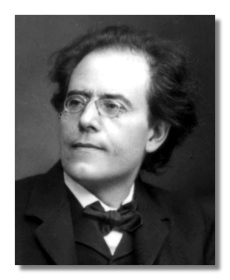 | | Mahler |
A number of conductors have been associated with the music of Mahler since the composer's death some 102 years ago, but only a select few were able to bring the benefit of direct working contact with the composer to the recording studio, or were captured conducting concerts in live broadcasts. The recordings of three major conductors might be thought to offer the greatest possible additional insight into the composer's thoughts: Mengelberg, Klemperer, and Bruno Walter. Of these, only Walter and Klemperer lived into the age of stereo - although the handful of concert recordings of Mengelberg's with the Concertgebouw Orchestra made around 1940 survive in remarkably good sound quality for the era, and include his idiosyncratic recording of the Fourth Symphony, reviewed left and available as this week's half-price FLAC. Otto Klemperer's association with Mahler, as a young upcoming conductor, was no doubt vital to the launch of his long and successful career, but of this trio of great conductors, it was Bruno Walter's association with Gustav Mahler which lasted longest, and arguably Walter who would become most closely associated with his music after his death - not least for having conducted the premières of two of Mahler's major works, Das Lied von der Erde and his Symphony No. 9, shortly after the composer's death, nearly two decades after they first met and worked together.  | | Bruno Walter |
Moving forward by nearly half a century to the early sixties, we find Columbia Recordings keeping Walter very busy, during the last months and years of his life, as the advent of stereo and new higher quality recording techniques seemed to demand new recorded material from the now-legendary conductor. The "Columbia Symphony Orchestra" on these Mahler recordings, which appears to have been largely (some sources suggest occasionally even entirely) made up of members of the Los Angeles Philharmonic Orchestra, was an outfit constructed for contractual reasons by the record company for many of these twilight-years Walter recordings, though it wasn't exclusively used as a vehicle for Bruno Walter. As well as a wealth of other recordings, including a full cycle of stereo Beethoven symphony, Walter recorded two of Mahler symphonies with the Columbia orchestra, both in January 1961: the First and the Ninth, both of which are included on this week's new release. As previously with well-made studio recordings of this era, I've had to stop and listen carefully to test XR-remasterings, and to apply a rule which states that there needs to be a clear and significant sonic improvement throughout the recordings to justify their reissue on the Pristine label - after all, they're easily obtainable on CDs issued by Sony, current owners of Columbia, and you may already own a quite passable copy. The fact that we're beginning what I hope will become a substantial Walter/Mahler collection with these two recordings should therefore be seen as indicative of the successful passing of these rigorous listening tests. The symphonies, when heard on the most recent Sony issues, sound clouded, the brass veiled, the bass thin, the overall sound somewhat grey by comparison to the "full technicolor" of these Pristine remasters. The sense of "being there", post-XR, is palpable and electrifying - the brass glitters; the deepest bass growls and rumbles where appropriate; the orchestral colour and detail is hugely enhanced. You may of course know well that there were two recorded Mahler 9ths from Bruno Walter, offering two very different takes on this monumental work, and each has its devoted adherents. I'm pleased therefore to report work is already ongoing on the 1938 recording, with exceptionally exciting results, though there'll be other Mahler from Walter before we return to the Ninth. So for now, take a listen to this week's sample, the full third movement of the 1961 Ninth, and see what you think of that sparkling brass!
New website search
 | |
Our new Google-powered site search engine has now been deployed right across our website
|
Last week we started rolling out the new Google-powered website search in a handful of locations on our website. This has now been extended so that the search box appears on almost all pages on our site.
Just like Google's own site, the search offers suggestions and auto-completes. However, here the results are tailored and filtered so as to find the best results from the Pristine Classical website only.
Just start typing a query into the box (marked "Google Custom Search") and you're away - when you press return (or click on the magnifying glass button) the results will scroll down beneath your text, with links and cover graphics to guide you. And if you want to close this search window, simply click on the X that appears on the right hand end of the window where you entered your query text - everything will revert back to how it was before.
It's simple, slick and very effective. Give it a try - you might be surprised at what it turns up!
 Today we're 8 years old and I've just been looking through the sales statistics for that period and discovered that the best-selling download since 1st February 2005, our launch date, is the 24-bit version of Miles Davis "Kind of Blue:XR". So, if you missed it, I'm putting a special link here (which will work for one week only) to a half-price version of this FLAC download. It's a classic, timeless album - if you like this sort of thing as much as I do! Today we're 8 years old and I've just been looking through the sales statistics for that period and discovered that the best-selling download since 1st February 2005, our launch date, is the 24-bit version of Miles Davis "Kind of Blue:XR". So, if you missed it, I'm putting a special link here (which will work for one week only) to a half-price version of this FLAC download. It's a classic, timeless album - if you like this sort of thing as much as I do!
Fanfare March/April: Reviews Pt.2
Review by Dave Saemann:
"This is a great conductor at his peak."
BEETHOVEN Symphonies: No. 6, "Pastoral";[1] No. 8 [2] * Wilhelm Furtwängler, cond; [1]Vienna PO. [2]Berlin PO * PRISTINE 359, mono (70:12) [2]Live: Berlin 4/14/1953  Recently I watched Fellini's 8 1/2 with a friend who never had seen it before. Her reaction when it was over was, "I'm speechless." That was my reaction the first time I heard the present CD. Now a critic who is speechless would be of little use to his readers, so I have listened to this CD several more times and attempted to gather my thoughts. What's foremost in my mind is that Furtwängler, more than any other conductor in my experience, conveys the epic nature of Beethoven. By epic I do not mean monumental, which so easily can be confused with grandiose-as sometimes occurs in the Beethoven performances of Klemperer and Bernstein. No, Furtwängler's Beethoven is epic in the way that it tells a story, notably a story that illuminates the entire culture it comes from. For Furtwängler, Beethoven essentially is a lyric composer, and he conveys this quality in his interpretations through beauty of phrasing and of orchestral sonority. The epic quality exists in performances as widely divergent as Furtwängler's 1944 and 1952 Vienna versions of the "Eroica." In the recordings on the present CD, Andrew Rose's superb remasterings contribute immeasurably to our appreciation of the distinctive sound Furtwängler got from Beethoven. This sound is not manicured like with Karajan but rather soulful and majestic. In Furtwängler's hands Beethoven becomes the Homer of composers, a truly epic poet. With the "Awakening of cheerful feelings" that begins the "Pastoral," Furtwängler focuses notably on "awakening." I'm reminded of the same sensation in the first movement of Mahler's First Symphony. Furtwängler's tempo here is measured and thoughtful, not bubbly. This is not just anybody entering the countryside, but Beethoven himself. A deep thinking personality is suggested by richness in the lower strings, horns, and first clarinet (is it Alfred Boskovsky?). In the second movement, one can imagine the composer lying on the ground by a brook. Furtwängler's tone-painting is especially subtle, with gorgeous playing from the Vienna principals. Luscious string sound conveys the deep green of the countryside. The winds and horns in the next movement suggest that the "country folk" may have brought their own instruments to their "gathering." Furtwängler's conducting here reminds me of certain moments in his performance of Weber's Der Freischütz. The thunderstorm has elements of light and shadow as in a Gainsborough landscape. There is a solitariness and a tension for the bridge passage to the last movement. Then, all nature seems to celebrate, as Furtwängler adopts a relatively quick tempo in the final movement. The overwhelming sense of joy prefigures the finale of the Ninth Symphony. For Furtwängler's Eighth, we are in Berlin. Klaus Tennstedt claimed that the Berlin Philharmonic was not a great orchestra until Karajan took over. I guess that all depends on what one means by great. If the ability to convey musical truth is what matters, then Furtwängler's Berliners were one of the greatest orchestras ever. In the first movement of the Eighth Symphony, the orchestral sound is like a living organism, out of which the thematic material asserts itself. The tumult is celestial, like the birth of a galaxy. The metronome joke in the next movement is an occasion for gentle humor, with a few guffaws. Furtwängler's moderate tempo here recalls the slow movement of Haydn's "Clock" Symphony, with its own tick-tocking joke. The next movement's minuet manages to be broad and delicate at the same time. The horns and clarinet engage in playing of almost superhuman delicacy in the trio. The last movement offers beauty with clarity. The music constitutes a dialogue that prefigures the late quartets. If you are looking for stereo CDs of these works, the ones I listen to the most are by George Szell and the Cleveland Orchestra, and Rudolf Kempe and the Munich Philharmonic in the "Pastoral," while for the Eighth I like Wolfgang Sawallisch and the Royal Concertgebouw, and Roger Norrington and the Stuttgart Radio Symphony. The Norrington offers historically informed performance practice with a vengeance. It's important to remember that H.I.P. represents a historical artifact of today's place and time as much as Furtwängler's Eighth was of its time in 1953. I believe we lose a lot musically if we turn H.I.P. into an absolute ideal. One would have to be a hard hearted ideologue to dismiss Furtwängler's performances on this CD because of vibrato in the strings and failure to adhere to Beethoven's metronome markings. As Stravinsky said to Colin Davis, a metronome marking is just a beginning. I'm confident that Furtwängler's Beethoven, particularly in these marvelous remasterings by Andrew Rose, will be a part of our high culture for a long time to come. This is a great conductor at his peak. Review by Robert Maxham:
"The most urgent of urgent recommendations." BRAHMS Violin Concerto.[1] SIBELIUS Violin Concerto [2] * Ginette Neveu (vn); [1]Issay Dobrowen, cond; [2]Walter Susskind, cond; Philharmonia O * PRISTINE 357 mono/analog (71:35)  Ginette Neveu, born on August 11, 1919, had reached only the age of 26 when she recorded Jean Sibelius's Violin Concerto with Walter Susskind and the Philharmonia Orchestra on November 21, 1945, and had barely turned 27 when she recorded Johannes Brahms's Concerto with Issay Dobrowen and the same orchestra on August 16-18, 1946 (at the same sessions, she recorded Ernest Chausson's Poème). Later and earlier studio recordings of major works would include Claude Debussy's Sonata (1948), Maurice Ravel's Tzigane (1946), and Richard Strauss's Sonata (1939). That's all. Of course, she also recorded some short pieces; but A. R., reviewing her release of Sibelius's concerto in The Gramophone in January 1946 (excerpted in Pristine's insert), expressed the wish that she would go on (soon) to record Ludwig van Beethoven's, Brahms's, and Edward Elgar's concertos. She managed only one of these (she supposedly planned Beethoven's, Piotr Ilyich Tchaikovsky's, and William Walton's) before her tragic death in an airplane crash in 1949, but there's an air-check of Beethoven's concerto. For Elgar, admirers will have to be satisfied with her reading of La Capricieuse from 1946-although HMV didn't publish it. All this commands attention because Neveu won the Wieniawski Competition in 1935-ahead of David Oistrakh and Henri Temianka (both Neveu and Temianka had studied with Carl Flesch). All we have left, besides air-checks, must be found in a handful of studio recordings, the age of which may for some have militated against a thorough and rigorous assessment. Pristine's Andrew Rose relates that he aimed to restore the "full frequency" of Neveu's violin (she played one by François Lupot, although she also owned one made by Omobono Stradivari in 1730). Since A. R. had called the Sibelius recording a "great" one, even upon its release, it deserves Rose's attention; and his remastering reveals more than the splendor of Neveu's tone (its brilliance in the upper registers and its gritty richness in the lower ones)-though it does that, too. It also allows listeners to hear the shimmering accompaniment of the concerto's opening with almost digital fidelity, and picks out details from that accompaniment throughout the first movement; all that's the more remarkable because, as Rose notes, the recording took place just before the era of magnetic tape. Neveu didn't attack passages with Jascha Heifetz's steely aggressiveness (his recording with Thomas Beecham, made in 1935, must have been familiar to her); but she reaches almost the same temperature, with perhaps even greater rhapsodic freedom (with Susskind providing sympathetic support), especially toward the end, without slashing and burning. If the slow movement lacks some of Heifetz's urgency, her statement of the finale's polacca theme (an updating of passages from concertos of the era of Giovanni Battista Viotti and Louis Spohr) pulsates with enough electricity to light several soundstages; and, as in other movements, her double-stops have an almost succulent purity that's rare even among legendary violinists (Michael Rabin comes to mind as a comparison). Whatever Rose wrought in his restoration of Sibelius's concerto, he managed something comparable in capturing the orchestra's sonority in Brahms's. Neveu herself plays the often angular violin solo with the ferocious panache of a knife-thrower. The first movement therefore makes a visceral impression, though it also suggests a magisterial comprehensiveness organizing more than moment-to-moment detail. The transfer's so startlingly lifelike that in the cadenza, Neveu almost seems to be standing in the same room with listener and speakers. The slow movement begins at a pace that could be deadening, but that in this case allows the theme's lyricism to blossom; that's true of the violin solo as well. Whence derives the reputation of Flesch students as soullessly intellectual? Does Neveu's playing (or Bronislaw Gimpel's, or Josef Hassid's, or Ivry Gitlis's, or Ida Haendel's, for that matter) suggest it? In the finale, Neveu again wields the cutlass with which she slashed through the first movement's thickets; but plenty of propulsive energy underlies her grand gestures. For those who believe the judging in the Wieniawski competition may have been contaminated by ethnic or political considerations, Pristine's release may serve as an occasion for reassessment. But at the very least, Neveu emerges in these concertos as a player with a gigantic personality and overwhelming richness of musical insight. Recordings that must count among the greatest ever made have now become available in the kind of restorations they clearly demand. The most urgent of urgent recommendations.
These articles originally appeared in Issue 36:4 (Mar/Apr 2013) of Fanfare Magazine. Andrew Rose
1 February 2013
|

|
Bruno Walter's classic stereo Mahler symphonies in hugely improved sound quality
"...a superb, definitive realisation of the work, in interpretation, performance..." - The Gramophone

BRUNO WALTER
conducts Mahler
MAHLER Symphony No. 9
MAHLER Symphony No. 1
Recorded 1961, stereo
Producer and Audio Restoration Engineer:
Andrew Rose
Columbia Symphony Orchestra
Bruno Walter conductor
Web page: PASC 376 Short Notes "In my experience, this is the first time the full significance of Mahler's Ninth has been revealed; and listening to this performance, with the new understanding gained from our ever-growing familiarity with Mahler's life's work, one realises how far this extraordinary music transcends period and place, and stands revealed as a timeless masterpiece, a tremendous feat of creative imagination and technical mastery, down to the last detail."
- Deryck Cooke, The Gramophone, 1962.
Bruno Walter's association with Mahler dates back to their first meeting in 1894 and a friendship and working relationship which lasted until the composer's death in 1911. The following year, Walter conducted the world première of Mahler's 9th Symphony.
Nearly 50 years later, at the end of his life, Walter recorded both the 9th and 1st symphonies for Columbia. These legendary stereo recordings have now been given a major sonic overhaul for this Pristine release, unleashing detail and clarity never before heard. Notes On this recording As with a number of recordings of this era, I approached this classic, some would say definitive historic document with a degree of trepidation. Once again I had to ask myself whether I could bring any significant improvement to the sound quality to justify my own efforts - and achieve something sufficient to persuade those who already know the recording well that it's worth hearing afresh.
Mahler's 6th Symphony was once famously dismissed as "Brass, lots of brass, incredibly much brass! Even more brass, nothing but brass!", yet here I would point the listener first to the brass to hear what dramatic sound improvements have been made. Gone is the dim, veiled sound of even the most recent "official" Sony CD issues, to be replaced by an openness and clarity that lets these instruments shine through as never before. Suddenly the whole sound of the original recordings sounds cluttered and constricted by comparison.
Listen next to the very low end, the depths of bass which underpin the orchestra, the growling rumbled of double basses and low percussion that seem almost absent in the original - they were there all along, just waiting to be found and returned to audibility. A monumental work such as the Ninth requires a monumental sound - and now this monumental recording has it.
Coupling it with the First beings together Walter's two stereo Columbia Symphony Mahler recordings, surely now sounding as fine as any ever recorded.
Andrew Rose
Review Symphony No. 9  | |
Reviewer Deryck Cooke
|
Mahler's Ninth Symphony, his last completed work, and undoubtedly his consummate achievement, was presented to the world in Vienna in 1912, the year after his death, by his disciple Bruno Walter. For those who understood Mahler (few enough at that time), it seemed to sum up, not only the soaring aspirations and despairs of this tormented genius himself, but those of a whole civilisation - the pre-1914 world of Vienna and the rest of Europe. And when Vienna fell to the Nazis, one of the last performances given there by Walter, before he left, eventually to settle in the U.S.A., was of the same work; and this, perpetuated by HMV in the form of a 20-side 78 rpm recording - the first ever made of the work - seemed more than ever to be an appropriate memorial to a glorious and irrecoverable past, not least in the imperfections inseparable from a recorded concert performance, which were felt to be part and parcel of a poignant historic occasion . And now it is once more fitting that the eighty-five-year-old Bruno Walter should have rounded off his life's work with a recording of the Ninth which is a superb, definitive realisation of the work, in interpretation, performance, and recorded sound alike.
But even more than looking to the past, and to Vienna, this recording impinges powerfully on the present and the future, and on the world at large. In my experience, this is the first time the full significance of Mahler's Ninth has been revealed; and listening to this performance, with the new understanding gained from our ever-growing familiarity with Mahler's life's work, one realises how far this extraordinary music transcends period and place, and stands revealed as a timeless masterpiece, a tremendous feat of creative imagination and technical mastery, down to the last detail.
Walter has been accused of sentimentalising Mahler, playing up his Viennese charm and haunting nostalgia, and playing down his biting sarcasm and bitter irony; but this opinion will not hold water, as is shown by the present performance. Admittedly, judging from the fascinating "Talking Portrait" on the accompanying bonus disc - a recorded interview with Arnold Michaelis - Walter would seem to have had a closer affinity with Bruckner, and to have taken a rather rosy view of the content of Mahler's music: "In each of his symphonies Mahler was seeking God." This is only half the truth; but we also hear him say how much the "demonic" element in Mahler meant to him. This was no doubt a largely subconscious affinity, since he does not dwell on it; and we notice from the equally fascinating "Working Portrait" on the other side of the bonus disc - snippets from the orchestral rehearsals for the record - that he did not 'interpret' Mahler to the players, but was content to secure perfection of playing. But that the affinity with every aspect of Mahler was there is obvious from the intensity of the performance, achieved, as he himself says, by the "occult power" by which a conductor communicates his feeling of the music to the players, and through them to the audience.
In comparison with Horenstein's largely fine performance and Ludwig's mainly misconceived one, Walter's fundamental superiority lies in his masterly tempo and rhythm - always broad enough to carry the great weight of the expression, but never drawn out for rhetoric to the point of breaking continuity. The vast span of the opening Andante comodo, presenting a life-and-death conflict, offers the most difficult problem, in its appearance of sprawling diffuseness. Ludwig, no doubt afraid that it can only sag if taken at a true andante, achieves flow by a continual pressing forward, which sadly minimises the music's majesty, drama, and depth of expression. Horenstein, splendidly broad, dramatic, and expressive, loses the flow at times; in particular, he so emphatically holds back for each appearance of the big exultant theme (first heard just before fig. 6), that he defeats his own object, failing to make these essential main pillars of the whole structure register clearly for what they are. But Walter unifies in one single unbroken flow the poignant lyricism of the main melody, the anguished agitation of the contrasting material, the full-blooded surge of the big exultant theme, the cataclysmic climax, and the shadowy disintegration of the coda. He leaves one in no doubt that this is one of the most superbly planned and executed large-scale symphonic movements in existence.
In the horrifying negative vision of the two central movements, which pillory the soulless emptiness of the modern age, Walter's affinity with Mahler's "demonic" element is undeniable. The whole point of the second movement is its alternation of dry parodies of popular dance-music - a medium tempo Ländler and a quick waltz - with a genuinely nostalgic slow Ländler. This is entirely missed by Ludwig, who whips away at the start with an impossibly quick waltz-tempo, and treats the whole thing as a jolly affair. Horenstein makes all the points clearly, but rather overdoes the 'clumsiness' asked for by Mahler to the extent of dragging the music in places and getting some rough playing from the strings. Walter prefers to let the music speak for itself: the tempi, and their integration into one another, are dead right; and there is plenty of subtle irony in the phrasing, so that the parodies are no less parodIes for being played as expertly as the genuine article. Moreover, he brings such ineffable beauty to the slow Ländler that the rest of the movement is set off vividly in its true garish colours .
No conductor can fail to make a powerful impact with the fast and frenzied contrapuntal uproar of the Rondo-Burleske; but whereas Ludwig sees only the physical excitement of the music, Horenstein and Walter bl'ing out superbly the livid 'to hell with everything' mood of the movement. Walter makes the music snap and snarl no less viciously than Horenstein, and he also achieves a virtuoso precision and greater impact in many details-notably the sudden fantastic outburst of fury when the main material first returns after the trio-section .
The Adagio-Finale's 'farewell to life' is for many people the outstanding movement of the work - the ultimate musical expression of heartbreak. Here Ludwig rises more nobly to the occasion with a deeply felt performance; but Horenstein again outdoes him in intensity, even if his extremely slow tempo makes the music almost burst at the seams here and there. Where Walter rises above both is in bringing out the other element in the music - the passionate joy in being alive, which is inextricably woven with grief in the noble chorale-melody, and only yields at the very end. Again it is a matter of tempo and rhythm: at a true adagio, and no slower, and with great weight of expression, and no more, he moves the music relentlessly forward until it at last slows down of its own accord and fades into silence.
What we must be just as thankful for is that this realisation of the work's full stature was not obscured by any deficiencies of engineering. The extracts from the orchestral rehearsals are introduced by the Music Director of American Columbia, John McClure, who describes with justifiable pride the concentrated effort which went into the technical side of the achievement. The absolutely lifelike reproduction of every strand of Mahler's complex texture, even in the loudest tutti passages, is an extraordinary feat of recording technique; and whereas Ludwig's performance sounds persistently remote, and Horenstein's persistently close, the present issue has a wide dynamic range, rising from a really hushed pianissimo to a really full-blooded fortissimo. Those with stereo equipment are especially lucky, for the unusually vivid separation will enable them to savour Mahler's fantastically intricate web of criss-crossing counterpoints to the full.
Deryck Cooke, The Gramophone, September 1962
MP3 Sample Symphony 9, 3rd mvt
Listen
Download purchase links:
Stereo MP3
Stereo 16-bit FLAC
Stereo 24-bit FLAC
CD purchase links and all other information:
PASC 376 - webpage at Pristine Classical
|
Johanna Martzy plays Franck
 | | Johanna Martzy |
PADA Exclusives
Streamed MP3s you can also download
Johanna Martzy violin
Jean Antonietti piano
Recorded 15 July 1959
VARA Broadcast Organisation Holland
This transfer by Dr. John Duffy
Additional remastering by Andrew Rose
Over 500 PADA Exclusives recordings are available for high-quality streamed listening and free 224kbps MP3 download to all subscribers. PADA Exclusives are not available on CD and are additional to our main catalogue.  Subscriptions start from €1 per week for PADA Exclusives only listening and download access. A full subscription to PADA Premium gets you all this plus unlimited streamed listening access to all Pristine Classical recordings for just €10 per month, with a free 1 week introductory trial. Subscriptions start from €1 per week for PADA Exclusives only listening and download access. A full subscription to PADA Premium gets you all this plus unlimited streamed listening access to all Pristine Classical recordings for just €10 per month, with a free 1 week introductory trial.
|
|


