Spectrogram
Pristine Newsletter - 14 December 2012 
E-mail header
QUICK LINKS
BRAHMS German Requiem
BEETHOVEN Violin Concerto
PADA Exclusives
FREE ALBUM
  PACM070

A FREE 128k MP3


HAYDN

Piano Trios 

Fournier, Janigro, Badura-Skoda 

1957 


CLASSIC REVIEW:  


These are the recordings from which I first learned Haydn trios, on Westminster LPs XWN 18610 and 18611. Which means, of course, that I am biased toward the performances. But let's try to be analytical about them. These three artists all had important solo careers in Europe, where they were considered among the top rank. They also had much experience as an ensemble, as testified by their Westminster recordings of much of the piano trio repertoire: Mozart, Haydn, Beethoven, Schubert, and Brahms. Aided by natural-sounding Westminster recordings, their "Archduke" and Schubert trios were the preferred recordings of the 1950s; I still have two of those three LPs on my shelves and have never found a preferable Schubert E♭.

These late mono recordings, c.1957, do not yet reflect the period-instrument movement, which had begun to make waves in Vienna with H. C. Robbins Landon's Haydn Society productions. Nevertheless, these artists were sensitive musicians, and their Haydn is consistent with the period; in Hob. XV:25 perhaps closer to Beethoven than to Mozart. Paul Badura-Skoda's playing has something of the joie-de-vivre of Menahem Pressler of the Beaux Arts Trio. But Pressler's pearly tones dominate those performances, whereas all three artists contribute equally here. Only in Haydn's late trios does the cello become a full partner, but Antonio Janigro makes the most of his part in every one.

Pristine's Andrew Rose has replicated Westminster's trademarked "Natural Balance" honestly and accurately. Although this disc may be most appreciated by those with nostalgia for the originals, no serious record collector could go wrong with it. For those who prefer "complete" sets, I recommend Haydn Trio Eisenstadt-also on modern instruments-on eight inexpensive Phoenix Edition CDs..

James North
FANFARE Mar/Apr 2011


Download it now - for one week only - it's only free from our Cover Page!


"UPGRADE" to full quality lossless 16-bit or 24-bit FLAC downloads with notes here:


PACM 070 


LATEST REVIEW
Audiophile Audition

7 December 2012


Beethoven Centenary 

by Gary Lemco


"Pristine begins its cycle of the 1927 Beethoven Centennial recordings, featuring a manic interpretation of the D Major Symphony under Sir Thomas Beecham"

 
PASC 366


Columbia Records issued the complete Beethoven symphony cycle in 1927 to celebrate the centennial of Beethoven's death [and following the switch to electrical recording...Ed.], allocating the works to eminent musicians: Henschel, Beecham, Wood, Harty, and Weingartner. Sir George Henschel (1850-1934) had made a reputation as a fine baritone before he established himself as a conductor. The Beethoven First Symphony (14, 21 December 1926 and 4 February 1927) survives as his only document as a conductor. The performance had been issued on LP some years ago on the Past Masters label (PM 17).  The performance strikes us singularly unmannered, given the Romantic tradition - Henschel and Brahms had a long standing relationship under which he had developed. Virile and robustly aggressive, the C Major Symphony exhibits none of today's concerns with an "authentic" sound, and the full-blooded approach has its four-square rhythmic limits in the outer movements. But the capacity for nuance and vitality remain singularly intact, and the RPO woodwinds enunciate with a clear brio. Restoration engineer Mark Obert-Thorn has applied once more his expertise to capture resonant, fluent  sound from what must have been noisy American Columbia 78 rpm shellacs.

Sir Thomas Beecham would inscribe the Beethoven D Major Symphony three times in his long career. The version Obert-Thorn restores here (9-10 November 1926) in collaboration with Andrew Rose urges Beethoven's tempos rather hastily, so the performance exists as less an example of Beethoven's late "first period" than as a testament to manic virtuosity on the part of the performers. The string work alone from LSO would have to qualify as Beethoven conceived in the manner of a Paganini caprice arranged for large ensemble! While the rhythm maintains a supercharged energy, the melodic lines simply smear under such blazing assaults. The breathless first movement coda quite loses any self-control and leaves us panting and not a little baffled.

Whereas Henschel kept his rhythmic licenses relatively restrained, Beecham overtly indulges in portamenti and luftpausen typical of Nineteenth Century music-practice, more to be expected from Mengelberg's side of the Beethoven equation. The Larghetto enjoys - or suffers, according to one's taste - any number of "plastic" stretches and compressions of the musical line, although the innately vocal character of the music manages to come through. The generous bass line comprised of low strings and winds displays the LPO's supreme status as the London musical organization par excellence, though the penchant for string slides becomes an irritant by today's standards. The Scherzo at first seems rather peasant-like and rugged; then, both before and after the Trio, Beecham inserts pregnant pauses that seem arbitrary, but he has excellent response from his woodwinds, especially the bassoon. The final  Allegro molto wants to become another runaway train, but Beecham keeps the reins in check enough to sing a few of the melodies without the dervishes' spinning into interstellar space. The last minute of the D Major, as per expectation, dance and twirl with athletic and acrobatic power, if not grace.

Sir Henry J. Wood (1869-1944) first came to my attention via his fine recordings of the Franck Symphonic Variations and Liszt E-flat Concerto inscribed with pianist Walter Gieseking. His potently direct style in the Beethoven Leonore Overture (rec. 28 February 1927) demonstrates Wood's own obligations to a Romantic aesthetic, but the singularly driven internal line remains unbroken, almost in the manner of Toscanini though likely more akin to Nikisch. The famous horn-call, wonderfully resonant, communicates a lithe heroism all its own. Flute and bassoon follow suit, a marvelous duet over throbbing strings. The tympani part receives no less attention, and the cumulative stretti leading to the coda whirl us into Beethoven's epic drama with a colossal sense of conviction. Even as period "filler," this performance - not intended as part of the 1927 Beethoven Centennial - insists on our taking note, particularly as the Eroica will be Wood's very own.


PASC 366  (66:56)  


LATEST REVIEW
Classical CD Review

November 2012


Beethoven Concertos   

by S.G.S.


"Backhaus's second I think an essential performance, the third less so, though by no means routine"

 
PASC 330


Great second, problematic third. For sure, Backhaus knows how to play the piano. No one has ever questioned his regard for, even worship of Beethoven. However, I found his complete traversals of the piano sonata cycle inconsistent, to say the least. Superb, sharply-etched readings stand side-by-side with clueless, shapeless ones. Furthermore, a certain corporate blandness hangs over too many -- a "white paper" interpretation, rather than a personal one.

Consequently, I approached this disc gingerly. I set my expectations low, and Backhaus confounded them with strong performances in both cases. The Classical period sorted concertos into various types: lyrical, pastoral, divertissement, and martial or military among them. Beethoven concentrated exclusively on the martial concerto, probably since it best fit his style of extreme dramatic contrast. Most performers treat the Concerto No. 2 like a poor relation. They put up with it but would prefer to spend time communing with Nos. 3 through 5. For years, I made excuses for the Second as almost student Beethoven. I had the excuse that Beethoven himself afterward rated this and No. 1 as "not among my best," but I feel ashamed of myself. Backhaus changed my mind. I now don't think of the work as an inferior Beethoven concerto, lacking the innovations of, say, No. 4, but a superior Mozart one, moving with great assurance within the conventions of late Classicism. Years later, Beethoven himself still thought enough of it to write a cadenza for it.

Formally, the concerto follows the usual lines: a sonata first movement, an A-B-A song slow movement, and a rondo finale (A-B-A-C-A-B-A). However, the level of thematic invention and variation remains high throughout.

Backhaus glitters in the quick movements and sings beautifully in the middle one. However, Böhm and the Vienna Phil also contribute substantially to make this one of the great recordings of the concerto. In the first movement, the Vienna strings, forgetting their usual suavity, give their lines exciting little nips that perk up your ears. In the second, Böhm finds the depth in a movement that too often just goes by. Both he and Backhaus convince you that this is one of the great Beethoven adagios. The final movement is noteworthy for the way Backhaus and the orchestra flick the syncopations of the main theme. Backhaus's passagework sparkles. The near-perfect ensemble balance reinforces the unanimity of intention between soloist and orchestra.

The third concerto lacks that strong connection. First, under Krauss the orchestra's attack (particularly the strings) becomes spongy. The winds, for the most part, manage sharp attacks but combined with the strings, the ensemble is often raggedy, particularly not really what you want in such a martial concerto. You miss certain important thematic details from the orchestra, not helped by a poor recording balance on the original LP which puts the players slightly too far back in the image, like a consort who walks seven paces behind the ruler. In the first movement, another c-minor storm like the Pathétique Sonata, the orchestra handles the introduction beautifully, with superbly well-managed crescendos. However, as the movement progresses, it begins to lose focus. Backhaus becomes the rather stern marshal, apparently taking direction over from Krauss by an insistence on the rhythmic integrity of the measure. I reserve most of my admiration for Backhaus, who gives a vivid performance. He uses his own cadenza, which starts out well, but sometimes veers away from Beethoven into Liszt-Rachmaninoff territory (I think especially of a loud sequential passage of articulated diminished-seventh chords). On the one hand, it's great piano playing, but I'm not sure what to make of the stylistic difference. If we long for the days when the soloist actually improvised his cadenza, then I think we must expect an individual take on the material and take into account that the soloist has heard music the composer has not and that such experience likely goes into the improvisation. The question then becomes the worth of the cadenza. I think, ultimately, that the cadenza shows me less about Beethoven and more about Backhaus the pianist, the wizard of the keys.

The second-movement Largo is a variation set. Krauss and Backhaus go for Profundity (a peeve of mine), but, by Granny's undies, they pretty near pull it off. Backhaus toes the line of pokey, but manages to keep the musical line spinning. The strings of the Vienna Phil are gorgeous here, Backhaus's pedaling as well. As far as I can tell, he actually follows Beethoven's pedaling indications, not usual enough to take for granted.

The performers regard the rondo finale in an off-beat way. Usually, players, considering other Beethoven c-minor scores, look to storm the heavens. Backhaus and Krauss work to stress intimacy and ensemble.

Backhaus's second I think an essential performance, the third less so, though by no means routine. It's a reading you add once you've experienced more basic ones. Pristine delivers one of its better sonic reconstructions. Extraneous noises and distortions have been cleaned up. More importantly, in LPs of this era, the sound tends to reproduce as if three dimensions have been flattened to two. Pristine has an ap for that: you seem to hear the ambience of the hall.


PASC 330  (61:45)  


Join Our Mailing List
CONTENTS
Editorial     Plex easy replay software; Help spread some light
Furt             Brahms German Requiem
Furt             Beethoven Violin Concerto, Große Fuge
PADA          Busoni, played by Egon Petri

Plex: XBMC-style replay facilities made easy

Plus a (literally) brilliant idea you can help support  


This week we return to business as usual after my short break in Ireland, with two rather special releases from the Furtwängler archive, in new transfers by Mark Obert-Thorn and myself.

Mark has been hard at work with two live Beethoven recordings, made with the Berlin Philharmonic in 1952 and 1953. The earlier recording is an orchestral arrangement of the Große Fuge, a work of which Furtwängler stated: "Experience has shown that the monumental character of the ... fugue is brought out more effectively by a full string orchestra than by a string quartet", and one of only two performances by Furtwängler to be recorded and issued (a third is understood to exist in private hands).

This is coupled with his 1953 recording of the Violin Concerto with Wolfgang Schneiderhan, a performance which has been rather overlooked, especially by comparison with the three Menuhin recordings and the wartime Rohn broadcast, and one which The Gramophone's reviewer in 1963 characterised as ultimately Furtwãngler's performance rather than Schneiderhan's.

As usual Mark has found the very best pressings to work from, and produced particularly fine transfers of recordings which may have been quite hard to source recently outside the Far East.


I've also had the pleasure of working from excellent pressings for my transfer of the Brahms German Requiem. Of the three recordings which survive of Furtwängler conducting this work, only the 1948 Stockholm performance is complete. Happily this too is the one preserved in the best sound quality, with disc noise a problem in a 1947 Lucerne performance that has multiple missing sections, and the 1951 Vienna recording described by John Ardoin as "murky-sounding" and lacking the opening of its 6th movement.

The 1948 recording was first issued by Unicorn Records in 1972 in collaboration with the Swedish broadcasters and the Furtwängler Society, and I was offered mint, unplayed discs of this release for the present transfer. This gave me a solid base to work from in trying to extract the best possible sound from a recording which lacks much very high treble and was perhaps a little light in the bass, but was otherwise quite capable of delivering more than acceptable results with some XR-style assistance. I think it's fair to say that this remastering has helped to deliver what is without doubt the best-sounding Furtwängler Brahms Requiem issue by some considerable distance.

Two things surprised me about this recording. The first was its length: as usual I re-pitched it to A440 standard concert pitch to begin XR re-equalisation. Given that the Requiem is usually an easy CD fit I didn't anticipate any problem here - Mengelberg gets through it in under 66 minutes, whilst Toscanini, including radio announcements and extensive applause, still comes in around 72 minutes. But here I was suddenly looking at nearly 85 minutes in total - almost 20 minutes longer than Mengelberg!

I needed to get this below 80 minutes, preferably around 3-4 seconds below to be accommodated on the majority of 80-minute CD-R discs which actually run to about 79:58. This was not going to be achieved by simply re-pitching, despite a careful analysis of the electric hum components indicating a performance pitch of around 447Hz, which would at least speed it up a little. The only other way to trim was to look at the pauses between movements, where the Swedish audience got to clear their airways (to some considerable extent!). Cutting bronchial exertions alone brought me much, much closer to where I needed to be; thereafter it was careful trimming of tenths of seconds between movements to preserve the musicality of the performance - I didn't want it to sound rushed - whilst squeaking everything in under that time barrier. You'll see from our listings that I made it to 79:58 on the CD player's readout - with my own total timing coming in at a tenth of a second under 79:57. Suffice to say it was a very close call - but the performance has not been compromised, nor has it been necessary to split it over two CDs.

The second surprise came with the very last note! The organ part is given in the score but also marked "ad lib." For the final long chord at the end of the work Brahms leaves nothing for the organ - but the Stockholm organist had other ideas, opening up his longest pipes for one of the lowest F naturals you'll ever hear on a recording of this era - or rather, "feel" - if your loudspeakers go low enough that is! Watch out for rattling windows at the end!


Playing digital audio the "easy" way: Plex

I've long sung the praises of XBMC, the cross-platform free music and video replay system which we use as the centrepiece of all our domestic media consumption. It's a big, powerful system which seems capable of playing just about anything and everything thrown at it, and it's under constant development, with a major new update (v. 12.0) extremely imminent.

However, as some of you have found, it's not the easiest software to get to grips with. There's something of a learning curve, and one sometimes senses it's been made by geeks, for geeks.

Well, three or four years ago, some of those geeks decided there needed to be a better and more easily accessible way for the underlying strength of the XBMC platform to be developed. The idea was to semi-commercialise it and make it a lot more user-friendly in the process, and the result was Plex, initially developed mainly for the Apple Mac community, but these days far more widely available, on many platforms.

I say semi-commercial. Most of what you need from Plex is free. What they do charge for is very inexpensive - a new Windows 8 app costs just $2.99 from the Windows Store, for example.

Plex requires a computer to act as a "media server". This is the PC at the heart of the operation: it catalogues your music, films, TV shows, home movies, photos and so on, and delivers them to your replay device.

The replay device may be that same computer, running Plex's replay software (which looks a bit like XBMC on Windows). Or it could be your iPad, another PC on your network, your Android phone, a MacBook in your bedroom, even (if you choose to set this up) a remote computer streaming music or video over the Internet miles while you're away from home. I believe there may also be sharing options, though I've not investigated this yet.

Setting up the media server software has been made as simple as possible by Plex. Once up and running you are asked where your music files are on your PC, where your video files are, and so on. You also set up a log-in and password for your access to Plex. It then gets to work cataloguing your files, and offers itself for connection on your wired or wi-fi network.

If you wanted, for example, to listen to your music then on an iPad, you simply download and install the Plex app from the Apple Store and start it up. It'll find the Plex media server you've just set up automatically if both are on the same wi-fi or wired network. Give it the log in and password and it'll connect, ready to stream audio (or video) from your server direct to your iPad.

Plex have also been busy working with the biggest Smart-TV manufacturers - not only will you find their apps for download at Apple and Google, but they're also ready to install on a newish Samsung or LG television, as long as it too has that vital access to your network. (Our TV has built-in w-fi - I had some success with it but the options for file formats, for video at least, seemed more limited on the TV than I'd have hoped for.)

Take a look at the Plex website - check out the Help section for first time users, and see how you get on. It's very good, and a lot easier in first-time use than XBMC. And if you want something to test it on...


Free 24-bit compilation - 4 hours of superb music!

This was first offered here last week and it a great way to put a replay solution through its paces at the highest level. You'll need to download a large file onto your computer, then unzip it - thereafter it'll be ready to play.

Here's what's on the compilation:

BAX Viola Sonata, 1st mvt. (Primrose, Cohen, 1937)
BEETHOVEN Piano Concerto No. 5, 1st mvt. (Solomon,1955)
BEETHOVEN Piano Sonata No. 23 (Backhaus, 1952)
BEETHOVEN String Quartet No. 12 (Hollywood Quartet, 1957)
BRAHMS Symphony No. 3, 1st & 2nd mvts. (Furtwängler, BPO, 1954)
CHOPIN Preludes 1-4 (Cortot, 1933/4)
DVORAK Cello Concerto, 1st mvt. (|Rostropovich, Talich, 1952)
HANSON Symphony No. 5 (Hanson, 1955)
HAYDN Symphony No. 100, Military (Beecham, 1958)
POULENC Organ Concerto (Duruflé, Prêtre, 1961)
PUCCINI Tosca, 13 min excerpt from Act 2 (Callas, de Sabata, 1953)
SIBELIUS Symphony No. 2, 1st mvt (Toscanini, NBC SO, 1940)
SIBELIUS Violin Concerto, 1st mvt. (Neveu, Susskind, 1945)
WAGNER Parsifal, Prelude to Act 1 (Paray, Detroit SO, 1956)

Each recording is presented as a 24-bit 48kHz FLAC file, identical to those included in our FLAC downloads, with embedded cover artwork. Remember, these tracks are NOT CD compatible - they can only be listened to using a compatible player or software (or via DVD Audio using special writing software). The download comes as a single ZIP file which you'll need to unzip (or extract) before you can play the contents. For help on this see our online help files - and if you need more, Google is your friend!

The download is available to all our newsletter subscribers: click here to start downloading. It's 2.26 GB in size, so it'll probably take a while to arrive, depending on your connection speed. Tracks are in alphabetical order by composer - but feel free to re-order them or pull individual tracks out as you wish.

[NB. Because of the size of the download, some hard drives formatted to FAT32 won't handle it in its unzipped state. This includes most USB keys. This is due to filesize restrictions in this almost-obsolete system which prevent the use of files over 2GB in operation. If you're having difficulties with it, do check your computer's file systems, and try saving to another drive - under Windows look for an NTFS drive.]


The time of year for giving: give the gift of light

From time to time, like any responsible business, we like to support other good causes, be they artistic or altruistic. Most of this goes unmentioned, but this week I came across an idea so simple and yet so brilliant that not only have we donated to help get it going, but I want to share it with you too.

A team of highly-regarded British engineers have been busy developing a lighting system for use in areas of the Third World in which 1.5 billion people lack electricity, and currently rely on unhealthy (and in areas of extreme poverty expensive to run, consuming 10-20% of income for light alone) and dangerous kerosene lanterns for night-time light. I can assure you that the latter, in the total darkness of an African night, give very little illumination - but a lot of smoke: the inhalation of fumes given off by these lanterns is, for hundreds of millions of men, women and children, doing the equivalent damage to their health as smoking two packs of cigarettes a day (according to World Bank estimates).

GravityLight The GravityLight is a solution to this: essentially, 3 seconds of work gives 30 minutes of power.

It's a simple idea - employing the force of gravity to lower a bag filled with soil or rocks and thus drive a highly efficient dynamo system to power a very low energy LED light. Pull on one end of a rope and the bag is lifted up. As it gradually drops down the rope passes through the light (it looks a little like a pulley system) and light is emitted. A 3-second pull to lift the weight up can provide 30 minutes of light as it descends back down. The electricity generated can also be tapped off for other uses.

Because there are no batteries, and because it's designed and built for its environment, there are no running costs once its paid for. It even comes in the bag which then holds the ballast. Currently the lamps will cost $10 each - though further development and refinements should ultimately halve this.

GravityLight It's this initial development which is being "crowd-sourced" by donations from individuals and organisations online.

We've sponsored lamps to go out to three villagers in developing countries, as well as helping to finance ongoing research and development, and we will be monitoring progress with great interest.

The initial goal was to raise $55,000 - this was reached within 4 days. When I first heard about this, on Wednesday they were up to $80,000. A day later the total stood at $110,000. This is a project that's captured the imagination of a lot of people, with donations from just $10 each.
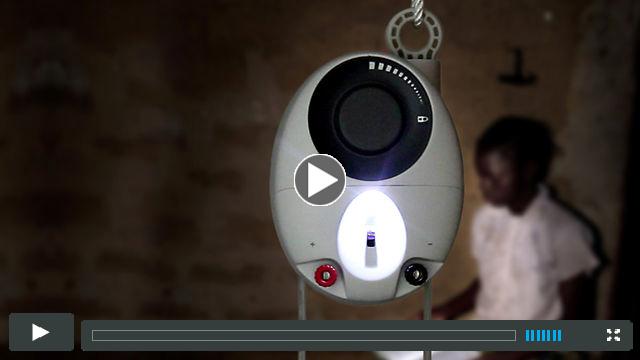
GravityLight: lighting for the developing countries
GravityLight - click to watch (link to video site)


You can read all about the project from their fund-raising website here. And do spare a few minutes to watch the video too - it's fascinating in its own right.


Andrew Rose
14 December 2012 

 Furtwängler's only complete recording of the Brahms German Requiem 


Fabulous sound quality extracted from this live 1948 performance in new XR remastering   


PACO 086

BRAHMS
Ein Deutsches Requiem


Recorded 1948         

Producer and Audio Restoration Engineer:  Andrew Rose      


Kerstin Lindberg-Torlind soprano
Bernhard Sönnerstedt baritone
Stockholm Philharmonic Orchestra
Stockholm Philharmonic Chorus
Wilhelm Furtwängler conductor


Web page: PACO 086  


Short Notes  

"The phrasing at the beginning of the second movement "Denn alles Fleisch" has all the affection one could want, and I have never heard the brief introduction to the great soprano solo, "Ihr habt nun Traurigkeit", played with such tenderness...The soloists have the best deal of all from the recording engineers. Bernhard Sonnerstedt has a light high baritone, beautifully focused... I found his fresh, completely unmannered approach delightfully convincing, with an underlying Biblical strength." 
- E.G., The Gramophone, May 1972   


Furtwängler's 1948 Stockholm performance of Brahms' Ein Deutsches Requiem is the only complete surviving recording - happily it is also the best preserved sonically.


This new 32-bit XR remastering makes the most of this to make great strides forward in sound quality with a wonderfully clear, open sound from all contributors. A really special recording!


Notes On this recording   


One can understand the decision, commented on by The Gramophone's reviewer in 1972, for the original LP issue of this recording to span four sides. Normally one has no difficulty fitting Brahms' Ein Deutsches Requiem onto CD - Mengelberg in 1940 completed it in just under 66 minutes (PACO012). Here I've had to cut quite savagely into the inter-movement gaps, helped by an accurate tuning reading of A4=447Hz drawn from residual mains hum in the recording, in order to just squeeze this into the 80 minutes of a single CD without misrepresenting the musical performance. At normal concert pitch, with the original gaps (with the usual audience coughs), it ran to nearly 85 minutes.

This is the only complete Furtwängler German Requiem, and I've been able to make great strides in terms of sound quality in this new 32-bit XR remaster, helped in no small part by the donation of an unplayed, mint-condition copy of the original Unicorn LP on which it was first issued, for which we are most grateful.


Andrew Rose   


Review LP issue, 1972    


In establishing Furtwängler's importance in the history of interpretation, the Unicorn label has done sterling service. Here is another historic performance, inevitably flawed, and not very well recorded (presumably from radio considering the lightness of bass). But devotees of Furtwängler will take such points for granted and relish the chance to study the master's insight into a work which by nature one would imagine him specially suited.

The results are not quite what I expected. Much of the phrasing is magical, but I imagine it would have been even more flexible had he been conducting one of his regular orchestras. Even so the phrasing at the beginning of the second movement "Denn alles Fleisch" has all the affection one could want, and I have never heard the brief introduction to the great soprano solo, "Ihr habt nun Traurigkeit", played with such tenderness. The tempo there is exceptionally slow - a severe test for the soprano, Kerstin Lindberg-Torlind, whose light high soprano (initially disappointing) then expands well rather in the manner of Grümmer. There are other slow tempi too, but i t was surprising to find "Wie lieblich" taken on the fast side with comparatively simple, unpointed phrasing as though it was a folk-song - very natural and fresh with a spontaneous-sounding stringendo in the middle.

The pull of urgency natural to a live performance is very clear indeed, but from Furtwängler I expected a degree more religious dedication. I naturally went to Kempe's Berlin performance (still available on HMV Concert Classics- mono XLP 30073-4, 4/67) and there I found extra intensity in the first movement, not just in the sustained pianissimos but in the outbursts on the word "Freuden". But then where Furtwängler scored supremely was in the second movement on the fortissimo cries of "Denn alles Fleisch" which have a bitterness, an agony I have never registered before to such a degree.

The soloists have the best deal of all from the recording engineers. I have already mentioned Lindberg-Torlind. Bernhard Sonnerstedt has a light high baritone, beautifully focused. Next to a singer like Fischer-Dieskau his style may sound almost naïve, but I found his fresh, completely unmannered approach delightfully convincing, with an underlying Biblical strength. The choral sound, I am afraid, is generally rather muzzy by comparison, but those who buy this record will almost certainly know what to expect. It is a pity the Requiem was not fitted (as is usual) on three sides, and a fill-up provided.    

The Gramophone  


MP3 Sample  First Movement                  

Listen


Download purchase links:

Ambient Stereo MP3 

Mono 16-bit FLAC 

Ambient Stereo 16-bit FLAC 

Ambient Stereo 24-bit FLAC   


CD purchase links and all other information:

PACO 086 - webpage at Pristine Classical     


Elusive live Furtwängler recordings of Beethoven's Violin Concerto
& Große Fuge
 
Superb new transfers by Mark Obert-Thorn for Pristine


PASC 370 BEETHOVEN    

Violin Concerto     

Große Fuge    

Wolfgang Schneiderhan   violin
Berlin Philharmonic Orchestra

Wilhelm Furtwängler   conductor


Recorded 1952/3                                      

Producer and Audio Restoration Engineer:  Mark Obert-Thorn


Web page: PASC 370  


Short Notes   

"As for Beethoven, anyone who accepts Furtwängler's monumental conception of this composer as the true gospel has difficulty in admiring any other conductor's (Schneiderhan obviously accepted it for this performance of the Violin Concerto, which is really Furtwängler's rather than his). All these are tremendous experiences, so long as one remembers that they are, after all, only the views of one man, and of a particularly extraordinary man at that." 
- D.C., The Gramophone, December 1963

Mark Obert-Thorn has dug into his archives for these two superb live Beethoven recordings made by Furtwängler with his Berlin Philharmonic Orchestra in 1952 and 1953.

As always, the quality of Mark's transfers is superlative, and with Furtwängler on top form and in great sound these are recordings which, outside of a couple of territories, have been inexplicably hard to find for too long.

 
Notes on this recording   
The present recording of the Beethoven Violin Concerto with Schneiderhan and Furtwängler is among the most elusive of the conductor's performances on CD. First released in 1964 as part of a series of Deutsche Grammophon LPs marking the tenth anniversary of the conductor's death, this broadcast has received less attention over the years than his three recordings with Menuhin (two studio, one live) and the wartime version with Erich Röhn taped at the last BPO concert in the old Philharmonie before it was destroyed. It has been transferred here from a 1970s monaural Heliodor LP pressing, as has the Grosse Fuge, which has a similar release history.

The pitches have been left as they appear on the LPs at around A4=445Hz when played at 33.3 rpm, which is in line with what is known about the BPO's higher tuning during this period and the evidence of their other contemporaneous recordings.
Mark Obert-Thorn


MP3 Sample    Concerto finale  

Listen 


Download purchase links:

Ambient Stereo MP3 

Mono 16-bit FLAC
Ambient Stereo 16-bit FLAC


CD purchase links and all other information:

PASC 370 - webpage at Pristine Classical    


Egon Petri plays Busoni

Egon Petri
Egon Petri
PADA Exclusives
Streamed MP3s you can also download


BUSONI
Fantasia Contrappuntistica


Egon Petri 
piano

Recorded 1959 for Westminster LP W-9347
 

Transfers by Dr. John Duffy


Over 500 PADA Exclusives recordings are available for high-quality streamed listening and free 224kbps MP3 download to all subscribers. PADA Exclusives are not available on CD and are additional to our main catalogue. 


Subscribe to PADA Subscriptions start from €1 per week for PADA Exclusives only listening and download access. A full subscription to PADA Premium gets you all this plus unlimited streamed listening access to all Pristine Classical recordings for just €10 per month, with a free 1 week introductory trial.
