Operon's Employee Spotlight exemplifies our commitment to employee engagement. We aim to lay the foundation for our employees to have rewarding and successful careers in the medtech field.
|
|
Associate Name:
Jeremy M.
Started working with Operon: 2012
Starting Job Title: Operator
Current Job Title: Precision Mechanical Inspector I
Jeremy's high school experience in drafting made him an obvious choice for Operon when a client was looking for a "mechanically inclined" candidate. Once Jeremy started work, it did not take long before he received praise from his supervisor who said Jeremy would be hired as soon as possible. This particular department does not typically request many new associates, so the fact that he was hired so quickly is a testament to his skill and work ethic. Since then, Jeremy has been promoted to Precision Mechanical Inspector I within this same department. Read more about Jeremy's journey with Operon.
|
|
Follow Us on Social Media!
| |
Follow and Like us on Twitter, LinkedIn and Facebook to see updates from Operon and interesting articles on #manufacturing, #HR and #medtech.
|
Community College Recognized for Manufacturing Program
| |
|
The Boston Foundation created an award named after former MA Governor Deval Patrick recognizing progress and excellence in establishing employer partnerships and career pathways at community colleges. Operon's partner, Mt. Wachusett Community College, received the award on March 9 for its innovative manufacturing job training program.
The Advanced Manufacturing Technology Programs are stackable programs in advanced manufacturing that address local employer training needs and provide for multiple entry and exit points. Operon is proud to be part of this successful program!
|
Legal Update from Schwartz Hannum PC
| |
 |
In recent years, the National Labor Relations Board (NLRB) has issued numerous decisions finding employer personnel policies unlawful on the basis that they inhibit employees' rights to engage in "concerted activities" protected under the National Labor Relations Act, according to Matthew Batastini at Schwartz Hannum PC.
The NLRB's critical stance toward such policies was recently bolstered by a decision by the U.S. Court of Appeals for the D.C. Circuit, Hyundai Am. Shipping Agency, Inc. v. NLRB, No. 11-1351 (D.C. Cir. Nov. 6, 2015), in which the court upheld the NLRB's invalidation of several employee handbook provisions.
According to Mr. Batastini, in addition to the policies struck down in the Hyundai case, other types of personnel policies that the NLRB has frequently scrutinized include:
-Policies that prohibit "disrespectful," "negative" or "rude" conduct towards management;
-Policies restricting employees' communications on social media platforms;
-Policies restricting employees' communications with the media, government agencies, or other third parties;
-Policies prohibiting any non-work-related use of an employer's name or logo;
-Policies forbidding employees from taking photographs or making recordings on the employer's property; and
-Policies that can be read as prohibiting employees from protesting workplace policies or practices, such as broad policies requiring employees to act at all times in the employer's "best interests."
|
|
|
|
|
|
|
|
|
Greetings from Operon!
This issue of our quarterly newsletter gets into the details of working with temporary labor in medical device manufacturing. Our industry is highly regulated, requiring contingent labor to keep up with ever-changing rules (see item on new ISO 13485:2016 below) while managing classic HR issues, such as shift length.
Below you'll find an article from experts about why on-site staffing firms work best for medical device manufacturing, as well as information on the pros and cons of 12-hour shifts for the manufacturing industry. We've also included tips from CIRCADIAN on how to best manage the change from shorter shifts to 12-hour ones. Our goal is to provide our readers with useful content that they can apply to their business. We hope you find the articles in this issue helpful. If you have a topic you want to see in the next newsletter, reply to this email and let us know!
|
 |
HR Experts: On-Site Staffing Firms Produce Best Results
| |
|
Executives at Nypro Healthcare Outline Advantages to Working with Firms like Operon
|
| |
Photo courtesy of ERE Media
|
At Nypro, a contract manufacturer of healthcare products in Clinton, Massachusetts, HR executives learned that managing the contingent labor process in-house is a time consuming task. Scott Loomer, Senior HR Manager at Nypro-Healthcare, and Rob Brand, Senior Director of Corporate HR at Nypro Inc., outline the cost-benefit analysis of utilizing a full-time on-site temporary labor firm for health care manufacturers in this piece published on ERE.net. An excerpt:
Location, Location, Location
Off-site staffing firms operate a branch model. They intake and screen workers at a central location and then send them to the client's production center, sight unseen. In the on-site model, these staffing firms typically have an office inside the client's facility where they recruit new workers, screen them, train them, and introduce them to their new working environment.
Thorough Training Produces Quality Workers
For the best outcomes, manufacturers should look for staffing firms that have customizable pre-screening assessments to ensure each candidate is a good fit for the specific position and the company's environment. This includes everything from math, reading assessments, and measuring dexterity to teaching the value of work ethic and our expectations of them as workers. At Nypro, our temporary workers are evaluated against all of these elements and more, depending on the specific job or department in which they will be working. Once prime candidates are selected, they move on to the balance of the onboarding process.
Foster a Symbiotic Relationship With the Staffing Firm
In working so closely together, on-site staffing firms become ingrained in your business process yet are able to supply useful feedback. At Nypro, we've been working with Operon Resource Management, a specialized staffing firm in health care manufacturing, for almost 15 years. In our production facility, Nypro's supervisors can go directly to the on-site managers to address an issue with a temp, rather than going through HR. Additionally, on-site staff can be included in company safety training, allowing them to pass along any new safety information to temporary workers. The communication is constant and flows in both directions. Since our staffing provider is embedded in our business, it is able to give us insight into what's working and what needs attention. Quarterly business reviews allow for the presentation and discussion of metrics and tracking tools to show us how our workforce is doing.
The True Value of the Service
Depending on the applicant screening, training, and orientation value-proposition of your staffing provider, the rewards can be huge. In this regard, one word of caution - don't get hung up in a straight mark-up comparison with other providers of lesser contribution. Look at total cost of onboarding and their ability to fill needs with qualified workers who are ready to make a contribution on the factory floor day 1.
Read the entire piece here.
|
|
Pros and Cons of a Rotating 12-Hour Shift for Manufacturing
Plus Tips for Transitioning to 12-Hour Work Schedules
|
|
| |
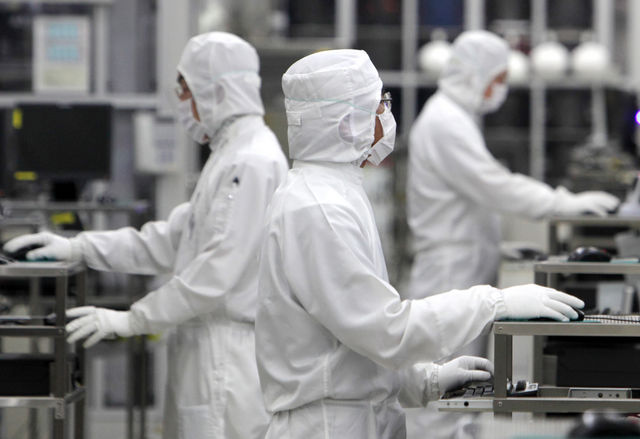
Photo courtesy of Tomohiro Ohsumi/Bloomberg
|
After the Great Recession, many manufacturers had to find new ways to increase productivity and efficiency. Some changed their shift schedules from eight to 12 hours so they lost less production time on shift changes each day.
But there's always a trade-off, and Operon explores both sides in an article published in Industry Week. The challenge for manufacturers is finding a reasonably acceptable shift configuration that provides the most productive use of machinery, has the highest yield of acceptable product and the best application of supervision and available labor.
The biggest factors include:
- Scheduling Issues: Fewer shift changes mean fewer opportunities for mistakes to happen, however most workers are accustomed to eight-hour shifts and may not be willing to make the change.
- Work/Life Balance: Workers who like 12-hour shifts value the extended time off but they can be disruptive to family life and personal health by causing long-term stress and lack of regular sleep.
- HR Considerations: When you consider that benefits account for 25% to 30% of each employee's total compensation, fewer employees doing more (going from 8- or 10-hour shifts to 12-hour shifts) reduces total labor costs and simplifies scheduling. Yet shift type and length also influence performance and evidence suggests workers are more at risk to make mistakes that jeopardize their safety on 12-hour shifts.
Is your company transitioning to a 12-hour work schedule from an eight-hour shift? CIRCADIAN, a leader in providing 24/7 workforce performance and safety solutions, suggests these nine tips to help your workers manage a shift schedule transition.
1. Don't rely on overtime
Overtime can be the downfall of a successful move to 12-hour shifts. Why? Workers lose what is deemed by many as a primary benefit of 12-hour shifts for them-added time off.
2. Permit multiple short breaks
Keep the same work-to-break ratio, both for the sake of fairness and to avoid fatigue and vigilance challenges.
3. Cross-train
Done effectively, cross training can increase job satisfaction and make the physical and mental requirements of a 12-hour shift easier to handle.
4. Focus on communication
CIRCADIAN says the potential for communication breakdowns occurs in 12-hours shifts, particularly when the shift cycle includes six- or seven-day breaks. Develop solutions, such as message boards or short debriefing processes.
5. Require managers to work 12-hour shifts
Not necessarily all the time, but managers should regularly experience a 12-hour shift. It improves communication channels and raises employee morale.
6. Establish an internal review team
A team comprised of workers can serve as a liaison to other workers, as well as share insights or concerns with senior management.
7. Hold team-building social functions
This may be easier to do with 12-hour-shift workers.
8. Encourage exercise
As long as it's not too close to bedtime, exercise improves morale, alertness, health and sleep. CIRCADIAN says providing an opportunity to exercise at work frequently is well-received.
9. Look for shiftwork-friendly products
Consider incorporating products that ease worker fatigue, such as anti-fatigue mats, and providing ergonomically correct positioning. Also keep in mind that these products typically are in use 24 hours per day, so durability should be a factor when making selections.
|
|
|
|
|
Calling All Medical Device Manufacturers Looking for Entry-Level Employees
| |
|
Operon CEO Spreads the Word About New Skills Standard at MD&M West
|
| |
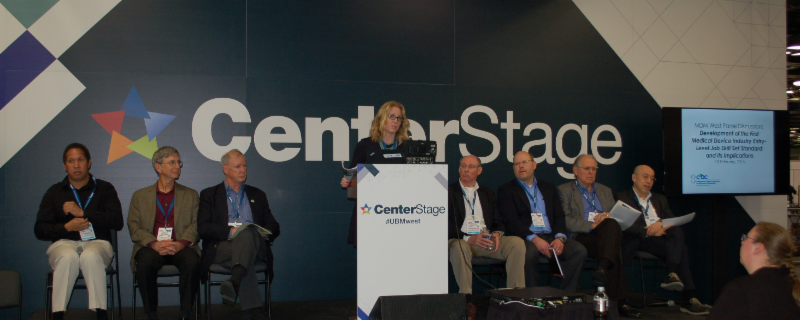
Members of the Community College Consortium for Biosciences Credentials presents at the Center Stage at MD&M West in February.
|
For the past few years, Operon has been participating in the Community College Consortium for Biosciences Credentials' harmonization initiative. The process is coming to a close and the final product will soon be released--a national standard of skills for entry level medical device employees to be used in community colleges' curriculum. The grant addresses skill areas including: engineering, research and development, quality assurance, instrumentation, manufacturing, regulatory compliance and facilities management.
Steve Sawin, Operon's President and CEO, presented at MD&M West in February with fellow members of the harmonization initiative. Now that the skills standards have been developed and will soon be available to the public, what next? The answer: A call to action for medical device manufacturers and community colleges to spread the word!
Are you a medtech manufacturer that is struggling to find skilled workers? Do you work at a community college that is close to a medical device cluster? Then you should get involved.
Sign up here to be notified when the skills standard is released. Then contact a community college/manufacturer in your area to share the news (you can find a map here).
|
|
|
|
What to Expect from the New ISO 13485:2016
| |
As the only known ISO 13485-certified staffing firm, Operon is closely evaluating the new standard
The International Organization for Standardization has recently released the long-awaited revision to ISO 13485, the global standard for medical device quality management systems (QMS). This new release replaces the previous version from 2003. ISO 13485 is a management systems standard specifically developed for the design and development, production, storage and distribution, installation, servicing, provisioning and decommission/disposal of medical devices.
Its primary objective is to facilitate harmonized medical device regulatory requirements. The requirements in this International Standard can also be used by suppliers (e.g. raw materials, components, subassemblies, medical devices, sterilization services, calibration services, distribution services, maintenance services) to such organizations. This can also include outsourced labor on-boarding services to support the staffing needs of large production or distribution operations.
Similar to the recent revision of ISO 9001 released in September 2015, this new version of ISO 13485 provides greater emphasis on a risk-based thinking approach to compliance and an increased focus on supplier management.
Some key changes in ISO 13485:2016 include:
- Transition from risk management as solely a part of the design phase to a risk-based thinking approach that covers the entire life-cycle of the product from supply chain to delivery
- Increased linkage with regulatory requirements, particularly for regulatory documentation
- Alignment with 21 CFR 820.70 related to the requirements for software validation
- Additional requirements related to the planning, documenting, and implementation of corrective and preventive action
This new revision is expected to have an impact on organizations that supply labor to medical device manufacturers. Greater emphasis on supplier management will increase the burden on staffing organizations to demonstrate a compliant Quality Management System in order to meet their customers' systems and regulatory requirements.
|
|
|
|
Client Corner: SMC Ltd. Moving to New, Expanded Manufacturing Facility
| |
|
|
| |
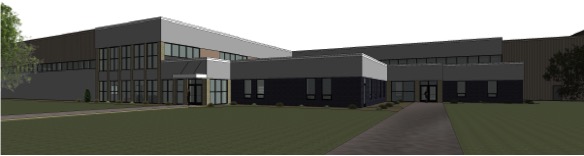
An artist rendering of the new SMC facility.
|
SMC Ltd., a medical device contract manufacturer with locations in California, Wisconsin, Massachusetts, Ohio, Costa Rica, and India, will be moving to a 250,000 sq. ft. facility in Devens, MA. Operon provides temporary labor for SMC's Massachusetts locations.
The expansion will consolidate three current facilities into one facility, while allowing additional square footage for future growth. The new manufacturing facility will have a 60,000 sq. ft. Class 8 clean room with an additional 20,000 sq. ft. Class 7 clean room.
"We're excited to build a leading edge facility and consolidate all three SMC East locations under one roof. The move to Devens will allow us to better serve our customers with an expanded manufacturing service offering and increased product development capabilities. The ultimate goal is to help our customers get their products to market faster and provide a competitive manufacturing solution," said Brian Payson, Vice President and General Manager SMC East.
Operon looks forward to helping SMC make a smooth transition to the new location!
|
|
|