|
|
|
Episcopal Women's Caucus Newsletter


|
The Episcopal Women's Caucus: Advocating for women since 1971,
theologically, spiritually and politically.
|
|
|
|
IN THIS ISSUE:
- Convention Breakfast
- Article by Convener
- Mary and Joseph Awards
- Sarah Eagle Heart
- General Convention Resolutions of Interest to Caucus
- Videos of Nominees for Presiding Bishop
The Caucus will have a booth at General Convention. Be sure to drop by - chat - get a breakfast ticket - check out our merchandise.
|
| |
|
|
|
 |
|
Episcopal Women's Caucus
Convention Breakfast
The traditional Episcopal Women's Caucus breakfast at General Convention will be held on June 28, 2015 from 7-9 am in the ballrooms of the Marriott City Creek,across from the Salt Palace Convention Center in Salt Lake City.
The breakfast is hosted by the Board of Directors for the Caucus and features a keynote speaker and the presentation of the Mary Magdalene and the St. Joseph awards, to a woman and a man who have been instrumental in advancing justice for women, and thus justice for all people.
This year's keynote speaker will be Sarah Eagle Heart,
missioner for indigenous ministries for the Episcopal Church. In October of 2014, she was named as one of 40 emerging American Indian leaders by The National Center for American Indian Enterprise Development (NCAIED). The award recognized 40 emerging American Indian leaders from across Indian Country who demonstrated leadership, initiative, and dedication and made significant contributions in business and/or in their community.
Eagle Heart holds an MBA in global management from the University of Phoenix, San Diego. She is enrolled as a member of the Oglala Sioux Tribe in Pine Ridge, South Dakota, and was raised on the reservation. The following video, made in 2012, introduces her to you.
Advance Tickets ($26.00) for the breakfast may be reserved by emailing mackeychristine@att.net or purchased for $30..00 at the Caucus Booth in the Exhibition Hall.
|
|
|
|
|
|
|
|
|
Letter from the Convener: The Rev. Terri Pilarski 
Although I moved fifty years ago, this summer I will return to the city of my birth, where I will stay for three weeks. I've come back many times, but this will be the longest visit I've ever made. No doubt the contrast of how I began my life and how I live it now will be prominent in my thoughts. True, I think about this every time I return to Salt Lake City. However this summer, when the Episcopal Church holds its triennial General Convention in Salt Lake City, the past and the present will merge in new ways. More specifically, on Sunday, June 28, when the Episcopal Women's Caucus hosts its ever popular General Convention breakfast, I will celebrate my fifteenth anniversary of ordination to the priesthood in the Episcopal Church. I've come a long way from the little Mormon girl I was when my family moved away in 1966.
TO READ MORE CLICK HERE |
|
|
|
MARY MAGDALENE AND JOSEPH AWARDS
This year the board is proud to name Fredrica Harris Thompsett as the recipient o
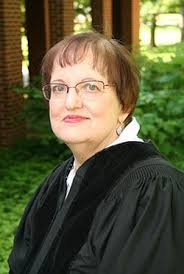 fthe Mary Magdalene award. Frederica served on the Board of the Directors in the early days of the Episcopal Women's Caucus. She is the Mary Wolfe Professor Emerita of Historical Theology at Episcopal Divinity School where she served as academic dean for 14 years and as a professor for over thirty five years. She is a noted church historian, feminist, activist, author, and theologian.
Fredrica says that her vocation is to teach. She credits other women, Verna Dozier, Pam Chinnis, and Marion Kelleran, as mentors who taught her how to be a theologian and a teacher while remaining a lay woman in the church.
Raised in a progressive Episcopal family in Michigan, Thompsett has been active in causes of justice for women and people of color her entire life. Her greatest challenge has been overcoming the blinders of privilege, unlearning the assumptions she was raised with, which are supported by the culture she lives in. Fredrica currently serves on the Executive Council for the Episcopal Church. She is delighted to receive the Mary Magdalene award and honored to be aligned with this fiesty, troublemaking, faithful disciple. 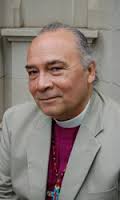
Likewise, the board is pleased to announce that The Rt. Rev. Steven Charleston has been named as the recipient of the St. Joseph award. Bishop Charleston is a citizen of theChoctaw Nation of Oklahoma. His great-grandfather and grandfather were both ordained Presbyterian pastors who preached in their native language in rural communities throughout the state. Following in their footsteps, Steven was ordained at Wakpala, South Dakota on the Standing Rock Sioux Reservation.
Steven was the national director for Native American ministries in the Episcopal Church, a tenured professor who has served on the faculty of three seminaries, and the Bishop of Alaska.
Currently he teaches at the Saint Paul School of Theology at Oklahoma City University. Of the St. Joseph Award Steven says, "Joseph was a partner in the very contemporary sense of the word: the wisdom to work together, the humility to listen, the courage to challenge his culture. If one can learn those lessons and live into them, I think that's a good thing to do."
|
|
LINK TO VIDEOS OF NOMINEES FOR PRESIDING BISHOP
|
GENERAL CONVENTION RESOLUTIONS OF INTEREST
from Lilith Zoe Cole
As we gear up for another General Convention, the 78th, the big issues will be the TREC (Task Force to Reimagine The Episcopal Church) report recommendations for a more "nimble," modern church; the Task Force on Marriage report with its recommended canonical changes to permit same-sex marriage in diocese where this is now legal under civil law; and the election of the 27th Presiding Bishop. As usual, a number of the resolutions that have already been filed address important justice issues, including those specifically related to the lives and unique ministries of women. All filed resolutions are posted on the General Convention website:
General Convention.
Although all resolutions proposed by CCABs (Commissions, Committees, Agencies, and Boards) have already been filed along with their reports, resolutions by dioceses, bishops, and deputies may continue to be filed until the second legislative day of convention.
To check on resolutions, go to the general convention web-site, and click on "legislative resources." The list can be sorted by number, subject matter, and proposer. Reports from CCABs can all be found on the General Convention website as well, under the tab "Blue Book resources." You can review reports individually or in the electronic version of the Blue Book (which for the first time in some years does actually have a blue cover). Each report has a list of all committee members, as well as a recap of the group's mandate, along with explanations for the proposed resolutions.
Those looking for an explanation by the trustees of General Seminary about the recent issues between faculty and the Dean will not find it in the report the trustees submitted for the Blue Book (a good reminder to check other resources, such as Episcopal Cafe, for alternative views of what is needed and why).
The TREC Report is long on overarching values, but short on concrete ideas for the restructuring of the church in the 21st century. The report proposes nine resolutions - A001 - A009 - creating one sweeping polity change in the way General Convention and the Executive Council function, and then identifying three other areas for examination. The major change proposed is for General Convention to become a unicameral legislature, with bishops, clergy, and laity all meeting, deliberating, and voting together. In some cases, voting would still be by orders. In addition, a dramatic reduction in the size of Executive Council is proposed, eliminating representatives from each province, and all Standing Commissions, except the Standing Commissions on Constitution & Canons and Liturgy, & Music. Finally, this set of resolutions proposes revised leadership titles and clearer lines of accountability among EC, the Church Center staff, and executive officers.
The TREC report also proposes that all church-owned property be comprehensively evaluated to determine how best to maximize its use. Resolution A003 proposes that $200,000 be dedicated for this purpose. The first resolution the task force proposes addresses funding for formation and education of the ordained.
Although the TREC report proposes a grand vision of the mission and ministry of the church in the 21st century, the report does not link its proposed resolutions to this vision.
The main focus of the 122-page report of the Task Force on Marriage is to articulate a theology of marriage and to consider whether same-sex marriages are able to express that theology. The report proposes both further study and immediate changes to the canons on marriage. The changes proposed would allow same-sex marriages to be treated the same way in the church as different-sex marriages, in states where same-sex marriages are legal. The diocese of Chicago has also proposed a change to the marriage canons, C024, which advocates the insertion of an "if" clause, that seems to allow the church to distinguish its actions solemnizing and blessing marriages from the state's function of recognizing civil marriage.
Most interesting among the hodgepodge of justice resolutions are the bloc from the Standing Commission on Social Justice and Public Policy. These resolutions, A091-A096, invite the church to the prophetic role of calling for economic justice. They advocate reform of defense spending, focus on food security, income tax reform, and wealth redistribution. These resolutions articulate a compelling vision of God's commonwealth of love and justice. However, it's not easy to see what concrete steps the church as a corporate body or its individual members might take to effect the vision.
Both the Standing Commission on Liturgy and Music (A066) and the Diocese of Connecticut (C016) have proposed revisions to Article X of the Constitution to provide for the development of alternative liturgical texts that are not intended to replace or amend the BCP. Some commentators suggest such amendments are not necessary, pointing to the long-running development of the Book of Occasional Services as well as the Enriching Our Worship series.
Other areas of focus to watch include the establishment of a Women's Ministries Coordinator position (A032), continuing involvement in the UN (A020 - this would continue the status that allowed TEC to send an official delegation to UNCSW this year for the first time), Latina (A035) and Native American ministries (A024-A029) and theological training (including a resolution concerned with the trafficking of Native American women and one calling for dioceses to examine the effects of the Doctrine of Discovery - the topic of our key note speaker at the triennial Caucus breakfast on June 28 will address), gender equality in foreign aid (A049), support of persons who are LGBTQ in Africa (A051), as well as continuing work on anti-racism. Most of these resolutions have been proposed by the Executive Council subcommittee on Indigenous Ministries or Anti-Racism, although the LGBTQ resolution comes from the Standing Commission on Anglican and International Peace with Justice.
The Standing Commission on Lifelong Christian Formation and Education has proposed several resolutions designed to provide content for, as well as access to, Confirmation and other formation programs. They have also reposed that the Safeguarding God's Children materials be updated.
The Caucus' legislative committee will continue to monitor resolutions as they are filed and make their way through their various legislative committees. Only one member of the board is a deputy for this triennium, and she'll be tracking the slew of resolutions proposing revisions and fine-tuning of Title IV, as the secretary for the legislative committee on Constitution & Canons. However, all members of the board, plus several volunteers will be present in Salt Lake City, working the Caucus booth and tracking legislation of interest to members. If you're in or near Salt Lake City this summer, stop by and say hello - maybe even talk to us about becoming a board member yourself. If you can't be with us in person, we appreciate your prayers for the Caucus and for General Convention, and we'll keep you updated on our Facebook page.
|
|
FESTIVAL OF HOMILECTICS From The Rev. Gigi Conner
If you want to find out what kind of shape you are in - go to the high altitude places - like Denver, Colorado! I have just returned from the Festival of Homiletics which was held in Denver. The lectures/preaching/worship took place in three different churches - within easy walking distance from the hotels. Two of the churches however, were 'up the hill' - which felt like 'up the mountain.' I kept forgetting about the warnings of high altitude and would charge out the door of the hotel - heading up to the church at a fast clip -so as to get a good seat (is there ever a good seat in a church that is over 100 years old?) and would find myself gasping for air while my heart was beating wildly in my chest. Then I would remember - oh yeah - altitude does figure in here (even though it is possible that I am actually out of shape). To get energized - maybe it is necessary to come back down - come off the mountain - and enter into the life of the city. Easy to do in a place like Denver which has a long street marked as a 'mall' with a rail car that travels, free, up and down the street, which is loaded with stores, outdoor restaurants, outdoor seating areas - all teeming with life.
This seemed to be a recurring theme in the comments offered by the variety of theologians and preachers during the week: God is not on the mountain - God is down in the cities - among the people. The God of pathos is with us all the time, in everything, not sitting on a divine throne, floating above us, but with US - us being all of humanity. Or as one speaker put it, "God is around the planet vivifying - animating the spirit of the world."
|
|
Use this form to join the EWC, renew your membership, or make a donation. Make check out to EWC and mail to: Episcopal Women's Caucus, 1103 Magnolia St., South Pasadena, CA 91030
attn: Chris Mackey-Mason, Please indicate if this a:
___new application
___renewal
___donation to the EWC
Amount: $________
For new and renewing members, please select the appropriate membership level below.
| | |
|
|
