|
THE MONTHLY CAUCUS*
The Episcopal Women's Caucus:
Advocating for women since 1971,
theologically, spiritually and politically.
ADVENT CAUCUS 2013 |
|
|
IN THIS ISSUE:
- Greeting from Co-Convener
- Australia: a woman is appointed as bishop
- Bishop Suffragan Search Diocese of New York
- Companions on the Way a new venture in community
- Passing Ellenville - one act leads to a video
- Ministry Transition - adding teaching preaching to the mix
- Conference offerings: Kirkridge and Adelynrood
- Commission on Status of Women
|
|
ADVENT GREETINGS from Terri Pilarski 
Co-convener of the Episcopal Women's Caucus
The window of my second story home office affords me a perfect view of a squirrel in the tree outside. This morning the squirrel sits in a hole in the tree and eats her breakfast, just her little head and hands visible as she nibbles some goody. The squirrel is plump, ready for winter, with food stashed away in multiple places. December ushers in the season of Advent, a time when the tradition of the church year asks us to consider if we are ready? How are we preparing for the coming of Christ in the year ahead? This time of year is always paradoxical, a yearning to slow down and move to interior spaces contrasted by a culture of parties and shopping.
As Christians, the paradox of this time of year is amplified as we prepare to celebrate, the Incarnation, one of our major Holy Days. How we are being good stewards of the world around us is contrasted with the urge to shop and spend money on gifts. How are we caring for others even as we bake and cook and eat our festive meals? How are we tending to the needs of the world around us as we wrap the gifts for our family and friends? The paradox is, in part, that Christmas and all the preparations for it are fun but they are also a trap. We can become trapped in too much work, too much pressure, too much self-interest. Advent is an invitation to slow down and ponder God's love poured out in the world. As Christians we know God's love in its most perfect form in the life of Jesus. God's love made manifest in human flesh is a paradox as well. God's love manifest in and through us is often places us in paradoxical situations, called to love when we want to do otherwise.
This month, as you go through the busyness of Christmas preparations, remember to take a few minutes now and then to stop and give thanks, rest, and find some silence. The Season of Advent is only four weeks long, most of the month of December. Advent holds in contrast the pull to busyness and a pull for silence. Sometimes the best way we can love ourselves and therefore love others is to take the time to find stillness, and a balance in life. Anne Lamott, in her infinite wit and wisdom offers this thought on grace: "I do not understand the mystery of grace -- only that it meets us where we are and does not leave us where it found us." May the grace of this season meet you where you are and at the same time bring you to new place of peace.
|

Australia:
The Reverend Dr Sarah Macneil has been appointed as the 11th Bishop of the Anglican diocese of Grafton.
Dr Macneil said she was surprised and humbled by her appointment.
"The Diocesan Appointment Board is keen to have a bishop with a heart for mission in the 21st century, a respect for the diversity of Anglicanism and with administrative experience, all of which are part of my story," she said in a statement.
Dr Macneil was previously the Dean of Adelaide and archdeacon in the Diocese of Canberra-Goulburn.
She will leave her role as a senior associate priest at Holy Covenant in Jamison, ACT to take charge of the Grafton diocese.
|
| Bishop Suffragan Nominees, Diocese of New York
The Standing Committee of the Episcopal Diocese of New York Episcopal announced a slate of five nominees to stand for election as the diocese's bishop suffragan. The election will take place on December 7th.
 The Rev. Kim L. Coleman, rector, Trinity Episcopal Church, Arlington, Virginia;St. Paul's Episcopal Church. 
The Rev. Canon Susan C. Harriss, rector,Christ's Rye, New York 
The Rev. Kathleen L. Liles, rector, Christ and St. Stephen's Church, New York, New York Also nominated were: The Rev. Allen K. Shin, rector, St. John's Episcopal Church, Huntington, Long Island, New York; The Rev. Mauricio J. Wilson, rector, , Oakland, California and nominated by petition: The Rev. J. Patrick Ward, Interim Rector, Christ Church, Riverdale, Bronx, NY. |
|
COMPANIONS ON THE WAY!
by the Rev. Dr. Shane Phelan, CMA
A new venture has begun on the grounds at Holy Cross Monastery in West Park, New York. In January, the Companions of Mary the Apostle began our shared life. Shane Phelan and Elizabeth Broyles, both passionate about life in Christ, are seeking to share that life in community with others.
Our mission is to enable all people to experience the presence of God through a common life of prayer, worship, study, and service. We do that through
a) supporting the spiritual journeys of all people;
b) helping people to access the feminine at the heart of God by fostering the use of inclusive, diverse language and images of God in worship and prayer;
c) supporting women as leaders within and beyond the Church.
We turn to Mary of Magdala, the Apostle to the Apostles, as the personification of women's leadership and power. Mary's history of healing and conversion, her place at the hinge between death and resurrection, her subordination and misrepresentation in the Church, all speak to the power and the challenges of women today.
We pursue our mission in the context of three guiding values: love of God, love of the earth, and love of one another. We are revisioning the traditional vows to meet the needs of our time. We have formulated a covenant to guide us, rather than a rule, because of the importance of shared accountability and support on the journey.
We are beginning a network of companions who seek to share our values within the context of their own lives. We are forming covenant groups in person and on line so that people from all over can be connected in a meaningful way. We are looking for ways to share the news of resurrection and renewal, to make a space for the questions in our hearts and minds, and to challenge what needs to be challenged.
The two of us in residence are currently working as retreat leaders, spiritual directors, and supply clergy. We hold local gatherings of women every other week, as well as quiet days and longer retreats. As other women join us, we will encourage them to use their gifts as they feel called.

We are enabled to make this beginning by the generosity of the brothers at West Park. We meet so many people here, from all walks of life and different places on the spiritual journey. We know that this is a place to hear God's call for the future. We share daily Eucharist and Vespers with the brothers. Matins, Diurnum, and Compline are said at our house. We are enjoying the freedom of experimenting with different prayer books and resources, while we live in the tension of masculine language in shared offices.
We would love to hear from you. We have an electronic newsletter.
If you would like to receive that newsletter, please send your email address to Companions. Our website and blog, "Standing at the Empty Tomb," is at Companions of Mary the Apostle
Our Facebook page is Facebook/CompanionsMA.
Thanks be to God for this new beginning!
|
|
|
|
|
 PASSING ELLENVILLE PASSING ELLENVILLE
A Photo Essay leads to short Documentary about transgendered teens by Gene Fischer
Gene Fischer is a New York City-based photographer. His work has been exhibited at the (e)merge Art Fair in (Washington, DC), Center for Photography at Woodstock, the Art Registry Gallery (Washington, DC), Terra Nova (NYC), and on multiple occasions at the Woodstock Byrdcliffe Guild in Woodstock, NY. In 2010, his work was reviewed in Washington Life Magazine. Gene's work is held in private and corporate collections throughout the US, including the Samuel Dorsky Museum of Art at the State University of New York and Davis & Harman, LLP
Why I started this project
People often ask me how I got involved in this project and why I have become so passionate about telling these young people's stories. Well there is usually some personal relationship to things we all get involved with, right?
When I was 19 years old, my mother took me to a Christian psychologist who told me the Bible says homosexuality is wrong. I still dated boys. And then a couple of girls. And then more boys.
When I was 21, my mother sent me to an Ex-Gay Christian ministry - the type where they try to convert you to being straight, sort of like a 12-step program. Each week these 30, 40, 50 year old men would "confess" to the other members and leaders of the Ex-Gay ministry their homosexual thoughts and why they were wrong in the eyes of God.
Obviously, none of these things worked - but it made it harder in my youth to become my true self and feel positive about who and what I am. I struggled a very long time to "feel normal" and to feel "passable" in the environments in which I lived and worked. It delayed my maturing to become a more positive and happy person.
And so, I see myself in these kids today - what gay people of my generation went through 25 years ago seems very similar to what these transgender kids are going through today --- especially when they are living in small, rural towns like where I grew up. While societal acceptance of the gay community has improved over the last 25 years, it feels like the Transgender movement and societal acceptance is still back where the gay movement was then - viewed as outsiders, not well understood and problems being accepted.
How it Started
In early 2012, I was asked to contribute to a fund to send a young transgender person to a writer's workshop. It was explained to me that this young person had great enthusiasm and a talent for prose. He was also on government assistance and food stamps and couldn't afford the tuition. A few weeks after this request, I finally met James, a 23 year old transgender person living in a small, rural town in upstate New York.
Thus began a new journey for me, both as a photographer and an adult gay man, as I started to shoot these young people in their homes, on the street, and around their small towns. I also then began to see similarities of my own youth and coming out and struggling with acceptance as I spent more time getting to understand the lives of these kids.
As the photo essay progressed, I began to think how I could tell these young people's stories beyond photographs and to put their voices into people's heads. I was fortunate enough to meet a young student filmmaker in early 2013, Samuel Centore, who saw the same possibility in my photographs to tell these young people's stories.
We began filming two of the young people from the photo essay in early 2013. The film is shot in Ellenville, New York - a small, economically-depressed town 90 miles north of New York City that time has passed by. Located at the edge of the storied Catskills Mountains and not far from the now-abandoned major Jewish resorts which had their heyday in the mid-20th Century, Ellenville and its few dilapidated motels are easily avoided via the state highway outside of town.
The film follows James, a female-to-male 23 year old, who comes from a history of abuse and a string of family problems, and Ashlee, a 22 year old male-to-female, who struggles to find acceptance of her transgender identity in her orthodox Jewish community. Our film will show a side of transgender youth that we have not seen in the national news media. These are the transgender youth at the margins of society living, barely surviving on government assistance and food stamps and facing tremendous prejudice and hate. However, the film also shows how each of the subjects, including their older and wiser transgender mentor, find their own pockets of happiness as they go along their life journey.
We are raised funds through Kickstarter to finish editing the film and submit to major film festivals. We are passionate about getting these young people's stories told and making a difference for kids just like them in Anytown, USA - it's a story we do not see in mainstream media and we will give a voice to this disenfranchised population.
What I have learned
Over the last one and a half years photographing and filming these young people, I have begun to understand what being transgender means for them and others in similar circumstances:
- The sometimes impossible difficulties finding appropriate and educated counselors and therapists that understand transgender issues in rural communities - worsened when relying on government assistance and Medicaid.
- Finding transportation to get to those therapists and doctors when you do get approved.
- Being homeless and then living in youth shelters --- but then hoping to find low rent affordable housing and getting food stamps to live on.
- Talking a lot of talk about being "Passable". Passable to not get scrutinized in the street by strangers. Passable so as to not get chased after or yelled at with derogatory slurs. Not to get dirty looks. And Passable to feel good about one's self and build self-esteem. --- Imagine how you look in the mirror each morning to make sure you look 'alright' before going out ---- do I look fat, do I look old, do I have a pimple? But then imagine adding on to that the hope of being perceived as a different gender than the world perceives, and not getting strange looks in your little town.
- And of course, DREAMS. Dreaming of getting approved to start hormone therapy. Dreaming of settling down to a 'regular' life. Dreaming of one day being able to afford surgery....but in the meantime, doing a lot of talking about being "passable"...sometimes that just makes life more manageable.
Starting to Make a Difference
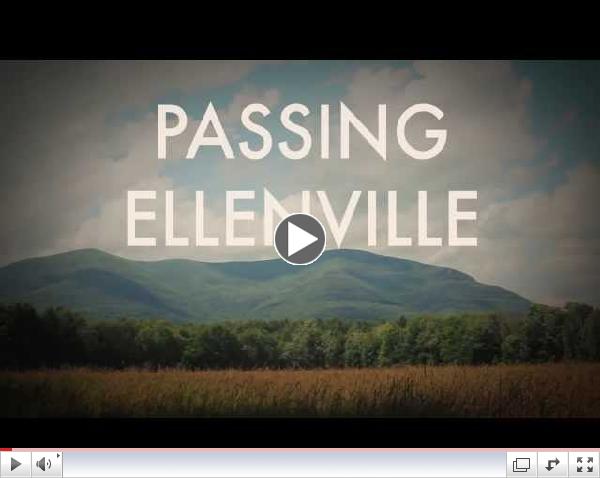 | | Passing Ellenville |
Within days of the YouTube launch, James and Ashlee were walking along the streets in Ellenville. They ran into a group of kids from high school - the same kids that that used to bully Ashlee while she was in school. They heard the buzz around town and looked at the YouTube video. Most of them had a lack of interest and were sneering at James and Ashlee, but one of the kids said just the trailer was an eye opener for him. He said he had no idea what she must have been going through and that he respects her for what she is doing and never really thought about things from her point of view before. He said she is lucky because she knows what she wants out of life - and said he is just a loser that has no clue what he wants to do. Ashlee was shocked and overwhelmed.
How do you change the world? One person at a time.
Original Photo Display
|
Ministry Transitions: Adding Teaching Preaching to the Mix
The Rev. Lisa B. "Lucy" Hamilton is Associate Priest at St. Thomas Episcopal Church in St. Petersburg, Florida. She has preached in parishes in Indiana, Pennsylvania, New York, Connecticut, Rhode Island, Massachusetts, Florida, New Zealand and England.

When I told Ron, my spiritual director, that it seemed my vocational future was coming together as if I were looking inside a kaleidoscope to see a design slowly taking shape, and that the design was pointing me toward teaching preaching, he laughed.
Ron laughed because he's known me since I was a very young woman who wrote notes on her bulletin with the little mini-golf pencil in the back of the pews.
Somehow all those years ago - maybe even because I informed him - Ron learned that I was taking notes on his sermons. I noted points at which I thought Ron's delivery was strong and the places where I thought he'd lost his logic.
Ron asked for my notes. At least this is how I explained to my mother that in addition to shaking his hand as I left church, I handed the senior minister a scribbled-on bulletin. Weekly was my mother mortified, giving Ron an embarrassed smile as he gleefully accepted the bulletin, and sometimes even responded to my critique, always in a way that made me feel my opinions were valid.
Actually, my call to add teaching preaching to my ministry mix has roots that go further than Ron at the Disciples of Christ Church in which I grew up. I first boycotted Sunday School at age four because I wanted to listen to the deep voice and rolling cadence of our long-time senior minister, Dr. Anderson, who knew how to tell stories, and how to use his voice with authority even when he was whispering. Over time, I attended Sunday School less and "big church" more, enthralled by the sermons preached in what I judged as varying degrees of effective by Dr. Anderson and then a series of successors.
Eventually, I was asked to be the young face on the committee that eventually called Ron to be the senior minister. Several years into his tenure, I asked him for a recommendation to his alma mater, Yale Divinity School. By this time Ron had married my first husband, Scott, and me, and, five years later, helped us begin the walk through Scott's cancer that ended in his death eight months later at the age of 32. Gradually after Scott's devastating death, I found my way into ordination and a ministry mix of communications and parish and pastoral care. In a way, it was a natural outgrowth of my work in Mister Rogers' Neighborhood, where I was employed when I became a mother and when I became a widow.
Divinity School and ordination found expression in organizations including Trinity Wall Street Media and CBS Religion News Unit, alongside hospice chaplaincy and parish work, where preaching and pastoral care have continually lit my soul. I was happily supplying in parishes and serving in a beloved Church Center job when the budget cuts came in 2009.
I was grateful in this trying vocational period for the opportunity to serve as president of the Berkeley at Yale Alumni Association, because it gave me a chance to use latent meeting-running and letter-writing skills. It also gave me a chance to learn about a phenomenon across denominations. Fewer and fewer people who are called to ordained ministry are able to avail themselves of the traditional, residential three-year seminary education Ron experienced in the 1960s and I in the 1990s. Many seminaries are reorganizing themselves, and some are closing. Dioceses, synods, districts are constructing educational programs for those in their ordination processes. I couldn't get this information out of my head, couldn't help but think there were some opportunities for the teaching I'd longed to do while in Divinity School, but had put out of my reach for financial reasons the complicated logistics of raising a child alone. The information sat in my head, suspended like chains of onions hanging from the ceiling, patiently waiting to nourish through the winter.
Eventually, I was led, by a series of improbable events, to a parish where I serve part-time, but where I love the people all the time (and at least most of them seem to love me at least most of the time). About the same time my parish call came, so did part-time employment at CREDO, the wonderful organization that has guided so many clergy and lay employees of the Episcopal Church toward healthier living. Sadly, about a year and a half into the experimental project for which my colleagues and I had been hired, the funding disappeared. Also disappearing was my experience of feeling my vocational life in near-perfect balance.
Now what? The time and energy I'd expected to give CREDO, along with the income I'd anticipated, were gone. "Now what?" How many times did I ask God that? Sometimes pleading, sometimes raging, even a few times with humility. And not infrequently did I bring the question to ever-patient Ron, who consistently asks me useful questions like, "What do you think God is desiring for you?" I have to confess to frequently being more impatient than gracious with questions like this, but nevertheless his consistent, gentle prodding helps me stay more open than I would be otherwise.
Nevertheless, God brings us home to ourselves in many ways. One of those ways is though the evolving incarnations of our ministries. And this is my incarnation, for now, anyway: I'm on my way to teaching preaching in the diocesan/synod/district ministry training programs that are popping up in mainline denominations across the country. And leading ministry retreats and even offering one-on-one tutoring. The setting in which I teach is less important to me that the learning itself. I'm enrolled in Sewanee's D.Min. preaching program, eagerly honing my own skills and enabling others to reach their preaching potential. God and I are creating a new work balance for me in which the giving ratio of what I am offering and what the world is receiving is healthy and invigorating.
Along the way, I'm learning that the ever-evolving shape of ministry has a constant: it always demands asking and answering what God desires for us.
|
|
|
|
| PROGRAMS @ Adelynrood
Adelynrood is a retreat and conference center owned and operated by The Society of the Companions of the Holy Cross.We offer women and men an opportunity to visit and to discover new resources for spiritual development through conferences and workshops, as well as individual or group retreats.
Adelynrood

|
|
PROGRAMS AT KIRKRIDGE
Kirkridge Retreat Center - 2495 Fox Gap Road Bangor, PA 18013 - 610-588-1793
MARCH 7-9, 2014 - SINGING IN THE AFRICAN AMERICAN TRADITION
 Ysaye Barnwell Ysaye Barnwell
Join us for a weekend of singing, American history, and fun. Experience music from the African American vocal tradition, including calls and chants, spirituals, ring shouts, hymns, gospels, songs of the Civil Rights Movement, and songs of contemporary struggle.
Cost $365 includes double occupacy room, board and tuition.
MARCH 14-16, 2014 WOMEN'S SINGING CIRCLE
 Carolyn McDade Carolyn McDade
We sing music of Carolyn McDade, as well as others, and the songs of social movements. We reflect in silence, communal sharing, and simple ritualized moments. Entering the circle as persons, we collectively create who we are together.
Cost $365 includes double occupancy room, board and tuition
AND MUCH MORE KIRKRIDGE PROGRAM
|
|
Commission on the Status of Women
The fifty-eighth session of the Commission on the Status of Women will take place at United Nations Headquarters in New York from 10 - 21 March 2014 (tentative date). Representatives of Member States, UN entities, and ECOSOC-accredited non-governmental organizations (NGOs) from all regions of the world attend the session
Members of the Board of The Episcopal Women's Caucus will offer workshops during the first week of the UNCSW. The workshops will focus on the language of violence, violence against women in the military, and men who are involved in bringing about justice for women.
Priority theme: Challenges and achievements in the implementation of the Millennium Development Goals for women and girls.
Review theme: Access and participation of women and girls to education, training, science and technology, including for the promotion of women's equal access to full employment and decent work (agreed conclusions from the fifty-fifth session)
|
|
The Episcopal Women's Caucus strives to offer views from different women, lay or ordained, throughout the Church and to hold up celebrations, events, achievements, or struggles that involve women. If you are interested in contributing, whether through an article you have written or a newsworthy item, please contact either Karen Bota, editor of RUACH, at kdbota@aol.com or Gigi Conner, editor of "The Monthly Caucus," at GigiConner
The Episcopal Women's Caucus is on Facebook and we have a website. Follow us on Twitter @ewcaucus.
Please feel free to pass along articles to friends or forward this email ... and let us hear from you. And if you are a member and would like to "re-up" your membership, please do so by filling out the coupon at the bottom of the page. If you are new to the Caucus and would like to become a member, please use the same form.
|
|
|
|
Use this form to join the EWC, renew your membership, or make a donation. Make check out to EWC and mail to: Episcopal Women's Caucus, 1103 Magnolia St., South Pasadena, CA 91030
attn: Chris Mackey-Mason, Please indicate if this a:
___new application
___renewal
___donation to the EWC
Amount: $________
For new and renewing members, please select the appropriate membership level below.
|
|
|



