|
THE MONTHLY CAUCUS
The Episcopal Women's Caucus:
Advocating for women since 1971, theologically, spiritually and politically.
OCTOBER 2012 |
|
|
IN THIS ISSUE
Connection to current issue of RUACH, the publication of the Episcopal Women's Caucus.
1)The Voice of My Ancestors: Terri Pilaski
2) Indian Giver: Elsie Dennis
3) Repudiating the Doctrine of Discovery
4) F.E.A.S.T. : A way to share stories and build community
5) Saving Lives
6) Educational Documentaries
7) If you are in the area - documentary screening event
8) Looking ahead - 16 Days
|
|
Exercise your rights!
VOTE |
|
The Voice of My Ancestors
by Terri Pilaski - Co-convener of the Episcopal Women's Caucus

My parents, grandparents, aunts, uncles, cousins, most of my family are Mormons. I was born in to the church, a child of pioneers who risked their lives for their faith. My ancestors risked life and health to travel west across an ocean, the Great Lakes, prairie and mountains in 1848, a six month journey.
Enthralled by stories of my ancestors, I remember the exhilaration I felt climbing the mountain trail and arriving at the statue that marks the spot where Brigham Young announced, "This is the place." The story told is reminiscent of Moses pointing the way to the Promised Land; a place of milk and honey, of blessing and a new life.
Nonetheless it took those early settlers years of grueling work to build up provisions and establish a vital community. As a child I would look across the valley and feel the potency of that hard work displayed in city lights and the glistening temple. My heart swelled with pride, I was part of this. Through my ancestral family, I helped build this beautiful city.
Regardless of what you may think of the teachings of the Mormon Church I was taught that I was a Christian. I was baptized through full immersion in "the Name of the Father and of the Son and of the Holy Spirit." Mormons have their own version of apocalyptic Old Testament- twelve tribes of Israel- teachings in the Book of Mormon, but they embrace the Bible and Jesus too.
My father worked long hours as a manufacturing engineer. My mother was weighed down with parenting and depression, not always fully functioning. I walked by myself down Elizabeth Street to the local "ward" of the Mormon Church. "Primary," the Tuesday school for children, taught me stories of Mormon hardship, survival, salvation and faith. These stories mirrored my life and gave me hope. Hard work and strong faith and I too would persevere and all would be okay. Those teachings sustained me through my parents' divorce when I was five and my mother's prolonged struggle with mental illness and addiction to valium. They sustained me through several years when my mother spent every day in bed and I took over as the mother of my three younger brothers. They sustained me through my mother's second marriage to an alcoholic who was absent more than present. Sustained me through the year when my parents decided that beating my brothers was appropriate discipline. Sustained me through the psychological abuse these beatings afflicted on me, forcing me to hide in my closet in a desperate effort to shut out the cries of my brothers. My mother got well and my parents took a different approach to discipline but the damage was done. I remember feeling helpless and incapable of rising up against my father to protect my brothers. The teachings of the church gave me hope even as they reinforced my submissive behavior. I was to be, always, the good obedient daughter.
The climate of American society today - political and religious - is stirring me up. I feel an almost constant undercurrent of anxiety within me. It hums just beneath the surface.
The agitation is fueled because this is an election year, and much is at stake.
The agitation is fueled because I am feeling called to be more authentic, to use my voice, to speak about the issues that concern me. Sometimes this part of my voice filters into my sermons. An article from the Alban Institute on "Preaching Ethically, Preaching Your Perspective" by Ronald D. Sisk addresses this growing edge in my preaching voice:
"Transparency in preaching requires an ongoing personal effort both to know yourself well and to remain objective about how who you are informs your preaching. ... You must know yourself well enough to be able to testify how you have responded to those formative influences. An ethical preacher first honestly and unashamedly preaches her own perspective." [i]
I am working to find that ethical voice that preaches appropriately from my perspective. My voice is influenced by the faith of my ancestors, the trauma and love of my family, the upheaval of the 1960's and 1970's, the assassinations of JFK, Bobby Kennedy, and Martin Luther King, Jr., the Reagan years, Bush, Clinton, and Obama, the tea party, the war on women, and the empowerment of LGBTQ people.
As a priest in the Episcopal Church I have been clear about my experience of the Mormon Church, how the teachings formed me early on and how the Episcopal Church has opened up my response to those teachings, giving them life and breadth and giving me enough hope to remain a Christian.
As a priest I walk a fine line when I reflect on politics, and yet I feel that religious leaders must speak, honestly and with integrity, about our understanding of life, faith, religion and politics. This level of authenticity, in a climate of anxiety, pushes the paradigm of my life experience to be the "good, obedient daughter." I speak through the lens of a faith informed by my life. I strive to be honest and respect the dignity for all. I try to not slip into name-calling or inverting the bad behavior imposed by one group and turning it onto another. It is my ethical duty as a priest to do this; any other voice would not be authentic, honest, or grounded in the Gospel.
This comes with a price. Transformation always comes with a price. The good girl paradigm is being transformed. What does it mean to be a good, obedient daughter? This is a conversation I am having internally as I think, pray, reflect, and write about the agitating hum within me. It is a conversation that finds its way into my preaching as I test this voice and learn its growing edges, limitations, and strengths. This conversation I am having with myself is a kind of "homiletical ethics" approach to discerning and preaching. Duke Divinity School ethicist Stanley Hauerwas talks about ethics as character, one's dominant approach to the challenges of life.[ii]
I live at risk of giving into the threat the hum poses and silencing this voice. I know that silencing my voice is not the answer. The only way for me to find peace is to follow the Spirit's lead. This must be my dominant approach to life. It is a question of ethics; of learning to be authentic to the person God is calling me to be. Surely that too is being a good, obedient daughter - just not a submissive, passive, silent one hiding her true voice in a closet of despair.
[i] http://www.alban.org/conversation.aspx?id=5604
|
"Indian Giver" by Elsie Dennis
August 6, 2012/Edited September 17, 2012
During the Olympics being broadcasted from London in early August, I peeked over at Matt Lauer and Meredith Vieira discussing souvenir clothing when I heard him tell her "Don't be an Indian giver" as one playfully tried to tug at a garment and the other retracted it.
My first thought was, "He didn't say that, I can't believe he said that."
Please know this is not an attack against Mr. Lauer. I am a long-time fan of his and of the "Today Show." Other celebrities Kris Jenner and Jessica Simpson also have recently been taken to task for using that same phrase. As I learned at a "Words Matter" training, let's first assume good intentions in communication, that people in most cases do not intentionally wish to do emotional and psychological harm to others.
Why does the phrase "Indian giver" cause me personally to cringe? I answer as one Native person, and not as one who speaks for all Native people. A common misperception is that one Native person speaks for all of us. I would not venture to claim that ability ... ever.
"Indian giver" is a term that has come to mean offering a gift and then abruptly taking the gift back, and it has come to be associated with indigenous people, the First Peoples of the Americas. One explanation is that newcomers from Europe did not understand that Native people were offering goods in trade or attempting to loan items, and not necessarily as gifts, and so colonizers were offended when things were taken back by the First People of the land.
For some Native people, rather the phrase means that we were the ones promised the retention of some of our land, the right to fish, hunt and gather food in "usual and accustomed" areas, and goods and services (food, education, medical care, and housing) in exchange for ceding millions of acres of land. For Native people, the U.S. government is viewed as the body that failed to hold up their part of the treaties, official and binding agreements between two nations.
The use of the phrase "Indian giver" does not recognize the generosity of Native people in so many ways: at potlatches where the wealth of a family is determined not by how much they have, but by how much they give away; give-away celebrations where people are recognized for how far they have traveled to come to be with the family for a name-giving ceremony or for weddings, or to remember a beloved band, clan or tribal member at a funeral. Hospitality is part of every Native community. My late grandmother on my mother's side had an "open house" where anyone was welcome and coffee, tea and food was served to anyone who stopped by at any time. We may not have much, but what we have we share with others.
At the Province VIII WinterTalk held in January of this year, and hosted by the Diocese of Oregon and the Confederated Tribes of the Grand Ronde, Rocco Tedesco, a Huron man, a very dear, new member of the First Nations Committee from the Diocese of Olympia, presented me with a cross necklace that had significant meaning for him in his spiritual journey. A Paiute elder, the Rev. Deacon Reynelda James, from the Diocese of Nevada, presented me with holy water from Pyramid Lake in a beautifully beaded bottle. At a previous Province VIII gathering, she had listened to my story of my personal tradition of giving out scarves, but that I myself had not received one in my family. She came back and gave me one of her scarves, and I hold it when I pray now because it was given to me in love. I am honored to be thought of as worthy to receive such gifts that brought tears to my eyes and much joy to my heart and spiritual being.
The phrase "Indian giver" is offensive, its association with Native people is inaccurate and its use perpetuates stereotyping and divisiveness between mainstream culture and the First Peoples.
Why do Native people give things away? One reason, as shared earlier, is to show appreciation for people choosing to travel to participate in the gatherings, and another reason is the hope that we will be remembered. Please remember me, please remember the Native people. Please support us. Please help fight the sin of racism.
Elsie Dennis, Shuswap and Cherokee, is a member and past co-chair of the First Nations Committee from the Diocese of Olympia. She has served on the Executive Council Committee on Anti-Racism, and as a former staff person in the Multicultural Ministries office for the diocese. For those on Facebook, please visit the Native American/Indigenous Ministry of The Episcopal Church page and the Episcopal Intercultural Network page where Ms. Dennis serves as volunteer administrator.
|
|
Repudiation of the Doctrine of Discovery
from the Episcopal Church
Lest we forget:During October when we have remembered being 'discovered' it is good to revisit these resources provided by the Episcopal Church.
 | | The Episcopal Church Exposes the Doctrine of Discovery |
Resources from the Episcopal Church
These resources include:
A Pastoral Letter from the Presiding Bishop
The World Council of Churches Statement on the doctrine of discovery
and its enduring impact on Indigenous Peoples
Paper for the U.N. Permanent Forum on Indigenous Issues
The Doctrine of Discovery: The International Law of Colonialism
Advent study guide using the Maginificat
Lent Study Guide
Laments (service) over the Doctrine of Discovery
Looking at Columbus Day Through our Baptismal Vows
|
F.E.A.S.T.
Families Eating and Storytelling Together
Here is a a new way to encourage families and communities to share food and stories to strengthen relationships and build bridges of understanding. This program was introduced by Tales and Trails Storytellers of New Mexico. As you watch you will see a personal and poignant story told by a Native American about losing his language. There is a plug at the end about support - couldn't be edited out - but the idea of the community building is what is important. If there is a storytelling group in your area - you might want to give it a try...and a women's group could certainly have great evening of good food and telling stories about women.
-----Gigi Conner, Monthly Caucus editor
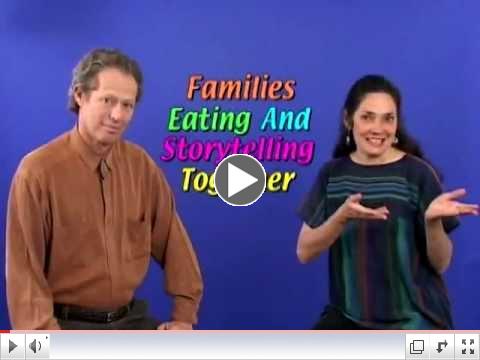 | | Families Eating and Storytelling Together- F.E.A.S.T! |
|
 Want to Help Save Lives? Want to Help Save Lives?
Through the Reverse Book Club sponsored by Book Aid International Reverse Book Club you can send a donation for books that you will never read. "You are unlikely ever to be offered a copy of 'Where women have no doctor' through a US or UK Book club, but an Ethiopian nurse could make excellent use of it, if you give her a chance."
The cost in US dollars is around $10.00 for three books.
This work has been written to help women care for their own health, and to help community health workers or others to meet women's health needs - problems that affect only women, or that affect women in different ways from men. It combines self-help medical information with an understanding of the ways in which poverty, discrimination and cultural beliefs may limit women's health or access to care. Developed with community-based groups and medical experts from more than 30 countries, this book aims to help anyone understand, treat and prevent many of the health problems that can affect women. Topics featured in the book include: how to solve health problems; ways to stay healthy; understanding the reproductive parts of women's bodies; sexual health; HIV/AIDS and other sexually transmitted diseases; pregnancy, birth and breast feeding; mental health; health concerns of women with disabilities, girls, older women and refugees; the politics of women's health; rape and other violence against women; and the use of medicines in women's health.
|
|
EDUCATIONAL DOCUMENTARIES
WEBSITE
Miss Representation is the award-winning documentary film that exposes how mainstream media contributes to the underrepresentation of women in positions of power and influence in America. The film challenges the media's limited and often disparaging portrayals of women and girls, which make it difficult for women to achieve leadership positions and for the average woman or girl to feel powerful herself.
MissRepresentation.org is the social action campaign of the documentary film. Its mission is to shift people's consciousness, inspire individual and community action, and ultimately, transform culture so everyone, regardless of gender, can fulfill their potential.
How We Are Making A Difference Together
- Using social media, women and girls are speaking out, telling their stories and influencing change. Men and boys are standing up to sexism, countering hyper-masculinity and championing women as leaders.
- Schools are using the Miss Representation's Curriculum to educate youth around media literacy and to inspire and activate students to make change.
- Communities are hosting screenings and discussions to shift the cultural mindset around gender and end sexism.
- Consumers are using their power to celebrate positive media and advertising, and challenge negative media and advertising.
 | | "Miss Representation": Official Trailer |
Half the Sky Movement
WEBSITE
Half the Sky: Turning Oppression into Opportunity for Women Worldwide is based on the book by Pulitzer Prize-winning journalists Nicholas Kristof and Sheryl WuDunn. The book takes the reader on an odyssey through Africa and Asia to meet with extraordinary women struggling there. Among them is a Cambodian teenager sold into sex slavery and an Ethiopian woman who suffered devastating injuries in childbirth.
Drawing on the breadth of their combined reporting experience, Kristof and WuDunn depict our world with anger, sadness, clarity and, ultimately, hope. They show how a little help can transform the lives of women and girls abroad. That Cambodian girl eventually escaped from her brothel and, with assistance from an aid group, built a thriving retail business that supports her family. The Ethiopian woman had her injuries repaired and in time became a surgeon.
A four-hour DVD series, shot in 10 countries: Cambodia, Kenya, India, Sierra Leone, Somaliland, Vietnam, Afghanistan, Pakistan, Liberia and the U.S., is available for purchase from Amazin.
Traveling with intrepid reporter Nicholas Kristof and A-list celebrity advocates America Ferrera, Diane Lane, Eva Mendes, Meg Ryan, Gabrielle Union and Olivia Wilde, the series introduces women and girls who are living under some of the most difficult circumstances imaginable - and fighting bravely to change them. Their intimate, dramatic and immediate stories of struggle reflect viable and sustainable options for empowerment and offer an actionable blueprint for transformation. The series premiered in the United States Oct. 1 and 2, 2012.
 | | Half the Sky: Turning Oppression into Opportunity for Women Worldwide Trailer |
|
|
|
|
|
|
|
|
|
IF YOU ARE IN THE AREA
Friday, October 26 6:00 p.m.
Seabury Auditorium
General Theological Seminary
440 W. 21st St, New York
Sweet Dreams sponsored by AWE (Anglican Women's Empowerment)
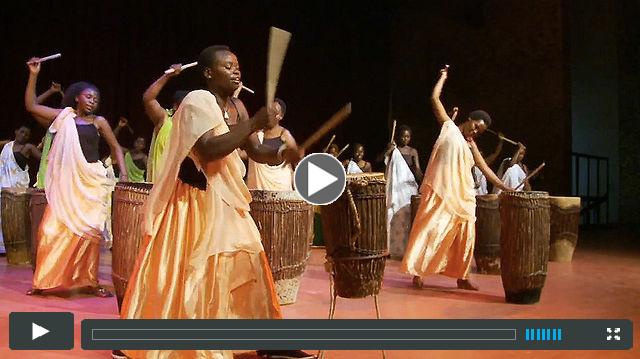 | |
Sweet Dreams :: Trailer |
Powerful sounds pierce the silence of the Rwandan countryside. A group of women pound out rhythms of joy. In 1994, Rwanda suffered a devastating genocide. Yet women are helping to rebuild the human spirit. Kiki Katese decided to start Ingoma Nshya, Rwanda's first and only women's drumming troupe. For women from both sides of the conflict, the troupe has been a place to rebuild relationships, to heal and to rediscover joy. These women opened Rwanda's first and only ice cream shop, helped by Jennie and Alexis of Brooklyn's Blue Marble Ice Cream. The women named the shop Inozi Nziza, or Sweet Dreams.
Behold, be inspired and taste Blue Marble Ice Cream at this preview screening of the documentary film Sweet Dreams, followed by conversation with Director Rob Fruchtman.
Proceeds will benefit Ingoma Nshya.
Space is very limited. Tickets must be purchased in advance at:
http://sweetdreamsgts.eventbrite.com/ To learn more about the film, go to: Sweet Dreams |
|
Center for Women's Global Leadership (CWGL)
16 Days of Activism Against Gender Violence Campaign
From Peace in the Home to Peace in the World: Let's Challenge Militarism and End Violence Against Women!
The 16 Days are November 25 to December 10.
This year's campaign marks our third year of advocacy on the intersections of gender-based violence and militarism. The sub-themes of the campaign are:
- Sexual and gender-based violence committed by state agents, particularly the police or military
- Proliferation of small arms and their role in domestic violence
- Sexual violence in and after conflic
CWGL launches the 2012 16 Days Take Action Kit and Discussion Forum!
We are thrilled to announce the launch of the 2012 Take Action Kit in English, French, and Spanish, and our new online discussion forum. Please click on the links below to access the kit and request a hard copy to be mailed to you.
And watch for news about the Episcopal 16 Days partnership, coming soon!
TAKE ACTION KIT
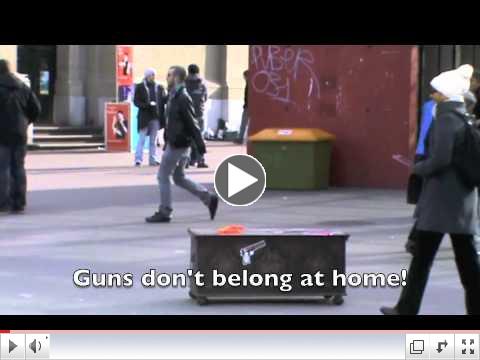 | |
Say NO to guns at home!
|
|
|
The Episcopal Women's Caucus strives to offer views from different women, lay or ordained, throughout the Church and to hold up celebrations, events, achievements, or struggles that involve women. If you are interested in contributing, whether through an article you have written or a newsworthy item, please contact either Karen Bota, editor of RUACH, at kdbota@aol.com or Gigi Conner, editor of "The Monthly Caucus," at gigipriest@prodigy.net.
The Episcopal Women's Caucus is on Facebook and we have a website. Follow us on Twitter @ewcaucus.
Please feel free to pass along articles to friends or forward this email ... and let us hear from you. And if you are a member and would like to "re-up" your membership, please do so by filling out the coupon at the bottom of the page. If you are new to the Caucus and would like to become a member, please use the same form.
|
|
|
|
Use this form to join the EWC, renew your membership, or make a donation. Make check out to EWC and mail to: Episcopal Women's Caucus, 1103 Magnolia St., South Pasadena, CA 91030
attn: Chris Mackey-Mason, Please indicate if this a:
___new application
___renewal
___donation to the EWC
Amount: $________
For new and renewing members, please select the appropriate membership level below.
|
|
|



