May 1, 2016
Greetings,
How do we measure the important, non-academic skills like creativity, critical thinking and curiosity? Read on for an update on an exciting new initiative for our students that addresses that question.
Noncognitive Skills and Success in the 21st Century
by Julia Getty, 8th Grade Dean & Wellness Coordinator
"Success is a science; if you have the conditions, you get the result."
- Oscar Wilde
In a paper published in 2014 by the Economic Policy Institute, economist and education researcher Emma Garcia explains what constitutes a 21st century education:
 "The term 'educated' also suggests a more far-reaching concept associated with individuals' full development. Such development implies, for example, that individuals are equipped with traits and skills - such as critical thinking skills, problem solving skills, social skills, persistence, creativity, and self-control - that allow them to contribute meaningfully to society and to succeed in their public lives, workplaces, homes, and other societal contexts. These traits are often called, generically, noncognitive skills."
Many families choose independent school education, at least in part, due to our "whole child" approach. Visit the website of any independent school and you will likely find a mission statement that promises a level of education beyond training students to read, write, research and compute. Our schools strive to help develop in our students desirable characteristics like moral character, citizenship, creativity and tenacity - the noncognitive skills that are so vital to success.
About seven years ago independent school leaders from 20 schools came together to form the Independent School Data Exchange (INDEX) group. They voluntarily
united with the realization that it wasn't enough to just assume that independent schools are guiding their students toward achieving noncognitive goals. Somehow they needed to show, beyond anecdotal evidence, that students were gaining and practicing these skills, much in the same way we demonstrate the more traditionally measured cognitive skills associated with reading and math.
They searched for a test that would measure the skills promised in their mission statements, but when they couldn't find one they created one themselves. They partnered with Educational Testing Service and its Center for Academic and Workforce Readiness and Success, and the Mission Skills Assessment (MSA) was born.
The INDEX group has grown to over 100 schools, and we, at The Swain School, are very excited to be included among them. As newcomers to the group , we are still in the process of learning about the assessment and the information it provides. We know that the data we collect now and in the future will help shape our curriculum and pedagogy for years to come.
The MSA measures six character strengths:
- curiosity
- creativity
- teamwork
- time management
- resiliency
- ethics
 Each individual student responds to a battery of online questions, rating themselves in these areas. Advisors answer similar questions about each of their advisees. These assess-ments were performed in late fall 2015, and we received results last month. The results reflect the responses of students in grades six through eight, as a whole. They can be separated by grade and gender, but we do not receive results by individual students.
In order to learn more about the benefits of membership in the INDEX group and using the MSA as a tool to strengthen Swain's teaching of noncognitive skills,
 |
|
|
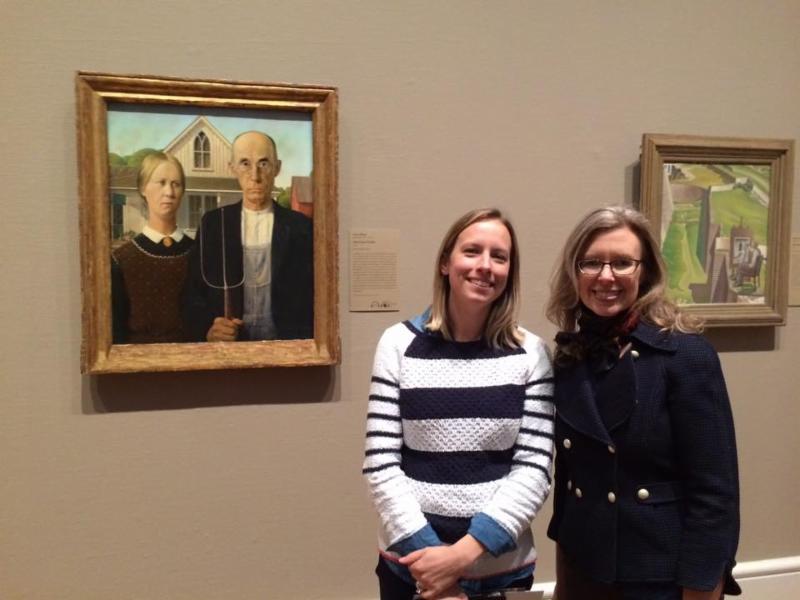
Mrs. Franzyshen and Mrs. Getty at the Art Institute of Chicago, where they participated in teambuilding and reflective exercises as part of their MSA training.
|
Middle School Director Megan Franzyshen and 8th Grade Dean and Wellness Coordinator Julia Getty attended the annual MSA Conference last month in Chicago. They joined representatives from 47 other schools and the Secondary School Admissions Testing Board in discussing how to interpret MSA data, how the data can influence teaching and learning, and why these traits that we are measuring are so important to success in high school and beyond.
"At Swain we've always intuitively known the importance of creating a caring environment that nurtures students mentally and emotionally," observed Mrs. Getty. "The conference offered solid research to back up what we already felt was right. We also gathered loads of resources for promoting the emotional skills of our children - and our adults."
Mrs. Franzyshen agreed, "The MSA will help guide the choices we make in our programs and, more importantly, help us measure whether the choices we are making are translating into our students' increasing their competency in the noncognitive skills that so are vital to their future success.
She added, "We are very excited to continue learning about the importance and support of noncognitive skills, so that we continue to be at the forefront of these intriguing studies and relevant, worthwhile national discussions."
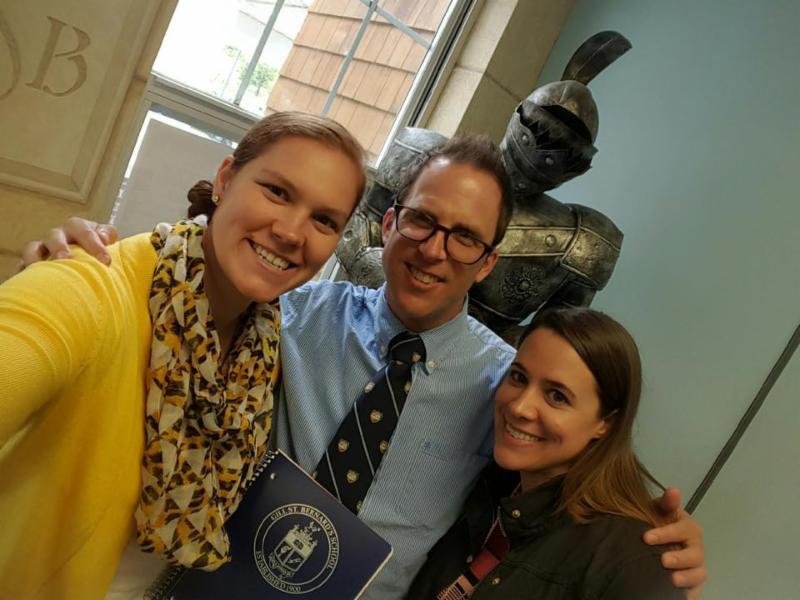
More 'teachers as learners': Lower school teachers Sarah Kleppinger (left) and Stacey Pugh visited Gill St. Bernard's School in New Jersey to see Singapore Math in action. While there they had lunch with former Swain administrator Kyle Armstrong. Miss K reported that watching teachers using Singapore Math was extremely valuable, and she is excited to bring it to our students!
Thanks and week!