Website    |   Wastewater/Industrial   |   Commercial  |   Ionization Science     |   Library   |    About Aerisa


Oxygen Ions - They're Not Hydroxyl Radicals or Ozone


During a recent meeting with an odor control industry expert, he asked, "Would you please create a table identifying the differences between ionized oxygen versus hydroxyl radicals and ozone?"
 
As stated in my recent email, confusion remains regarding ionized oxygen (O2+, O2-), hydroxyl radicals (*HO), ozone (O3) and the respective odor control technologies that create them. Please find the following table:


Click the graphic for a larger view

The O2+and O2- ions created by air ionization are completely natural and safe-- you're breathing them at some concentration right now! Our Aerisa ionization system increases these oxidative ions in the application area (e.g., headworks building, dewatering room, tank headspace, large pump station) to safely provide odor and corrosion control and vastly improve in-area working conditions. As a second purification step, outside air may be ionized and mixed with pre-treated facility air to deliver high quality exhaust.  O&M expenses for ionized air applications are low relative to competing odor control technology- see here.


Hydroxyl radicals are short-lived molecules that are extremely reactive and will attack most cellular components. Oxidative stress due to *HO exposure is believed to be linked to neurodegenerative and cardiovascular diseases.  Photoionization (PCO) utilizes numerous UV bulbs, a metal (titanium or potassium) compound supported on media (such as granular carbon) and humidity to create *HO oxidant and treat facility exhaust.  Another technology, hydroxyl radical fogging, is performed by misting water and ozone to create *HO in a contained, unmanned area such as a wet well or pump station.  For both PCO and *HO fogging applications, personnel safety issues must be considered.
 
Though the equipment itself may appear similar to that of air ionization, ozone generators commonly operate at 30,000-40,000 volts, whereas Aerisa's ionizers operate at less than 3,000 volts to negate O3 production.  The OSHA standard for O3 is 0.10 ppm average over an 8-hour work shift--that's not much more than background concentrations, which can be 0.07 ppm or higher.  Exhaust O3 treatment systems must also use instrumentation and controls to minimize the residual concentration of this greenhouse gas.  Ozone attacks natural rubber, nitrile, nylon, and mild steel-- this too must be considered.


CALL TODAY TO SCHEDULE YOUR COMPLIMENTARY

ODOR-ELIMINATING DEMONSTRATION!


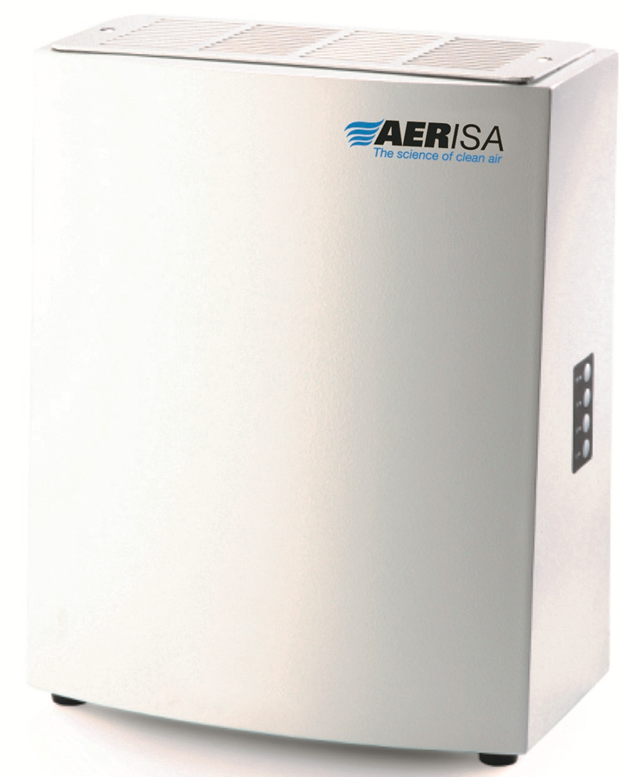
AerBreeze is our portable two tube air purification unit with three speed (100 cfm max) fan. We offer a complimentary demo unit trial so you can experience first-hand its effectiveness against your own malodorous "cocktail."  Please contact us at

1-877-4-AERISA (23742) to schedule today. 

I trust the above provides clarity regarding the differences among ionized oxygen, hydroxyl radicals and ozone.


Aerisa will continue to lead the air ionization industry through successful installations as well as conveying truthful information about our technology.


ABOUT AERISA

Aerisa manufactures bipolar ionization technology that results in dramatic air quality improvements in a wide array of markets including industrial, institutional, commercial and residential. Aerisa successes are found in the most demanding applications, such as wastewater treatment, food processing, casino, athletic, and transportation. Contact Aerisa at 1-877-4-AERISA (23742) or visit www.aerisa.com

Sincerely,


Stuart Humphries

s.humphries@aerisa.com 

770-880-0590

Check out our website!  www.aerisa.com


1214 W. Boston Post Road  |  Suite 410  |  Mamaroneck, NY 10543
480-302-6300  |  info@aerisa.com
Copyright © 2015 Aerisa. All Rights Reserved.

Images courtesy of: 
Newsletter developed by Solutions for Growth