|
|
|
 The Compass The Compass
Pointing the Way to the Stars
|
|
|
NC Division of Child Development
& Early Education
|
Spring 2013
|
|
|
|
|

We begin EVERY issue with this feature, because it can't be said enough: early education and care truly matter - for children, for families, for communities and for the future prosperity of our society.
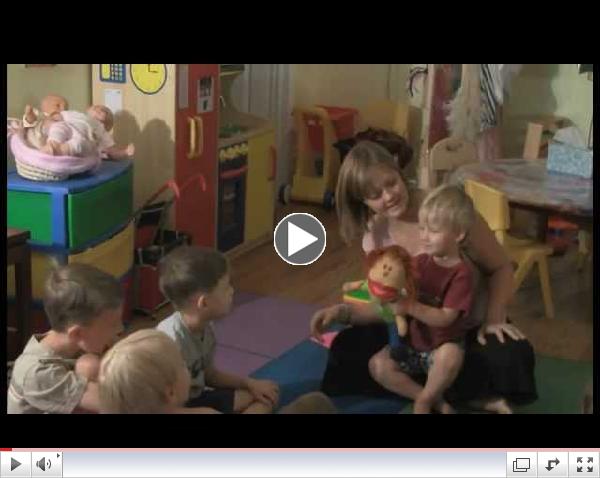
This video - Brain Builders - reminds us about what's happening in the brains of very young children and how their experiences now make a difference later.
 | | Brain Builders |
Our state's business leaders understand that building brains early is an investment in North Carolina's future.
They also recognize how early education and care boosts the state's economy. In a recent press release they state that . . . investments in early care and education are generating immediate sales of local goods and services, creating jobs and aiding in long-term economic security in North Carolina.
|
|
|
Minds in the Making
Have you heard the term "executive function" used when talking about young children? Did you picture little kids in business suits, sitting behind big desks?
Understandable, but wrong! "Executive function" really describes a system - something like air traffic control at a busy airport - that serves as the manager of the mind. Executive functions lay the groundwork for school success and young children need to begin developing these skills early.
A new paper from Child Care Aware® of America explains how executive functions underlie a child's ability to: focus on complicated problems; control impulses; set goals and work toward achieving them; and get along with others. To learn more, read Executive Function and School Readiness. This paper gives a clear picture of what it looks like, offers good practices to use in early care and education that support executive functions, and describes what's needed so that teachers are prepared to do this well.
|
|
Cultural Competence Corner: Importance of Home Language
For children who are dual-language learners, school readiness and success are directly tied to mastery of their home language. Do you want a better understanding of this, and to be able to share it with families? Head Start's
National Center on Cultural and Linguistic Responsiveness has created a series of handouts that highlight information for every adult who lives or works with young

children who are learning two or more languages.
Download these easy-to-read resources:
The Gift of Language English ~ Spanish
Language at Home and in the Community for Families English ~ Spanish
Back to top
|
|
Highlighting Healthy Early Care and Education
 | |
Screen Free Moments:
Promoting Healthy Habits
|
Preventing obesity and fighting
the habits that contribute to it are concerns for everyone helping to raise young children. We know that reducing screen time (less time spent with television, video games, computers, tablets and smart phones) can encourage children
to move more.
Watch this video Screen Free Moments: Promoting Healthy Habits to learn ways to limit screen time in a family child care home - and perhaps in many children's homes.
* * * * * * * * * * * *
A New Resource for Healthy Child Care:
We're all aware that our environments contain things that are not good for children's health. The United States Environmental Protection Agency (EPA) has a new
online resource directory for child care providers, parents and government agencies.
Be sure to visit this site for information and training resources on asthma, lead, mold, plastics, pesticides, tobacco smoke and much more.
Back to top
|
|
Be On the Safe Side: Administering Medication Safely
 Each year, 60,000 young children are treated in our nation's emergency rooms due to accidental unsupervised medication ingestions. Safe Kids USA compares this to approximately four busloads of children per day visiting the emergency room because they took medication on their own. In fact, 95% of medication-related emergency room visits among children Each year, 60,000 young children are treated in our nation's emergency rooms due to accidental unsupervised medication ingestions. Safe Kids USA compares this to approximately four busloads of children per day visiting the emergency room because they took medication on their own. In fact, 95% of medication-related emergency room visits among children
under age 5 are due to a child ingesting medication while unsupervised (the other 5% are due to dosing errors).
Each year, 56 children ages fourteen and younger die from unintentional medication overdose. This is an alarming number of children dying preventable deaths (for more details, read the study Safe Storage, Safe Dosing, Safe Kids).
Read more in this article to learn about safe storage, safe dosing and safe disposal of medications. It answers common questions and is full of resources to make your job easier as you look out for the safety of young children in your care.
Check with your local Child Care Resource and Referral Agency to take their
Beyond Bandaids training. And don't miss these two additional handy resources:
Tip Sheets for Administering Medications Safely in Child Care Centers and
in Family Child Care Homes.
Back to top
|
|
The First 2000 Days
 Don't forget: every newborn is only 2000 days away from entering kindergarten. Will they be ready to be successful when they get there? Don't forget: every newborn is only 2000 days away from entering kindergarten. Will they be ready to be successful when they get there?
Bookmark this website www.first2000days.org to keep up on news, action and information to help you be an advocate for the young children of North Carolina.
Back to top
|

Parting Thoughts
"An investment in knowledge always pays the best interest." ~ Benjamin Franklin
"Access to high-quality early education and learning opportunities is integral to helping today's children prepare for the highly competitive, fast-paced global economy."
~ National Association of Manufacturers, Education and the Workforce, 2012
Back to top
|
|
|
|
|
|
|
|
|


