Real World ...Real Learning: Shadow Play
Young children naturally love to play with shadows. Making shapes and puppets with their hands comes instinctively to kids, and even just watching your own shadow as you move can be a source of fun and inspiration.
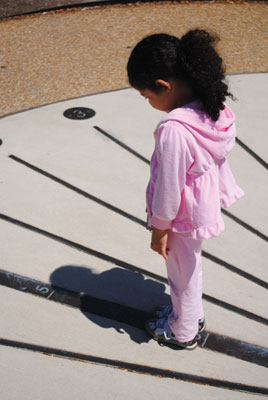 Such shadow play may seem silly, but it's an important step in a young child's ability to understand how the Earth gets day and night. Take your students outside to the playground at the beginning of the day, and mark their shadows with sidewalk chalk. You can trace around the whole shadow, or just make a line between the feet and the top of the shadow's head. Stand in the same place and make the shadows again at recess. What happened? What changed? Why is the shadow different? Stand facing the Sun (don't stare at it!). Now turn all the way around so you see your shadow. What's different? What changed? These simple investigations will prepare your students to learn about day and night.
|
|
Check out these websites for information, stories, photos, data and links related to this month's "Real World ... Real Learning":
|
|
Sun, Light and Shadows
A great kids science website on shadows and shadow play.
NASA's Keeping Cool with Shadows
More about shadows and how they affect us every day.
|
|
Grade K - 1 Science SOLs: K.8, K.10, 1.6, 1.7
 Join us in the Abbitt Planetarium for a thorough exploration of how the Earth gets its day and night. We will explore shadows, and discover how they help us get day and night. We'll also explore how day and night change throughout the year, how we can use shadows to tell time, and even spend a few minutes exploring the evening skies. This program makes a wonderful first experience in the planetarium for kindergarteners and a great way to learn the mechanics of day and night for first graders. Join us in the Abbitt Planetarium for a thorough exploration of how the Earth gets its day and night. We will explore shadows, and discover how they help us get day and night. We'll also explore how day and night change throughout the year, how we can use shadows to tell time, and even spend a few minutes exploring the evening skies. This program makes a wonderful first experience in the planetarium for kindergarteners and a great way to learn the mechanics of day and night for first graders.
To make a reservation or find out more about our range of science education programs, visit our website or call our reservations office at 757-595-9135.
|