Moving around the Mediterranean
Wherever there are people, there is a need for certain commodities. Wherever there is a need for commodities, there is a need for ways to get those commodities to stores and eventually into people's homes. However, those transportation resources weren't available centuries ago.
Back in the 3rd century AD, the Romans had a rather sophisticated highway made of diamond-shaped pavers that were designed for the feet of men and horses. Wheeled carts bounced and bumped uncomfortably on these roads, and the containers available at the time (mostly large clay jars called amphorae) would break open during long-distance travel.
The Roman Empire lay on the shores of the perfect shipping lane-the Mediterranean Sea. In fact, the Empire almost totally surrounded the Mediterranean. The Romans established ports all over the Mediterranean, in Greece, Egypt, Judea, and many other places. These ports had huge infrastructures to support a large fleet of merchant ships, which were largely independently owned, much like the modern fleet of owner-operator trucks.
Since Rome has always been a bountiful region, much of their food was actually grown locally (and still is). Most of what was being shipped up the Tiber River to Rome itself was delicacies such as spices from India, coconuts, almonds, and garum (a kind of fermented fish sauce manufactured in Spain). Cargo was shipped in large amphoras that were specially made for the holds of ships. They had rounded bottoms in order to slot neatly into the V-shaped interior of the hull, and into the spaces between other amphoras. This way, Roman crews could fill almost every bit of available space in a ship's hold.
Highway systems have replaced ancient roads, trucks have replaced ships when they can, and refrigerated trailers mean that it is much easier to transport produce to places where it does not normally grow. Since the beginning of time, people have needed to get food into the marketplace and into their homes, and now the transportation industry is the most efficient it has ever been thanks to ingenious people throughout history. Who knows what improvements to the industry the future holds?
Noah Creedon
Broker's Assistant, Kansas City
|
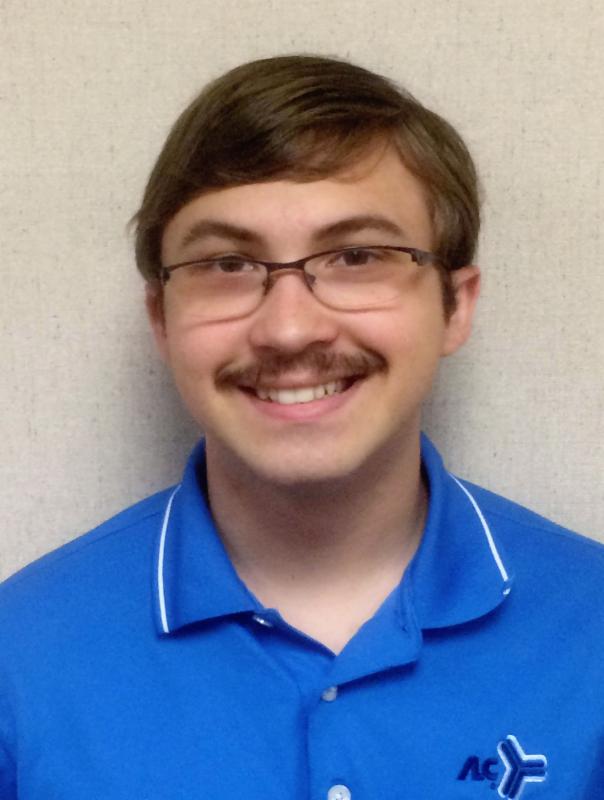
Noah Creedon is a Broker's Assistant in the Kansas City office. He recently completed a college preparatory program in the Great Books and is preparing to continue his education later this year pursuing a degree in Liberal Arts.
|
About Allen Lund Company: Specializing as a national third-party transportation broker with nationwide offices, the Allen Lund Company works with shippers and carriers across the nation to transport dry, refrigerated (specializing in produce), and flatbed freight; additionally, the Allen Lund Company has an international division, which is licensed by the FMC as an OTI-NVOCC #019872NF, and a logistics and software division, ALC Logistics.
|
The content of this email is intended to provide information on the perishable commodities industry and is promotional in nature. Reliance should not occur on the content of this site other than to generally advise the reader as to such industry and no action should be taken in reliance on this site's information. With the exception of the Allen Lund Company website, ALC is not responsible for any contents linked or referred to from these pages. The copyright for any material created by ALC is expressly reserved but content on this site, in whole or in part, may be used, reproduced, or republished without ALC's prior written consent provided that ALC is identified as the source.
Privacy Policy: If the opportunity for the input of personal or business data (email addresses, name, and addresses) is given, input of these data takes place voluntarily and with no assurances of limited distribution, use, or restricted access by ALC.
|