|
WELCOME
NEW AND RENEWING
MEMBERS!
| Alison & Marshall Ash
Marsha & Phil Dowd
Brigitte Erbe
Maureen Gawlik
Joan Goldstein
Del & Ginger Hall
R. Janie Isackson
Carolyn & Walker Johnson
Barbara Koren
Laura McCormick
Bernard & Jane Nicholl Sahlins
Kathy Schubert
Mary Sparks
James & Joan Woods
| |
|
VILLAGE PROGRAMS
| |
Register for these programs by calling 773.248.8700 or e-mailing
celebrate@lincolnparkvillage.org
Village Members receive registration priority.
Payment is due in advance.
Let the Village office know if you need a ride!
As the Village grows, from time to time events with limited attendance are fully subscribed with a waiting list. If you wish to participate in any event, please sign up early. You can do this by calling or e-mailing the office.
|
|
|
FITNESS
| Tai Chi
Eight-session series:
Mondays thru June 3
10:00 - 11:00 AM
Whole Foods
(1550 N. Kingsbury)
Members - $64 for the series of 8 sessions, or $10 per session; Non-members - $15 per session.
Join instructor Arlene Faulk to learn a series of slow, fluid movements that help promote proper body alignment and good balance and help manage chronic health conditions such as arthritis, fibromyalgia and back pain. Slow down! Take time for yourself. Be open to a brand-new exercise that is actually very old. It can pay many dividends for your health.
Click here to visit instructor Arlene Faulk's Web site. *** Nia
Eight-session series :
Thursdays
thru May 16
10:30 - 11:30 AM
Church of the Three Crosses
(333 W. Wisconsin)
Members - $64 for the series of 8 sessions, or $10 per session; Non-members - $15 per session.
Join Ann Pringle Burnell in a sensory-based movement class for all levels and all ages and learn a new way to exercise your mind, body and spirit. Nia takes nine different movement forms--from tai chi, aikido, dance and Feldenkrais--into a joyous routine that is easy to follow. For more information about Nia, click here.
***
Hatha Style Yoga
Mondays, 7:00 - 8:15 PM
Church of the Three Crosses
(333 W. Wisconsin)
Members & Guests - $15; no need to register; simply drop in.
***
Basic Meditation
Occasional Saturdays,
9:15 - 10:30 AM
Host: Ellen Stone Belic
Members Only - Free
Join this group, led and hosted by member Ellen Stone Belic, to learn and practice basic meditation techniques. This is a great way to start or renew your practice--and to experience the joy and multitude of benefits of meditation.
| |
MAY EVENTS
|
***
Member Potluck
Wednesday, May 8
6:00 - 9:00 PM
Church of the Three Crosses
(333 W. Wisconsin)
Members Only - Free
Program following dinner will feature member Sheldon Patinkin on the founding of Second City and more.
***
Warblers' Watch
Saturday, May 11
7:00 - 9:30 AM
Montrose Harbor
(Look for group at eastern end of Harbor.)
Members - Free; Guests - $10
Member David Baker leads a morning birding trip to Montrose Harbor during one of Chicago's most active weeks for spring warbler migration. Bring binoculars, dress in layers and wear good walking shoes.
***
Memoir Writing 2 with Beth Finke: Eight-Session Series
Mondays, May 13; June 3, 10, 17, 24; July 1, 8
2:00 - 3:30 PM
Host: Joan Miller (May 13)
Members - $60; Guests - $80
Participants write short pieces on varied topics and share writing that explores events in their lives.
Only a few spots left, so call the office to reserve!
***
Bridge Basics: Advanced Beginners
Tuesdays, May 14, 21, 28
5:00 - 6:30 PM
Host: Monika Betts
Members & Guests - $15 per session
Sharpen your skills so that you can fully enjoy this game. It's a great hobby and will help with your memory! Please call Jane Kennedy with questions and to register at 312.642.0709.
***
Banjo Night
Monday, May 13
6:30 - 9:00 PM
Lincoln Restaurant
(4008 N. Lincoln Ave.)
No cover charge but self-hosted food and cool beverages.
Members & Guests - Free
Join members John Buenz, Jack Hartray and the Windy City Jammers, a merry band of musicians playing banjos, guitars, brass, accordions and singing songs from the '20s, '30s and '40s.
***
Street Smarts: Self-Defense Course for Women
Tuesdays, May 14, 21, 28; June 4
10:30 - 11:30 AM
The Hallmark
(2960 N. Lake Shore Dr.)
Members Only - $20
This four-session course offers practical skills that empower women in their lives. Led by instructor Shirleen Kajiwara, this course will cover self-awareness, situation assessment and options and verbal and physical techniques.
***
Knitting For A Purpose
Wednesdays, May 15, 22, 29
1:00 - 3:00 PM
Sisters Art Studio
(721 W. Wrightwood)
Members & Guests - Free
Interested in knitting or crocheting? Beginners and experts are welcome to join--you'll have the opportunity to knit for the Night Ministry or for another project of interest.
***
Simplify Your Life
Thursday, May 16
6:00 - 7:30 PM
Church of the Three Crosses
(333 W. Wisconsin)
Members & Guests - Free
We all have those piles of papers and boxes of stuff we plan to get to someday! Join Village service providers and experts in organizing and decluttering--Sprau Advocate Group, Dawson Relocation Services and The Chicago Organizer--for a panel discussion on ways to tackle these challenging projects.
***
Lurie Garden Tour
Thursday, May 16 or 23
11:00 AM - 11:45 AM
Lurie Garden at Millenium Park
Members Only - Free
Join member Reven Fellars--certified gardener and docent at Lurie Garden--as she escorts a small group of Village members on a tour of the architecture, hardscape and landscape of the city's five-acre green space.
***
'In a Garden'
Friday, May 17
Self-hosted dinner: 6:00 PM
Kamehachi Japanese restaurant
(same building as theater)
Curtain: 8:00 PM
Red Orchid Theater
(1531 N. Wells St.)
Members - $20; Guests - $25
Chicago premiere of a play by Howard Korder, one of the writers and producers of HBO's "Boardwalk Empire."
***
Written From, In and About Chicago
Saturday, May 18
2:00 - 3:30 PM
Host: Bill Gordon
Members - Free; Guests - $5
Moderated by member R. Janie Isackson, this month we will discuss Joseph Epstein's
Fabulous Small Jews,
a collection of short stories of piercing satire and serious subjects, all incorporating characters of Chicago's landscape.
***
Silver Screenings
Sunday, May 19
11:00 AM - 1:00 PM
The Admiral at the Lake
(929 W. Foster)
Members Only - Free
Optional brunch to follow at
1:00 PM for $15.
May begins a new series, the Films of John Huston. First up is
Treasure of the Sierra Madre (1948; written and directed by Huston). American drifters go prospecting for gold in the mountains of Mexico. Humphrey Bogart, Walter Huston (John's father), Tim Holt. From the novel by B. Traven.
A discussion led by member
Mel Washburn will follow.
***
Come Play Scrabble!
Sunday, May 19
2:00 - 4:00 PM
Host: The Admiral at the Lake
(929 W. Foster)
Members Only - Free
A friendly game of Scrabble for neophytes or experienced players.
***
Alfred Caldwell and the Lily Pool
Monday, May 20
Reception/book signing: 5:30 PM
Program: 6:00 - 7:00 PM
Hosts: Doris & Harvey Adelstein
Members Only - Free
Member Harold Olin, an architect and former student of Caldwell, has just published a book of photographs of the Lily Pool and will lead us in a special conversation. Harold will be introduced by architect and member Jack Hartray, who was on the faculty at IIT when Caldwell taught there.
***
Stroke: Know the Warning Signs
Wednesday, May 22
1:00 - 3:00 PM
Rush Professional Building, Searle Conference Center, 5th Floor
(1725 W. Harrison)
Members & Guests - Free
Did you know that stroke is the third most common cause of death in the United States and occurs more frequently in older adults? Experts from the Comprehensive Stroke Program at Rush will discuss the two main types of strokes, how to reduce your risk and warning signs.
*** 'Gen Silent': Documentary Screening
Wednesday, May 22
3:00 - 6:00 PM
Church of the Three Crosses
(333 W. Wisconsin)
Hosts: Brandon Haydon, Armand Cerbone & John Hobbs
Members & Guests - Free
Join us for a special screening of Gen Silent, the critically acclaimed documentary from filmmaker Stu Maddox that addresses aging in the LGBT community. For more information on the film,
|
|
|
JUNE PREVIEW
|
Wednesdays, June 5, 12, 19, 26
The Hallmark
(2960 N. Lake Shore Dr.)
Members Only - $40/four-session course
Join us for a lively mix of discussions, presentations and tutorials about social media. Learn about the leading social networks--Facebook, Twitter, Pinterest and Skype.
***
Driehaus Museum Tour
Saturday, June 8
2:30 - 3:30 PM
Richard H. Driehaus Museum
(40 E. Erie St.)
Members - $17.50; Guests - $20
This tour will showcase the Driehaus Collection of Fine and Decorative Art.
***
Lincoln Park Village's
4th Anniversary Celebration
& Benefit!
Monday, June 10
Reception: 5:00
Program: 6:30
Chicago History Museum
(1601 N. Clark St.)
Member tickets - $40;
Non-member tickets - $50
Come celebrate the music inside you and all that it does for body and soul! Discover what research is rapidly making clear--music connects, comforts, strengthens, transforms. Be captivated by the rhythm of life and the joy of sharing a fun, music-filled evening with our growing Village community. Featuring live music and a silent auction.
***
Shredding/Recycling Day
Saturday, June 15
9:00 AM - 12:00 PM
MB Financial Bank
(2401 N. Halsted St.)
Members - Free
Let the Village and MB Financial Bank help you clean house! Provided on-site to Village members and MB Financial Bank customers will be two disposal trucks--one for paper, one for electronics.
***
Taste of Thailand
Wednesday, June 19
10:30 AM - early afternoon
Southeast Asian
neighborhood in Uptown.
Starting location is
Tai Nam Supermarket
(4925 N. Broadway)
Members Only - $15 for lunch
Lunch at noon: Thai Pastry & Restaurant (same address as above, Unit E).
Member Lois Baron, who lived in Thailand, will lead a small group of Village members through the shops to learn about the foods, including lunch at a neighborhood Thai restaurant. This is a walking tour, but all of the shops and restaurants are accessible.
Call the Village office to arrange for a shared ride.
***
Carol Brookes' Studio Tour
Saturday, June 29
12:00 - 2:00 PM
Members & Guests - $25
Tour mixed-media artist Carol Brookes' new studio, view artwork and a demonstration and enjoy a lunch buffet. For more information about the artist and her work, click here.***
Lucia Blinn Poetry
Sunday, June 30
2:00 - 3:30 PM
Host: Eva Wahl
Members Only - Free
Join us for witty commentary on contemporary life.
Returning by audience request is Lucia Blinn, who will be sharing her new work with a small group of Village members.
| |
|
CALL US! JOIN US!
| |
Joining Lincoln Park Village
Lincoln Park Village helps members live life to the fullest by providing a vibrant array of stimulating activities, engaging events and, if needed, services from the most trusted resources. But most important, the Village is a community composed of neighbor-to-neighbor connections that can enrich lives in new and unexpected ways. If you are interested in becoming a member, please call the Village office at 773.248.8700 or follow the links below.
Download Membership Application
Download the form to pay via auto-withdrawal through your bank account.
Application Process
Membership is available to adults 50+ living in greater Lincoln Park and surrounding communities. A membership application is available above, or call the Village office for other options. A reduced-rate program, Member Plus, is available for those on limited fixed incomes.
After becoming a member, an informal conversation will be scheduled to acquaint the new member with the services, programs and events of the Village and to better understand each new member's specific interests and needs.
|
|
|
Support the Village through Amazon.com
| |
Begin your Amazon shopping trip for absolutely anything from the Lincoln Park Village site, add one item to your cart and a portion of every item you purchase will support the Village!
Click here to begin.
|
|
LEADERSHIP
|
Board of Directors
Ruth Ann Watkins, President
Charlotte Damron, Vice President
Mel Washburn, Vice President
Mary Ann Schwartz, Vice President
Marcia Opp, Secretary
Robert Spoerri, Treasurer
Harvey Adelstein
Neelum T. Aggarwal, M.D.
David Baker
John A. Bross
Armand Cerbone
Larry Elkins
Marjorie Freed
Jack Hartray
Christopher Horsch
Barbara Koren
Carol Rosofsky
Lois Stuckey
Dirk Vos
Advisory Council
Henry B. Betts, M.D.
Robyn L. Golden
Robert B. Lifton
Warner Saunders
Joanne G. Schwartzberg, M.D.
Michael Spock
Immediate Past President
Katherine Zartman
Dianne S. Campbell Founding Executive Director |
|
What is Lincoln Park Village?
Lincoln Park Village is part of a burgeoning national movement--a grassroots not-for-profit membership community made up of people 50+ (360+ strong and growing) who share a commitment to creating new ways to age well live well while living longer.
With one phone call or mouse click, members have access to a
full range of activities, events and services--all delivered with customized attention and
designed to build strong
neighbor-to-neighbor connections and friendships.
The Member-Plus Program ensures that residents on modest fixed incomes can join the Village and have funds for services.
Serving Chicago's Lake View, Lincoln Park and Near North communities, Lincoln Park Village is a unique resource--professional, yet neighborly and close by--available to you right now and
as your needs change.
Call us! Join us!
773.248.8700
2502 N. Clark St.,
Chicago, IL 60614
p. 773.248.8700 f. 773.248.8181
www.lincolnparkvillage.org
info@lincolnparkvillage.org
|
|
|
Dear Village Neighbors,
Hard to believe, but June marks the start of the Village's fifth year of operation! Join us on June 10 to celebrate four extraordinary years of community-building and collaboration. This year's anniversary benefit theme is The Power of Music! and our inventive dream-team committee promises it will be our best anniversary bash yet. Don't miss it!
We've lots to celebrate, and at the top of my list is the success the Village and its members have had in making us so very valuable as both a personal and practical asset for members.
Adding to this value is a nonstop effort to be always present in the lives of our members. From programs, services, member-to-member connections and critical just-in-time referrals to the daily ongoing need for rides and technology support, we are always seeking more, better, faster. As we grow, so do our volunteer ranks, and so does the range of free services we can offer to fulfill the needs for both serious help--and also for opportunities for just plain fun! For example:
- Remaining in our own homes is a high priority for most older adults, and providing vetted resources to help us to do so safely is part of the work the Village does. Read more about emergency call systems and one such tool--a Personal Emergency Response System (PERS)--and about a special pricing offer from Intel-GE Care Innovations by clicking here.
- Just this past Saturday some twenty-six member households benefited from a corps of students from DePaul's St. Vincentian Service Day and other young volunteers who flipped mattresses, organized closets, got ready for gardening, moved heavy furniture, helped with computer issues and more. Rave reviews from everyone who was helped!
- Thirty-six members and guests enjoyed free tickets to two dress rehearsals of Oklahoma! at the Lyric Opera, thanks to Village member Sylvia Decker and Northern Trust. Some landed box seats!
I can guarantee that there is always something new and better at Lincoln Park Village. Join us!
Dianne S. Campbell
Founding Executive Director
|
|
Soothing the Savage Beast ...
| |
This issue of the Village Newsletter puts music in the spotlight.
On one level, the reason is obvious: "The Power of Music" is the theme of Lincoln Park Village's 4th anniversary celebration and benefit, to be held on Monday, June 10. It will be an evening to remember, with music and musicians filling the Chicago History Museum and a rare opportunity to see--and hear--how good music can make us all feel.
On a deeper level, the choice of music and its powers gives us all a chance to consider an art form we often take for granted. Most every aspect of our lives is touched with music, from the songs of birds to smart-phone rings to the sounds of a symphony playing Stravinsky or Gershwin.
And information about the power of music is sneaking up on us. For the last couple of decades, neuroscientists in particular have trained their sights on the ability of music to exercise the brain, to bring back memories, and otherwise to connect us to ourselves ... and to others.
So please read first about the upcoming gala Village event and join us in the fun.
Meet a sampling of Village members who shared with member Catherine Rategan how music empowers and enriches their lives. (For this article we did not revisit professional musicians who happen to be Village members-blues and boogie-woogie pianist Erwin Helfer, for instance, or beloved children's folk singer Ella Jenkins, or Chicago Symphony violinist Fred Spector.)
Finally, still on topic, let yourself be amazed, or at least amused, by snippets of information about music's power.
--Susan Nelson, Editor
|
Monday, June 10, 5 PM Chicago History Museum
| |
Come Celebrate the Launch of
Lincoln Park Village's Fifth Year!
You are invited to join our growing Village community on Monday, June 10, at the Chicago History Museum for an evening of music, friendship and fun, from start to finish.
Come and enjoy music with your friends and neighbors. Experience the power of music on both body and soul. Hear good, live music of different genres. Learn more about music's connections to the brain....And learn about the power of Lincoln Park Village as it celebrates its fourth anniversary, 360+ members strong!
Here's the Lineup:
- A festive reception--meet, greet, eat and drink--will begin at 5:00 PM.
- The "Power of Music" program will begin at 6:30 PM with noted music educator and flutist Dr. Roy Ernst, professor emeritus at the Eastman School of Music.
Be prepared for musical surprises throughout the evening. And also for...
... A Very Special Silent Auction
Musical and magical--that describes the Village's first-ever silent auction. You may bid on a select, very desirable group of items. (Look for a complete preview of auction items on our Web site beginning May 22.) Here's a sneak peek at what's in store:
-A catered dinner for six and private concert with renowned violinist Rachel Barton Pine, hosted by Fred and Estelle Spector in your home or theirs.
Imagine an evening of delicious food and sublime music with family and friends. Priceless!
-'Red Badge' Membership to the Chicago Humanities Festival.
Free admission and preferred seating for two to all programs in this outstanding year-round series. Listen, experience and enjoy, month after month.
-A stunning tangerine satin Holly clutch bag from Tiffany & Co.
This stand-out accessory is a luxury that will make you feel like a Red Carpet regular for all your special occasions.
Here's the Lowdown:
Great Fun as Well as Great Benefit
The funds the Village raises through our Anniversary Celebration and Benefit provide essential support for the services and initiatives that make the Village unique--especially the Member-Plus program, which enables all neighbors, regardless of income, to join and integrate fully into Village life. Nearly twenty percent of our membership currently is supported through Member-Plus.
Here are three ways you can be involved:
1. Join the Host Committee
Host Committee members receive six tickets to the event and are listed on selected event announcements and in the program book. You can join the Committee at one of three levels: $300, $500 or $1,000.
THE HOST COMMITTEE, IN FORMATION:
Ellen Stone Belic
Dianne & Tom Campbell
Jack Hartray
Mary Ann Schwartz & Richard Brewer
Pam & Mel Washburn
Ruth Ann & Tom Watkins
Charlotte & Larry Damron
Betty Dayron
Barbara Koren
Carol Rosofsky & Bud Lifton
Marcia Opp & Jon Ekdahl
Katherine & James Zartman
Susanne & David Baker
Judy & John Bross
Marjorie & Harvey Freed
Dorothy & Robert Hernquist
Carolyn & Walker Johnson
Madelyn MacMahon
Baila & Irv Miller
Rush University Medical Center
Greta & Richard Salem
Emily & Bob Spoerri
Liz Ware & Wally Shah
2. Become a Sponsor
We are seeking sponsorships from companies and businesses, as well as from generous individuals. Contribution levels range from $1,500 to $7,500. Sponsors receive recognition at future Power of Music-related events throughout the year, recognition for one year in our newsletter and on our Web site and blocks of tickets to the June 10 event, depending on sponsorship level.
Please call Dianne Campbell, 773-248-8700, to discuss the opportunities to support the Village by becoming a Host or a Sponsor.
3. Spread the Word
Share this exciting evening with friends and neighbors. The flyer here includes a ticket order form and more information.
See you June 10th for an unforgettably upbeat evening!
Meet Dr. Roy Ernst:

Dr. Roy Ernst's work mirrors the goals and achievements of the Village movement itself. In 1991, Dr. Ernst started the first New Horizons Band at Eastman School of Music for the purpose of creating a model program that emphasized entry and reentry points to music-making for older adults. The New Horizons International Music Association, which he founded, now includes more than 200 New Horizons bands in cities throughout the world. As Dr. Ernst explains: "A lot of things don't get better as we age, but one thing that does get better is that we have a great deal of life experience to bring to being very expressive--and particularly to playing music."
Read more about Dr. Roy Ernst by clicking here.
|
Music's Power in
Our Members' Lives
|
By Catherine Rategan The membership rolls of Lincoln Park Village contain a treasury of extraordinary people who recognize the power of music, both to maximize their own lives and to connect them to others. Following is a sampling of some of our members and their comments about the power that music has in their own lives. Laurel Baer has a dual identity--she is the dedicated writer and compiler of the Village's weekly Member Memos, and she is also as a singer. Until recently, she was a second soprano with the Northwestern University chorus, made up of more than a hundred community members. "I got to sing all the great choral works and requiem pieces," she says. "I'd never gotten vocal training, other than what I received from various choir directors. And I always felt so fortunate that someone with my limited talent could sing at that level. I'd rate my voice as just adequate," she says, "but to perform that level and magnitude of music was thrilling." Laurel took piano lessons as a child and sang in the chorus, first at New Trier High School, next at the University of Michigan, then with the Apollo Chorus of Chicago. When asked what advice she offers to other would-be musicians and singers, Laurel says, "You're never too old to pursue an interest in music. It's so satisfying, and there are so many ways to add the power of music to your life."  John Bross retired from his post at Northern Trust Company in 2001, and today, thanks to his many interests, he's busier than ever. This is due in part to his role as a baritone in the Great Lakes Dredge and Philharmonic Society, which last year celebrated its 75th anniversary as an all-male holiday caroling group. Members wear old-timey top hats and scarves and sing traditional carols at various locations, including the Rehabilitation Institute, the Newberry Library, the Racquet Club and children's hospitals. One of the group's favorite performance venues is The Admiral on the Lake, where John serves on the Board and also acts as liaison to Lincoln Park Village. "I enjoy the social interaction of the group. But once we're done for the holiday season, none of wants to hear any more holiday carols until the following October, when we resume our rehearsals." He took voice lessons when he was in his 50s, a move he describes as part of his mid-life crisis. John also plays the piano and the harmonica. "It's so fulfilling to have music travel through your body and out your fingers or your throat," he marvels.  John Craib-Cox began piano lessons in the Fine Arts Building when he was six years old. That lasted only a few years, but he resumed music lessons just a few years ago. His interests include ragtime, Broadway musicals from the late '20s by Gershwin and Rodgers & Hart and the music of French composers such as Milhaud and Ravel; he's also a fan of Brazilian tango composer Ernesto de Nazareth. John also teaches part time and does design restoration, where he attempts to recreate and restore interiors of commercial and retail buildings from the past. "Music is enjoyable in so many ways," he says. "It can be a solitary pursuit or a group experience for me. It's good for the brain because you have to look at the notes on the page and translate those to the piano. It generates an instant reward and lets you concentrate on something with a beginning and an end." 
Del Hall took ukulele lessons for three months at the Old Town School of Folk Music but stopped when he realized the focus there was on Hawaiian music. He then launched out on his own, and his aim is to play "You Always Hurt the One You Love,"which was performed to a ukulele accompaniment in the 2010 movie "Blue Valentine.""I'm still practicing," he says, "using the techniques from Ukulele for Dummies. 
"The ukulele is very popular now, and it's something I always wanted to do. I love the simplicity of it and being able to sing along with it." Del was born in New Orleans, where music seems to be in the blood of so many residents. "I could whistle before I could talk," he recalls. "I was known as a wunder-kid. My mother used to push me around in a stroller, and I would whistle for people." Del worked in the news business for many years as a cameraman for CBS News. Six years ago he and his wife, Ginger, shuttered their video production company on Jackson Boulevard just west of Racine. "Today, I whistle by ear and can whistle while I play the uke. My two talents are photography and whistling." At 92, Tom Hardie is one of the oldest members of the Village. And he retains his interest in music, which began when he was a child, when he sang in the church choir and hoped to become a professional pianist. But that dream was dashed when Tom lost the tip of his little finger in an accident. He turned instead to singing baritone roles and conducting, and he joined the music faculty of Western Michigan University in Kalamazoo. At one point, he took his choir to perform in Europe. He also spent a summer at Tanglewood, the summer home of the Boston Symphony Orchestra. Eventually the university offered him and other faculty members a $30,000 bonus to retire early, and he was free to pursue other interests. "At one point, I became a dog walker to earn extra income," he recalls--"and I got to know Chicago pretty well." Although he no longer sings, he still plays the piano, which he bought with a bequest from his mother earmarked specifically for that purpose. Tom still attends the opera and concerts, and he loves watching baseball. "Music keeps me interested in life and makes my life so much richer," he says. "I've worked all my life to encourage students and help them choose music as a career."

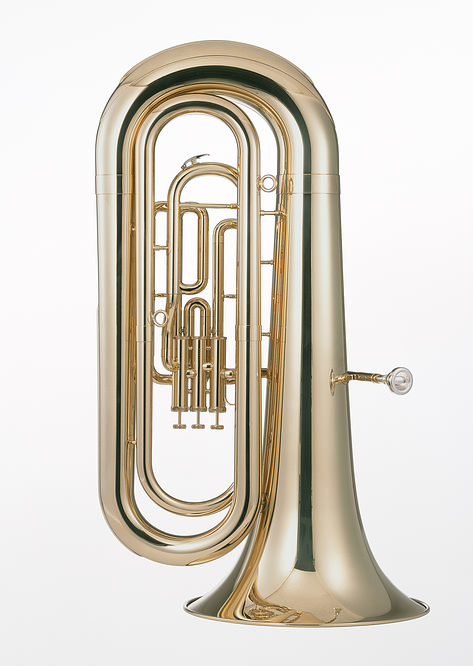
Chris Horsch is a retired attorney who loves to play the tuba. He started with piano lessons when he was six; when he was in fifth grade, the band director asked him which instrument he wanted to play, and he unhesitatingly chose the tuba. "That was it," he says, "I got hooked." Chris's father loved music too but warned him that if he chose to become a professional musician, he'd probably starve. So Chris made the law his profession. Now he plays in the Ravenswood Community Orchestra, a 45-member group that meets at St. Ben's Church on Irving Park and gives three concerts a year, each preceded by eight to ten rehearsals. "There's a lot of fellowship in this group," he says, "and the rehearsals are a great outlet. We tend to play a little over our head, but it's better than playing under our head." He also plays in a quintet, which meets weekly in the kitchen of his home, where he and his wife, Patty, have lived for 38 years and raised three children. For the last two summers, Chris has attended the Interlochen Arts Camp in Northern Michigan, where he plays in the adult band camp. "Most of the members are fairly senior people; many of them very good players." His advice to others interested in the power of music is direct: "If you ever played, take it up again. I recommend it highly. There are lots of closet musicians, and I'm always surprised by the number of groups that have come out of the woodwork."
Carol Rosofsky was challenged about five years ago by a teenage grandson who is also a jazz drummer. He agreed to jam with her if she tried to learn jazz, so Carol embarked on a journey that started with jazz lessons via telephone and Skype, then went on to private lessons at Merit School of Music and now includes participating in DePaul's New Horizons Jazz Ensemble. Carol studied classical piano throughout her childhood. Her pianist mother was a model accompanist who performed with the Chicago Symphony Orchestra under the direction of renowned conductor Frederick Stock, so music was ingrained in her family: It was something they'd always made together done around the piano throughout the generations. Carol finds jazz a huge challenge. "I'm learning a lot," she says, "and I'm as interested in the process as in the playing because it's such a challenge. Jazz piano is nothing like classical piano. It requires you to get off the beat and improvise. I'm not very good at that, even though I work hard at it. It's difficult to hear the complicated rhythms, especially when you're accustomed to reading music with a regular beat. As an adult, I'm acutely aware of how I learn and, more importantly, how I don't learn. At this age, I'm able to say to a teacher, 'I understand what you're saying, but I need another way of looking at it,' something I wouldn't have had the nerve to say as a youngster. I'm as interested in recognizing how I'm learning as what I'm learning. It's part of mindfulness." 
Carol Senderowitz began taking guitar lessons at the Old Town School of Folk Music in hopes it would relieve the arthritis in her hands. The lessons continued for 18 months, and as long as she maintains her daily practice regimen, the guitar helps control the pain in her hands. "I grew up playing the air guitar and always wanted to learn music," she says, "but I can't read music and never played an instrument. One nice thing about the school is that they teach beginners and novices both." She started out by using a left-handed guitar. But the school hands out chord charts for right-handed players, so eventually Carol transferred to a right-handed instrument. Though her first job was at a rock 'n' roll radio station in Pittsburgh, where she rubbed shoulders with the performers of that day, "I've always been a folkie," she says. "Today I meet many new young folk performers when I go to concerts at the Old Town School. I love the concert space there. They bring in new blues and country performers as well as folk." Among her established favorites are Tom Rush, Kris Kristofferson and the Sons of the Never Wrong. "I'm happy to report that folk music is alive and well." 
Sandy Tice loves opera and also country and Western music, she says, "probably because they both tell a story." She started singing in the fourth grade, studied voice until she was 35, and continued to sing for the next 10 years, until she began to lose her voice. "I sang opera for a while and then just sang at parties," she says, "and now I sing with my smart phone and hope the neighbors don't mind." Sandy describes herself as a lyric coloratura, the kind of voice that's often showcased in roles such as the Queen of the Night aria in Mozart's "The Magic Flute." But she confesses that she doesn't think she could have made it in the world of opera and didn't much like the environment or the people in the world of popular music. While she enjoys the concerts at the DePaul Music School, Sandy confesses to spending most of her time working. A cognitive scientist, she began as a reliability engineer on the trajectory system for the Saturn I space project. Today, she helps business organizations develop high performance decision-making systems. 
Jim Zartman plays the harmonica, the banjo and the folk and country fiddles. But it's his lifelong love affair with the violin that consumes a great deal of his time and attention. Today, Jim still plays the same violin his mother bought him when he was 10. He uses the instrument--a Ficker made in 1924--when he plays regularly as part of an informal chamber music group. Jim also serves as president of the Board at the Chicago School of Violin Making in Skokie, which next year will add a new three-year program on violin maintenance and repair to its core curriculum. Five years ago, on his 80th birthday, he received as a gift a violin made at the school. "When I was a child, our teacher handed out the violin," he recalls. "My mother was a music teacher and a stickler for discipline, and she made me practice an hour a day before school." He kept up his music studies all the way through Harvard Law School. And now that he's retired from 40 years as a trust and estate lawyer, he's free to devote himself to the violin. Although he no longer practices an hour a day, he increases his practice schedule when he and his colleagues make a commitment to play for a church organization or other group. "Chamber music is the ultimate in music-making," he says. "Professional string players say chamber music is most satisfying because it's a mutual emotional experience; you communicate musically with each other in interpreting the music you're playing. It's thrilling when it works, even though it's so hard to do it right. You have to emote together."
|
|
Did You Know?
Music's Power Through the Ages
| |
In 2007, neurologist, author and psychiatry professor Oliver Sacks, M.D., published Musicophilia: Tales of Music and the Brain. In that landmark book, observations from the best-known proponent of the powers of music on the brain range from the simple to the complex:
"Music can lift us out of depression or move us to tears--it's a remedy, a tonic, orange juice for the ears. But for many of my neurological patients, music is even more--it can provide access, even when no medication can, to movement, to speech, to life. For them, music is not a luxury but a necessity."
***
"Music evokes emotion, and emotion can bring its memory."
***
"The inexpressible depth of music, so easy to understand and yet so inexplicable, is due to the fact that it reproduces all of the emotions of our innermost being, but entirely without reality and remote from its pain...."
But where did music originate? Here are some snippets to consider:
- It's sometimes advanced that some, perhaps many, primitive cultures believed certain songs or chants evoked the presence of supernatural beings or deities.
- Priests in pre-Columbian societies who calculated the calendar and astrological measurements of heavenly bodies and supervised ceremonies may also have used forms of music to cure the sick.
- Ancient Greeks, Homer and Aristotle among them, examined the therapeutic effects of music on the ill and believed that music could heal both body and soul. Plato is quoted as having said, "I would teach children music, physics and philosophy, but most importantly music, for the patterns in music and all the arts are the keys to learning."
- The Old Testament recounts at least the tale of David playing the lyre to cure King Saul of his problems.
- Native Americans used drumming with guided imagery to produce an altered state of consciousness.
- Warring peoples rallied to the drumming and chanting they created ... and so did celebrants of many other public events, not all of them bellicose in nature.
As early as the 18th century, students of Dr. Benjamin Rush wrote dissertations that focused on music as a therapeutic process. Dr. Rush himself was said to be a big supporter of using music in his process of treating patients with medical illnesses.
But today's recognition of music with its unexpected powers of healing began after World Wars I and II. In the aftermath of both wars, musicians were invited to veterans' hospitals to help the staff reach soldiers who had suffered "shell shock" in combat.
In time, the musicians' success in dealing with the emotional and physical trauma of veterans indicated a need to standardize their efforts. This led to the beginning of music therapy as it is now known. In 1944, Michigan State University established the first music therapy degree program in the world.
Music therapists are trained to understand how to apply melody, rhythm, tone, harmony, pitch and lyrics to help effect meaningful changes in psychological and physiological human processes. Their work goes far beyond the anecdotal listening and feeling and improved spirits from hearing music that we know and like.
Psychiatrists and physicians working in VA hospitals with veterans in the 1950s, then, were the first U.S. health care practitioners to formally begin to use music as standardized therapy for patients. They later began to work with children and adults in psychiatric settings and in the treatment of developmental disorders.
By the 1970s music therapy had evolved beyond specialized fields of psychiatry and rehabilitation to nursing homes and to private hospitals assisting cancer patients to resolve emotional or psychological issues. Now music therapy is a common part of services offered by hospice and other health care institutions to help promote a patient's physical, mental and spiritual well-being. It is used to help neurological impairments in the elderly, the developmentally disabled, a range of issues in mental health and physical disabilities and substance abuse; it has been found to be effective with school age and early childhood patients as well as patients with Alzheimer's disease and with the terminally ill.
In August 1991, during a U.S. Senate panel called to learn more about music therapy, Sen. Harry Reid (D-NV) said, " Simply put, music can heal people." Accounts from the time stated that until that hearing, Congress had never before "directly addressed the question of music as preventive medicine" and as "a [possible] therapeutic tool for those suffering from Alzheimer's disease and related dementias, strokes and depression."
In 2000, in the PBS series "The Healing Arts," host Bill Moyers spoke of music's ability to evoke emotions and memories. That ability "gives [music] powers that can be experienced any time we turn on the radio....Throughout time, music compositions have been used to enhance comfort, build community and effect healing."
In the years since, music increasingly is being seen not only as a tonic for the soul but also a pathway to better understanding the brain.
So let's rejoice in the still-unfolding power of music that will be played and shared at the Village's June 10 celebration!
--S.N.
|
Teenage Computer Whizzes
Mentor Village Members
| |
On April 17, fifteen Village members traveled to Walter Payton High School to receive help from student computer wizards. It was the second such collaboration, and, like the first, this session turned out to be a gratifying experience for both Village members and for their young teachers.
Renee Harrison wanted to get an expert opinion on the capabilities of her laptop and find out what kind of new one she should get. She said of her young mentor, "He was the leader of the group, a very bright young guy who kept asking if I had any more questions. When I ran out of questions about my laptop, he then proceeded to show me how to text." Best of all, Renee was advised she could keep her current laptop.
Susan Tennant said her time at Payton was great. "I had two helpers, both enthusiastic and willing to work through my list. When they got through all that, they showed me some apps for my iPhone and introduced me to Sirius."
 | |
Susan Tennant
|
 | |
Renee Harrison
|
Del Hall photos
Catherine Rategan said, "The kids were awesome and smart. If they didn't know something, they knew how to find out. I wanted to download Twitter onto my phone but learned that it was too old for that. I now have a new phone and can use Twitter."
Del Hall attended the technology session to take these wonderful pictures, and his wife Ginger accompanied him, which gave her the opportunity to observe what was going on around the room. Here is what she saw:
"The intergenerational connection was so easy. I was surprised at how smoothly everyone worked together. The kids were impressed by how much the adults already knew....The[y] had the key to opening doors and were experiencing the joy of teaching that comes with the special give-and-take of a good relationship."
Intergenerational encounters are a very important part of our Village life. They occur on a daily basis between our student interns and members and frequently throughout the year with programs such as this. Such encounters always demonstrate that the experience is enriching for all.
 | |
Bruce Wagner
|
 | |
Dick Karlov
|
Based on the success of these first two collaborations, the Village hopes to continue computer training for members with Payton High School students in the fall.
|
|
|



