Apolipoproteins tightly bind and mask the effects of endotoxin. This effect is so significant that the immune system increases plasma lipoprotein concentration in response to endotoxemia (
Harris) (
Feingold). This relationship is also observed in patients on statin therapy that have increased levels of endotoxin-induced inflammation (
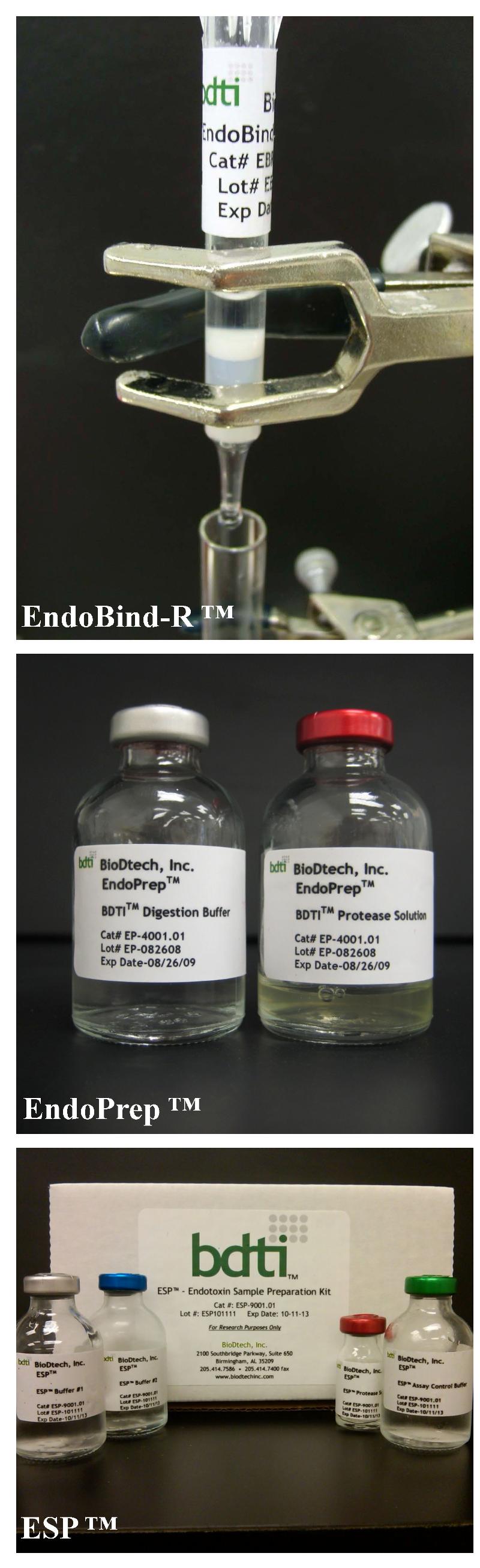
Rauchhaus). Here we use our EndoPrep
™ technology to demonstrate that commercial preparations of a common apolipoprotein contain higher levels of endotoxin than claimed by the manufacturer due to masking effects. Additionally, we use our EndoBind-R
™ chromatography media to reduce the level of contaminating endotoxin by approximately two orders of magnitude.
Samples of the apolipoprotein were sourced from 4 different manufacturers. Two of these were purified from control donor plasma and two were made recombinantly. Three manufacturers claimed endotoxin contamination <1 EU/
µg. However, when these products were used in an immunoassay they caused a reaction indicating endotoxin contamination. We tested the endotoxin content of each sample both before and after digestion with EndoPrep
™ with PPC controls to indicate assay accuracy. Sample #1 contained approximately 1 EU/
µg both with and without digestion. Sample #2 contained extremely high levels of endotoxin. Samples #3 and 4 contained negligible levels of endotoxin without digestion but this increased nearly four orders of magnitude with digestion. Digested samples also gave better PPC results, indicating better assay accuracy. These results indicate that EndoPrep
™ removes protein masking and results in more accurate endotoxin quantitation. This is especially crucial for proteins like Sample #3 and 4 where inappropriate endotoxin detection resulted in false data. The following table summarizes these results. Endotoxin measurements are given as EU/
µg with PPC recovery given in parentheses (%PPC).