Adar II 5776
March 2016
Dear Friends,
Most people, whether they're Jewish or not, know that there are a lot of Jewish holidays.
Most of us know that there is an intense cluster of Jewish holidays in September-October: Rosh HaShanah, Yom Kippur, Sukkot, Shmini Atzeret and Simchat Torah.
We may not be aware that we are approaching a similar cluster of Jewish holidays, spread over two months.
Holidays are important: They ground us by reminding us of pivotal moments in our history (both ancient and recent) and/or by sanctifying turning points in the year.
For the sake of those who may be wondering what these holidays are, when they fall, and how they might be observed within our community, let me give you a brief preview:
(Please note: Holidays begin at sunset on the PREVIOUS day listed below.)
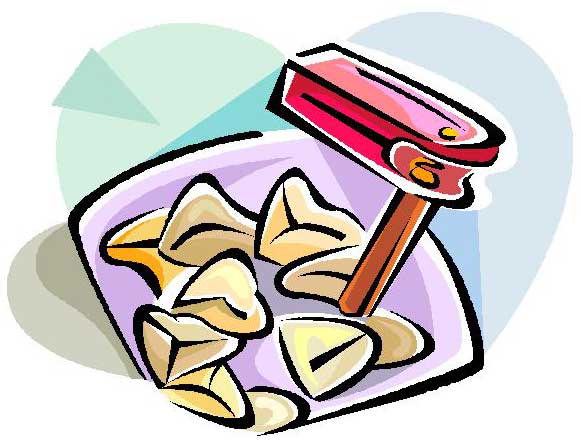 Purim (March 24th)
 This holiday commemorates our defeat over the devious and evil arch-anti-Semite, Haman, who sought to destroy the Jewish community of Persia. We'll read the Megillah on the evening of March 23
rd (followed by our "Fiddler on the Spoof" Purim Shpiel and the Sisterhood wine sale); and we'll read it again on the morning of March 24
th. In addition to joining us in hearing the Megillah read in its entirety, don't forget to (a) give
tsedakah that day to at least two people (it's called "
matanot la-evyonim"); (b) give sweets ("
mishloach manot") to others; and (c) eat, drink and be merry. They're all
mitzvot on Purim!
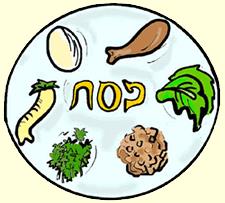 Passover (April 23rd-30th)
 Passover, of course, celebrates our redemption from brutal slavery in ancient Egypt. We begin with two
sedarim (the plural of "
seder") (on April 22
nd and 23
rd) held in the home, and services in shul on the first two days (April 23
rd and 24
th) and the last two days (April 29
th and 30
th)
of Passover.
Watch ComingUp@Aliyah for upcoming Pre-Passover Programs and holiday details.
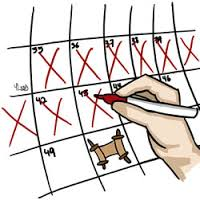 The Omer (April 24th through June 11th)
 These are the days between Passover (which celebrates our freedom) and Shavuot (which commemorates the Giving of the Torah). We count the days and the weeks each night during the evening (
Ma'ariv) service, adding one day each night, up to a total of 49 days and 7 full weeks. For obscure reasons, this period became associated with mourning. It became customary to refrain from getting a haircut during this time and to refrain from engaging in public celebrations as well. There are many variations regarding when these expressions of semi-mourning are to be practiced. In our own community, they begin on the second day of Passover and conclude on Yom Ha-Atzmaut, Israel Independence Day (for more on Yom Ha-Atzmaut, see below).
Yom Ha-Shoah (May 5th) 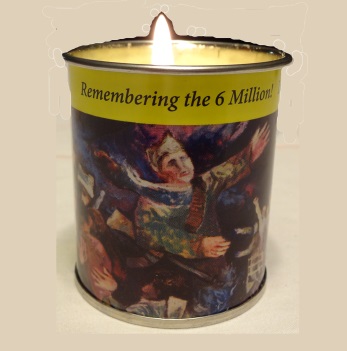
This day commemorates the Holocaust, i.e., the systematic effort to annihilate the Jewish population of Europe in 1939-1945. This year, we'll commemorate Yom Ha-Shoah on the evening of May 4
th with a talk by Deborah Shelkan Remis, the daughter of the late Cantor Gregor Shelkan of Mishkan Tefila, who will speak about how she came to learn about her father's first wife (to whom he had been married in Europe in the 1930s) who had been an acclaimed virtuoso musician before she was murdered by the Nazis.
Yom HaZikaron (May 11th) (Israel Memorial Day) This is a very solemn day in Israel: a two-minute siren is heard at 11:00 in the morning there, and everyone stands at attention, recognizing the enormous contribution that so many have made that Israel might come into being and survive. As of April 2015, the total number of casualties was 23,320. Every year, a communal commemoration (conducted in Hebrew) takes place at a synagogue in the Greater Boston area. It's quite moving and, whether or not one understands Hebrew, it's an important act of communal solidarity to attend. Watch ComingUp@Aliyah for details.
 Yom HaAtzmaut (May 12th) -- Israel Independence Day.
 We will celebrate Israel's 68
th birthday here at Temple Aliyah on Friday evening, May 13
th with a festive Israeli dinner and a program which will feature members of the congregation sharing stories of their first encounters with Israel.
Lag B'Omer (May 26th) This day, of obscure origin, is a festival in the middle of the Omer period (which, as described above, is otherwise considered a sad time). In Israel, it is marked by bonfires and barbecues. Some people who otherwise refrain from shaving or getting a haircut during the Omer period do so on this day. Because there are no other rituals associated with the day, it tends not to get noticed much here in the States.
Yom Yerushalayim (June 5th) This day commemorates the day in June 1967 when the City of Jerusalem became united under Israeli sovereignty. This day remains highly significant within the Religious Zionist community in Israel; less so, among secular Jews. Again, because there are no rituals associated with this day, it tends to be ignored on this side of the Atlantic, though I always urge people to read about and contemplate the significance of Jerusalem on this day. See:
http://tinyurl.com/zyml8ep .
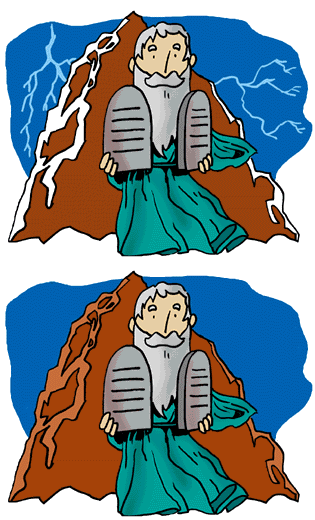 Shavuot (June 12th-13th)
 This holiday celebrates the giving of the Torah. Where (and who) would we be without the Torah? It's hard to contemplate what it would mean to be Jewish without our sacred stories, guiding principles, and traditions. We'll celebrate Shavuot with a
Ma'ariv service, a festive dairy
Kiddush and a late-night
Tikkun (study session) on the eve of the holiday, June 11
th, and with services on both the first and the second days of Shavuot (with more dairy desserts!).
Whew! I did say that this was an intense couple of months on the calendar. I hope that you will avail yourself of the opportunity to worship and celebrate with us on these special days. Looking forward to seeing you!