THIS WEEK'S FEATURE!
|
|
|
Jackie has trained with Orthopedic Surgeon and Yogi Ray Long MD on how to help your body and mind with better breath and more. Watch and see!
|
How to Breathe to Benefit your Brain and Posture
I was fortunate to train with Ray Long, MD, FRCSC, a board certified orthopedic surgeon who has studied hatha yoga for over 20 years, training extensively with B.K.S. Iyengar and other leading yoga masters. Ray is the creator of BandhaYoga and has written various books on the subject of combining modern western science with the ancient healing art of Hatha Yoga.
My yoga and meditation students well know that I encourage Diaphragmatic (Belly) Breathing as a means to prepare the mind and body to be in the NOW at the beginning of class and to enter into final relaxation with Shavasana. With the stroke patients I've worked with, and those battling depression and anxiety, I often find that they "breathe backwards" or paradoxically. Inhaling when they should be exhaling and visa versa. But many new training clients don't realize they are also doing this even during exercise. If you aren't breathing properly, it can be why you aren't getting a toned core, have a higher cortisol level which results in belly fat, have poor posture, back pain, etc.
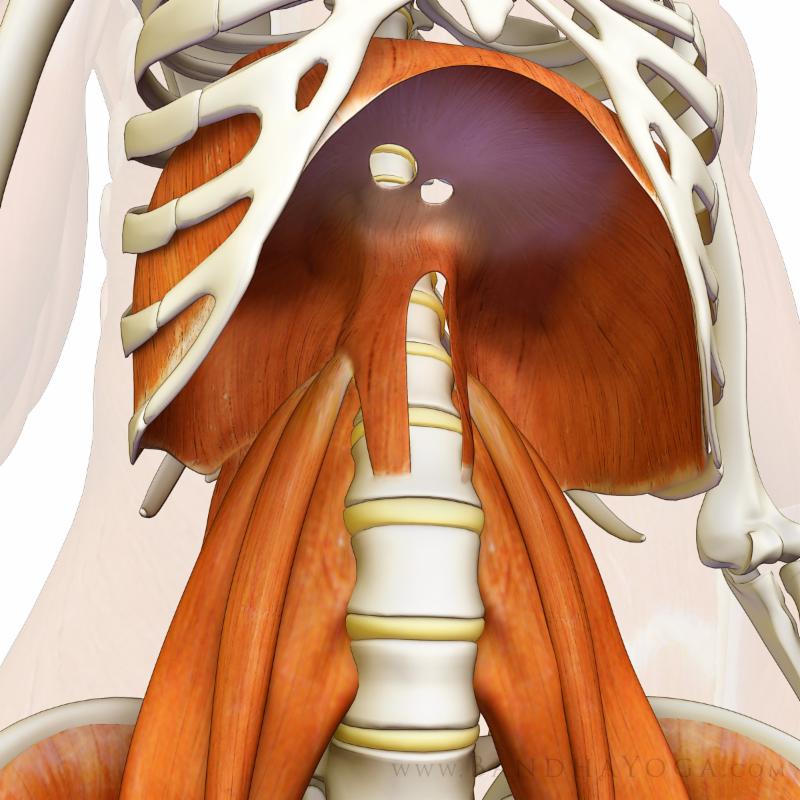
Your thoracic diaphragm is the main engine for breathing, supplemented by the accessory muscles of your chest and abdomen. It is also an important postural muscle with functional connections to your pelvic floor. In addition, regular practice of diaphragmatic breathing draws the mental focus into what is known as the "belly brain". It has a calming effect on the mind while, at the same time, potentially strengthens the diaphragm. I recommend practicing diaphragmatic breathing for 5-10 minutes per day. This can become an integral part of your meditation practice in the morning and a great way to encourage better sleep at night.
However, if you breathe backwards, you are reversing breathing benefits, resulting in poor posture, tight psoas muscle/hips, pelvic problems and your abdomen may be pouching or distended.
Regardless if you are not breathing and engaging your core properly during exercise, you are going to stress your body and brain and limit your results. For example, inhaling while crunching up during a sit-up does not engage the abdominals properly to tone these muscles and most importantly, to protect the spine. It also puts the body into a Fight or Flight Response, which in turn can lead to anxiety, high blood pressure and even stroke. It can also be why you are unable to perform exercises with enough endurance.
You can test yourself to see if you breathe paradoxically and also learn more about the benefits of breath with meditation, for better clarity, stress relief, fitness endurance and posture in just minutes a day
...CLICK HERE TO FINISH ARTICLE