|
Lynn Senior Center
Gets Around
|
|
The Lynn Senior Center (LSC), directed by Stacey Mincello is a busy place. Or, to be more precise, it's several busy places. Under the umbrella of the Greater Lynn Senior Services (GLSS), the senior center has kiosks in the community, a little like small satellite offices. According to the 2010 federal census, Lynn has about 14,500 senior citizens, and their needs range widely. GLSS director Paul Crowley notes that his agency serves five municipalities (Swampscott, Nahant, Saugus, Lynnfield and Lynn) with a staff of 730, many of them working in the area of transportation, since GLSS is the regional vendor for the T's The Ride serving elderly and disabled residents.
GLSS Kiosks Provide Outreach into the Community
Paul Crowley is especially pleased with the unique program called The Kiosk for Living Well that reaches seniors where they live. "These kiosks are social magnets set up at pulse points through the community. They are staffed by outgoing and dedicated employees and volunteers familiar with the latest technology. A key feature of each kiosk is an IN2L device, short for "It's Never Too Late." IN2L is a customized, state-of-the-art computer system modified for the use of older folks who might be daunted by new technology.
|
| |
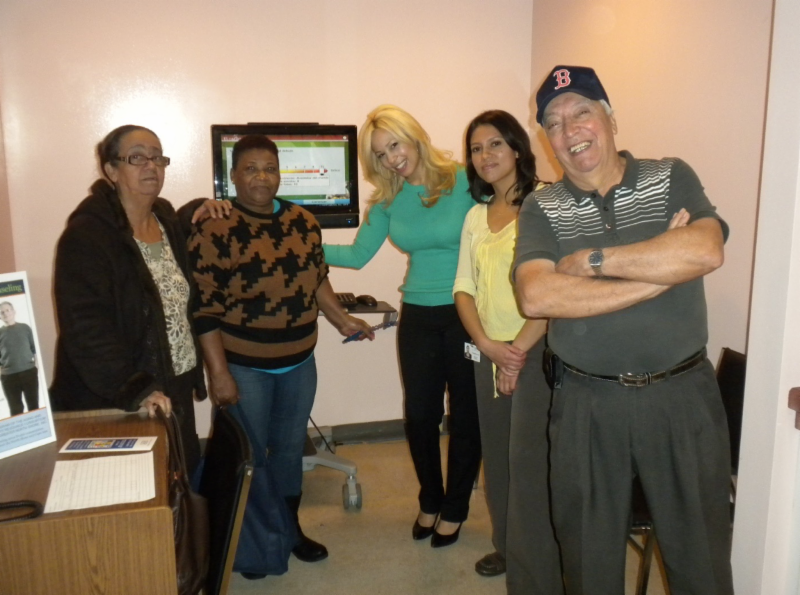
Kiosk Site Supervisor Sandra Suarez poses with Senior Center consumers at the Kiosk for Living Well.
|
Using IN2L screens, the kiosk staff help residents on their own turf learn to tame the perhaps scary machinery. "They play memory games, Skype grandchildren who live far away, and develop relationships with the staff." The kiosks are specially designed to offer stimulating and fun experiences that can help people solve some of the problems that may be making it more difficult to manage daily life. This year a new program works with seniors on balance to avoid falling. Health care is also an important piece of the Living Well kiosks. Nurses check residents' vital signs and advise on wellness. Kiosk staff can connect with people who don't think they need services. Over three years they have had 8000 visits at the seven kiosks-two at the Wall Towers with elderly housing, one at the Lynn Senior Center, as well as sites in Beverly, Danvers, Gloucester, and Peabody. There is even a Roving Kiosk that sets up in |
| |
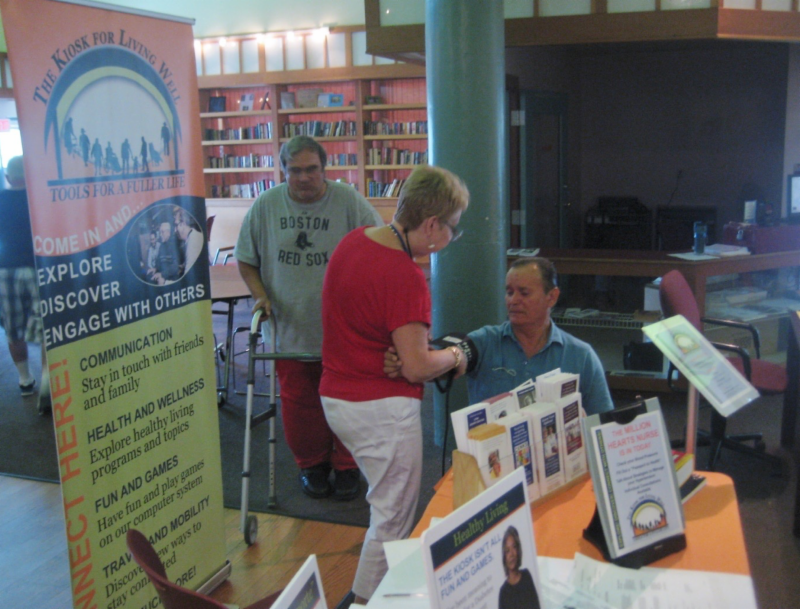
Brenda Raney, the Million Hearts nurse with The Kiosk for Living Well meets with a consumer at the Lynn Council on Aging.
|
different places; you can invite that unit to your event. Check the LRC calendar for the kiosk schedules, and in the case of the Roving Kiosk, for the location.
WW II Veterans Roll to Washington
GLSS serves our military veterans as well. At the end of September, a number of Lynn veterans of World War II were guests on a three-day trip to Washington, DC, to visit the World War II memorial. Planned by GLSS and sponsored by local residents and businesses like Solimine Funeral Homes, the trip included bus transportation, housing at Andrews Air Force Base, and other sightseeing in the nation's capital.
|
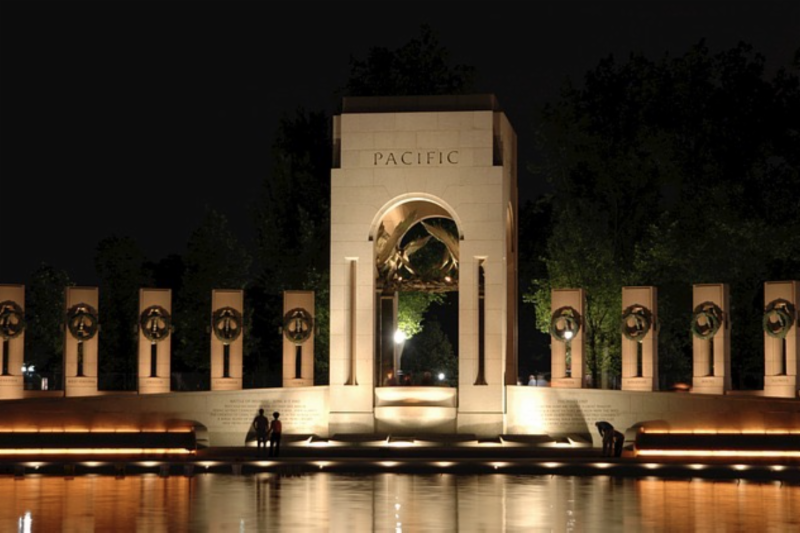
| | World War II Memorial at night. |
This is not the first time local veterans have been treated to a trip to Washington. In 2004 Dave Solimine Sr. and others put together a trip to the capital to attend the dedication of the World War II Memorial. That was a very moving experience for Dave Sr., one he has not forgotten. Over the intervening years, the number of WW II vets has dwindled, and Paul Crowley was concerned that they would not have enough men and women to fill the buses. By adding Korean War vets, the seats were filled and about $30,000 was raised to fund the trip.
What Happens at LSC?
Something is always up at the Lynn Senior Center on 8 Silsbee Street. Nurses, social workers, and other staff teach classes in exercise, dance, and various arts. Nutritious breakfasts and lunches are served each weekday except holidays for a nominal fee. There is even a weekly hair salon. Movies, Bingo games, and clubs entertain residents age 60 and over. Test your knowledge with a team playing Trivial Pursuit. Learn to tap dance or paint with watercolors. Take a trip or two: regular excursions head off to Foxwoods and other casinos as well as into Boston for theater events. How about "Rudolph the Red Nose Reindeer-the Musical" at the Schubert on December 2, for example?
It's easy to find out what's happening at LSC and GLSS. A monthly newsletter from the senior center announces upcoming programs and celebrations. It is available online at the LSC website. For further information: Lynn Senior Center, http://www.ci.lynn. ma.us/citydepartments_councilonaging.shtml |
 |
Calendar - Dates of Note
Veteran's Memorial Service,
November 7 at 1 pm at Solimine Funeral Home, 426 Broadway, Lynn. All are welcome to join veterans' organizations, families, local dignitaries and local high school Junior ROTC and band for a beautiful and moving service remembering veterans who have died in the past year and beyond.
Annual Holiday Memorial Tree Service, December 5 at 1 pm at Solimine Funeral Home, 426 Broadway in Lynn. This is an opportunity to remember loved ones who are no longer here to celebrate the holidays in person. All are welcome to attend the brief service and then decorate the tree with ornaments they bring to commemorate the lives of their loved ones. Santa's Island, through December. Stop by the traffic island on Broadway near Wyoma Square to make the holidays merrier for deserving children. The project is a two-parter: donating funds for the Salvation Army's Item Santa and providing warm winter clothing for needy youngsters in the local schools. Volunteers are welcome.
|
|
|
|
|
|
|
|
|
|
|
|
Care Dimensions Presents
"Living Well Learning Series"
Are you confused about advance directives like living wills? Could you use some guidance on making every moment of your life count? Do you know how to make your wishes known about your medical care? If so, you are cordially invited to a series of talks at the Solimine Community Center, 583 Chestnut Street in Lynn, co-sponsored by Solimine Funeral Homes and Care Dimensions. The first topic was "Aging with Dignity" on September 22. The two final parts of the series will be presented on Tuesday mornings, October 20 and November 17 from 9:30 to 10:30 am. The facilitator at each event is Mary Crowe of Care Dimensions (formerly known as Hospice of the North Shore and Greater Boston). These programs are free and open to anyone in the community who would like to learn more about aging and having conversations about healthcare planning. You may attend any or all of the events; a continental breakfast will be provided, and professionals who require Continuing Education credits for accreditation may apply through Care Dimensions for them. Fall Program Offerings The October program is "Making Choices When It Matters Most: Conversations, Advance Directives and Five Wishes." This program will discuss the importance of advance care planning and making one's health care wishes known through use of Five Wishes and more. Learn about the Five Wishes plan that covers the medical and legal aspects of advance directive, but without the confusing language; instead, it goes beyond other living wills to address the spiritual and social aspects of those facing serious illness. The November discussion is "Living Well: Making Every Moment Count." Speaker Mary Crowe will explore what it means to live well, the barriers we face, and how we can begin to choose. |
| |
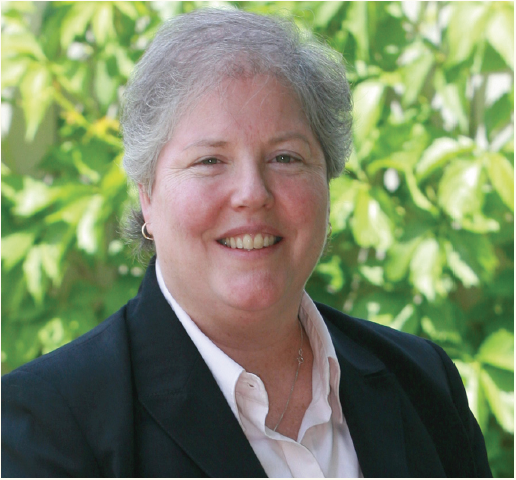
Mary Crowe is Care Dimension's
Education Coordinator.
|
Meet the Speaker, Mary Crowe The speaker for each of these programs is Mary Crowe, who is Care Dimension's Education Coordinator. She has extensive experience presenting information to healthcare professionals, families, and community groups. After completing her master's degree in Social Work at Boston College, she has had additional training and certification in serving the elderly, alcohol counseling, and dementia care. She has worked for over 25 years as a medical social worker in acute care, rehabilitation, skilled nursing and adult day health settings, caring for people and families with advanced illness or at end of life.
This busy lady also teaches at North Shore Community College and Salem State University. Whew! Come to the series at Solimine Community Center to tap into her wealth of knowledge.
Care Dimension Receives Prestigious Award Solimine's partner in this series, Care Dimension has just been honored by the American Hospital Association and related groups with the Circle of Life Award for 2015. The local hospice was recognized for providing a broad range of services, for training healthcare professionals, and for outreach into traditionally underserved communities. "We are honored to be recognized as one of the nation's premier hospice and palliative care organizations," said Care Dimensions President and CEO Diane Stringer. "It's a testament to the hard work and dedication of our staff and volunteers who for more than 35 years have provided the highest quality care to terminally ill patients and their families as they face one of life's greatest challenges." Palliative care provides comfort and medical services to patients at any age or stage of their illness, while hospice provides similar and additional services for those with a life expectation of less than six months. This is just one of the perhaps confusing concepts that Mary will be addressing this fall through the "Living Well Learning Series." To reserve your seat for either or both of the remaining two talks, RSVP to Kim Anderson Hogan, Director of Community Outreach for Solimine Funeral Homes at (781) 718 5668 or kim@solimine.com. Call Care Dimensions (888) 283-1722 for more information on CE credits.
|
|
|
|
|
|
Five Wishes for the
End of Life
|
|
Most of us have heard of a living will 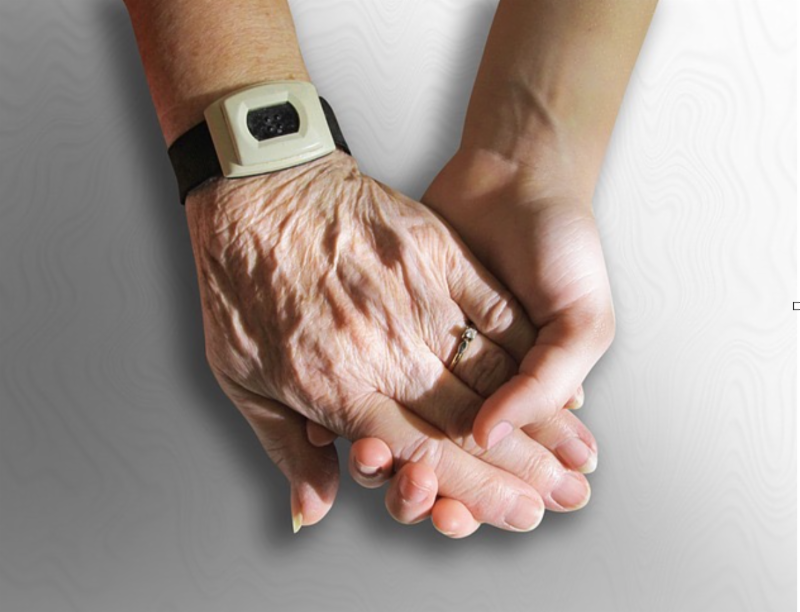 or a health care proxy-those legal forms that document how we want to live our final days. A living will is a directive to physicians that lets us record our wishes for end-of-life medical care should we become unable to communicate our decisions ourselves. A health care proxy is a legal instrument by which we appoint an agent to make legal health care decisions on our behalf when we can no longer speak for ourselves; by these documents we stipulate what measures we might want to take or avoid as our health deteriorates and we become unable to communicate for ourselves.
While these formalities address legal and medical issues, they ignore the social and spiritual aspects of those nearing the end of their lives. Enter Five Wishes, a different form of legal directive some have called "the living will with a heart." Five Wishes was written with the help of the American Bar Association's commission on Law and Aging, and it is legally valid in 42 states (New Hampshire is one that does not recognize it.) Of course, your attorney can help you make sure your wishes are properly recorded and meet legal requirements.
Five Wishes is simple, written without medical and legal jargon, and asks each of us five questions about our end-of-life treatment:
* Who do we want to make health care decisions when we can't make them?
* What kind of medical treatment do we want, and what do we not want?
* How comfortable do we want to be? (Would we accept pain killing agents if they kept us from being fully sensible of our surroundings?)
* How do we want to be treated?
* What do we want our loved ones to know?
Five Wishes was created in Florida by Jim Touhey, who had served as legal counsel to Mother Teresa and worked in her homes for the dying. "We needed an easy-to-use advance record to help all adults plan ahead of a serious illness, addressing issues of the heart and soul that mattered most to them at the end of life," said Paul Malley, President of Aging with Dignity, the organization that publishes and distributes Five Wishes. "Other things are important: we want to be with family, to be comfortable, to have a say in our treatment, to address our spiritual needs. Five Wishes is the first advance directive to put that in a form that is easy to use, to fill out and talk about in our own living rooms. It takes the discussion of advance care planning out of the ER and lawyers' offices and puts it in a comfortable place for discussion."
Five Wishes forms are available for purchase by phone or online from the developer Aging With Dignity. Since its inception in 1998, 23 million copies have been distributed in 27 languages. Versions for children ("My Wishes") and teens and adolescents ("Voicing My Choices") are also available, written on a level that youngsters can understand.
Joel Solimine and other staff members are always available at Solimine Funeral Homes to help you with any advance directives and to answer questions you might have. For further information: www.agingwithdignity.org
|
FAQ: What to Say to Grieving Friends and Relatives
|
|
A cup of coffee, a few kind words, can make all the difference for those who grieve the loss of a loved one.
|
Everyone has to deal with death, but that doesn't make it any easier for us. When we are faced with someone grieving a recent loss, we still stumble for the right words. Sometimes, to avoid saying the wrong thing, we don't say anything at all, and that is perhaps even more painful, suggesting that we either don't remember their loss or we don't care.
How can I console a friend who has lost someone after a long illness?
Even when the grieving person has trod a long and difficult road, he is still grieving the loss of his loved one. "I know you have had a rough time, and I am so sorry for your loss," will give him an opening to share if he wishes.
The wake/viewing/funeral was so crowded that I didn't really have a chance to talk with the family. Should I wait a while to contact them?
Give them a call, drop a note, or make a brief visit, and give them a chance to really talk with you if they wish. "You know I'm a night owl. You can call me as late as you want if you need to talk." Or conversely, "I am up with the birds, so call me as early as you would like. Maybe we can meet for a cup of coffee."
I offered to help in any way but haven't had a response. What should I do?
Make another quick call or visit and be more specific. "Let me take little Johnny for a few hours to give you a break," might be one suggestion. Or, "I am here for you. Can I pick up some groceries?" One neighborhood got together to mow a widow's lawn for the season, a wordless way to show they cared.
How about "I know how you feel?"
Everyone's relationships and situations are different, so it is impossible to know how the grieving person really feels. Instead, share a favorite memory of the loved one, opening the door for reminiscences.
When is it too late to convey condolences?
It's never too late to talk with those who are grieving. There is no timetable for grief, and people mourn in individual ways. Don't be afraid of "reminding" friends or relatives of their loss; they have certainly not forgotten and will appreciate your heartfelt thoughts.
My friend's loved one committed suicide. Is there anything I can say to him?
"I am so sorry for your loss" is always appropriate. Don't ask what happened; if he wants to talk about it, he will. Reassure him that he doesn't have to "be strong," that it's okay to feel needy, sad, angry or scared.
What is the worst thing to say?
While finding the right words can be difficult, those who are grieving will appreciate whatever gesture you are able to make. Your thoughtful and heartfelt sympathy is important, and just a few simple words and a firm handshake or hug shows that you care. If you can't find appropriate words, just be there.
|
|
|
|
|