|
 For exceptional benefits to help you in the garden- Join Today! If you are a Mass Hort member - please recommend membership to a friend! Forward this newsletter. CLICK HERE TO JOIN |
|

SPREAD THE WORD,
HELP US GROW!
Refer a new member to Mass Hort and receive a coupon to attend a Thursday Night at the Hort lecture for free!
|
|
|

You Shop - Amazon gives to Massachusetts Horticultural Society!
Amazon will donate 0.5% of the price of your eligible AmazonSmile purchases to Massachusetts Horticultural Society whenever you shop on AmazonSmile.
AmazonSmile is the same Amazon you know. Same products, same prices, same service.
Begin shopping
www.smile.amazon.com
|
|

Letter from the President
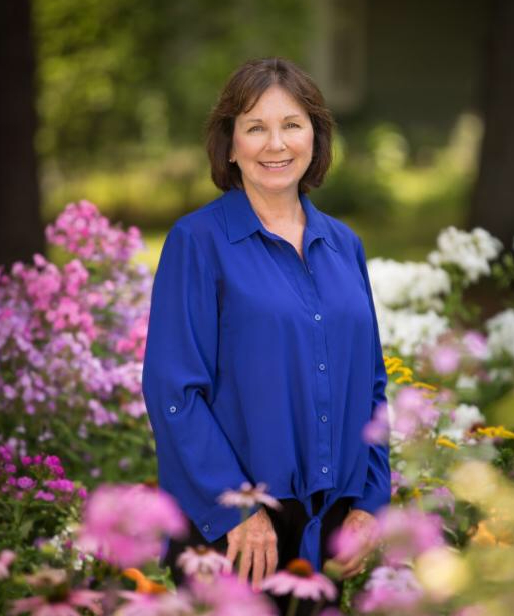 Greetings!,
Take advantage of all that Mass Hort and The Gardens at Elm Bank have to offer this summer! Enjoy a restorative stroll through our beautiful gardens. Rejuvenate yourself with a brisk walk on the hiking trails along the Charles River. Connect with neighbors at our Goddesses in the Gardens celebration.
Bring a friend. Get connected. Join. This wonderful natural resource is just minutes away. Our historic and contemporary gardens demonstrate how plants and design are an integral part of everyday life.
Come, learn, and grow with the Massachusetts Horticultural Society. I hope you will join us in the gardens to enjoy and explore the wonderful world of plants and gardens.
Best wishes, |
|
Weezie's Garden Restoration, Phase II
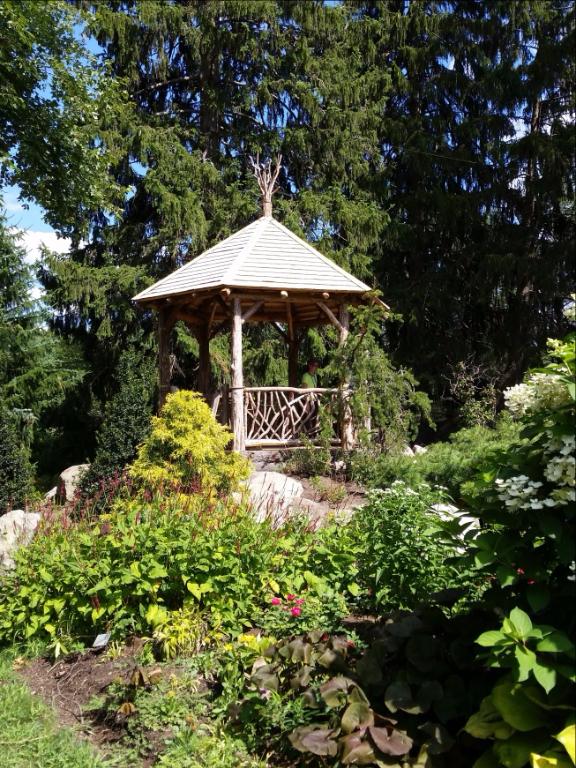 We have a beautiful new addition to our children's garden landscape! If you were at the Boston Flower Show last March, you might have seen its rustic framework premiering as a gazebo in our garden exhibit. It is now nestled into new landscape that replaces the paved road bed that previously divided Weezie's Garden and the Bressingham Garden. This stately shingle roofed belvedere offers beautiful views into the waterways and pollinator gardens of Weezie's and grand sweeping views across the Bressingham Garden to the manor house and the landscapes beyond! We have a beautiful new addition to our children's garden landscape! If you were at the Boston Flower Show last March, you might have seen its rustic framework premiering as a gazebo in our garden exhibit. It is now nestled into new landscape that replaces the paved road bed that previously divided Weezie's Garden and the Bressingham Garden. This stately shingle roofed belvedere offers beautiful views into the waterways and pollinator gardens of Weezie's and grand sweeping views across the Bressingham Garden to the manor house and the landscapes beyond!
A belvedere is defined as a summerhouse or open-sided gallery typically commanding a fine view from a raised elevation. The word has been in used in English language and gardens since the late 16th century. It is borrowed from the Italian language and translates from bel 'beautiful' + vedere 'to see.'
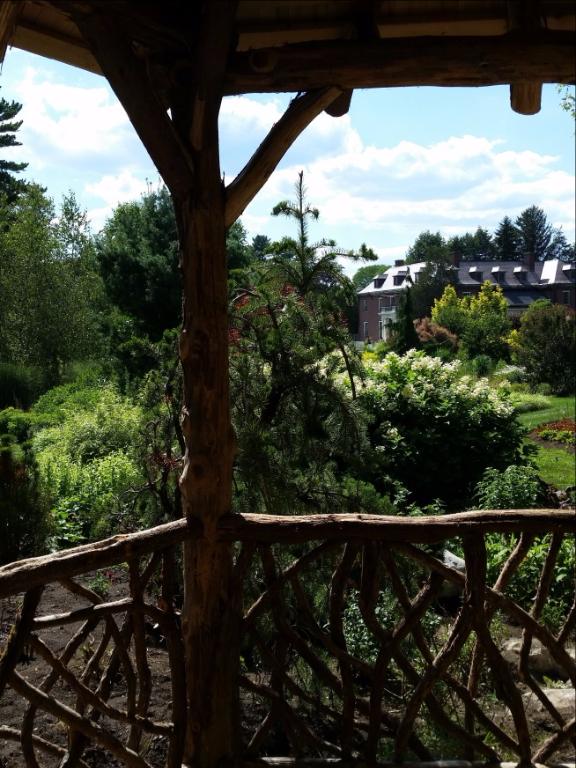 In our landscapes, it certainly helps to open up beautiful sights and sounds of birdsong and an interplay with nature as it can be seen from this new perch up in the treetops. Like many of the other rustic structures and fences added into Weezies, the belvedere was built by Frank Hamm, learn more at www.rusticconstruction.net.
Our belvedere overlook can be approached by an elevated and accessible pathway that begins at the new water feature and the outdoor classroom. It can also be approached from the new entry/exit path that runs directly through all of our gardens from the trial garden all the way out to our Seed to Table Vegetable Garden.
The installation of the belvedere is one of the final major projects of the 2015-2016 landscape rehabilitation made possible by the foundation responsible for Weezie's Garden for Children.
|
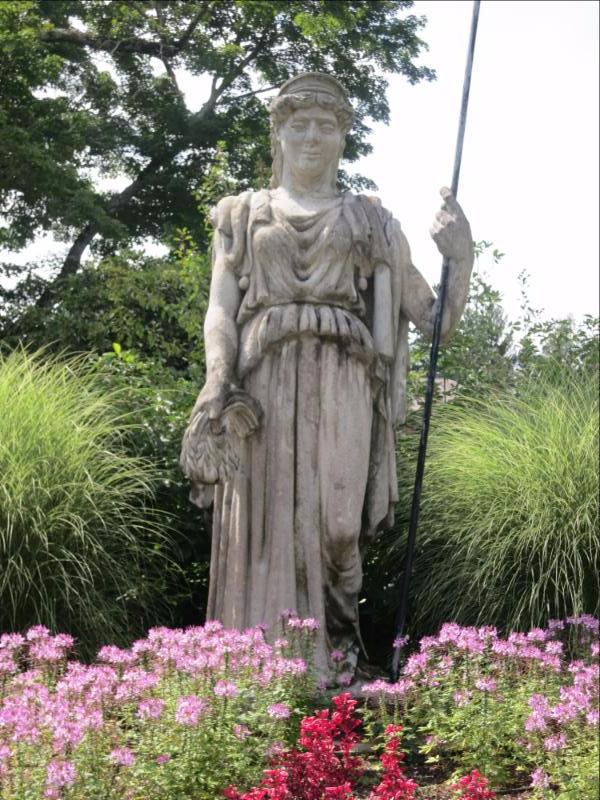
Evening at Elm Bank:
Goddesses in the Gardens
Thursday, August 18
5:30 - 8 p.m.
Join us in the gardens for
an evening of live music, garden tours, harvest tastings, and kids activities.
Kids can explore our newly renovated Weezie's Garden
for Children, and everyone
can try something fresh
from our Seed to Table vegetable garden!
Bring a picnic and friends to enjoy an evening surrounded by our beautiful gardens. Wine, beer and other beverages will be sold. Fun for the whole family!
Free to members and children under 12/$8 non-members.
Join Mass Hort at the door and get in free. Live music in the Maple Grove by North of Trouble  North of Trouble is a classic R&B cover band performing g enerational hits people know and love. North of Trouble band members are Ryan Kelleher, vocals/piano; Tom Keiser, guitar; and Doug McPherson, drums/vocals.
Learn more about the band
at www.northoftrouble.com or www.facebook.com/northoftrouble.
For questions about the event,
please contact Amy Rodrigues at amyrodrigues2@aol.com.
This event is sponsored by Wellesley Bank Charitable Foundation
|
|
The Possibilities: The Manor House at Elm Bank
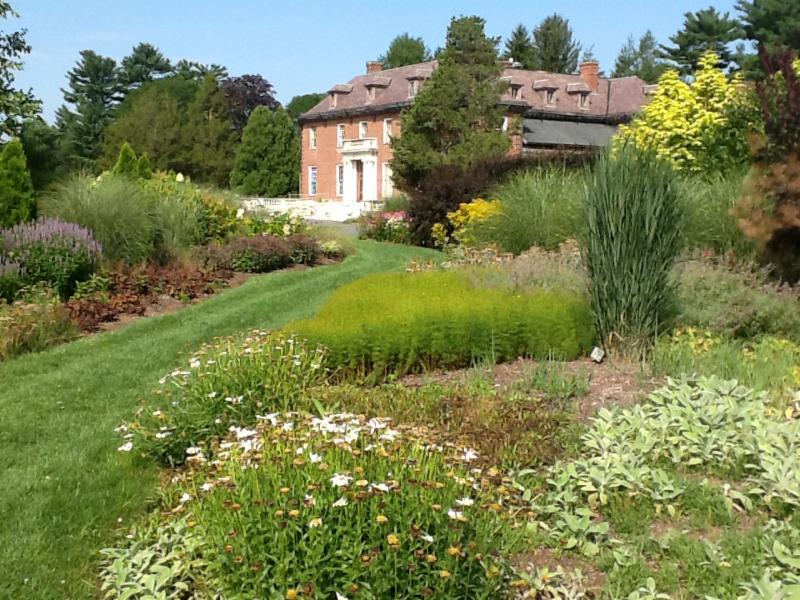 On July 13, 2016 a group of people who are interested in saving the Manor House met at Elm Bank to envision its future. Hoping to be part of a group that will grow, 23 people with varied backgrounds discussed different options for the building. Some of the visions were: an event venue, a garden to table restaurant, a very small hotel, a corporate conference center, and a center for horticulture innovation. Many people concluded that the adaptive reuse of the building could include several of the ideas generated at the meeting.
Executive Director, Katherine Macdonald, noted that the question most often posed to her is What's happening with the Manor House? One hopes that groups working together with neighbors, various constituencies, and nearby communities, will move the discussion forward. Massachusetts Horticultural Society is working to fund a Master Plan to address the Manor House, Asian Garden, and other planning challenges, as it contemplates the next 10-15 years at Elm Bank.
The Baltzell Manor House on the Elm Bank Estate is listed on the National Register of Historic Places. It was designed by architects, Carrere and Hastings, who also designed the New York Public Library, as well as the Congregational Church in Wellesley Center. The Neo-classic Georgian Mansion has stood empty for many years, waiting for that great idea and funding package that will bring it to life again. Enjoy this video to take a virtual tour of the Manor House.
Please help us preserve this wonderful landmark. We need your help with process, ideas, and funding. To get involved, please contact Kathy Macdonald at 617-933-4955 or kmacdonald@masshort.org |
|
Save the Monarchs Tour
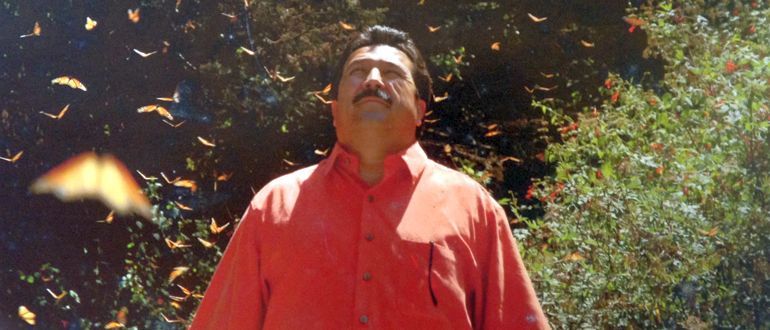 For nearly two decades, Jose Luis Alvarez has been working to reforest the over-wintering habitat for Monarch butterflies. Once a common sight, these butterflies have been declining in number for nearly two decades. Eastern Monarchs migrate to Mexico each winter. For a long time the story of their migration was unknown, and, until 1975, their winter habitat was undiscovered.
Monarchs congregate in central Mexico, flocking to specific trees. Populations of these trees have also been in decline due to deforestation. Jose Luis Alvarez is a Mexican tree nurseryman, who has for decades been growing trees for reforestation projects. In 1997 he created Forests For Monarchs (FFM), also known as La Cruz Habitat Protection Program (LCHPP). It is an innovative non-profit designed to restore the Monarch's forest habitat and at the same time give indigenous people a desperately needed source of wood for cooking, heating and building houses. Vermont Woods Studios and its founder, Peggy Farabaugh, are excited to sponsor his tour and hope to see the Monarch's winter and summer habitats restored. Please come listen to Mr. Alvarez share the story of his work, and details of the natural history of the Monarch butterfly. We'll also lead a walk to our own pollinator garden to show you what you can grow to help the Monarch butterfly, and other pollinators, in Massachusetts.
This lecture will be Friday, August 26 at 1:30 pm. Sign up now! |
Work by Carol Govan on Display at Elm Bank
Recent Paintings on Exhibit from August 22 to Columbus Day
|
|  | |
Govan, Carol. Abandoned Parking Lot. Watercolor.
| |
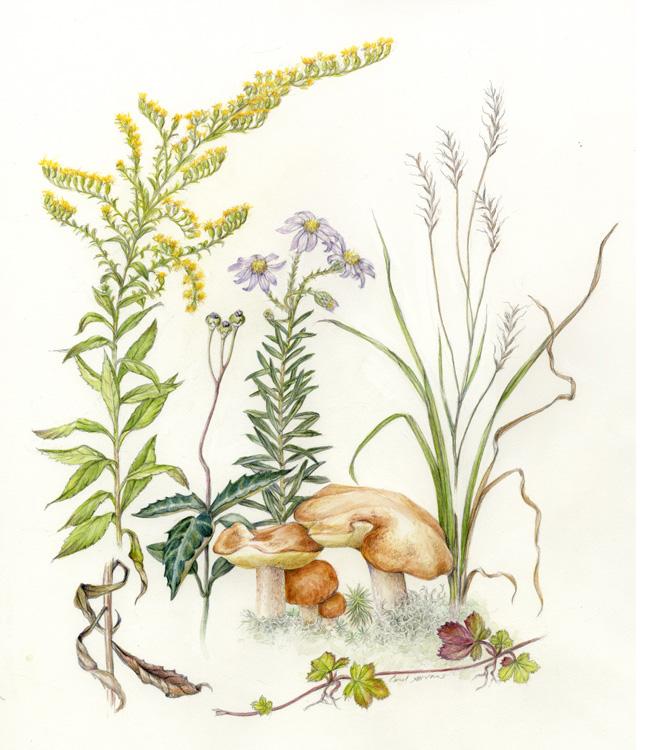
Carol Govan, a popular local naturalist, botanical art historian, and teacher has devoted years to informing the public about the work of many other artists, but this summer Mass Hort is fortunate to be able to present an exhibition of her own artistic output. It will be easily accessible to all late summer visitors to The Gardens at Elm Bank because it will be housed in the Visitor's Center. In her statement below, Carol invites the public to understand the process of producing art, but most of all, to enjoy looking at it.
Seeing Nature's Secrets Artist Statement by Carol Govan I like to look at the natural world but have a hard time slowing down to see anything unless I draw and identify it. Drawing allows me to see details I didn't see at first glance. Struggling to find its name tells me new information that encourages me go back and look again. My interests tend to combine art and science, both of which require concentrated observation. I am a naturalist who teaches various science and art courses. One has students find a natural habitat in order to identify and draw all the plants (or anything else interesting) throughout the year. Another, focusing on plant relationships in situ and through a microscope to fit them into family groups. "The History of Botanical Art" marvels at old books filled with beautiful detailed illustrations and descriptions. "Drawing Botany" has students examine and sketch plants as they learn about roots, shoots, flowers and fruits. I encourage lots of drawing and playing with color to take notes rather than create a perfect plant portrait. I teach or give lectures at The New England Wildflower Society, The Boston Mycological Society, The Massachusetts Horticultural Society, the Coastal Maine Botanic Garden, the Attleboro Museum, and the Wellesley College Botanic Gardens where I also write and illustrate articles about tropical plants and train the docents. My lectures are about pond life, tulips, orchids, succulents, gymnosperms, cacti, insects, fungi, art history, color, field sketching, old herbals, etc. As you can see I have a hard time focusing but see or learn something new each time I go outside and draw something, teach a class (and relearn what I have forgotten), or give a lecture. These activities help me focus (a little) and encourage me to see and learn about new things. |
Mass Hort's Seed Lending Library
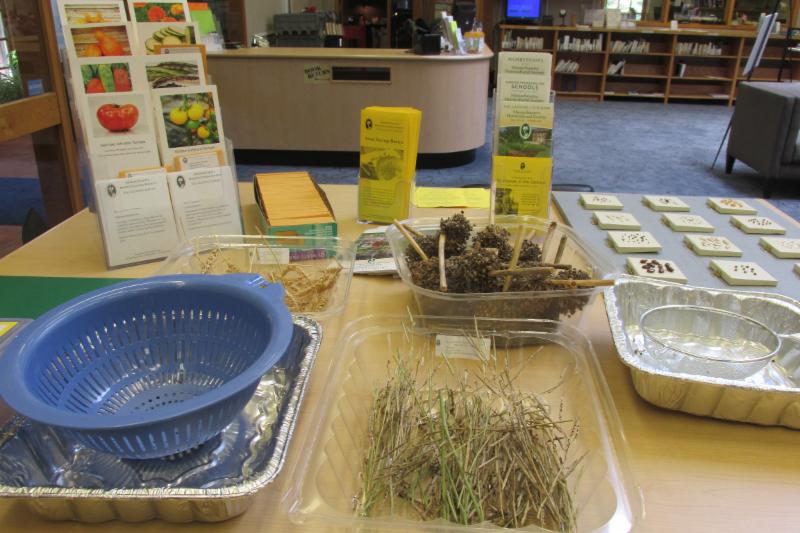
Throughout the month of August, Massachusetts Horticultural Society will be featured in the 'Makerspace' of the Dover Town Library. This rotating feature of the renovated library highlights different organizations each month. Mass Hort has a display seed lending library, a collection of seeds that others can take and plant. Library patrons are also encouraged to collect seeds from their own gardens to return to the seed library.
Additionally, library visitors can pick up information on how to save seed, and do a few activities in the Makerspace to learn more about seeds and how to handle plant material to save seed for future use. If you are in the Dover area, be sure to check it out!
The seed library is a collection of seeds from the Seed to Table vegetable garden at The Gardens at Elm Bank, as well as other gardens in Massachusetts. Collection is coordinated by Hannah Traggis, our Seed to Table educator. You can come to her program on Seed Saving, in the Seed to Table Garden, on August 14 from 10 - 11:30 a.m. Learn more and sign up here. This workshop is great for both home gardeners as well as educators who may want to teach about seed saving in the classroom.
The seed library, collection activities, and germination experiments have also been added to the Plantmobile offerings which can come to a school near you.
John Forti, Director of Horticulture and Education, will be giving a presentation at the Dover Town Library on Tuesday, August 16 at 2:30 focusing on heirloom plants woven into the history of New England. This lecture will be of interest to those who want a better understanding of the most tried and true plants in our area, and to discover our role in preservation a diversity of plantlife.
For the third year, throughout the summer, Dover Town Library staff can be seen at Mass Hort's Gardens at Elm Bank, 900 Washington Street, Wellesley. Each Wednesday at 10:30, Super Awesome Fun Time is held in Mass Hort's award-winning Weezie's Garden for Children. We are thrilled to be continuing and strengthening this wonderful relationship with a community partner!
If you are interested in hosting the Seed Lending Library display at a library near you, please contact education@masshort.org.
|
 117th Honorary Medals Dinner
Save the Date: Thursday, October 20! Mass Hort's Honorary Medals Nomination Committee for 2016 has just published its list of honorees and invites the public to the 117th annual ceremony and dinner. Congratulations and awards will be given to these recipients in the Hunnewell Building.
The Nominees Are:
George Robert White Medal of Honor: Peter Hatch, Director of Gardens and Grounds Emeritus for the Thomas Jefferson Foundation
Jackson Dawson Medal of Honor: John Herbert Alexander III, Plant Propagator at the Arnold Arboretum Thomas Roland Medal: Darrell Probst, Plant Breeder and epimedium expert.
Mass Hort Gold Medals: Karen Binder, Executive Director of Blithewold, Inc., Clark Bryan, Director of Operations for Massachusetts Horticultural Society, Holly Perry, Volunteer Extraordinaire and Trustee for Massachusetts Horticultural Society
Mass Hort Silver Medals: Ted Elliman, Botanist and Author, Jane Hirschi, Executive Director of CitySprouts, and Volante Farms
|
Catching Up with the Last Half Century
By Maureen Horn,
Mass Hort Librarian
Part 18
1996 & 1997: The Years of Multiple Responsibilities
During the late nineties, the Society embraced the reality of caring for two development responsibilities. The Trustees were pursuing the challenge of creating an urban garden in the part of Boston that needed to be filled after the Central Artery was abandoned and of creating a suburban showplace at Elm Bank in Dover. In January of 1996, they had just received approval by the Massachusetts Highway Department for a long term lease for the urban location, and inquiries were already coming from plant societies on the availability of garden sites at their suburban location.
The annual exhibition was marking a notable event, the 125th anniversary of the New England Spring Flower Show. The theme was "Celebration", and installations were contributed by outside organizations like Longwood Gardens and the Montreal Botanical Garden. A crisis occurred in Horticultural Hall when a waterline broke in the library's rare book room and endangered 1300 books.
During the ensuing year they were to be evaluated, with an eye to conservation, by the Reprocessors of Rochester, N.Y. During the spring and summer, the Massachusetts Horticultural Society was packed with accomplishments and aspirations. In April, the Massachusetts Arborists Association donated over $400,000 of professional tree care, labor and maintenance to Elm Bank. In May, the first New England Trial Garden, an All American Display Garden was planted. Round the clock supervisory staff were put in place and open hours were posted. A promise was made the in the months ahead the existing buildings would be stabilized and a Master Site Plan would be created. In the fall, adult education classes, seminars and workshops were being promoted by a call to "Be the first one to attend classes at Elm Bank."
The 1997 Flower Show theme was "Secrets of the Garden", and its secrets would be revealed by the introduction of a website, which could be searched for news of the whole Society. Soon after, a new resource, HortLink, for horticultural information, was added to the website.
In the fall, there was much joy that the lost Goddess statues had been recovered. They had been moved for storage to Orchidvale, the home of President Albert C. Burrage, when the Third Horticultural Hall was built in 1901. Orchidvale is now the site of the Urquhart School, and its founder, Lynn Warren, graciously donated them to the Society. Because Benjamin P. Cheney had given the statue of Ceres to the Second Horticultural Hall in 1865, it was deemed appropriate that they be returned to his estate.
The year 1997 came to a close with an air of urgency because the need for funds was anticipated when President John Bok announced the impending "designation" of the downtown land to Mass Hort. The Society would need to commission an expensive Plan, required by March, for the parcels, and it was estimated that it would need $2 to $4 million a year for maintenance.
The good news was that membership had increased 3% and that all the books that had been endangered by the flood had been saved and were back on the library shelves.
|
Book Review

Onward and Upward in the Garden
Katharine S. White
Edited with an Introduction by E.B. White
New York Review Books Classics: 2015
Reviewed by Patrice Todisco
In 1958 as her job as an editor at The New Yorker was coming to close, Katharine S. White penned a gardening column entitled "Onward and Upward in Garden," the first in a series of fourteen pieces that would run in the magazine over a twelve year period. Compiled and published with an introduction by her husband E.B. White two years after her death in 1977, Onward and Upward in the Garden was reissued as a New York Review Book Classic in 2015, the second garden book to be so honored.
I have returned to Onward and Upward in the Garden frequently and it is a book that I recommend for any season, particularly the dog days of August. There's not a picture within its pages and each piece can be read and savored on its own merit. As White notes in its concluding essay, there are few American books that deal with horticulture and plants as a true branch of literature. Her pieces for The New Yorker achieved both, providing pleasure to not only gardeners but any other reader.
 A traditionalist, White's tastes were, like her writing style, simple and direct. She grew up in Brookline, Massachusetts and gardened in Maine. With a sensibility shaped by her New England heritage, White preferred the "plain to the fancy, the relaxed to the formal, the single to the double, the medium sized to the giant." A traditionalist, White's tastes were, like her writing style, simple and direct. She grew up in Brookline, Massachusetts and gardened in Maine. With a sensibility shaped by her New England heritage, White preferred the "plain to the fancy, the relaxed to the formal, the single to the double, the medium sized to the giant."
The book's title, Onward and Upward in the Garden, is borrowed from a Unitarian phrase and underscores the pragmatic approach White favored in her exploration of the gardening world. Nothing fancy or unnecessary, please. Included within are chapters devoted to the history and literature of gardens, the arranging of flowers, herbalists, seed catalogues, and garden trends and developments.
For White the garden was a world where the practical intersected with the intellect and the catalogues of seedsmen and nurserymen (described as her favorite reading matter) were as worthy of consideration as those of historians and botanists. She wrote extensively about current publications including a piece from 1962 in which she reviews a new book, Her Garden Was Her Delight, breaking new ground and based upon the promising idea that "little-known women gardeners, botanists, botanical artists, plant collectors and garden writers have played a part in the horticultural history of our country." How far we have come.
White is described in the book's introduction as owning no gardening clothes and more likely to visit her garden in a pair of Ferragamo shoes than work boots. Once a year, in a ceremonious manner, she donned a shabby Brooks Brother raincoat and on a fall day oversaw, with military precision, the laying out of the spring bulb garden described as "a crucial operation, carefully charted and full of witch craft."
Witch craft or not, in the introduction by E.B. White he notes that his beloved Katharine aspired to author a garden book but wished to write one more piece - a reminiscence of the gardens of her childhood. While this final piece, unachievable due to ill health, was never realized, Onward and Upward in the Garden serves as the legacy of her contribution to the canon of American garden literature.
Patrice Todisco writes about gardens at www.landscapenotes.com
|
 Watering with an Eyedropper Watering with an Eyedropper
by Neal Sanders,
Leaflet Contributor
I remember back when it used to rain. I distinctly recall looking at computer weather maps with angry red, orange, and even purple rain pounding all of eastern Massachusetts. There were days when we awakened to a soft, gentle rain that soaked the soil down eight or ten inches.
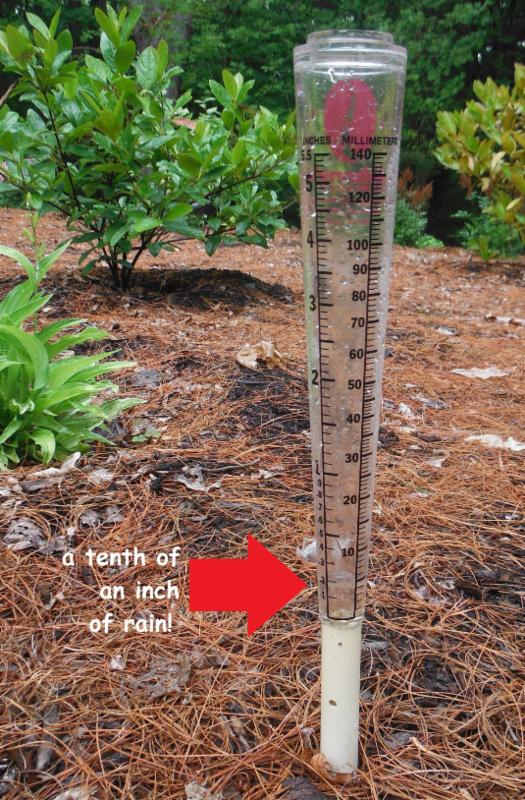
But not recently. We're in a drought, a Stage 2 drought according to the U.S. Weather Monitor. We're 25% under our normal rainfall - 6 ½ inches short and counting - with a long term trend for more of the same. Our town has imposed strict watering guidelines that will likely get even more draconian in August. If we lived in an apartment or condo, we'd shrug, water the plants on our deck, and count our blessings. If we lived in a house with a long-established garden, we'd ride out the dry spell and consider ourselves lucky. But we don't live in a condo and our garden is brand new - nothing in is more than a year old. We have a dozen young trees that are just starting to establish root systems. We have sixty or more shrubs and several hundred newly-planted perennials. If we don't water, they'll die. |
| | |
The storm that was supposed to drop 2-4 inches of rain
| |
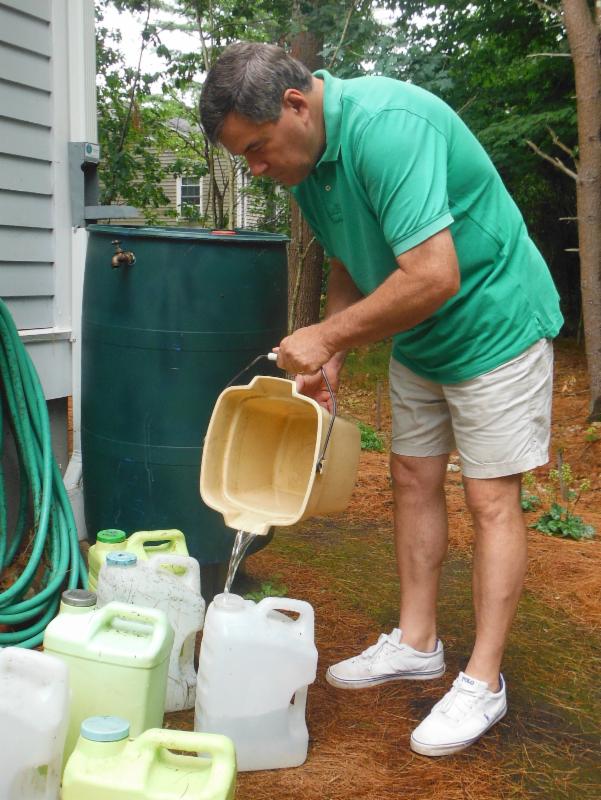
So, here is what we do. Every morning at 5:30 a.m. we are dressed and out in the garden. Our four rain barrels would hold 200 gallons of water if there had been rain to fill them, but they've been dry since Bastille Day. (That storm at the end of July that the radio promised would drop two to four inches of rain went south of us. Rhode Island got lucky. We got sprinkles.) So we collect the water condensate from our air conditioner. We collect the water that we ran while the shower warmed up. We pool the water in which we washed vegetables saved in a pail. There are mornings when those three activities generate six or seven gallons of water.
|
| |
Water collected from the air conditioner goes into jugs for watering
|
To get the rest of the water we need, we begin filling re-purposed cat litter jugs with tap water. One day, we water the plants in the front of the property. The next day, we water the plants in the back. Each tree, shrub, and perennial gets a specific allotment of water. There is no waste. We've built little berms around the plants to ensure that there is no runoff. Betty applies the water, I refill the jugs and run them to where they're needed next. And 'run' is an accurate descriptor: I carry two, three-gallon jugs at a time, and a jug is filling while I sprint to the next drop point.
The jug-watering brigade goes on for up to two hours because we also have to water our vegetable plot two miles distant. (There, we're allowed to use a hose, but Betty is just as precise in her watering.) At 7:30 or so, we line up the empty containers. We are both covered in sweat and ready for a shower. Where, of course, we will start collecting the water for tomorrow morning...
Neal Sanders is the author of ten mysteries. His newest, 'How to Murder Your Contractor' has just been published and, together with his other titles, is available in stores and at Amazon.com.
|
 August Hort Hints August Hort Hints
By Betty Sanders,
It's official now: it is dry, dry, dry. Like many areas, Massachusetts seems to have been missed by every storm going north or south of us. But even those getting a quick dousing from the occasional 'pop-up' thunderstorms aren't getting nearly enough. What's a gardener to do?
F 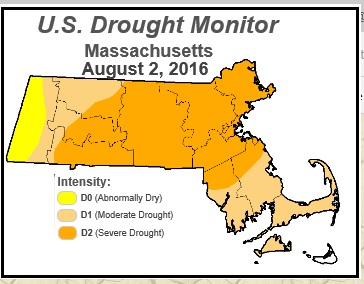 irst, respect watering bans. Towns are worried about having enough water for people -to drink, cook, shower and flush. Minimize your home water use any way you can. When you water outside, water early in the day when the air is coolest to lose the least to evaporation. Don't water at night when water left on leaves can promote fungus diseases. irst, respect watering bans. Towns are worried about having enough water for people -to drink, cook, shower and flush. Minimize your home water use any way you can. When you water outside, water early in the day when the air is coolest to lose the least to evaporation. Don't water at night when water left on leaves can promote fungus diseases. Second, prioritize your watering. Water your vegetable garden. Its plants are annuals that are feeding you and your family so it should be a priority. I note that my own town, Medfield, specifically exempts vegetable gardens from its otherwise severe ban. If it is allowed, water new trees, shrubs and perennials. They lack an established root systems and need the extra help. 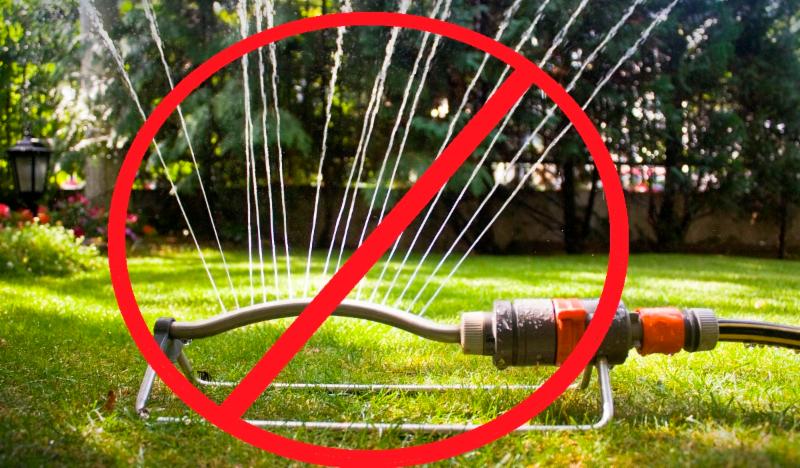 Third, don't use water unwisely. Put away your sprinklers or, if you have an in-ground system, don't turn it on. Sprinklers waste water by landing it on the wrong areas and by its evaporating before it even hits the ground.When you water, do so less often but deeply-shallow watering leads to shallow roots, and they will dry out quickly on hot days. The top couple of inches dry out quickly on sunny 80 and 90 degree days. Dig down with a trowel occasionally to make certain the water is going down at least 4 inches. Third, don't use water unwisely. Put away your sprinklers or, if you have an in-ground system, don't turn it on. Sprinklers waste water by landing it on the wrong areas and by its evaporating before it even hits the ground.When you water, do so less often but deeply-shallow watering leads to shallow roots, and they will dry out quickly on hot days. The top couple of inches dry out quickly on sunny 80 and 90 degree days. Dig down with a trowel occasionally to make certain the water is going down at least 4 inches. Finally, now is not the time to fertilize lawns, trees or shrubs. Plants should never be fertilized when water is scarce. Fertilizing trees and shrubs encourages them to put out new growth that will not have time to harden off before winter freezes cause damage.Fertilize in the fall.
Garden Maintenance. Cut back perennials that have finished blooming. They'll look neater and many will surprise you with a second bloom when prevented from setting seed the first time. Keep picking your vegetable gardens. By picking, you are preventing your plants from going to seed so they keep producing produce. If you have more vegetables than you can use, offer it to friends or call a local food cupboard and ask for their drop-off days.
Replant this month for a more bountiful fall crop: green beans, peas, cucumbers, carrots, kohlrabi, summer squash, early sweet corn, green onions. Water seeded areas by hand daily until the new plants are up and a couple of inches tall. Cover the newly planted seeds with row cover to help keep them cooler and out of pecking range of birds. You can take the row covers off when the plants are several inches tall.
Keep weeding! Pull them or dig them out, roots and all. Weeds allowed to set seed ensure that you will be working harder next year. And, because your weeds likely are making seeds this month, go the extra step and put them in the trash, not the compost.
|
| | |
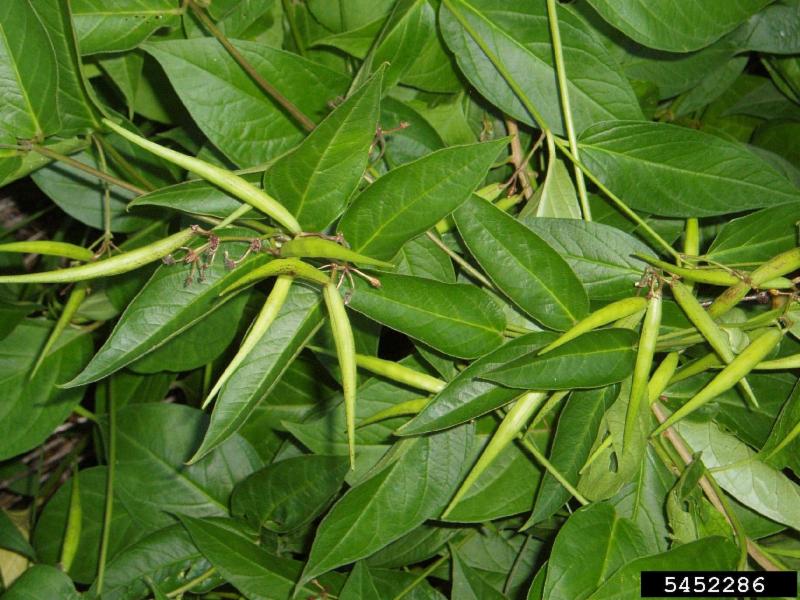
Swallowwort seed heads
| |
Save our monarchs. Some very nasty weeds are coming into seed at this time of year. One of the worst of them is swallowwort, a relative of milkweed that confuses monarchs looking to lay their eggs. While milkweed both feeds and acts as a nursery for monarch butterflies, swallowwort is a death trap with toxic leaves. In August, swallowwort produces seed pods. If you see them, cut them down, bag them and send the bag to the trash. Mark the spot and next year start early to mow or cut it down as it emerges. If you keep at it, swallowwort will eventually die. Enjoy your hydrangeas. It was a tough year for spring-blooming hydrangeas. February's warm weather fooled plants into producing buds that were then killed by April's cold snap. Fortunately, ever-blooming varieties were less affected and will more dependably provide you with flowers this August. |
| |
Remove any remaining spring bulb foliage
|
Spring bulbs. Any remaining foliage should be cut off and removed now. If you had areas that did not bloom well in the spring, the problem could be that the bulbs divided and are now too crowded. Or if you weren't happy with an area of your yard this year, dig the bulbs up carefully now, dry them in a garage or garden shed and replant them in the fall. If you're thinking of adding bulbs for next spring, this is the month to order those new bulbs for fall planting. The selection only narrows as summer turn to fall.
You can see more of Betty's horticultural ideas at www.BettyOnGardening.com. Betty is also 2015-2017 President of the Garden Club Federation of Massachusetts.
|
|
|
|
|
|
|