|
 For exceptional benefits to help you in the garden- Join Today! If you are a Mass Hort member - please recommend membership to a friend! Forward this newsletter. CLICK HERE TO JOIN |
|

SPREAD THE WORD,
HELP US GROW!
Refer a new member to Mass Hort and receive a coupon to attend a Thursday Night at the Hort lecture for free!
|
|
|

You Shop - Amazon gives to Massachusetts Horticultural Society!
Amazon will donate 0.5% of the price of your eligible AmazonSmile purchases to Massachusetts Horticultural Society whenever you shop on AmazonSmile.
AmazonSmile is the same Amazon you know. Same products, same prices, same service.
Begin shopping
www.smile.amazon.com
|
|

Letter from the President
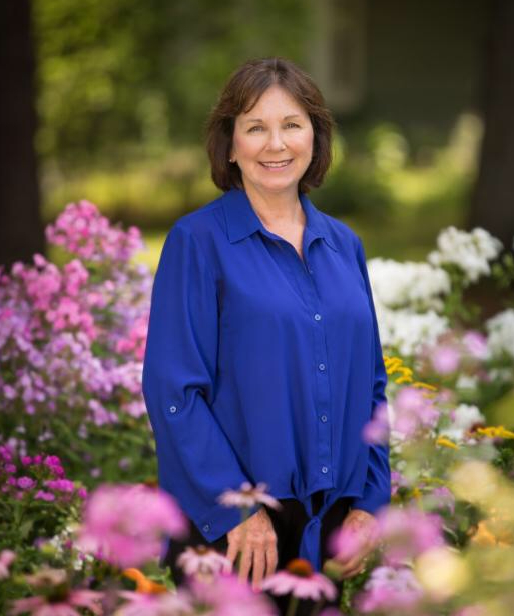 Greetings!,
I hope you are enjoying the summer as much as we are at Mass Hort. Families and their children are enjoying day trips to Elm Bank. We have a great evening program July 28 - Arts on the Green, where you can enjoy a picnic dinner and buy wine and beer, as you walk around the gardens and see the work of many visual artists.
Join me for a walk in the garden and enjoy the beauty of the summer. Learn how you can get involved and help restore the beauty of this estate.
Best wishes, |
|
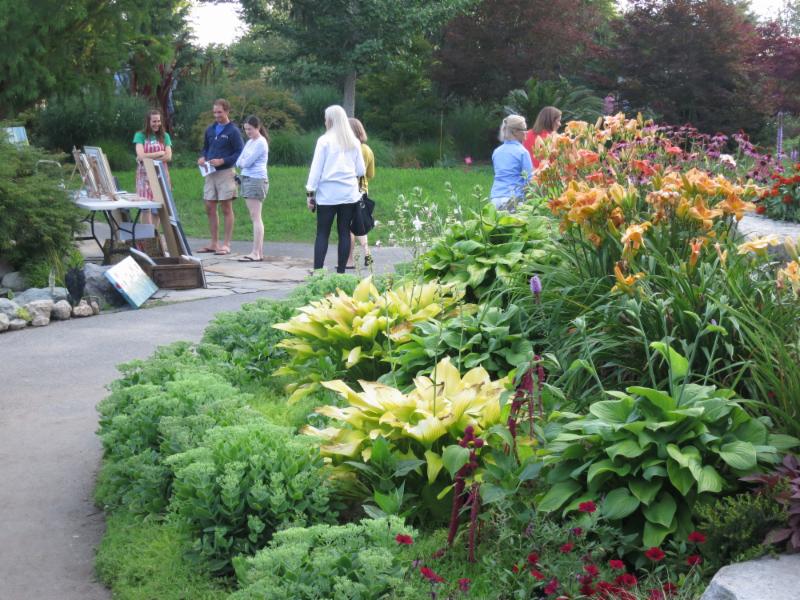
Evening at Elm Bank:
2nd Annual Arts on the Green
Thursday, July 28, 5:30 - 8 p.m.
Join us for our summer music and arts series, sponsored by Wellesley Bank Charitable Foundation. Wander the gardens, enjoy live music in the Italianate Garden, and stroll through our Art Walk. Support local artists showcasing and selling their work throughout
our grounds. There will also be activities for kids and tours for all!
Bring a picnic and chairs or blanket.
Wine, beer and other beverages will be sold. Music by: LiveWire Boston Jazz, Blues and Bossa 2016 Participating Artists: Admission is free to Mass Hort members, $8 for non-members,
free to children under 12.
Sponsored by the Wellesley Bank Charitable Foundation: CALL TO ARTISTS If you are interested in being one of our showcased artists on our Ar t Walk, please complete the Artist Application and return it as soon as possible to reserve your space.
For more information, visit or email Amy Rodrigues at |
| Get Your Kids to the Gardens!
There is a lot of excitement this summer in Weezie's Garden for Children! The flowers are blooming in every color, our new Belvedere should be complete by the end of the month, Dover Town Library is back this year with Wednesday's Super Awesome Fun Time, we have great educators leading activities Tuesday-Sunday at 10:30 (more on them later), and we're excited to introduce a multi-day program this summer.
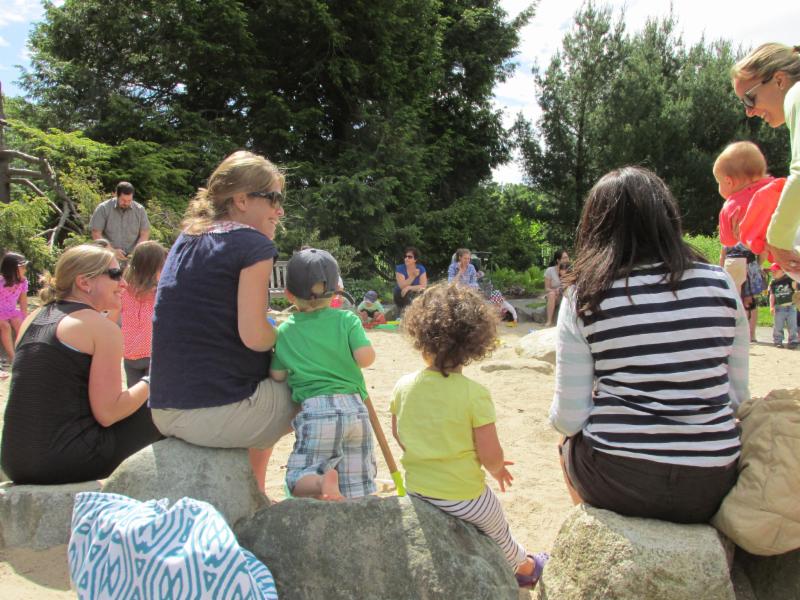
Bring your children or grandchildren to The Gardens at Elm Bank for a three day exploration of our gardens and the plants growing there. Education Coordinator, Katie Folts, will use the award-winning Weezie's Garden as the backdrop for games, garden crafts and fun science activities.
You can find more details and sign up for our series in the last week of July, or sign up for our August series- held each Wednesday for three weeks.
Still looking for summer fun for your kids? Come to Weezie's Tuesday-Sunday at 10:30. Join our garden educators for activities that connect the youngest gardeners to the plant world. This month, Melissa Pace will be featuring pollinators, and Lorraine Lee will be highlighting seeds. Activities are designed for kids 3-5, but all ages are welcome.
 Garden Educator Melissa Pace always wanted to be a teacher, and after a career in art management, she got her Masters in Teaching and Creative Arts. She has been an art teacher and has taught environmental educator at URI. She is also a Master Gardener and garden lecturer. Melissa is excited to be learning and expanding her love of horticulture along with our visitors; she has something to teach everyone who visits Weezie's. Melissa feels "privileged and honored" to be gardening and teaching in the oldest horticultural institution in the United States: MassHort," and we're excited to work with her!
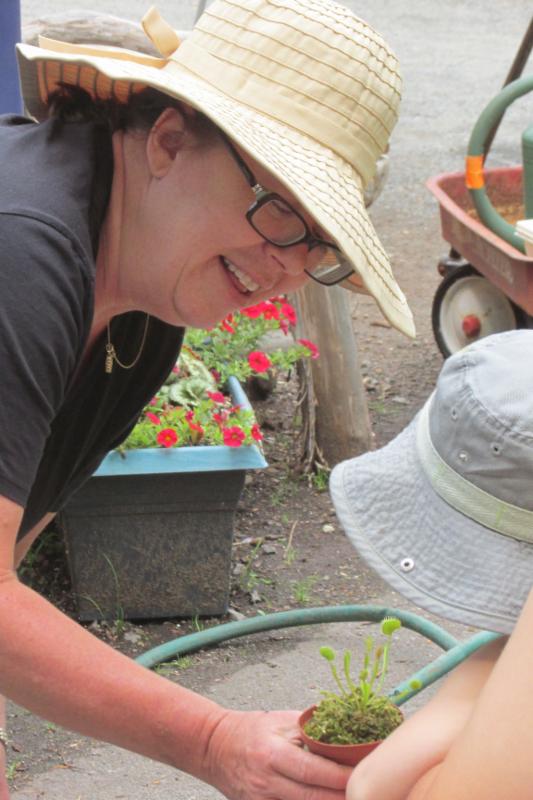 We are also happy to have Lorraine Lee return to the Mass Hort Team. Lorraine brings experience as a horticultural therapist to her role as Garden Educator in Weezie's. She has a Master's degree in counseling, experience as a recreational and horticultural therapist, as well as a fine arts teacher and home gardener. Lorraine is a chair in the Garden Club Federation of Massachusetts and has her own practice working with those with Alzheimer's and related dementias. Lorraine loves working in Weezie's because the "visitors are so little and active...They have their lives ahead of them and are making brand new memories that will be in their hearts and minds for decades to come." We are also happy to have Lorraine Lee return to the Mass Hort Team. Lorraine brings experience as a horticultural therapist to her role as Garden Educator in Weezie's. She has a Master's degree in counseling, experience as a recreational and horticultural therapist, as well as a fine arts teacher and home gardener. Lorraine is a chair in the Garden Club Federation of Massachusetts and has her own practice working with those with Alzheimer's and related dementias. Lorraine loves working in Weezie's because the "visitors are so little and active...They have their lives ahead of them and are making brand new memories that will be in their hearts and minds for decades to come."
Allow us to help your family create memories, and cultivate a love for gardening and the natural world. Come visit our garden and be sure to plan to attend a program!
|
Veggie of the Month
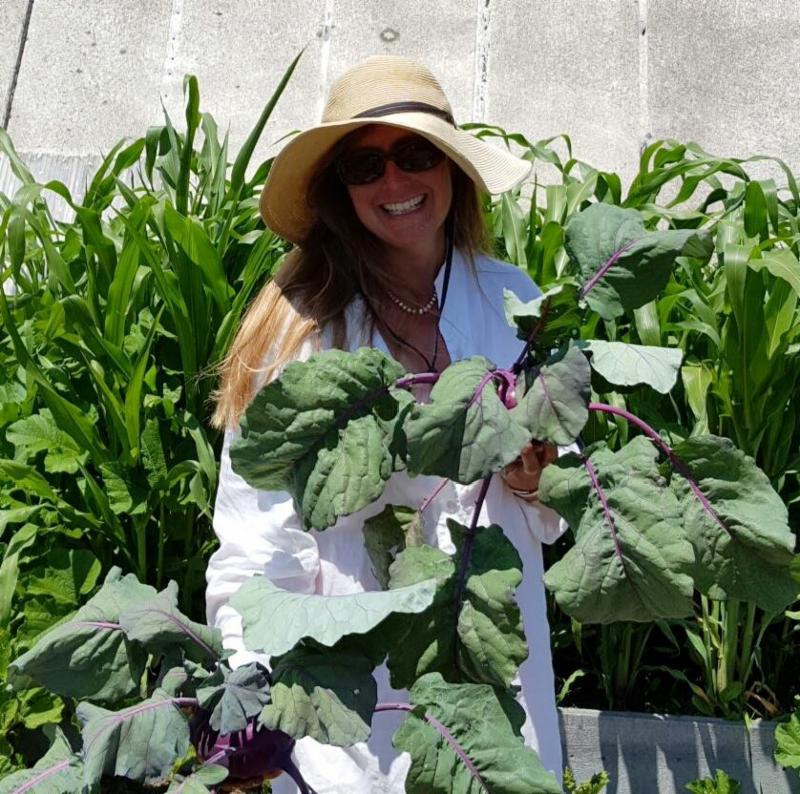
These wonderful purple globes are Kohlrabi! A relative of cabbage and broccoli, they taste like the tender stems of broccoli but are milder and sweeter. They can be sliced and eaten raw with veggie dip or in a salad, and can also be steamed like broccoli, baked, grilled
or roasted. High in iron and many other nutrients, Kohlrabi is a unique treat! We're proud to offer these to our local food pantries this year!
|
|
Free Admission Passes at Public Libraries
With the help of local librarians, Mass Hort has reached out to their patrons by depositing free admission passes to The Gardens at Elm Bank. The passes are in the form of convenient coupons that will not have to be returned to the library at the end of a visit to our location. They are valid for a family or a small group and will be filled out by the library staff with the name of the library and the date. The libraries have agreed to limit distribution to two passes a day, so it may be a good idea to make a reservation.
The participating libraries are: Your passes will be welcome at our Visitors Center during its open hours: Tuesday through Sunday, 10 a.m. to 4 p.m., from now until Columbus Day. We extend thanks to our good neighbors, the local public libraries. Direct questions to Maureen Horn at 617-933-4912 or Mhorn@Masshort.org. |
|
Knee High by the Fourth of July:
Baby, We've Come a Long Way!
Update from Mass Hort's Seed to Table Program
By Hannah Traggis, Mass Hort's Seed to Table Educator It was an incredible spring in the Seed to Table Program's teaching vegetable garden as we cultivate a new community of folks passionate about growing food. Seeds and their genetic potential and the biodiversity they represent are the overarching theme for 2016. They were sown as early as February for a 24 variety onion trial. Direct-seeded succession planting is on-going and planned throughout the early fall to give us harvest season extension and crops that will overwinter for early spring enjoyment.
|
|  | |
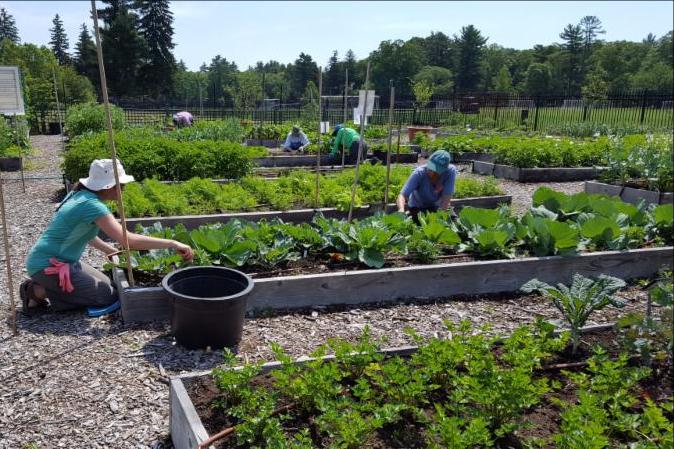
Volunteers happily buzzing away
in their beautiful garden.
| |
We took to the gardens in early April beginning with much needed care for an organic gardener's best friend, the soil. Serious amendments with high quality locally sourced compost and early and aggressive weed management has paid off 10-fold. Productivity and plant health in the garden is booming! Everything we do has education at the core. Progress is humming along as happily as the many native insects we attract with othe copious interplanting that will help us with both pollination and pest control. We have worked with over 150 volunteers and students from Earth Day through to the present. Over 500 hours of work has already gone into the garden. Evan Martin, our Spring Intern, a junior from Purdue University majoring in Agricultural Engineering, was instrumental in helping get the garden established. He shared much knowledge with us all. The MA Master Gardeners and their students have worked alongside many members of the public, including school garden educators, retirees, K-12 students, food bloggers and others that share the common interest of growing food for those in need. Harvests are a celebration of food, and Food Pantry deliveries began in late May. On average we have sent 60 pounds of produce, including over 20 pounds of our beautiful fresh strawberries. Workshops. Sunday with Seed to Table workshops are well underway. We offer both half hour demonstrations and 1.5 hour hands-on workshops. Keep an eye on the weekly newsletter and Seed to Table page on Mass Hort's website. Kicking off the series with 'Summer Sustainability for School Gardens', we armed participants, with knowledge of how to successfully maintain a garden over the summer with limited time and how to plan for fall crops. Folks also took home some beautiful transplants to give an extra boost to existing gardens. Focusing on supporting school garden educators with gardening know-how and curricular connections, these workshops are also highly informative for the homeowner, and attendees have been very pleased with this summer's offerings. Sign up today to catch our next workshop ' Strawberry Bed Rejuvenation' on Sunday, July 17th, and don't miss our extensive composting workshop on Sunday, July 24th, featuring MA Department of Environmental Protection's Green Team program leader, Ann McGovern.
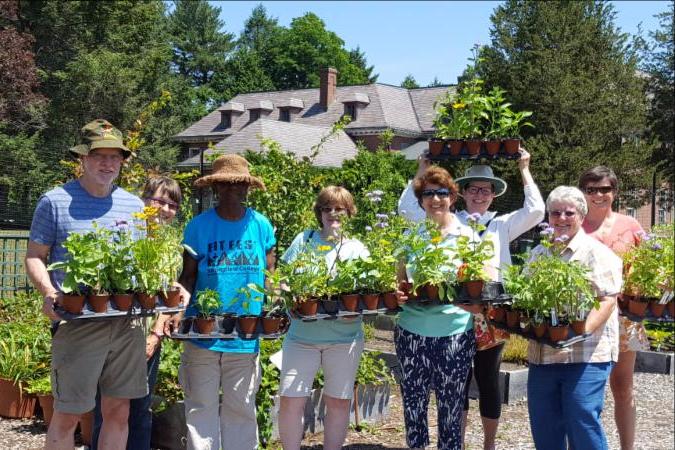
Happy participants from the Summer Sustainability workshop
bringing a few treasures home with them!
Variety Trials. With an open exchange of ideas and techniques, variety trials, showcasing the diversity within crops, are ongoing. We have planted 45 varieties of tomatoes in all size classes, 38 varieties of peppers, 15 varieties of lettuce with plans to trial 20 more throughout the summer. For every crop we plant, we plant several varieties. Results of what does and doesn't work will be made available on the website later, after all results have been tabulated this fall. |
Catching Up with the Last Half Century
By Maureen Horn,
Mass Hort Librarian
Part 17
1994 & 1995:
The Environment and the City
At the beginning of 1994, Executive Director, Dr. John C. Peterson, declared that the Massachusetts Horticultural Society had shifted from a culture of fruits and vegetables and the growing of shrubs, flowers and other plants to emphasize protecting the environment. To emphasize this stance, it would support Massachusetts House Bill 5568, the Open Spaces Bond Bill.
The whole world was in the Society's sights, so the theme of the New England Spring Flower Show was "A World of Color", and its education program summoned children to "Color Your World with Plants" by dying them with natural materials. For the first time, the Show had international exhibits, representing China, the United Kingdom, Canada, South Africa, Colombia, The Netherlands, and Singapore to celebrate horticulture's diversity. This was considered a big step in strengthening the Society's own position as a world class organization.
At this event, Mass Hort's new logo, still in use today, was introduced. The book held aloft by a plant reflected the Society's primary mission, to provide horticultural information and education. The unique exhibits attracted a record-braking 2,200 new members during the run of the Show.
At midyear, Dr. Peterson looked back on the previous 12 months and focused on the "explosion" of youth programs that occupied the staff's attention. They took the form of Flower Show presentations, which were attended by more than 5,000 children, Plantmobile visits to 100 classrooms, distribution of teaching materials to more than 40,000 school children and coordinating the Green Team, which provided work experience for youth.
Adults were remembered when the Volunteer Appreciation Day turned into a day of fun and sun at Drumlin Farm in Lincoln for 100 participants. The really young set, 200 children under five from local day-care centers, had their day in Copley Square learning how important water is to seeds and plants.
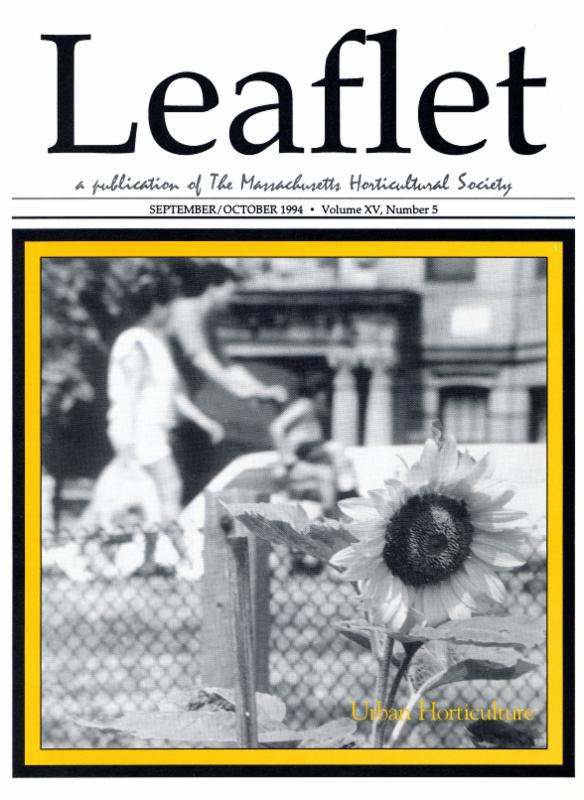
In the fall, the Society focused on it geographical position and emphasized the fact that it was a Boston based institution. It renewed its commitment to collaborate with other Boston green organizations to teach residents how to grow plants on porches, window sills and along busy streets. In recruiting for the Master Gardeners course, a high priority was to find urban residents to join the program. The Mass Hort Library assisted the effort by promoting its holdings on the subject of city gardening. A special pitch was made to urban gardeners to exhibit at the Flower Show, to be called "Magical Moments" in 1995.
Some of the memories brought forward from the Show were a crystal conservatory, a topiary carousel and a floral clock. The hands-on plant science curriculum showcased the "Magic of Flower to Seed... and Back Again". While the Society looked to the future and foresaw many changes in horticultural education, it also recognized some of its old traditions and reactivated the Visiting Gardens Committee, which bestows the Hunnewell Medal on a garden that has been consistently superb over a period of three years and honors small gardens with the Mary B. Wakefield Medal.
In the fall of 1995, the members were introduced to the possibility of developing a suburban Horticultural Education and Information Center at Elm Bank Reservation in Dover. It was announced that our proposal had passed the Legislature in July with great support from our Board of Trustees, MDC Commissioner Balfor and local and state official from Dover, Natick, Needham, and Wellesley. They were asked to mark their 1996 calendars for the 125th New England Spring Flower Show with a theme of "Celebrations", a fitting tribute to the initiatives that were about to be undertaken. The last paragraph in a "Vision of the Future" pictorial essay stated that the Society intended to remain a Boston-based organization.
|
Hannah Traggis, Seed to Table Educator, presents at the 8th Annual National Farm to Cafeteria Conference
The Seed to Table program works very hard to educate the public about growing healthy and nutritious food and about our local food systems; we have a variety of avenues through which to accomplish this. A major focus is working to support and promote the establishment and sustainability of school gardens throughout the state and region. Hannah Traggis, a well-known independent school garden educator in Massachusetts and Seed to Table 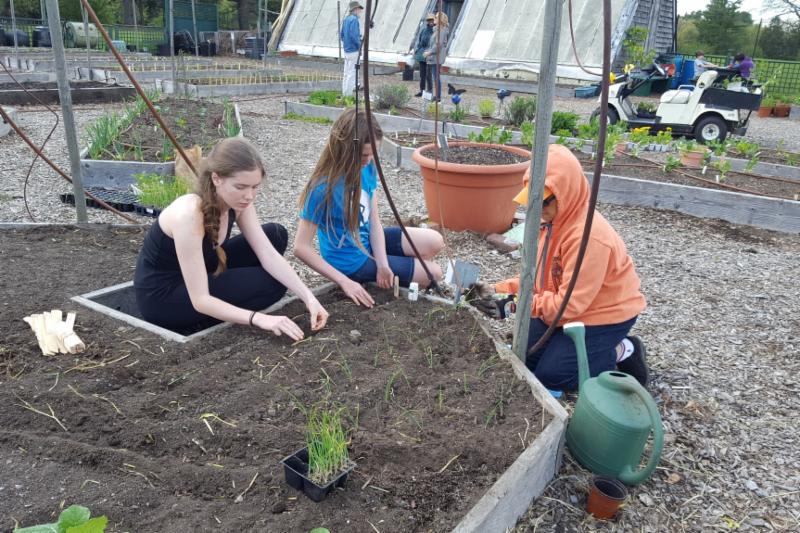 Educator here at Mass Hort, recently traveled to Madison, Wisconsin as an invited panelist at the 8th Annual National Farm to Cafeteria Conference. The panel topic 'Growing Farm to School Leaders Through Teen Engagement', was a collaboration between Mass Hort, Quabbin Composting and Organic Gardening Program, Island Grown Schools from Martha's Vineyard, Oxford School District in Mississippi and the Lafayette Parish School District in Louisiana. It addressed high school level garden-based education and the opportunities for developing teen leadership skills. Educator here at Mass Hort, recently traveled to Madison, Wisconsin as an invited panelist at the 8th Annual National Farm to Cafeteria Conference. The panel topic 'Growing Farm to School Leaders Through Teen Engagement', was a collaboration between Mass Hort, Quabbin Composting and Organic Gardening Program, Island Grown Schools from Martha's Vineyard, Oxford School District in Mississippi and the Lafayette Parish School District in Louisiana. It addressed high school level garden-based education and the opportunities for developing teen leadership skills.
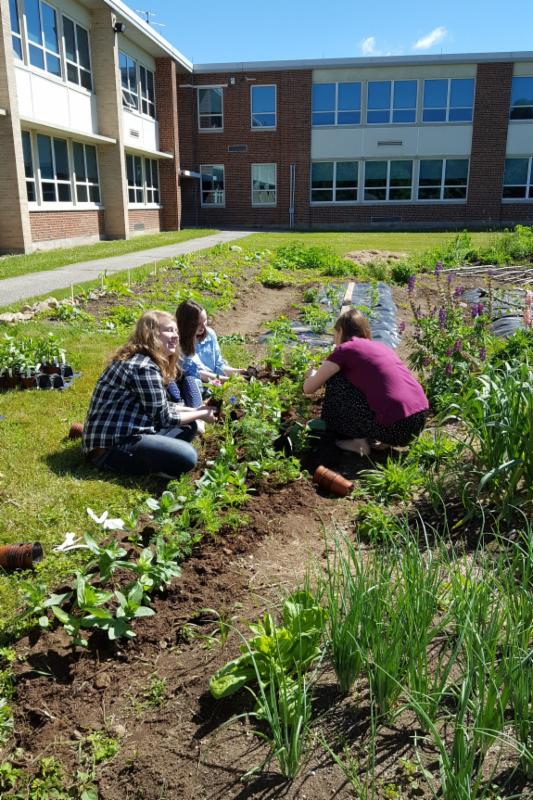 The conference atmosphere was vibrant and community spirited and offered many opportunities to create and deepen relationships among school garden focused organizations across the country. To explore how better Mass Hort can serve as a leading support organization for school gardens and facilitate collaborations across the country and within the northeast region, Hannah participated in both private and public networking meetings and discussions; many exciting things will come for Mass Hort and the future of garden-based education for school children of all ages in Massachusetts and New England! The conference atmosphere was vibrant and community spirited and offered many opportunities to create and deepen relationships among school garden focused organizations across the country. To explore how better Mass Hort can serve as a leading support organization for school gardens and facilitate collaborations across the country and within the northeast region, Hannah participated in both private and public networking meetings and discussions; many exciting things will come for Mass Hort and the future of garden-based education for school children of all ages in Massachusetts and New England!
Earlier this spring, Hannah, and the Seed to Table program, was invited by the MA Department of Elementary and Secondary Education to serve on a panel at the John C. Stalker Institute of Food and Nutrition's 'Healthy Kids, Healthy Programs Summit'. The session, entitled 'Partnerships to Improve School Meal Quality', addressed promoting locally grown food procurement and use in school cafeterias. Specifically, Hannah addressed the value of school garden-based education to improve overall social and emotional health and wellness of students and to teach about the importance of nutrition and locally grown food.
|
Book Review

Green Metropolis
The Extraordinary Landscapes of New York City
as Nature, History and Design
Elizabeth Barlow Rogers
Foreword by Tony Hiss
Alfred A. Knopf 2016
Reviewed by Pamela Hartford
Elizabeth Barlow Rogers has indelibly influenced our approach to the management of urban parks in the United States. It's not an understatement to say that forming the Central Park Conservancy in 1980 focused a high beam on the necessity for strategic and well maintained public green spaces, while providing the solution for compensating meager municipal budgets by the injection of private funds and, importantly, private energy. The hundreds and thousands of Friends group that have sprung up everywhere to stake a claim in protecting and nurturing much needed green spaces is her legacy.
At the same time, she took on recasting the perception of designed landscapes as products of culture melded with nature. Her masterpiece, Designed Landscapes: A Cultural and Architectural History, published in 2001, is now the standard reference and textbook on landscape history.
In her most recent book, she travels to seven remarkable green spaces in New York City, and shows how natural history intertwines with culture to create evolved landscapes - the basic fabric of our metropolitan environment. New York may appear to most as a completely human artifact, but Rogers shows us otherwise.
 She journeys to Staten Island, Roosevelt Island, Inwood Hill Park, Central Park's Ramble, Jamaica Bay and the High Line in the company of passionate people, each with a deep knowledge and connection to the places she visits. Sometimes she accompanies groups - a birding group in Central Park's Ramble, a band of edible mushroom fanatics in Staten Island, a church youth group planting spartina grass in the Black Wall Marsh in Jamaica Bay. She journeys to Staten Island, Roosevelt Island, Inwood Hill Park, Central Park's Ramble, Jamaica Bay and the High Line in the company of passionate people, each with a deep knowledge and connection to the places she visits. Sometimes she accompanies groups - a birding group in Central Park's Ramble, a band of edible mushroom fanatics in Staten Island, a church youth group planting spartina grass in the Black Wall Marsh in Jamaica Bay.
Rogers's essays create a broad and deep frame around each of these places, balancing well researched exposition with lengthy personal exchanges. Each essay is friendly and astute at the same time. We learn about Fordham gneiss, cicadas, horseshoe crabs, the summer tanager and vegetative palimpsets as well as garbage, Robert Moses, and infrastructure. We learn from Gary Lincoff (mycologist and edible mushroom expert), Mike Feller (naturalist and cicada expert) and Henry Towbin (enthusiastic geology student). In addition to describing migratory patterns, the ecology of marshes, and Dutch settlement patterns, Rogers explains with equal lucidity long and complex political processes which, in most instances, were the most invisible but most influential forces shaping the contemporary landscape.
In great novels or skillful plays, the situation and the story are very specific. In hindsight, those works are treasured for the universal truths they reveal. Specificity is what draws us in and engages our attention. In Rogers's explorations, each place is a situation whose story she tells by explaining its specifics - in the case of landscape, the specifics of the natural and cultural forces intertwined in its making. In hindsight, the reader takes away an enormous amount of insight as well as heightened awareness of the presence of nature in our most constructed places.
Tony Hiss accurately sums up the impact of this gem of a book: "Individually these adventures are vivid; cumulatively they can rearrange your mind so thoroughly you never look at things the same way again."
Pamela Hartford is a landscape historian and preservation planner. She lives in Salem, Massachusetts
|
 Free to a Good Home Free to a Good Home
by Neal Sanders,
Leaflet Contributor
Betty and I were "corporate gypsies" during much
of my working career. At various times we lived in Chicago, New York City, Virginia, Connecticut, and Massachusetts. It was all a matter of moving for opportunity. Until our move back to the Boston area in 1999, we had never really put down roots anywhere.
For much of the 1990s we lived in Alexandria, Virginia. We had
a very nice house on a cul-de-sac and wonderful neighbors. But gardening our half-acre property was nearly impossible; the
problem was the heat and humidity. Vegetables and annuals died
horrible from diseases. Perennials were eaten to the ground by insects. Already ecologically conscious before it was fashionable, Betty refused to spray the necessary chemicals on plants to deter these pestilences. She was well aware that the same fungicides that allowed roses and phlox to survive were deadly to the beneficial insects that were attracted to their flowers.
|
| |
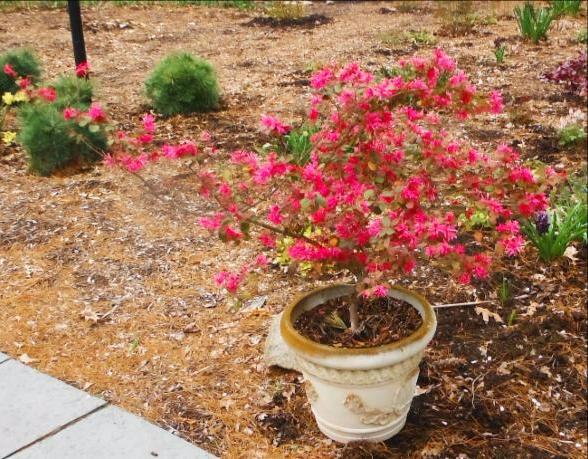
Our Loropetalum in full bloom in early May.
|
And so our landscape
consisted of heat-tolerant azalea and evergreens, and a handful of trees and shrubs that were bred for Zone 7A. Three shrubs in particular were continuing delights. Loropetalum, an Asian native, was at the lower edge of its hardiness zone, but its tiny burgundy
leaves and periodic displays of ruby-red or fuchsia flower clusters made it a pleasure to look at.
Lagerstroemia, better known as crape myrtle, was another import-
from Indonesia and northern Australia. Most cultivars of crape
|
| | |
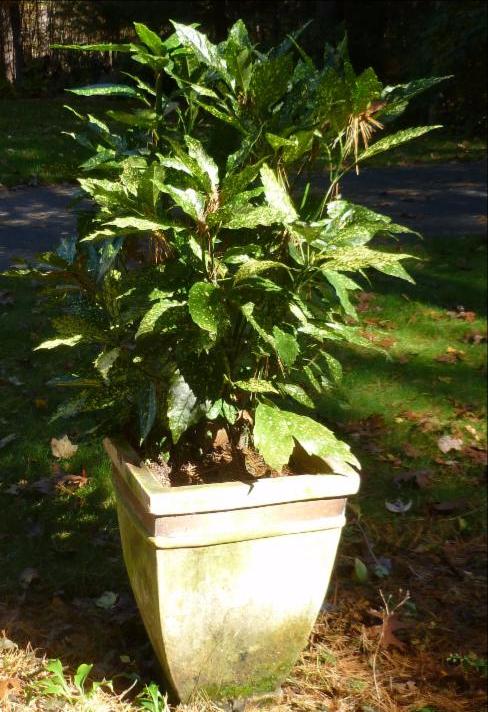
Three years after coming home, the acuba was thriving.
| |
myrtle are found along the southeast coast, but newer, more cold-
tolerant ones were appearing. We enjoyed the summer-long display of pink-to-red flowers that made our shrubs seem ablaze.
The third shrub that we hated to leave was a large acuba, also called spotted laurel. Native to China and Japan, it's a Zone 7 to 9 plant that had two 'wow' factors. The first was that it was happiest in shade. The second was that its natural leaf color was an almost banana yellow with green spots. It happily grew under a large wisteria trellis and was the focal point of the view out our kitchen window.
We returned to the Boston area in 1999 and, for the first time in eight years, Betty could design and plant a 'real' garden. But she missed those southern plants and was disappointed to learn that, except for Cape Cod, eastern Massachusetts is solidly in Zone 5B. Her favorite Virginia shrubs would perish even in an average winter. And so she got busy and filled two acres with hardy New England plants.
Then, in October 2008 or 2009, Betty and I were visiting a friend, landscaper Paul Miskovsky, on Cape Cod. We were walking through his Falmouth plant yard when Betty noticed a pile of discarded shrubs. They looked exactly like loropetalum. There were easily a dozen of them, thrown into a pile. Her inquiry brought a shrug from Paul. "My customers use them as annuals," he explained. "I put them in in May and pull them out at the end of the season." Betty asked if she might retrieve one. She was told to help herself.
|
| | |
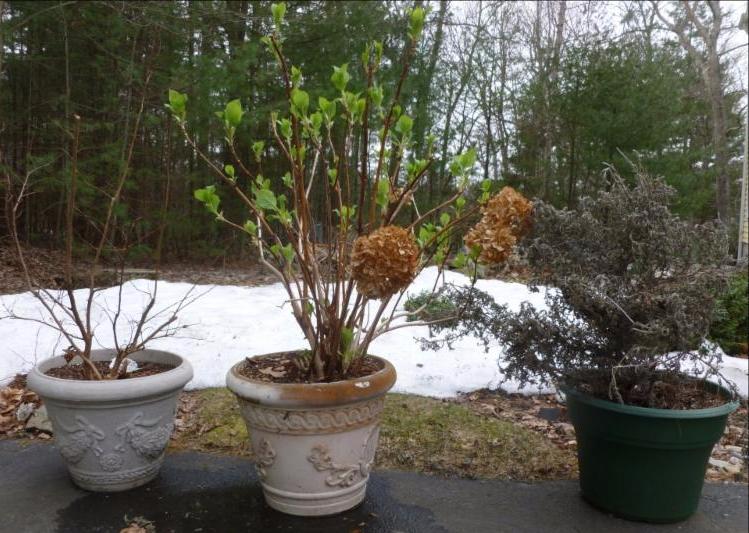
On warm days, we would take our overwintering plants outside.
| |
We brought the best looking of the shrubs home, trimmed it back severely, and placed it in a large container. We watered it well until the weather turned colder; then, lacking a greenhouse, we brought the shrub into our garage and positioned it by a window that got morning light. Our garage wasn't heated, but it was well insulated and, presumably, some heat radiated from the adjacent house wall because our garage never got below freezing all winter. The loropetalum lost its leaves, but, the following spring, it produced both new leaves and flowers. We were delighted.
Then, in May 2011, Betty was set to receive an award at the
National Garden Clubs convention being held in Washington, D.C. I tagged along and so we elected to make the nine-hour drive
rather than flying. On our way home, we passed the Route 1 exit off the Beltway in Maryland and Betty said, "Didn't we used to get really good plants at a nursery up here?"
Five minutes later, and despite the passage of more than a decade, we found Behnke's Garden Center in Beltsville. And, 45 minutes later, we were back on the highway, now carrying a small acuba and a crape myrtle cultivar called 'Burgundy Hearts'.
For five years, our 'southern garden on wheels' thrived. For seven months of the year, the crape myrtle, loropetalum, and acuba luxuriated in our garden; then, 'wintered' in our roomy garage,
coming out only on days when temperatures rose into the 40s
or 50s. The loropetalum and crape myrtle grew to a modest size and then seemed to find an equilibrium. The acuba, though, quadrupled in size.
|
| |
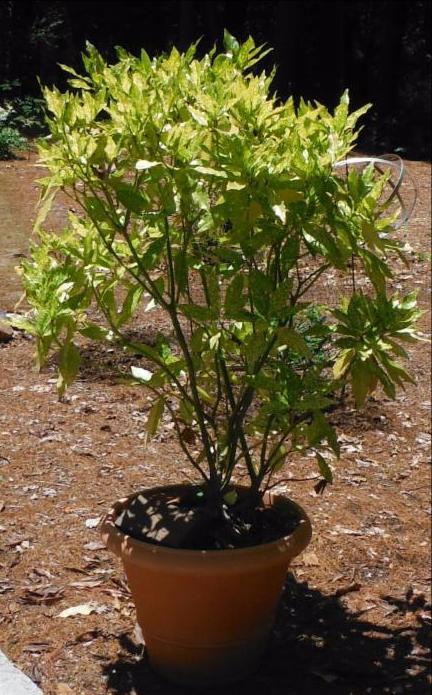
The acuba in 2016. It's getting too much sun and needs to be re-potted yet again.
|
Then, last year, we moved into our new home. Suddenly, two th ings were different. First, there was no shady area for the acuba; everything in the garden was new and the trees did not yet have a shade-producing canopy. The acuba had to stay in the shade of the house, but even there, its leaves scorched. Second, our new garage lacked the extra insulation of our old one, plus it had a northern exposure. Nighttime winter temperatures fell in to the twenties on several occasions.
This summer, we have realized that our acuba, despite being 'up-potted' several times, requires a much larger container to hold its root system. And, because of its size (nearly five feet tall with its new, 2016 growth), it has also outgrown its place in our plant family. It needs a new home where it can grow and thrive.
How do you tell a plant you're putting it up for adoption?
Of course, next year the NGC convention is in Richmond and, to get to Richmond, you have to drive around Washington. And Benkhe's is still right there in Beltsville...
Neal Sanders is the author of ten mysteries. His newest, 'How to Murder Your Contractor' has just been published and, together with his other titles, is available in stores and at Amazon.com.
|
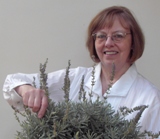 July Hort Hints July Hort Hints
By Betty Sanders,
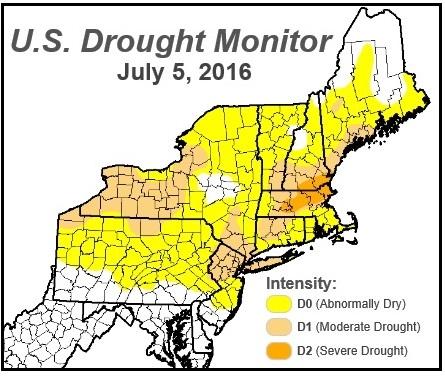
The heat is on! As the weather turns hot and water bans abound, set your priorities and use some old tricks. First, skip watering the lawn. It's OK to allow it to turn brown. It isn't dead or dying; it is waiting out the heat; ready to green up with cooler temperatures and rain in the fall. Your highest priority is your vegetable garden (assuming you have one). You will be eating those plants so give them first dibs. Water newly planted trees and shrubs next - they are expensive and take a long time to get settled so don't let them suffer. Next, perennials. Finally, water annuals only if you have it to spare.
|
| | | Drought Monitor Map | |
Here are some tried-and-true ways to make your watering more effective. First, water early in the morning when it's coolest and the water will soak in and not evaporate. Watering in the evening promotes diseases because wet leaves are a perfect habitat for molds, mildews and the like. Second, always water deeply to encourage plant roots to travel down to the cooler soil that stays wet longer. Check with a trowel to see how deep the water has gone-three to four inches should be the minimum for vegetables and perennials; deeper for trees and shrubs. Third, put plants with similar water needs together, such as hostas. Similarly, sedums and succulents need much less frequent watering, allowing you to periodically skip that part of your garden.
Finally, save household water whenever you can. For example, station a bucket next to your shower and collect the cold water that initially comes out of the shower head. That trick alone can produce up to two gallons of water. Similarly, you'll save electricity if you run water to get it hot before starting your dishwasher. Why not run it into a bucket to use on outdoor plants? Also, consider adding rain barrels around your home. The water off your roof can fill a 50 gallon barrel with as little as a quarter inch of rain.
|
| |
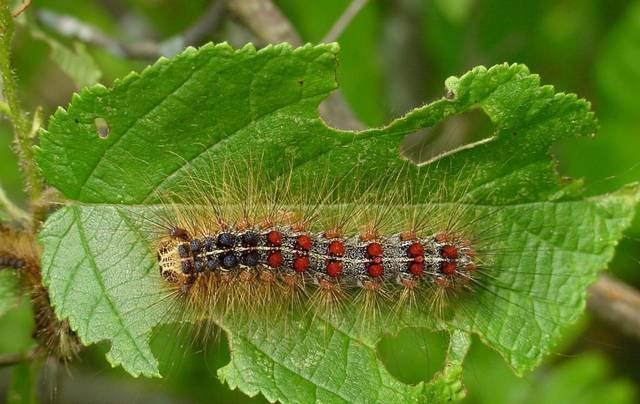
Gypsy Moth Caterpillar
|
Pests abound. Our abnormally dry spring yielded one unwanted summer bumper crop: pests and disease. Gypsy moth caterpillars, which in the 1980's devastated many areas, have returned this year in significant numbers. Why? Because the fungus that keeps these pests in check most years needs spring rains to proliferate and kill caterpillars before they can do damage. Dry weather has meant a banner year for the leaf destroying pests. In some parts of the state, many trees were stripped bare and are now trying to replace some of their leaves to make it through another year. If the trees in your yard are affected, water them regularly to help recovery.
|
| | |
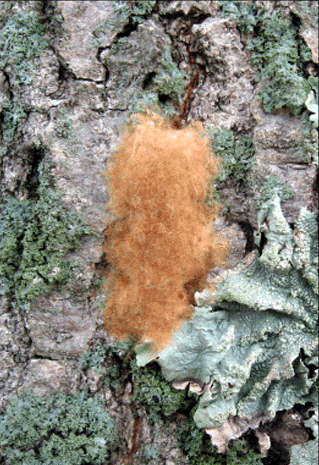
Gypsy Moth Egg Mass
| |
It's too late to do anything about the gypsy moths this year but, next winter and early spring, look for beige masses of eggs on trees, remove them or spray them with horticultural oil and then talk to your arborist about other treatments after the eggs hatch.
Another common sight this year are white pines with browning needles. For many trees this is not caused by cold weather or drought but, rather, by a fungus that attacks the trees in the spring when there is insufficient rain to kill the disease (sound familiar?). While some trees may be water stressed, you and I cannot tell the difference. You need to have a licensed arborist take samples and have them properly examined. If the problem is fungal disease you will need to help the tree with additional water to help it put out a second set of needles. For the future, cross your fingers that we get a wet spring next year.
|
| |
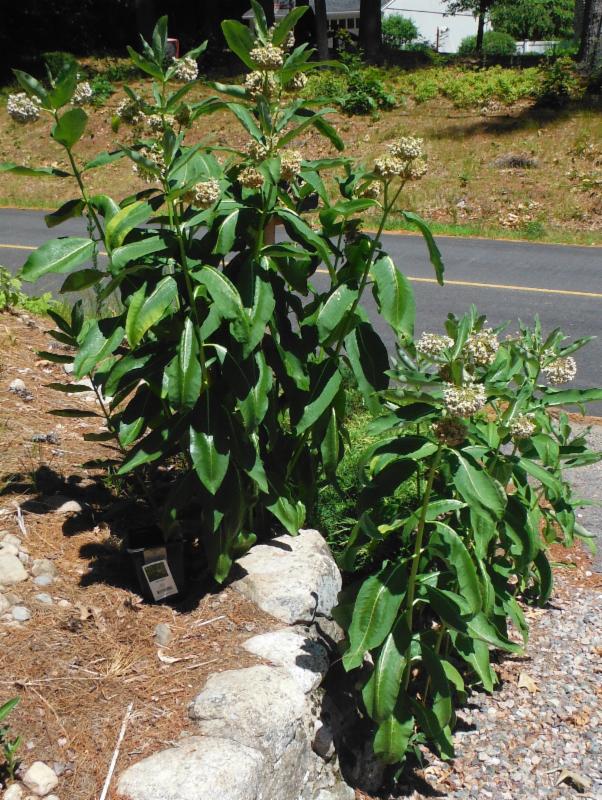
Milkweed
|
The scent of summer. Last week on a walk to the mailbox, I found myself amidst the most wonderful fragrance. None of the usual suspects - Carolina sweet shrub, daphne, roses or oriental lilies - were nearby and I was at a loss until I realized it was the milkweed plants. I hate true weeds in my garden as much as anyone. But there are plants (think ironweed and butterfly weed) who don't deserve the "weed" label, though it has stuck. Milkweed is one of them. It has lovely balls of pink flowers that attract bees and butterflies; and sturdy, pretty foliage that is the source of life for Monarch and a few other butterflies that, in their caterpillar stage, can only live on milkweed leaves. But the scent of a small patch of milkweed has made my walk to the mailbox a delight. Ignore the scoffers, plant that "weed", invite the beautiful insects into your yard and reap all the benefits.
|
| | |
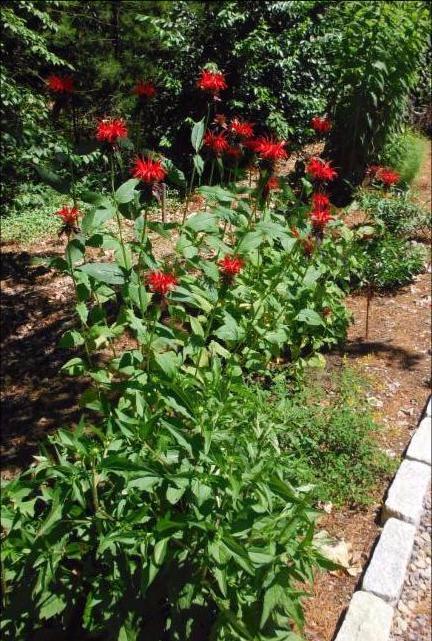
Monarda can be cut back after it blooms to promote new growth.
| |
Time to pinch. If you missed your Father's Day pruning of plants such as chrysanthemum and asters, start with an early July pinching. This leads to later flowers, but bushier plants with more blooms and a tidier habit. I also cut back some of my balloon flower (Plactycodon) and bee balm (Monarda), dianthus, coneflower (Echinacea), Helenium, and veronica. By pinching or trimming back one or two leaf sets of the plants at the front. I get an early bloom from the untouched stems at the rear and a later, bushier bloom from the remainder. It keeps your garden going stronger and longer.
You can see more of Betty's horticultural ideas at www.BettyOnGardening.com. Betty is also 2015-2017 President of the Garden Club Federation of Massachusetts.
|
|
|
|
|
|
|