|






J.C. Timmerman
Loft 7 Productions
|
|
 For exceptional benefits to help you in the garden- Join Today! If you are a Mass Hort member - please recommend membership to a friend! Forward this newsletter. CLICK HERE TO JOIN |
|

SPREAD THE WORD,
HELP US GROW!
Refer a new member to Mass Hort and receive a coupon to attend a Thursday Night at the Hort lecture for free!
|
|
|

You Shop - Amazon gives to Massachusetts Horticultural Society!
Amazon will donate 0.5% of the price of your eligible AmazonSmile purchases to Massachusetts Horticultural Society whenever you shop on AmazonSmile.
AmazonSmile is the same Amazon you know. Same products, same prices, same service.
Begin shopping
www.smile.amazon.com
|
|

Letter from the President
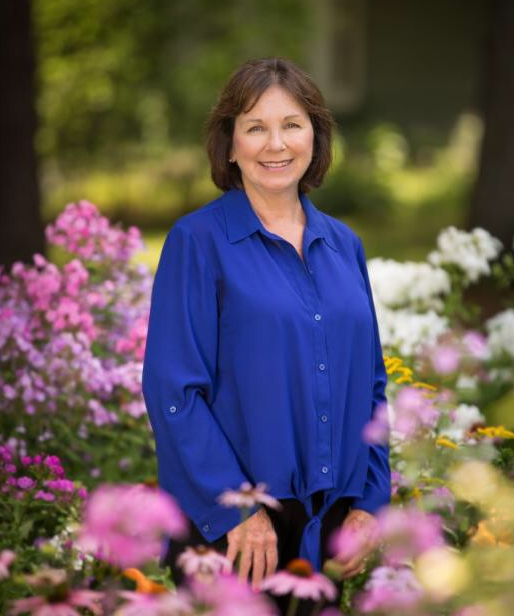 Greetings!,
Join us in the garden! Over 50,000 plants have made their way out of the greenhouse and into the gardens. Through the hard work of our staff and volunteers, the gardens are ablaze with color. Please help support the gardens with a spring appeal donation!
Pack your kids, grand kids, and friends in the car for the short drive to the Elm Bank Reservation and Mass Hort's gardens. Children's programs at 10:30 a.m., Tuesday-Sunday, and garden tours at 11 a.m. Make a day of it and pack a picnic lunch!
Check out the new art exhibit in our Visitors Center/art gallery by artists, Anne and Walter Robb. Their whimsical art is delightful.
Thanks again and help spread the word...The Gardens at Elm Bank and Mass Hort's lectures, events, and workshops welcome you into the garden.
Best wishes, |
|
Twilight Garden Party a Great Success
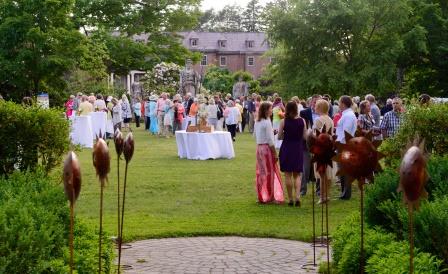
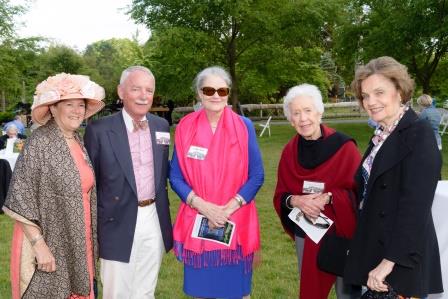
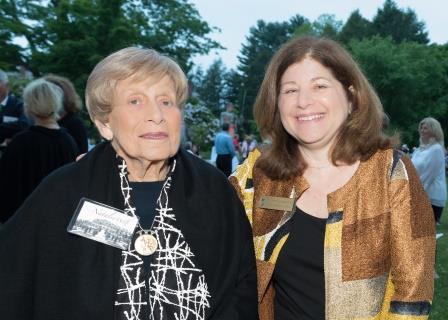
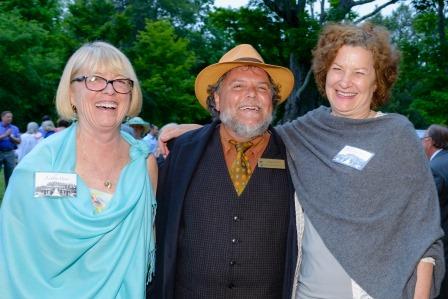
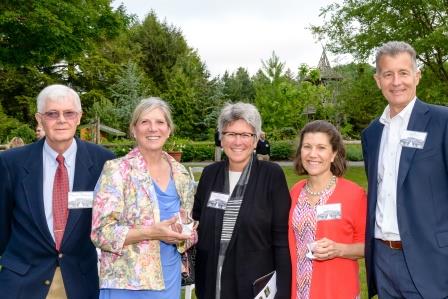
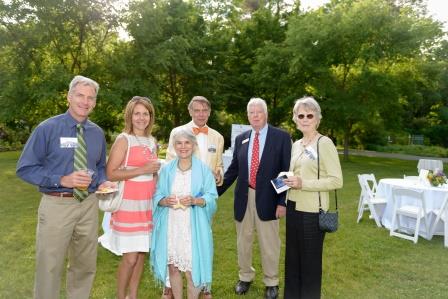
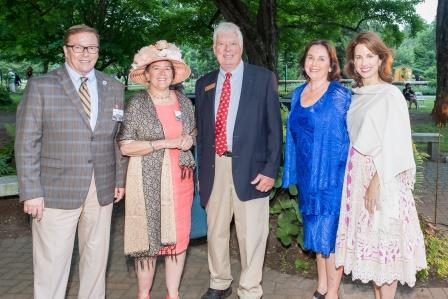
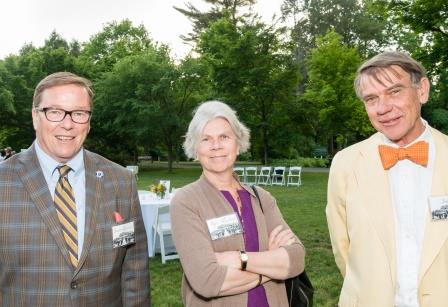
On June 2nd, over 300 people gathered in the gardens to celebrate Mass Hort's 20th anniversary at Elm Bank.Twilight, swing dancing, local food and drink, all in a beautiful estate setting. Henry Platt's Swing Quartet entertained the guests with great sounds from the 20s, 30s, and 40s. The Rivers School Conservatory Magic Marimba band welcomed guests as they arrived.
All were commemorating 20 years of a public/private partnership between the Commonwealth of Massachusetts and the Massachusetts Horticultural and noting the day in 1996 when Mass Hort became steward of the Elm Bank estate, which is listed on the National Register of Historic Places.This beautiful property has enabled the Society to introduce horticulture and hands-on education to thousands of people.
Thank you to our guests, sponsors, and supporters that helped make this celebration possible...and thank you to all those that made Mass Hort's move to Elm Bank a reality. |
Evening at Elm Bank: 2nd Annual Arts on the Green
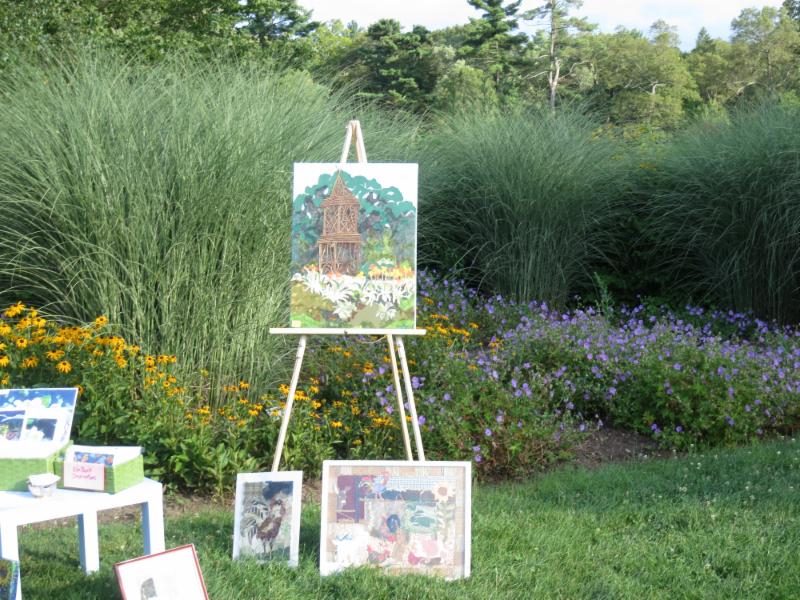
Thursday, July 28, 5:30 pm - 8:00 pm
Join us for our summer music and arts series, sponsored by Wellesley Bank Charitable Foundation. Wander the gardens, enjoy live music in the Italianate Garden, and stroll through our Art Walk. Support local artists showcasing and selling their work throughout our grounds. There will also be activities for kids and tours for all! Bring a picnic, and chairs or blanket. Wine will be sold.
Music by: LiveWire Boston
Jazz, Blues and Bossa
Admission is free to Mass Hort members, $8 for non-members, free to children under 12.
CALL TO ARTISTS
If you are interested in being one of our showcased artists on our Art Walk, please complete the Artist application and return it as soon as possible to reserve your space. For more information, visit www.masshort.org/events or email Amy Rodrigues at amyrodrigues2@aol.com.
|
Springtime Means Plantmobile Time!
|
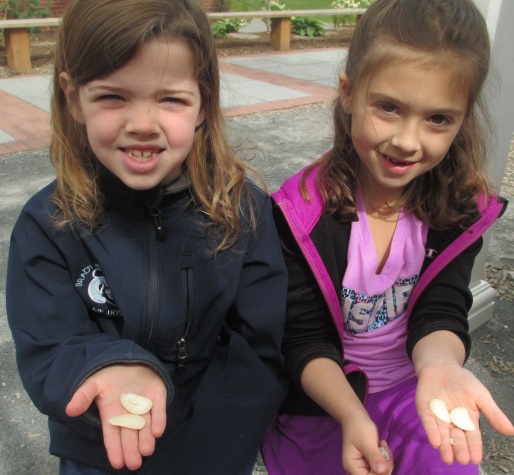
|  | | Quincy Kindergarteners dissect seeds | |
The Plantmobile is a traveling plant science workshop that visits classrooms and community events. Spring is the busiest time of year with the Plantmobile. We have a schedule full of Earth Day events, park openings and end-of-the-year school fun!
With the Plantmobile, kids aged 3-14 learn how to take care of plants, discover the phases of the life cycle, connect the needs of animals and plants, observe plant adaptations in different ecosystems and find excitement in STEM and their natural world. School visits are conducted indoors as wells as in outdoor classrooms. A visit from the Plantmobile is often a kick-off to a life science segment in the school curriculum or the capstone to a classroom's scientific explorations. Our programs integrate state standards with hands-on activities, often accompanied by a large collection of live plant material to study. Nearly every child that works with the Plantmobile is given a seed or seedling to take care of and encouraged to carry on their inquiry and study of the plant world.
|
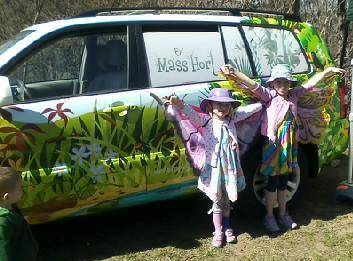
| | | The Plantmobile planted pollinator friendly plants with kids at the Fairy House Workshop in Franklin Park, Boston | |
The Plantmobile program is growing, in just the last two years; we have more than doubled our bookings. We will be visiting more than 40 schools and communities this year, and likely driving more than the 1,416 miles we traversed in 2015. We are also introducing new programs such as the Seed to Table programs which connect kids to their food system and the Seed Lending library, which will be a coordinated seed exchange that helps children learn about the plant life cycle as they grow and save their own seeds (which can be "returned" to the seed library and shared with other schools).
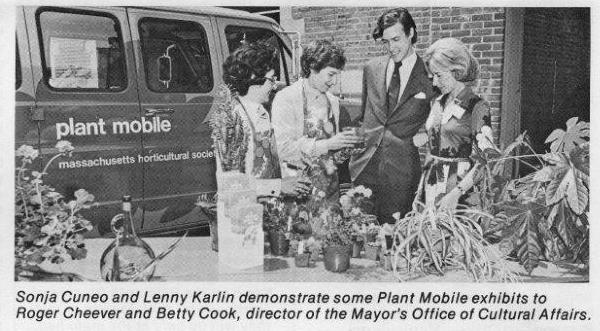
The Plantmobile program began in the 1970s, at the time, as a program more
|
| | An image of the Plantmobile in 1975 |
geared towards adults with questions about caring for their own plants. It was a program more akin to today's Mass Hort Help Line, a group of knowledgeable plantspeople who can offer advice and troubleshoot gardening problems (call today at 617-933-4929 to talk with a Massachusetts Master Gardener). Later in the decade, a children's program was introduced that worked with hundreds of kids in the Boston area, engaging them in Horticulture. Today, the Plantmobile works in Boston and most of Eastern Massachusetts, visiting more than 4,000 children, and about an additional one-thousand adults.
|
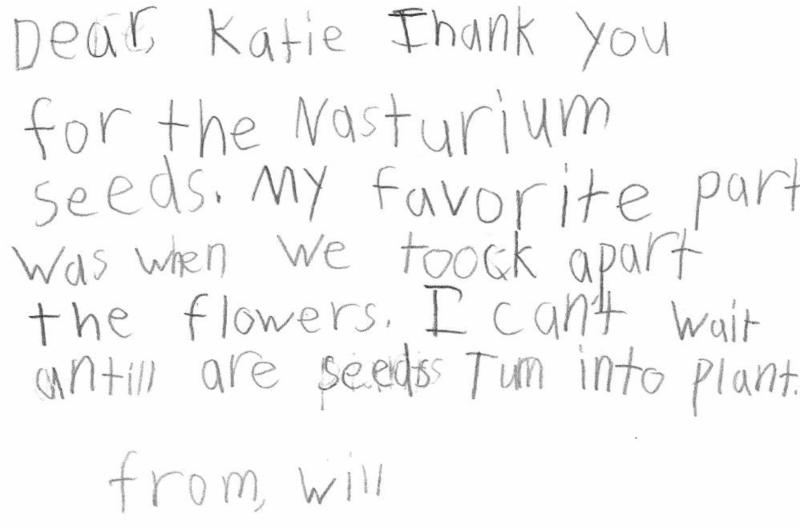
| | | A Thank You Note from a 1st Grader in Hamilton who learned the life cycle of a plant | |
Since its first inception, Mass Hort members have been valuable contributors to the Plantmobile program. Help spread the word, sponsor a visit to your school or community event, volunteer at a program, or donate to the Spring Appeal to grow the Plantmobile program. To learn more about these opportunities, contact Katie Folts at kfolts@masshort.org, or check out our website.
|
A Rediscovered Treasure
Maureen T. O'Brien
Each spring we eagerly anticipate discovering what delightful composition Nature will curate from her repertoire. However, it is important to take a pause and look back at what Nature did in the past to see what is still here, what has changed and what has disappeared. Fortunately we have avid recorders of the past flora in our region, who diligently and accurately recorded nature's offerings with herbaria, sketches, botanical art and photography. Many of these recordings are scientific, others artistic and some are both.
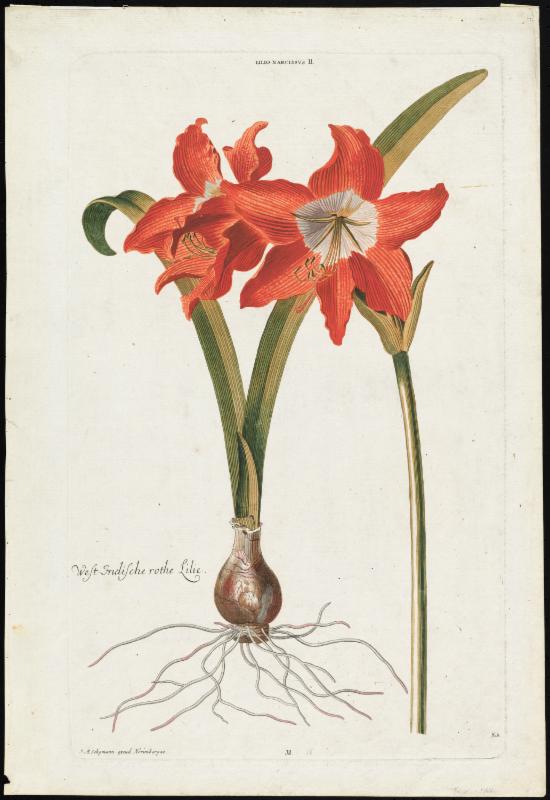
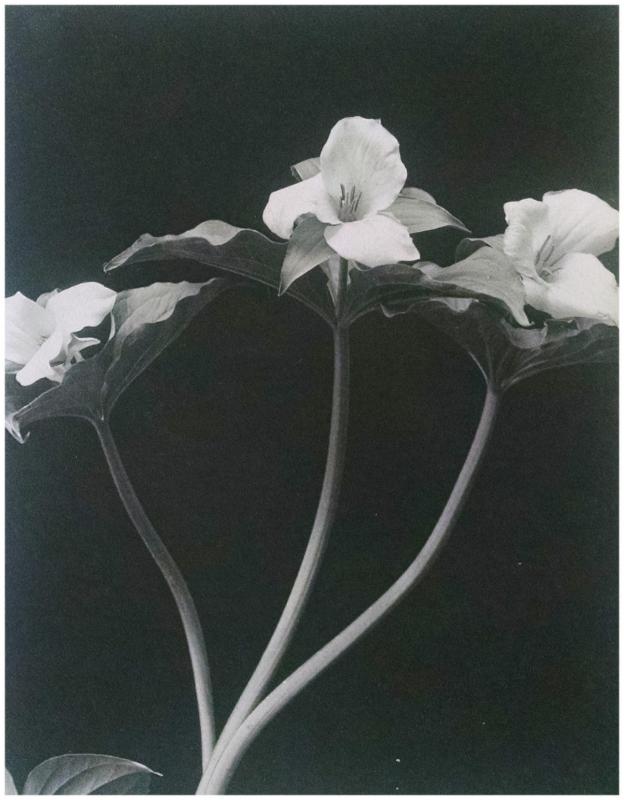
Photographer Edwin Hale Lincoln (1848-1938) of Pittsfield, Massachusetts produced an opus that merged his two passions, photography and wildflowers. He self published a limited edition 8 volume set of platinum prints The Wild Flowers of New England between 1910 and 1914. This publication was an important contribution to two early twentieth century movements: the Arts and Crafts movement to preserve wild flowers and wild gardens in America and the movement to include photography in the fine arts. In 1931, he followed this work with Orchids of North Eastern United States. Both are treasures of scientific and artistic importance.
Mass Hort is the proud owner of the largest collection of Lincoln's glass plate negatives. These plates include images in "Wildflowers" and "Orchids," as well as many unpublished images. We are in the process of assessing the scope of the collection and plan to digitize the collection for all to enjoy. Recently, Mass Hort collaborated with the Boston Public Library and Digital Commonwealth to digitize its botanical print collection and Transactions.
This will be a tremendous undertaking requiring the effort of many volunteers. Our first step is to catalog the prints. If you are an experienced cataloger or librarian who would like to help us, please contact Library Committee Chair Maureen O'Brien at LandscapePreservation@hotmail.com. Even a few hours a week would go a great way toward reaching our goal.
We will keep you posted on the project in future issues of The Leaflet.
Image: Trillium grandiflorum, White Trillium,from The Wild Flowers of New England, Part IV, Plate 102 (1910)by Edwin Hale Lincoln. Courtesy of Wellesley College Science Library.
|
Catching Up with the Last Half Century Maureen Horn, Librarian
|
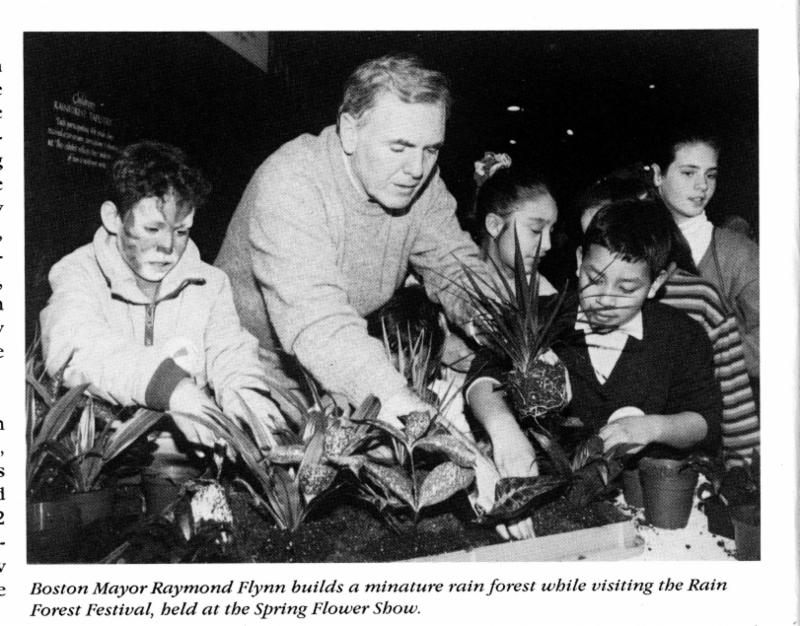
| | | Mayor Flynn at the Flower Show | |
Part 16
1992 & 1993: "New Visions and Steady Focus"
Interim Executive Director, James S. Hoyte began 1992 with a call to "focus our efforts". His goal, to collaborate with Boston schools and community groups in promoting environmental education, was progressing on schedule when the Trustees passed two resolutions that would divert the attention of the Society for years to come. They approved of establishing an urban horticultural/environmental exposition facility on land created by the depression of the Central Artery. They also foresaw moving educational operations to a suburban garden.
The future of the Massachusetts Horticultural Society would soon be in new hands because on March 23, the Board unanimously approved the appointment of Dr. John C. Peterson as the new Executive Director. He came from Columbus, Ohio, where he was a professor in the Department of Horticulture at Ohio State University, so the Trustees were particularly impressed with his horticulture expertise. President George Hill had cautioned the Board that the two separate visions, urban and suburban, shouldn't be in competition with other. Its members, though, seemed to favor the suburban project because in May they agreed that, besides organizing the staff and positioning the Society to raise more money, Dr. Peterson should concentrate on selecting a site for the suburban garden.
The administration, its committees and members could never take their eyes off the New England Spring Flower Show, though. The revenue it earned was the chief predictor of the Society's financial state of health until the end of the year. The 1992 spectacular was the most popular Show in its 121 year history, as 179,000 visitors, 30,000 more than expected, made their way to see two special additions: the Discover Center and the Rain Forest Festival, which was sponsored by Fleet Bank. The extra crowd resulted in a $250,000 windfall, very welcome to an organization with ambitions for doing good deeds for its community. Thanks to funds, also, from four granting agencies, MHS was able to field three Green Teams, composed of 5 to 6 student interns, 14 to 17 years old, and one adult supervisor, to do hands-on work at various Boston sites.
A source of pride in the fall was the publication of a handsome valuable book, Keeping Eden, which was edited by Librarian, Walter T. Punch, and produced by Bulfinch Press (Little, Brown and Company). It was a large compendium of contributors and subjects covering many aspects of the history of horticulture.
In January 1993, President Hill reported to the Trustees that the sites considered for a suburban garden were down to two locations, including Elm Bank in Dover. He said that both would be examined closely and suggested a field trip. After the previous year's success story, there were high expectations for the Flower Show, but the vagaries of weather interfered, and for the first time in its 122 year history, it had to be temporarily shut down, when the Blizzard of '93 dumped more than a foot of snow on the city. It was still the steadiest star in the Society's sky, however, and during the summer, McDonald's renewed its ties with MHS for the 1994 Show. And the 1994 Show would have more garden exhibits, along with computerized data for the first time.
More change came in the fall when the Trustees elected a new President, Skip Pile, and 10 new Trustees.
|
The Coupon

by Neal Sanders
Leaflet Contributor
Coupons, we are told by experts, are dead. Nobody cares about them anymore. The idea that someone will make a purchase just because there's some tiny discount applied to it is a relic of the 20th Century.
I guess I'm also a relic of the last century because, six weeks ago, I found a coupon in my email inbox. It came from one of my favorite nurseries and it offered $20 off of any delivery. Not off of any plant or shrub... just twenty bucks off of a delivery.
Well, it just so happened that Betty and I had been discussing buying leaf mold - those finely chopped-up leaves that have aged a year or more and are perfect for mulching flower beds. We have something better than flower beds at our new home: an entire yard - half an acre - that is one enormous shrub, tree, and flower bed. It consists of eighteen inches of screened loam topped by several inches of mulch and, since last October, a coating of chopped autumn leaves. Our great idea was to put another inch or two of leaf mold on top of that parfait for even better future soil, impervious to weeds and grass. We knew we were probably going to buy leaf mold, it was just a matter of where and when.
So, off we went to the nursery, my printed-out coupon in hand. We went straight to the sample bin of leaf mold. Great. Exactly what we wanted. Ready to order!
Not so fast. Betty started looking at the other bins. And especially at the aged leaf and grass compost. It was jet black, crumbly, and smelled of the good earth.
"We need this," Betty told me, letting a handful of black gold trickle through her fingers. "We have dozens of shrubs still to plant and hundreds of perennials. This is perfect!" And so we bought ten cubic yards of compost instead of ten cubic yards of leaf mold. I used my $20 coupon which brought our total purchase price down by about five percent.
|
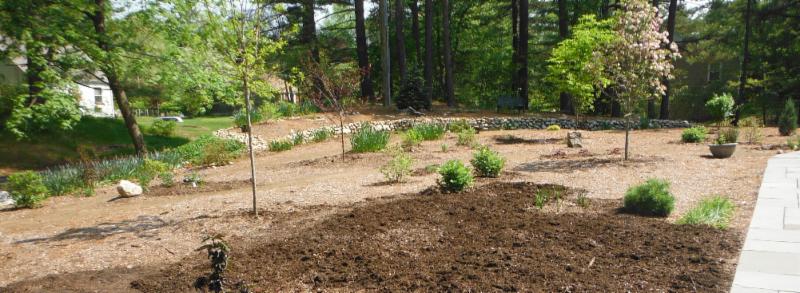
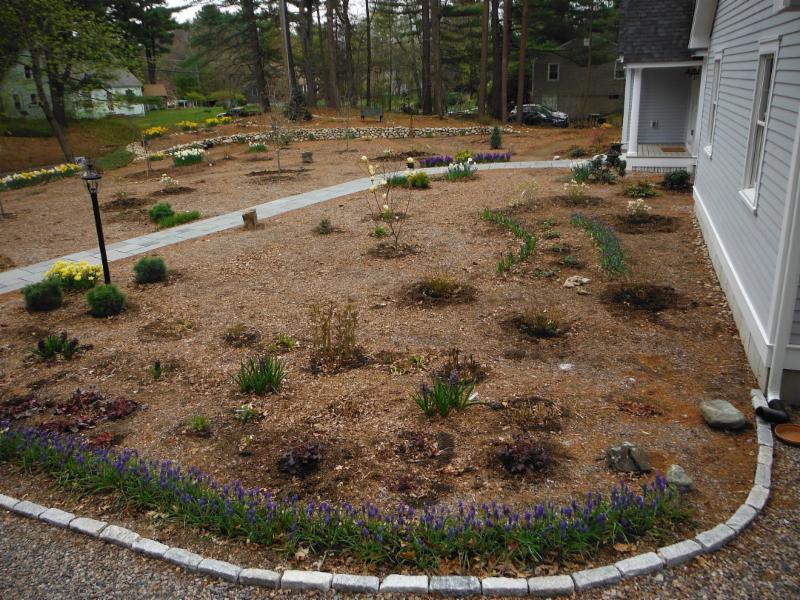
| | The dark area in front is where compost has been added under the mulch |
Three days later, a truck delivered our ten cubic yards of compost. Which is when we discovered our strategic error: compost and leaf mold are not the same thing. Leaf mold is a great insulator; it's akin to bark mulch except that it is fluffier and looks nicer. Compost also looks very nice, but it is a nutrient-rich medium in which to grow things.
Had we purchased leaf mold, we could have raked it over the plantable part of our property, topping the loam and mulch with a fresh insulating layer that, in a year or so, would itself become part of the soil. Time commitment? About a day. Compost, on the other hand, is like adding a layer of super-rich, ready-to-plant soil. It would also take about a day to spread compost over our yard but, once in place, it would nurture each and every seed that fell on it, be that seed one of grass, weeds, poison ivy, strangler fig, kudzu, or maple trees.
To put it mildly, that would not be a smart thing to do. Here's what we did instead:
Over the course of four weeks, we used about three cubic yards of compost to plant those new shrubs, perennials, and annuals. Which left us with just seven cubic yards of the stuff.
|
| | | The part of our property that is not wetlands - roughly half an acre - is a grass-free site | |
All the while, we contemplated an alternative - any alternative - to what in our hearts we knew all along was the only possible solution for the other seven cubic yards.
This week, I began what is without a doubt the hardest work I will do all summer. In five-foot-by-ten-foot strips, I am raking off the top few inches of mulch from our yard...
No. That's not right. "Raking" is an inaccurate description. A year after being put down, the bark mulch has begun breaking down into its own, soil-like texture. It is, in short, now a solid, hard-pressed mat of material. To remove it, I bang the tines of my steel rake into the mulch and pull up a piece a foot wide and a few inches long, which I then chop into bite-size pieces that resemble what was put down originally.
When the old mulch has been pulled into a pile and the loam below is exposed, I add tubs of compost and spread that compost out to an inch's thickness. When that is done I pull the reconstituted mulch back over the top of the compost and loam. The compost lies atop the soil, gradually enriching it for the next round of shrubs and perennials we will plant.
As of this morning, I had completed work about 400 square feet of our yard. I have another 8,000 square feet to go. Gosh, I've done five percent of the project!
Which is exactly what that coupon represented as a discount to the purchase price of the compost that got me into this situation.
--------------------------------------------------------------
Neal Sanders is the author of ten mysteries. His newest, 'How to Murder Your Contractor' has just been published and, together with his other titles, is available in stores and at Amazon.com.
|
The Bressingham Garden at Elm Bank
by Wayne Mezitt, Chair of the Mass Hort Board of Trustees
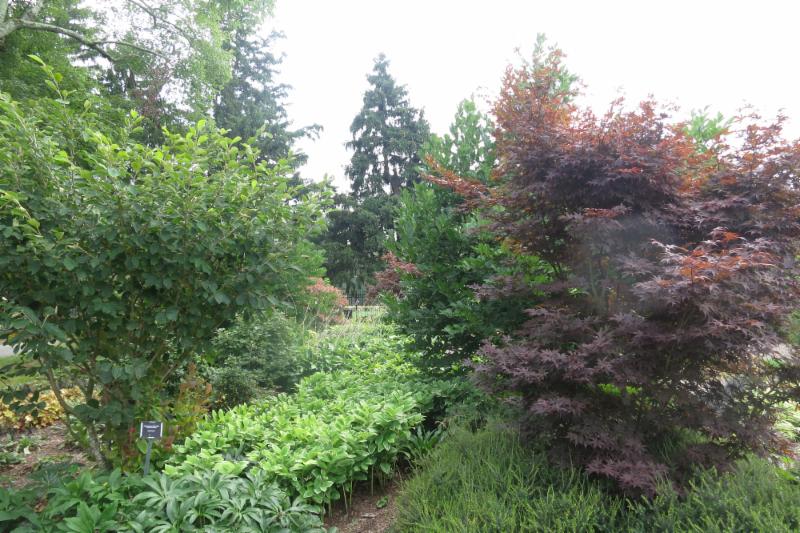
Back in 2007, fabled horticulturist and English garden designer Adrian Bloom had a vision: create a new garden to act as a catalyst for promoting the horticultural industry and gardening throughout the New England area. He selected The Gardens at Elm Bank, the Dover/Wellesley home of the Massachusetts Horticultural Society as the perfect site.
For a single frenetic week in August 2007, a cadre of over 200 volunteers helped Adrian reshape and convert a full acre of the former estate's deteriorating tennis court into an inspiring garden. Comprised of over 8,000 perennials, shrubs and trees, the sweeping views and perspectives inspire visiting homeowners and professionals with effective design combinations for plants well-suited to this region.
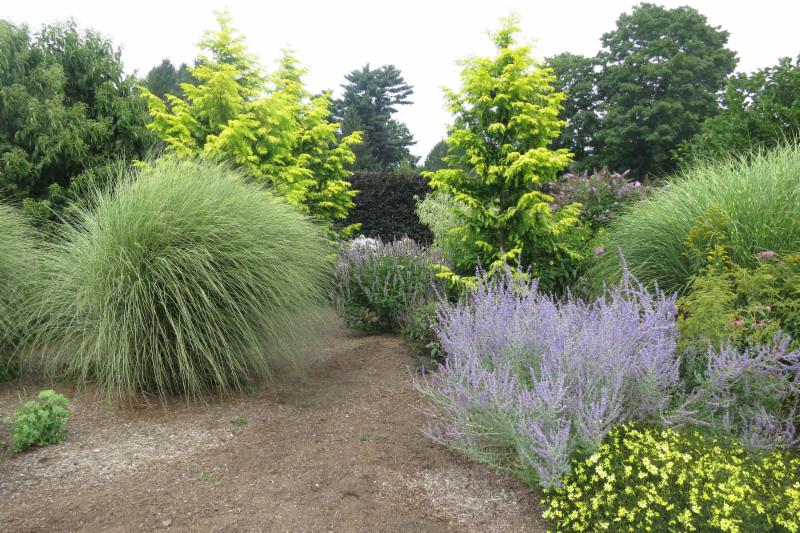
Now approaching its 10 th year, the Bressingham Garden has matured and prospered, effectively displaying many aspects of horticulture for all to enjoy. In designing the layout, Adrian designated different areas to represent various environmental conditions homeowners commonly encounter in this region. One planting bed demonstrates plantings suitable for dry soils, another for a hilly site, yet another for shade conditions, and one that features native plants. A remarkably unique component is the "longest river of Geranium Rozanne in the World", flowing through several planting areas and unifying the entire garden. 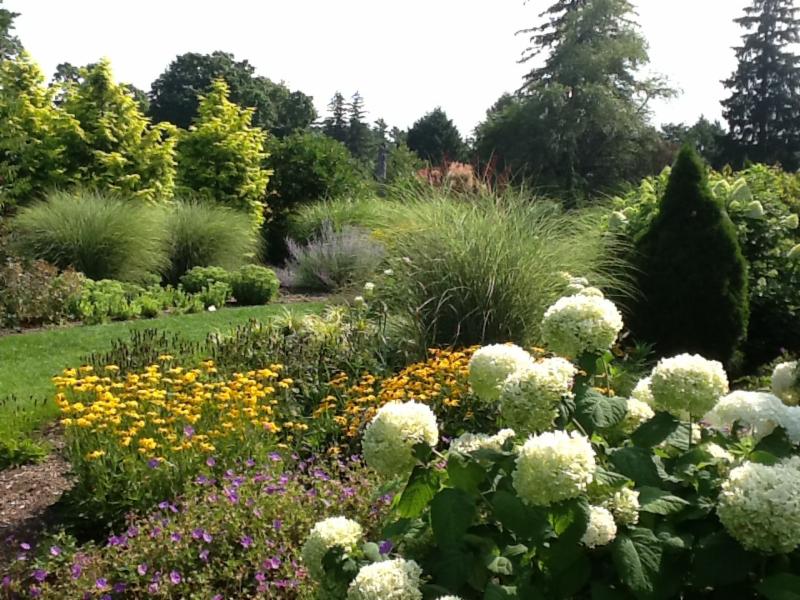
Adrian recently visited to meet with a group of local nursery professionals. He's asked for their participation in upgrading and adding plantings to show some of the new cultivars that have appeared on the market in recent years. This opportunity enables us as professionals to better utilize this garden to demonstrate how to effectively maintain maturing plantings and integrate exciting new cultivars into the landscape. Some pointed out the value of using the garden as a convenient site for training new employees.
The next time you are in the area, take a few minutes to stop by and see the impressive Bressingham Garden at The Gardens and Elm Bank, 900 Washington St, route 16, Wellesley. With thousands of our customers visiting each year, this is a perfect location for us nursery and landscape professionals to demonstrate ways we can help make their yards, gardens and landscapes more enjoyable. In upcoming communications we'll be detailing further particulars on how MCH's and MNLA members can participate in this unique educational opportunity.
Originally published in the MNLA Newsletter, Pro| Grow|News
|
Crush Wine Festival Announces New Location for 2016 Event
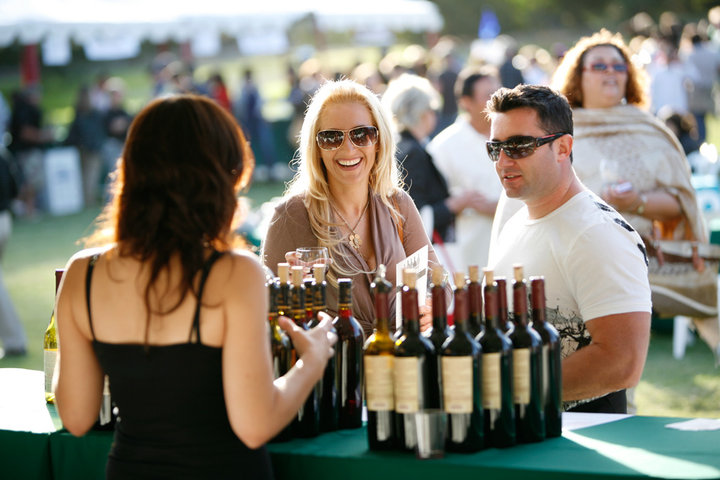
Massachusetts Farm Wineries and Growers Association annual fundraiser, 'Crush Wine Festival' will be held at The Gardens at Elm Bank, Massachusetts Horticultural Society in Wellesley on Sunday July 10th 2016 from Noon - 3pm. Wine enthusiasts and novices alike will find plenty to love about this year's Crush Wine Festival which features 20 wineries from every corner of the Commonwealth.
Set against the stunning backdrop of the graceful Gardens at Elm Bank attendees will enjoy a comfortable guest to winery ratio with the opportunity to talk directly with the winery owners and wine makers. Taste and learn about different varietals, still and sparkling wines, hard ciders and mead. Ticket price includes sampling of more than 75 wines, ciders and meads, delicious hors d'oeuvres and our popular "ask the expert" information sessions as well as parking and one-day access to The Gardens at Elm Bank. Joining our award winning wineries will be artisanal cheese, local food and flower vendors and the opportunity to purchase wine by the glass to enjoy as you explore the lush gardens.
Do you want to find a new favorite or are you interested in adding local wines to your wine cellar? Crush Wine Festival has the answer! In addition to sampling wines, ticket holders are able to purchase wine by the bottle directly from the wineries with many wineries offering special pricing for case and half case purchases. {NOTE: Wine purchased by the bottle is for off-site consumption only}
Located just 30 minutes outside of Boston, Elm Bank has more than 30 acres of fields, forests, and formal gardens as well as a collection of architectural masterpieces. Crush Wine Festival's main tasting area will be in the elegant Hunnewell Building, the carriage house for the former Cheney-Baltzell estate, which once occupied the Elm Bank site. This great hall is capped with a magnificent vaulted and trussed ceiling. An attached three-season tent expands the event hall and allows plenty of room to explore the nearly 20 Massachusetts wineries on hand sampling their finest wines.
To ensure that our guests enjoy a relaxed, informative environment, only a limited number of tickets are available to this exclusive event. MA Horticultural Society members receive a special discount when you buy your tickets online at http://www.masswinery.com/elm-bank/
For more information please contact:
Kate Levin, Director
MA Farm Wineries & Growers Assoc.
508.454.5631
www.masswinery.com
|

|
Book Review
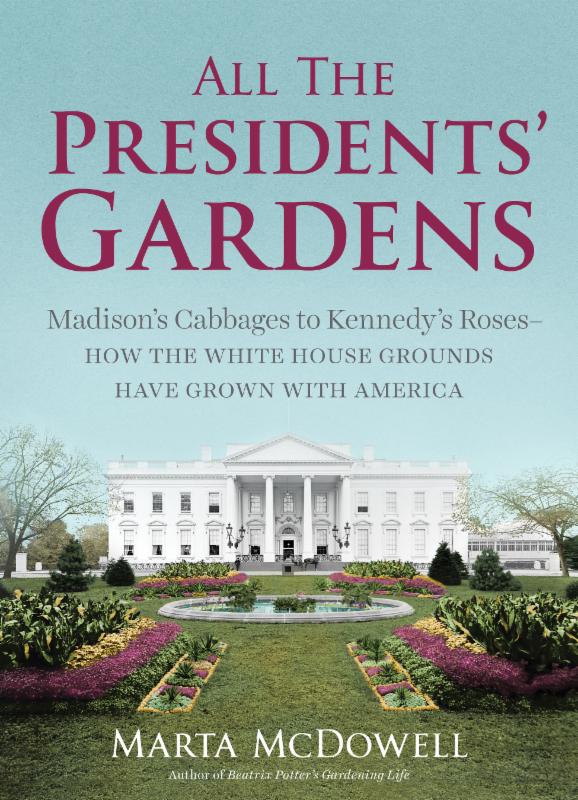
All the Presidents' Gardens: Madison's Cabbages to Kennedy Roses - How the White House Grounds Have Grown with America
by Marta McDowell
Timber Press: Portland, Oregon, 2016
Reviewed by Patrice Todisco
If in this year of presidential politics you yearn for a different perspective on life in the White House, All the Presidents'Gardens: Madison's Cabbages to Kennedy's Roses - How the White House Grounds Have Grown with America by landscape historian Marta McDowell provides the perfect antidote.
|
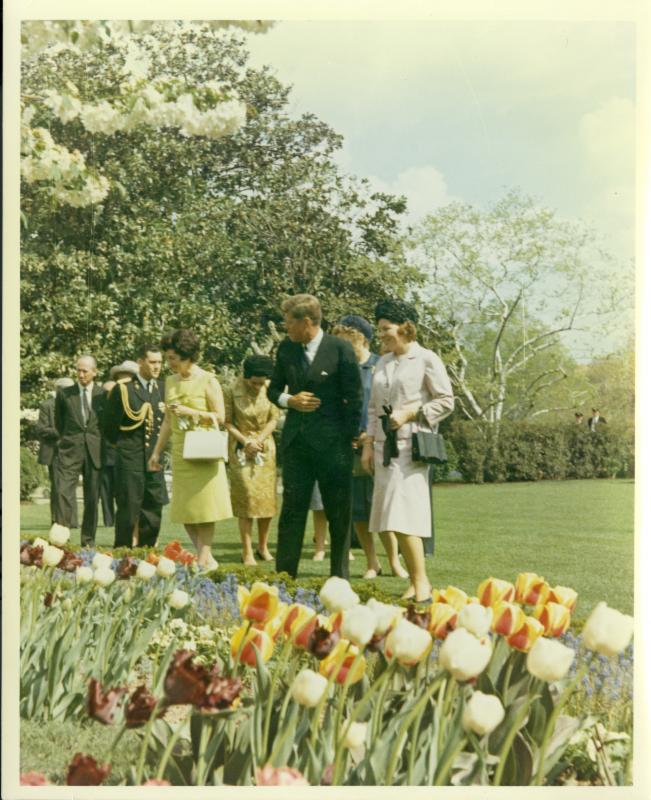
| | Kennedy showing the Rose Garden, April 1963 |
Revealing the story of how the Presidents and their families have shaped the eighteen acre landscape which comprises the White House grounds, the book provides both a refreshing and revealing account of what is the nation's "first garden"and begs the question, depending on who is elected in November, what's next?
McDowell, a consummate storyteller, is without political bias relying instead on the politics of plants to provide "common ground"and serve as the focus of the book's narrative. A backdrop for the nation's history since 1800, the White House grounds are both a public space for pageantry and protest and a private space for refuge and reflection. Each presidential family has left its imprint and each has a story to tell.
Beginning with the founding of the capital by the somewhat "plant-crazy" George Washington, who sited the executive mansion on a rise for a good view, McDowell traces the history of the White House grounds within the context of the American horticultural movement. Its first plant list, an order for specimen trees, including species native to America, to line a formal entrance approach to the executive mansion, was placed by James Madison in 1809.
The cultivation and ceremonial use of trees plays a central role throughout, including the history of Washington DC's iconic cherry trees. While John Quincy Adams answered "the great ends of his existence" by growing chestnuts and elms and establishing the nation's first forestry project, Eliza Scidmore, described as an "unpaid but determined garden lobbyist"vigorously pursued her vision for the planting of cherry trees along the tidal basin.
And speaking of trees, in the chapter "All the President's Plants", McDowell includes a list of trees, shrubs and vines grown on the White House grounds based upon White House inventories conducted in 1809, 1900 and 2008. The plant list includes the botanical name, cultivar, whether the plant is native to the lower 48 states and information about the time frame in which the plant grew.
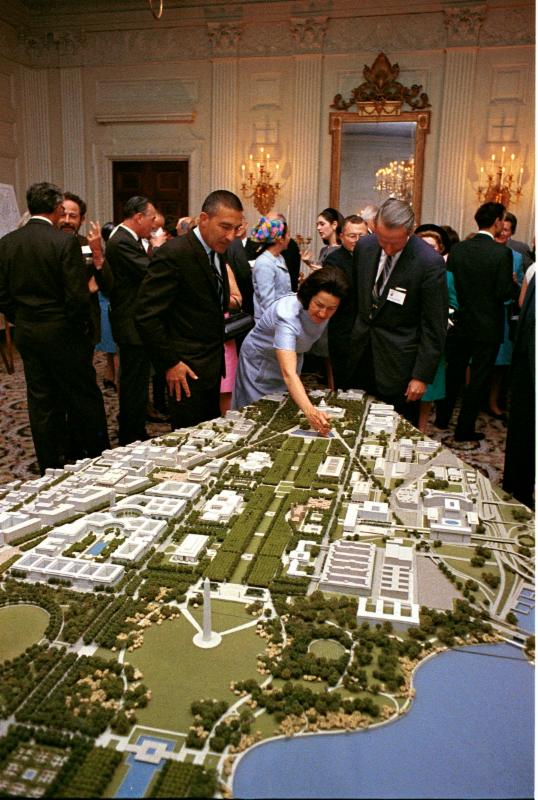 Additional sections provide background information about the White House gardeners (The Men Who Planted for Presidents), recommended reading, sources and citations. Historic documents, maps and photographs generously illustrate the text, which deftly balances its breadth of scholarship with the freshness of McDowell's style and depth of enthusiasm for the subject at hand.
In its final chapter,"Is Green the New Red, White and Blue?,"All the Presidents'Gardens: Madison's Cabbages to Kennedy's Roses - How the White House Gardens Have Grown with America comes full circle as Michelle Obama breaks ground on the Kitchen Garden. Planted with more than 50 varieties of vegetables (including some grown from seeds from Monticello), berries and herbs, the garden brings local food, in the tradition of past administrations, back into the White House kitchen.
Irvin Williams, head gardener from 1962 - 2008 is quoted as saying, "What's great about the job is that our trees, our plants, our shrubs, know nothing about politics." A felicitous thought indeed.
The White House grounds are open to the public twice a year. Information can be found at www.whitehouse.gov in the statements and releases section.
Patrice Todisco writes about parks, gardens and the public realm at www.landscapenotes.com
Images taken from All the Presidents' Gardens
© Copyright 2016 by Marta McDowell. Published by Timber Press, Portland, OR. Used by permission of the publisher. All rights reserved
|
 June Hort Hints June Hort Hints
Betty Sanders,
Another dry spring! Looking back at the past few years, it seems as though our New England springs have been too dry more often than too wet. Plants don't grow without adequate water, and that high temperatures have joined the dry weather, it's time to review how you will make the most of the precipitation we receive between now and October. Here are four ideas: Use rain barrels to catch water that would otherwise run off roofs and soaker hoses to eliminate the water wasted through evaporation. Put away sprinklers, which can lose up to a third of their output to evaporation. When planting, group plants with similar water needs together.
Plant for the pollinators. It is now well established that bees are in trouble because of the overuse of pesticides and herbicides. Less well publicized but just as true is that butterflies and moths (who do their share of pollinating) are threatened, as well as are other insects you never notice. Planting for these pollinators is a two-fold job. First plant the pollen- and nectar-rich flowers they need. Older, heirloom and classic varieties usually offer much more in the way of food because the newer plants have been genetically manipulated to increase bloom time or produce extravagant flowers at the expense of producing pollen and seeds.
Don't forget that pollinators need habitat for all the stages of their lives. Native bees (which, unlike honeybees and wasps, cannot sting you) live and lay their eggs in hollow stems of dead plants or in special tube housing. Butterflies need something to eat when they are caterpillars: the leaves of native trees, other trees, shrubs and, sometimes, your perennials. If you blanch at the idea of insects munching on your perennial border, keep in mind that we're talking about a leaf chewed here and there, damage we can live with - because without a little damage, we lose the beautiful and useful presence of those pollinators. It's a small price to pay.
In the vegetable garden. It's time to put in the tomatoes
|
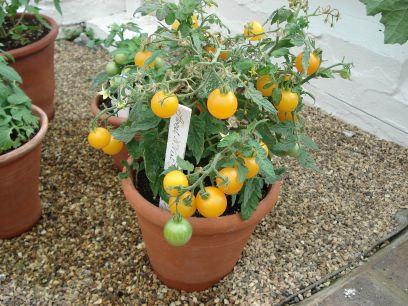
| | A pot of bite-sized tomatoes grown in a sunny area is the ideal way to convince kids that the best foods are eaten warm |
and basil, the eggplant and peppers, the squash and corn. Before planting, make certain you choose the best tomatoes for your purpose. Tomatoes come in two types: 'determinate' and 'indeterminate'. The former get to a certain, genetically determined height. Then they stop growing, set ting flowers and fruit to ripen in a short period of time. These are best for those who make homemade sauce or canned tomatoes.
For all other uses, you probably want to grow indeterminate tomatoes. These may be tiny, small, medium, large or jumbo sized red, green, yellow, orange, black or some wild blend of colors, but they are all grown for eating fresh. A pot of Sungold bite-sized tomatoes in the backyard is the ideal way to convince youngsters that the best foods are eaten warm from the sun. All of the indeterminate types just keep growing until frost so give them a tall sturdy support (such as a cage) to keep the fruit off the ground, healthy and clean.
Pruning time, again. Once the flowers on your spring blooming trees and shrubs are finished, it's time to prune. Perform a hard cutback on established forsythia both to keep it in bounds and to ensure great blooms next year. Pruning lilacs for shape as the flower heads die is good, but remember you will get a greater number of blooms if you remove some of the oldest wood from established lilacs and allow new shoots to come up. To completely renew a lilac, remove up to one third of the oldest stems every year for three years. The new stems that take their place will produce more flowers.
|
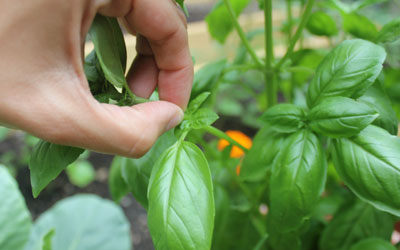
| | | Pinch back herbs to promote bushier growth | |
Pinch me! Pinch back the tops of annual herbs such as basil to promote bushier growth. If you start to see your herbs flowering, pinch off the flower stem at its base, not just the flowers. Herb flavors are strongest early in the day so do your harvesting in the morning, and refrigerate until needed for use.
Be greedy! If you grow blueberries and raspberries, you
|
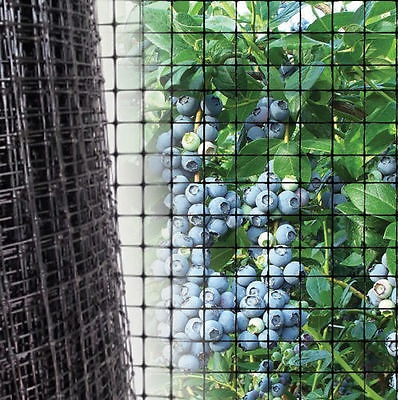
| | Net your blueberries and raspberries before they ripen |
need to know that the wildlife around your garden is watching those berries ripen and, like you, they're looking forward to snacking on them as soon as they're ripe, probably early on the morning you had planned to pick them. Your best defense is to net them now. Your berry bushes have set their fruit; it's just a matter of time, sun, and adequate moisture. One-inch netting will allow far too many critters to get through. Half-inch or even quarter-inch is best. And, don't make it tight: otherwise, birds will perch on the netting and pick the berries they want. But as your crop winds down, open up access for the critters with whom you share your land.
Weed, weed, weed. By June, every weed in your garden is setting seeds. Get them now before those seeds ripen. Seeds will still blow in or be dropped in by birds, but you can lessen the work by pulling out of the parent plant before it has the opportunity to populate your garden with its progeny.
---------------------------------------------------------
You can see more of Betty's horticultural ideas at www.BettyOnGardening.com. Betty is also 2015-2017 President of the Garden Club Federation of Massachusetts.
|
|
|
|
|
|
|