|
 For exceptional benefits to help you in the garden- Join Today! If you are a Mass Hort member - please recommend membership to a friend! Forward this newsletter. CLICK HERE TO JOIN |
|

SPREAD THE WORD,
HELP US GROW!
Refer a new member to Mass Hort and receive a coupon to attend a Thursday Night at the Hort lecture for free!
|
|
|

You Shop - Amazon gives to Massachusetts Horticultural Society!
Amazon will donate 0.5% of the price of your eligible AmazonSmile purchases to Massachusetts Horticultural Society whenever you shop on AmazonSmile.
AmazonSmile is the same Amazon you know. Same products, same prices, same service.
Begin shopping
www.smile.amazon.com
|
|







J.C. Timmerman
Loft 7 Productions
|
|

Letter from the President
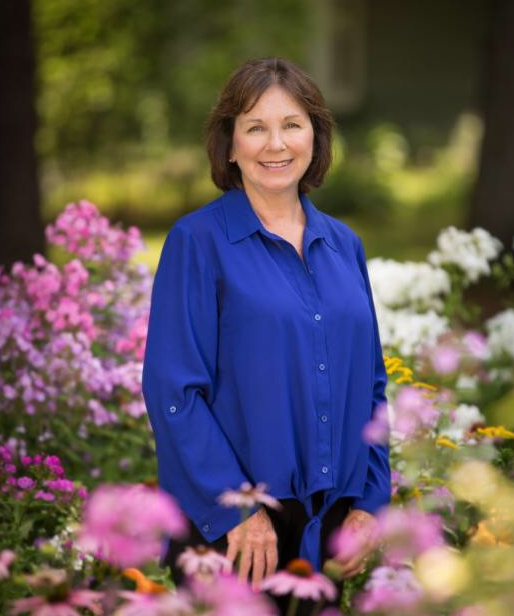 Greetings!,
Thanks to our staff and volunteers, The Gardens at Elm Bank are shaping up beautifully for the season. We had a great group in to help on Earth Day, Bartlett Tree Experts were by to trim the Copper Beech Hedge, and Harrison McFee joined us on Arbor Day for some branch cleanup.
We are preparing for a wonderful season in the garden, with daily children's activities and garden tours, and plenty of picnic tables to enjoy a lunch al fresco. Our visitors center offers tea and coffee and unique items to purchase. Be sure to check out new improvements in Weezie's for kids of all ages to enjoy.
If you are busy working on your garden, don't forget the Gardeners' Fair this Saturday, May 14th, open for members at 8 a.m. and the general public at 9 a.m.
Thank you to our hardworking Twilight Garden Party Steering Committee for putting together a wonderful event. I hope you will join us on June 2nd to celebrate our 20th anniversary at Elm Bank. Bring your friends and enjoy swing music, hors d'oeuvres, wine, beer, and cider, and garden tours.
Best wishes,
Kathy Macdonald
|
It must be spring! It's time for the Gardeners' Fair
Saturday, May 14 9 a.m. to 3 p.m.
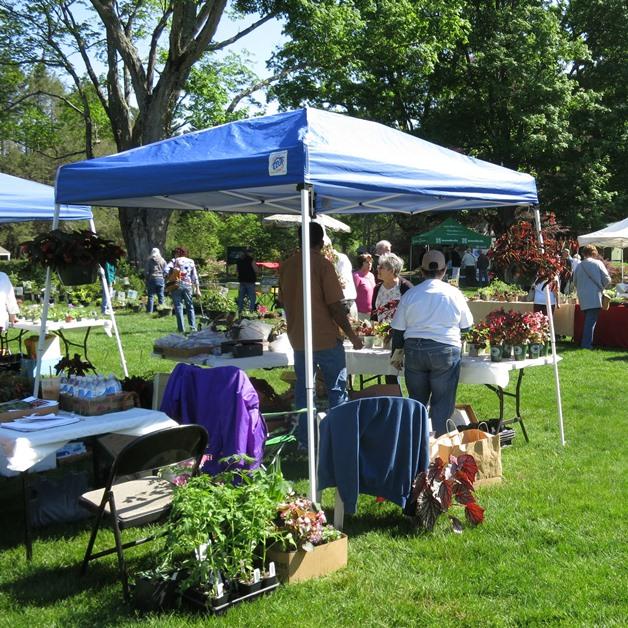
It must be spring if it's time for Mass Hort's Gardeners' Fair and Plant Sale! A number of vendors will be on site, offering everything you need to plan, dig, plant, and enjoy your home garden space. Allandale Farm, Boston's oldest working farm, will bring a wide selection of heirloom and hybrid tomato plants grown right on the farm! Peppers, eggplants, cucumbers and other starter plants will also be available.
The Gardeners' Fair will take place on a new weekend, Saturday, May 14, 2016, from 9 a.m. to 3 p.m. at Massachusetts Horticultural Society's The Gardens at Elm Bank, Route 16, in Wellesley. The Gardeners' Fair is an opportunity to find rare and unusual perennials, trees and shrubs; ready-to-plant herbs and vegetables; and tomato varieties by the dozens. It's also a chance to hear talks by experts, find unique garden tools, garden ornaments and accessories, as well as other gardening necessities. The fair will feature tomatoes by Allandale Farm, the Herb Society Plant Sale and over 20 vendors. Admission is $5 per car for the general public, free for Mass Hort members.
The Gardeners' Fair provides fun and shopping for the whole family! Mass Hort will sponsor daily children's programs and garden tours. Don't miss the Wellesley Band 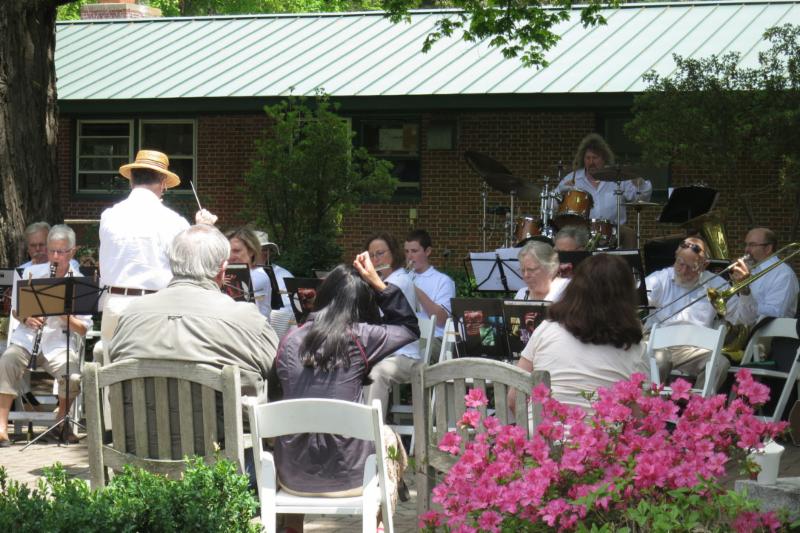 who will entertain at 1:00 p.m who will entertain at 1:00 p.m., and a truck will be on site for lunch and snack. The New England Unit of the Herb Society garden activities will include: drop in tours, family-oriented workshops- 10 a.m. make a Fairy flower; 12 noon- plant an herb in a tea cup. Vendors from around New England will be here selling plants and garden supplies to help you get your garden and yard ready for the summer. This year's vendors include: Allandale Farm, NE Unit Herb Society of America, New England Daylily Society, American Rhododendron Society MA Chapter, Slug Shield, Lorelei's, Iron Arts, The Warren Farm and Sugarhouse, MDAR, Deborah's Kitchen, Stonegate Farm and Flowers, New England Hosta Society, American Conifer Society, Greystone Garden, Teaberry Garden, Horizon Line Ceramic, Copper Cuties, Lakonia Greek Products, Elwell Associates, Stephen Proctor Ceramics, the Miniature Plant Society, and James Hardie Building Products. |
Garden Party Celebrates Mass Hort's 20th Anniversary at Elm Bank
Thursday evening, June 2, 6-8:30 p.m.
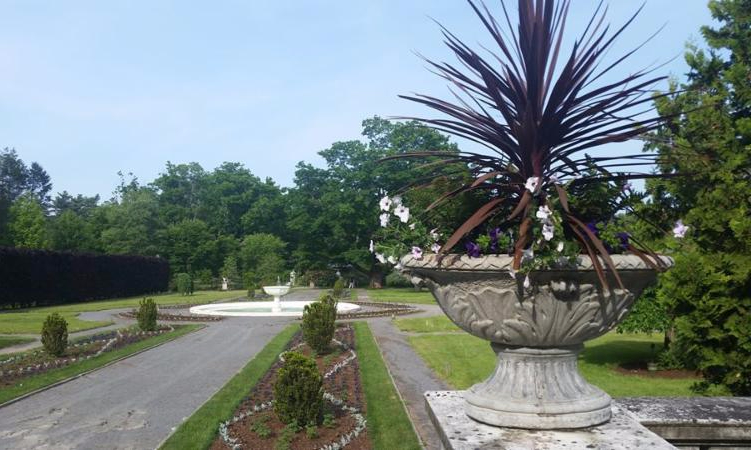
Twilight, swing dancing, local food and drink, all set within a beautiful garden estate. It's the 20th Anniversary of the Gardens at Elm Bank, and the entire community is invited to celebrate during our special Twilight Garden Party on June 2, 6:00-8:30 p.m.
Open to members, friends, and newcomers, the Twilight Garden Party at The Gardens at Elm Bank will take place at the heart of our gardens in the Maple Grove, where guests can enjoy local beer, wine from Massachusetts Wine Growers, Stormalong Cider, hors d'oeuvres prepared by Peppers Fine Food Catering with local produce, and the music of Henry Platt's Swing Quartet. The Rivers School Conservatory Marimba drummers will welcome you as you arrive, and our display gardens will be open for exploring throughout the evening. In the event of rain, the event will take place in our historic Hunnewell Carriage House.
Tickets for the Twilight Garden Party are $85 and can be reserved by calling Elaine Lawrence at 617-933-4945 or online at www.masshort.org/twilightgardenparty. All proceeds support The Gardens at Elm Bank's annual capital improvements and Mass Hort's education programs.
Mass Hort is steward of the 36-acre Elm Bank estate, which is listed on the National Register of Historic Places. In 1996, the Commonwealth of Massachusetts and Massachusetts Horticultural Society signed a 99-year lease for a portion of the Elm Bank Reservation. This beautiful property has enabled the Society to introduce horticulture and hands-on education to thousands of people.
Hope to see you at the party!
|
|
|
Match Opportunity - For Education
We are excited to report a match opportunity for education! We have a $5,000 grant that needs to be matched by June 1. We have received $1,000 towards the match and need to raise $4,000 by June 1.
This is a great opportunity for individual donors to help Mass Hort continue its educational mission and serve children of all backgrounds. Please contact Elaine Lawrence for further details at 617-933-4945 or just make a donation and in the comments section, note: ed match.
Click here to DONATE NOW to this match opportunity.
|
 May Hort Hints May Hort Hints
Betty Sanders,Mulch, Mulch, Mulch. Mulch is a gardener's best friend and May is the right time of year to apply it in New England. Mulching everything will cut water bills on what is forecast be a below-average-precipitation summer. Mulch keeps the soil around plants cooler in summer heat. It prevents weeds from popping up to compete with plants you want, and saves water by reducing evaporation from the soil. Bark mulch is acceptable, but your plants will be happier if you use leaf mulch or just chopped-up leaves from last fall. The partially broken down leaves will finish decomposing and add nutrients to your soil after the year is finished. Didn't save your leaves? Leaf mulch is commercially available. How deep to mulch? An inch is too little; two-to-three inches is just right depending on location; and more than four inches inhibits water from getting to the soil below. When you mulch, remember to keep mulch a few inches away from the bark of trees and shrubs, and a couple inches away from the stems of perennials, annuals and vegetables. Mulch "volcanoes" are a sure way to kill a shrub or tree.
|
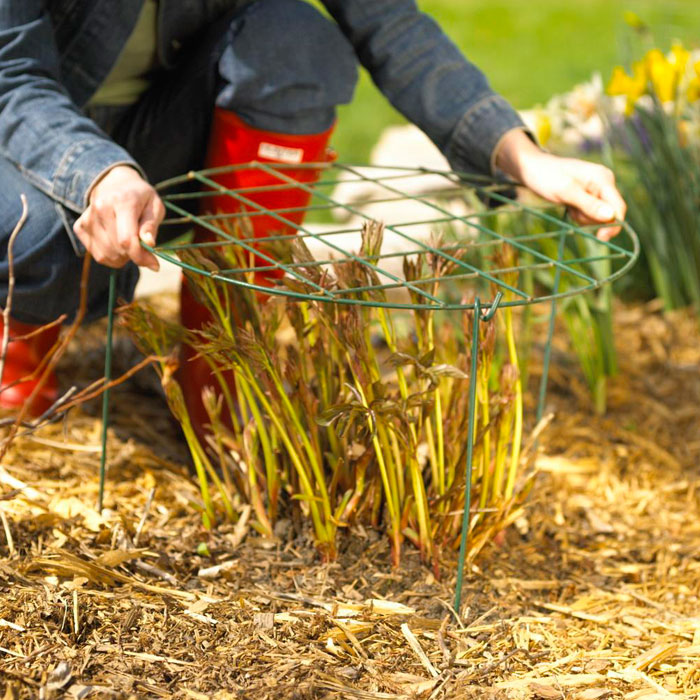
|  | | Stake tall perennials now while they're manageable | |
Stake tall garden perennials while they are still small and easy to handle. To prevent "bunchy" plants such as peonies and baptisia from flopping over from the weight of their flowers, use commercially available single or double rings to hold stalks and flowers upright. Use individual stakes for delphiniums. Often these supports can be removed after the flowers have passed and their heavy heads are gone. Pinch me! Around Mother's Day, pinch back
|
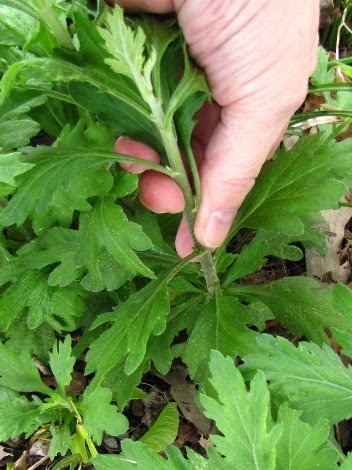
| | Snip or pinch chrysanthemums |
chrysanthemums to generate shorter but bushier plants with more abundant flowers. This technique works well with many other multi-stem perennials such as asters. A second pinching just before the Fourth of July will result in slightly later, but noticeably more flowers in the fall. It's not as wet as we hoped this spring. The most recent U.S. Drought Monitor shows central Massachusetts and Connecticut are already in a "D0" condition, or abnormally dry. Protect you investment in new plantings by watering them on a regular schedule if your area isn't getting an inch of water a week or more. A rain gauge is as important as your trowel or hoe. It may rain heavily where you work and barely at all where you garden. Water new perennials the first season, new shrubs for one to two years, new trees for two to five years (depending on how large the tree was when you put it in.) The larger the plant, the longer it will to grow enough roots to find sufficient water on its own. Do not fertilize new plantings-they need to get established before being encourage to grow.
|
| | | It's too soon for tomatoes | |
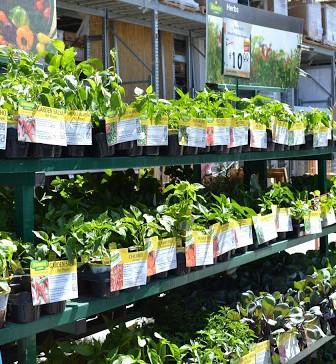
Don't be fooled by the displays at some nurseries, and especially at the big box stores, In early May, home centers in New England began selling tomatoes and basil, marigolds and geraniums, a month before the temperatures are consistently high enough to allow safe planting. Use a thermometer to check the soil temperature about four inches below the surface, and avoid being fooled by warm (air temperature) days. Protect your tender plants against deer. Those hostas
|
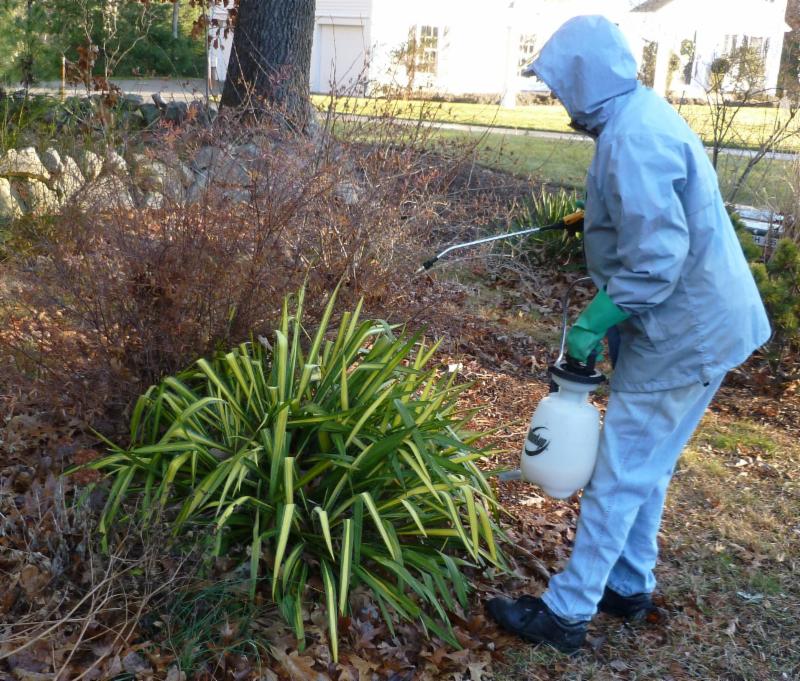
| | Spraying with a commercially available solution of putrefied eggs and garlic will help deter browsing deer. Be sure to wear protective covering |
and other perennials that are just emerging for their new season are taste treats for deer, rabbits, and other herbivores. Your best bet to protect your investment in those plants is to make them taste terrible. There are several commercially available preparations (Bobbex and Liquid Fence are two examples) that consist of putrefied eggs, mint oil, garlic, and other ingredients that ruminants (and especially deer) find noxious. These preparations are sprayed on using a standard gallon-sized home sprayer. A light spraying of all new foliage is best, making certain no rain is in the immediate forecast. For an hour or two your yard will smell terrible. Once the sprays dry, humans no longer detect them but deer and rabbits do. One bite is enough to send them elsewhere for a meal and save your plants. --------------------------------------------------------- You can see more of Betty's horticultural ideas at www.BettyOnGardening.com. Betty is also 2015-2017 President of the Garden Club Federation of Massachusetts.
|
Garden Craft
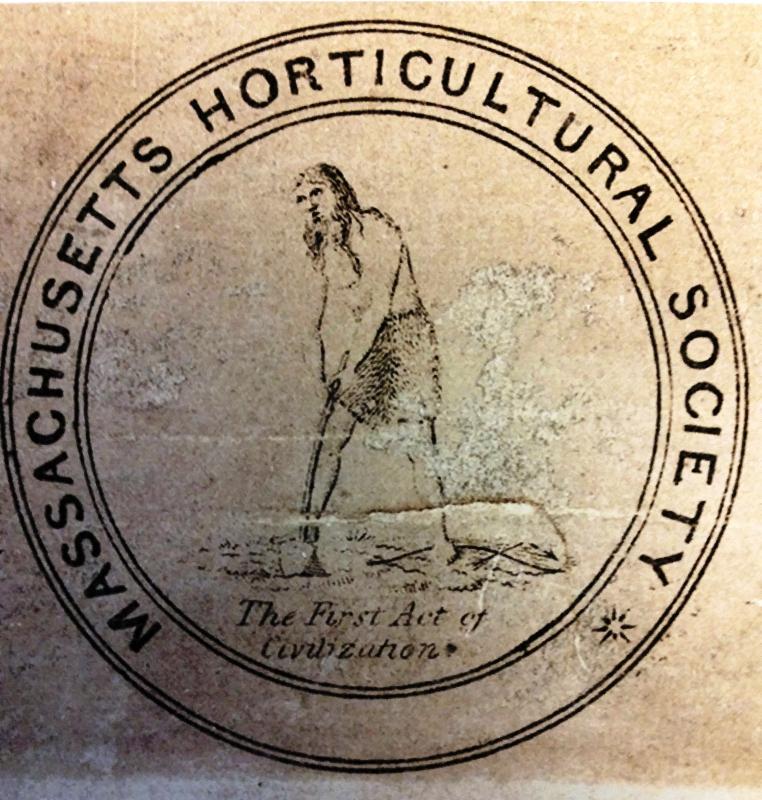
Each spring, we take out our old garden tools and work among plants and landscapes full of legacy. Rhubarb from your aunt, iris from a garden club plant sale, seeds handed down from long ago...
The first seal of the Massachusetts Horticultural Society depicted a Native American farming with the words "The first act of civilization". Throughout the ages, farming and gardening came down to us as craft. We passed down regional best practices for cultivating the food which sustains us, breeding the flowers that adorn our lives, preserving the plants of place, and tending our gardens sustainably.
Mass Hort has been the steward of regional garden craft since 1829. Today we continue to teach horticultural arts and garden crafts that offer sustainable lessons for our region. When you come to Elm Bank, you can learn how to prune an orchard, compost household waste, brew beer from the plants you grow, arrange a bouquet, save a seed, make an herbal tea, preserve a historic landscape, or plant a shrub that will enhance our regional environment and habitat.
As times change we often outgrow our traditional folkways because science, culture and our perspectives advance. After World War II, we saw the appearance of centralized agriculture and the decline of local gardening. Yet when we pick up a trowel or peony passed down to us, we keep alive the seeds and observations of all those who have gardened in this region before us and worked to improve the common good through sustainable horticulture.
This year when you visit us, you can find our staff and teaching partners (Master Gardeners, plant societies, garden clubs, universities, green industry specialists...) teaching from, and working in, our gardens.
Consider the Massachusetts Horticultural Society Gardens at Elm Bank as your DIY Center for local garden craft. Every day we offer kids programs, garden tours to engage your family and visitors, weekly educational programs, credit courses, hands-on Sunday vegetable garden programs, garden volunteer learning/work opportunities and special events. If you are looking for a chance to access rare and unusual plants, a soil test, or plants to enrich your yard, kitchen or bar...then join us for our next event The Gardeners' Fair.
When are you making plans to come to take a fresh look at The Gardens at Elm Bank?
We look forward to seeing and working with you in the gardens!
-John Forti - Director of Horticulture & Education
. |
Catching Up With the Last Half Century Maureen Horn, Librarian
Part 15
1990 & 1991: Two Years in Paradise
|
| | | MHS Garden Line 1991 | |
At the beginning of the nineties, the Massachusetts Horticultural Society aimed to lead its members and the public to a paradise on earth. To signal this goal, it called the 1990 New England Spring Flower Show "Bridges to Paradise". Ever conscious of the environment, Executive Director, Richard Daley, said, "The most important bridge is the emotional and intellectual bridge we must all build personally to maintain a healthy planet." The new plantmobile arrived with murals representing a tropical rain forest and a New England wetland.
As it entered the new decade, the Society's standing in the public eye grew when the city and state officials discussed the possibility of Mass Hort creating a conservatory and gardens above the depressed Central Artery. The Flower Show was so popular that WGBH filmed it as part of its "Victory Garden" show, and NBC's "Today Show" was there live. For the first time, the Show recruited a sponsor, the Bull Worldwide Information Systems.
The impetus to share its knowledge was energized by the success of the Community Service Horticulturists intern program, which took junior high school students to the Boston Public Garden and the Southwest Corridor to introduce them to different neighborhoods, so they could observe creative uses of open spaces and unique landscapes. In general, this was the era of the greatest expansion in educational programs. Six years previously, there had been no adult programs, but in 1990, there were 150, with 100 offered at the Flower Show. The New England Garden History Society was founded, the Children's Department flourished, and, encouraged by President George J. Hill, the Community Services Department played an important role in the greening of Boston neighborhoods. The Plant Clinic, staffed by Master Gardeners, increased its hours.
Paradise was revisited when a rain forest, with a simulated tropical storm, and New England woodland scenes were featured at the Flower Show. Explorers stepped outside Horticultural Hall with the newly revived Visiting Garden Award Committee, and the Society sponsored tours to places far afield. Much of the success of this burgeoning activity was credited to Executive Director Richard Daley who resigned his position during the summer.
In 1991, ownership of Horticultural Hall, home to Mass Hort since 1983, was turned over to The Christian Science Church. The Christian Science Church made a good offer, and in December 1991, James S. Hoyte, Interim Executive Director, authorized turning over the deed to the home which the Massachusetts Horticultural Society had inhabited for 90 years.
|
Mass Hort Help Line
A Twenty-five Year Partnership with Master Gardeners
|
| | | Master Gardeners Paul Steen and Donna Ticci | |
An enduring relationship between the Massachusetts Master Gardener Association and the Massachusetts Horticultural Society began on April 1, 1991. There was an announcement that the Garden Line would expand its services and operate out of an office in Horticultural Hall, essentially following the same schedule that has lasted to this day in the Help Line office of the Education building at Elm Bank: Monday, Wednesday and Friday, 10:00 to 2:00.
A quarter of a century ago, before the age of the Internet, which gives independence to some researchers, the hotline was constantly ringing, and the volunteers had difficulty meeting the demands of the callers. To answer frequently asked questions, like "What should I do about watering my lawn while I'm away on vacation?" or "What is the best way to get my houseplants through the summer?", there was a "Tips from the Hotline" column in each edition of Leaflet. From the beginning, helpers have emphasized service to the home gardener, but they continue to be challenged by scientific inquirers. For example, a college student of aeroponics recently asked, "What is the weight of waste matter left over from plants after they have been harvested on earth?" She wanted to know, so farmers of the future could factor it in when planting vegetables in outer space. "The Master Gardener volunteers are essential to the success of the helpline and our outreach to help people with their gardening questions", notes Kathy Macdonald, President of Mass Hort. The Master Gardener volunteers interviewed in May 2016 agreed that one of the benefits of the job is that they often learn as much as their questioners. Master Gardener President, Ruth Shelley commented: "the helpline is there as a resource for the public to answer their horticultural questions. We commit to doing our best to get answers through our research and experience and without commercial bias. One of the key missions of a master gardener organization is to educate the public and staffing the helplines is one of the ways we accomplish that".
FOR YOUR GARDENING QUESTIONS CALL
617-933-4929
|
What's Spring without Skunk Cabbage Popping Up!
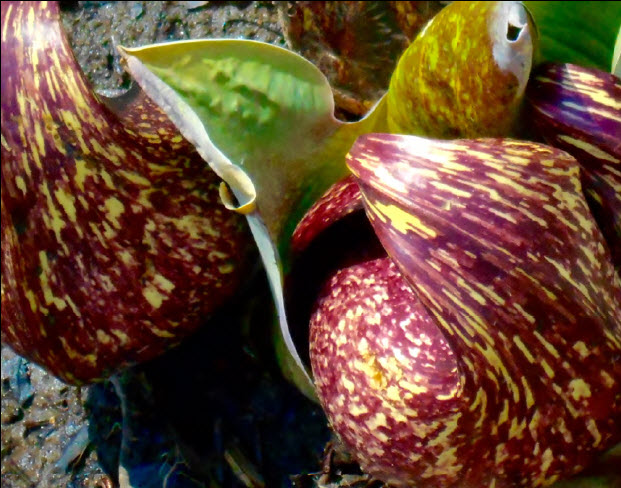
Teddy's wonderful picture of the skunk cabbage just won the runner up to the people's choice award at the National Garden Clubs annual convention in Michigan. Congratulations! 750 people were here and enjoyed your picture.
Mass Hort at the Flower Show -2016- Boston Flower & Garden Show- Photography Youth Division
Class 2 Pollination
Teddy Age 12 2nd Red
Photo: Skunk Cabbage
The name of this plant is Symplocarpus foetidus, also known as skunk Cabbage. Flies and bees pollinate it. It attracts them by releasing a noxious odor from which it gets its name. They are some of the first plants to come up in the spring, and can even melt the snow around it so that it can bloom! This helps give the first pollinators of the spring, the energy they need to mate and survive.
Judges Comment: Feel and smell Spring! The diagonal lines and swirls create movement. A pollinator would complete the story. |
If You Go to a Flower Show with a Gardener

(With apologies to Laura Numeroff)
Neal Sanders, Leaflet Contributor
If you go to a flower show with a gardener, she's going to suggest that the two of you return to the show on Sunday afternoon. She'll also suggest you fill the car with empty crates.
When you return to the flower show on Sunday, you're going to find that she has made a sharp deal with one of the landscape exhibitors to purchase 125 of the heucheras and tiarellas that populated an exhibit she admired. She's going to ask you to carry the now-plant-filled crates back to the car.
When you get home, she'll ask for your help planting the heucheras and tiarellas. But she'll also notice that while they make a nice ground cover, they're only accent plants. She'll ask you to accompany her to a nursery.
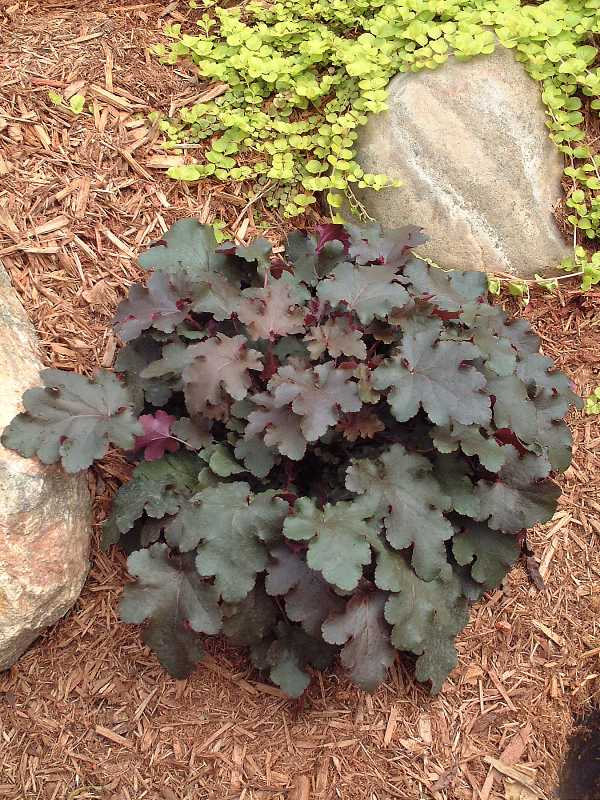 At the nursery, she'll remember how much money she saved on those heucheras and tiarellas. She'll therefore decide that your landscape could also use some fothergilla, viburnum, itea, kalmia, and other native plants. She'll ask your advice on which ones look best. She'll also ask your help in planting them. At the nursery, she'll remember how much money she saved on those heucheras and tiarellas. She'll therefore decide that your landscape could also use some fothergilla, viburnum, itea, kalmia, and other native plants. She'll ask your advice on which ones look best. She'll also ask your help in planting them.
All these new plants and ground covers will require compost. She will order ten cubic yards of compost which will be delivered to the front of your property. She will ask you to move the eight unused cubic yards of compost to the back of the property. You will require lots of ibuprofen.
When the new native plants are arrayed around the property, she'll discover that certain other shrubs, planted the previous year, no longer look attractive in their original locations. She will ask you to dig them up and re-plant them ten feet away.
When the new fothergilla, viburnum, itea, kalmia, heucheras, and tiarellas are in place, she will be exceptionally pleased. She will be so pleased that she will go to a nursery specializing in native perennials and come back with a car laden with dozens of ferns and wildflowers. She will ask your help in planting them in special locations. Some of these locations will require digging through what seems like solid granite.
When the new ferns and wildflowers are planted you will need a long nap. While you nap, she will bake you a chocolate cake with raspberry filling. When you awaken from your nap and enjoy a slice of the cake, chances are you will remember that the next flower show is just ten months away.
--------------------------------------------------------------
Neal Sanders is the author of ten mysteries. His newest, 'How to Murder Your Contractor' has just been published and, together with his other titles, is available in stores and at Amazon.com.
|
Book Review
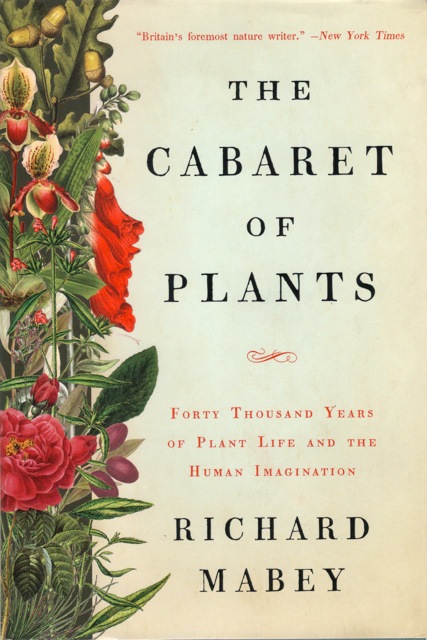
The Cabaret of Plants: Forty Thousand Years of Plant Life and the Human Imagination
by Richard Mabey. W. W. Norton & Company 2015
Reviewed by Pamela Hartford
Richard Mabey is Britain's most celebrated naturalist and science writer. In well over a dozen books written across forty years, he has illuminated the properties of plants and our relationships with them through his first person narrative, infused with curiosity and frank admiration of the vegetable kingdom. As Alistair Cook was the voice of "Masterpiece Theatre", so Mabey has been the BBC's voice of nature and botany.
In The Cabaret of Plants Mabey draws on his years of travel, research and writing, and above all, on his close, patient and persistent observation, to explore dozens of plant species that for millennia have challenged our imaginations, awoken our wonder, and upturned our ideas about history, science and beauty.
The history and canonization of the Fortingall Yew, purported to be older than Stonehenge, reveals how plants have been mythologized by successive societies, as they undergo shifting symbolic appropriation. His stories of the pursuit of the orchid, the defining, binding presence of the hazel bush to the savage environment of the Burren, and the one hundred and fifty nine plants endemic to Crete impresses upon us the fortitude and sheer inventiveness of the vegetable universe.
Many of Mabey's stories are drawn from the particularly heady days of nineteenth century botanizing and plant exploration, when successive discoveries of extraordinary plants inspired profound excitement and appreciation of floral beauty as well as promise of commercial revenues.
The enormous leaves of the Amazonian lily were so brilliantly engineered that their design became the model for the greatest glass building of the nineteenth century - Joseph Paxton's Great Conservatory at Chatsworth.
The simultaneous publication in 1851 of Thomas Moore's A Popular History of the British Fern with the manufacture of the Wardian glass case incited a frenzied passion for ferns that spawned the incorporation of living as well as painted ferns in the decoration of houses and in textiles, to the extent that some varieties were collected to the verge of extinction.
The nineteenth century enthusiasm for plants also inspired respect for them as complex and adventurous organisms, and a sense of real wonder that "units of non-conscious green tissue could have such strange and existences and unquantifiable powers."
Mabey's personal encounters
|
| | A mudflat |
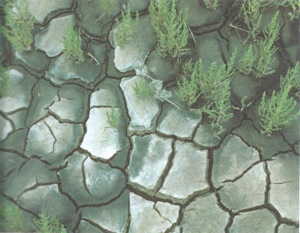
with plants have confirmed for him that plants have an agenda of their own, and have evolved extraordinary ways of compensating for their essential immobility In the case of the marsh samphire, Mabey discovered that "this very desirable wild delicacy had an enthralling existence beyond my use for it - a love of bare, viscous mudflats which was seemingly contradicted by an inherent drive to turn them into dry land.
The vegetable world's survival solutions have enthralled - and instilled fear - since the Paleolithic era forty thousand years ago, when the human mind shifted, became conscious of itself and of the fact of consciousness, and art was born. Over the centuries, depiction of plants in imagery and language has become deeply embedded in our consciousness. The plant world has given us not only the means for our survival, but a rich source of linguistic imagery (root, branch, flowering, fruiting....) Mabey suggests that we can think more clearly about our own lives because we have taken plants "into the architecture of our imagination."
But plants in the twenty-first century have largely been reduced to the status of utilitarian and decorative objects, They have come to be seen as the furniture of the planet, necessary, useful, attractive, but just sitting there, vegetating.
Mabey's goal is to challenge this contemporary view of plants. His book re-awakens us out of detachment and metaphor, into spontaneous imaginative experience of vegetation. In his Cabaret, Mabey showcases encounters between particular plants and particular peoples, with the plans as the stars of the show, authors of their own lives, and humans as the participating audience in an "immense vegetable theatre."
Pamela Hartford is a landscape historian, designer and preservation planner living in Salem MA.
|
Great News! Your support helps us grow!
Thank you for your support with the Globe Grant program that ended April 30. Mass Hort ended up 71 on the leader board out of 3,442 nonprofits, and we will receive $2,875 in free advertising in the Globe. Thank you!!
Also in April, Mass Hort reached 5,000 "friends" on Facebook! Facebook is a great way for Mass Hort to quickly update members on programs and what's going on at Mass Hort. Please help us by "liking" us on Facebook. Click on the link above if you haven't already "liked" Mass Hort.
|
Friends for a Long Time
(from the archives) by Jason Karakehiar
 It is heartening to learn that two venerable organizations cherish a long association and honor the days when they shared the same space. Below is an article From The Bulletin : A Publication of the Boston Mycological Club Since 1897. Volume 70, No. 3, November 2015. It is heartening to learn that two venerable organizations cherish a long association and honor the days when they shared the same space. Below is an article From The Bulletin : A Publication of the Boston Mycological Club Since 1897. Volume 70, No. 3, November 2015.
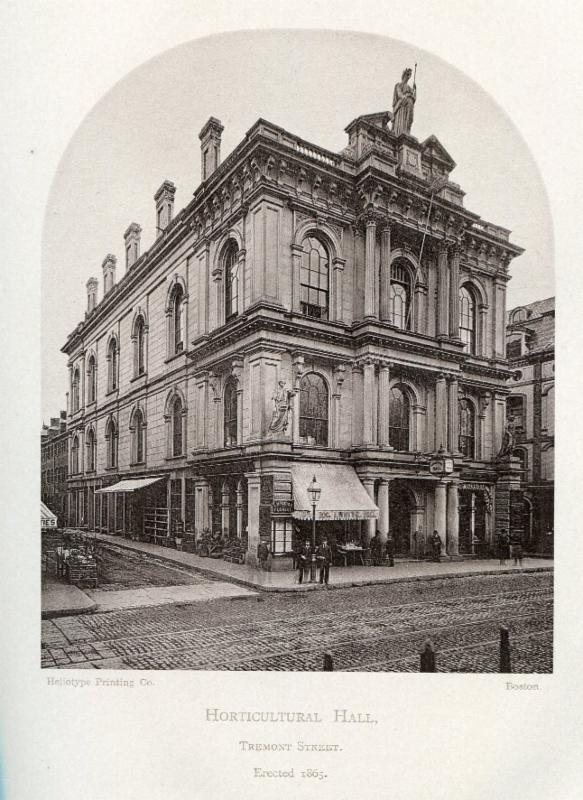
The Boston Mycological Club has had something of a peripatetic existence since its foundation in 1895. Our club is currently hosted by Harvard University in the Herbaria building on Divinity Ave., and this reflects our traditional ties with Harvard's first Professor of Cryptogamic Botany, William G. Farlow (1844-1919) who advised and corresponded with early Club members on mycological topics, and to whom interesting or puzzling 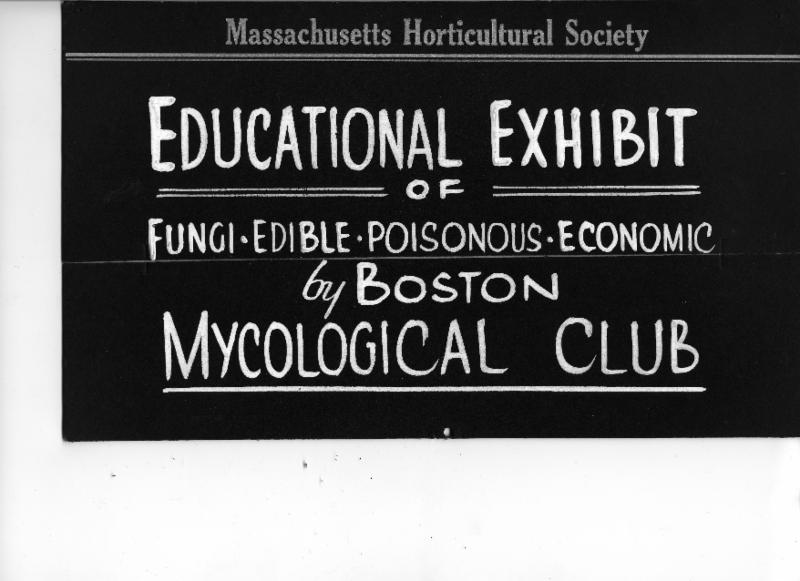 specimens of fungi were delivered for examination. In the earliest days of the Club however, meetings, lectures and other club functions were hosted on the premises of the Massachusetts Horticultural Society and later also by the Boston Society of Natural History (now better known as the Museum of Science, whose museum in the Back Bay at the corner of Boylston and Berkeley Streets is now the current home of Restoration Hardware). Fungi collected by members were placed on display on Saturday afternoons for the benefit and education of the general public in the 2nd Horticultural Hall building on Tremont Street, erected by the Massachusetts Horticultural Society in 1865. This ornate three-story Greek revival building displayed on each ascending floor of its exterior ascending orders of columns in the Doric, Ionic and finally Corinthian styles on the uppermost floor which terminated in a richly carved pedestal supporting a statue of the Goddess Ceres, the Roman Goddess of Agriculture. Flanking the entrance way were statues of Pomona and Flora, the Roman goddesses of fruit and flowers respectively. It was in this building on August 24, 1895 where around a dozen men and one woman met to discuss and formerly vote into existence the Boston Mycological Club. The Mycological Club held its meetings in the Hall, and the Saturday exhibitions of fungi were occasion for a quite a bit of activity including impromptu lectures on edible and poisonous fungi using actual specimens. Hollis Webster, the Club's first secretary and an ardent promoter described in a December, 1896 essay in The American Kitchen Magazine that these meetings were popular and well attended with "Many ... expressions of surprise from good people of intelligence on learning that for years they have had delicious dinners and suppers growing neglected at their very doors, and often trampled underfoot." Webster went on to narrate a part of an exchange held with a visitor to one of the Saturday exhibitions which is worth relating here as it further contrasts our current culture's gourmet appetite for mushrooms with that of our Club forebears: specimens of fungi were delivered for examination. In the earliest days of the Club however, meetings, lectures and other club functions were hosted on the premises of the Massachusetts Horticultural Society and later also by the Boston Society of Natural History (now better known as the Museum of Science, whose museum in the Back Bay at the corner of Boylston and Berkeley Streets is now the current home of Restoration Hardware). Fungi collected by members were placed on display on Saturday afternoons for the benefit and education of the general public in the 2nd Horticultural Hall building on Tremont Street, erected by the Massachusetts Horticultural Society in 1865. This ornate three-story Greek revival building displayed on each ascending floor of its exterior ascending orders of columns in the Doric, Ionic and finally Corinthian styles on the uppermost floor which terminated in a richly carved pedestal supporting a statue of the Goddess Ceres, the Roman Goddess of Agriculture. Flanking the entrance way were statues of Pomona and Flora, the Roman goddesses of fruit and flowers respectively. It was in this building on August 24, 1895 where around a dozen men and one woman met to discuss and formerly vote into existence the Boston Mycological Club. The Mycological Club held its meetings in the Hall, and the Saturday exhibitions of fungi were occasion for a quite a bit of activity including impromptu lectures on edible and poisonous fungi using actual specimens. Hollis Webster, the Club's first secretary and an ardent promoter described in a December, 1896 essay in The American Kitchen Magazine that these meetings were popular and well attended with "Many ... expressions of surprise from good people of intelligence on learning that for years they have had delicious dinners and suppers growing neglected at their very doors, and often trampled underfoot." Webster went on to narrate a part of an exchange held with a visitor to one of the Saturday exhibitions which is worth relating here as it further contrasts our current culture's gourmet appetite for mushrooms with that of our Club forebears:
'"Is that great thing good to eat?" asked a farmer's wife, one Saturday, pointing to a puffball as big as watermelon that lay on one of the platters. "Why, my boy found one of those in the barnyard right by the watering-trough, and smashed it with his fists. We made him wash his hands in a pail of water, and then we wouldn't let the horse drink out of the pail for fear he'd be poisoned."'
The themes of a neglected and overlooked food source in wild fungi and the task of educating a general public which was becoming increasingly interested in eating mushrooms to distinguish between edible and poisonous species, coupled with the scientific pursuit of documenting the localities and seasonality of our local fungal flora, preoccupied the efforts of early Club members. To these ends, prizes were awarded by the Horticultural Society for the best collections in the months of July, August and September and lists of the scientific names for the fungi exhibited were drawn up in record logs. An illustrated lecture was given in the Hall's 300 seat auditorium in the winter of 1895 as well as an exhibition of colored drawings of fungi by the Club's artistically inclined members. In 1901 the Horticultural Society, having outgrown the Tremont Street location, moved to a 3rd location in the Back Bay at the corner of Huntington and Massachusetts Avenues, across from Symphony Hall, and the old building was soon after demolished, though the statuary was preserved to a degree and are at the Society's headquarters now located in Wellesley. The Club moved with them and enjoyed the early through middle-decades of the 20th century with a home at Horticultural Hall.
|
|
|
|
|
|
|