|
 For exceptional benefits to help you in the garden- Join Today! If you are a Mass Hort member - please recommend membership to a friend! Forward this newsletter. CLICK HERE TO JOIN |
|

SPREAD THE WORD,
HELP US GROW!
Refer a new member to Mass Hort and receive a coupon to attend a Thursday Night at the Hort lecture for free!
|
|
|

You Shop - Amazon gives to Massachusetts Horticultural Society!
Amazon will donate 0.5% of the price of your eligible AmazonSmile purchases to Massachusetts Horticultural Society whenever you shop on AmazonSmile.
AmazonSmile is the same Amazon you know. Same products, same prices, same service.
Begin shopping
www.smile.amazon.com
|
|

Letter from the President
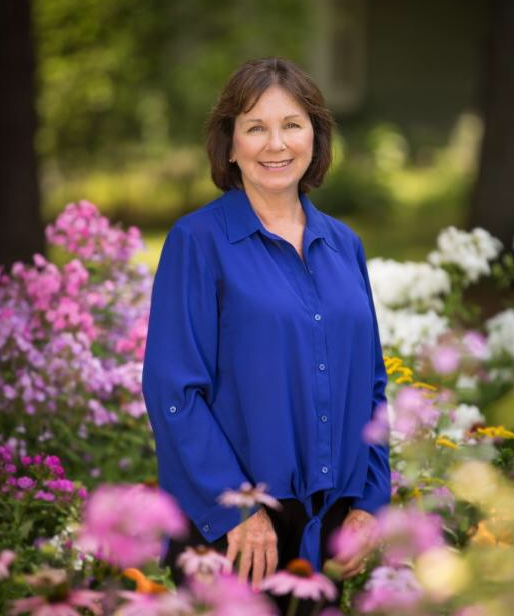 Greetings!,
The Flower Show is upon us! Everyone is busy picking up plants, getting show ribbons, lining up volunteers, speakers, and competitors for the show. Finishing touches are being collected for Mass Hort's exhibit, Nature's Classroom.
This annual rite of spring is a flurry of activity and I hope you will visit the show and enjoy a breath of spring. Public transportation to the Seaport World Trade Center is easy from South Station, by jumping on the Silver Line. Whatever mode of transportation you use, we hope to see you there. Please stop by Mass Hort's membership booth and say hello.
A hearty thank you to the committee chairs and committee members, and all the volunteers and staff that help pull the flower show together!
Happy Spring,
Kathy Macdonald
|
Attention Globe Subscribers 
The Boston Globe GRANT (Globe Readers And Non-profits Together) program is back, giving subscribers a super easy, no-cost way to support the Massachusetts Horticultural Society. With your continued support, help Mass Hort be one of New England's non-profits recognized this year! The Boston Globe grants advertising space to nonprofits, based on the number of votes the nonprofit receives. Help MASS HORTICULTURAL SOCIETY jump to the top of the leaderboard! Thank you. CLICK HERE TO VOTE FOR MASS HORTICULTURAL SOCIETY.
|
Nature's Classroom
By John Forti
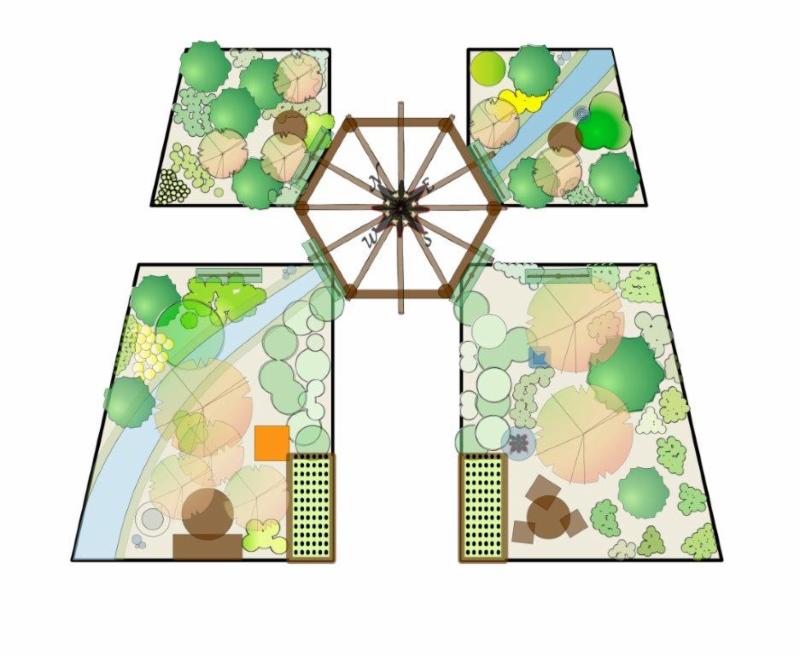
The theme of the 2016 Boston Flower & Garden Show is "Nurtured by Nature." Building upon the guiding philosophy that we are all enriched by a healthy reciprocal relationship with the natural world, our Mass Hort exhibit is entitled "Nature's Classroom." The landscape we are creating is designed to represent the garden as an outdoor classroom where families can learn and play together in nature.
As gardeners, we can use this exhibit as a model to create happy, healthy environments for people, plants, and pollinators. The plantings throughout the garden are designed to improve habitat by providing seasonal seeds, fruits, shelter or nesting. On either side of the entryway path, raised beds containing herbs, veggies and edible flowers conspire to bring kids and wildlife out to eat and play together in a yard designed for outdoor fun. Locally gathered saplings are used to make old fashioned wattle beds, furniture and structures which remind us that found and gathered objects can make beautiful and sustainable garden features. The beehive and pollinator plants artfully remind us that we all have a role to play in environmental stewardship.
The rustic gazebo at the center is surrounded by beds
oriented to the North, South, East and West. Since some plants prefer sun, and others shade, each bed is designed to highlight plants that thrive best according to their exposure to the sun. The sundial is an additional reminder of connections between plants, ecosystems and the sun.
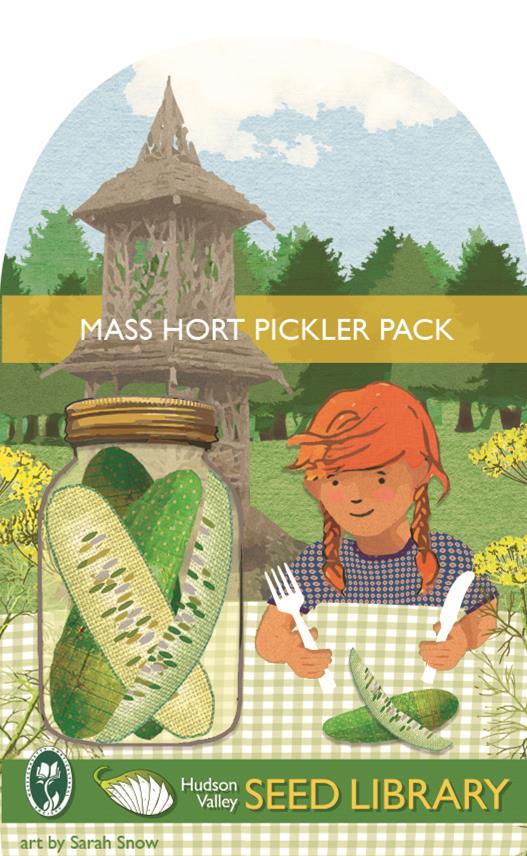 Decorative elements like the granite art pieces, carved wooden sculptures, bird houses, along with a range of playful kid creations also inspire families to use free and found objects to make engaging and sustainable garden features. Families can enjoy o ur discovery guide to help kids navigate all of our horticulture exhibits. You can find Mass Hort's Flower Show Discovery Guide here, and print a copy ahead of time, or get one at the Membership Desk at the show. Each family that completes the process will receive a free Mass Hort "Pickler Pack" containing heirloom Mammoth dill and Boston Pickling cucumbers. |
Amateur Horticulture Competition - Mass Hort at the Flower Show
HISTORY
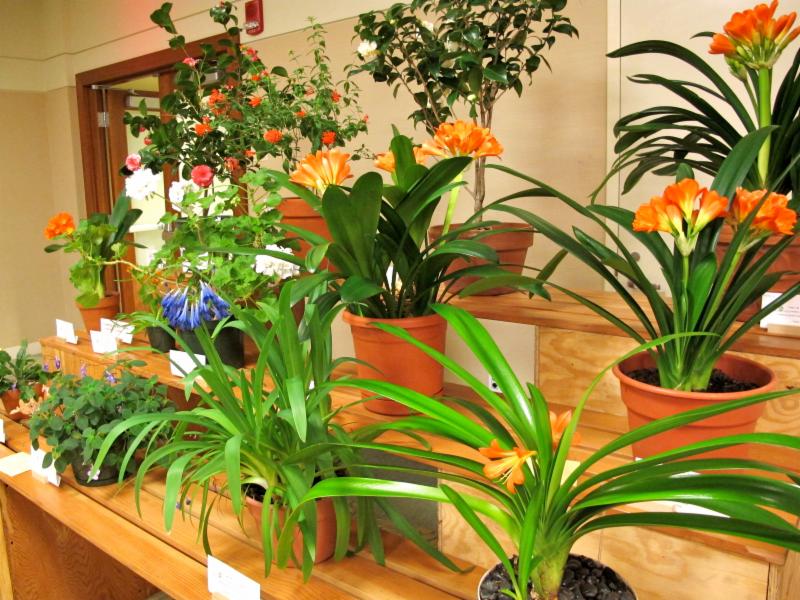
Since our founding in 1829, the Massachusetts Horticultural Society has been instrumental in introducing new plants for the cultivation, use and enjoyment of the public. Throughout our history, sharing plants, flowers, fruits, and vegetables has been central to our education and outreach missions. By 1834, an annual three-day horticultural exhibition had become a fixture at Faneuil Hall, with prizes given for the most outstanding specimens on display. Over the past century, the Boston Flower and Garden Show has grown and seen many transformations. In 1961, we were proud to introduce the Amateur Horticultural Competition to provide the public an "opportunity to exhibit the plants and flowers they raise in their homes, greenhouses and coldframes." This year, the 55th anniversary of that effort, is a good time to celebrate the leadership of the women who encouraged their friends to demonstrate the best they could do during that era's hugely popular New England Spring Flower Show.
TODAY
The Massachusetts Horticultural Society continues to nurture the passion for plants by providing this forum to showcase home gardeners' hard and loving work striving for excellence in plant cultivation. We encourage all amateur horticulturalists (those that do not grow or sell plants as the major part of their income), young and old, to enter their plants in this publicly displayed competition. The range of plants presented each year fascinates the public and inspires new gardeners to grow their own beautiful plants and to cultivate a love of horticulture.
THE COMPETITION
Do you have a plant or two that brings you great joy and want to display that for others to see? Help us spread your appreciation, love and dedication to horticultural excellence by entering our competition THIS year!
CRITERIA FOR ENTRY - Plants that are clean and disease and pest free
- Plants that have been cultivated by their owner for 90 days or more
ENTRY PROCESS Obtain our Show Schedule and Information Book from the Mass Hort website OR by calling 617-933-4900 - Fill out an entry card
- Bring your plant to the Seaport World Trade Center between noon-8pm on March 14th
JUDGING PROCESS The judges are highly trained either by a plant society, the Garden Club of America or the National Garden Clubs. Judges use a scale of points to evaluate each plant with greatest weight being given to Cultural. The Scale of Points is as follows: - Cultural Perfection: vigorous, healthy, well-formed plants, free of disease and pest damage
- Distinction: meritorious in aesthetic appeal
- Bloom: quality and quantity of bloom
- Fruit: quality and abundance
- Maturity: size of plant and foliage characteristic of mature specimens
- Difficulty: level challenge to the home grower
- Rarity: seldom grown or exhibited
|
|
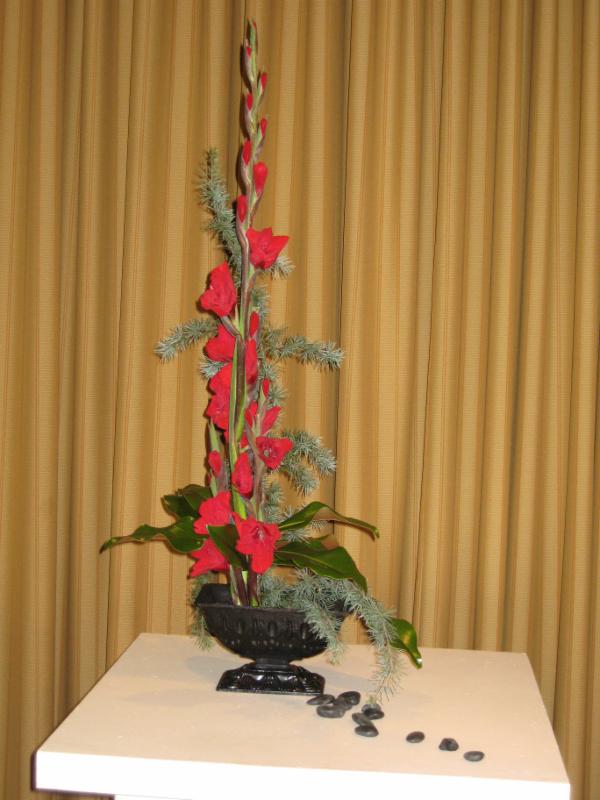
From exotic masks and hovering butterflies crafted entirely of dried plant materials to mass designs reflecting colors from dawn to dusk , Metamorhosis at Mass Hort at the Flower Show promises to be a breath of spring for show visitors. Sponsored by Mass Hort at the Flower Show,
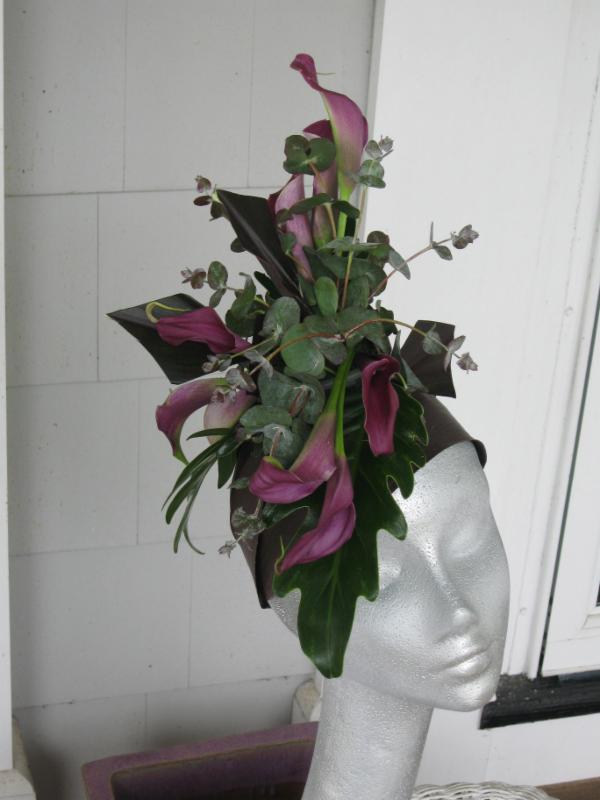 Design Division II, is open to anyone with an interest in floral design. Come see a display of creative artistry reflecting diverse design styles and themes. Why wait for spring? It is here at the Boston Flower and Garden Show!
|
Ikebana International at the Flower Show

Ikebana, a Japanese art of flower arrangement, is more than simply putting flowers in a container or a floral decoration. It is a disciplined art form in which the arrangement is a living thing where nature and humanity are brought together. Its philosophy adheres to the importance of developing closeness with nature. Its heart is the beauty resulting from color combinations, natural shapes and graceful lines.
This year's Flower Show theme, "Nurtured by Nature", connects more with Nature than themes of years past. As we all know, Nature is always changing. Plants grow and put forth leaves, flowers bloom, and berries are borne regularly and repeatedly throughout the seasons. Nature has its own rhythm and order. The awareness of this is the first step in involving oneself in Ikebana. There are various schools of Ikebana, but here at our Flower Show we will represent Ikenobo , Ohara and Sogetsu . Many practitioners of Ikebana feel that the spiritual aspect of Ikebana is very important. One becomes quiet when one practices Ikebana. It helps you to live "in the moment" and to appreciate things in nature that previously had seemed insignificant. It is an asymmetrical form and the use of empty space as an essential feature of the composition. A sense of harmony among the materials, the container, and the setting is also crucial. These are characteristics of aesthetics that Ikebana shares with traditional Japanese paintings, gardens, architecture, and design. |
 March Hort Hints March Hort Hints
by Betty Sanders
www.BettyOnGardening.com
You can hear Betty speak at this year's Flower Show on Friday, March 18 at 1:30 p.m.
Last call, First call. Early March is your last opportunity to order seeds and clean tools before the season gets underway. If you've put off your seed order until now, you will find seed houses have sold out of some popular varieties. Tools that aren't clean, sharp, and in good repair will make your end-of-winter cleanup and spring prep work harder. Now is also the best time to get annual maintenance done on lawn mowers and rototillers. Shops can do any work on your equipment in a few days. When the warm weather comes, the turnaround time can stretch to several weeks.
Clean up fallen branches. The two wind/rain/sleet/snow storms in mid- and late February left yards littered with downed branches and even trees. If you remove debris while the ground is still frozen, you'll prevent leaving footprints that add to soil compaction later. Compacted soil lacks the oxygen to allow plant growth.
 |
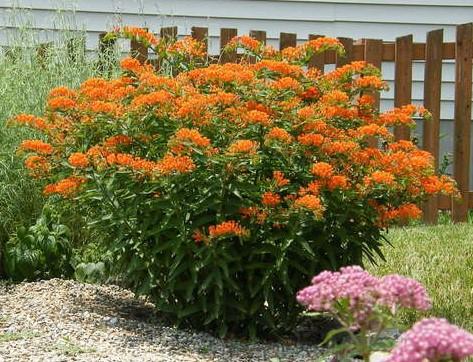
| | Asclepius butterfly weed attracts bees and butterflies |
Pruning time, but stay away from spring blooming plants. While the ground is frozen, do go into your yard and remove any branches on trees and shrubs damaged by winter storms. You can safely prune most fruit trees and shrubs (blueberries, raspberries) now. Avoid pruning any spring-flowering trees and shrubs. They've already set their buds and all you will do is reduce the number flowers that will bloom.
Prune back and remove rose canes and vines that were left in place last fall. They need to go away so the new growth can emerge in late March and April. Do not be hasty in removing protective mulches or covers from roses, perennials, bulb beds and so forth. There's no way to predict the date of the last snow or hard freeze, and those mulches are your best protection.
Plant dormant roses as soon as the ground can be worked. If you are thinking of planting new trees or shrubs this year, remember the earlier you can get them in, the more time they will have to establish their roots before the blistering heat of summer.
|
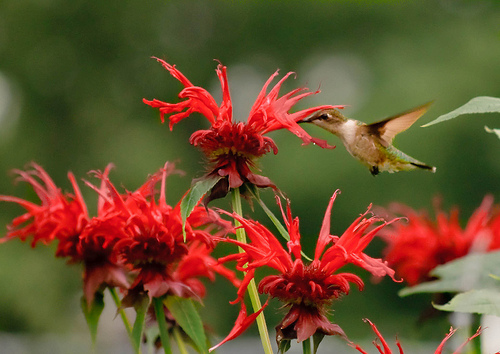
| | | Monarda bee balm attracts not just bees but hummingbirds | |
Pollinators are all in the news because we've been awakened to the drastic drop in numbers of everything from native bees to Monarch butterflies. Bees are being killed not by some single pesticide (products to kill insects) or herbicide (products to kill unwanted plants and weeds) but, rather, by the accumulation of chemicals that we put on our lawns, gardens and trees, and in our waterways. Since pollinators are responsible for one third of all the food you eat, cutting down on the use of lawn and chemicals is a vital first step.
An equally important step is planting food sources - pollen-rich plants for them to live on - while allowing a few weeds to survive too. Milkweed is the only plant that monarch butterfly young can eat as they grow from caterpillars to butterflies. So, when you are planning your garden this year, make certain to include as many pollen-rich plants to feed your friends and even a few weeds to give them a start in life. We all need to eat, and having butterflies ornament our garden is more than just a pleasure.
Think native. Finally, not all flowering plants provide useful pollen. Many plants imported to North America from
|
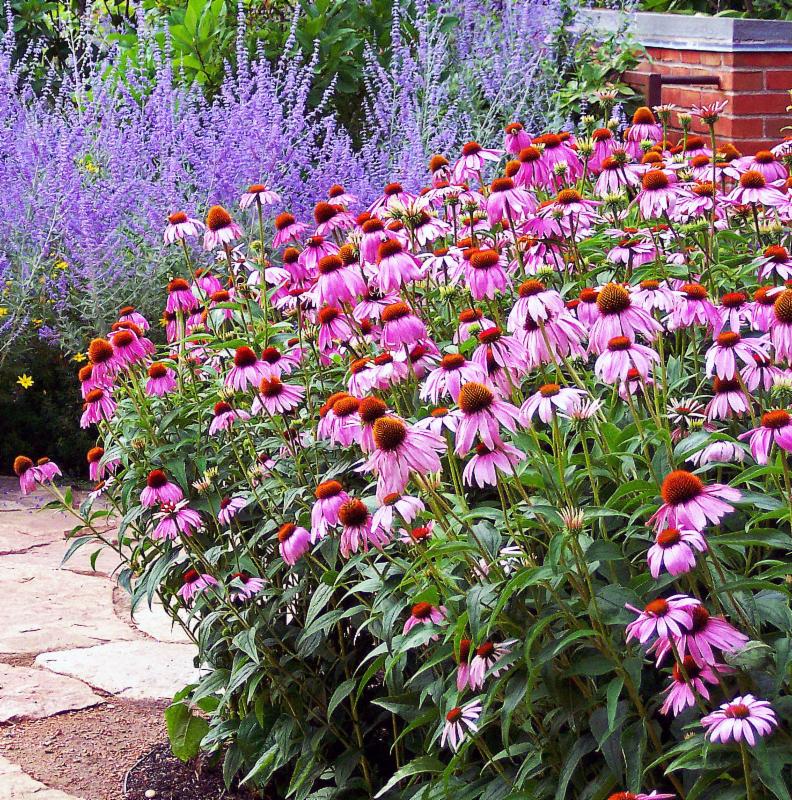
| | Echinacea cone flower is easy to grow, drought tolerant, and great source of nectar. |
other parts of the world produce pollen that our insects cannot use. Moreover, some of the new cultivars have had the pollen bred out of them. They have pretty flowers for us to look at, but they're a sterile environment for insects. To be certain you are offering a good source of food, plant some native plants, such as butterfly weed (a very pretty flower made prettier by its visitors), Echinacea (cone flower) and rudbeckia (black eyed susan). And don't forget the bright red flowers, like red salvia or bee balm (monarda) for the hummingbirds.
-----------------------------------------------------------------------------------
You can see more of Betty's horticultural advice at www.BettyOnGardening.com. Betty is also the 2015-2017 President of the 11,000+ member Garden Club Federation of Massachusetts.
|
Book Review
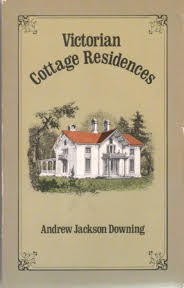
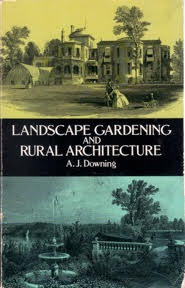
Apostle of Taste: Andrew Jackson Downing 1815-1852
By David Schuyler
Amherst, MA: Library of American Landscape History, 2015
Andrew Jackson Downing: Essential Texts
Edited by Robert Twombly
New York: W. W. Norton, 2012
Reviewed by Pamela Hartford
Andrew Jackson Downing's immense influence on American life in the middle decades of the nineteenth century is gradually being revealed. Overshadowed by focus on Frederick Law Olmsted's prolific career as the father of American landscape architecture, and by the sheer magnitude of his extant work, and by attention paid to high style practitioners of the Gothic and revival trends in architecture, revelations of Downing's impact parallel a growing investigation of the significance of the vernacular.
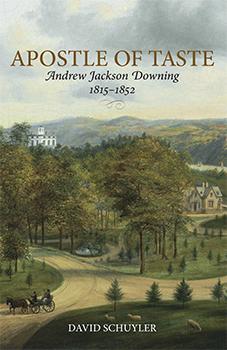
David Schuyler's biography, Apostle of Taste, first published in 1996, built on existing but largely unpublished research by Downing scholar George Tatum. It was enhanced by Schuyler's deep digging in correspondence and memoirs, newspaper and magazine articles, public records, and above all, Downing's own writings. Schuyler gives us a portrait of a gentle, self-effacing man who gave freely of himself while working diligently for a moral cause. Downing felt that when Americans learned to make their holdings beautiful, or better, 'picturesque,' they would commit themselves to a place and neighborhood, build family and community ties which would in turn hold the Republic together. Schuyler shows us how Downing grew from a horticulturalist into a big picture thinker and change agent.
Downing's popularity was driven by the circumstances of his most prolific years: the antebellum period, which spanned the years from the time of the nation's recuperation, in 1845, from the panic of 1837, until the economic effects of the panic of 1857 and the Civil War took hold. A rapidly expanding middle class could afford to leave the urban centers of commerce (by means of steam locomotion) where they had become successful, seeking 'rural' places to build a home, raise a family and lead exemplary and healthy lives. The rural places in many instances were available due to the shrinking of farms. A media explosion of newspapers, magazines and books disseminated ideas to an eager audience.
This moment could be compared to the post World War II years of building and selling the latest in homes and appliances to the parents of baby boomers, or to the seeking (and shopping) endlessly for "A Good Thing" by the baby boomers themselves. Schuyler's choice of "apostle" is deliberate and truly apt, as Downing was not in any sense a "purveyor" of taste.
The Library of American Landscape History has reissued David Schuyler's biography in celebration of the bicentennial of Downing's birth. Schuyler himself used the occasion to organize a day-long symposium in October in Poughkeepsie, New York, the location of Springside, the only extant landscape design by Downing. Academics speaking at "The Worlds of Andrew Jackson Downing: A Bicentennial Celebration" symposium examined Downing's ideas and influence through lenses of environmental history, architecture, the fine arts, landscape architecture, history, the decorative arts and historic preservation. Over the course of the day they revealed, as is often the case when the spotlight shines on the vernacular, that what turns out to be significant has been right in plain sight all along.
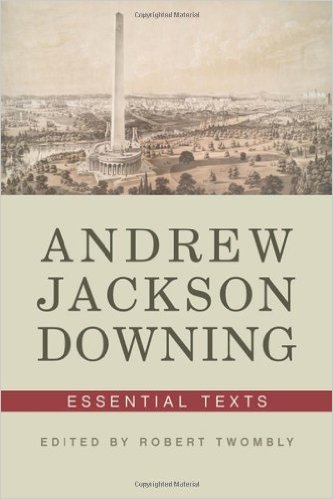 Robert Twombly 's collection of writings by Downing is a perfect companion to Schuyler's biography. Largely drawn from the seventy four articles published in "The Horticulturist, or The Journal of Rural Art and Rural Taste," Downing's recommendations and rationales are referenced in the biography and laid out for the reader to experience firsthand. In addition to an engaging introduction, "Architect and Gardener to the Republic," each entry benefits from a very thoughtful contextual observation by Twombly, making this book a doubly informative trip into the mindset of the middle class of the nineteenth century.
Together, the books paint a picture of the landscape of our not so distant past, which helps us read the landscape of our present.
Pamela Hartford is a landscape historian and preservation consultant living in Salem, Massachusetts.
|
Bundle Pricing for Education Programs!
Mass Hort is offering six classes that will be useful for the homeowner. You may register for any of these classes
 individually, but new this spring, you can register for the entire bundle, and receive a discounted rate. individually, but new this spring, you can register for the entire bundle, and receive a discounted rate.
The classes begin Thursday, March 31 and run through Saturday, May 7. They include four Thursday Night lectures and two hands-on workshops. Register Now! The lectures are: Vegetable Gardening for Everyone on March 31 at 7 p.m. This lecture will help you plan for a bountiful veggie garden, covering plant choice, soil amendments and site selection. Tree Care 101 on April 7 at 7 p.m. Is a lecture that will cover the basics of caring for landscape trees and their health. Seed Starting Lecture on April 14 at 7 p.m. Get a jump on starting your own plants from seed, which is less expensive than buying transplants and offers a wider range of possibilities. Seed Starting Workshop on April 16 at 10 a.m. This workshop will provide a hands-on experience of how to start and care for seeds and seedlings: vegetables, annuals and perennials. Organic Lawn Care on April 21 at 7 p.m. A review of a no-nonsense approach to having a chemical free lawn, and a clarification of much of the rhetoric involved in using chemicals. Daylilies and Perennial Transplanting on May 7 at 10 a.m. This workshop will be an introduction to a favorite perennial, the daylily and include a hands-on program of dividing and transplanting perennials of all kinds. For the discounted registration cost, register here. |
Cultivating Community In School Gardens 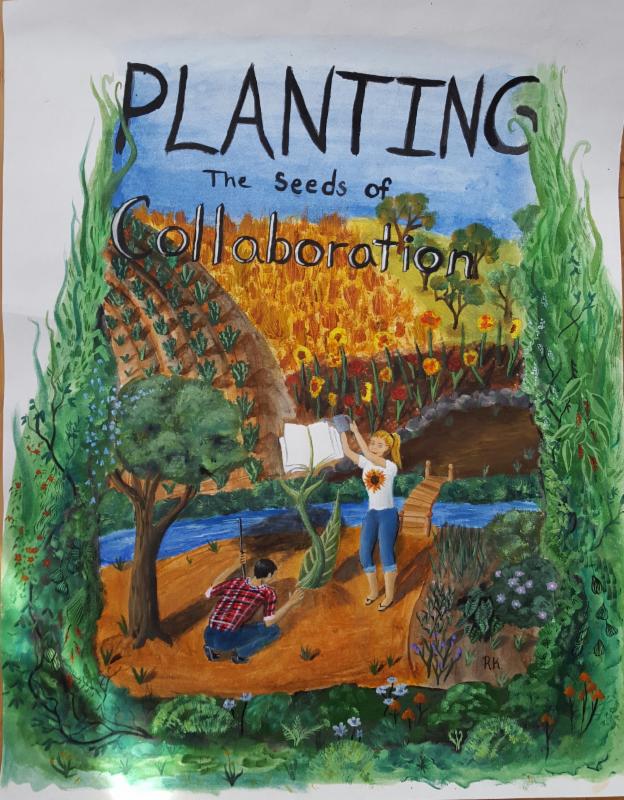
School Gardens are magical places where students, teachers, families and volunteers discover their natural world, their food system, as well as beauty and a shared history. Because of all they have to offer, Mass Hort was thrilled to host two events in February that focused on progressing the school garden movement forward.
We spent one day with professional facilitator Lisa Hirsh of Lisa Hirsh and Associates, who organized our education staff and two dozen leaders from organizations that focus on school and youth gardens. Attendees came from every corner of Massachusetts. Everyone was excited to make connections in their field and brainstorm how we can work together to promote school gardens, support programs already in existence, and create a richer experience for students learning about their natural world-both on and off school grounds. Plans are moving forward to implement some of the ideas generated that day, such as a 'mentor bank' of experts who will be available to support gardens throughout the region. It was a high-energy day, and it brought together a community of leaders.
On Friday, February 19, we were excited to host our second annual conference: Cultivating Community in School Gardens. We hosted 130 people from all over the region, with established gardens and those just breaking ground. The schedule was full of workshops, networking and even visits to our neighbors, the Natick Community Organic Farm. Presenters represented school garden programs across Massachusetts (and Slow Food USA's National Program).
Feedback from the conference has been great, and we are excited to continue our support by offering workshops for educators and school garden volunteers. These workshops will pair practical garden skills with activities that can be used in classrooms. Mass Hort's school garden offerings are growing, and we are thrilled that our community is rallying around this wonderful movement. |
Spring Ahead
by Neal Sanders
Leaflet Contributor
You can see Neal speak at this year's Flower Show on Friday, March 18th at 11:30 a.m.
|
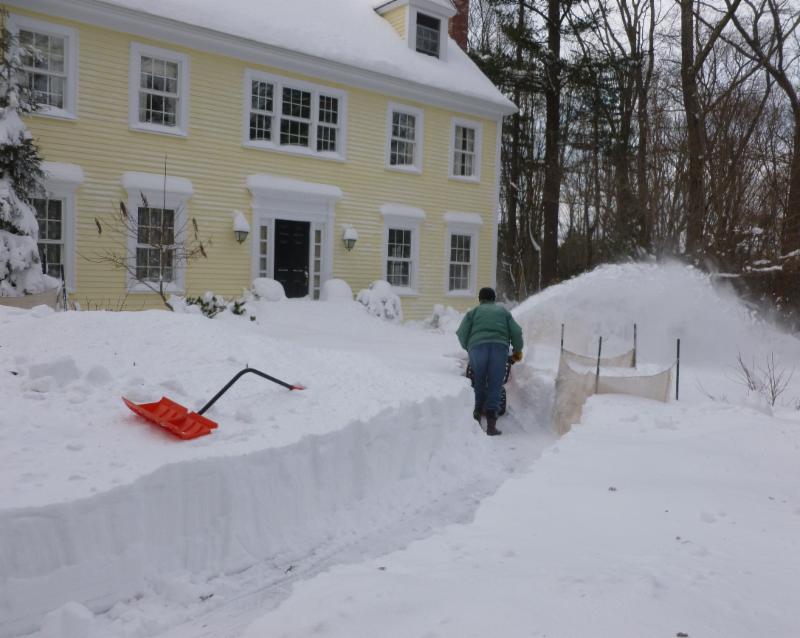
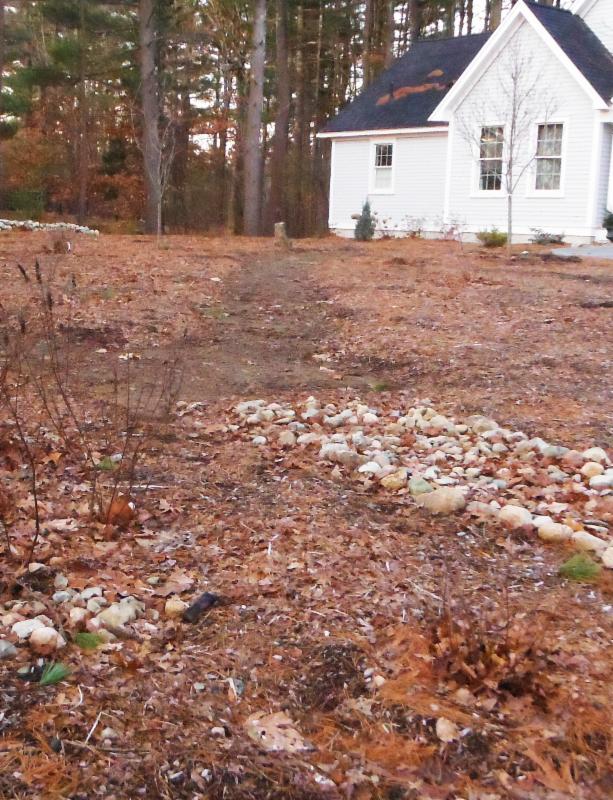
| | | The scene a year ago this week | |
What a difference a year makes. In early March of 2015 we were desperately looking for places to put snow around our house and driveway. Our roof groaned under more than three feet of solidly packed snow (our skylights would reap our failure to take action). Meanwhile, alongside the Convention Center in South Boston, a snow mountain 70 feet tall had taken up residence. Its lease would not expire until the middle of July.
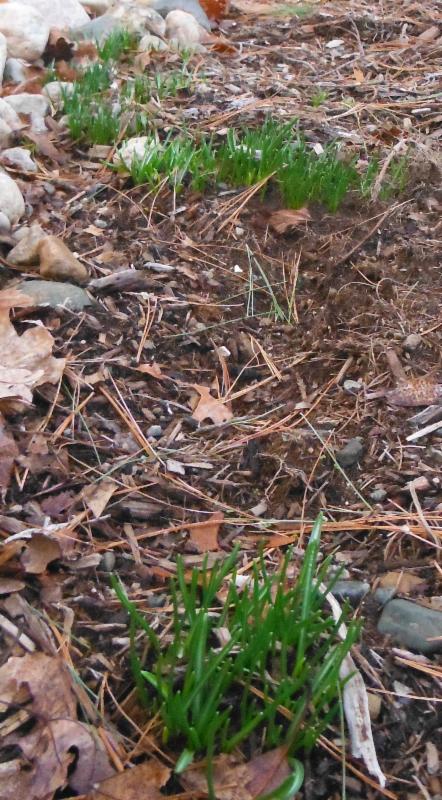
On the last days of February 2016, Betty and I created a stupendous pile of broken pine and oak branches from the month's twin storms - rain- and wind-driven rather than snow - while treading carefully to avoid sinking into mud on the paths around our home. In picking one branch I uncovered the dark green of crocus foliage, with flowers to follow by mid-month. Snow? Yes, we remember it snowing this winter. Vaguely.
|
| | Our lawn is a parfait of chopped leaves and mulch |
This El Niño winter is giving us a much-needed head start on completing the landscaping we began last summer. Then, the later-than-expected completion of our home and unplanned requirement for replacing a quarry's worth of loose rock with usable topsoil meant that, by the time we were ready to start landscaping, the "good" trees we wanted were out of stock. Rather than put in second-choice saplings, we left empty spaces.
Now the problem, naturally, is that the nurseries we favor won't have in their stock of trees and shrubs until mid-March. We have a shopping list. (Boy, do we have a shopping list.) Betty spent the winter reading up on recent introductions of native plant cultivars. As a result, what was once a quest for the perfect forest pansy redbud (cercis canadensis) has broadened into wanting to inspect a gold-leafed variation on that hardy native tree before settling on the one that will occupy a place of honor in front of our house. Multiply that example by four trees, 40 shrubs, and an army of perennials, and you get a sense of what is our future by way of choices - and work once the choices are made.
|
| | | Crocus should be blooming any day now | |
There is also a "small" question about what surrounds those trees and shrubs. The default choice at most homes is, of course, a grass lawn. We're holding fast to our principled decision regarding a lawn-free property. Last summer we spread a thick covering of bark mulch over our topsoil, with packed-soil pathways separating beds. At the end of autumn, we begged fifty bags of leaves from our neighbors and mowed those leaves into a fine mulch. This spring, we'll rototill those two mulches into the top few inches of soil, then top that parfait with leaf mold. This is what comes from adhering to principles.
But early spring is also for dreaming and one way of doing that is to head for the Flower Show. If I've learned one thing over the years, it is that no two editions of the Flower Show are alike. Each one brings new ideas, new gadgets, new things to gawk at. Part of your Mass Hort membership benefits is tickets to the show. Use them. And come away with some new vision of how to make your garden a more interesting place.
--------------------------------------------------------------
Neal Sanders is the author of ten mysteries. His newest, 'How to Murder Your Contractor' has just been published and, together with his other titles, is available in stores and at Amazon.com.
|
|
UMass Stockbridge Offers Accredited Courses at Mass Hort
The Stockbridge School Agriculture (UMASS) will be using the "eastern campus" of the Massachusetts Horticultural Society at Elm Bank to teach a series of accredited courses.
The first class, on Plant Identification, will begin in May and is a one credit course. There will be more one credit courses to follow this fall, and another during winter. To enroll or learn more about the course, please visit this site: http://www.umassulearn.net/classes/summer-2016?view=class&clid=15121.
The Massachusetts Horticultural Society, many years ago, was instrumental in creating the Stockbridge School of Agriculture ! Its Board of Trustees and staff are very excited to join forces with such an exemplary college, and Stockbridge director, Westerly Auttio, is pleased to have an eastern exposure for Stockbridge to offer classes through its outreach program for many years to come. Mass Hort is dedicated to providing educational opportunities for learning about the benefits of plants and the environment, as well as healthy living. Please consider looking into not only this new Stockbridge accredited class, but also our other proactive inspirational classes taught at Mass Hort at Elm Bank. We look forward to serving you with the best education that we can, and we appreciate all of our volunteer support on every level. Please check out our web site today for more information.
Yours in healthy outside living,
Mark Ahronian ( MCH )
Education Chair, Massachusetts Horticultural Society
|
|
|
|
|
|
|