|
 For exceptional benefits to help you in the garden- Join Today! If you are a Mass Hort member - please recommend membership to a friend! Forward this newsletter. CLICK HERE TO JOIN |
|

SPREAD THE WORD,
HELP US GROW!
Refer a new member to Mass Hort and receive a coupon to attend a Thursday Night at the Hort lecture for free!
|
|
|

You Shop - Amazon gives to Massachusetts Horticultural Society!
Amazon will donate 0.5% of the price of your eligible AmazonSmile purchases to Massachusetts Horticultural Society whenever you shop on AmazonSmile.
AmazonSmile is the same Amazon you know. Same products, same prices, same service.
Begin shopping
www.smile.amazon.com
|
|

Letter from the President
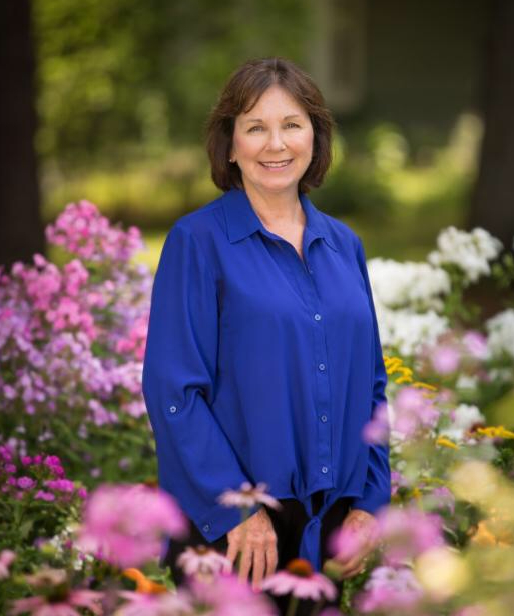 Greetings!,
I am looking out my window as the snow is piling up. Heavy with snow, many branches are coming down at Elm Bank and in my neighborhood. It's time to think spring and about the flower show!
The photography committee, led by Chris Woods and Christine Paxhia, have already juried the entries for the show, with over 175 entries this year for both adult and youth divisions. Merrily Rowse, Floral Design, Division I Chair, and Marisa McCoy, Floral Design, Division II Chair, are filling up the last of the classes so designers can demonstrate their skills and love of floral design. Amateur Horticulture chaired by staff member, Hannah Traggis, and with the experienced help of Diane Cullen, Carri Waterman, Libby Moore, and others, is getting ready for its exciting debut on the floor of the main exhibit hall at the show. It is only fitting that Am Hort is on the main floor this year--it's the 55th Anniversary of the Amateur Horticulture Exhibit at the flower show (see Maureen Horn's article below, Catching up with the Last Half Century). Ikebana, chaired by Minal Akkad will delight audiences with the Ikebana display. Mass Hort's garden exhibit committee, chaired by John Forti, and working in collaboration with Terry Duffy of Weston Nurseries, Ahronian Landscape, and staff members David Fiske and Clark Bryan will present "Nature's Classroom" for all to enjoy.
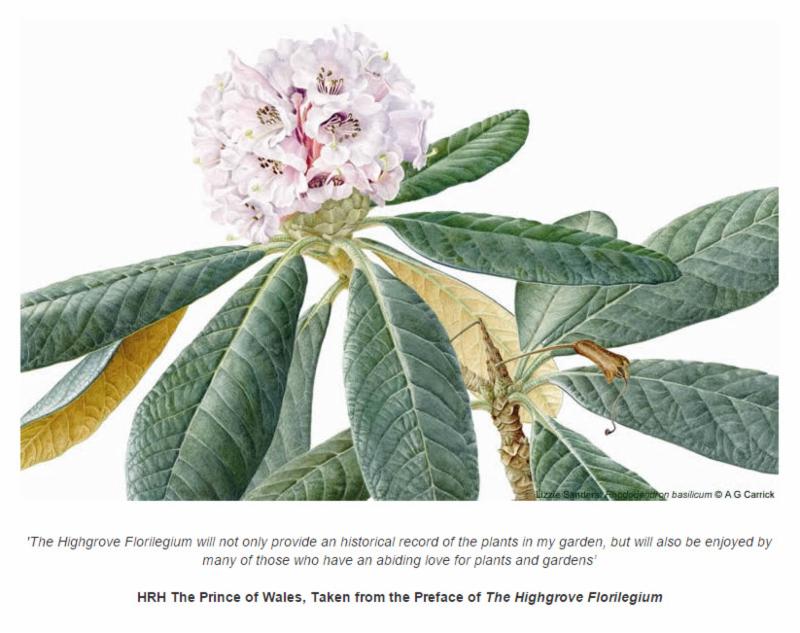
Next week the Highgrove Exhibit will open Thursday evening, February 11 from 6 - 8 p.m. in the Hunnewell Carriage House. Thank you to Maureen O'Brien, Chair of the Library Committee, Maureen Horn, librarian, and others who have helped to bring this unique exhibit of botanical art from HRH The Prince of Wales' garden. The reception will include docent commentary by Susanne Dowdall, volunteer MFA docent, music by the Maverick's string group, wine and hors d'oeuvres, and a display of rare botanical books and botanical giclees from Mass Hort's collection. To sign up, please click here.
Thanks again for all your support.
Best wishes,
Kathy
|
|
Watch your post office box for
your Flower Show Tickets
Tickets will be mailed the week of February 15!
Boston Flower & Garden Show will be held March 16 to 20. Mass Hort's flower show committees are busy with the amateur competitions of Floral Design, Horticulture, and Photography for you to enjoy with the rest of the show! Mass Hort's exhibit, Nature's Classroom will delight you and your family. Save the dates now!
|
|
Cultivating Community in School Gardens
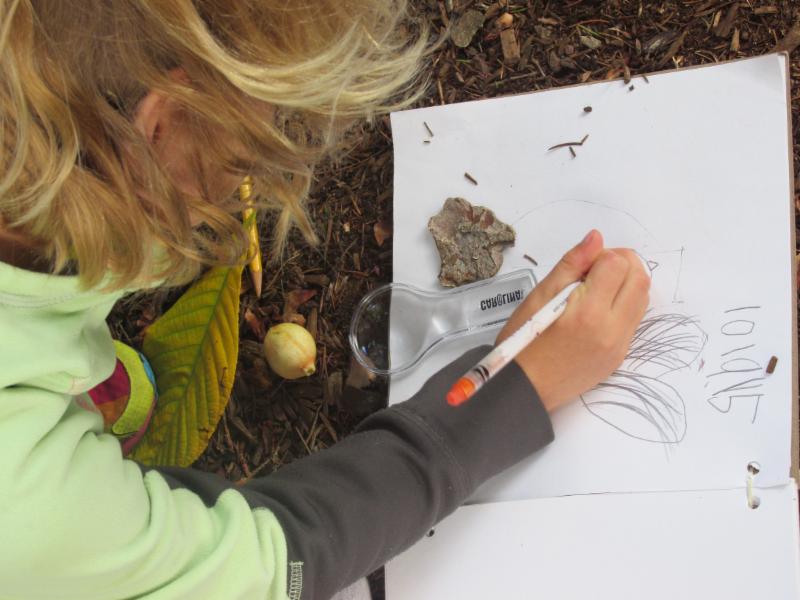
Help us support school gardens across Massachusetts (and beyond)!
Our Second Annual School Garden Conference will be held February 19, and will be a day full of workshops that dive into the best practices for planning and running a garden in our region.
We know that our members are supporting school gardens in many capacities: as teachers and administrators, as parents and classroom volunteers, through their community groups and as students themselves. We welcome all of these players to the conference for a day of learning.
Please register and share with friends! Help us cultivate garden spaces that will enrich every community's understanding and stewardship of its horticultural inheritance by spreading word of this excellent day networking and education.
Member Registration (members of Mass Hort and co-sponsoring
organizations): $40
Non-Member Registration: $50
Students: $25 (contact Katie at
617-933-4973 or Hannah at
617-933-4943 for discount code, supply is limited)
Space is limited, register early!
|
|
Valentines Day
Send the gift of acres gardens...for the price of a bouquet!
Give the gift of a Mass Hort Membership.
Give a Mass Hort Membership to the loves in your life!
Buy a gift membership today at a $10 DISCOUNT for new members.
Your gift will mean FREE admission to our gardens, discounts on horticultural classes, and FREE ticket(s) to the 2016 Boston Flower and Garden Show and so much more!
Offer valid for NEW MEMBERS ONLY. Expires midnight Feb. 14, 2016
To give the gift of membership, CLICK HERE. Use promotional code: VALENTINE
|
How to Plant Your Own Perennial Food Garden
by John Forti, Director of Horticulture and Education
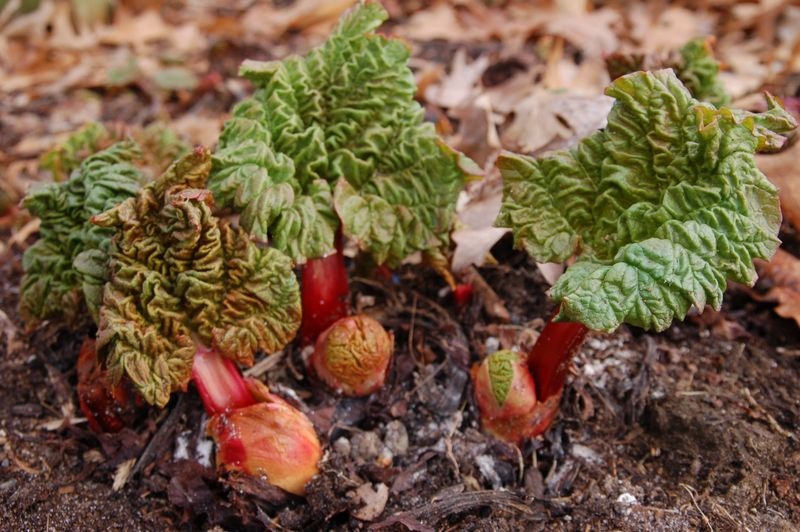
Do you have any perennials that have been handed down to you? In my gardens, they are often the most meaningful plants. Sometimes they represent living connections to ancestors, fond memories of family and friends, or pleasant reminders of seasons past. Every time I eat homegrown rhubarb, chives or asparagus, I recall the joy my grandfather would express when eating 'the fruits of his own labor.' The Massachusetts Horticultural Society would have been a mere 60 years old when he was born, but today, we are coming full circle to the pleasures of home vegetable gardening. Not since the victory garden era have so many Americans been growing food to supplement their diet. In the process, we are reminded that there is nothing more fresh or nutritious than the flavorful produce we harvest ripe from the sun in our own yard. As the Horticultural Society approaches our 200th anniversary, we are keenly aware that the landscape is changing, and that we have a role to play in sharing sustainable practices.
A wonderful lesson of the past is the cultivation of perennial food crops. In this age of local farmers markets, we have all grown to appreciate that the fewer miles our food travels, the better it is for our environment and our health.
Perennial crops conserve labor and resources, and they extend the growing season, producing food nearly 10 months a year! The deep roots of well-established perennials access moisture when annual crops might struggle.
These roots also push growth during the colder months when pollinators and people are looking for food, and few annual seeds would dare to sprout. If you are poring through catalogs and designing perennial vegetable beds into your landscape, consider the following perennials to add flavor and diversity to your own yard:
Asparagus, chive, daylily, walking onions, horseradish, Jerusalem artichoke, lovage, mint, ostrich fern, ground nut/potato bean, bronze fennel, rhubarb, skirret, sorrel, salad burnet, sweet Cicely, violet, watercress, wintergreen and a whole range of perennial herbs add color and texture to your garden, and flavor to your life.
Think beyond the garden bed! Dooryard garden fruits are gaining entry back into our urban landscapes and these frequently include: blackberry, blueberry, current, dwarf apples and pears, elderberry, gooseberry, grape, plum, strawberry and raspberry.
What legacy will you leave in the landscape when you plant this spring?
|
|
Join us for the Highgrove Botanical Exhibit Opening Reception Thursday, February 11
6 - 8 p.m.
Hunnewell Carriage House
Susanne Dowdall, volunteer MFA docent, will help us learn more about this wonderful exhibit created by 72 botanical artists at HRH Prince Charles's garden at Highgrove. Four rare books from Mass Hort's library collection, featuring botanical prints from across the globe will also be on display, including Redoute's Choix des Fleurs Belles.
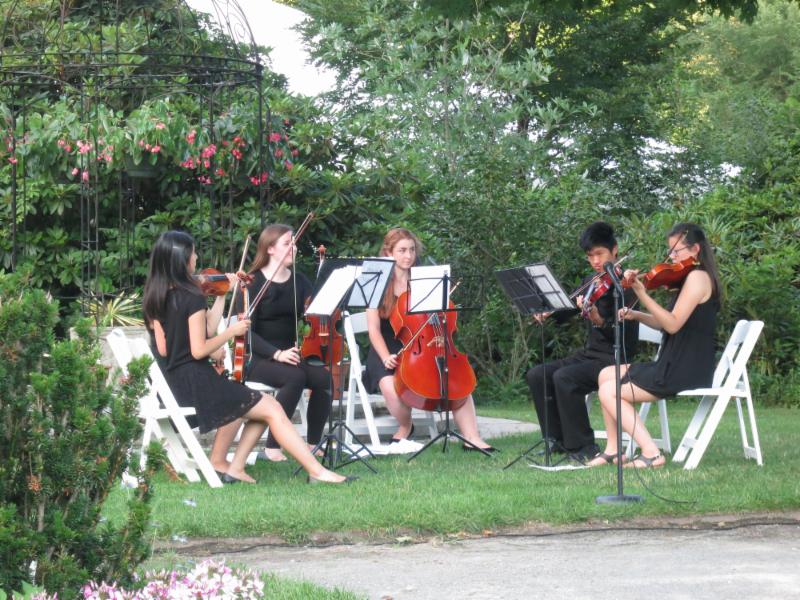
The Maverick String Group will entertain us with their beautiful music. The group is pictured in the Italianate Garden where they performed last summer to the delight of the Arts in The Garden Event.
Wine and hors d'oeuvres will be served in a delightful atmosphere of beautiful art.
For exhibit dates and times February - March, visit our website. |
Upcoming Classes at Mass Hort
There's plenty of time to plan your gardens for 2016. Mass Hort has several education events this month to help you get started. Feeling cold? We have some colorful presentations to help chase off the winter blues too! Jana Milbocker and Joan Butler will present The Adventurous Gardener on Tuesday, February 23, from 1:30 - 3 p.m. This presentation will be certain to brighten up your winter, and inspire you to visit more gardens. They will show you the best public gardens, nursery display gardens, and private gardens open to the public in the Northeast to visit for inspiration! Learn about each garden's highlights, ideal times to visit, and enjoy a visual tour of each amazing destination. Learn more and sign up here. If you need more ideas for your garden (or enjoy highlights from across the world and the ages), join us for Warren Leach's presentation Classic Design for Contemporary Gardens on Thursday, February 25, 7 - 8:30 p.m. Our everyday lives offer many examples of classic design principles. Landscape designer, Warren Leach, will explore elements of Classic Design, from a Classic Chinese Scholar's Garden to 19th century paintings and more. He will show their basic design connections and offer suggestions for translating these elements to your own gardens and landscapes. Register here.
The History of Botanical Art, a presentation by Carol Govan, will be given on Tuesday, March 1, 2:00-3:00 p.m. Surrounded by beautiful facsimiles from the Highgrove Florilegium and historic prints from Mass Hort's collection, this lecture will enhance your experience of this wonderful exhibit and increase your knowledge of botanical art. Find out more and sign up here. Separate fact from fiction with Judith Sumner's presentation on Herbal Medicine, Thursday, March 3, 7:00-8:30 p.m. Sumner shares the history of herbal medicine, its lore and science. Retaining practical knowledge of medicinal herbs is essential; today 40 % of all pharmaceutical drugs still contain at least one botanical compound. Join us for this intriguing overview of medicinal plants-from ancient traditions to military history and modern medicine. Read more and register here. |
 February Hort Hints February Hort Hints
by Betty Sanders
Valentine's Day is coming and while flowers are always welcome in winter, remember this: to satisfy this once-a-year splurge, flowers are stored by growers for as long possible to be available for that one special day. They will cost much more than usual and be of lesser quality. And we won't discuss the growing techniques, working conditions of the labor or the environmental costs of flying flowers around the world. But that's no reason not to celebrate.
My husband is under strict orders to think outside the (flower) box. For Valentine's Day I have received over the years gift certificates to my favorite nurseries, and one very special year, tickets to the Chelsea Flower Show in London.
|
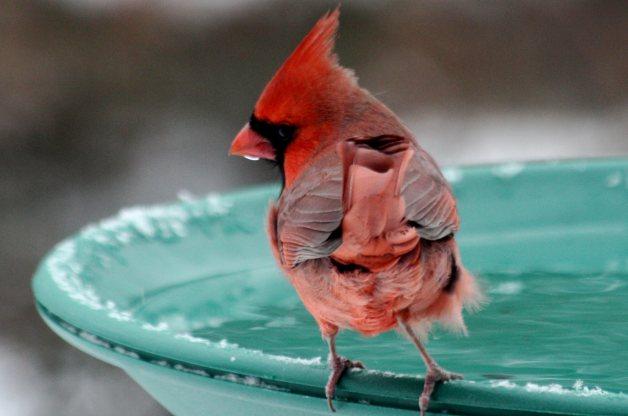
| | Birds need water in the winter too |
For the birds. One of the hardest things for birds in the winter is the lack of water. While putting out seeds and suet certainly helps, a shallow container of water birds can drink from is vital. If you don't have a heated bird bath, put out fresh water for the birds each morning in a sunny location. It may freeze during the day, but the birds in your garden will have had the chance to get a very important drink before it does.
Snow piles up. Note where the snow thrown by the snow plow or shovel lands. If it's on perennials, no problem. If it's on small trees or shrubs, branches could be broken and the plant damaged or misshapen as a result. If you can't put the snow somewhere else, plan to move the shrub in the spring to a safer location.
Also make note of where any salt or de-icer laden snow piles up, usually along streets, sidewalks and possibly your driveway. In the early spring, you will want to remove underlying mulch (which may be heavily salted) from those areas and hose off those plants so they can start the growing season free of the poisonous salts.
Heavy machinery. Planning any tree work, or activities that might require heavy machinery? While the ground is frozen, the machinery will do very little damage to the lawn or flower beds. Try to get such work accomplished before the first spring thaw. You don't want to add removing tire tracks to your spring chores.
Seeds and plants ordered? It's amazing how soon some people order their seeds and plants. I know this because last yearI ordered in mid-January and found a number of things I had planned on purchasing already sold out. Don't wait any longer - order now so you get what you want. And if you start your seeds indoors, it's almost time to get going with slow starting vegetables and flowers.
|
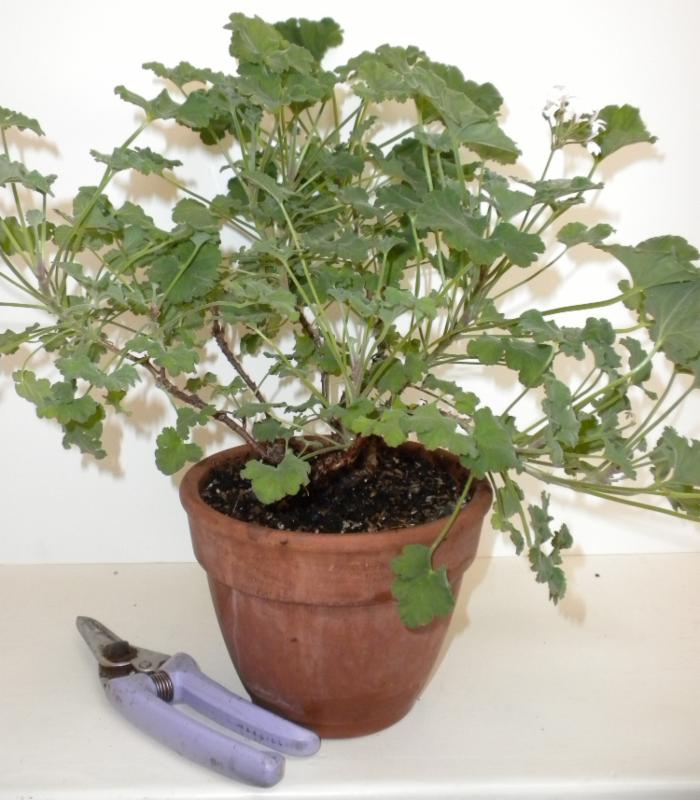
| | Your houseplant could win a blue ribbon |
The Boston Flower Show is only six weeks away. It's time to begin grooming your special house plants to take to the show. Remove any unsightly leaves and old flower stalks. Make a first run at carefully cleaning the exterior of the pot (dirt and salts are a no-no for judging). Depending on what you are growing, it may be time for some plant food to encourage it onward. Everyone was a first timer once and the people who run the horticulture area do their best to help you make your plant a contender.
You can see more of Betty's horticultural advice at www.BettyOnGardening.com. Betty is also the 2015-2017 President of the 11,000+ member Garden Club Federation of Massachusetts.
|
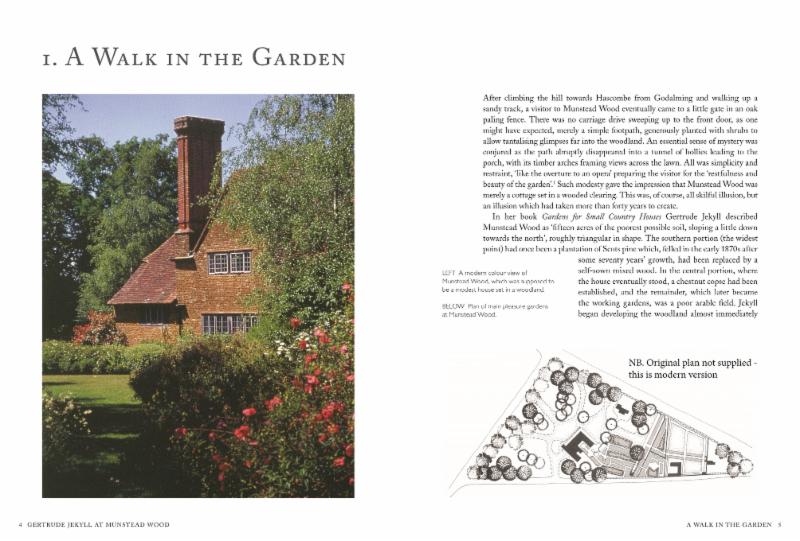
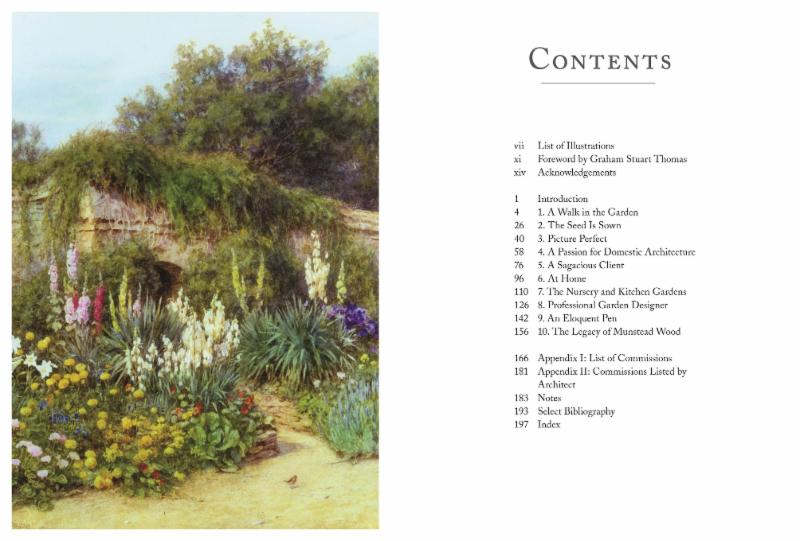
Book Review: Gertrude Jekyll at Munstead Wood
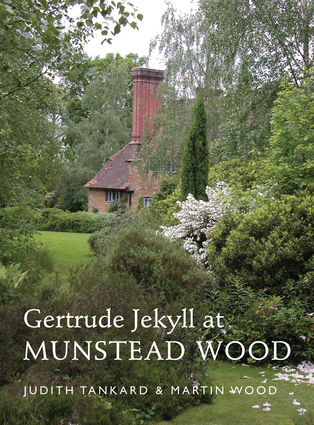
By Judith Tankard & Martin Wood
Pimpernel Press Limited, 2015
Distributed by Trafalgar Square Publishing, www.ipgbook.com
Reviewed by Patrice Todisco
Within the canon of landscape history a collection of gardens exists that has revolutionized the profession shaping, and shaped by, genius and sense of place.
Munstead Wood, the home of Gertrude Jekyll, stands at the apex of this collection. It was here that the woman described by eminent historian Christopher Hussey as the "greatest artist in horticulture and garden planting that England has produced,"collaborated with architect Sir Edwin Lutyens to build a house and garden.
Jekyll's ideals were deeply rooted in a love of the Surrey countryside, cottage gardens, vernacular building traditions, the Arts and Crafts Movement and her training as a fine artist. The creation of Munstead Wood embodied the perfect expression of her ideals, providing a canvas for Jekyll's craftsmanship and experimentation with garden design.
Gertrude Jekyll at Munstead Wood, by Judith Tankard and Martin Wood, is a redesigned edition of the Pimpernel Garden Classic first published in 1996. It recreates Munstead Wood as it was in Jekyll's time, introducing the reader to the "activities and enterprises"around which her daily life evolved.
Neither a biography nor an assessment of Jekyll's well documented contributions to the field of garden design, it is instead a compelling and intimate portrait of Jekyll and the home and gardens that she created for her own pleasure.
There is much to savor in this eminently readable account of the talented, paradoxical Jekyll who, if you'll pardon the expression was, in her day, the "rock star"of the gardening world. Her talents were remarkable and wide reaching: carving, modeling, painting, silversmithing, carpentry, gilding, embroidery, herb and flower knowledge. She mastered them all, laying a foundation for her acclaimed gardening career.
While deeply rooted in her finely orchestrated country life at Munstead Wood, Jekyll was a prodigious communicator, the author of more than a dozen books and 1,000 articles. So great was Jekyll's fame, and so voluminous her fan mail, that she drafted a form letter advising that her "oculist forbids letter writing."
Jekyll seldom ventured far from home, designing more than 400 gardens during her career (although records for only 250 survive) yet rarely traveling to any of them. Instead she developed designs from site plans supplied by her clients, many of whom were wealthy industrialists whose fortunes were made at the expense of the countryside she so loved.
It is these details that delight, revealing the most extraordinary Jekyll in an ordinary light. While her fame as a garden designer and writer is widely celebrated, her management and business skills were also equally impressive.
Drawing upon Jekyll's photographs (yet another of her highly evolved talents), scrapbooks, correspondence and the recollections of her contemporaries, the authors chronicle Jekyll's many enduring personal and professional relationships. Chapters are devoted to both the design of Munstead Wood and her commissions as a professional garden designer. These are listed alphabetically and by architect and included as appendices.
Despite its fame, Gertrude Jekyll's garden at Munstead Wood lasted for only 50 years as she made no plans to preserve it after her death. While it lives on through books, articles, photographs and the recollections of those that visited it, the garden was a personal endeavor, created by and for Jekyll herself.
How fortunate then that Gertrude Jekyll at Munstead Wood provides a glimpse of Munstead Wood at its prime, as well as an opportunity to understand Gertrude Jekyll's garden design enterprises within the context of the practical and creative arts to which she was deeply devoted.
Patrice Todisco writes about parks, gardens and the public realm at www.landscapenotes.com.
|
Seeds of Expectation 
by Neal Sanders
Leaflet Contributor
Before I get carried away, let me be clear about one thing. We're talking about packets of seeds. Seeds that cost about a buck fifty for a paper packet containing somewhere between a dozen and 500 seeds. Starbucks would not swap you a tall decaf mocha latte for four packets of seeds, no matter how you declaim their virtues.
|
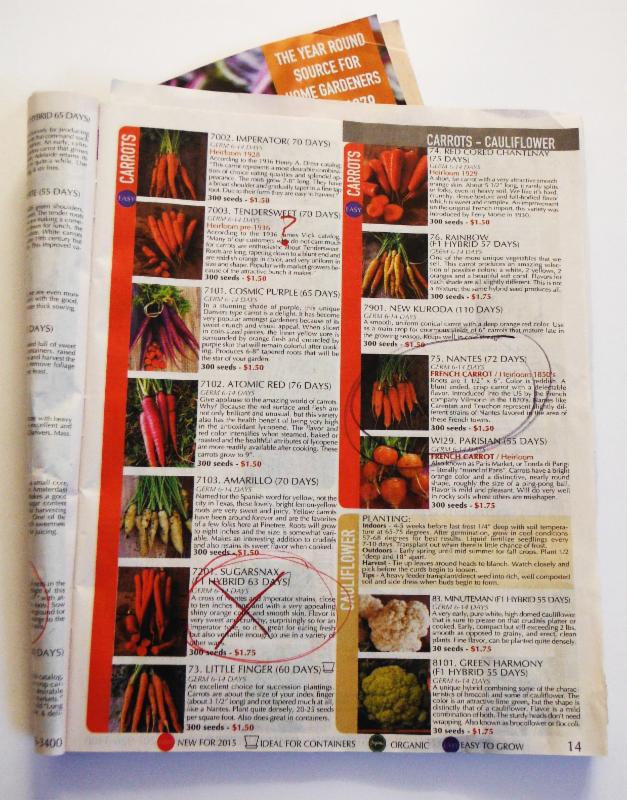
| | Every page of our catalogs was marked with an earnestness that That belied the price tag of the seed packets offered |
But virtues they are. After you consume that latte, all you'll have to show for it is an empty cup. Plant those seeds and you can harvest a season's worth of Parisian carrots or Tom Thumb butterhead lettuce. And, talk about bargains, the value of that $1.50 seed package multiplies tenfold, or even a hundredfold. Case in point: Butternut squash is going for $1.59 a pound at my local supermarket this week. We've been eating our 2015 crop of squash since October and still have a dozen specimens in the basement with a current retail value of more than thirty dollars.
I offer that prologue because, last week, two boxes arrived in our mailbox. They contained our vegetable and flower seeds for the spring of 2016.
Betty began poring over seed catalogs in late November (their arrival coincided with the last turkey sandwich made from our Thanksgiving dinner). We receive more than a dozen such catalogs each year; the ones from which she might order is a small subset of what arrives in the mailbox. What the semifinalists have in common is that their seeds are grown for a northern climate. "One size fits all" seed companies need not apply.
Betty's markup of these catalogs is a wonder to behold. There are bold "X" marks through descriptions that, to my untutored eye, look like great choices. What, exactly, is wrong with Crosby Egyptian beets? Some varieties are circled once; others, like Maximillian sunflowers, have multiple bold rings.
Looking through the seed packets now on hand (there are more than 50), there are a few surprises. For example, we will grow five kinds of beets this year. Why five? Flavor, days to maturity, and an interest in trying some new introductions without jeopardizing the main crop.
This year will also mark a momentous turn in our gardening practices. For more than a decade we have been part of a community garden in our town. We have had a 600 square foot plot, tilled by the town and overspread with composted manure. All we had to do was fence and plant our little bit of horticultural heaven.
|
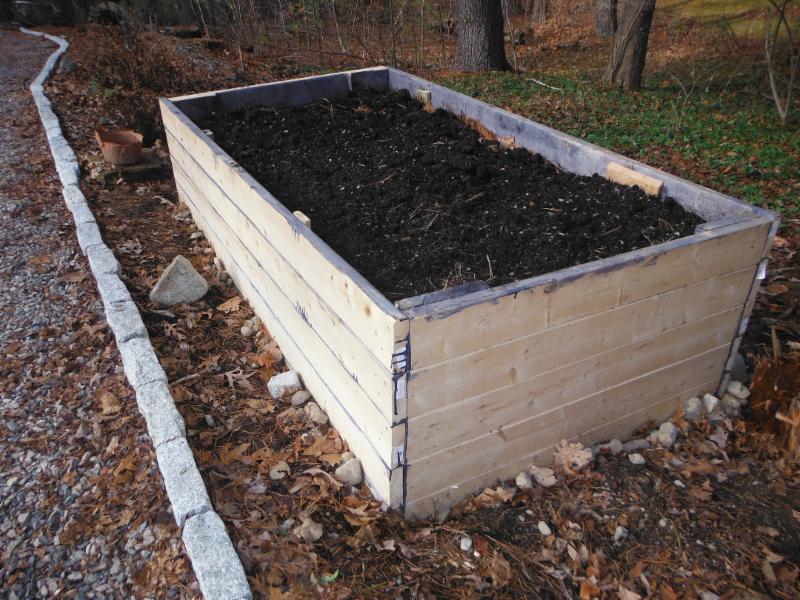
| | Each of our new beds is 32 square feet and raised 30 inches above the surrounding ground |
We'll still have that community garden space but, this year, we'll augment our real estate by ten percent. This past autumn I built a pair of raised-bed gardens in the sunniest part of our property. Each is four feet by eight feet for a total of 64 square feet. The nifty part of the beds is that when I say 'raised bed' I mean beds where the soil line is 30 inches above the surrounding ground. Most raised beds are up about a foot. Ours can be worked while sitting on the wooden rail around the garden - or even standing.
And the beauty of a raised bed is that there is not a square inch of wasted space. There are no 'aisles' with a raised bed. We will plant from board to board and start as soon as the soil is warm enough to germinate early spring crops. We can even artificially warm the soil with row covers. Perhaps best of all, picking lettuce for a lunch or dinner salad now will mean a quick walk outside rather than a two-mile drive.
Those seeds are a harbinger of the coming season. The days are lengthening. Those seeds are tangible proof that winter's end is within sight.
Well, at least it's a glow on the horizon.
Neal Sanders is the author of ten mysteries. His newest, 'How to Murder Your Contractor' has just been published and, together with his other titles, is available in stores and at Amazon.com.
|
Catching Up with the Last Half Century
Maureen Horn, Librarian
Part 13
1985 & 1986: The Society Honors Its Members
In the spring of 1985, as work continued on the renovation and restoration of Horticultural Hall, Executive Director Richard Daley expressed his great pleasure at discovering how many friends the Society had, as shown by contributions during the preceding year. A remarkable 1,000 person has made donations, 500 of which were new donors.
To satisfy the public's desire for spectacle, the Flower Show exhibitors embraced water and featured it in its myriad forms - waterfalls, brooks, fountains and pools. The exhibitors also raised their horticultural standards to a new high, presenting a total of twenty new cultivars.
In October, the Society was poised for a major event. After a hiatus of three years, the library would reopen under the direction of a new librarian, Walter Punch. Mr. Daley declared that with Mr. Punch's acceptance of the position, the library would be operated by an exceptional librarian, who had both the professional skills and personal commitment to direct a nationally important institution. Walter Punch, in turn, was delighted to work with so many interesting rare books, and he promised to make them more accessible to the public.
Mass Hort looked westward as it presented a show at the Springfield Civic Center. It was called ColorFall Flower Show, and it was designed to provide fall foliage seekers with an opportunity to see the nation's largest fall flower show, as it featured autumn blooming and fruit producing plants. The Massachusetts Horticultural Society's new traveling and educational exhibit on plant propagation would make its first public appearance at the Show.
In the new year 1986, it was announced that there was so much enthusiasm for the news and helpful hints in Leaflet that it would be boosted from four issues a year to six. Director Daley rejoiced that, in spite of residing in the temporary quarters at the Prudential Center, where everything was unsettled, the Society continued to be successful in its education programs. Leaflet kept up its practice of reporting news about allied organizations and noted that the Worcester Horticultural Society had just purchased property in Boylston for its new headquarters, where it planned to have demonstration gardens. We can now appreciate how it has grown as the Tower Hill botanic Garden.
Education continued to be the byword for its mission as Mass Hort initiated a program in collaboration with School Volunteers for Boston to bring horticulture into the classroom. A call went out for volunteers from our membership to help introduce children to the wonders of the plant world. At the 1986 Spring Flower Show, there was a celebration of the 25th anniversary of the Amateur Horticultural Exhibit, or "Am Hort". Richard Daley called its creation the most important innovation in the history of the Society's flower shows. The leaders in 1961 were Thalassa Cruso, Dorothy Wheatland, and Theresa Cunningham. To underscore the importance of the library, Walter Hunnewell, MHS president, conducted an awards ceremony in the venue to honor the Visiting Garden Committee's choice landscape, the Albert C. Burrage Gold Vase recipient and the John S. Ames Trophy winner.
|
|
|
|
|
|
|