|
 For exceptional benefits to help you in the garden- Join Today! If you are a Mass Hort member - please recommend membership to a friend! Forward this newsletter. CLICK HERE TO JOIN |
|

SPREAD THE WORD,
HELP US GROW!
Refer a new member to Mass Hort and receive a coupon to attend a Thursday Night at the Hort lecture for free!
|
|
|

You Shop - Amazon gives to Massachusetts Horticultural Society!
Amazon will donate 0.5% of the price of your eligible AmazonSmile purchases to Massachusetts Horticultural Society whenever you shop on AmazonSmile.
AmazonSmile is the same Amazon you know. Same products, same prices, same service.
Begin shopping
www.smile.amazon.com
|
|

Letter from the President
 Greetings!,
Happy New Year! I hope you and your family had a wonderful holiday and are now focusing on what to put in your garden this spring.
Our education department is here to help you with that and they have a wonderful schedule of lectures and events to help you in the garden. You will receive our course catalog in early March, and can find our upcoming classes listed on our website.
We are very busy with the amateur competitions for the Boston Flower and Garden Show. I hope you will consider participating in Floral Design Divisions I and II and Amateur Horticulture, it's a lot of fun! Make sure you review this year's junior divisions, which are full of great family projects. Please check out the schedules on Mass Hort's web site. Additionally, John Forti, our Director of Horticulture and Terry Duffy of Weston Nurseries, are working on our garden exhibit to engage the public in the wonderful world of horticulture!
Mass Hort members please watch your mail boxes for your flower show tickets.
Finally, Thank you for attending or volunteering at the very successful Festival of Trees and Snow Village. We were thrilled to honor our Festival of Trees Committee, Bill and Ellen Meagher, Gretel Anspach, Penni Jenkins, and Holly Perry at our December Overseers meeting.
It's going to be a busy winter, and we hope you will join us in the fun! |
|
January Classes at Mass Hort
The new year is a wonderful time to learn something new or take up a new hobby. Let Mass Hort help you grow by attending one of our many classes!
If you're looking to do a little gardening through these cold months, come to our lecture and demonstration, Year-Round Indoor Salad Gardening with Peter Burke to learn how you can grow your own fresh greens with ease at home. He will show his simple method to grow plenty of greens in your windows, no grow-lights required. You will also have a chance to pick up his new book and get your hands dirty as you plant something to take home. Tuesday, January 19, 7 - 8:30 p.m. $12/member, $20/non-member. Learn more and register here.
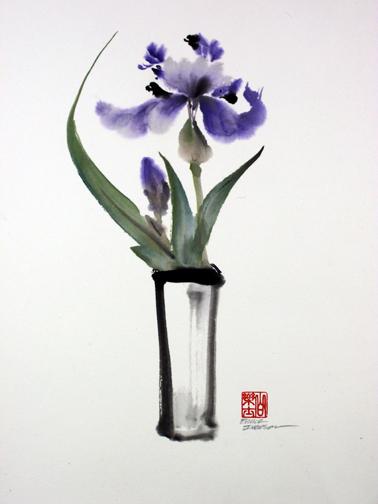 We are excited to welcome back the accomplished artist, Bruce Iverson. He will be leading a workshop for all levels on Asian brush painting. Iverson comes with all the materials and experience to demonstrate and teach this ancient technique. Students will leave with two complete paintings focused on the iris. This is an all-day course, 10 a.m. - 4 p.m. on Wednesday, January 20. $150/member, $180/non-member. Register and learn more here. Finally, we are kicking off a new year of Thursday Night at the Hort lectures with Dr. Paul Steen who will be giving an introduction to the practical side of houseplant culture. He will help you troubleshoot common problems with houseplants and share tips to keep them flowering year-after-year. January 28, 7 - 8:30 p.m. $12/member, $20/member. Register here. |
|
The Highgrove Florilegium Exhibit at Mass Hort
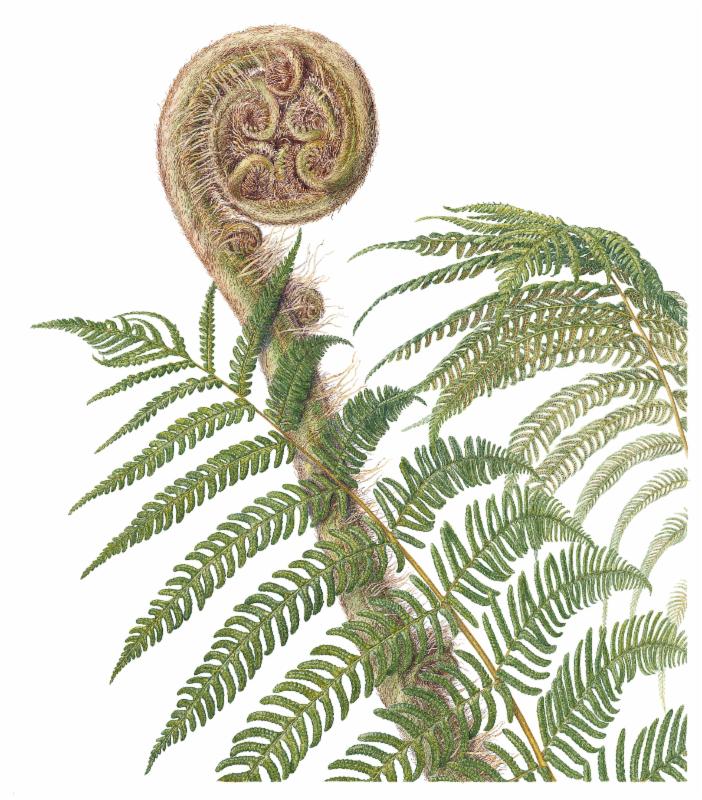 Addison Publications LTD is the publisher of the book and the prints and the copyright is held by A G Carrick Addison Publications LTD is the publisher of the book and the prints and the copyright is held by A G Carrick
Massachusetts Horticultural Society is pleased to announce an exhibition of watercolor facsimiles from the Highgrove Florilegium from February 12 through March 12, 2016. It will be open from 10:00 a.m. to 2:00 a.m. in the Hunnewell Carriage, and it is free to the public. In addition to viewing a selection of images from the Highgrove Florilegium, visitors will have the opportunity to view the finely crafted books that contain these beautiful facsimiles.
The Opening Reception on February 11, 2015, from 6 to 8 p.m. will feature remarks by Susanne Dowdall, a volunteer docent from the Museum of Fine Arts. Wine and hors d'oeuvres will be served. On Tuesday, March 1, there will be a lecture at 2 p.m. by Carol Govan, a professional artist, teacher and historian of botanical illustration. Her presentation will enhance your appreciation of the exhibition.
The Highgrove Florilegium is an exquisite two-volume set of 124 facsimile botanical watercolors of plants from Prince Charles's garden at his family estate in Gloucestershire, England. Seventy-three renowned international artists painted the watercolors. The set is a limited edition of 175 and signed by HRH the Prince of Wales. All royalties from the publication are donated to The Prince's Charities Foundation.
Highgrove House and Gardens is the private residence of Their Royal Highnesses, The Prince of Wales and The Duchess of Cornwall. HRH The Prince of Wales spent 30 years transforming the grounds of Highgrove into one of the most inspired and innovative gardens in the UK.
Botanical illustration dates from the 15th century originally to record herbs used for medicinal and culinary purposes. A florilegium is a collection of botanically accurate paintings of plants, usually a record of a living collection in a particular estate or garden. The Highgrove Florilegium is a contemporary record of HRH's collection at Highgrove and is the first Royal Florilegium in the United Kingdom.
Massachusetts Horticultural Society, the oldest horticultural library in the United States, has an impressive collection of botanical images dating from 1620 to 1969. Recently, Mass Hort collaborated with Digital Commonwealth to digitize these images and made these historic images available to the public for viewing online at Digital Commonwealth's website. This exhibit of contemporary images underscores the relevance and importance of Mass Hort's botanical image collection today.
Private groups of at least 10 persons may arrange for a private tour of the exhibition on Closed Days by contacting Maureen Horn, at 617-933-4912 or Mhorn@Masshort.org. The cost will be $5 per person. Volunteers to help with security and interpretation on our Open Days are also encouraged to call.
|
Mass Hort at the Flower Show- Division II Floral Design Competition
by Marisa McCoy, Chair
You are invited to be part of a long tradition in the world of floral design. Join designers from New England in a unique opportunity by entering Design Division ll of the Boston Flower and Garden Show in March, 2016.
Designers of any level of experience, whether garden club members or not, are invited to participate in this New England tradition. Everyone is welcome to enter; the committee is ready to support you; you may work with a partner; and designs may be brought in partly done and finished in place. If you get a friend to sign up with you, you can carpool, share parking fees and have brunch in the city.
 Are you a participant in design classes or workshops? Put your knowledge and talent out there for the public to enjoy. Display your personal style for a receptive audience that loves to see flowers in the winter. Afraid to enter a flower show? Do you feel inhibited by the thought of too many rules? Design Division ll of the Boston Flower and GardenShow 2016 is meant for you. This is a long-established part of the Flower Show that lets you compete with as little intimidation as possible. Consultants are available to assist you in planning, executing and staging your design, and there is a class reserved for novices to provide a level playing field. Need show experience or ribbon? Here is an opportunity with an exciting schedule. If you have entered the show in another division, you are still welcome to sign up for either of our entry days - March 15 or 18.
Mass Hort has a very long history in promoting gardening, horticulture and floral design through this show. You can help keep this tradition vital whether you are a long-time exhibitor or a novice who just likes to arrange flowers for your own satisfaction. As an extra for exhibitors, you get to see the show before the public comes in. You may see the entire schedule on line at masshort.org. There are openings in classes for the following design types: A design in the Japanese manner A Small Design (8"x8"x5") A Still Life An All Foliage Design An Artistic Craft class for a child (grades 1-6 or 7-12) with a parent or grandparent
|
Have You Checked the Due Dates on Your Library Books?
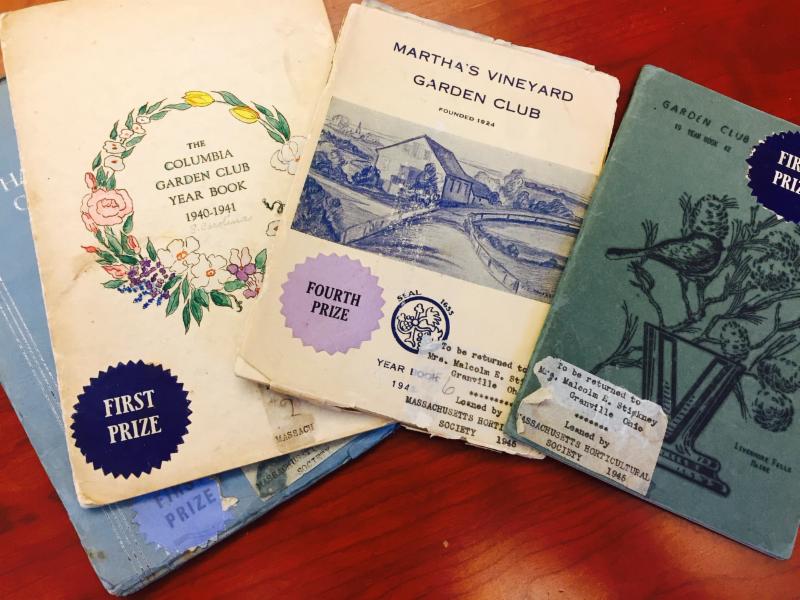
On January 11, 2016, a plain brown envelope was delivered to Massachusetts Horticultural Society's library bearing a cryptic message: "Found in our archives. Please do not return."
The return address read: the Granville Garden Club in Ohio.
The package contained four books - garden club programs that were part of the Massachusetts Horticultural Society's collection of award-winning Garden Club programs. The cover of each program bore an incriminating stamp: Loaned by Massachusetts Horticultural Society, 1945.
Yes, the books were 25,915 days overdue. According to the current overdue fine rate of 10 cents per day, the Granville Garden owed Mass Hort $10,366 for the delinquent books.
But it's hard to blame the club for holding onto the programs. After all, they had been the winning entrants in a garden-club-year-book contest. For the Granville Garden Club, the programs were trophies.
Fourth Prize was awarded to the Martha's Vineyard Garden Club, written during World War II. The forward of the year book even offered a special tribute: "To members of our Club who may be conscientious objectors to carrying on a Garden Club program this year as usual, may I say that this year's book with it prospectus for 1942 is in accord with the common policy of The State Federation of Garden Clubs, The Massachusetts Horticultural Society, and the Royal Horticultural Society of England, which have weathered several war periods in the century old existences, continue to publish periodicals, hold their Flower Shows, and otherwise stimulate garden interest, believing that especially the days of world devastation and change, mankind needs to be reminded of earth's enduring strength and bounty."--Ruth Eldridge White
In fact, the entire book provides a wonderful time capsule of the war era -- describing food production gardens, canning centers, the Red Cross, and the Office of the Civil Defense.
The Columbia Garden Club Year Book (1940-1941) of South Carolina; Hawkinsville Garden Club, Hawkinsville, GA (1938-1939), and the Garden Club of Livermore Maine (1942) had all won first prizes in the short-lived year book contest, and each club's program helps paint a picture of the time. Livermore Maine Garden Club's forward notes: "Every local citizen is ready to do all in his power to defend his country against a foreign foe." This book also focuses on the Victory Programs of our Nation.
Rather than a bill, we will be sending a sincere thank you note to the Granville Garden Club. More than just books, these programs are priceless pieces of horticultural history. I think we will just waive the fine.
|
 January Hort Hints January Hort Hints
by Betty Sanders
Effects of a Hot December. Did you take advantage of the warm weather to complete your autumn chores? Did you enjoy the unanticipated displays of cherry blossoms, forsythia and other unexpected flowers before the late arrival of cold weather? For most plants, the long, warm autumn did no lasting harm. There may be a few missing blossoms but, in general, the lingering warm weather allowed plants to soak up the water that they did not get during the dry summer or early fall. Once the ground freezes the trees and shrubs can no longer take up water while cold drying winds take moisture out of the leaves and needles of our evergreens. While spraying antidessicants on them can help, plants do best when they have been able to fill roots with moisture before winter settles in.
The greatest danger to your plants is not the cold but the warm days that can lead to the plants being pushed up out of the ground when it freezes again, exposing roots to killing temperatures. Once the ground freezes, you can help perennials and newly planted trees and shrubs better survive any winter thaws by topping them with a covering of leaves, straw or the branches from your Christmas tree.
Seed Catalogs and Other Temptations. The catalogs began arriving at my house by Thanksgiving - the earliest ever. Now they have become a torrent. As you settle into a winter hibernation, those catalogs provide a chance to dream and plan for next year. The growing season is easier if you begin now. Look back at your notes from last season (you did keep up your journal didn't you?) and use that as a start. Were there flowers that you tried that should be regulars? Did the new variety of corn or tomato live up to the hype, or are you looking for heirloom squash that doesn't produce by the bushel? Whether it is 'old reliables' or new possibilities, you are more likely to get what you want if you order seeds and plants early. And you are much more likely to be happy with the results if you do some research now.
Stop, Look and Learn Before You Shop. Want a tree to block the view of a neighbor's hot tub? How much sun do you have and how 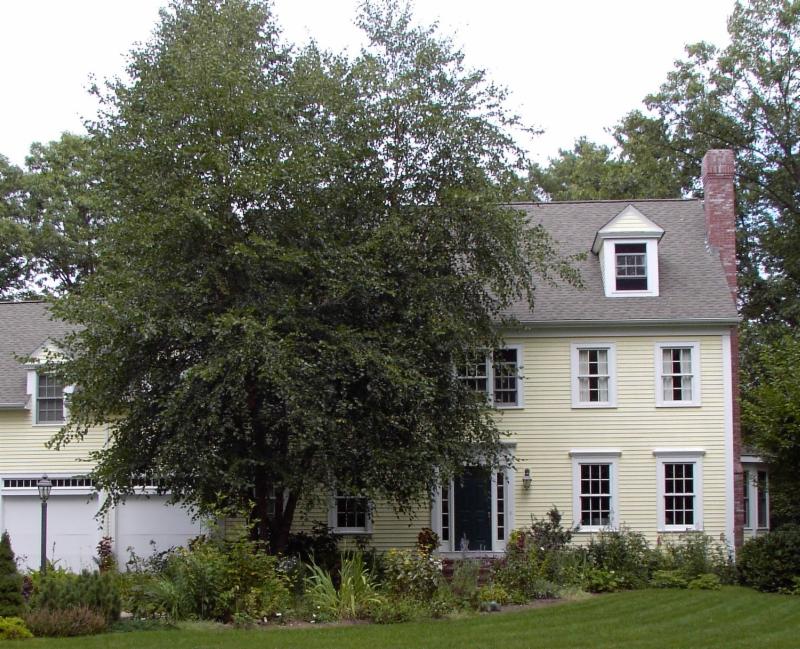 much does your first tree choice need? How fast does it grow, and how tall or big around will it get? And how long will that take? This is a good month to do some armchair research toward next spring's purchases. Look at the breeder's notes, but also look at the information offered by those who are not trying to sell it to you. Go on websites that end with .edu - indicating that education, not sales is their business. I prefer university sites such as UMass, URI and UNH plus Cornell. Their climate is our climate and the professors and students are dealing with our problems and plant material. Look at articles written by respected writers such as Michael Dirr and Bill Cullina on trees, Rick Darke and Doug Tallamy on environmentally appropriate plantings, Edward Smith and Barbara Damrosch on vegetable gardening. There are many more, but you are looking for unbiased, sound advice so it is a good idea to stay away from the .coms and other commercial sites. Of course, once you have found the perfect tree, shrub or perennial, look to the nursery sites for availability. much does your first tree choice need? How fast does it grow, and how tall or big around will it get? And how long will that take? This is a good month to do some armchair research toward next spring's purchases. Look at the breeder's notes, but also look at the information offered by those who are not trying to sell it to you. Go on websites that end with .edu - indicating that education, not sales is their business. I prefer university sites such as UMass, URI and UNH plus Cornell. Their climate is our climate and the professors and students are dealing with our problems and plant material. Look at articles written by respected writers such as Michael Dirr and Bill Cullina on trees, Rick Darke and Doug Tallamy on environmentally appropriate plantings, Edward Smith and Barbara Damrosch on vegetable gardening. There are many more, but you are looking for unbiased, sound advice so it is a good idea to stay away from the .coms and other commercial sites. Of course, once you have found the perfect tree, shrub or perennial, look to the nursery sites for availability.
House Plants. No matter how carefully we plan gardens for "winter interest," we cannot get our fingers in the soil or soak in the scent and feel of the garden for several months. So we have house plants. Whether you grow philodendrons or orchids, cactus or hibiscus, 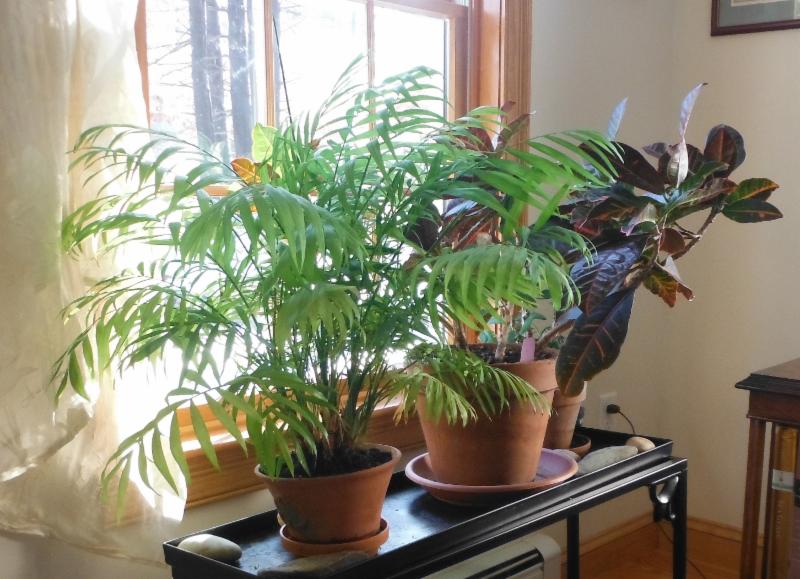 remember they need help to get through the winter - even indoors. remember they need help to get through the winter - even indoors.
With much lower light levels than they had during summer (even at the same window) they need less water and no food. For most house plants you can throw out the schedule and water only when the soil feels dry a couple of inches down. And do not feed them until spring. They cannot grow successfully until there's more light available. Cacti and succulents generally need no watering at all during the winter unless you see signs of wilting. Remember to give each plant a quarter turn every week-whether you are watering it or not--to keep it from leaning to the light.
-------------------------------------------------------------------
You can see more of Betty's horticultural advice at www.BettyOnGardening.com. Betty is also the 2015-2017 President of the 11,300+ member Garden Club Federation of Massachusetts.
|
|
Catching Up With the Last Half Century
by Maureen Horn, Librarian
Part 12
1983 & 1984: Loosening Ties
For more than eighty years, the Massachusetts Horticultural Society had derived much of its pride from its headquarters, the magnificent Horticultural Hall opposite Symphony Hall in Boston. As the eighties advanced, the trustees had to admit that the building was showing its age, and, although they committed themselves to its renovation, they recognized that most of the public identified the Society through the Spring Flower Show, so efforts should be made to improve the show and to use the show as an advertising tool for the rest of the Society's activities.
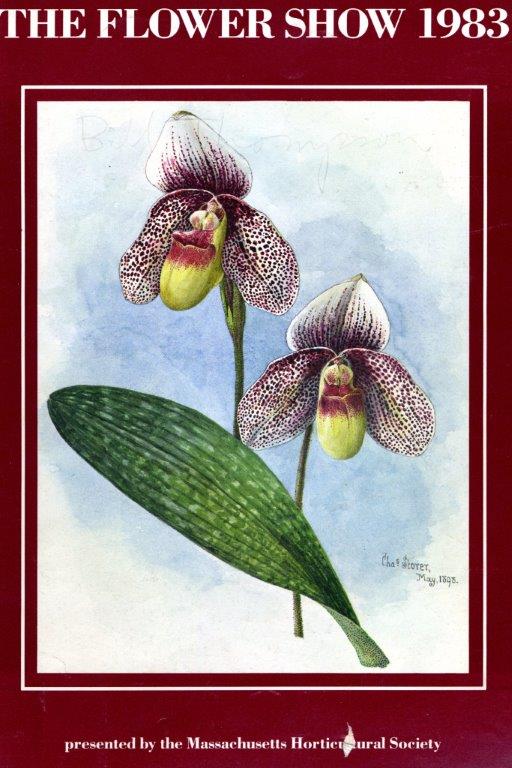 At the February 16 meeting of the Board of Trustees, Executive Director Roger Dane gave a two-pronged report: Historic Hall Associates (HHA) would commit itself to the renovation by purchasing a 38-year lease for $275,000, with Mass Hort retaining the option to buy back the lease at any time after year 10, and the 1983 Flower Show program would reproduce one of the Society's original works of art on its cover to highlight the show's ties to Horticultural Hall.
At the April 20 Trustees meeting, Mrs. John L. Gardner noted that the trade vendors were selling some poor quality plant products, and she felt that the situation reflected poorly on the Society. Phyllis Anderson, the current president stated that this would be the last full Board meeting she would attend, and on May 2, Walter Hunnewell was elected as the next president.
On May 25, in light of the lower than expected final figures from the Spring Flower Show, a committee was formed to come up with a fundraising plan. The Board membership encouraged Roger Dane to define a role for the Society as a consultant/catalyst for urban groups who need advice from an established organization like M. H. S. It was agreed that the position of Horticulturist should be added to the staff. The early summer was a period of stalled plans: the Historic Hall Associates were not going forward because of unexpected costs and Susan Child, the Chair of the Education Committees said that their work was held up because they had not received from Roger Dane a job description of the expected Horticulturist.
By August 17, an altered agreement was reached with HHA: they would pay $150,000 for the lease, and at the end of 38 years, the Society would regain full ownership. Because it had already been decided that the Massachusetts Horticultural Society could not afford to occupy the whole building, the work of finding other tenants began in earnest. The rental fee for the tenants would be $17 per square foot. The job captain for the renovation project promised that certain improvements could be made before knowing who the tenants would be: a new elevator, an inconspicuous staircase, cosmetic and restorative changes to the library, e.g. better lighting and new colors. On September 21, the Education Committee announced that it had completed a job description for a staff horticulturist and Mr. Dane said that he would leave on August 31, 1984.
On October 19, the Executive Committee was encouraged by the promise that the work on Hort Hall should begin in November and be completed in 9 months. They were also told that Horticulture magazine planned to rent most of the third floor. On November 16, they were told that as the result of a collaboration with Mass Bay Community College, its courses would be in our winter Leaflet and our courses would be in the college's spring calendar. By the end of the year, the Education Committee called for a delay in the search of a Horticulturalist until a new Executive Director could be found.
Early in 1984, the Executive Committee renewed its commitment to an improved annual Flower Show by announcing that appropriate sound zones would be incorporated throughout the exhibit space. They would stimulate auditory as well as visual enjoyment. The committee also announced that the program would not contain any trade information, but that it would be be distributed separately. At this time, the preparatory demolition of Hort Hall, in its present layout, was predicted to begin on March 26, with a completion date 9 months in the future.
The good news on June 20 was that a primary tenant for the Great Hall, Boston magazine, had been found, and Richard Daley accepted the position of Executive Director. When he took over in July, he announced that his primary goal was to revitalize and enlarge the membership. He felt that to do so would require addressing the question of marketing, which involves product, price and promotion. He said that the new Horticulturist would focus on teacher training and adult education. He said also that the Society must reassert is position as the leader of horticulture throughout New England. To help accomplish this, he proposed traveling exhibits.
At the end of the year, the staff was last seen making preparations to move to temporary lodgings in the Prudential Center for the duration of the construction time needed to make a space for Mass Hort to become the occupant of only part of its venerable building.
|
Oh, Useful Christmas Tree  By Neal Sanders, Leaflet Contributor
I believe in Christmas trees with a zeal only a convert can possess. Having grown up in South Florida in an era when the idea of flying in fresh-cut Nova Scotia firs was the stuff of science fiction, my family made do with Scotch pines that had already lost half their needles before they appeared the day after Thanksgiving at the Lions Club lot.
Since migrating to New England some 35 years ago, I have become a connoisseur of fresh-cut trees, able to discuss the particular merits of Frasers and concolor firs, balsams, and spruces. I believed in soaring trees: for 16 years, our trees rose as high as our cathedral ceiling would allow: some years more than 14 feet. Whatever their height, our trees fill our home with the wonderful scent that only a Christmas tree can bring.
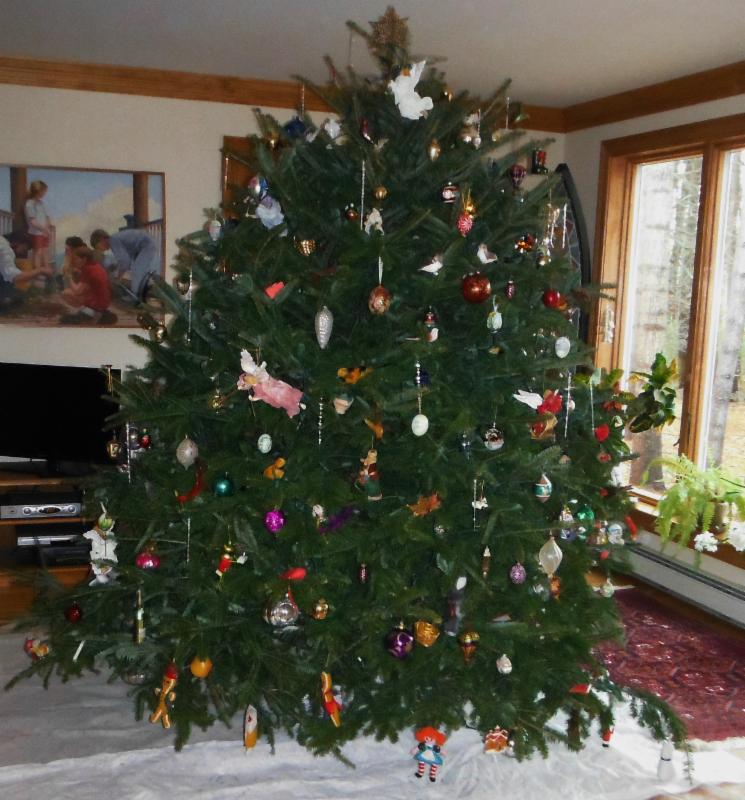
This Christmas was our first in our new home. The vaulted ceiling of our old home has been supplanted by an energy-efficient eight-foot one. So, naturally, we traded height for girth. The Fraser fir that came into our home on December 18 had branches that stretched an improbable four feet from the trunk at it base, giving the tree an eye-popping circumference of 25 feet. It took seven strings - 900 lights - to satisfy Betty that there were no gaps in its brilliance. Our trees are the history of our lives, from my baby shoes and delicate ornaments from the 1930s handed down from Betty's family, to a wealth of travel mementos repurposed as decorations. Boxes bearing tiny bells and crystal icicles still bear the name of long-vanished stores - B. Altmans, Woodward & Lothrop - where they were purchased decades ago at prices that seem to be missing a digit. But a Christmas tree is an ephemeral visitor. Some friends, especially those with young children, keep their tree lighted beyond Twelfth Night. In our home, the tree goes up a week before Christmas and comes down on New Year's Day. Regardless of the duration, though, the tree must eventually make its exit. For our trees, those two weeks of glory are just a stage in a longer journey. On the appointed morning after our tree has been 'de-consecrated' of its ornamentation but still in its stand in our home, I bring in a pair of sturdy loppers and begin cutting off those lower branches (an enormous sheet of plastic is a necessity). 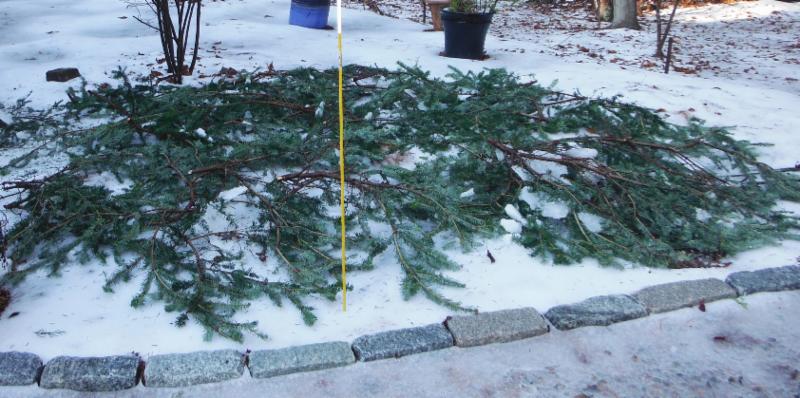 The branches are dispersed to insulate perennials and low-growing shrubs. They offer a layer of protection from unwanted sun and its resulting harmful freeze-thaw cycles. They lessen the impact of frost heaves and unwelcome animal visitors. This year, the lower four feet of our tree yielded some 30 branches that were deployed to all corners of our property. At our old home, we scavenged trees from up and down our street to cover our extensive perennial beds. As our new garden grows, so may we return to that tradition. 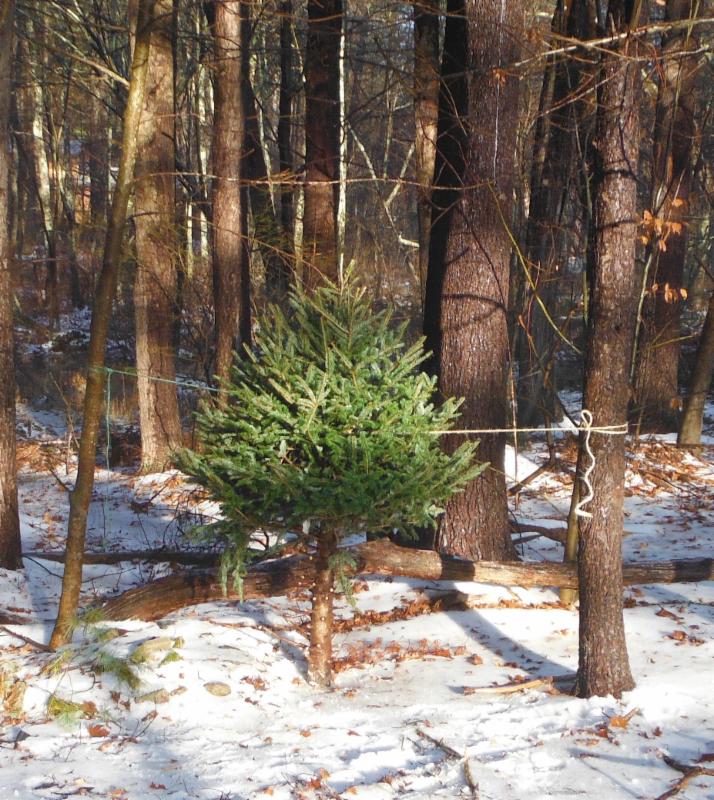 After the lower boughs were removed there remained another lush four feet of tree with thick branches. We left those on the still-eight-foot trunk and placed the tree at the edge of the wetlands behind us. Almost all of the trees in our wetlands are deciduous; the lone evergreens are thin white pines. Our Christmas tree will serve as a refuge for birds seeking shelter from wind, rain, and snow. In April, we will collect the fir boughs and take them to our town's transfer station where they will be chipped into mulch. A month later, as the remaining fir loses its needles, that remnant, too, will begin its final journey. ------------------------------------------------------------------ Neal Sanders' tenth mystery, 'How to Murder Your Contractor' will be available at the end of January You can find Neal's books at Amazon.com and in bookstores.
|
|
|
|
|
|
|