|
|
Friday, December 4,
10 am - 8 pm
Festival of Trees
| |
Saturday, December 5,
10 am- 8 pm
Festival of Trees
| | | Sun Dec 06, 10:00 am - 8 pm
Festival of Trees and Snow Village
| Wed Dec 09, 4- 8 pm
Festival of Trees and Snow Village
| Thursday, Dec 10, 4- 8 pm
Festival of Trees and Snow Village
| Thursday, Dec 10, 4-5 pm
Children's Horticulture Workshop
| Friday, Dec 11, 10 am - 8 pm
Festival of Trees and Snow Village
| Saturday, Dec 12, 10 am - 8 pm
Festival of Trees and Snow Village
| Saturday, Dec 12, 11 am- 12 pm Children's Horticulture Workshop
| Sunday, Dec 13, 10 am - 6 pm
Festival of Trees and Snow Village
| Monday, Dec 21, 10 am - 12 pm
Winter Solstice Walk |
|
|
 For exceptional benefits to help you in the garden- Join Today! If you are a Mass Hort member - please recommend membership to a friend! Forward this newsletter. CLICK HERE TO JOIN |
|

SPREAD THE WORD,
HELP US GROW!
Refer a new member to Mass Hort and receive a coupon to attend a Thursday Night at the Hort lecture for free!
|
|
|

You Shop - Amazon gives to Massachusetts Horticultural Society!
Amazon will donate 0.5% of the price of your eligible AmazonSmile purchases to Massachusetts Horticultural Society whenever you shop on AmazonSmile.
AmazonSmile is the same Amazon you know. Same products, same prices, same service.
Begin shopping
www.smile.amazon.com
|
|
|
A great holiday gift!
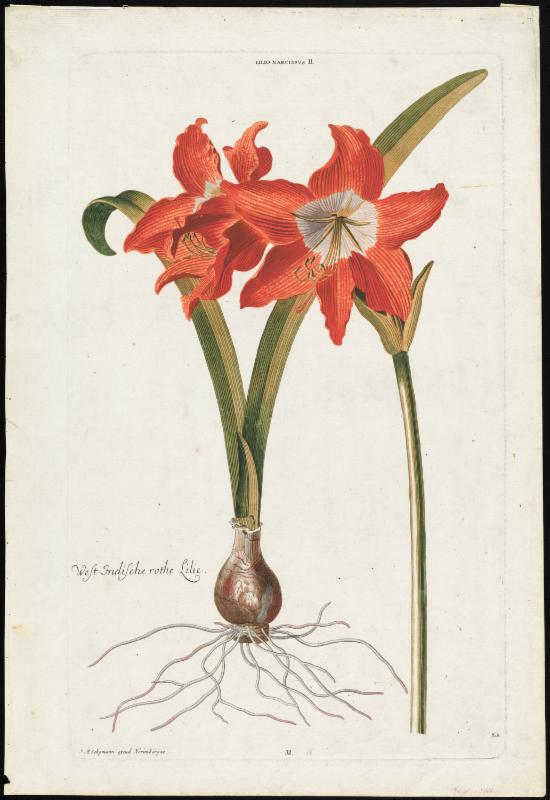
SHOP NOW!
|
|
|
Letter from the President
Greetings!,
Thank you for your membership, volunteerism, and support throughout the past year. The staff and trustees truly appreciate your help, which allows Mass Hort to continue to deliver our mission of connecting people to plants, gardens, and the natural world.
Check out the 2015 highlights of our accomplishments. We could not have been so successful without your help! If you have not done so already, please consider making a gift to our annual fund this season.
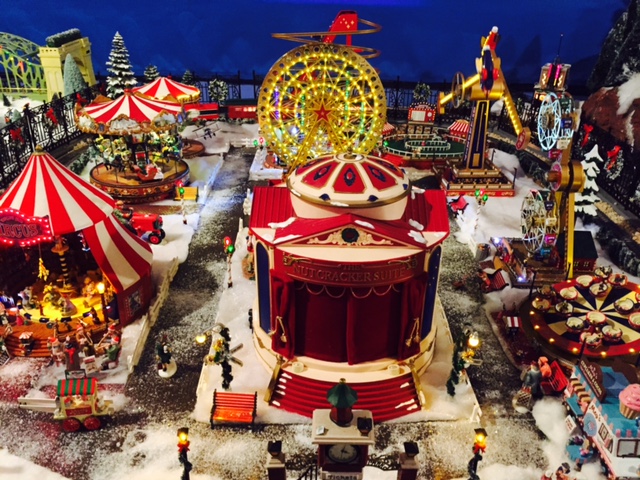
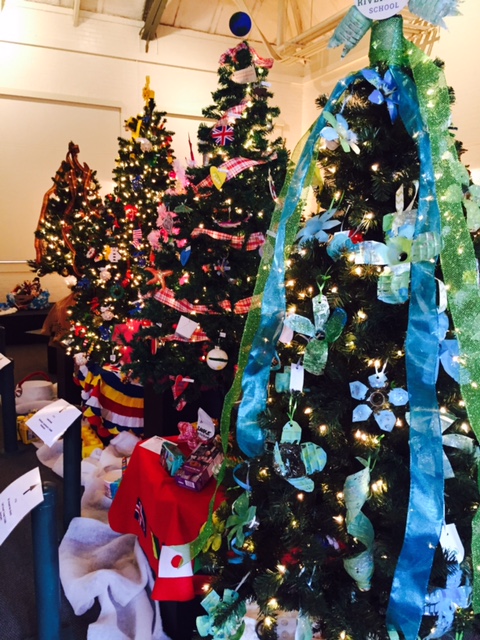
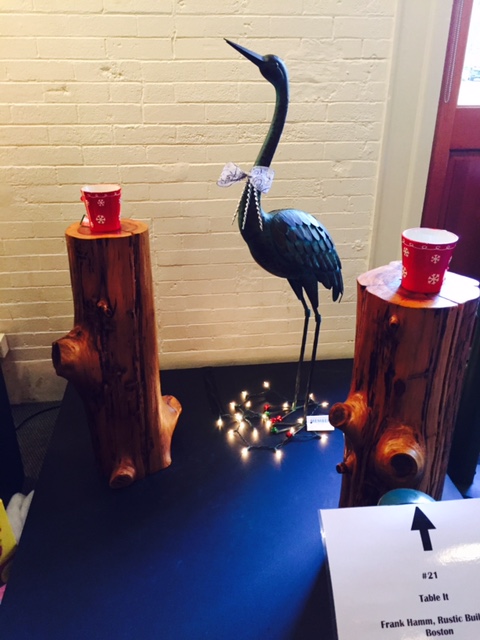
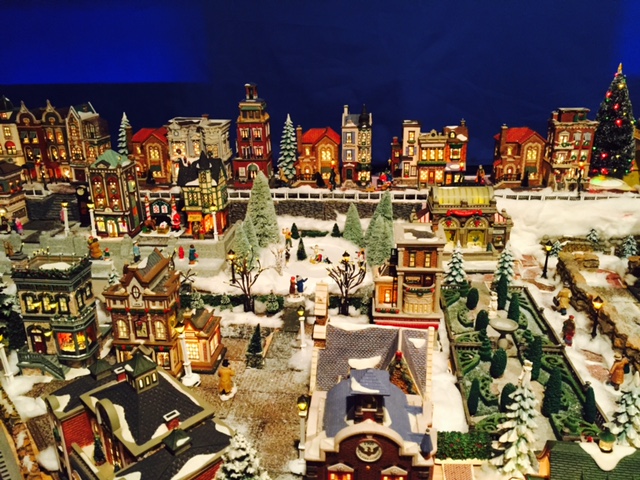
We are in the midst of the Festival of Trees and Snow Village. We hope you will tell friends about the event and bring the whole family to enjoy it. A hearty shout-out of thanks to Gretel Anspach, Festival Chair, and Penni Jenkins and Holly Perry, who have worked tirelessly to bring this fun festival together, and all the volunteers that help. Thank you to the many individuals, garden clubs, and companies that have helped us by donating or sponsoring a tree, and a special thanks to our event sponsor, Bartlett Tree. There is a wonderful selection of unique trees that will be raffled off on the last night, December 13th. Bill Meagher's Snow Village tripled its size this year in the west wing of the Education Center. It is sure to mesmerize young and old alike. The Festival of Trees takes place at Mass Hort, 900 Washington Street, Wellesley, MA from November 27 through December 13. For more information, please visit: http://www.masshort.org/Festival-of-Trees
Trying to think of unique gifts for the holidays? Now is a great time to give someone the special gift of a Mass Hort Society membership. Go to http://www.masshort.org/Gift-Memberships for a gift that is perfect for the gardener and non-gardener, alike.
For a beautiful gift of botanical art, check out our new Botanical Prints Shop online at http://www.masshort.org/mass-hort-shop. Mass Hort has made available seven giclee reproductions for 2015. Learn more about purchasing these beautiful prints, available for the first time at our online shop.
I wish you and your family a very happy holiday season.
Warm regards,
Kathy
|
|
Choosing Your Christmas Tree - Real or Plastic?
By R. Wayne Mezitt, Trustee Chairman
From my perspective, those of us who appreciate the value of horticulture and the natural world need to make a more compelling argument for using real Christmas trees. Big-box stores shamelessly promote the convenience of "Real-Feel" artificial trees, usually produced in a foreign factory, boasting natural-appeal-marketing terminology like "realistic", "true needle" and "natural series", along with pre-lit, scent stick, fire-retardant technology! Sure, an artificial tree asks for minimal effort to set up and put back into the box for another use; but largely comprised of non-biodegradable polyvinyl chloride (PVC), so when it outlives its usefulness, disposal is not beneficial to the environment.
Fortunately, nurseries, garden centers, big-box stores, community/service organizations and individuals continue to offer widely-varied choices of cut trees (starting in recent years even before our Thanksgiving dinners are prepared!). A measure of family commitment is involved with choosing, cutting, transporting, setting-up, decorating and removing a real Christmas tree, but the authentic aroma and touch of a natural tree is unmistakable. And utilizing the tree's branches for wildlife habitat or mulch after the holidays makes it far more nature-friendly.
Admittedly not all real trees offered at Christmas are locally grown, but they're all sustainably produced and support local endeavors. Governor Baker has designated the Friday after Thanksgiving as " Green Friday", recognizing of the value of Massachusetts Christmas tree growers to the environment and our economy, encouraging us to shop locally.
As environmentally-concerned consumers, our Christmas challenge is to choose between the value of tradition/authenticity of a real tree or the well-marketed convenience of "reusable" PVC. Pervading our winter-solstice-holiday celebrations (our society's recognition of nature's cycles), the surfeit of artificial trees certainly contributes to the rapid erosion of our personal connections with the natural world. You'll notice that even the trees on display at our annual Mass Hort's Festival of Trees are artificial, an unfortunate necessity, because Massachusetts law prohibits indoor cut live trees at a public event.
Certainly the expectations and rewards of using a real tree are different; they strongly represent what the Christmas season is truly about. It's easy to show that you care for this festive season's natural sustainability values - choose a real tree!
R. Wayne Mezitt is a 3rd generation nurseryman and a Massachusetts Certified Horticulturist, now chairman of Weston Nurseries of Hopkinton and Chelmsford, MA, and owner of "Hort-Sense", a horticultural advisory business. Wayne currently serves as Trustee chairman for the Massachusetts Horticultural Society at Elm Bank in Wellesley MA.
|
|
Festival of Trees and Snow Village
Fun for the whole family!
November 27-December 13. All trees are raffled off! Santa and wagon rides on the weekend. Check the website for schedule of activities. Thank you for joining us for the holidays! |
Get Growing!
Mass Hort is excited to invite you, your children and students to compete at the 2016 Boston Flower and Garden Show (March 16-20). We would love to have more kids experience the Flower Show and make connections to professionals and enthusiasts in the plant-science world.
There are a number of competitions that youth (ages 6-18) can enter. The competitions have wonderful connections to art and science, and we hope you will consider sharing this opportunity with the kids and teachers in your life.
Click here to read about the twelve photography, amateur horticulture and floral design competitions. Kids can enter competitions as individuals, and teachers are welcome to enter their entire classrooms.
Please help us spread the word to those who might be eager to explore this exciting opportunity.
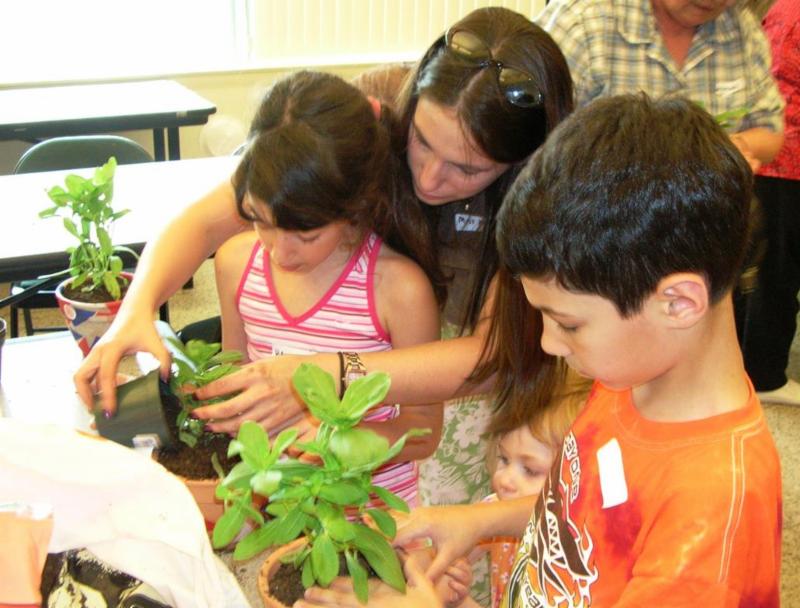
New this year, Mass Hort is also hosting workshops for kids to grow and care for plants they can show in the amateur horticulture competitions. Throughout the Festival of Trees, we are running three hands-on workshops to teach kids (aged 8-16) how to propagate cuttings. Each child will bring home two plants! For more details on these workshops, and to register, click here.
If you have any questions, please feel free to contact Katie Folts, Education Coordinator, at kfolts@masshort.org or 617-933-4973. |
|
Growing a Greener Holiday
 By John Forti, Director of Horticulture By John Forti, Director of Horticulture
Have your foundation plantings filled out more than you planned?
Do your window boxes and planters look sad now that frost has arrived?
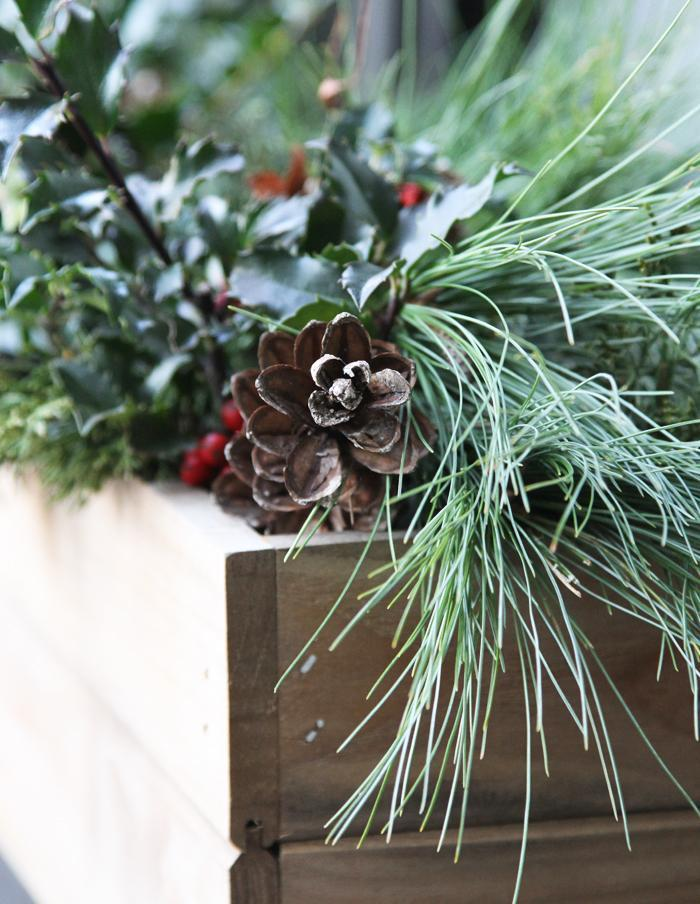
It's a great time of year to get out with your whole family and green up your holidays by pruning the plants in your garden and landscape. Create new traditions by adding in your own landscape favorites. In the process of using plants like andromeda, rhododendron, skimmia, leucothoe, hydrangea and ornamental grasses, we can create unique and special planters that reflect a sense of place.
Traditional old-world favorites included plants like holly, ivy, rosemary and bay for the holidays. When we began celebrating Christmas in 19th century New England, we added native plants to our holiday pallet. Wintergreen, spruce, laurel, pine, winterberry, cedar, red-twig dogwood, milkweed and staghorn sumac all helped to bring nature closer to home, and make the yuletide bright. In addition, when we use native plants we can also be glad when the birds flock to our seasonal displays and spread the seeds for future generations of people and pollinators.
These days, my favorite holiday traditions are a blend of old and new. When we use plants from our own yard, every window box and planter filled with backyard plants helps us to reduce our carbon footprint and get down to the work of pruning and maintaining in our own winter landscape.
So don't just lament the grey - deck the halls with your long awaited pruning projects. Simply make sure to use best practices when pruning, and make cuts above leaf buds where you hope to encourage thicker growth and new branching. Learn more from this link: http://pubs.ext.vt.edu/430/430-457/430-457.html
Take time to build new traditions, by creating ornamental planters, wreaths, roping with family and friends...and you might even get a little yard work done in the process!
Happy Holidays!
John
|
December Hort Hints
by Betty Sanders
Protecting Plants. Not every winter will set records like last year, but new or tender plantings may still need help. If you took advantage of fall nursery sales, or if you used the warm weather to work on your garden, or ifyou moved a few plants, give those plants the extra
|
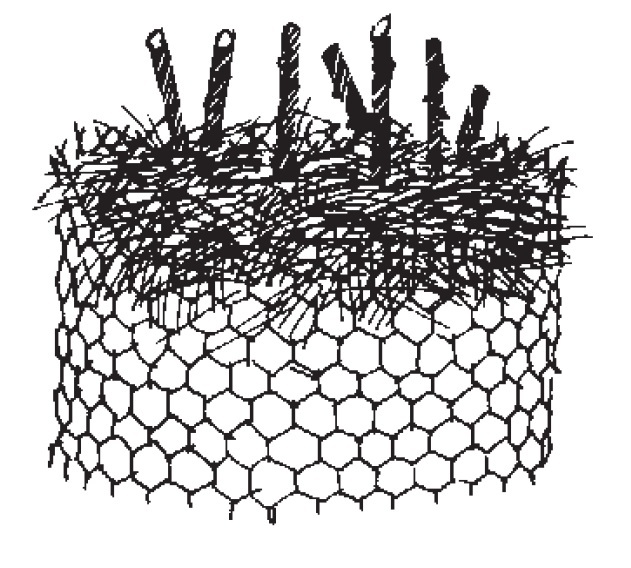
| | A poultry-wire mesh filled with leaves or pine needles will protect roses |
protection they'll need. Wind screens or cages stuffed with mulch, straw or leaves will protect from both drying winds and temperature fluctuations. Plants susceptible to having branches broken by ice or heavy snow need special help. Tying branches together with heavy twine can be effective.
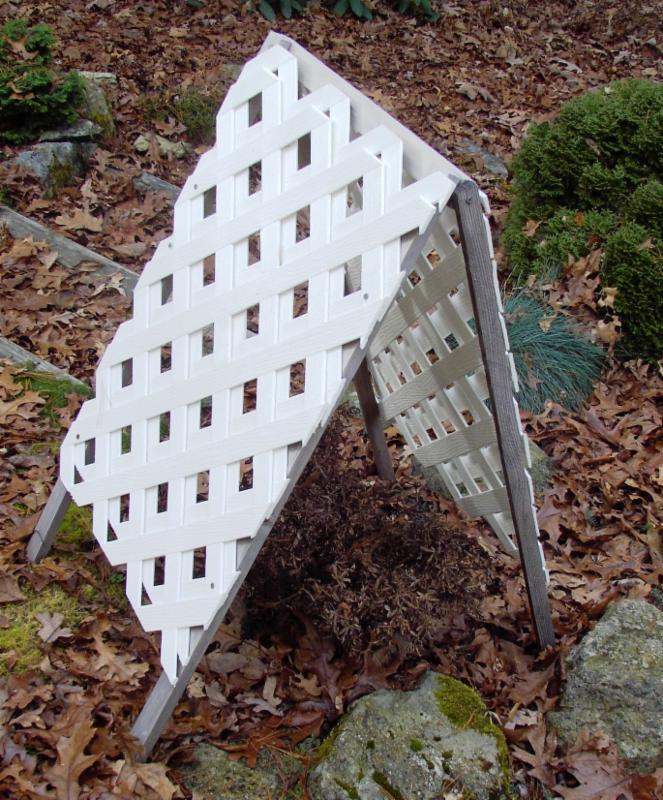
For small plants, structures allow good air flow while preventing crushing snow loads from building up. Never wrap plants in plastic or burlap. These deprive them of light and fresh air, and provide a comfy home for rodents that may dine on their bark.
Cutting your own Christmas tree is better for the
|
| | A simple lean-to can protect newly planted shrubs from winter snows |
environment than buying one pre-cut. Many of those trees are transported long distances and many, many of them remain unsold on Christmas Eve, increasing the waste. A tree cut locally is fresher and cutting it yourself is great family fun. Here is a link to "choose and cut" Christmas tree farms in Massachusetts. After Christmas, cut the branches and use them to cover gardens, keeping sleeping perennials from suffering freeze and thaw cycles as the winter goes on.
|
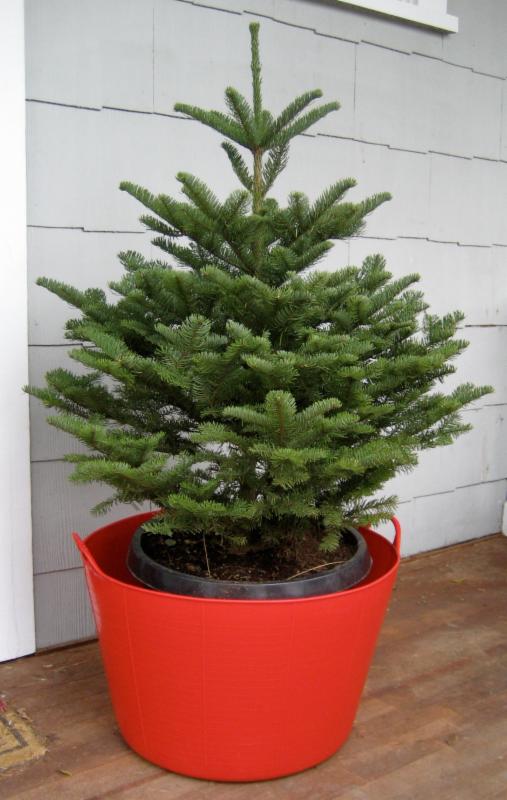
| | Consider a live Christmas tree that can be planted in your yard |
Live Christmas trees are a wonderful way to make Christmas a permanent part of your landscape. If you are considering a live Christmas tree, there are a few rules to follow. When you choose the site in your garden for the new tree, be certain to take into account its ultimate size. Today's six-foot balsam wants to grow to 75 feet high and 25 feet wide. Dig the hole now, before the ground freezes. Remember: it should be three times as wide as the root ball and just as deep as the root ball is tall. Keep the excess soil covered with a tarp so it is ready to be put back in the hole no matter the weather between now and your planting date.
Bring a live tree into the house for no more than 3 or 4 days. Before bringing it indoors, make certain it is well watered and, once indoors, keep it away from heat sources. After replanting, mulch the tree with 3 to 4 inches of wood chips or similar material. Continue to water your tree until the ground around it is frozen solid. Consider adding protection from direct sunlight and harsh winds with a burlap screen. In the spring, resume the watering for one or more years as it becomes established.
Winterize your tools. With the gardening season at an
|
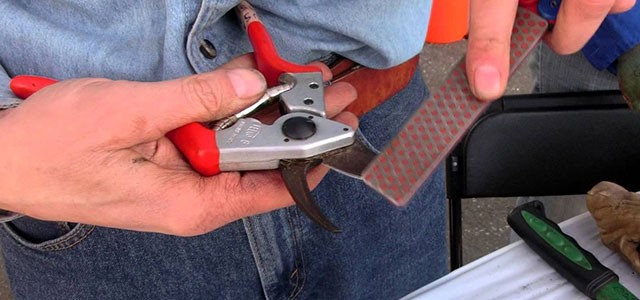
| | Sharpen tools before you put them away for the season |
end, it's time to clean and prepare your tools for next spring. Wash tools to remove dirt or mud. Sharpen cutting tools like pruners, but don't forget that a good shovel or hoe works better with a smooth, sharp edge. After the clean-up is finished, wipe metal and wooden parts with an oily rag. The oil will protect metal from rust and keep wooden handles from drying out. Never put oil on plastic or painted parts. And remember, if you send your lawn mower out for a tune-up now, it'll be ready when the lawn needs it in the spring. You have already tuned up your snow blower, haven't you?
------------------------------------------------------------------------------
You can see more of Betty's horticultural advice at www.BettyOnGardening.com. Betty is also the 2015-2017 President of the 11,300+ member Garden Club Federation of Massachusetts.
|
Book Review

The Good Garden: The Landscape Architecture of Edmund Hollander Design
By Edmund Hollander and Anne Raver, with principal photography by Charles Mayer
Monacelli Press: 2015
Reviewed by Patrice Todisco
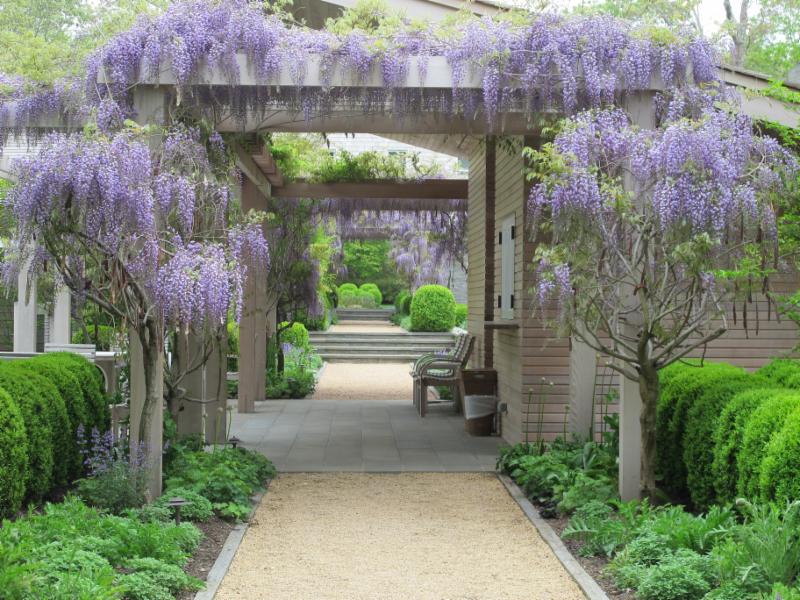
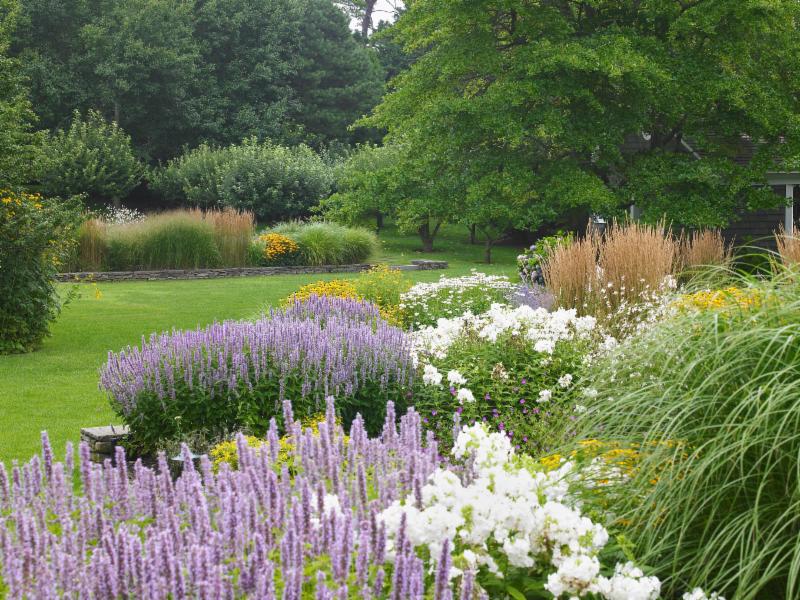
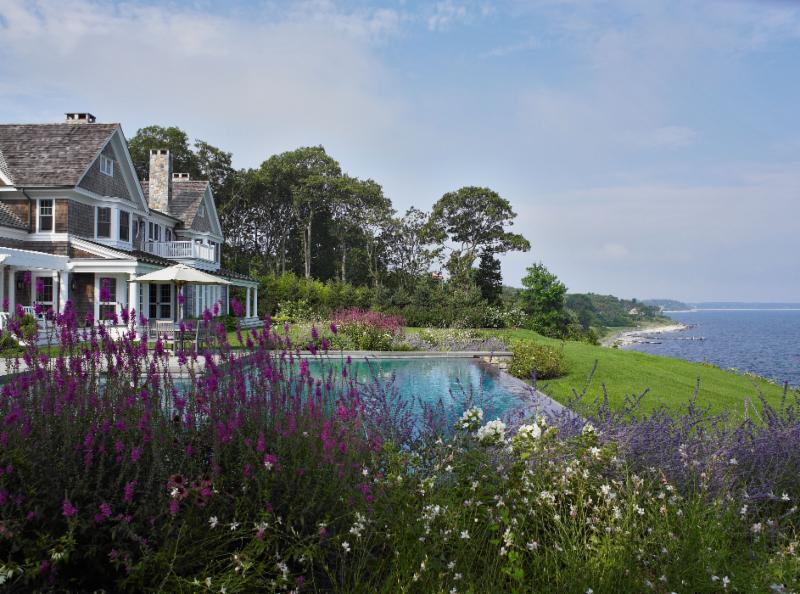
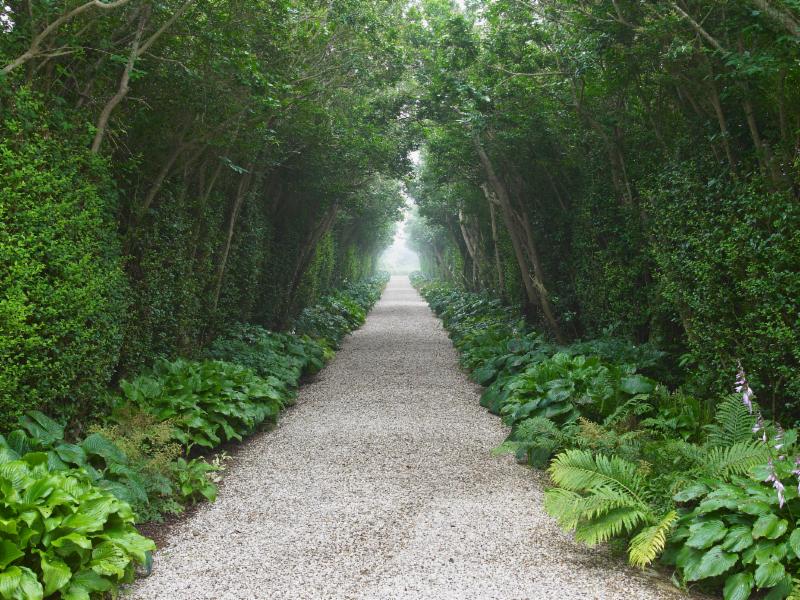
According to landscape architect Edmund Hollander, "a powerful landscape unfolds like a story"with a narrative of sequenced, choreographed movements transitioning the public to the private realm. Here "your land is your home, and within that home is the house", whose material culture of wood, brick and stone is animated by plant materials.
The Good Garden: The Landscape Architecture of Edmund Hollander Design, details how that story is told from a landscape perspective using a holistic design process that integrates ecology, cultural history and a sense of place.
For Edmund Hollander Design that place is, by and large, located within 200 miles of New York City where for more than twenty-five years he, and his business partner, Maryanne Connolly have practiced. While they maintain a robust list of international clients, it is within this particular geography that they have created hundreds of landscapes, rooted in the distinctive ecology of the region.
Deeply influenced by Ian McHarg, the Scottish landscape architect and regional planner who founded the department of landscape architecture at the University of Pennsylvania where Hollander and Connelly met as students, their work employs an ecological approach to every project. This is informed by three elements: nature, including topography, soil and climate; human, or the way in which a client "pictures"living on the property; and architectural, including the house and related built structures.
Elegantly designed and exquisitely photographed in full-color, The Good Garden: The Landscape Architecture of Edmund Hollander Design features a selection of the firm's private gardens from throughout the Northeast. These are thematically arranged according to individual design elements. Chapters are devoted to plantings that complement architecture, plants as architecture, specialty gardens, and landscapes inspired by nature.
Within each chapter are subheadings that explore design elements and principles, providing a framework for landscape design and a reference for the home gardener. These range from the intimate (gateways, stairs and pathways) to the landscape scale (dunes, meadows, shorelines, woodlands and greenswards). For each a series of annotated photographs provides additional detail and planting information.
Written in collaboration with New York Times and Landscape Architecture columnist Anne Raver, The Good Garden: The Landscape Architecture of Edmund Hollander Design is a beautiful book filled with beautiful landscapes designed in an environmentally sensitive manner for a very particular clientele, with the financial resources to maintain them. With nary a leaf out of place they provide the ultimate gardening fantasy.
Try as I might I could not find any direct reference explaining how the book's title, "The Good Garden" was chosen. Hollander's purports that the ability to "shape the landscape as a whole separates the landscape architect from the gardener" with a successful landscape based "primarily on the spatial quality that is created and the use of plants to shape spaces, particularly as you get away from building architecture." Perhaps that's good enough.
Patrice Todisco writes about parks, gardens and the public realm at www.landscapenotes.com
All Photos © Charles Mayer. Courtesy of The Monacelli Press.
|
Catching Up With the Last Half Century
Part 11
The Early Eighties : Hard Decisions
 When the calendar was flipped to 1981, President W. Robert Mill told the Board of Trustees that they needed to vote on an annual budget that would involve three of the Society's most important assets. A decision was looming as to which would be the most beneficial to sell: the building, the rare book collection, or Horticulture magazine. He said that the Executive Committee, at its March meeting, would be charged with making recommendations, so advocates for the retention and expansion for one or the other were lining up. Executive Director Roger Dane presented the 1981 budget with the warning that it could be met only if one of the aforementioned assets were sold. Mr. Dane said that he thought that selling Horticultural Hall to the First Church of Christ, Scientist would involve its restoration and continuing occupation by the Massachusetts Horticultural Society.
The Trustees were also trying to lift restrictions on some of the endowment funds and suggesting that in the future, donors be asked to give funds while granting their use to the discretion of the Society.
Along with books, art works were considered likely to be sold. It was voted, though, that the portraits of past officers and the three Gold Medals owned by the Society were not to be parted with. In light of unsuccessful results from numerous campaigns to boost circulation and advertising, it was decided that Horticulture would be the first asset to go, with the proviso that that there be an attempt to retain its current staff. The Trustees accepted the offer from a partnership called "Horticulture Associates", which was composed of New Yorker magazine and Eliot Wadsworth II of White Flower Farm. They would continue to publish from space in Horticultural Hall, for which the Society would expect rent.
As a result of this sale, the financial stability of MHS seemed assured, and more good news came from the Justice of the Suffolk County Probate Court, who signed an order modifying restrictions on the uses of various restricted endowment funds. Income was now payable yearly for general purposes of the Society, as well as support for its shows. The income would be approximately $34,000 a year. Later, another source of excitement was the discovery of the Eleanor Tudor Trust Milk Fund, which would yield $30,000 a year. The Trustees hoped to use the funds to help children enjoy horticultural activity.
Attempts to dispose of artifacts through auction houses were not fruitful, so they were retained. And in spite of the specter of downsizing, the membership looked forward to hosting the Annual Congress of the American Horticultural Society, which was to meet in Boston in September. In honor of the meeting M. H. S would present a show called "Yankee Gardening - Yankee Ingenuity". It would feature energy efficient greenhouses.
To begin almost every meeting, though, there was a question about what to do with the building, and in retrospect, it becomes obvious that the Society's leaders were hesitant to move. They made plans to rent out unused space to appropriate tenants. The question was still uppermost at the beginning of 1982, when Phyllis Anderson was elected President. There was an emphasis on educational activities and media publicity at the Flower Show. In fact, the 1982 Flower Show was a resounding success, having shown a profit of $265,000, which was a record. Eager to maintain the Hall as a jewel of the community, the Executive Committee decided on a compromise: it would advise the Board of Trustees that they enter into an agreement with Historical Hall Associates, which had been successful in adapting other venerable buildings for commercial purposes, to undertake the revitalization of Horticultural Hall.
|
The Boston Flower Exchange 
by Neal Sanders
Leaflet Contributor
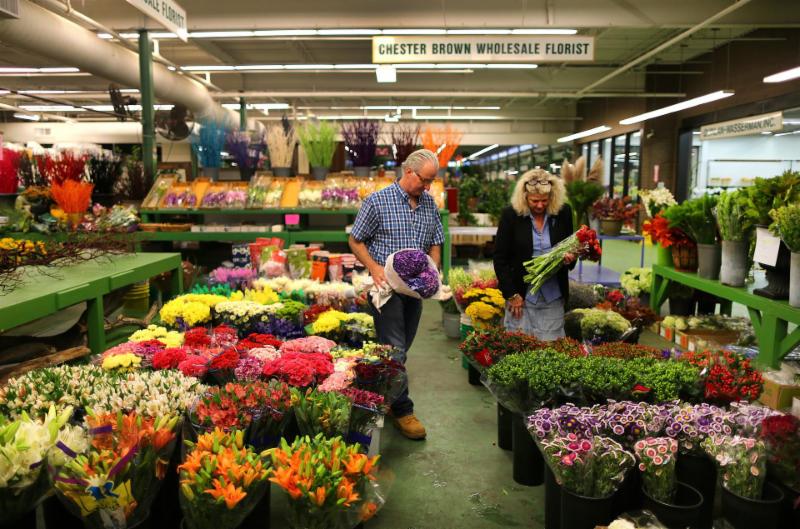
If you live in southern New England and you ever thought a florist or floral designer did an especially imaginative job choosing the flowers for a wedding, flower show, or garden club presentation, you should probably include the Boston Flower Exchange in your thanks. At the 'flower exchange', as most people refer to it, the aforementioned florists and designers can browse 13 wholesalers under one, 75,000-square-foot roof that is wall-to-wall displays.
The flower exchange is a venerable institution that has its origins back when greenhouses in the hinterlands around the city grew summer and winter blooms (notably carnations, roses and camellias) for the carriage trade. Over time, 'outside' flowers were allowed in.
|
| | Inside the Boston Flower Exchange (photo credit: The Boston Globe) |
Today, the source of most flowers is South America and the Netherlands. They're flown in overnight and, beginning at 2 a.m., the flower exchange wholesalers collect their orders at Logan Airport, bring them to the market, sort them, and have them ready for sale before 5 a.m. I can attest that at 6 a.m. the flower exchange is in high gear. By 9 a.m. the stalls are mostly bare and the market formally closes at noon.
The beauty of the flower exchange is the breadth of offering and specialization. One stall specializes in 'tropicals', another in orchids. If you can't find the right shade of the specific flower you need at Chester Brown, try Cupp & Cupp or Carbone. If you need 100 dozen roses in the exact same hue of cream for a wedding next Saturday, explain your need to the salesmen at Riccardi and let them ensure your order is filled.
|
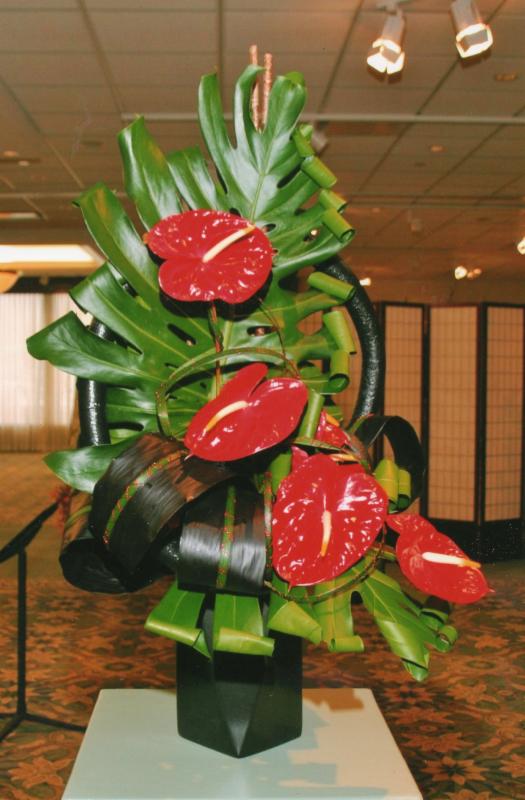
| | At the 2012 Boston Flower Show, this design by Thelma Shoneman was a huge hit |
Although not part of the Boston Flower Exchange, life for those florists and designers is made easier still by the presence of Jacobson Floral Supply. Housed in a supermarket-sized building adjacent to the flower exchange, Jacobson offers everything imaginable (except cut flowers) someone could need.
You would think that every city would have its own flower exchange. You would be wrong. Most cities - including most major cities - have widely dispersed wholesalers, requiring florists and designers to either establish a strong rapport with one of those wholesalers, or else to drive from one end of (say) Houston to the other to find what they need. Out-of-town designers who come to Boston for events have nothing but high praise the institution, and uniformly wish it was replicated back where they came from.
You would also think that the future of the Boston Flower Exchange would be as secure as the North End's Paul Revere statue. Again, you would be wrong. The flower exchange led a peripatetic existence for decades before settling in the old CycloramaBuilding in the South End in 1923. By 1963, however, that building's future was threatened by redevelopment and the Exchange's Board of Directors went looking for a permanent home.
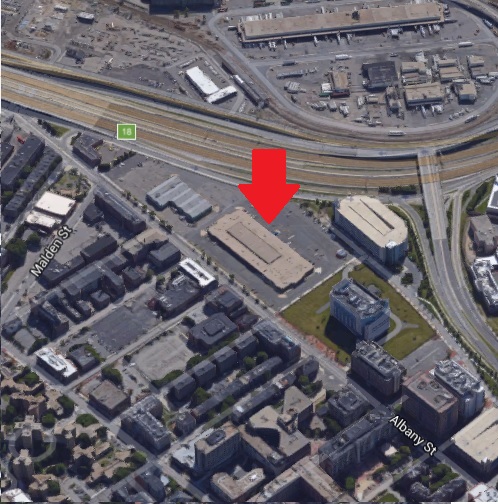
They found it a mile away in a desolate, 5.6 acre, plot hard
|
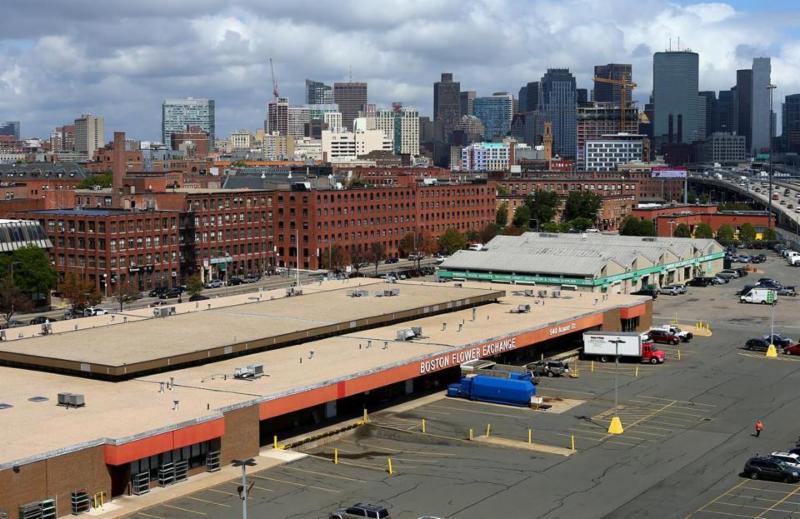
| | When it was built, the flower exchange was in a rundown industrial neighborhood. |
by the elevated Southeast Expressway amid gritty, abandoned industrial loft buildings. Built on land that was once part of Boston Harbor, a functional, one-story building with ample parking and loading docks opened in 1971. Jacobson Floral Design built their store on an adjoining plot. For more than four decades, florists and designers had a readily accessible, central market where the lone complaint was crime (ameliorated by a steel fence around the perimeter of the property, and then more recently by a much improving neighborhood).
|
| | In 2015, the land under the Boston Flower Exchange is ripe for development. |
But in the second decade of the new century, that part of South Boston has become exceptionally attractive to developers. In September 2014, the Exchange's Board received an unsolicited offer of more than $35 million or the site. Other offers quickly followed. In May 2015, the vendors who make up the Board voted overwhelmingly to accept the offer from a still-unidentified buyer. The transfer and closing of the market will take place before December 2017.
The reality of the closing of the market - and the apparent likelihood that there is no replacement facility on the
horizon - has started to sink in among those who have always relied on the flower exchange. One highly regarded North Shore floral designer mused about the situation during a floral demonstration last week. His favorite wholesaler - one who has always found just the right blooms for demanding clients - is contemplating retiring rather than relocating, a devastating change that would add an unwanted, new layer of complexity to what is already a demanding business.
I think about the fifty-plus amateur designers who enter the competition at the Boston Flower & Garden Show on each of its two entry days in March. They receive no compensation for their designs, only a ribbon or two. To earn that ribbon, they'll spend many hours (sometimes several dozen),
|
| | Wedding flowers from the flower exchange |
creating a unique design at home. Then, the day before they enter their design in competition, they converge on the flower market between 5:00 a.m. and 6:00 a.m. where they'll spend an hour or more searching out the perfect blooms among several wholesalers. Those flowers will go back home where the designers will take a day to 'condition' them. The following morning, those same designers will descend on the Seaport World Trade Center at 5:30 a.m. to create their masterpieces. This is all for a ribbon and the satisfaction of having created something beautiful for others to admire.
That frenzy of competition is replicated across half a dozen other 'major' shows across the region each year (Topsfield, Marshfield, Barnstable), plus across several dozen club shows where the more ambitious designers eschew supermarket flowers in favor of those from the flower exchange.
An end of an era is on the horizon. There's no petition to sign or rally to attend. It is simply progress. It is also a case where the future - at least for floral designers - may not be as bright as the present.
------------------------------------------------------------------
Neal Sanders is the author of nine mysteries. His tenth, 'How to Murder Your Contractor' will be published in early 2016. You can find Neal's books at Amazon.com and in bookstores.
|
Notes from the Vegetable Garden
By Susan Hammond
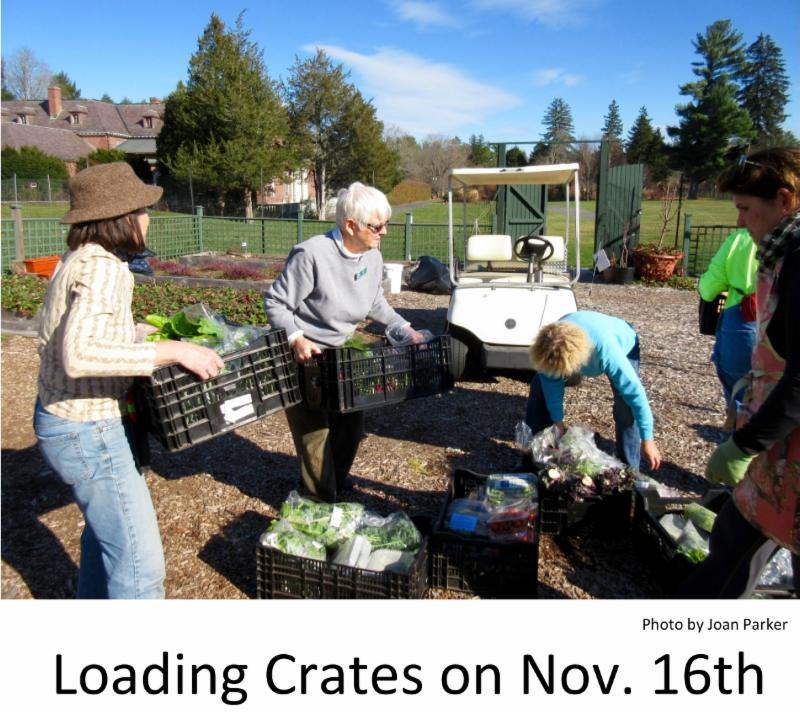 On Monday, November 16, we did something new in the vegetable garden. For the first time, we had a real November harvest for our food pantries!
As was mentioned in the previous issue of the Leaflet, planning for this harvest started months ago. During the summer, our intern Bryce worked on keeping our leek bed weeded, which gave us a big enough crop so that we could send some on November 16 and still leave some in the garden to overwinter for an 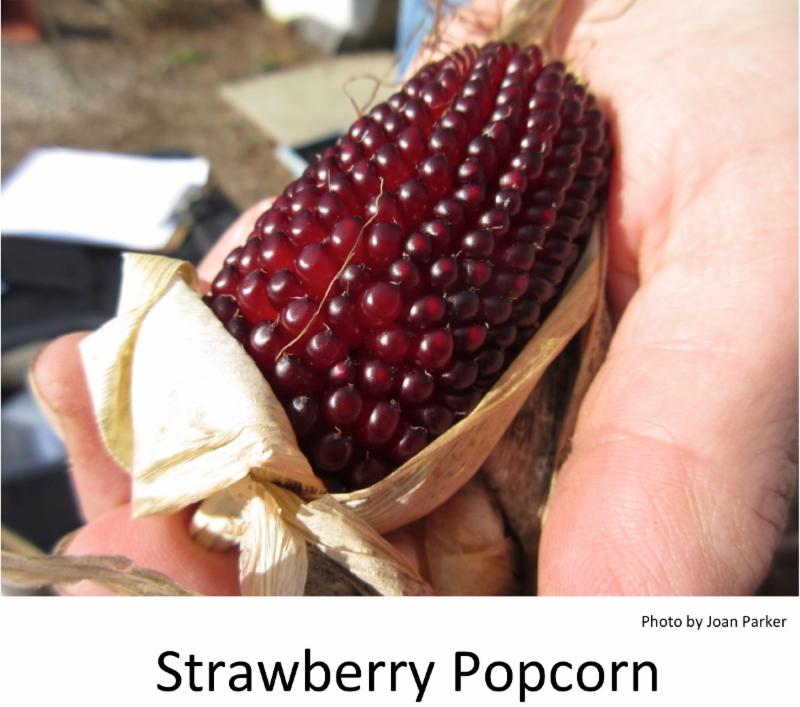 early spring harvest. Some of our garlic was cured, so it could be sent as part of the November harvest and be available for folks to use for Thanksgiving or beyond. The later harvest also meant that we were able to wait and harvest our "strawberry" popcorn at the perfect state of dryness for easy shelling and popping. This is an heirloom that many people may have never seen before - beautiful, red, miniature ears with a delicious flavor far beyond the common popcorn in the grocery store! We're delighted to be able to share this crop with the community.
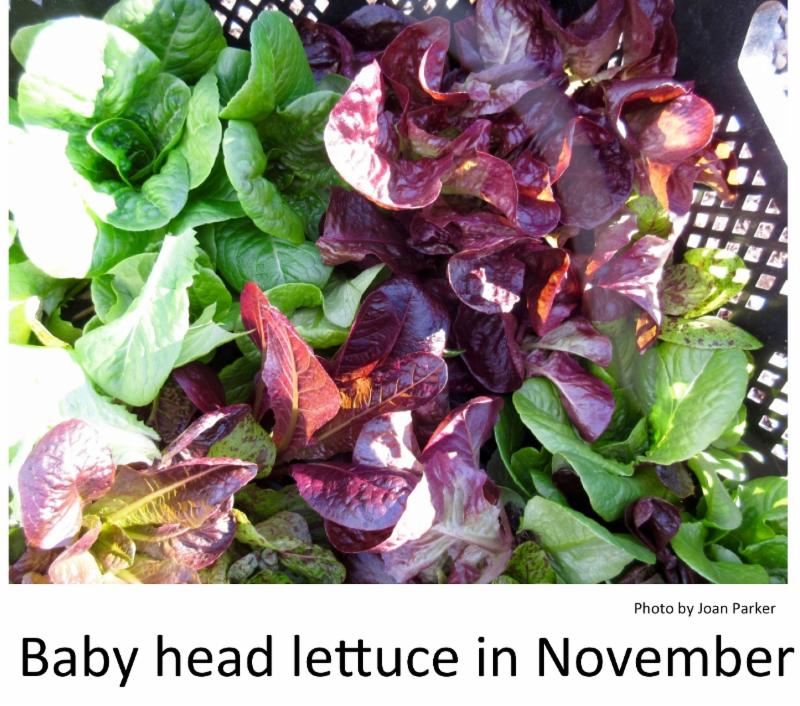 We also used some season extending techniques to include crops like lettuce in this harvest. Our lettuce was grown under row covers, a lightweight fabric that allows light in but helps protect the plants from excess cold. We had harvested unripe tomatoes before frost and layered them into crates stored in a cool but not too cold place, which allows them to ripen gradually. This worked - while not all of the tomatoes ripened, we did have some ripe tomatoes to send in November. And we'd pulled up pepper plants roots and all and tucked them into large tubs in our unheated greenhouse (a cold frame would work as well). We didn't expect to have the plants make new peppers, but we were hoping for extra time to allow green peppers to ripen, and that 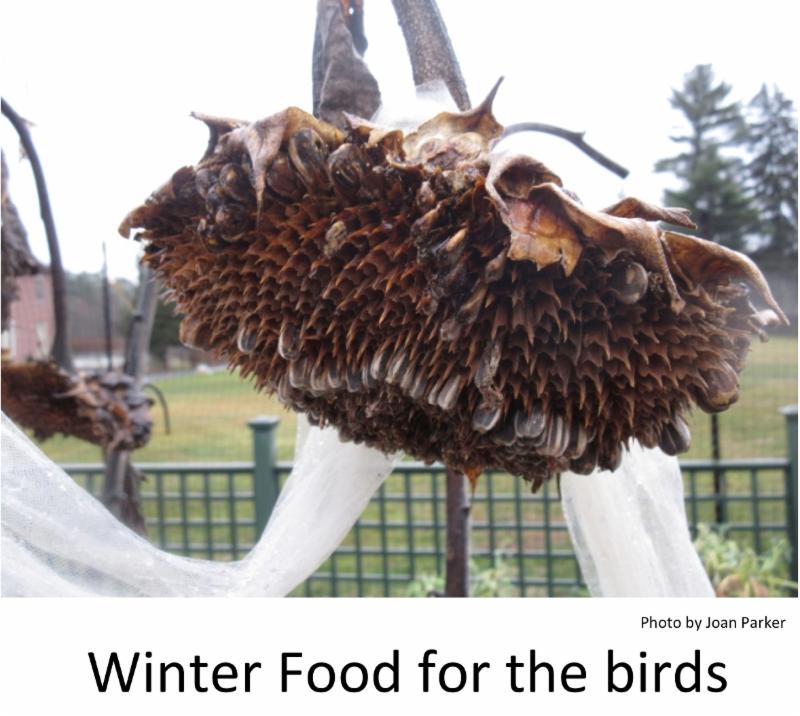 worked, too. These are all easy gardening techniques that can be done at home with a minimum of equipment.
We harvested 106 pounds on November 16, split between our two food pantries, and our final total for the year is a bit under 3500 lbs. While that's down from last year, our diversity of crops was up and our season lasted longer.
Harvest is not the end of our gardening season! We've been out in the garden cleaning up our beds and starting to prepare them for next year - some have cover crops, some have compost or manure, some have leaves. Next year's garlic has already been planted as well, with a layer of dried alfalfa on top that will break down over the winter and provide nutrients as the garlic grows.
Some parts of the garden don't get cleaned up until spring. This allows the garden to support natural lifecycles - both by providing seeds to birds, and creating spaces where our native pollinators and other beneficial insects can overwinter. Even if we are done harvesting for the food pantries, the garden still helps to "feed" a healthy environment, all winter long.
|
|
|
|
|
|
|