|
 For exceptional benefits to help you in the garden- Join Today! If you are a Mass Hort member- please recommend membership to a friend! Forward this newsletter. CLICK HERE TO JOIN |
|

SPREAD THE WORD,
HELP US GROW!
Refer a new member to Mass Hort and receive a coupon to attend a Thursday Night at the Hort lecture for free!
|
|

You Shop - Amazon gives to Massachusetts Horticultural Society!
Amazon will donate 0.5% of the price of your eligible AmazonSmile purchases to Massachusetts Horticultural Society whenever you shop on AmazonSmile.
AmazonSmile is the same Amazon you know. Same products, same prices, same service.
Begin shopping at www.smile.amazon.com |
|
|
Letter from the President
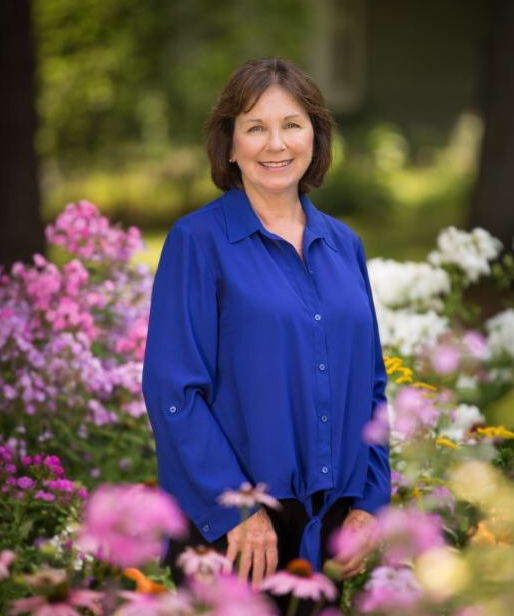
Dear Friends,
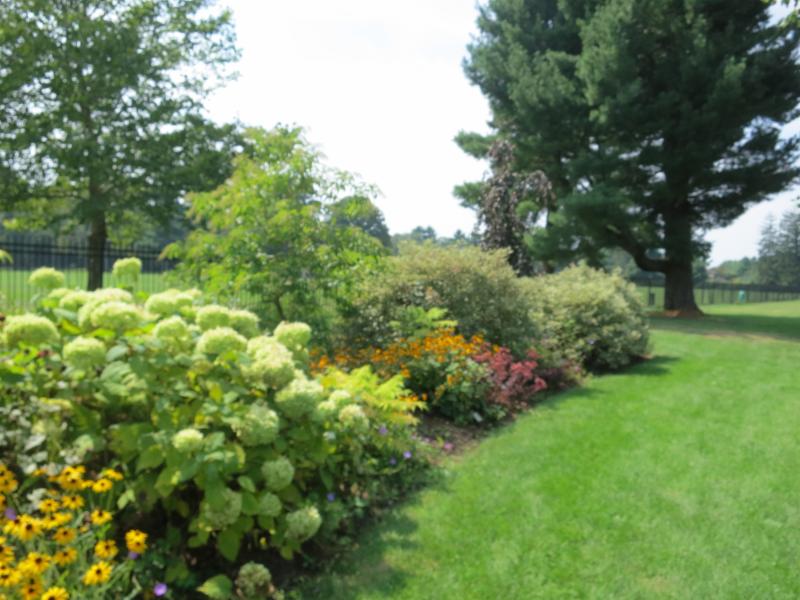
Walks in the garden not only yield brilliant colors in September, but interesting people as well. Children and their families are busy learning about the new fairy garden in Weezies...or discovering the fossil in the sandbox. Old friends join each other for a walk and a picnic. And many artists and photographers are busy capturing the color before the cool nights of fall.
I hope you will join us in the gardens and help support our beautiful property.
September has a great schedule of events for people to enjoy, learn, and just have fun: Sir Peter Crane, Gingko, The Tree That Time Forgot, September 16; Fall Harvest Dinner, September 20; and Princess Corsini, September 27. Sign up now and bring your friends!
Thank you for your ongoing support of The Gardens at Elm Bank and Massachusetts Horticultural Society.
Best wishes,
Kathy
|
|
Membership at Mass Hort
Our members help sustain our gardens and educational programs while receiving over $70 of value with our benefits.
Renew. Rejoin. or Refer Today! |
|
Fall Harvest Dinner
Sunday, September 20, 2015 from 5:00 to 8:30 p.m.
Please join us on Sunday, September 20th at 5:00 p.m. for a wonderful evening with friends dining under the stars. We hope you will join an inspired community of supporters gathered around the table celebrating harvest and the best that our region's farms can offer up. Please consider booking a table for all your friends.
At 5:00 p.m. we will gather in our vegetable garden for creative libations and heirloom tastings or around the harvest table at 6:00 p.m. This year, the harvest supper will be prepared by Chef Mary Dumont. In addition to alfresco fine dining, you will be able to enjoy 3 Goddesses Pale Ale, brewed from our own Cascade hops, and locally made hard cider from Stormalong Cider. At dusk, you will be able to sip an Elm Bank cordial and stroll through a 700 candle labyrinth created by landscape artist Martin Grealish.
The Garden to Table program strives to build strong local food systems from the seeds planted, to the food grown and shared within the community. We work to offer high caliber education in horticulture, nutrition, and food production while helping to raise awareness of food accessibility issues within local, greater Boston, and regional communities.
This celebration is the major fundraiser that will help support future Garden to Table programs, so we can continue to educate, connect and build strength in our local food system!
Please sign up today to help us create a greener future for generations to come.


Image of candle labyrinth of Martin Grealish.
|
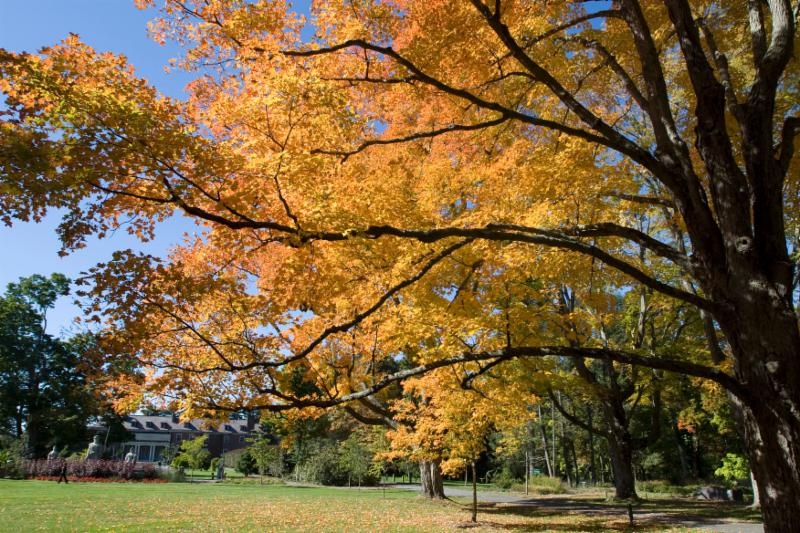 Fall Courses and Events to Get You Growing! Fall Courses and Events to Get You Growing!
When was the last time you thought about going back to school? We have fall horticulture courses that serve a number of horticultural interests. The time to sign up is now!
The Beginning Floral Design course starts Wednesday, September 30 and runs for six weeks. This class gives students the nuts and bolts of flower arranging. The course covers several styles from traditional and table design to creative and miniature. Each week is led by an expert of a different style, and the final session will give students an opportunity to compose their own arrangement. If you want to create impactful arrangements for your home, organize a design contest for your Garden Club or enter a larger competition, this course will give you the foundation for doing so. Sign up here! Cost is $100/members, $125/non-members. Class runs Wednesdays 7-9 p.m., September 30-November 4. Sir Peter Crane, Dean of the Environmental Sciences and Forestry School at Yale. He will be lecturing on the topic of his book, "Ginkgo: The Tree that Time Forgot." There will be a welcome reception and time for book signing after the lecture. The cost is $20 for members and $25 for non-members. The event will be on Wednesday, September 16, from 6:30-8:30 p.m. Find more information and register here. On Sunday, September 27 from 5pm-7pm, we'll be excited to welcome Princess Georgiani Corsini, presenting the 'Culture of Gardens of the Italian Renaissance.' She brings rich understanding and hands-on experience in gardening and will give ideas to elegantly enhance our New England gardens. Please register here, by September 22. The cost is $20 for members and $25 for non-members.
|
Plein Air Artist in the Garden
Alexander Korman
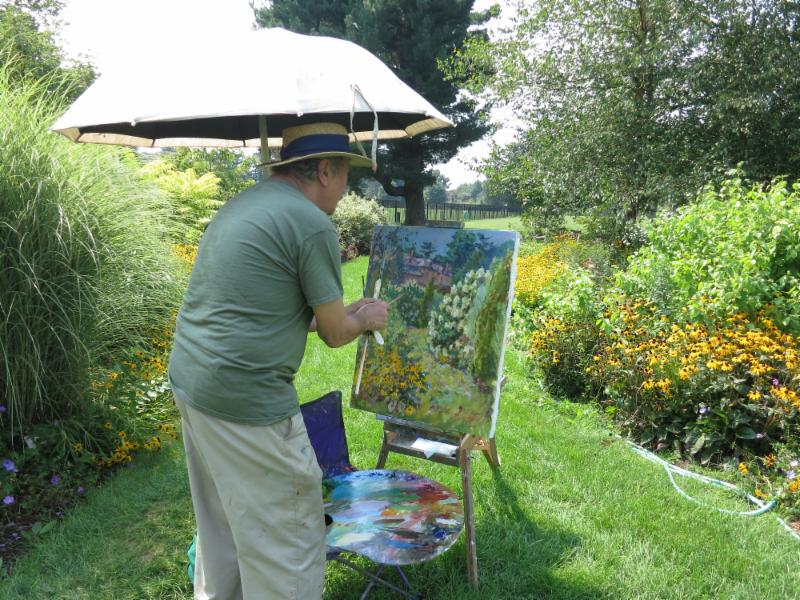
This summer many artist have joined us in The Gardens at Elm Bank to capture the vibrant colors and the light in the beauty of the gardens and landscapes. At the beginning of September we caught up with Alexander Korman in Bressingham Garden working in plein air. Alexander is currently a resident of Boston Center for the Arts. Learn more at www.alexanderkorman.com
|
 September Hort Hints September Hort Hints
By Betty Sanders
BettyOnGardening.com
Take Pictures, Make Plans. If your garden is perfect, take its picture. If your garden is looking tired, take its picture. If your garden doesn't make you happy, take its picture. If you do this once a month through the spring, summer and fall, you have the information to help figure out why your garden is perfect, tired or not making you happy. By analyzing those photos you can see where you need to add more spring bulbs, late summer plants or shrubs and trees to provide structure to your garden throughout the year. Didn't take any photos in the spring? Start now. And don't forget to take some in the winter! Only by looking at your successes and failures can you make plans for the garden that doesn't disappoint. Whether you do your own landscaping, or have someone do it for you, it'll be more successful when you can point out what you like or dislike about the garden you have now.
|
| | Don't be worried about mushrooms on your lawn |
Clean-up Time. It's time to start cleaning your gardens. As plants reach the end of their life (annuals and most vegetables), cut them down and add the healthy material to the compost bin. Any diseased (for example, downy mildew) or insect-infested material should be bagged and put in the trash. Weeds should be cleaned out now because, left to their own devices, they will plant hundreds of thousands of seeds in your lawn and garden, making your job so much more difficult next year.
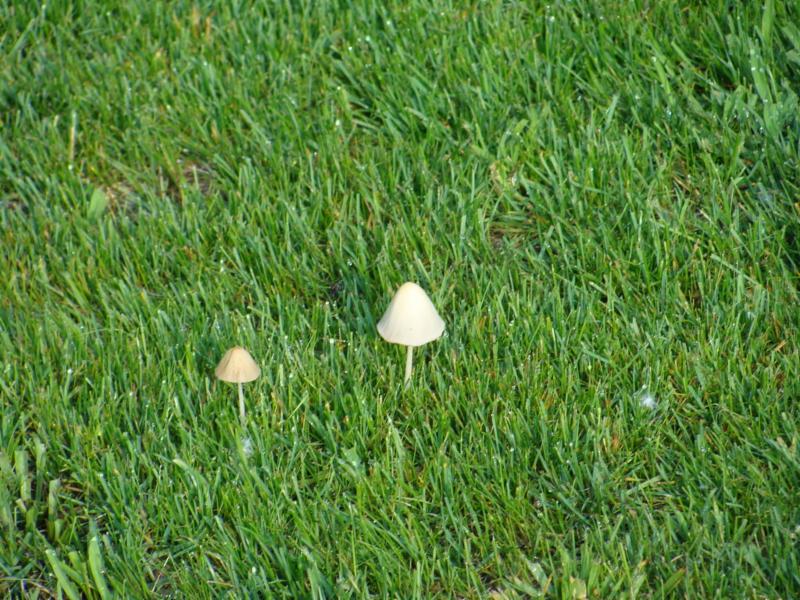
If you find mushrooms in your lawn or garden, leave them alone because they help break down organic matter. Forget fungicides and simply knock them down with a rake if you are annoyed by the sight of them.
|
| | A cold frame will allow you to pick vegetables into November or December |
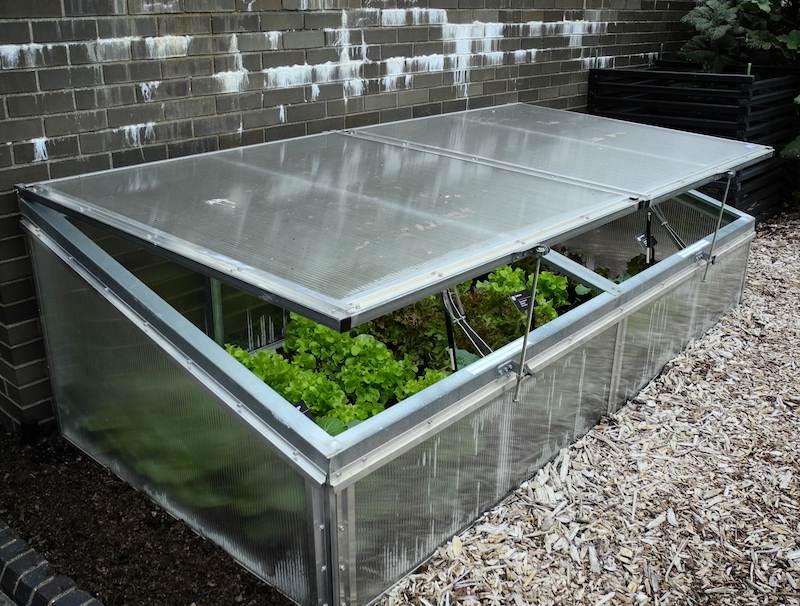
Fall Planting- Vegetable. It's not too late to be planting in the vegetable garden. Add more lettuce, radishes, oriental greens, Tokyo Cross turnips and quick maturing beets. If we have a mild fall, you may be picking through October or even into November. Want to stretch that season? Build a simple cold frame that will keep cold weather vege
|
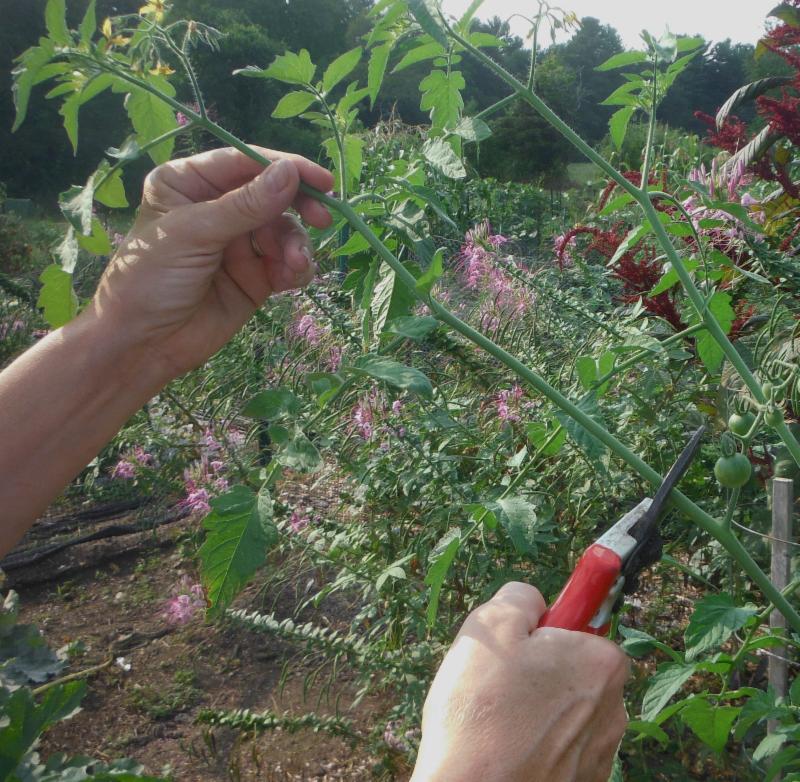
| | Early September is the time to trim back the growing ends of your tomato plants |
tables growing through December or until it is covered with snow. Or at least put a double layer of row cover over your fall crops when frost is expected.
If some of your garden has emptied out, plant oat seed as a cover crop in those areas. The oat plants will die when hit by hard frost, having reduced weeds, recycled nutrients and prevent erosion. In the spring the dead plants are easily turned over or even planted through.
And while it is strange to write this as the thermometer reads 90 degrees, it's time to tell some plants to stop producing and concentrate on ripening. Around Labor Day, I cut the growing tips off tomatoes and winter squash. There is very little chance they will manage to put out new flowers, grow the pollinated flowers into squash or tomatoes that will ripenbefore that first real frost. I want my plants to concentrate on putting all their energies into growing and ripening the tiny green tomatoes into large red slicing tomatoes and the similarly small and greenish winter squash into large, brown winter squash for my Thanksgiving and Christmas table.
Watering. This has not been a good year for the water-conscious gardener. It has been dry and hot, hot and dry. The rain came in bursts and then disappeared for weeks on end. Water bans throughout the area has made watering plants very difficult.
It is important to remember to water newly planted trees and shrubs right up to December, or until the ground freezes. Don't put fertilizer on any plant, including grass, unless it is raining outside or you can give it a deep soaking. Fertilizers are salts that will burn the roots if applied to dry soil.
-----------------------------------------------------------------------------------------
You can read more of Betty Sanders' gardening tips at www.BettyOnGardening.com. Betty is also the 2015-2017 President of the Garden Club Federation of Massachusetts.
Want to learn more? Attend Betty's presentation "Wrapping up your garden" at Mass Hort on Thursday, October 8, 7-8:30 p.m. for more helpful information. Sign up here.
|
Bressingham Garden Update
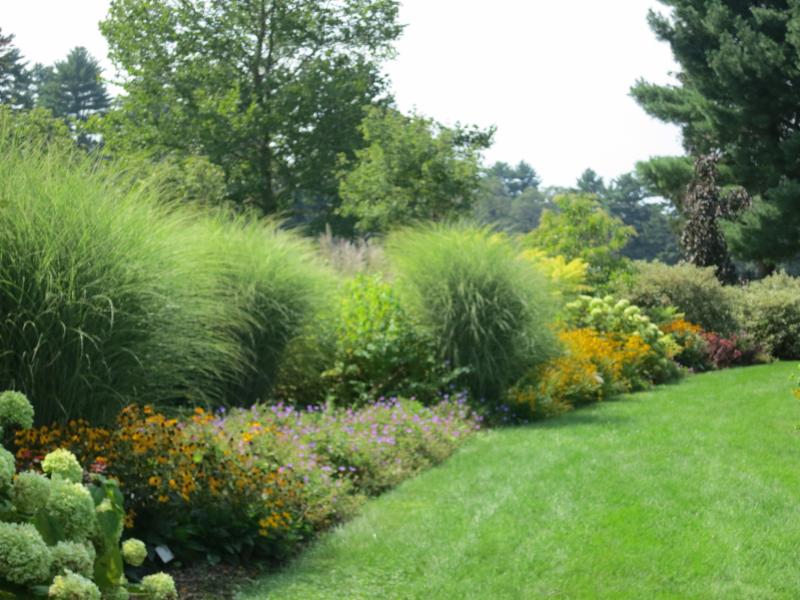
It is a beautiful time to be in the gardens. In the Bressingham Garden, designer and horticulturist Adrian Bloom used Geranium Rozanne to create "rivers" that flow through the garden. The effect of this bright, violet-blue flower is something magical. The Elm Bank 'River of Rozanne' is the largest in the world. There are two other Bressingham gardens. The original is in England and another one, also created by Adrian Bloom, is in Germany.
The magnificent miscanthus grasses provide structure to the river of 'Rozanne'. Ornamental grasses are a major feature of the Elm Bank Bressingham Garden. In addition to providing structure to the 'River of Rozanne', they provide movement and sound to the garden when they sway with the wind.
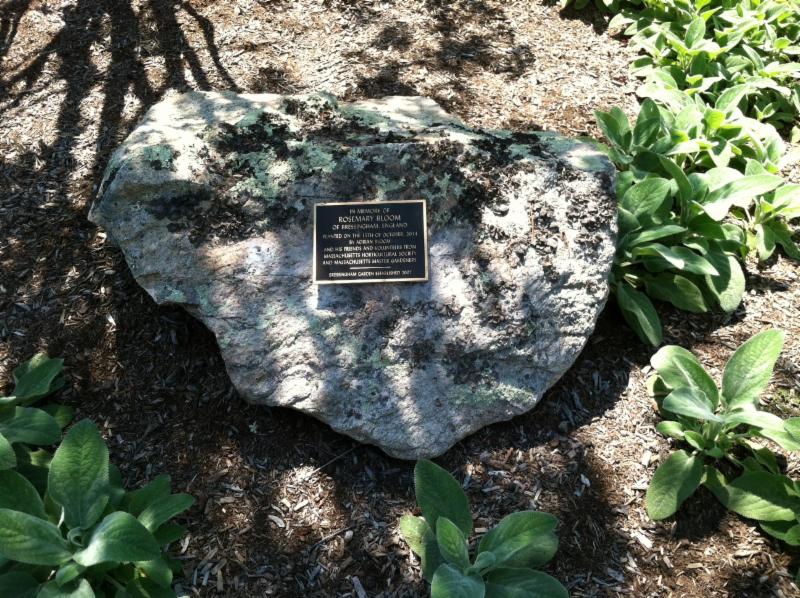
Fall is when ornamental grasses are at their peak of interest. They are at their height of growth, some 10 feet tall, and 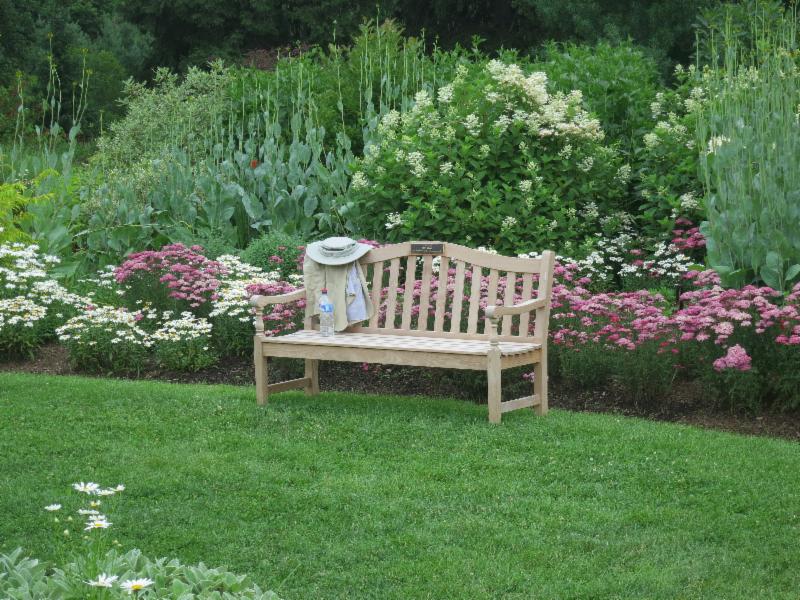 seed heads and feathers have bloomed. The grasses are of all shades of green and many are variegated. As Fall progresses the grasses turn beautiful shades of grey, red, and yellow. Last week in the garden, we finished installing a plaque in memory of Adrian Bloom's wife, Rosemary, beside the Acer griseum tree planted in her honor last fall. We encourage visitors to spend some time in the Bressingham and enjoy the cozy feeling of the landscape. Alcoves abound for quiet moments of reflection and discovery. |
| | Plaque to Rosemary Bloom, Bressingham |
|
Talk and Taste: Tomatoes

Come feed your brain and tickle your palate as the
Massachusetts Horticultural Society (Mass Hort),
the Jean Mayer USDA Human Nutrition Research Center on
Aging (HNRCA), and the Boston Center for Adult Education (BCAE) team-up for the next in a series of programs that shine a spotlight on some culinary superstars that are anything but garden-variety. The first event is on Tuesday, September 15, 2015, 6:00 - 7:30 p.m. The instructors, Hannah Traggis, Diane Manteca, and Dr. Xiang-Dong Wang,
will speak at the Gardens at Elm Bank, 900 Washington Street (Route 16) in Wellesley.
.
Find out about the amazing journey from garden to table at this celebration of all things tomato hosted by the Massachusetts Horticultural Society at their 36-acre estate. In fact, come early, and enjoy an informal tour of their spectacular The Gardens at Elm Bank from 4:30 -5:45 p.m. Then at 6:00 p.m., we'll gather for a lively and informative session that features great tips about planting, growing, and
harvesting the tomato. You'll also have the opportunity to add some delicious new recipes to your repertoire and learn about the nutritional benefits you enjoy by simply biting into this bona fide superfood. To register, click here. .
|
Mass Hort's Wish List
I wish, I wish upon a star... please be our star!
Since we opened on May 1, thousands of people have visited us at The Gardens at Elm Bank. So many have come to learn and relax... including Master Gardeners, friends, picknickers, and families playing in the newly renovated Weezie's Garden for Children!
Our staff and volunteers work diligently to maintain this magical place. Please review our Wish List on Amazon.com and help us keep The Gardens at Elm Bank growing. The Gardens at Elm Bank Wish List You can spend $10 or $1,000 - every purchase helps. Thank you! |
|
Book Review
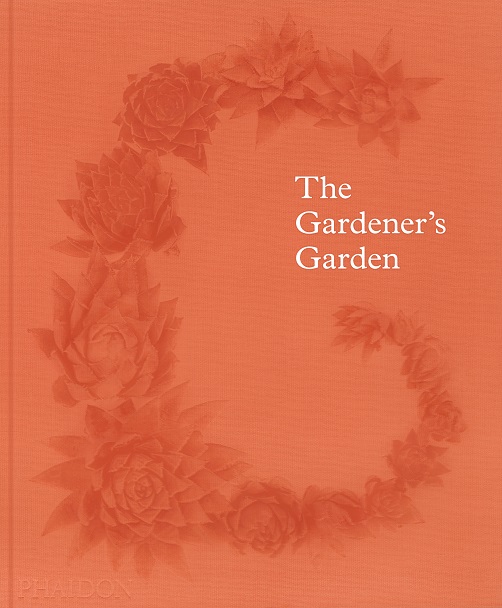
The Gardener's Garden
Contributors are Ruth Chivers, Madison Cox, Toby Musgrave, et al.
London: Phaidon Press, 2014
Reviewed by Patrice Todisco
Created by an international team of leading garden writers and designers, horticulturalists and landscape architects, The Gardener's Garden is a lushly illustrated 480 page global survey of more than 250 private and public gardens from throughout the world.
Gardens are included from five continents and 45 countries representing diverse styles within a wide range of climates. They are organized geographically beginning with Alice Springs Desert Park in Australia and concluding with Jardin Los Vilos, Coquimbo, in Chile.
Conceived as "the ultimate gardening book of the 21st century,"The Gardener's Garden features the work of more than 100 gardeners and designers and includes gardens ranging from the "world famous to the unknown; the public to the private; the grand to the intimate; the historic to the contemporary; climate zones from deserts to steamy rain forests; and garden styles from Baroque formality to naturalistic wilderness."
|
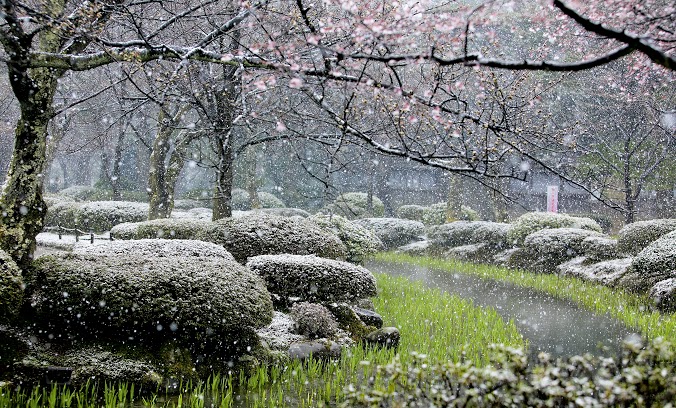
| Kenroku-en (Garden of the Six Sublimities), Kanazawa, Ishikawa, Japan, Maeda Family, 17th-19th century
photo credit Claire Takacs
|
According to Madison Cox, who provides a brief introduction, the choice of what to include took months to formulate and while the book will serve as a "source of inspiration for some and a practical guide for many"it is also a 'testament to centuries of human passion for the garden"a key factor in choosing which gardens to share with the reader.
Unlike many books that attempt to provide a sweeping overview of the world's best known gardens, The Gardener's Garden is well organized and laid out in a clear and predictable format. Pages are designed with descriptive text running down a left hand column featuring the garden's name, location, date and origins, designer (if applicable), size, climate and style. More than 1,000 full-color annotated photographs illustrate the text.
While abundant, at times the photographs overwhelm and compete with each other for the reader's attention. Individually they dazzle and would benefit from some judicious editing. The use of seasonal photographs for individual gardens, as well the inclusion of plans, sections and historic images, would add depth to the text. The cover is a curious, incongruous bright orange which is not at all intuitive.
|
| Olinda, Olinda, Victoria, Australia, Phillip Johnson, 21st century
Courtesy Phillip Johnson Landscapes, photo © Claire Takacs |
The Gardener's Garden concludes with a glossary, listing of garden festivals, shows and garden, horticultural and plant societies, further reading and a garden directory including private gardens with restricted openings. These provide a useful tool for garden visits and tours.
This is a very large and heavy book measuring 11"x 13"and weighing nearly 5 1/2 pounds, making it difficult to maneuver. As a reference guide it is both useful and educational and with its broad scope will appeal to both amateur and professional gardeners alike. However, its size and weight will confine where and how the book can be read and thus enjoyed.
In his introduction Cox describes the "primal fascination"that inspires the creation of gardens worldwide by amateurs and professionals alike noting that..."the role of both amateur and professional gardener is vital to understanding the delicate balance that is needed for humans to sustain ourselves in a global state of transformation." As a comprehensive survey of gardens worldwide, The Gardener's Garden, provides a compelling illustration of that role.
Patrice Todisco writes about parks, gardens and the public realm at www.landscapenotes.com.
All print and electronic media reproduction of Phaidon content, www.phaidon.com
|
A Tree that Won't Be Forgotten
By Katie Folts
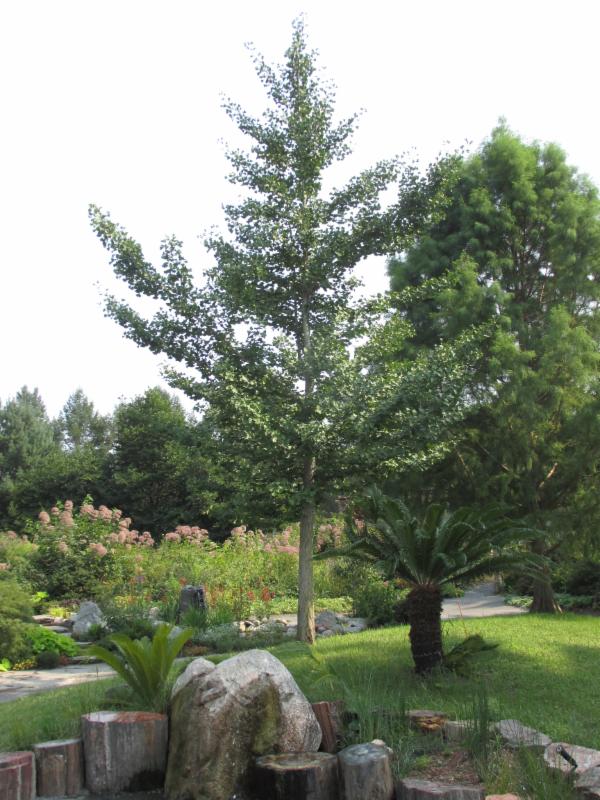
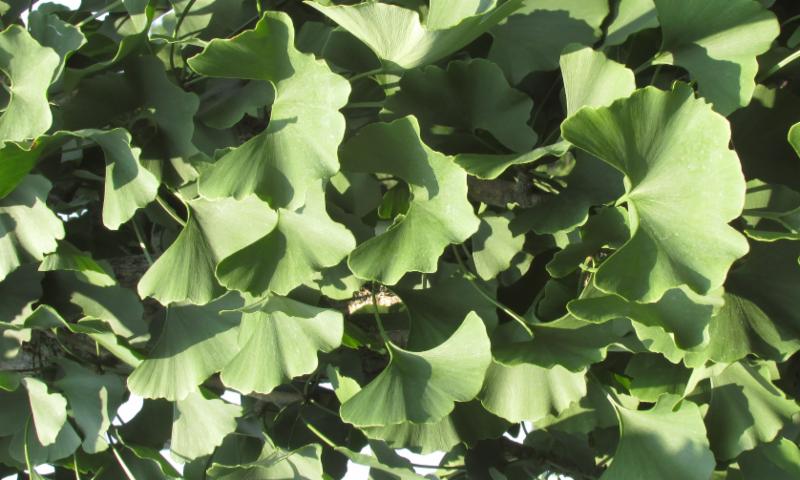
The ginkgo is a truly unusual tree, and though this tree doesn't grow naturally anywhere in North America, I find that it is a tree most visitors can identify with ease. As an educator at Mass Hort, I delight in showing off the Ginkgo trees that grow in Weezie's Garden for Children. Imaginations run wild to describe their unique leaves: mushroom-like or umbrella-shaped. When I tell kids that this species has been growing since the time of the dinosaurs, we all get excited. It is accurate to say that the ginkgo is a personal favorite.
So imagine my excitement to host Sir Peter Crane, honored horticulturist, who will speak on the topic of the ginkgo. In his book, Ginkgo: The Tree that Time Forgot, he reviews the history and survival of this tree, its modern ornamental use, and its medicinal and religious value. Sir Peter will lecture and sign books at The Gardens at Elm Bank on September 16.
Join us in welcoming Sir Peter Crane, Dean of the Yale School of Forestry and Environmental Studies on Wednesday, September 16, 6:30p.m.-8:30p.m. The lecture will begin at 7:00 p.m., following a brief reception. Sign up now! |
Part 8: Catching Up with the Last Half Century
Maureen Horn, Librarian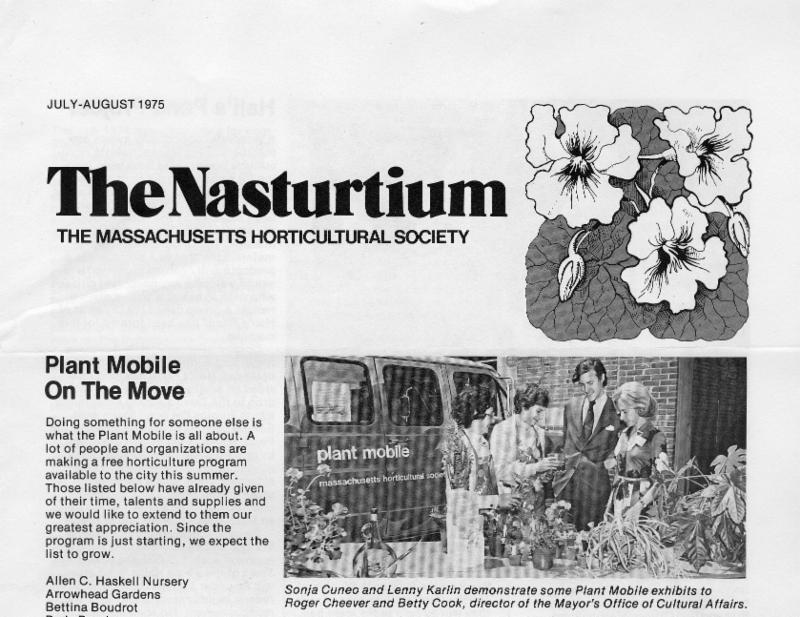
The Mid-Seventies: Turning back to the City
In 1975, a full-sized Plant Mobile van inaugurated an era of plant clinics throughout the inner city, and after a few years of focusing on the suburbs, the Society turned itself around and attended to its business in the urban neighborhoods. The Trustees also reversed themselves with regard to the question of moving out of Horticultural Hall. They decided that a major renovation of the hall would be more economically sound than relocation. In support of this decision, the building was listed on the National register of Historic Places, the official list of the country's cultural resources that are worthy of preservation.
At the Annual Meeting, President Willard P. Hunnewell announced that a long overdue approach to membership recruitment would be adopted. Up until then, new members needed to be sponsored in writing by a present member, with the name posted for two weeks, so someone would have a chance to object. "We will accept any new members, anytime," he said.
To participate in the Massachusetts Bicentennial, which came a year earlier than the 1976 national celebration, the M. H. S. library showed an exhibit of books which might have been found in libraries at the time of the American revolution.
The Trustees had spent much of 1974 searching for a new Executive Director, and finally in the fall of 1975, they appointed Roger Cheever, and experienced landscape consultant, to the position. Their relief was short lived because on November 19, he announced that he would resign on July 1, 1976 to pursue his landscape studies.
After 140 years of receiving income from Mount Auburn, the Cemetery requested that they buy out M.. H. S,'s share of the remaining unsold lots. Thus, a venerable relationship was severed.
A new Executive Director, in the person of Clifford de Baun, was chosen to lead the Society in its downtown involvement. He was a businessman who gave time to cultural interests, for example, as the founder of the "Trees for Boston" committee.
The Society celebrated with an announcement that it could "now be considered officially affiliated with the City of Boston", when it joined the Plants Go to School Program. It followed up by assisting the Fenway Neighborhood Group in window box planning for the streets in the vicinity of the Hall. As one of the original supporters of the Boston Plan Organization, which was attempting to coordinate the activities of institutions towards the rehabilitation of the Fenway area, the Massachusetts Horticultural Society contributed its expertise to reviewing landscape plans. In 1976, the Society planted its first city garden, in the fire alley next to the Christian Science Church.
|
The Ogre and the Squash Vine Memo

by Neal Sanders
Leaflet Contributor
Eight years ago, Betty and I made the mistake of complaining to one of our town's selectmen about the sad state of the volunteer-managed community garden. We noted that the garden seemed to exist for the pleasure of a few well-placed friends of 'the Committee', who lavished multiple plots on themselves while neglecting basic services such as water and mowing. Plot-holders abandoned their gardens in mid-season and those gardens grew up in weeds. Couldn't something be done? We asked.
Something was done. A few weeks later, we found ourselves in charge of the operation. Just the two of us. The Committee had resigned en masse.
We like to think that we've made the garden a better place in the intervening years. Now covering three-quarters of an acre, there are 62 gardeners and 62 gardens (all occupied, thank you) in two sizes. The perimeter is mowed regularly, aged manure has been overspread on the site enough times that the garden is now a foot above the surrounding fields, wood chips are delivered to create paths, and the six water spigots all function properly.
There are no 'rules' for the garden, only guidelines; and they fit neatly on one page. But even guidelines require some level of enforcement. Enforcement requires an Ogre. That's me. Every week, I walk the garden looking for problems. What follows is a true story. Only the name of the individual has been changed.
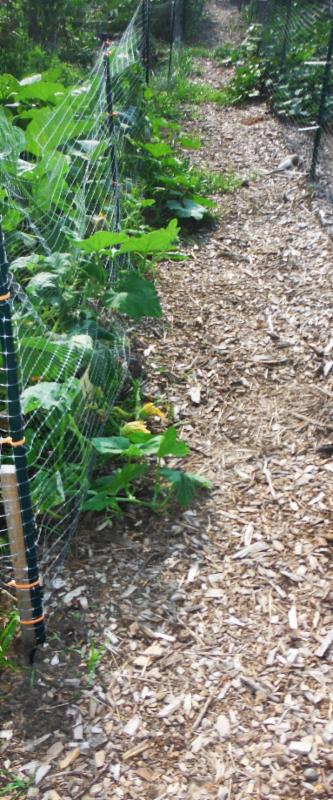
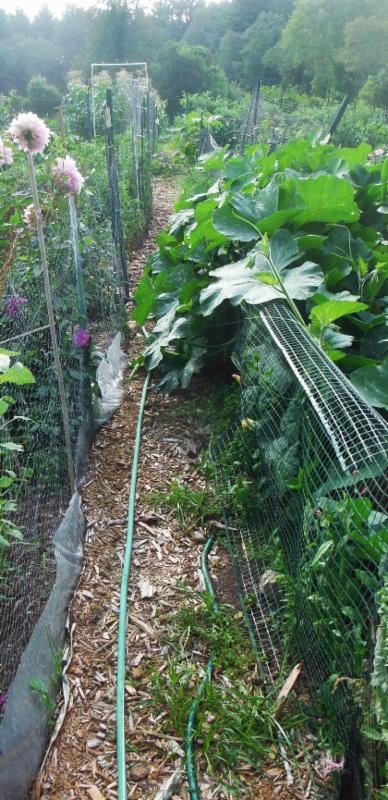
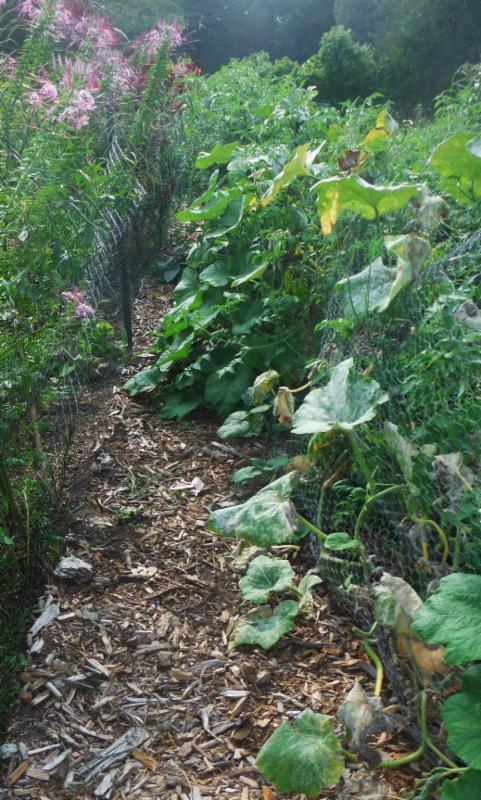
It is the time of year when the gardening season is winding down. The gardens, though, are lush with crops. In some of the gardens, pumpkin and winter squash vines climb and/or go under fences. Zinnias and cleomes press against groaning fences as do tomatoes heavy with fruit. Gardens that were spotless a few weeks ago now show noticeable weeds. The result is the three-foot-wide walkways around certain plots become impassable.
It is time for the Garden Ogre to go to work: I send out 'The Squash Vine Memo'.
My first email is light and breezy:
Subject: Garden maintenance
"Hey, Judy! Can you get down to the garden this weekend and take care of the squash vines out in the walkways?"
I send out twelve such emails, each personalized and tailored to the specific problems in that plot. Four gardeners quickly respond that they will get right on it.
|
| | At first the squash vines were a minor problem |
On Monday morning I'm back at the garden. Six of the gardens have been brought back to a semblance of order. Excellent! But six have not been touched and the vines are longer and more treacherous. I go home and write:
Subject: Please take care of your garden
"Judy: The squash vines from your garden have spilled out into the walkway, making it difficult for people to get to their own gardens. We would all appreciate your taking time this evening to clear your path."
That email to the six miscreants will draws three
|
| | By the time of the third memo. the vines were out of control. |
responses along the lines of, "Sorry! We were away! I've sent my son down to take care of it."
Two days later, I am again at the garden. Two of the six gardens have been cleaned. The other four - including one that promised immediate response - have vines that now are completely across the aisle and climbing the neighbors' fences. I go home and write:
Subject: You need to clean your garden right now!
"Judy: This is my third email about getting the vines out of the aisles around your garden. You owe your neighbors an apology and you need to get down to the garden today to clean up the mess."
|
| | ntil the vines made getting by impossible |
The next day, two of the remaining gardens have, in fact, been cleared of vines. I even have a note from one of the offenders apologizing for taking so long to take action.
But two gardens remain holdouts. Not only are the vines still a problem, the weeds have started going to seed. And so I go home and write one final message:
Subject: You are going to lose your plot at the community garden
"Judy: Your garden has become a hazard for everyone else. If, by the end of today, you have not completely cleared the weeds and vines that are clogging the walkways around your garden, I will take them down myself. If I have to do that, you will lose your right to a plot next year.
Neal Sanders
Garden Ogre"
The next day, I go to the garden, hoe and clippers in hand. But I don't need my tools: both gardens have been ridded of vines in the aisles and weeds along the fence line.
I go home and open my email. I find this message:
Subject: My plot at the garden
"Dear Mr. Sanders:
Why do you have to be so mean about it? All you had to do was ask.
Judy"
As a writer, I spend my days exploring the mystery of human nature. I invent characters who commit crimes. I dream up sleuths who can see through the fog of warped motives and personal turpitude to point a finger of justice at the guilty party. Then, just when I think I've finally got a handle on the inner workings of my fellow man, along comes a "Judy" and I have to go back to square one.
----------------------------------------------------------------------------
Neal Sanders is the author of nine mysteries; his works are available at Amazon.com and at bookstores. His tenth book, 'How to Murder Your Contractor', will be published in early 2016.
|
Notes from the Vegetable Garden
by Susan Hammond
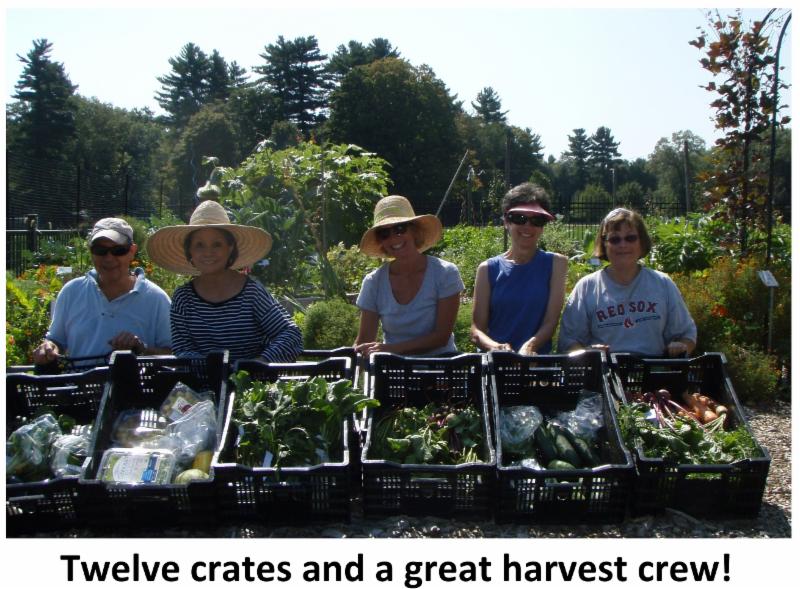 Sometimes a gardener doesn't know what to think. Is it fall?The days are getting shorter quickly. Is it summer? We're having some of the hottest and driest weather all year. Sometimes a gardener doesn't know what to think. Is it fall?The days are getting shorter quickly. Is it summer? We're having some of the hottest and driest weather all year. Whatever it is, it's a season of bountiful harvests at the Garden to Table vegetable garden. On Labor Day, a crew of volunteers turned out despite the heat and holiday and harvested over 110 lbs of produce for the Wellesley food pantry, bringing our season total to over 2000 pounds. We harvested one of the potato bags that we'd planted in May 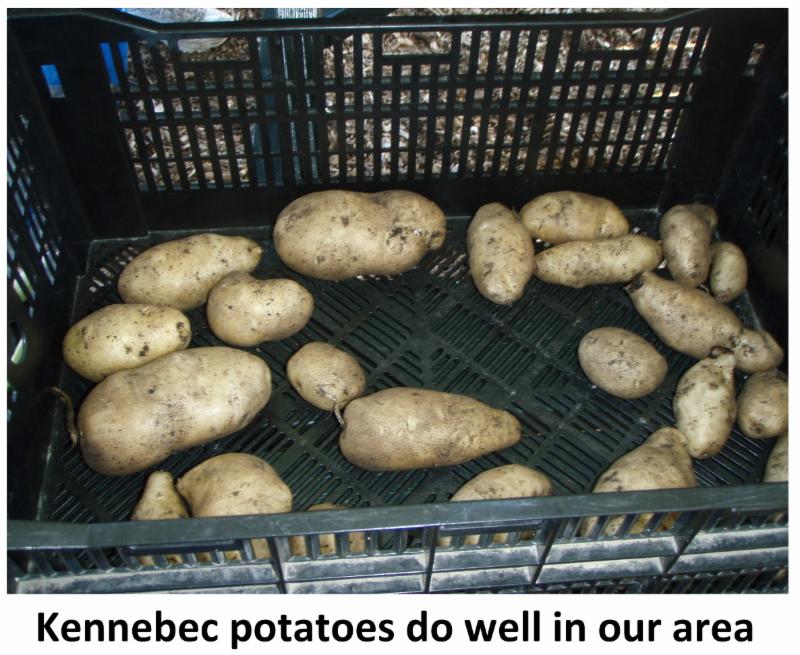 - a small, simple growing setup that anyone can do as long as they have a sunny space - and one pound of "seed" yielded eight pounds of beautiful baking potatoes!
The heat has caused us to make some adjustments, of course. It's so hot that some crops we would usually plant in fall may have to wait a bit longer. But 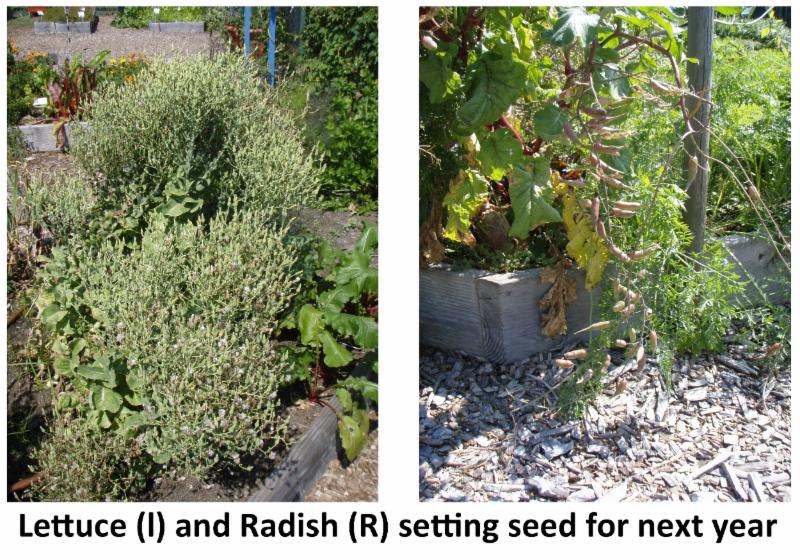 the heat is helping with a special, new "crop" for us - we are letting some of our heirloom lettuces and radishes go to seed so that next year we can grow crops from seed we have saved ourselves. the heat is helping with a special, new "crop" for us - we are letting some of our heirloom lettuces and radishes go to seed so that next year we can grow crops from seed we have saved ourselves.
This year, our fall-planted crop of pea shoots used seed we saved this spring - and we hope to have those available for guests at the Garden to Table Fall Harvest Dinner on September 20th. Learn more about this great event at this link.
The heat will extend harvest of some of our warmth-loving 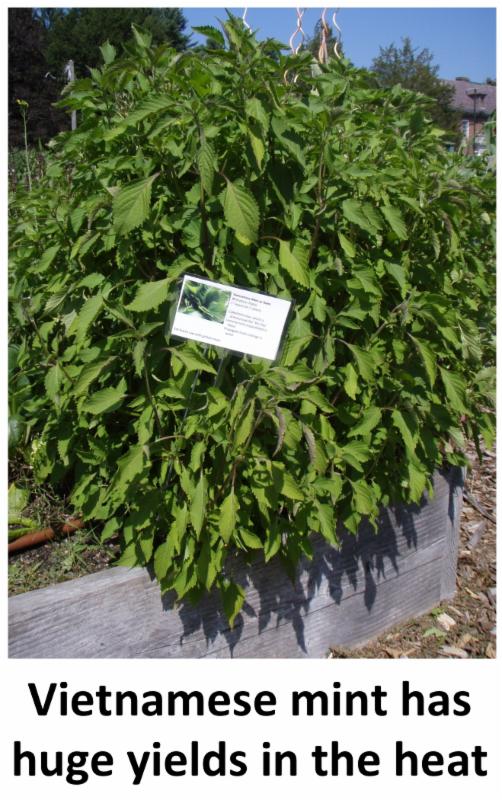 crops like tomatoes, eggplant, and peppers - even some of our herbs, like our Vietnamese Mint that adores the hot weather. But we're also looking forward to the fall when we can harvest crops like leeks and other heirloom root vegetables. crops like tomatoes, eggplant, and peppers - even some of our herbs, like our Vietnamese Mint that adores the hot weather. But we're also looking forward to the fall when we can harvest crops like leeks and other heirloom root vegetables.
Do you want to see the peak of the garden, but can't attend on September 20th? Come visit us! We harvest on Monday and Thursday. Harvest starts at 9:00 a.m., and we're there until 1:00 p.m. to give tours and answer questions.
|
|
|
|
|
|
|