|
 For exceptional benefits to help you in the garden- Join Today! If you are a Mass Hort member- please recommend membership to a friend! Forward this newsletter. CLICK HERE TO JOIN |
|

SPREAD THE WORD,
HELP US GROW!
Refer a new member to Mass Hort and receive a coupon to attend a Thursday Night at the Hort lecture for free!
|
|

You Shop - Amazon gives to Massachusetts Horticultural Society!
Amazon will donate 0.5% of the price of your eligible AmazonSmile purchases to Massachusetts Horticultural Society whenever you shop on AmazonSmile.
AmazonSmile is the same Amazon you know. Same products, same prices, same service.
Begin shopping at www.smile.amazon.com |
|
|
Letter from the President

Dear Friends,
The summer is in full bloom and our visitors are enjoying all the beautiful gardens at Elm Bank. Thanks to John Forti for his horticultural magic and his team for bringing the gardens to life! We would love your help volunteering in gardens! Check out John's article below about all we have been up to at Elm Bank. If you haven't visited yet, please do!
We are already looking ahead to the fall and have a great line up of special events and experts for you to enjoy. Please invite your friends and help introduce new people to Mass Hort. Click on the event link to learn more and sign up.
Thank you for your ongoing support and membership to help us support The Gardens at Elm Bank.
Hope you are enjoying a wonderful summer.
Best wishes,
Kathy
|
|
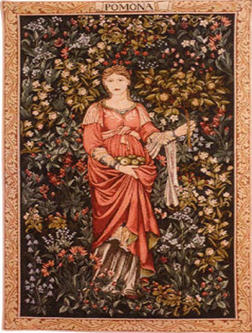
Join us TONIGHT for the Pomoma Festival!
An Evening at Elm Bank
Pomona Festival
Thursday, August 13, 2015
6:00 p.m. - 8:30 p.m.
The Gardens at Elm Bank, 900 Washington Street, Wellesley
Music by:
Jennifer Kimball
& Cuddle Magic's Alec Spiegelman, Dave Flaherty and Christopher McDonald
Sponsored by
|
|
Garden to Table Fundraising Dinner
Sunday, September 20, 2015 from 5:00 to 8:30 p.m.
Join us for an evening celebrating the fall harvest and building community in the Gardens at Elm Bank! Showcasing the best local agriculture and seasonal heirloom foods, the Fall Harvest Festival Dinner will held on Sunday, September 20, 2015 from 5:00 to 8:30 pm. Enjoy fine open-air dining, hand-crafted beverages, and music and dancing under the goddesses in the Maple Grove! Twilight tours of the gardens will lead to us to gather together for a festive seated dinner, culminating in a magical illuminated candle labyrinth!
The evening will begin at 5:00 pm with sampling heirloom vegetables and locally produced artisanal beverages and specialty tours of the Garden to Table spaces throughout Elm Bank. As we take our seats along the harvest tables at 6 pm a celebrity chef will share a dinner sourced from local farmers and our own gardens at Elm Bank!
At 7:30, we will be treated to enticing desserts, and music and dancing in the Maple Grove as a stunning luminary labyrinth, created by Martin Grealish, lures us to the Asian and Temple gardens!
This celebration is a major fundraiser that will help support future endeavors of the Garden to Table program to continue to educate, connect and build strength in our local food system! To register for the event, click here.
|
Book Review: Gingko: The Tree that Time Forgot
By Peter Crane
New Haven: Yale University Press, 2013
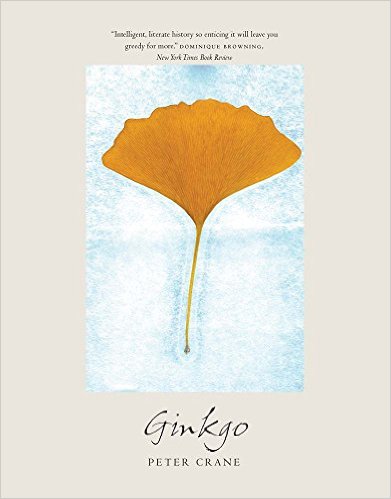 Book Review By Pamela Hartford Book Review By Pamela Hartford
Before launching into this horticultural feast of a book, I was intrigued by the note from author Peter Crane inscribed in my copy of Gingko: "I hope you enjoy this unusual biography of a very special tree!"
I thought it curious that Professor Crane appropriated 'biography' to apply to a tree, but 'bio' of course means 'of or relating to life.' How anthropocentric of me! In reading this bio of the gingko, I realized that it is in fact a very apt term, one that couldn't be applied to 'Oak,' for instance. Which oak? Live oak? English Oak? Red Oak? But Ginkgo - there is only one Ginkgo. That alone qualifies it as a subject fit for a biography. Ginkgo is singular and unusual on many, many levels. From its botany to its habitat(s), the ginkgo is distinctly out on its own, a tree with no relatives, whose fate is intertwined in a dependency constructed not in symbiotic relationship with a bird or insect, by a mammal: the human.
 The ten oldest living things in the world - biological beings whose form has remained unchanged across one hundred million years or more - are members of a very exclusive club, perhaps all worthy subjects of biographies. One is an ant that lives largely underground, and one is a bacteria - the cyanobacteria (blue green algae) - which in fact played a key role in our future, as the bacteria that developed photosynthesis to use oxygen as a positive source of energy. Seven others live underwater: the sponge, the sturgeon, the horseshoe crab, horseshoe shrimp, nautilus, jellyfish, and coelcanth (related to the lungfish). The ten oldest living things in the world - biological beings whose form has remained unchanged across one hundred million years or more - are members of a very exclusive club, perhaps all worthy subjects of biographies. One is an ant that lives largely underground, and one is a bacteria - the cyanobacteria (blue green algae) - which in fact played a key role in our future, as the bacteria that developed photosynthesis to use oxygen as a positive source of energy. Seven others live underwater: the sponge, the sturgeon, the horseshoe crab, horseshoe shrimp, nautilus, jellyfish, and coelcanth (related to the lungfish).
The tenth member of the club is the Gingko. Being a tree, it is a species that many of us can relate to in principal simply because it exists so intimately with us here on land (no offence to the sponge, with which we have an afterlife involvement, or the nautilus, an intellectual and visual interest). The Ginkgo is the only one of the ten directly involved in human culture, and therefore, makes an inherently good subject for a biography.
It's a long story, starting back over 250 million years ago, according to the fossil record. Once ranging up to the Arctic Circle and across Europe, there are now only a few populations of Ginkgo which appear to be in a wild situation - all in China - but the degree to which they are truly 'wild' has still to be determined. That means there is no understanding of the ecosystems and relationships that supported Gingko's evolution. Since China has such a long history of human occupation, it is hard to know if seedlings arise where they do because they descend from trees deliberately cultivated for nuts - a centuries old practice in China.
The narrative of Ginkgo's history is instead told through 'interviewing' the oldest and most majestic specimens and verifying through written records how they came to arrive in their current locations - in Japan, Korea, Europe, England, and the US, as well as China. Buddhism, Shintoism, their temples and shrines, both British and Dutch East India Companies, Joseph Banks, all the major botanic gardens of Europe - most especially Kew - play into this history. Paleobotanists and paleontologists are critical to the narrative, as well as a history of street trees and herbal medicine in China. It's a very deep and wide biography.
At the very beginning of his book, Professor Crane explains the botany of the Gingko - how the architecture of its water supply is unique among the world's trees. I yearned to have a diagram to help me understand and appreciate this unusual characteristic of Gingko. More than anything, this distinct botany makes the Gingko a living fossil, owner of a system that doesn't connect it to any other organism.
I am sure his presentation at 6:30 p.m. on Wednesday, September 16, at Elm Bank will be a source of delight to the horticulturally inclined and rewarding to those interested in a really good and unusual biography.
Pamela Hartford is a landscape historian designer and preservation planner living in Salem Massachusetts.
|
 August Hort Hints August Hort Hints
By Betty Sanders
BettyOnGardening.com
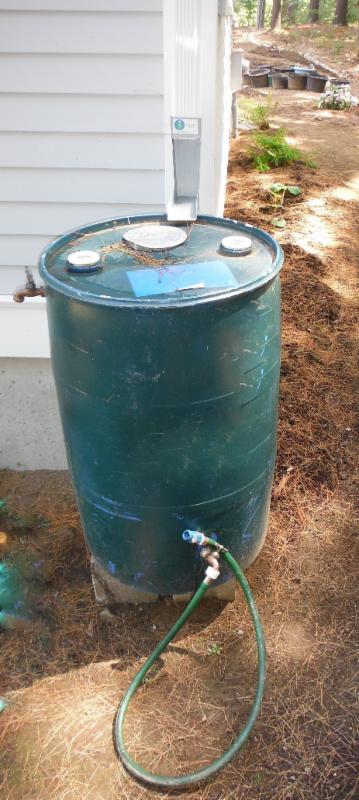
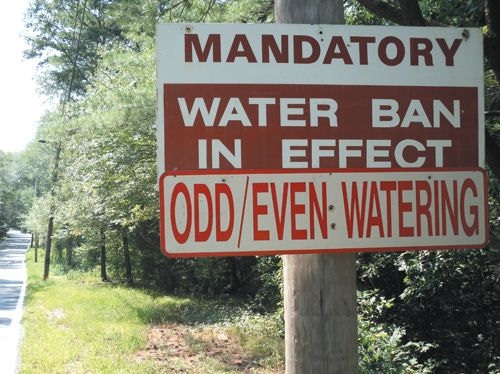
Watering bans, hot days, and your garden. This is the sad tale of a summer with too little rain for most of us. Because of the complete or partial bans on watering gardens and lawns in most towns, gardeners are stressed trying to keep everything flourishing. My advice is to take a few lessons from those facing the West Coast multi-year drought. First, skip watering your lawn; it may brown up but it will return, with cooler temperatures and fall rains none the worse for the experience. Second, water new plants first - trees need to be watered regularly during their first two to five years after planting, shrubs at least one year and perennials for two to three months. Third, hook up a rain barrel to a downspout and watch as a quarter inch of rain on the roof gives you 50 gallons of rain water for your plants. Finally, choose new plants with water in mind. A little research will show you that not only succulents, but many other plants such as hostas, heucheras and epimediums tolerate dry soil when planted in the shade. Many New England standbys such as asters, rudbeckia (black-eyed susans), salvia and dianthus thrive in sunny, dry sites
|
| | Signs like these are a common sight around the region |
Keep weeding. Weeds keep growing, stealing water, nutrients and sunlight, and producing seeds to bedevil you next year. Stop their life cycle by uprooting them now. Hand weeding is the order of the day in flower beds and vegetable gardens in order not to damage surface roots with tools. Spraying with herbicides will damage nearby plants as well as the soil organisms that play an important role in the growth of the garden.
Hold the food! By mid-August you should no longer be fertilizing any perennials, trees and shrubs. New growth the plant has put out this year needs time to harden off before the cold weather begins. Keep fertilizing your annuals; you want them to bloom and grow until they're hit by frost.
|
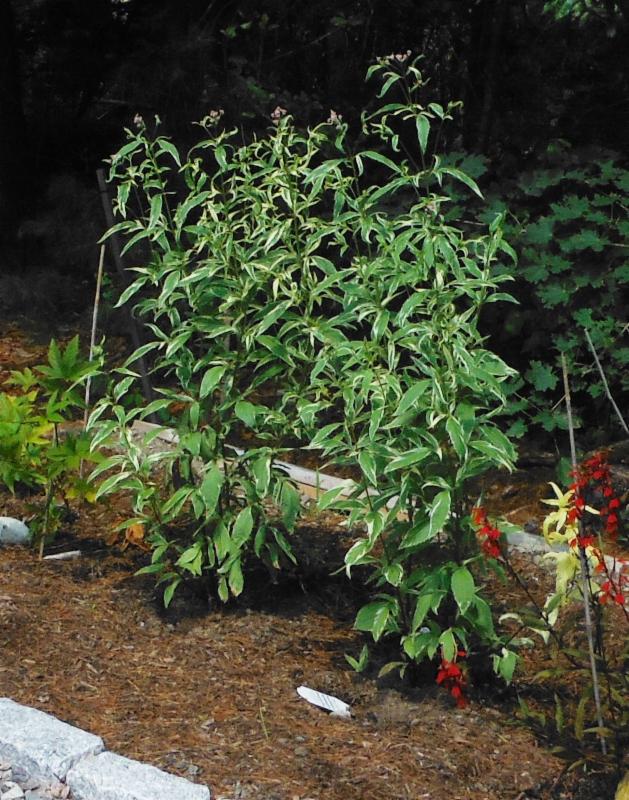
| | Native plants such as this eupatorium (Joe Pye weed) are drought-tolerant yet attractive |
Replant in the vegetable garden. It's time to put in seeds for fall crops of lettuce, spinach, arugula, green beans, chard and leafy oriental vegetables. On years with mild autumns we've enjoyed fresh greens from the garden for Thanksgiving and (with some protection) Christmas.
Buy bulbs, but don't plant them yet. Now is the time to order bulbs from the catalogs. I love my local nurseries but they lack the best selection of sizes, colors and varieties. Bulb-specific catalogs allow you to buy bigger bulbs for bigger blooms or more 'landscape' size bulbs to cover a greater area. But don't even think of planting them now. The soil is too warm for most bulbs until sometime in October. Daffodils can be planted in November when they still have time to grow the roots they need for glorious blooms next spring.
Lawn renovation. Late August is prime time in New
|
| | Hostas adapt well to dry environments |
England for restoring lawns. As the days get shorter and cooler, lawn seeds germinate happily while most weeds won't, with the result you get grass and not the new crop of weeds that accompany spring seedings. Buy quality seed; cheap seed may be an annual grass that dies in the winter, full of weed seeds, or even a grass that does not perform well in New England. Spend a little time on the Internet or go to your local nursery (not big box store) to look at the new varieties of seeds that need less water to thrive, are more resistant to disease, and need less frequent mowing. Those three benefits will make an 'expensive' seed cheaper in the long run.
-----------------------------------------------------------
You can see more of Betty's gardening advice at www.BettyOnGardening.com. Betty is currently President of the Garden Club Federation of MA with over 180 clubs and 11,000 members.
|
Talk and Taste: Tomatoes
Come feed your brain and tickle your palate as the
Massachusetts Horticultural Society (Mass Hort),
the Jean Mayer USDA Human Nutrition Research Center on
Aging (HNRCA), and the Boston Center for Adult Education (BCAE) team-up for the next in a series of programs that shine a spotlight on some culinary superstars that are anything but garden-variety. The first event is on Tuesday, September 15, 2015, 6:00 - 7:30 p.m. The instructors, Hannah Traggis, Diane Manteca, and Dr. Xiang-Dong Wang
will speak at the Gardens at Elm Bank, 900 Washington Street (Route 16) in Wellesley.
.
Find out about the amazing journey from garden to table at this celebration of all things tomato hosted by the Massachusetts Horticultural Society at their 36-acre estate. In fact, come early, and enjoy an informal tour of their spectacular The Gardens at Elm Bank from 4:30 -5:45 p.m. Then at 6:00 p.m., we'll gather for a lively and informative session that features great tips about planting, growing, and
harvesting the tomato. You'll also have the opportunity to add some delicious new recipes to your repertoire and learn about the nutritional benefits you enjoy by simply biting into this bona fide superfood. To register, click here. .
|
|
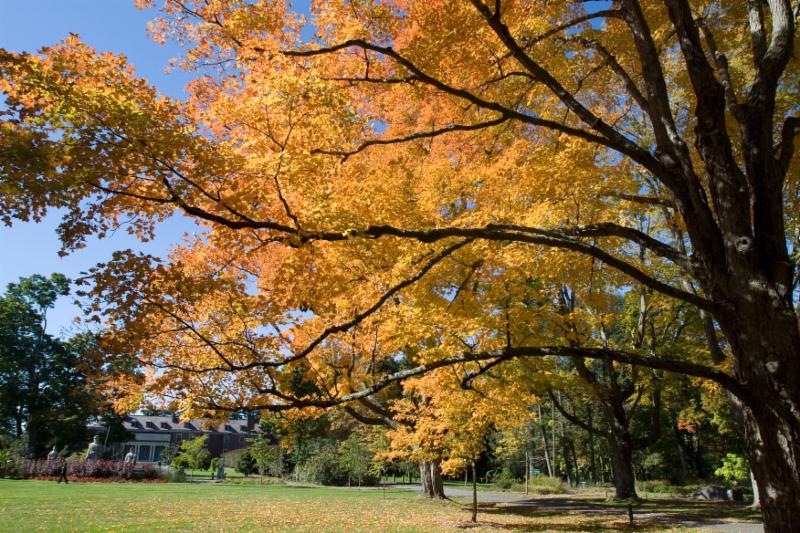 Fall Courses to Get You Growing! Fall Courses to Get You Growing!
When was the last time you thought about going back to school? We have fall horticulture courses that serve a number of horticultural interests. The time to sign up is now!
The very popular Fundamentals of Landscape Design course instructed by Mark Ahronian of Ahronian Landscaping and Design will begin Tuesday, September 8. This course runs for four weeks on Tuesday evenings and includes two Saturday field trips to local nurseries. The goal of this class is for every student to draft their own design for their home landscape. Students begin the course by bringing in images of a space they want to design or redesign. Mark will give overviews on plant choices, design concepts and drafting. Field trips and one-on-one instruction make this a very hands-on course. Sign up now, space is limited! Cost is $275/members, $300/non-members. Class runs 6:30-8:30 p.m. on Tuesdays September 8-September 29, and 10 a.m.-Noon on Saturday, September 12 and 19. The Beginning Floral Design course starts Wednesday, September 30 and runs for six weeks. This class gives students the nuts and bolts of flower arranging. The course covers several styles from traditional and table design to creative and miniature. Each week is led by an expert of a different style, and the final session will give students an opportunity to compose their own arrangement. If you want to create impactful arrangements for your home, organize a design contest for your Garden Club or enter a larger competition, this course will give you the foundation for doing so. Sign up here! Cost is $100/members, $125/non-members. Class runs Wednesdays 7-9 p.m., September 30-November 4. The Perennial Plant Symposium will be Thursday, September 10 from 8 a.m. -5 p.m. This is a full day of lectures open to all levels of gardeners and professionals. The day will be filled with dynamic presentations, with time to network and enjoy tours of The Gardens at Elm Bank. Sign up now for Early Bird Pricing: $99 before September 3, $109 September 3 and after. In addition to our Thursday Night offerings, we will have a lecture from Sir Peter Crane, Dean of the Environmental Sciences and Forestry School at Yale. He will be lecturing on the topic of his book, "Ginkgo: The Tree that Time Forgot." There will be a welcome reception and time for book signing after the lecture. The cost is $20 for members and $25 for non-members. The event will be on Wednesday, September 1, from 6:30-8:30 p.m. Find more information and register here. On Sunday, September 27 from 5pm-7pm, we'll be excited to welcome Princess Georgiani Corsini, presenting the 'Culture of Gardens of the Italian Renaissance.' She brings rich understanding and hands-on experience in gardening and will give ideas to elegantly enhance our New England gardens. Please register here, by September 22. The cost is $20 for members and $25 for non-members.
|
Take a Tour of the Trial Garden 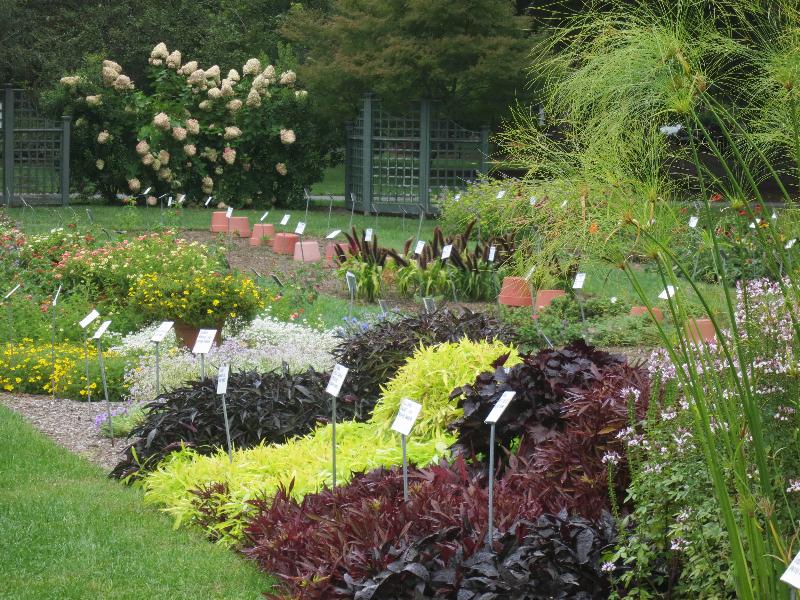
A unique garden at Elm Bank is the New England Trial Garden. One of just three in New England, it receives contributions from breeding companies located all over the world. They submit the newest and best varieties of annuals for viewing by amateur and professional gardeners. This garden also tests new and unreleased varieties competing for All-America Selections awards, displays previous winners, and grows hundreds of cultivars submitted for evaluation by commercial plant breeders.
David Fiske, Mass Hort Garden Curator, selects favorites and publishes the results of the trials every year. Spend an evening with David in the Trial Garden learning about the criteria of winning plants, and get the opportunity to cast your vote for favorite plants! The plants are judged on a number of criteria, and David picks his favorites from each company's submissions. |
A Season of New Growth for the Gardens of Elm Bank
|
| |
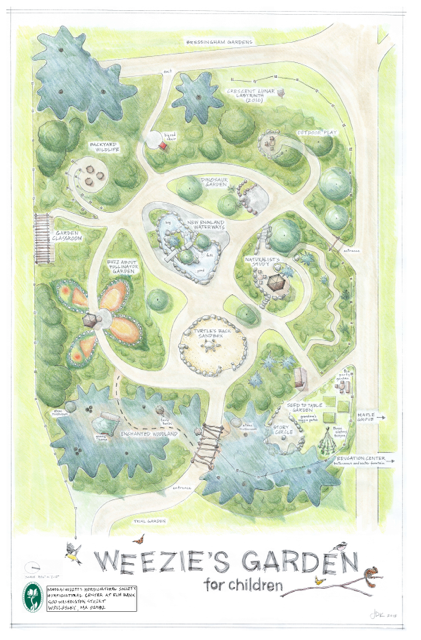
Illustrative map of Weezie's Garden for Children
|
After a long cool spring and summer, August heat has finally ushered in bountiful gardens.
Annuals have taken hold and filled our landscape with a riot of color. Heat loving veggies have begun to yield an abundance of produce, and once again we remember the sweetness of summer!
The taste of a sun ripened tomato right out of the garden reminds us why we fought back the crabgrass and gave over spring weekends to make our gardens grow.
For most of us, August is the month to kick back in the shade and make time to enjoy the fruits of our labors from a shady porch swing or hammock. Late summer provides a chance to lazily snap beans, can produce, revisit old family recipes and save seeds from the plants that are now giving back the love that we showed them in spring. Among gardeners, generosity abounds as bouquets and baskets of produce spread the bounty from one gardener or summer picnic to the next. August can also be the best month to put down the trowel, trade in your mud boots for a sun hat and visit friends in their gardens.
Your friends here at Mass Hort would like to encourage you to visit The Gardens at Elm Bank and see all of the good change that has come to life since spring.
As you may well know, we opened The Gardens at Elm Bank as an admissions site and public garden for the first time this May.
We have stepped up site-wide efforts to upgrade the quality of our exhibits, add engaging daily programs, and give you and your family reasons to take up gardening with Mass Hort.
If you haven't been here recently, you will notice changes:
- The Victorian gardener's cottage (lovingly known as Flora) reopened as a Visitor Center, members lounge and small shop surrounded with new gardens featuring plants to grace the era of the cottage.
- Being an admission site gives us the opportunity to build the staff and infrastructure, to restore our historic landscapes and to become a premier botanical garden.
- As you travel from the Visitor Center, you will encounter new planting areas and planters and even a new visitor pathway that move you through our gardens instead of past them.
- We added our first heirloom trial bed within the Trial Garden so that we can invest into the heirloom vigor of the regional open pollinated seeds that have come down to us as our cultural inheritance.
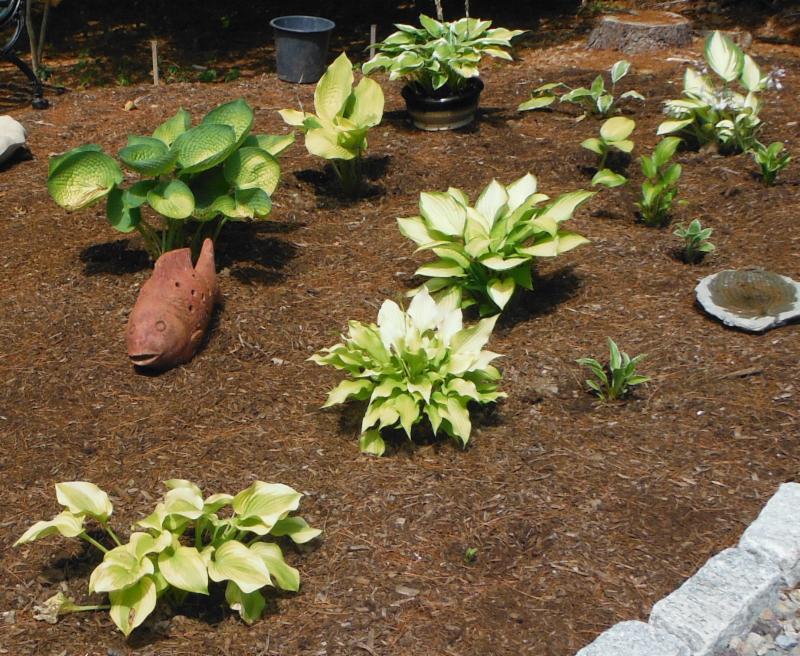
- We extended our hosta garden to become a new entry-way garden for the Children's Garden
- With the help of donors, we made a significant re-investment into Weezie's Garden for Children, (and future generations) with new infrastructure, themed gardens, educational aids and daily programs for families.
- A new Garden- to-Table Educator is helping us bring fun and engaging lessons of horticulture from seed to table throughout our site and programming.
- A new horticulturist who contributes to the overall care and maintenance of the gardens, while helping us begin to label our living collections.
- We have added daily garden tours at 11:00 to help make The Gardens at Elm Bank a tour destination.
- We have created a family discover guide for all of our gardens and a new brochure and discover guide for Weezie's Garden for Children for those inclined to guide their own family experience in the gardens.
If you have had your hands in the dirt and your nose to the grindstone, perhaps it's time to pick up your grandkids, call up an old friend, or plan a trip for your garden club to come visit us, and see all of the good change a season can bring to the gardens.
John Forti
Director of Horticulture and Education
|
 Trustee Mark Ahronian Nominated for Trustee Mark Ahronian Nominated for
American in Bloom
Community Champion Award
Holliston in Bloom Committee Co-chairman Mark Ahronian embraces the mission of America in Bloom by including flowers, plants and people to make Holliston a better place.
Mark exemplifies the spirit of a true community champion in the little town of Holliston. Mark brings his expertise in horticulture and leadership skills to his position of Co-Chair for Holliston in Bloom, his business, and all of his volunteer positions. That's why he has been nominated for an America in Bloom CommunityChampion Award.
Mark is a Massachusetts Certified Horticulturalist and started his business Ahronian Landscaping and Design, Inc. in 1987. With over 40 years in the industry, he has an innate ability to nurture not only plants but also people.
America in Bloom is a national competition that encourages beautification and preservation in communities across the country. Holliston will participate in the competition for the fourth time this year. |
Catching Up with the Last Half Century
 Maureen Horn, Librarian Maureen Horn, Librarian
Part 7
The Early Seventies: "The View from the City: Suburbs coming into Focus"
Taken by surprise in 1973 with the abrupt resignation of President Clark, after the trustees turned down an offer by his father to donate an estate in Hamilton as the new site for the Massachusetts Horticultural Society, the Trustees tried to return to normal under the leadership of Acting President Joseph W. Lund. The turmoil went further, though, when Executive Director Carlton Lees suddenly resigned.
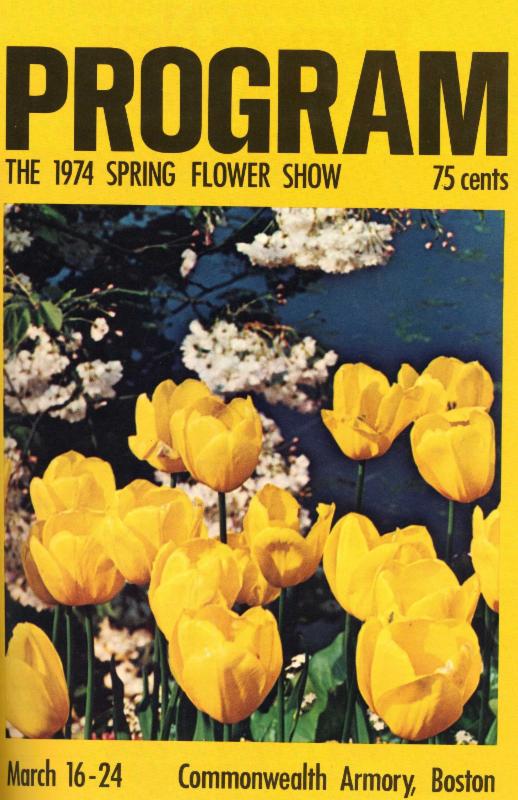
They were buoyed by the success of the New England Spring Flower Shows in both 1973 and 1974. They ascribed the success of the shows to Show Director Bill Thompson and his assistant Aldan McLeod. Among the participants to receive special recognition was the Women's Exhibition Committee. As 1974 progressed, the leadership was frustrated by its inability to find a replacement for Mr. Lees and appointed Bill Thompson as Acting Executive Director. They admitted that it would take an unusual person to deal with the many new ideas that were being expressed by numerous involved people for charting the Society's future. Mr. Thompson declared that the reason for its existence is education and that one of its strongest vehicles was its course program. He pointed out that during the past academic year a great effort was made to expand the program, not only in the number and scope of the courses but also into the times of the day and into their geographical location. The Educational Program Committee oversaw an explosion of energy under the chairmanship of Corliss K. Engle, and it supervised volunteers out into the suburbs to teach courses at satellite locations. Within the city, often in office buildings, conducting plant clinics was a chief activity because there was an all-time high interest in rowing plants indoors.
Staff members also left the confines of Horticultural Hall to serve as judges at other flower shows, exhibition, and window box contests. Membership of the staff in related organizations and attendance at conventions helped to keep the Society in tune with the rest of the horticultural world.
The Massachusetts Horticultural Society had friends all over the state, and many of them were eager to help the Site Committee find a new place for the old organization's headquarters. The Committee concentrated its efforts geographically on the junction of the Massachusetts Turnpike and Route 128, which was the center of membership. They were looking for a site that was already a horticultural gem. It should have fields, woods, and an orchard, water with a brook and a pond, and varied topography with outcropping for rock gardens. All this should be one block from an MBTA station. They had already received 40 suggestions, but they asked the public to keep looking for an ideal site that had all the essentials.
|
You Can Go Home Again (But You Probably Shouldn't)

by Neal Sanders
Leaflet Contributor
I've been thinking these past few weeks about the inevitability of change.
It started last month when Betty and I visited Bedrock Gardens, which is easily the most visually intriguing garden in New England. Located in Lee, New Hampshire, it sprawls across more than 30 acres and is created from equal parts intelligence and whimsy. Its creator, Jill Nooney, has filled it with plant combinations that challenge the imagination and garden art - sculptures forged from century-old industrial detritus - that inspire both laughter and thought.
She and husband Bob Munger have been working on the garden for roughly 30 years. It is a labor of love in every sense of the word and I have enjoyed watching it grow and mature. But Jill and Bob have been on this earth, by their own admission, for a combined 135 years. What happens when they can no longer care for the garden?
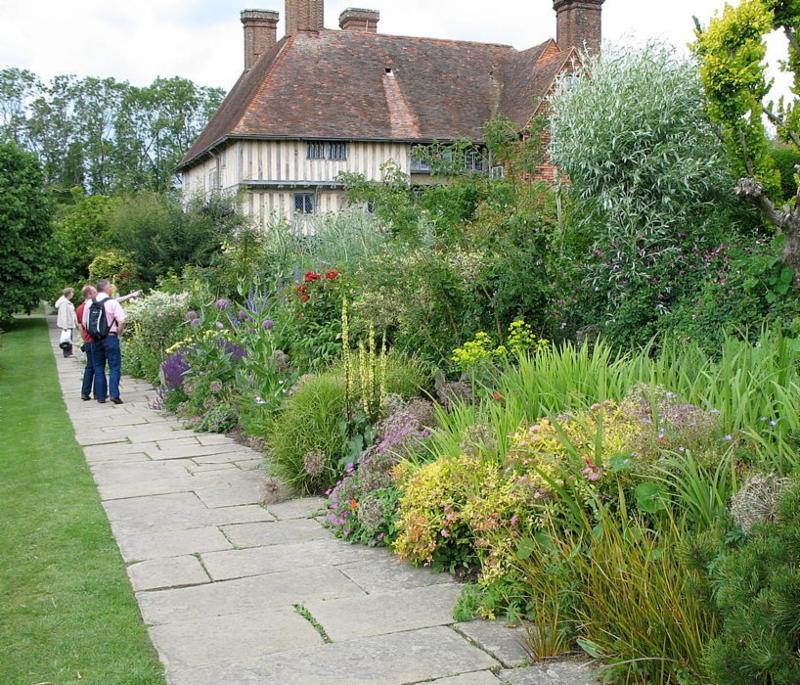
The late eminent English gardener, Christopher Lloyd, is credited with the wisdom "The garden dies when the gardener dies". Lloyd's home, Great Dixter, was still going strong the last time I was in East Sussex so, perhaps, death does not bring down the curtain on every garden. An entity called the Great Dixter Trust is charged with preserving the garden for generations to come. Looking to the future, Bedrock Gardens has similarly established a non-profit entity to help fund the preservation of that treasure.
Which brings me to the fate of a much smaller garden; one with much more limited notoriety: the one Betty and I created at our last home.
As everyone knows, we downsized this year; moving from a Colonial on Steroids on one side of town to a brand new 2100-square-foot jewel of a home on the other side. In a perfect world (meaning one where money was no object), we would have stayed put on our same piece of land and built that smaller house. The reason we would have stayed involved great views, terrific neighbors, and a garden that provided vast and continuing pleasure to us.
We sold our home to a couple with two young children. They loved the site, loved the pond view and shared our thoughts about pesticide-free lawns. The garden was buried under several feet of snow when we accepted their offer in February. We invited them over to take a tour of the garden as soon as the snow melted so that that we could identify some of the very unusual trees, shrubs, and perennials in it. They demurred, citing family demands.
When we closed on the house in April we reiterated the offer - a hands-on walk-through so that they wouldn't accidentally cut down a rare specimen. They thanked us but said the pressure of packing and the impending sale of their own home made it impossible. A few weeks later we passed along another invitation through our Realtor. Again, regrets.
Then, three weeks ago, we stopped by to see one of our
|
| | Beyond our house was an acre of woods we preserved |
former neighbors and saw the beginning of the transformation: a small copse of pines and oaks at the front of the property was gone. For us, it had provided desired privacy; we were part of our small neighborhood yet secluded. At the edge of the copse we had planted a number of specimen trees and shrubs. Most of those were also gone. Last week, we were again at our former neighbors' home. This time we saw that our 'forest' had disappeared.
We had nearly two acres at our previous home, but we gardened only one of them. The other acre was maintained as a forest preserve, primarily of oak and pine. Over the years we had painstakingly removed invasive plants and fostered native ferns, wildflowers and ephemerals. The forest floor was comprised of a rich duff and slowly composting leaves. When tree limbs broke off in storms, they lay where they fell. Because it adjoined town conservation land, our forest was full of wildlife and was a wonderful habitat, especially for birds. Now, it had been clear-cut; with massive logs from beautiful, mature oaks stacked like cordwood waiting to be taken away.
Naturalist Doug Tallamy tells us that a single oak tree supports 500 species of moths. Those moths feed birds and pollinate plants, which beautify our world while playing an important part in the cycle of life on which we ultimately depend. The dozen or more oaks in our forest are gone, likely to be replaced by a lawn suitable for young children.
We understand we ceded the right to dictate how our property could be used the moment we signed the papers passing title to it. As long as they obey zoning ordinances, the new owners are entitled to whatever they wish to the land. They have paid for the privilege.
But it does not stop us from mourning - and 'mourning' is the right word - the passing of those woods and, likely in time, the rest of the garden.
Sir Christopher got it only partly right: a garden does not necessarily die when the gardener dies, but a change of ownership will almost certainly do the trick.
---------------------------------------------------------------------
Neal Sanders is the author of nine mysteries, many of them with horticultural themes. He is hard at work on his tenth book, "How to Murder Your Contractor".
|
Notes from the Vegetable Garden
by Susan Hammond
The long, hot days of summer have also brought an ever-longer list of produce that we are harvesting from the Garden to Table Vegetable garden. While many of us think of tomatoes as a star of the summer garden, we have lots of other crops that start to peak in July as well.
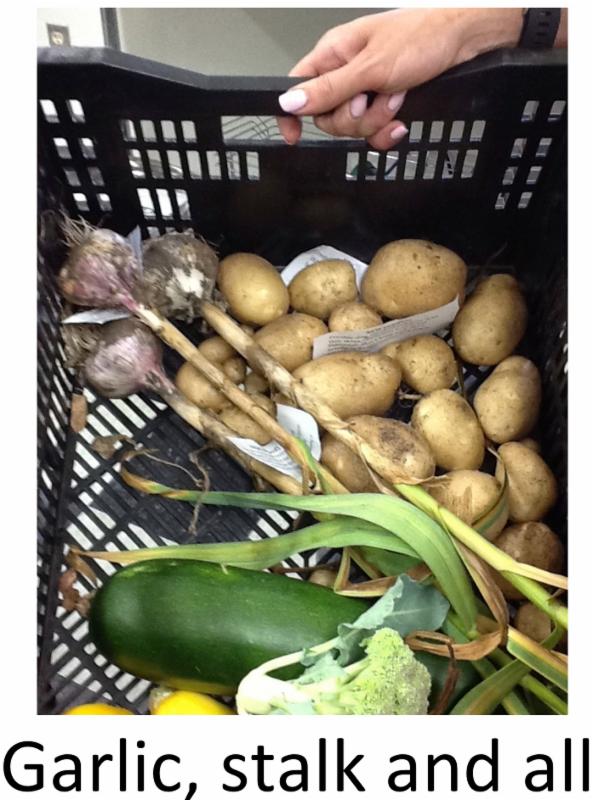
The first new potatoes of the year were sent out to our food pantries in July, as well as freshly-harvested (uncured) garlic. Most of the garlic crop has been set aside to cure so it can be sent as part of our fall distributions.
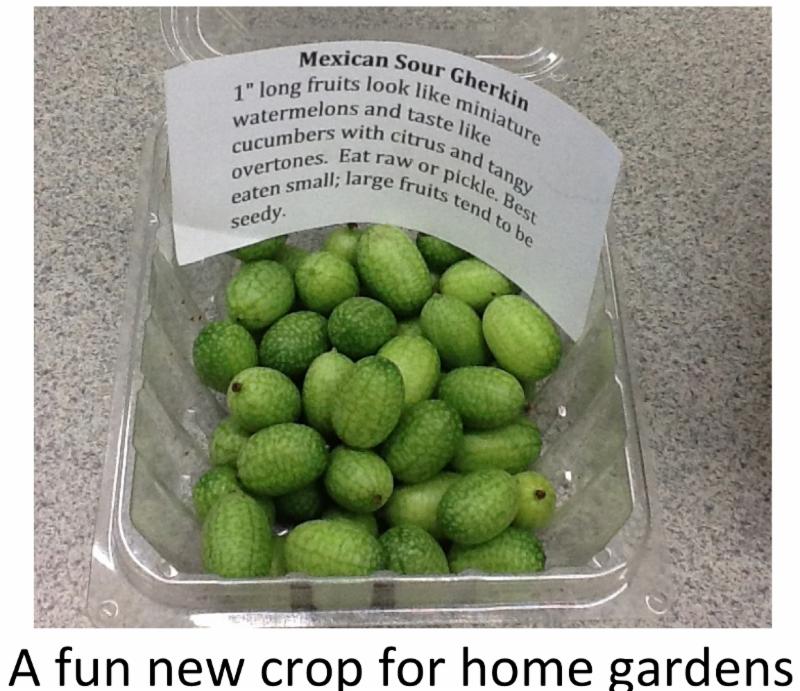 We've gotten our first harvest of a summer crop from Johnny's Selected Seeds - Mexican Sour Gherkin, sometimes called Cucamelon. These bite-size treats are attracting a lot of interest from garden visitors. 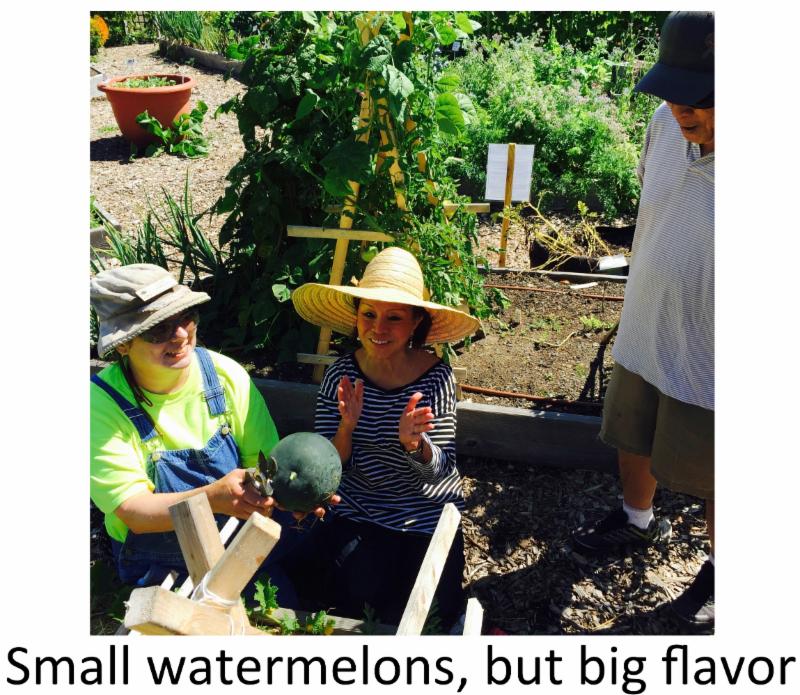
We've also gotten a real sign of summer, the first fruit from our bed called "Mini Melons". Yes, there are melons that work well in small spaces but still taste great.
But even as summer goes on, we are thinking about fall. As we anticipate our fall harvests, we can see that our late-maturing crops are nurturing bees right now - and without the bees, there wouldn't be many crops for us to eat later.
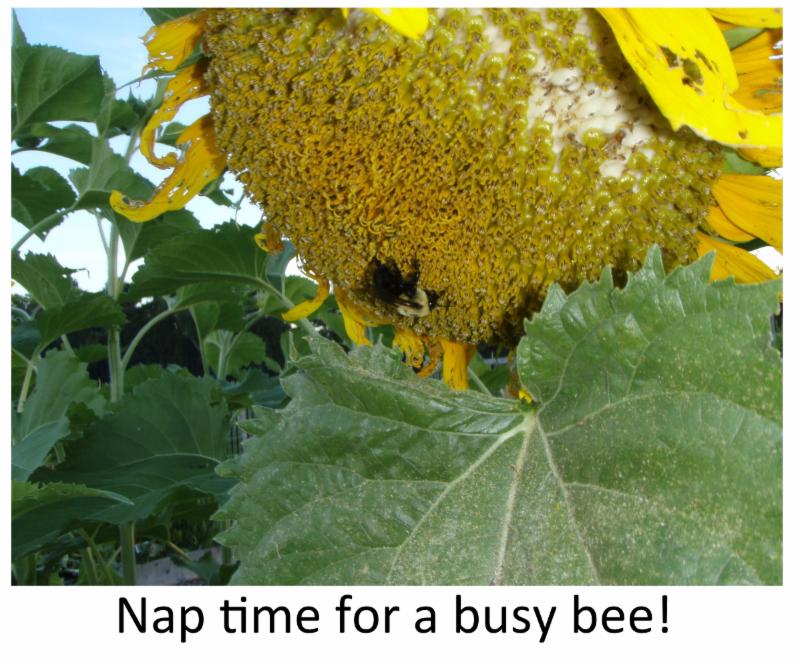 Did you know what we often think of as one sunflower blossom is actually a composite head made up of many tiny flowers? Each one of those tiny flowers has to be pollinated for us to eat later. Did you know that what we often think of as one pollinated in order to produce a sunflower seed, and it's all thanks to the bees!
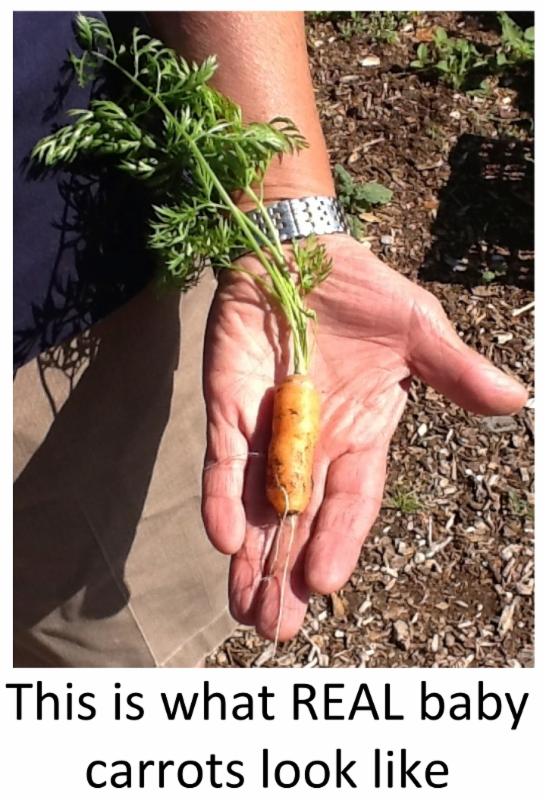
We are anticipating fall in another way too; we're getting to the point in the season where we have to do our last plantings of some crops in order to have them mature before the end of the growing season. For instance, full size carrots generally take about 65 days to mature; that means that if we want to harvest carrots in October, we need to plant them now. It's also worth remembering that crops may take longer to mature in the later part of the season, because the days are shorter so plants get less sunlight.
We are truly into the harvest season now. Come see us harvest on any non-holiday Monday or Thursday. Harvest starts at 9am, and we're there until 1pm to give tours and answer questions. Celebrate the season with us!
|
|
|
|
|
|
|