|
 For exceptional benefits to help you in the garden- Join Today! If you are a Mass Hort member- please recommend membership to a friend! Forward this newsletter. CLICK HERE TO JOIN |
|

SPREAD THE WORD,
HELP US GROW!
Refer a new member to Mass Hort and receive a coupon to attend a Thursday Night at the Hort lecture for free!
|
|

You Shop - Amazon gives to Massachusetts Horticultural Society!
Amazon will donate 0.5% of the price of your eligible AmazonSmile purchases to Massachusetts Horticultural Society whenever you shop on AmazonSmile.
AmazonSmile is the same Amazon you know. Same products, same prices, same service.
Begin shopping at www.smile.amazon.com |
|
|
Letter from the President

Dear Friends,
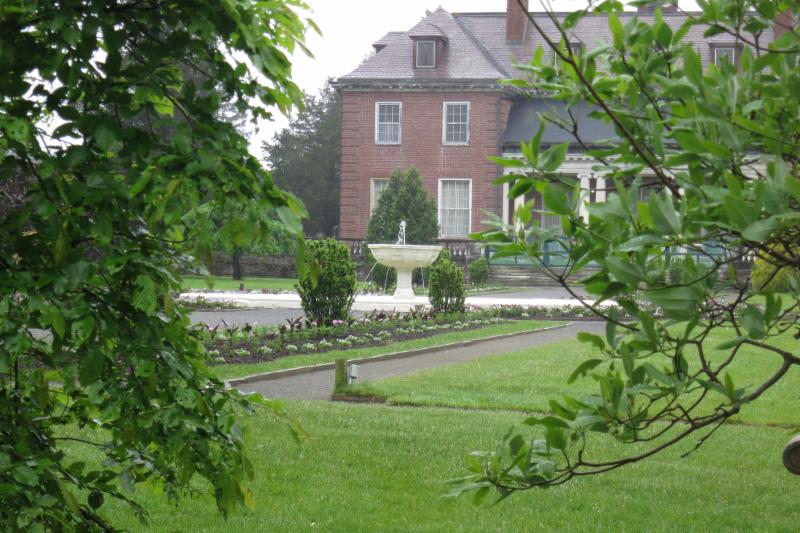
July is a color fest in the gardens! Everything is in bloom with a palette of hues to delight every visitor. Don't miss the variety in the Trial Garden where Mass Hort tests plants, most of them annuals, for growers. Our visiting hours are Tuesday to Sunday, 10:00 a.m. to 4:00 p.m.
Please join us as our guest on Thursday evening, July 23, from 6:00 - 8:30 p.m. for a picnic, musical concert, and a chance to see the gardens through the eyes of artists. Our evening garden series is graciously sponsored by the Wellesley Bank Charitable Foundation.
Thank you for your ongoing support and membership to help us support The Gardens at Elm Bank.
Hope you are enjoying a wonderful summer.
Best wishes,
Kathy
|
|
Arts on the Green--An Evening at Elm Bank
Thursday, July 23, 2015
6:00 p.m. - 8:30 p.m.
What better way is there to appreciate The Gardens at Elm Bank than by seeing artists interpret them for you? Come stroll the gardens, enjoy live music, and explore visual artists and their artwork on our Art Walk, Thursday, July 23 from 6:00 - 8:30 p.m.
Buy original art from the artists and enjoy the gardens in their summer splendor. Activities and tours will also be available.
Bring a picnic, chairs, or blanket. Wine will be sold. Bring the whole family and some friends. Free admission.
Mass Hort will be showcasing the following artists:
Bobbi Angell,
Jodie Apeseche
Julia Blake
Ellen Hovercamp/Scanner Photography
Bruce Iverson
Beverly Kenney
Sally Meding
Carrie Megan
Joan Onofrey
Chelsea Sebastian
Lucy Sur
Carolyn Mackin Watson
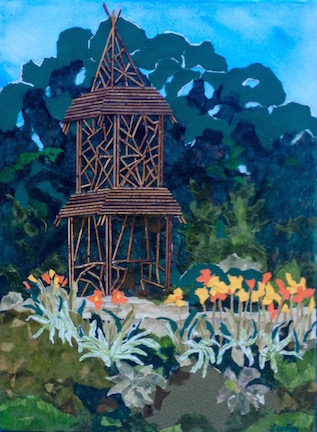
Joan Onofrey
College Artist/Arts Educator
As an art teacher and artist, I have always enjoyed watching my students create their art with spontaneity and energy. The art of torn paper collage captures that spark of spontaneous, lively creativity for me. The gardens of Elm Bank have been the perfect place to inspire my collages.
B.F.A Rhode Island School of Design-Masters of Art Ed. University of Pittsburgh
Member of Wellesley Society of Artists & Needham Art Association
Music:
Sponsored by:
|
A Beneficial Tea PartyHannah Traggis Move beyond the commercial teabag and explore how to  blend your own unique herbal teas! In a class on Thursday, July 16, 7:00 to 8:30 p.m., at Elm Bank, you will learn how to create delicious, personal tea beverages and experience different techniques of making cold and hot water infusions. Steph Zabel, herbalist, ethnobotonist and educator, will review the art of choosing roots, leaves, flowers, and berries to make harmonious blends and will also discuss the health benefits of the herbs we use! Come prepared to sample lots of tea! Steph Zabel is an herbalist and educator based in Somerville, MA. For over a decade she has combined her passions for natural medicine, community outreach, and education. She holds a Master's degree in ethnobotany and has completed several herbal apprenticeships, including a three-year training in clinical herbalism. Prior to launching her herbal business, Steph began her professional career working in the botanical collections of the Harvard University Herbaria. Her current work focuses on teaching practical and inspiring herbal classes and offering dynamic wellness sessions for her clients. Steph is also the founder of HERBSTALK, Boston's vibrant community herbal conference, through which she creates accessible educational opportunities for all plant enthusiasts! To learn more about Steph, visit her website: http://www.flowerfolkherbs.com and join us for this enjoyable hands-on event! Members $10; non-members $15
|
Fun for the whole family in the newly rehabilitated Weezie's Garden for Children at Elm Bank
By John Forti - Director of Horticulture and Education
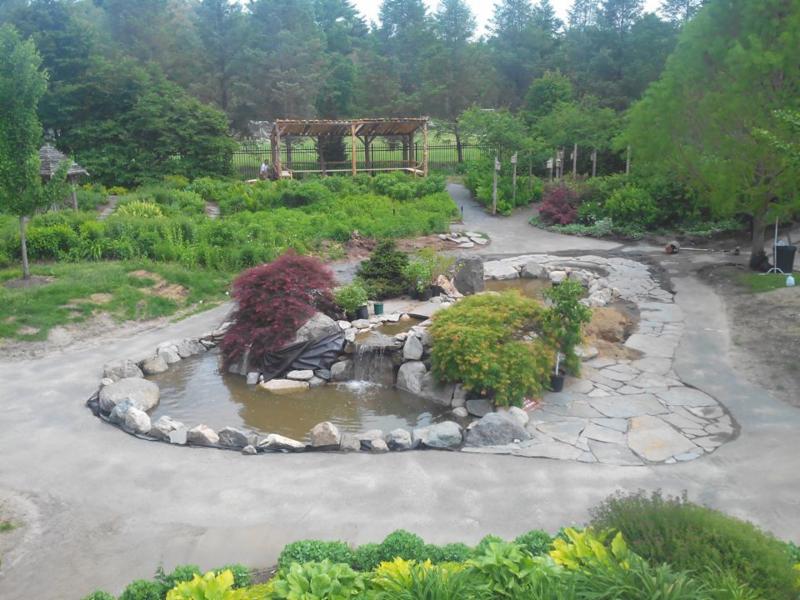
Isn't it time you come back for a fresh look at Elm Bank? 2015 is the year of kids and families at Mass Hort and we hope to be your family gathering spot to bring the generations together around a love of horticulture and landscape. Bring your children and grandchildren for our kids programs, and help them share the love you learned for gardening at a young age.
In addition, when you visit, you can stroll through 36 acres of inspiring gardens and over 100 acres of woodland and riverfront trails. You can discover all the fun interactions with nature and wildlife that can happen when we carve out family time together in the great outdoors. We have even created a Family Discovery Guide to help you engage your kids in all of the gardens at Elm Bank. Weezie's Garden has grown into a graceful mature landscape since it was first planted in 2003. Over the years, time revealed places where new pathways were required, where water features had fallen into disrepair and where structural improvements were necessary to rejuvenate and safeguard this beloved garden.
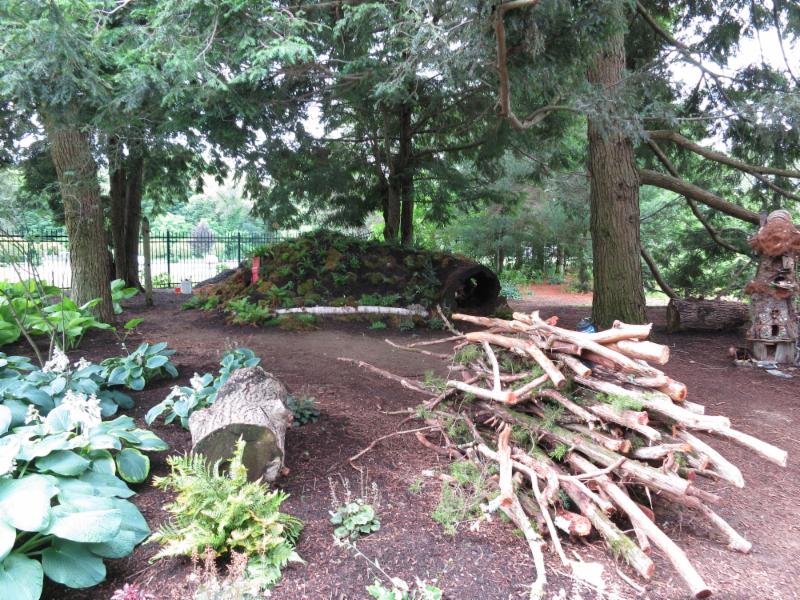
Thanks to a generous gift, we have been rehabilitating Weezie's Garden since mid-spring. Rather than alter the original design of the garden created by Julie Moir Messervy, we upgraded aging exhibits and make this passive learning space into a more active garden for outdoor place-based youth education.
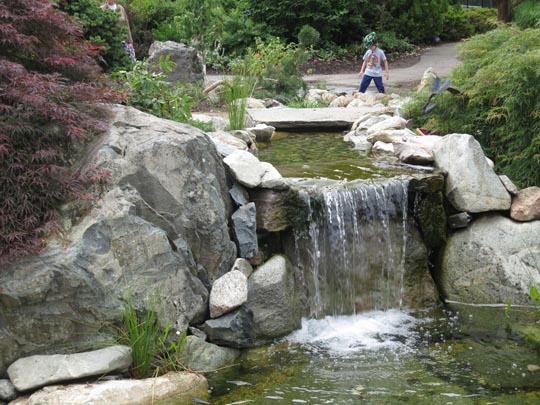
Signs of Improvement
The 2015 gift has enabled Mass Hort to redesign and add engaging water features, create new points of entry and exit, address hardscape needs, safety issues, and build new rustic style garden furnishings and an outdoor classroom. We built upon pre-existing plant selections and rooms created by the designer to layer in engaging, kid-friendly plants, themed garden beds and teaching tools that would enable us to create new daily educational programs to capture the imagination of kids of all ages.
Now that summer is here, most of the work is complete, but you will continue to find interesting new additions "cropping up" throughout the season as artisans finish the design elements intended for our first phase of rehabilitation.
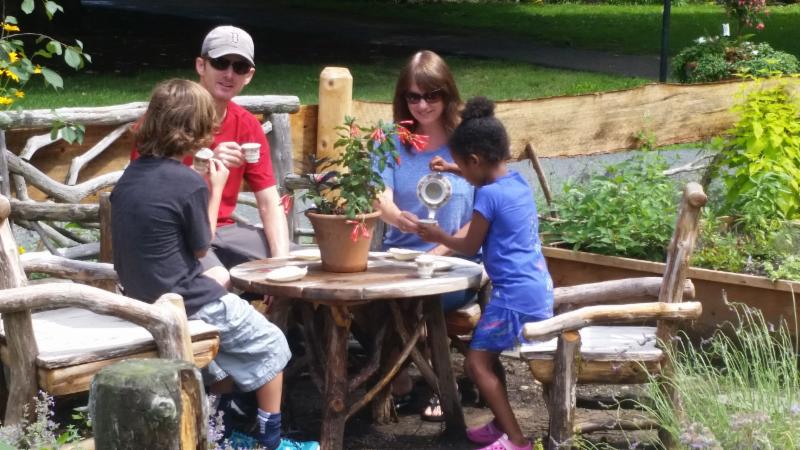
Plan for the Future
For the second installment in 2016, we will add additional rustic structures and furnishings, kid-friendly exhibit panels, a green roof, garden art installations, potable water, lighting, additional exhibit supports, and a labyrinth.
Programs for Kids
Best of all, you can now join us Tuesday through Sunday from 10:00 -11:00 a.m. for our new hands-on kids activities in Weezie's Garden. We are piloting new programs run by trained education staff to capture the imagination and bring the garden to life. Our new daily children's programming features an exploration of the garden through the eyes of a child. "Buzz About" helps kids explore the world of pollinators while they visit. "Plant a Seed, Save a Seed" helps kids understand the value and fun of seed saving, and growing their own veggies and becoming citizen scientists. Our "Frogs, Bogs and Polliwogs" program offers a fun exploration of our regional habitat and the plants and creatures that live there. "The Garden Classroom" helps families explore, have fun, acquire seasonal observation skills and learn nature crafts.
Check out: Weezie's Family Discovery Guide
---------------------------------------
John Forti - Director of Horticulture and Education was the project manager/designer for the rehabilitation of Weezie's Garden for Children .
|
Book Review
The Shepherd's Life: Modern Dispatches from an Ancient Land
By James Rebanks 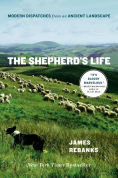
Flatiron Books 2015
Reviewed by Pamela Hartford
Ahhh.......the Lake District. Since the eighteenth century, this mountainous area of northwest England has been praised as the epitome of picturesque scenery and of the romantic, pastoral ideal. William Gilpin's journals, published in 1786, featured images of the Lake District's deep valleys, scenic lakes, meadows and medieval ruins, which served as examples of the emerging concepts of aesthetics, of the beautiful and the picturesque. Twenty five years later, Wordsworth's poetry lauded the District's rural life, played out against a daily panorama of clouds and shadows lighting the hills and lakes, as the closest one could get to living an honest life in nature, uncorrupted by modern ills. The very (modern) idea of the pastoral landscape embodying moral virtue and expressing the true beauty of man in synch with nature was born in the Lake District through Wordsworth's pen.
James Rebanks, the son and grandson of sheep farmers in Matterdale, Cumbria, first heard of Wordsworth at age 13. During a school assembly, his headmistress sought to motivate the unaspiring local boys by describing the Lake District as a "playground for an itinerant band of climbers, poets, walkers and daydreamers, people who had really done something." He was shocked that the "landscape that I love, where we had belonged for centuries, had an ownership claim submitted by outsiders and based on principles I barely understood."
Branded as ignorant, Rebanks dropped out of school at age 16 to fulfill his destiny as a shepherd. He wrote an essay for his younger sister that netted more marks than she normally achieved. Enrolling at evening classes, he made it quickly apparent that he was not ignorant. He eventually pursued a degree and a Master's at Oxford. He discovered that Wordsworth's writing contained tributes to the community of shepherds and farmers of the Lake District, believing that they formed a social and political ideal of great significance and value. Rebanks eventually understood - through Wordsworth - that others (tourists) had a right to enjoy 'his' landscape, but also a responsibility to understand the local culture that created it.
A necessary cell phone upgrade placed an unwanted iPhone in his hand. With no time to communicate anything more complex than a Tweet, he began sharing photos and notes about his life as a shepherd, his culture. Soon The Atlantic came calling, then an agent. His insider's tale of the Lake District inspired a bidding war among publishers.
This dispatch has many narratives - not least of which is the reverence for the breeds of sheep that the Lake District's history is built upon. With colloquial language and droll humor, Rebanks describes an entire constellation of essential relationships with animals, weather, land, and people. He is frank about physical effort, character, and change.
Farming is gaining in credibility and value again, not just for 'food security', but for its embedded values of connectedness to people, to nature and to our earth. Rebanks calls this 'hefted'.
The Tweeters are paying attention, as well they should.
https://twitter.com/herdyshepherd1
Pamela Hartford is a landscape historian writer and preservation consultant living in Salem, Massachusetts.
|
 July Hort Hints July Hort Hints
By Betty Sanders
BettyOnGardening.com
Now that we've had some rain...the lawn needs to be mowed. Keep it high, no less than 2 1/2 inches; three inches is even better. At that height the grass is making lots of food to send to the roots, the roots are shaded from the sun on hot days and these two conditions will lead to a dense turf and a deep root system.
And remember grass clippings act to feed the lawn as they break down. Also, grass clippings do not cause thatch. So save yourself the trouble of bagging and disposing of clippings and give the lawn a light feeding (from the clippings) every time you mow.
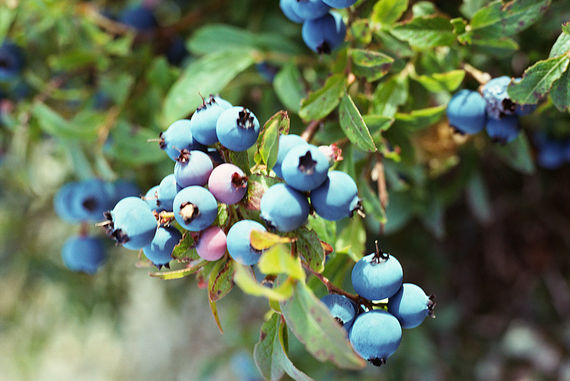 Be patient, whether it is blueberries turning blue or tomatoes turning red. The first sign of color is just that. Real flavor will develop over the next few days, as the berry and tomato increase in size and sugar content. With tomatoes, do not remove healthy foliage. Fewer leaves mean less food produced for the plant---and for you. Be patient, whether it is blueberries turning blue or tomatoes turning red. The first sign of color is just that. Real flavor will develop over the next few days, as the berry and tomato increase in size and sugar content. With tomatoes, do not remove healthy foliage. Fewer leaves mean less food produced for the plant---and for you.
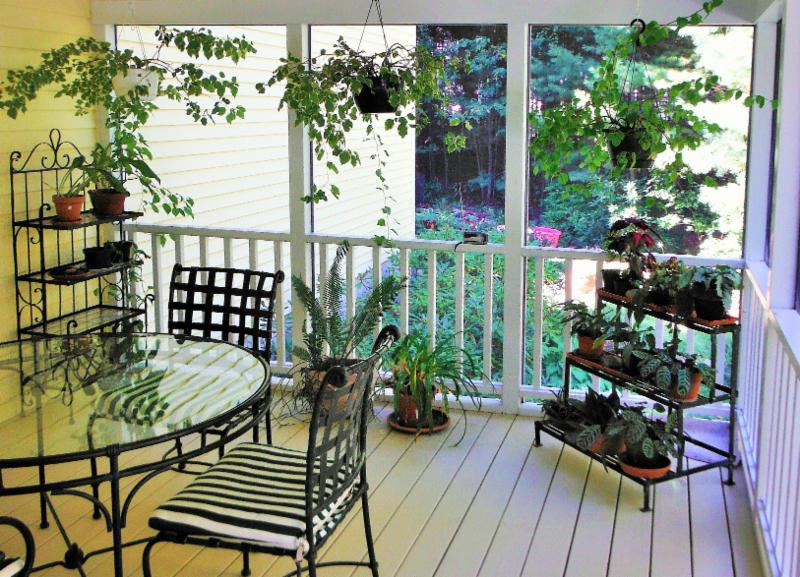 Give your houseplants a summer vacation. The best summer camp for houseplants is on a screened porch where they can enjoy the extra sunlight and fresh breezes without meeting up with insects or diseases from the "real world'. It also makes bringing them back indoors for the winter less work because you need worry less about "hitchhikers". Do remember the extra sunlight and warm breezes will require more frequent watering and regular, dilute feedings to keep them going strong. Give your houseplants a summer vacation. The best summer camp for houseplants is on a screened porch where they can enjoy the extra sunlight and fresh breezes without meeting up with insects or diseases from the "real world'. It also makes bringing them back indoors for the winter less work because you need worry less about "hitchhikers". Do remember the extra sunlight and warm breezes will require more frequent watering and regular, dilute feedings to keep them going strong.
Annuals, whether they are planted in the ground or in containers, can usually use a haircut about now. Trim them back up to halfway (be sure to leave some leaves to produce food) and get rid of leggy growth on geraniums, petunias, or any other that shows more greenery than flowers. Add a dose of weak fertilizer and in two weeks you'll be rewarded with a new crop of flower buds. Frequent deadheading keeps the flowers coming. Make certain they never dry out or the flowers will stop.
Perennials need less care than annuals once established, but to look their best, they need some maintenance. When you prune off the finished flowers, you send the plant's energy to the roots rather than to seed production. Tired of deadheading? Consider summer blooming shrubs. We all know roses and hydrangeas, but have you ever noticed flowers on clethra (June flowers and a great fragrance), caryopteris (blue flowers in late summer) or daphne that can bloom from spring to fall? Or have you been stopped in your tracks by the summer blooming trees including Oxydendron (sourwood tree) or Stewartia or Franklinia?
Any long-season crops in the vegetable garden may do well with a side dressing in mid-summer. Not something for the salad bowl but, rather, a light fertilization to get corn, melons, winter squash, onions and the like through the next couple of months.
It's also time to replant beets, carrots, lettuce (with a little shade from corn or trellised cucumbers, if you can), swiss chard, and green beans. Keep your vegetables well watered by watering deeply in the morning so the water is in the ground before the heat of the day. Watering in the evening promotes disease, especially fungi, that multiply rapidly on the wet leaves on a warm night. --------------------------------- You can find more of Betty's gardening advice at www.BettyOnGardening.com. |
|
|
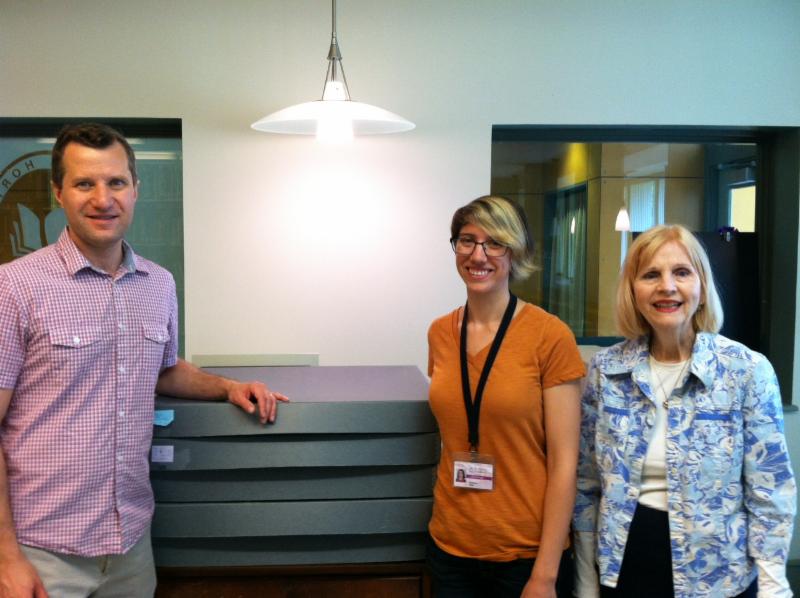
Tom Blake, Nichole Shea, and Maureen Horn, Librarian
Mass Hort's Botanical Prints Digitized
Mass Hort is coming closer to putting on view its outstanding botanical prints collection for the enjoyment of the general public. During the earlier days of the Society's history, the public was invited to see the actual items, but this time the exhibit will be digital. Our tradition of sharing is a long one: the collection was begun in 1829, the year that the Massachusetts Horticultural Society was founded. Noticing that interest in botanical prints had grown during the intervening 140 years, the Society mounted its first major exhibit in 1968. It continued in 1969 when a group of lily prints was shown to the North American Lily Society at its annual meeting.
During the 21st century, our emphasis has been on
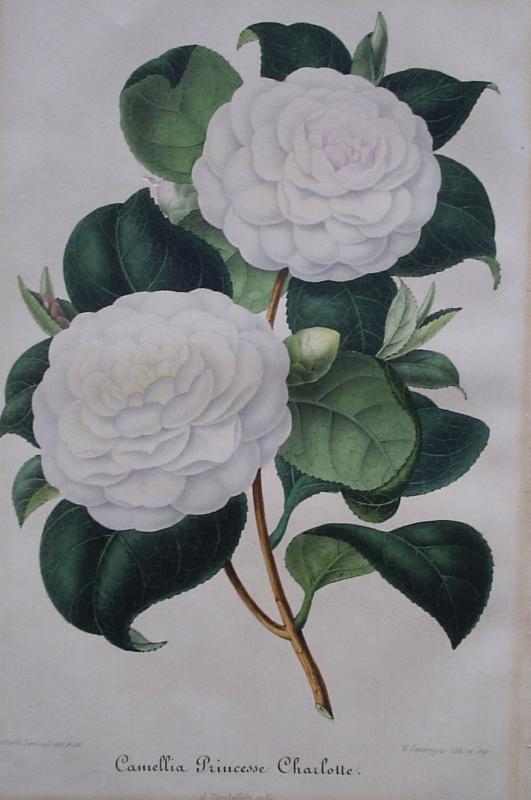 preserving these works of art by removing them from inadequate frames and rehousing them in acid-free boxes between sheets of tissue. Their fragile paper and paint has been hidden from the sun, and everything is safe. But they give very little joy to our friends. preserving these works of art by removing them from inadequate frames and rehousing them in acid-free boxes between sheets of tissue. Their fragile paper and paint has been hidden from the sun, and everything is safe. But they give very little joy to our friends.
When Thomas Blake, the Digital Projects Manager at the Boston Public Library, suggested that we use the services of its state-of-the art laboratory with its $40,000 digital camera, to copy our pictures, we agreed with enthusiasm. The BPL staff picked up the boxes of prints at the Mass Hort Library, located at Elm Bank, and brought them to be photographed at its main facility in Copley Square. There, the pictures were supplied with informative descriptive metadata by Nichole Shea, who helped to carry the original paper works back to their home. Accompanying the delivery was a CD with over 1,500 high resolution images that can now be posted on our web site, and through this means, the original objects will be preserved.
Soon, all of Massachusetts will know what we have treasured since the Society's beginning when copies of our botanical prints appear on Digital Commonwealth, an online library of collections from across the state.
|
Green is the New Orange

by Neal Sanders
Leaflet Contributor
My wife, Betty, is walking on air these days. I mean, clicking-her-heels-three-times-in-the-air happy. Turning-somersaults-with-glee pleased.
The orange fence is down.
|
| | Mid-September 2014 - the fence appears |
The fence appeared in mid-September of last year as workmen began preparing the site of our new home for its foundation. We had gone through a two-month permitting process that ended with the issuing of an Order of Conditions, or 'OC' by our town's Conservation Commission.
The OC is a lengthy document that spells out what the builder, landscaper, and homeowner must do to preserve the area beyond the immediate house. Because our home would abut wetlands, the OC was quite specific about preventing the construction process from encroaching on those wetlands.
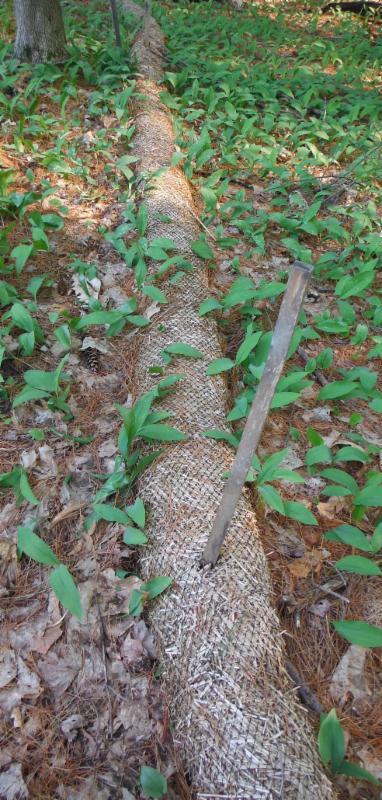
Specifically, the OC called for the placement of a 300-foot-long silt barrier to keep construction debris and landscaping materials from spilling over into land that we own, but cannot alter. The silt barrier, in turn, is a continuous tube of straw-stuffed plastic netting. It does an excellent job of keeping Bad Stuff on one side of a line while keeping the other side of the line pristine.
To mark that silt barrier for all to see and respect, the OC requested that we put up a four-foot-high orange fence.
For those of you reading this who know Betty - and especially those of you who have seen her do her superb container gardening demonstrations - you know that she dislikes orange.
No, dislike is too mild a word to describe her feelings on the subject. 'Hate' is not too strong a word. 'Abhor' is just about right. We have no orange flowers in our garden. Orange stops the eye in a garden.
And so, every time we visited the construction site as the house rose from the ground, Betty would avert her eyes. Then, winter came and, for a while, the fence was buried. But in March it reappeared: a specter of bad taste, a blot on an otherwise beautiful piece of property.
We moved into our new home in April, but the fence remained. Every time Betty looked out our back windows, the fence was there, shouting out its unwanted presence. Why did it stay? Because the OC specified that final grading for landscaping must be 'substantially complete' and hardscape items like our patio and driveway must be in place.
With the bringing in of loam in May and the construction of the patio and driveway in June, we neared our compliance goal. We purchased dozens of native and woodland shrubs and other plants to blend our property into the woodlands beyond. Betty tagged each plant so there was no question that it added to our standing as Stewards of the Land.
Then, one afternoon in early July, Leslee Willitts, our town's Conservation Commissioner, came to pay a call. She is a wonderful and knowledgeable lady who shares Betty's scorched-earth policy on the subject of invasive plants.
She and Betty walked the property for roughly half an hour, pausing to look at plants, discuss drainage and water barrels, and admire the new oxydendrum. Interestingly, Leslee's eyes went well beyond the silt barrier to spy out any invasive plants that had made their way into the woodlands and wetlands beyond.
At the end of the tour Betty asked, as casually as she could muster, whether the orange fence could come down.
"Oh, sure," Leslee said. "You don't need that now."
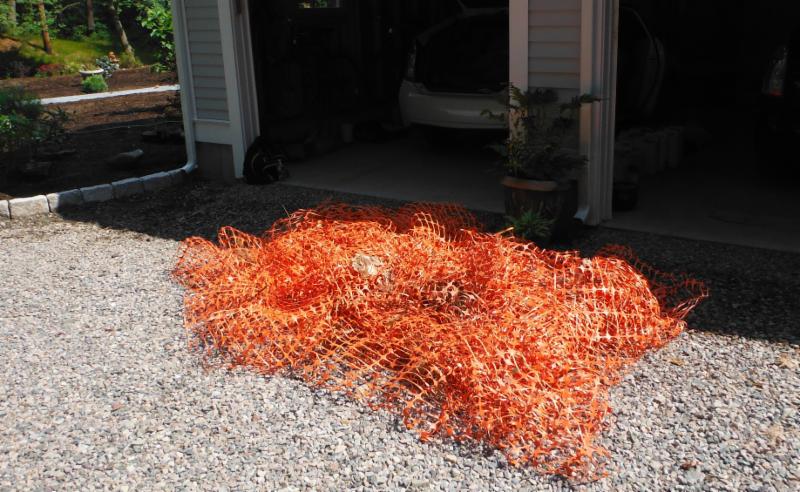
To her credit, Betty waited until the Conservation Commissioner's car was out of sight before starting to rip out the fence. But in less than twenty minutes it was in a pile in our driveway, ready to go to the transfer station. The workmen completing our driveway offered to take it away for us.
|
| | The fence, ready for the dump |
There is still one step remaining before the OC is lifted. The engineering firm that surveyed the land last year and drew up the construction plan must now do a final 'as-built' plan showing that we adhered to the letter of the Conservation Commission's orders. It will be a joy to write that final check for the report.
Almost as much of a pleasure as ripping out that fence.
-----------------------------------
Neal Sanders is the author of nine mysteries, many with horticultural themes. His latest, 'Murder in Negative Space', was published in March and is available in bookstores and at Amazon.com.
|
Catching Up with the Last Half Century
Maureen Horn, Librarian
Part 6
The Seventies Begin: With Lots of Help from Our Friends
|
| | Library books at Hort Hall |
The President's Report of 1970, by Oliver F. Ames, was in the form of a farewell to the office and a celebration of the difficult times that had just ended, thanks to the loyalty to the many people who had struggled to keep the Massachusetts Horticultural Society financially alive.
He had said a year previously that 1969 was a year of financial crisis, and he had led the charge find solutions. But the charge was not a one-man assault; it was carried out by 400 individuals. Mr. Ames lived by the philosophy that all members of the Society should feel equal pride in and responsibility for the organization, so with professional assistance, he launched a telephone campaign to solicit funds. After its success was evident, he admitted that the course of action had not been an easy decision for the Board. The result was stunning: In 1968, there had been a deficit of $487,000; in 1969 it was $317,000, and in 1970, they had slashed it to $75,181.
The year 1970 saw a trend towards a larger variety of programs to meet the new needs of the membership, many of them focused on "ecology", which had entered general consciousness. One such activity was called "Hub Box", which recognized the need to reach young people who were "going to have to learn something about growing things if we are to have a livable environment tomorrow." Horticulture magazine made plans for a more active editorial policy on conservation and ecology.
President Ames announced that his resignation was because he felt the Society needed new leadership. His bowing out was followed by five other retirements, most notable by the Chairman of the Committee on Lectures and Publications. John O. Stubbs left after learning the difficult news that the recent Comptroller had misled the organization for many years by hiding the fact that Horticulture had been operating at a loss of $306,000.
The Executive Director, Carlton B. Lees, continued his support of efforts to introduce children to sunlight, air, water and soil.
The new President, in 1971, rejoiced that, for the first time in twelve years, the Society not only broke even, but actually made $1,488 and that Horticulture for the first time ever made a substantial financial contribution.
M. H. S. was beginning to welcome suggestions for alternatives to maintaining its headquarters in the 70 year old Horticultural Hall. It was pointed out, though, that the By-Laws read that no sale of the Society's real estate could be carried out except by a majority of members assembled at a meeting to consider proposals. President Clark's notification showed an effort to continue the engagement of the membership. Another friend rallied to invest in the venerable library, when the Webster Foundation granted funds to clean and repair the 19th century book collection.
The world outside Horticultural Hall was never far from the mind of Carlton B. Lees, who promoted the contributions that M. H. S. could make in helping to beautify the city. He pointed out that because the public could not break through the façade of the handsome building, the Society must maintain a conspicuous year-round program of bringing people in contact with living plants.
The Committee on Gardens had already reached out with its awards beyond the grand private gardens to also celebrate public and business gardens. And the Chair said that they were anxious not to overlook any worthy locations, appealing to the membership to suggest recipients for the awards.
|
Notes from the Vegetable Garden
by Susan Hammond
A vegetable garden is a dynamic place, with changes happening every day. The season has turned from spring to summer, and the crops we are growing have changed with the seasons. As of the end of June, the Garden to Table vegetable garden has harvested over 450 pounds of fresh, local food for the benefit of our local food pantries.
 How did we do it? How did we do it?
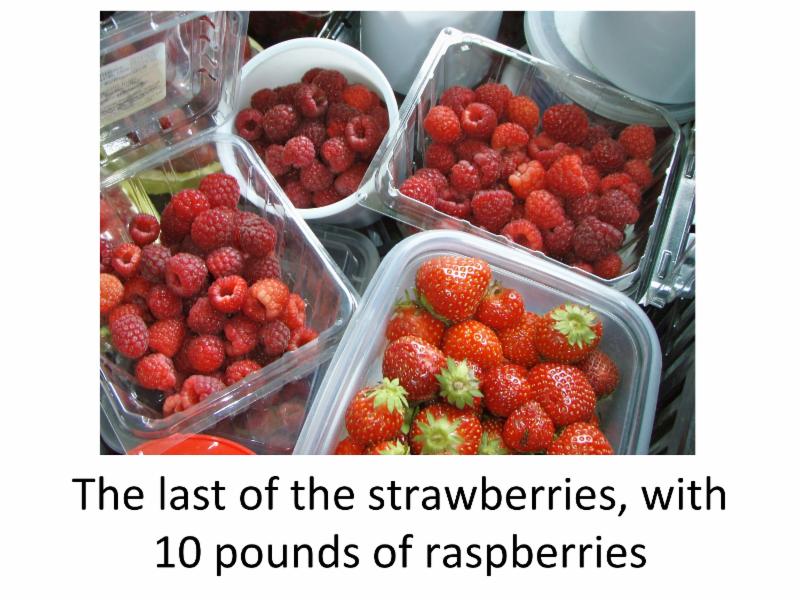
A lot of the good results come down to planning. Some of our perennial crop successions were planned from the beginning. For instance, when we decided to establish a strawberry bed, we picked two varieties with staggered maturity, so we would have berries for the whole month of June. And right about the time that the strawberries stop producing, the raspberries take up the slack.
For annual crops, we adjust both our crop selection and the specific varieties we choose within crops to help us keep produce flowing all season long. A good seed catalog and a good web site are valuable references in the planning process. Johnny's Selected Seeds has both. For instance, peas are a cool weather crop, planted early in the spring, but they can take 50-60 days to mature. But Johnny's has information on how select varieties that we could grow for the the shoots and tendrils, which gave us a harvestable crop weeks earlier.
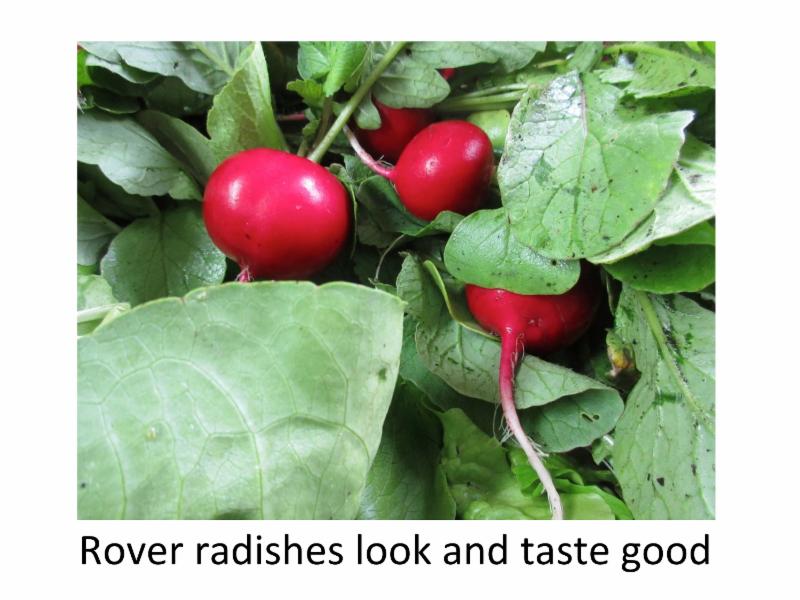 Radishes are generally thought of as a cool weather crop; if it's too warm, most radishes will become tough or woody and "bolt". But radishes are also a crop that we really like to provide to our food pantries because they are fast to mature, don't have a lot of disease problems, and are easy to prepare and eat. So we reviewed the Johnny's catalog for a heat tolerant radish and found Rover, which has been our workhorse production radish for several years. It is so heat tolerant that we can grow it all summer long, and it also does ok if we have to leave it in the ground for a bit after it reaches maturity. Radishes are generally thought of as a cool weather crop; if it's too warm, most radishes will become tough or woody and "bolt". But radishes are also a crop that we really like to provide to our food pantries because they are fast to mature, don't have a lot of disease problems, and are easy to prepare and eat. So we reviewed the Johnny's catalog for a heat tolerant radish and found Rover, which has been our workhorse production radish for several years. It is so heat tolerant that we can grow it all summer long, and it also does ok if we have to leave it in the ground for a bit after it reaches maturity.
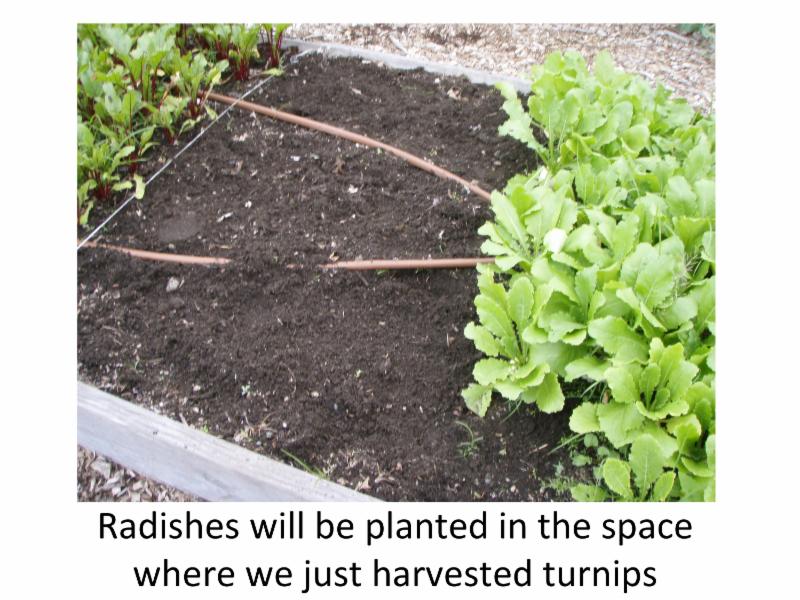 Why do we sometimes delay harvesting some crops? We want to be sure to send crops to both of our food pantries, and, when possible, we don't want to send 15 pounds of radishes from one harvest and then none for the next two weeks. Part of how we accomplish this is to do succession planting. If we have a large area designated for radishes, we will plant 1/3rd of it at a time, five to seven days apart, so we space out the maturity of the radishes. Why do we sometimes delay harvesting some crops? We want to be sure to send crops to both of our food pantries, and, when possible, we don't want to send 15 pounds of radishes from one harvest and then none for the next two weeks. Part of how we accomplish this is to do succession planting. If we have a large area designated for radishes, we will plant 1/3rd of it at a time, five to seven days apart, so we space out the maturity of the radishes.
We do this with many other crops as well, such as beets and 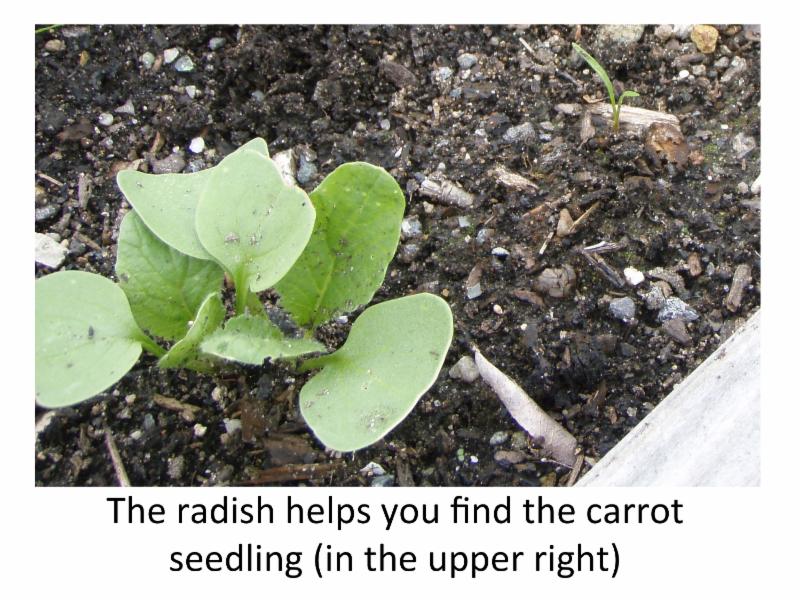 Japanese turnips. Often we'll harvest a strip's worth of one of these crops and look at what we have coming along in the garden to decide what will go in that space next. Japanese turnips. Often we'll harvest a strip's worth of one of these crops and look at what we have coming along in the garden to decide what will go in that space next.
We also use space saving techniques such as alternating radish seed and carrot seed in a row. The radishes will germinate very quickly and help you know where to look for the carrots, but the radishes will be done before the carrots need the space.
Our harvest days are every non-holiday Monday and Thursday, from 9:00 a.m. to 1:00 p.m. Visitors are welcome. Even if you've been to the garden once this year, it is worth a return trip and it will be different every time you come.
|
|
|
|
|
|
|