|
|
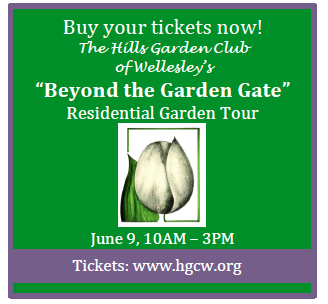
Hills Garden Club of Wellesley
Tour June 9
Chestnut Hill Garden Club
Centennial Garden Club Tour
June 6, 2015 |
|
 For exceptional benefits to help you in the garden- Join Today! If you are a Mass Hort member- please recommend membership to a friend! Forward this newsletter. CLICK HERE TO JOIN |
|

SPREAD THE WORD,
HELP US GROW!
Refer a new member to Mass Hort and receive a coupon to attend a Thursday Night at the Hort lecture for free!
|
|

You Shop - Amazon gives to Massachusetts Horticultural Society!
Amazon will donate 0.5% of the price of your eligible AmazonSmile purchases to Massachusetts Horticultural Society whenever you shop on AmazonSmile.
AmazonSmile is the same Amazon you know. Same products, same prices, same service.
Begin shopping at www.smile.amazon.com |
|
|
Letter from the President

Dear Friends,
On May 1, The Gardens at Elm Bank officially opened to the public, complete with garden tours and children's programming. This is a huge milestone for our 186 year-old organization and it is only possible with the help of members like you.
Mass Hort has come a long way and yet there is still so much more for us to do. I hope you will help support Mass Hort's Spring Appeal so that we may continue to grow.
Stewarding Mass Hort's 36 acres and 12 gardens requires love and attention - and funds. More than 60,000 people visited our gardens last year. As Mass Hort grows, we hope even more people will come and stroll through our beautiful gardens, enjoy picnics, and learn about plants, gardens, and landscapes. They may also bring home lots of innovative, practical ideas for their personal gardens.
Many thanks to John Forti, our new Director of Horticulture and Education for leading the effort for Mass Hort to provide children's programs in the gardens and garden tours this season. Thank you to all the staff for their on-going efforts to bring The Gardens at Elm Bank to life after a very hard winter. Elm Bank is truly a wonderful place for people to visit and enjoy.
Don't miss the Gardeners' Fair on Saturday, May 16th. there will be plants, vendors, and all you need to get your garden and yard ready for summer. Admission is free for members with special early member hours from 8 a.m. - 8 a. m. (General Admission Hours 9 a.m. - 3 p.m.)
Warm regards,
Kathy
|
Enjoy the Gardeners' Fair at Elm Bank, Saturday, May 16, 2015 - for all your gardening needs!
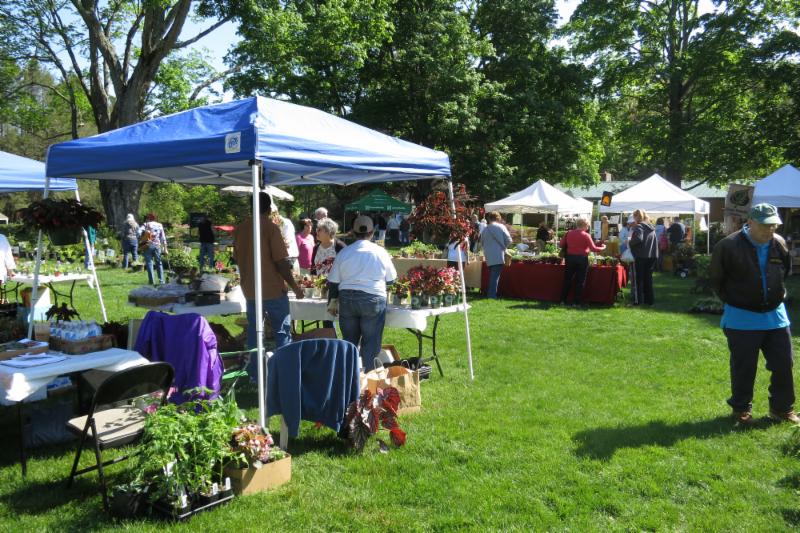
The Gardeners' Fair will take place on Saturday, May 16, 2015, from 9 a.m. to 3 p.m. at Massachusetts Horticultural Society's The Gardens at Elm Bank, Route 16, in Wellesley. The Gardeners' Fair is an opportunity to find rare and unusual perennials, trees and shrubs; ready-to-plant herbs and vegetables; and tomato varieties by the dozens. It's also a chance to hear talks by experts, find unique garden tools, garden ornaments and accessories, as well as other gardening necessities. The fair will feature tomatoes by Allandale Farm, the Herb Society Plant Sale and over 20 vendors. Admission is $5 per car for the general public, free for Mass Hort members.
|
| | Vendors at Gardener's Fair |
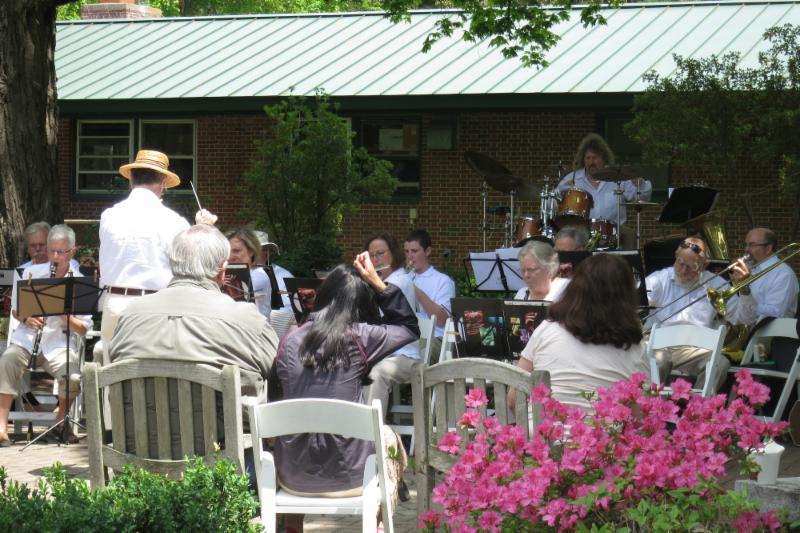
The Gardeners' Fair provides fun and shopping for the whole family! Mass Hort will sponsor daily children's programs and garden tours. Don't miss the Wellesley Band, who will entertain at 1:00 p.m., Event Specialists Food's truck will be on site for lunch and snacks. The New England Unit of the Herb Society Garden activities will include: tours at 9:00 a.m., tours at noon, family-oriented workshops, Fairy Houses at 10:00 a.m., and Herbal Seed Starting at 1:00 p.m.
Vendors from around New England will be selling plants and garden supplies to help you get your garden and yard ready for the summer. This year's vendors include: Allandale Farm, NE Unit Herb Society of America Herbs, New England Daylily Society, Nasketucket Gardens, Buxton Branch, Am. Begonia Soc., Lyndigo Spice, LLC, American Rhododendron Society MA , James Hardie Building Products, Slug Shield, Lorelei's, Iron Arts, Eastern Plant Specialties, Coldbrooke Pottery, The Warren Farm and Sugarhouse, MDAR, Boston Event Specialist Food's truck, Deborah's Kitchen, Hummingbird Crossing, Ginny Remedi Designs, Stonegate Farm and Flowers, New England Hosta Society, Conifer Society, Greystone Garden, Teaberry Gardens, and McCrea's Candies.
Massachusetts Horticultural Society and The Gardens at Elm Bank are located at 900 Washington Street in Wellesley, MA 02482. For more information, please visit: http://www.masshort.org/Gardeners-Fair.
To Volunteer for the Gardeners Fair, VOLUNTEER HERE.
|
|
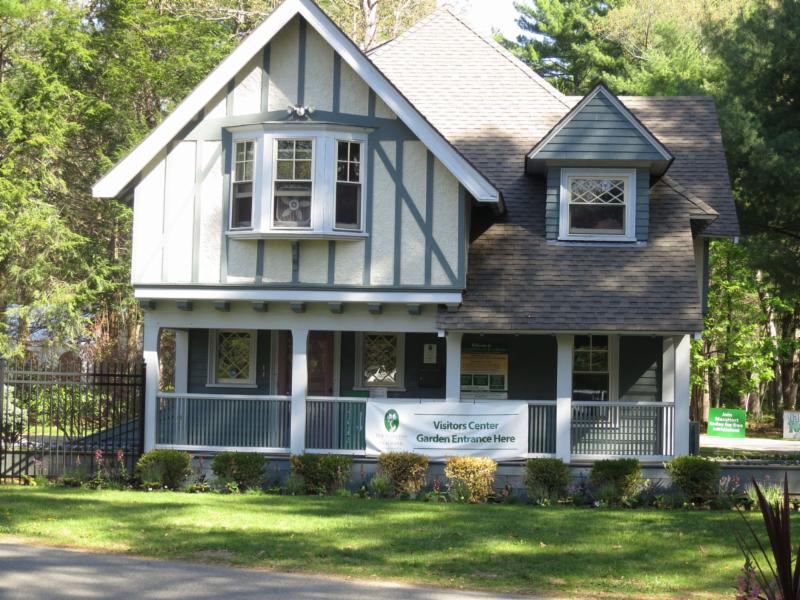
Mass Hort Opens New Visitors Center at The Gardens at Elm Bank
Welcome to The Gardens at Elm Bank new Visitors Center! The Vistors Center is located in Flora, the Tudor-style shingle and stucco gardener'scottage, which was built by Benjamin Cheney in 1876. It is adjacent to the parking lot. The staff is there to greet garden visitors and provide information about the property and Massachusetts Horticultural Society. Opening for the garden season, May 1- Columbus Day, the gardens are opened Tuesday through Sunday, from 10 a.m. to 4 p.m. Garden admission is $8.00 per adult, children under 12 free. Members enjoy free admission. Memberships may be purchased in the Visitors Center (or online): individuals: $55 and family: $90. Memberships and admissions help support the care and maintenance of The Gardens at Elm Bank and Mass Hort's educational mission.
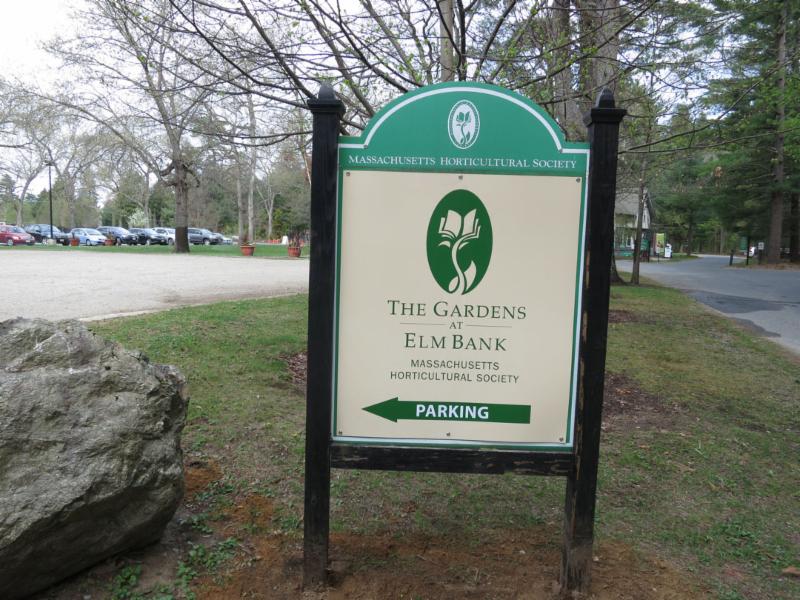
All parking is in the two main parking lots opposite the Visitors Center. We have established new traffic and walking patterns.
Also, Flora has a new members lounge so you can relax before or after your garden visit. Thank you to donations by Diane Valle, Susan Mooney, and Needham Bank and many others for their help with our new Visitors Center a reality.
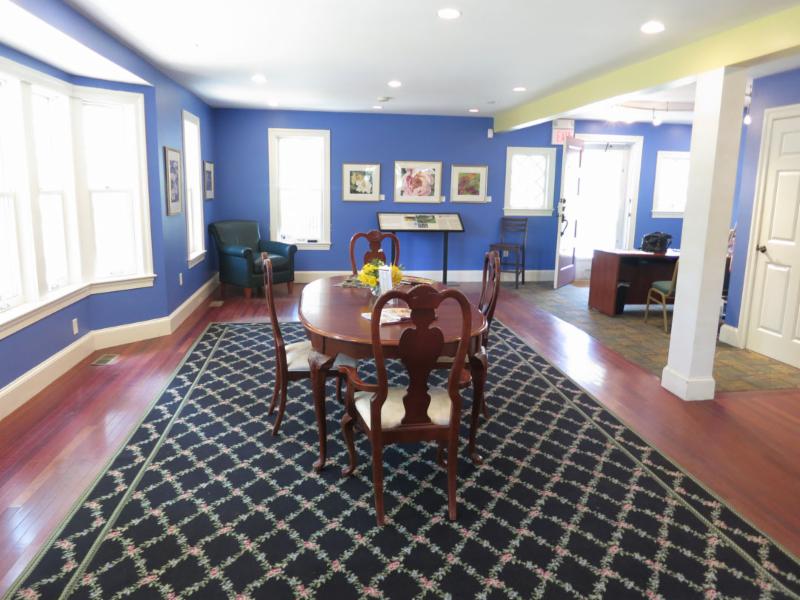
Art Gallery Opens in Flora Visitors Center
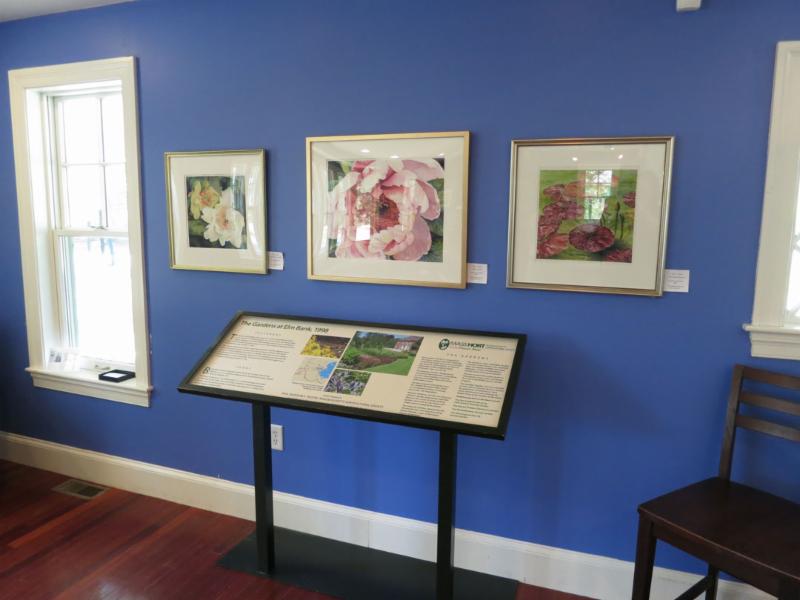
The Flora Visitors Center Art Gallery is currently featuring watercolors by Wellesley artist Yale Nicolls. Yale Nicolls is a watercolorist who has participated in many juried shows throughout New England. She is a board member and past president of Wellesley Society of Artists, and is a member of the Rhode Island and New England Water Color Societies. Enjoy her beautiful paintings of flowers in this show- many were painted from The Gardens at Elm Bank. |
Save the Date: Members' Evening in the Garden
 DATE: Sunday, June 7th TIME: 5:30 p.m. - 8:30 p.m. LOCATION: The Gardens at Elm Bank -Maple Grove and Crockett Garden Let's kick off the summer in the gardens! Enjoy a picnic in the gardens with live music Mass Hort members and their families and friends are all welcome! Bring chairs, blankets, and a picnic! Live Music by  LiveWireBoston including jazz, blues & bossa. RSVP - Amy Rodrigues - amyrodrigues2@aol.com or 617-933-4961 or just come! GENEROUSLY SPONSORED BY:  No rain date. |
|
Spring Meeting of Environmental Collaborative on Beacon Hill
Katherine Macdonald attended the spring meeting of the Environmental Collaborative of Massachusetts. Special guest was the new Secretary of Energy and Environment, Matthew Beaton.
Initiated by ELM in 1997 with 20 environmental groups, the Massachusetts Environmental Collaborative has grown to over 40 member organizations, including Massachusetts Horticultural Society - from the Berkshires to Cape Cod. Together, ELM and Collaborative members share knowledge, pool resources, discuss priorities and strategies, and provide a strong advocacy voice on key environmental concerns. |
|
Spring Tasting Dinner in the Garden
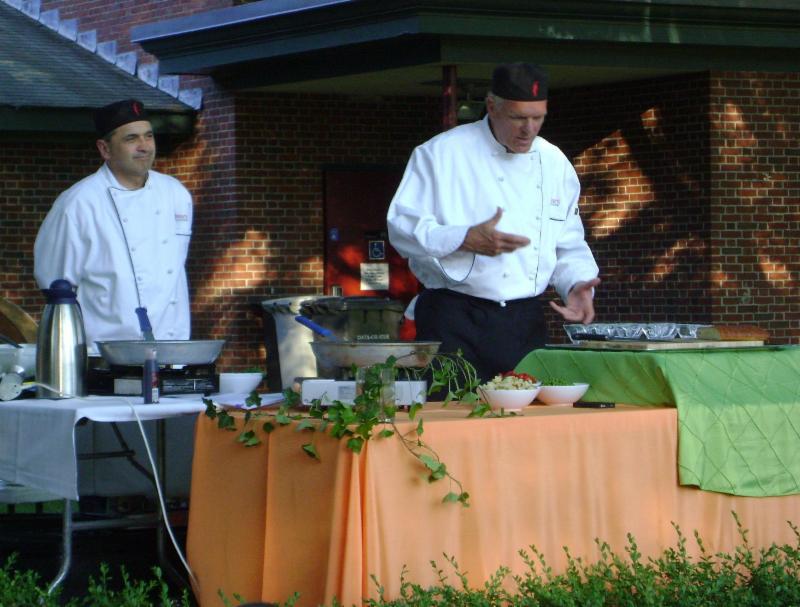
Peppers' culinary team, headed by Chef John Lawrence, will prepare an early spring tasting dinner in the Crocket Garden.
Enjoy a strawberry rhubarb spritzer or a glass of wine and seasonal cocktail in the garden as John teaches us how to make the most of the early season's offerings. To learn more about John and Peppers, visit Peppers Fine Catering.
Help support the Garden to Table program.
Cost: Mass Hort Members $65, Non-Members $70
SIGN UP NOW
|
 May Hort Hints: Ready, Set, Garden! May Hort Hints: Ready, Set, Garden!
By Betty Sanders
BettyOnGardening.com
Finally the soil has warmed enough to start serious gardening. Your clean-up should be finished and the real work beginning.
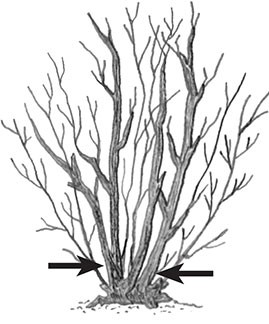
| After blooming cut out up to a third of old lilac branches at ground level |
Prune forsythia, lilacs and other spring bloomers as soon as the flowers are finished. They will bloom next year on the wood that grows during the summer, so delaying could mean fewer flowers next year. Remember that forsythia is a prodigious grower, so prune the bush smaller than you want it to be now because the summer growth spurt will come soon enough. With lilacs it is important to prune not the ends of branches (though you can do that to control size) but, rather, to take out up to one-third of the older branches at ground level on established plants. Lilacs renew themselves by sending up new shoots and, in two years, those shoots will have the biggest and best flowers. Vegetable gardens. If you don't have beets, spinach, lettuce, swiss chard in the ground, do it |
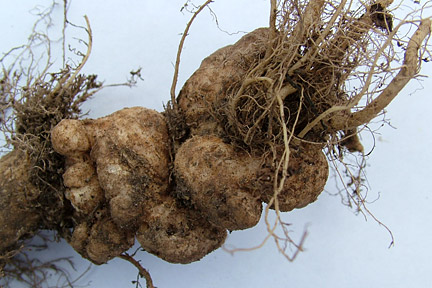
| | Add lime to your soil to prevent club root on cabbage |
immediately. When planting members of the cole family such as cabbage, broccoli and cauliflower, add lime to the soil because the resulting higher pH (more alkaline soil) inhibits club root, a soil borne disease that remains in the ground for up to seven years after first appearing and can devastate cole crops. Covering crops with floating row covers (available in nurseries or online) can prevent flea beetles, leaf miners, and root maggots (cole crops). Later, you can use floating row covers over beans and squash to prevent bean beetles and squash borers from attacking to the plants. If you want good crops organically, this is the easiest and least expensive (they are reusable) way. Don't let an early May burst of heat fool you into setting out hot weather vegetables such as tomatoes, peppers, eggplant, squash and melons. Wait until the end of May. It is soil, not air temperature that these vegetables need to have warmed to 70 degrees or more. Otherwise they may rot in the ground or be stunted. If you worry your favorite varieties will be out of stock by then, buy the plants now, but instead of planting, put them outside in the morning and back in for the evening until the soil has warmed. Lawns. You raked your lawn last month. This month, make certain the mower is set to 3 to 3 1/2 inches. If someone else mows your lawn, tell them you don't want a 2-inch lawn because it's not as healthy and needs much more attention to keep it green. That extra inch (or more) of grass will help shade the roots during the heat of summer, keeping them cooler, preventing water from evaporating as fast and shading out possible weeds. It's too late to reseed this spring - you'll only be helping the weed seeds grow with the additional water and fertilizers you'll be using. If the grass closest to the road is totally dead, it is likely the result of the heavy applications of road salts this past winter. The soil has been poisoned. Remove and discard the top three inches of soil. Put down fresh soil and sod if you want grass. Or fresh soil and a hardy ground cover. Or fresh soil and annuals. Or just cover the area with four inches of mulch for the summer and start grass come September. |
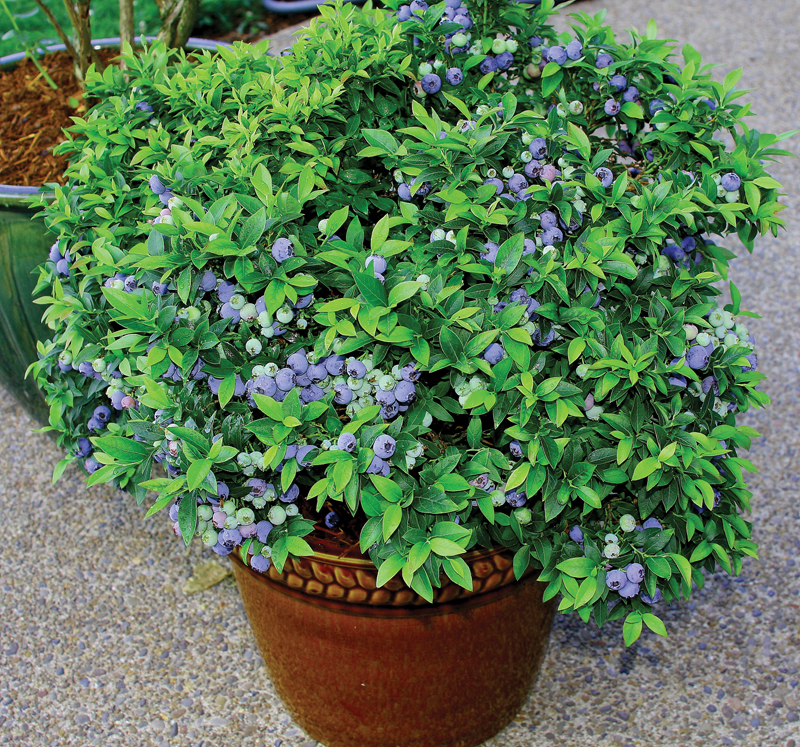
| | New cultivars of blueberries are colorful and well-adapted to container gardening |
Summer annuals. Once the air temperature are consistently in the fifties at night, you can begin planting summer annuals in the ground or in containers. Impatiens is still a bad bet because of the persistent fungal disease. Branch out and try less well known plants and vegetables (rainbow chard is beautiful and have you ever seen the flowers on okra?) Or, use perennials and even compact shrubs in your containers for longer seasons of interest. Breeders have developed new varieties of raspberries and blueberries, many specifically for growing in pots, that offer pretty and tasty new looks. ---------------------------------------------------------------- You can read more of Betty Sanders' gardening tips at www.BettyOnGardening.com |
|
Book Review
By Pamela Hartford
Reading the Forested Landscape: A Natural History of New England Forest Forensics: A Field Guide to Reading the Forested Landscape
Tom Wessels
Woodstock VT: The Countryman Press; 1997/2010
I walked with Tom Wessels around Appleton Farms in Ipswich several years ago. This was a game-changing experience for me. Walking in the woods, along back roads and trails, I would always test my familiarity with trees and understory plants, noting the unfamiliar to check up later in my hort ID manual. But now I scrutinize every tree, every stone wall, every stump and snag and boulder, and see if I can understand, through careful observation, what has happened to the landscape over the past four hundred years - wherever I am. Hikes, even casual walks around the neighborhood, are much more interesting and meaningful.
Wessels teaches how to 'read the landscape' by showing how each tree and stone wall reveals clues about the past, no matter what condition they may be in. A horizontal tree, or even a stump, offers its own narrative, contributing a puzzle piece to the layered history that unfolded around it.
Central New England (including Tom's 35 acre wooded Vermont landscape) is a phytogeographic region - an area that shares the same climate and is characterized by similar vegetation. There are only three factors that affect the composition of plant communities: topography, substrate and disturbance history. While a weekend horticulturist or botanist might identify the associated plant families by virtue of knowing the first two conditions, the third category is where the interesting story lies.
Reading the Landscape: A Natural History of New England involves more than natural history - it also involves cultural history. Do you know the difference between a stone wall built to frame a pasture vs a crop field? What runty, crumpled apple trees reveal? What caused a huge wound at the base of the really large, mature oak tree, and what that says about the other trees in the neighborhood?
Interspersed with ecology and botany are narratives about the effects of Native Americans on the New England landscape, logging patterns over two hundred years, and farming practices of the early settlers. A drawing of a particular scene in the woods at the beginning of each chapter sets the stage for Wessels' detective work. Looking at each of these elements, he works backward in time, reading the ages and kinds of trees and saplings, their relationships with each other, evaluating the type of stone walls, characteristics of stumps and fallen trees, even undulations in the topography, to piece together a narrative of what might have occurred on the site over time.
This is rich and fascinating reading, but more information than one can carry mentally out into the field. Wessels has solved this problem by creating a handy field guide of all these clues to carry around with you.
After Tom Wessels' talk & walk around Elm Bank on May 30, you'll be able to buy his books. If you have to miss his enjoyable and informative visit, I recommend getting both books. Once you learn how to read the landscape - especially your landscape - you will have a better understanding of the patterns that shaped the land, and a deeper emotional connection to the place around you.
Pamela Hartford is a landscape historian, writer and preservation consultant living in Salem MA
|
Children's Activities: A Year for Kids and Family in the Gardens at Elm Bank
Katie Folts, Education Coordinator
Mass Hort has named 2015 the "Year of Kids and Family." In The Gardens at Elm Bank, our goal is to connect as many children as possible to gardening and the natural world. We have introduced several new programs to meet that goal. So be sure to bring gardeners of every age to come, learn and grow.
For families visiting the gardens, we have introduced our Family Discovery Guide. This guide will tour you through our gardens, sharing history of our site and the science of plants. The guide is full of activities to engage the whole family. As the gardens are ever changing, you can use this guide throughout the season. Be sure to pick up a copy at our new Visitors Center, Flora, or download a copy from our website.
In addition to this guide that can be accessed at any time, Mass Hort is excited to offer family programs in Weezie's Garden. In the setting of our children's garden, using the backdrop of trees, flowers, insects and new garden features, we will bring garden lessons to life. Hands-on activities, games, crafts and explorations will connect our youngest visitors to the natural world. Programs are designed for children of all ages and are drop-in from 10am to 11am. To start off the season, during the month of May, they will be held just on Saturdays and Sundays, but for the rest of the summer, they will be held on Tuesday through Sunday. Open season lasts through Columbus Day.
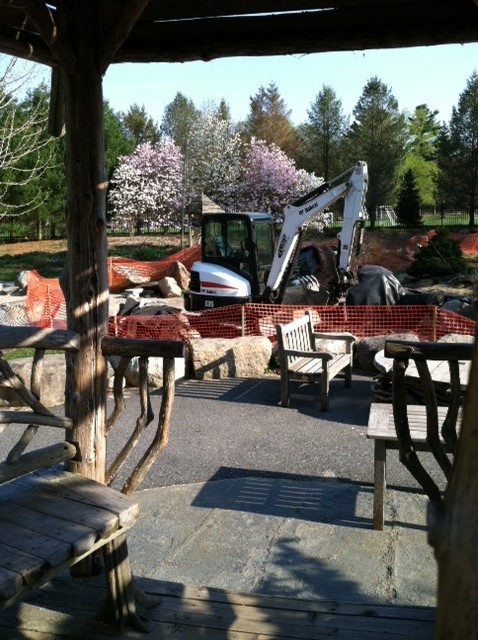
On the subject of Weezie's Children's Garden... as I write at my desk I can hear the sound of construction vehicles in Weezie's. Work is currently being done to restore the water elements in the garden. New features will include a new water tower, a pre-historic garden, a pollinators garden, an enchanted woodland and a new garden classroom. There will be many more exciting things for children to explore. Please pardon our appearances as work is being done; construction should be completed by the end of the month.
Taking Plants on the Road
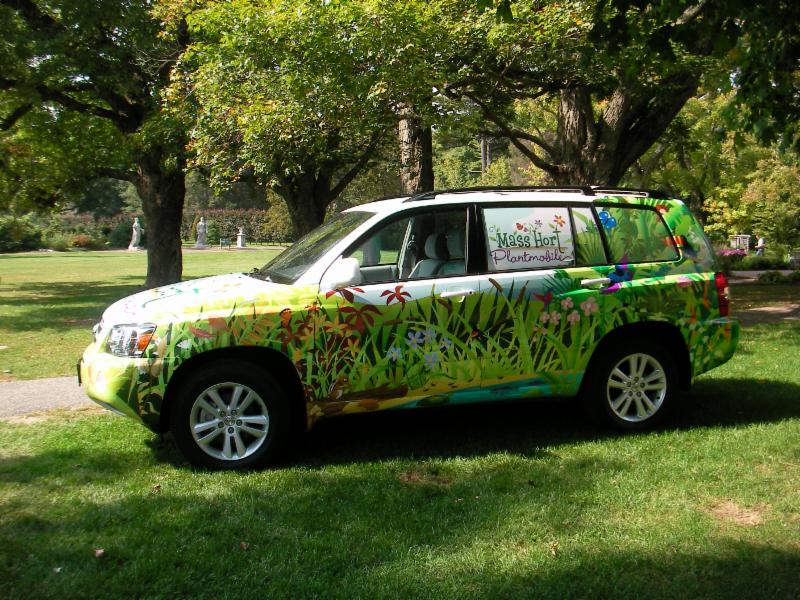
As the education coordinator for Mass Hort, I hold several roles in serving our mission. Perhaps my favorite is delivering the Plantmobile programs. In this season of community events and end-of-year classroom fun, the Plantmobile is very busy.
Perhaps you've seen the Plantmobile at an event, or maybe you have had it come to your local school. It's a travelling van that delivers plant science programs to children in preschool through middle school. I've been driving all over Eastern Mass this spring, working with families and students. For example, I visited middle schoolers to review the anatomy and ecology of plants. The students will be installing a native prairie habitat outside their school in Roxbury. We worked with several families on the North Shore to sow the seeds of vegetable gardens and discuss with kids the importance of healthy eating. I'll soon be visiting a preschool in downtown Boston, where we'll plant and study its rooftop garden. The Plantmobile was a part of several Earth Day STEM (science, technology, engineering and math) festivals, planting pollinator friendly plants with kids and talking with them about the importance of plants.
We've worked with more than 1,000 kids already, and there are still two more months of spring programs to be delivered. Thanks to all the volunteers that have helped, and to the garden clubs that have supported Plantmobile visits in their area. |
|
Mass Hort in the News
In the last month John Forti, Director of Horticulture and Education, was quoted in the press. Check out the articles in:
Boston Globe on May 3, 2015
Associated Press
and Susan Hammond, Keeper of the Garden to Table Garden, was quoted in Sunday, May10 Boston Globe on Critters in the Garden.
In addition, John Forti, personally, contributed a chapter published in the book Environmental Sustainability at Historic Sites and Museums. His chapter is entitled "Green from the Grou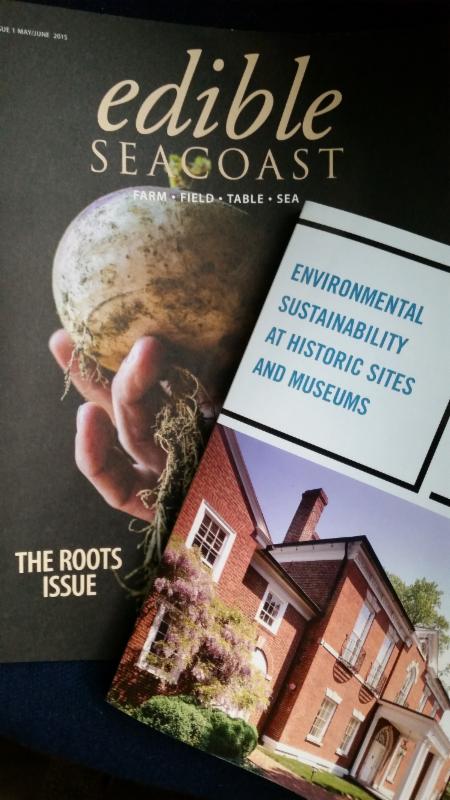 nd Up: Reclaiming Our Sustainable Heritage and Cultural Landscapes." nd Up: Reclaiming Our Sustainable Heritage and Cultural Landscapes."
He also contributed an article for
EdibleSeacoast magazine entitled "Seeds of Place - Rooted in Tradition."
|
Introducing New Garden to Table Educator

Welcome Hannah Traggis, Garden to Table Educator, who comes to us with much experience as a scientist and a teacher. Much of her career has been given to marine biology, but always with an emphasis on its plants and their ecology, which has led her back to her youthful fascination with terrestrial plants. This May she anticipates the completion of a Master in Science degree at the University of New Hampshire in plant physiology. Then, Hannah will be liberated to teach her greatest love, organic agriculture. Here at Elm Bank, her excitement is infectious and her words invigorate the staff:
"I am passionate about plants from their cultivation and use to their physiology and interactions with their environment. I am passionate about food systems and access to nutritious and local foods for everyone and work to raise awareness of food justice issues in our state and region. I am enthusiastic about sharing these passions with the members of Mass Hort and our many visitors here at Elm Bank and am looking forward to working within the Massachusetts community to bring educational programming to school children of all ages. I am excited to be at Mass Hort where I can combine my life passions into programming and bring about change that will honor the past, present and future of this society."
She is most likely to be encountered at the Vegetable Garden this summer, and we're sure that conversations will be beneficial to all participants. |
One Potato. Two Potato

by Neal Sanders
Leaflet Contributor
The landscaper didn't bother to reach down and pick up a handful of dirt to assess its merits. Not that he could have. Instead, he just tried unsuccessfully to loosen a clod with his heel. After three attempts he shook his head.
"I see this all the time," he said. "Builder's crud. There's nothing you can do with it."
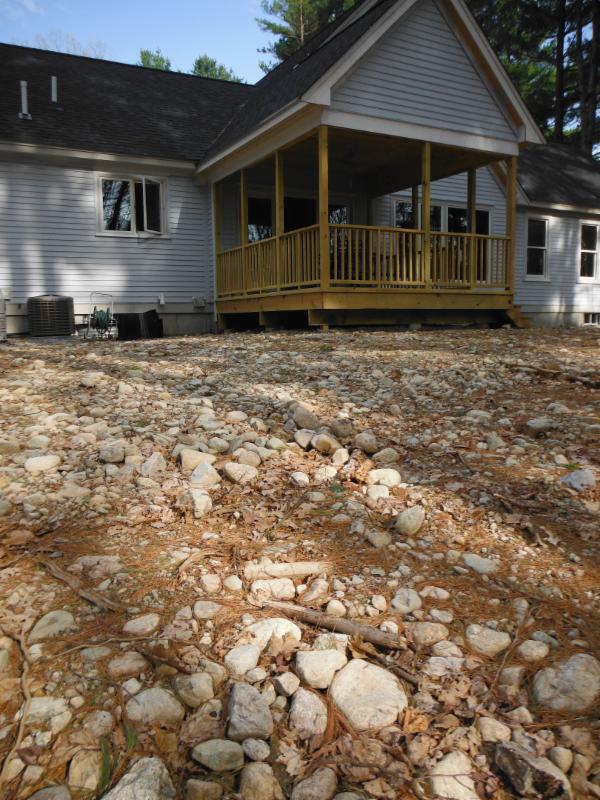
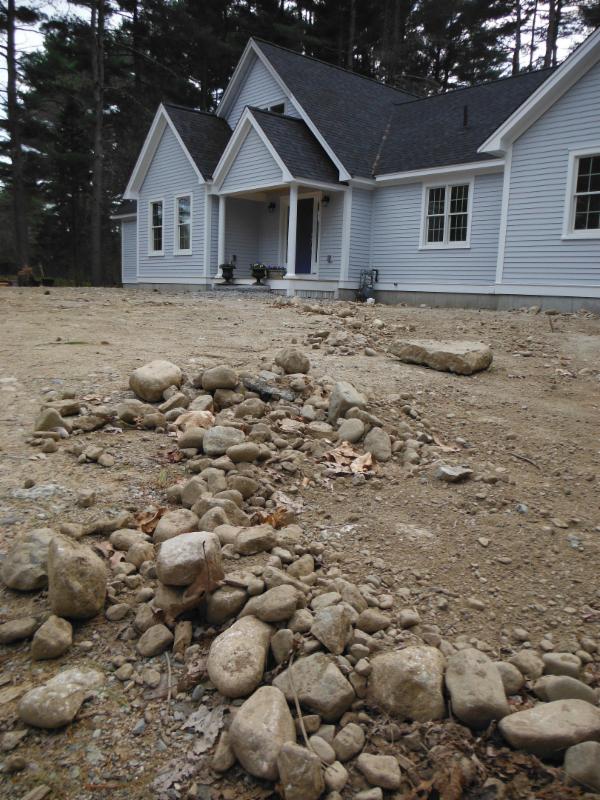
Fifty feet away from where we were standing was a silent testament to the truth of his statement: a large pile of stones and a few square feet of brownish-gray ground where, a week earlier, I had used our ancient, wheezing rototiller. Every few feet the rototiller would go 'clunk' as it struck more 'potatoes', as Rocks Of A Certain Size are known in the parlance of the landscaping industry. Three hours with that rototiller convinced me this was not a do-it-yourself project.
|
| | At our new home we have nothing but rocks |
He was not the first landscaper we contacted and he would not be the last. We spoke with four in all, each one delivering the same message: we have a very expensive problem on our hands.
The problem is that, at our new home, we want a garden, not a lawn. If all we wanted was a lawn, 'builder's crud' would be fine as a base. Just add six inches of top soil and spray on grass seed. If we wanted a lawn with a few trees, we need only whack through the rocks with a pickax and add a little compost.
When we explained that there would be no grass on the property, the landscapers' mouths would form a little 'oh'. That's when kicking the ground would begin.
|
| | Digging a foot-deep trench for a light pole pulled up these rocks |
The solution was a variant on this: dig out the top eighteen inches of crud. Truck it off or use it to create berms, walls, and other topographical features on the property. Next, bring in two feet of good, screened loam, plus peat moss, plus compost. Top it off with mulch. Then, plant anything you want.
How much loam will it take to create this garden? Let's do the math: Let's say the property has 120 front feet and all but ten feet of that width (the driveway) will be garden. The house is set back 75 feet from the street. So, the front garden is 8,250 square feet. Multiply that by two feet of loam for a requirement of 16,500 cubic feet of loam. Translate that into cubic yards: 611.
And that's the front part of the property. There's also the back and the side, though it is a little less daunting in size. Does anyone want to venture a guess as to the cost of a cubic yard of screened loam?
As one of the landscapers delicately put it, "the cost of my crew for three or four days will be a minor component of this job."
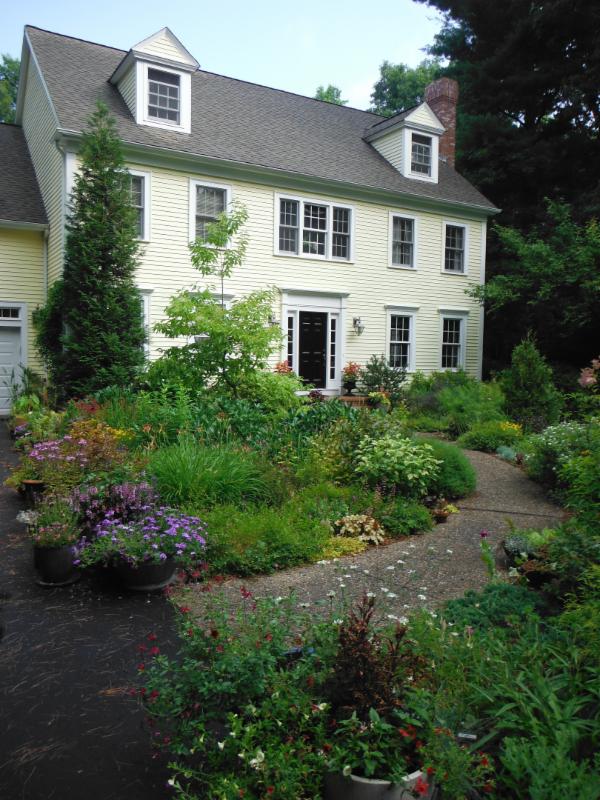
So, why are we doing this? The reason is simple. Over a period of sixteen years, Betty created a stunningly beautiful garden at our home on Wild Holly Lane. We opened it for the Garden Conservancy among other charitable organizations, and the Wall Street Journal did a very nice piece on it. But the garden ultimately became a maintenance burden. The new garden will retain the beauty of Wild Holly Lane while making low maintenance a key factor in the choice of plant material and overall design. It will emphasize (though not be limited to) native plants, and will put into practice all of the things that Betty has emphasized in her garden talks and writing.
My job will continue to be to move rocks and dig holes. The 'builder's crud', I'm leaving to the experts with their heavy machinery.
------------------------------------------------------------------
Neal Sanders is the author of nine mysteries. His most recent, 'Murder in Negative Space', was published in March and is available at bookstores and through Amazon.com.
|
Notes from the Vegetable Garden
Susan Hammond
Finally, spring has arrived!
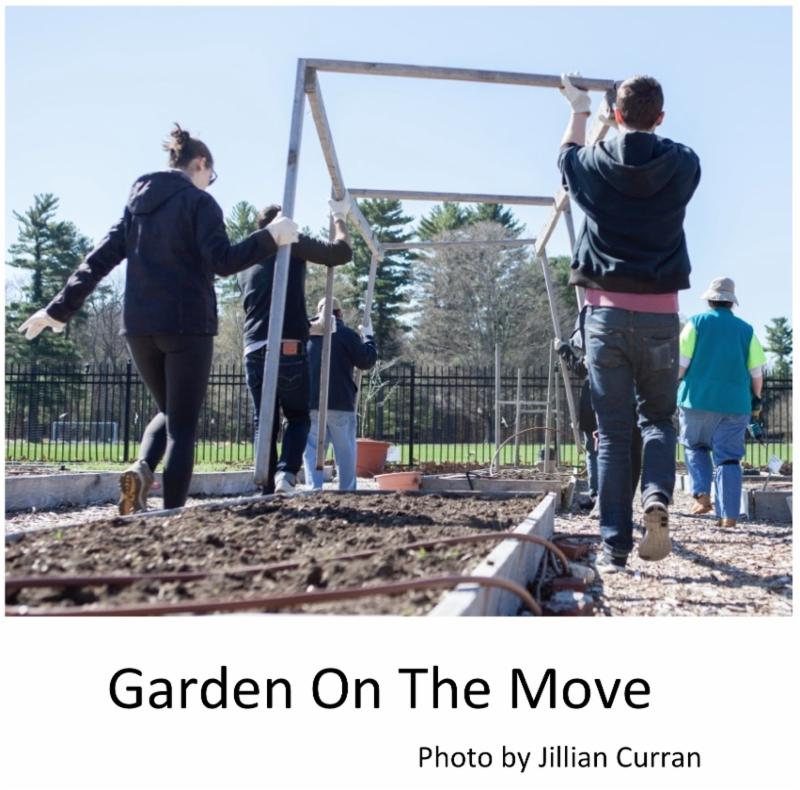
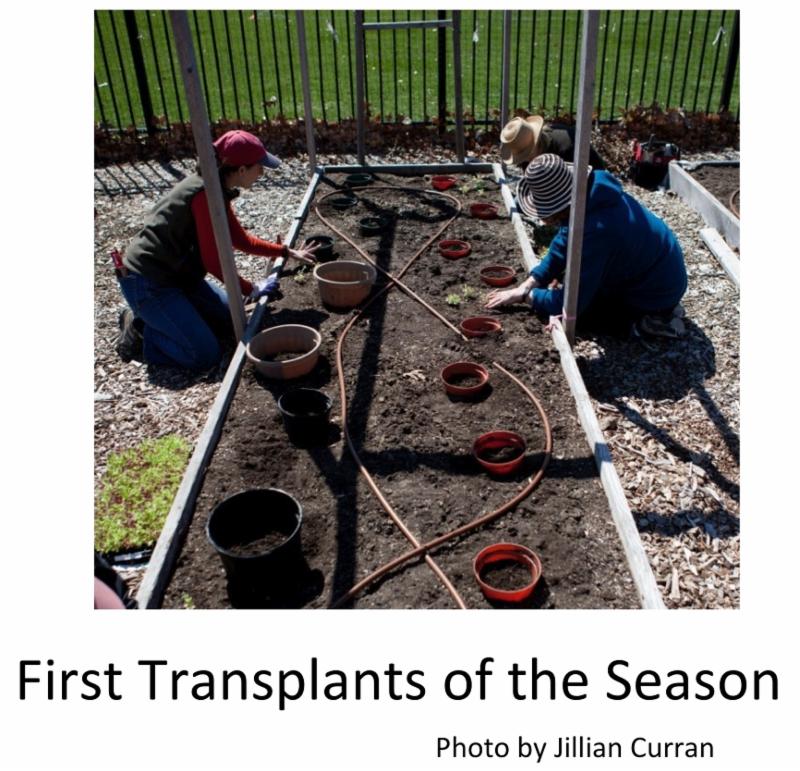
We've been busy in the garden getting it ready for our growing season. However, since we usually do a lot of our bed preparation in March, not April, we've also been trying to catch up by doing planting at the same time. We had a great turnout of volunteers for Earth Day, doing everything from setting up our tomato structures for the year to transplanting our first beds of All-star lettuce. 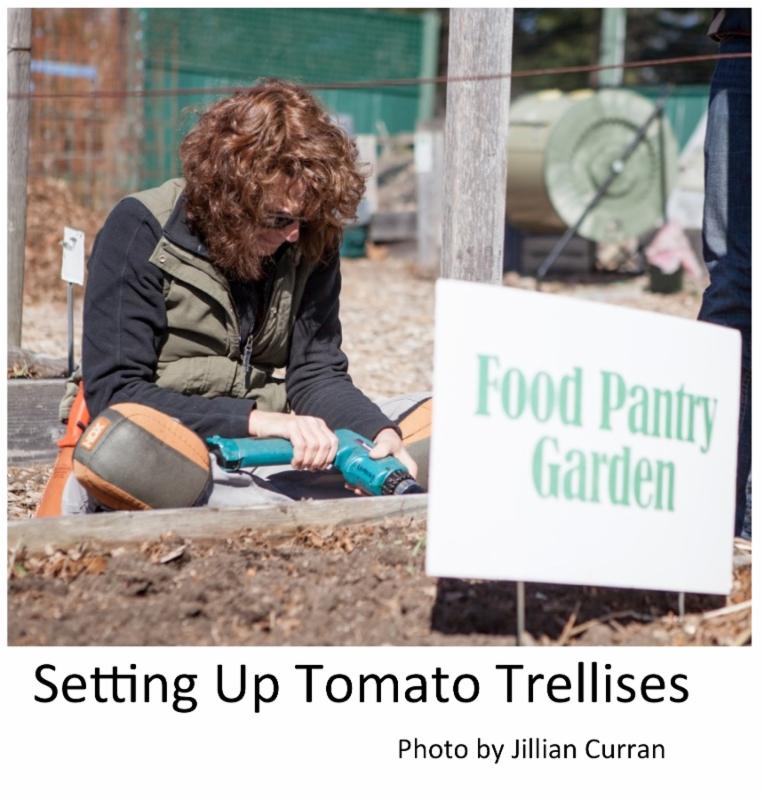
How did we decide what to plant now and how to adjust our plans?
One very important point is to not be fooled by the first warm day of spring - or even several warm days. The air may feel nice and warm to us, but the soil can still be quite cold, especially if your garden was covered with snow well into April. And soil temperature has a huge impact on how well some of your vegetable seeds will sprout.
 Old-time New Englanders may remember the saying to "plant peas on Patriot's Day". Normally by then the soil temperatures are in the right range to allow the seeds to germinate. How can you figure this out in your garden? Soil temperature can be taken with a thermometer that has a point or probe that can be inserted into the soil several inches. You might have something at home that will work, or you can purchase one from companies like Johnny's Selected Seeds. Old-time New Englanders may remember the saying to "plant peas on Patriot's Day". Normally by then the soil temperatures are in the right range to allow the seeds to germinate. How can you figure this out in your garden? Soil temperature can be taken with a thermometer that has a point or probe that can be inserted into the soil several inches. You might have something at home that will work, or you can purchase one from companies like Johnny's Selected Seeds.
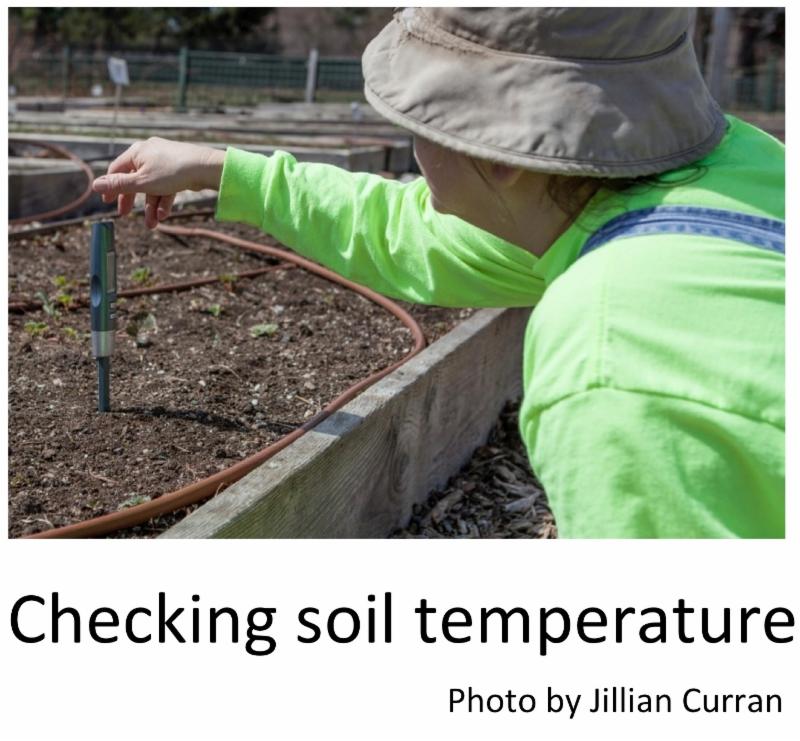
We measured the soil temperatures in both our raised beds and in the ground between them, and our raised beds won again. The first day we took readings, the temperature about 3" down was 37 in the ground, but 43 in the raised beds, and the raised beds continue to warm up much faster than the ground does.
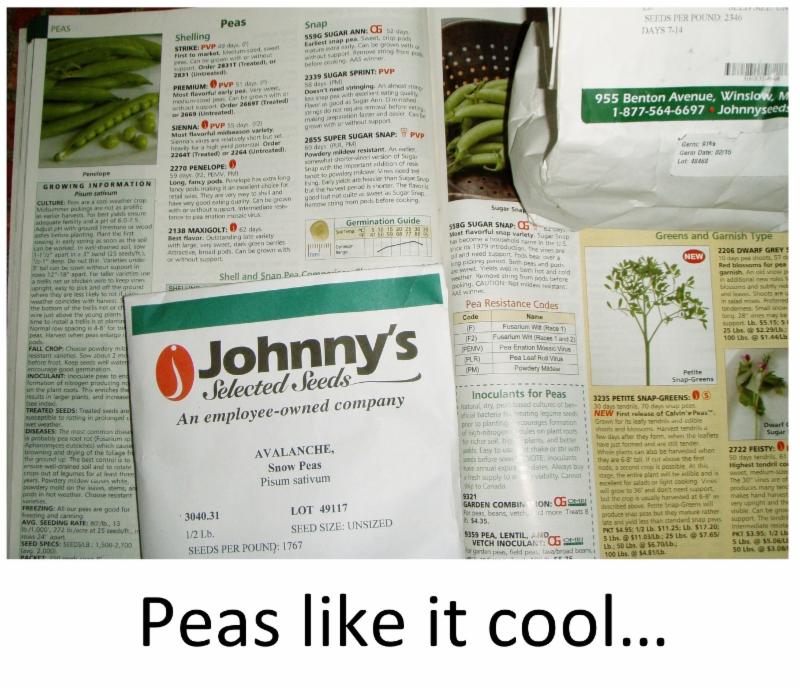
Now we can take a look at the growing conditions our possible crops would like. This is where a good seed catalog can be really useful as a resource. Let's take an example from the Johnny's catalog entry for peas. The "growing information" tells us we can plant them as soon as the soil can be worked, and the "germination guide" shows us they'll sprout in soil temps in the 40's. Peas were one of the first crops we planted. And we will get a very quick crop from some of them, as we can harvest the young shoots instead of waiting for pods to form.
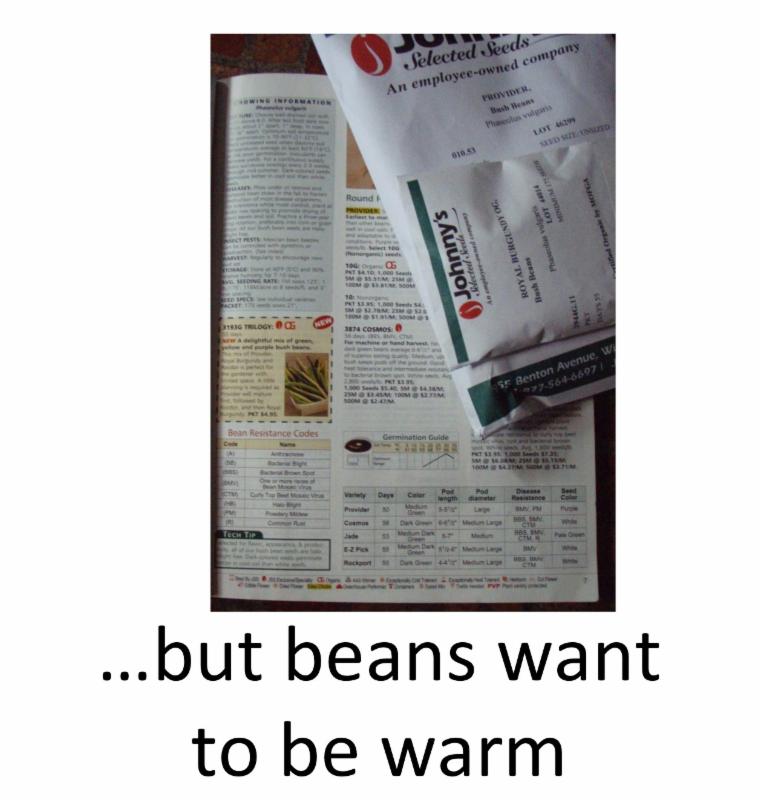
Beans, on the other hand, need to wait. The catalog entries tell us they need to be planted after our last frost date (the end of May in our area) - and their ideal soil temperatures are 70 to 90. Beans are not being planted for a while!
If you're interested in learning more about getting your own vegetable garden up and running for the year, come to May 14th's "Thursday Night At The Hort" program, "What do I do NOW for my Vegetable Garden?", where we'll give advice on how to get your vegetable garden on track, whether you're a first timer or experienced gardener. You can register for that course here: What do I do NOW?
We have lettuce, spinach, cress, peas, scallions, radishes, turnips, beets, and more planted -- what's growing in your garden? Come and see ours!
|
Catching Up with the Last Half Century Maureen Horn, Librarian
|
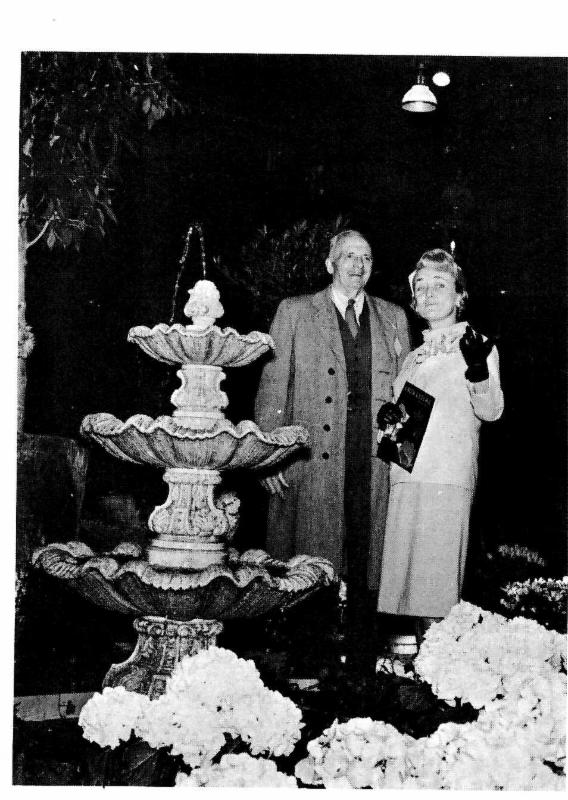
| | Mrs Peabody at the Flower Show |
Part 4
The Mid-Sixties: "A Service Organization"
From 1963 to 1965, the Massachusetts Horticultural Society strived to extend its voice and influence with a global reach and with social consciousness. One way to raise awareness of novel gardening practice was through the introduction of Japanese bonsai instruction, and the path to community service was through offering correspondence classes to inmates at the Norfolk County House of Correction, with the hope that the instruction would help them find gainful employment upon release.
In the 1964 Year Book, among the many photographs of varied activities, there is the recognition that "the Massachusetts Horticultural Society is basically a service organization and that, ultimately, its benefits extend far beyond its membership." The leadership was aware that one way to build its influence was to cultivate the friendship of people in high places. Thus, the annual report shows a picture of President Oliver Wolcott escorting Mrs. Endicott Peabody, the First Lady of Massachusetts, to a preview of the New England Spring Flower Show at Wonderland.
A focus of outreach for many years was Horticulture magazine, and the waxing and waning of its success was a preoccupation of numerous administrators. In 1964, it was 60 years old, and the bad news was that in 1963, the subscription renewal rate was only 44.3%, which indicated that something was drastically wrong with the publication. As a consequence, the content was analyzed and revamped, with the hope that a flow of ideas from readers would sustain a turnaround.
Evidence that the M. H. S. Library enjoyed international renown was the fact that more than 90 libraries from around the world purchased the 3 volume Dictionary Catalog of the Massachusetts Horticultural Society when the reproduction of the catalog cards of all 32,000 volumes was published in 1963. The facsimile was considered up-to-date technology at the time, but late in the year the first Xerox machine was installed. The news was heralded as a boon to the library because now exact copies could be sent around the world without the book leaving the building.
In 1963, the Society went through a significant change when Carlton Lees became Executive Secretary and Director of Publications. He had served in a similar capacity at the Pennsylvania Horticultural Society. Always looking forward, he directed the installation of a new telephone system that had a direct line to the library, which was a great convenience to the members. He arranged for major rewiring to overcome frequent electrical breakdowns, and, for safety, all gas lines were removed from Horticultural Hall. 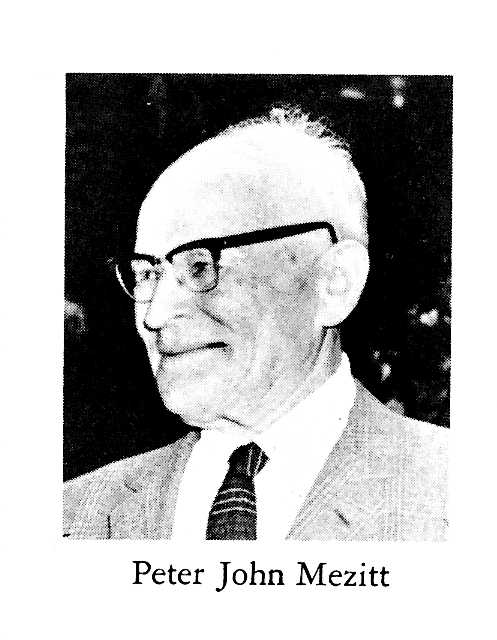
Carlton Lees was also a leader in helping the public become aware of the need to protect the environment and appreciate its beauty. He was a delegate to the White House Conference on Natural Beauty, which was called by President Lyndon Johnson in May of 1965. The Special Medal awards for the year reflected the Society's commitment to helping people enjoy nature when it gave the Jackson Dawson Medal to Peter John Mezitt of Hopkinton because for many years he and his family had shown good plants to the public and displayed them "in many ways to increase the public's desire for horticultural perfection."
|
New Volunteer Recognition Program at Mass Hort
Mass Hort is deeply indebted to our amazing crew of volunteers, garden keepers and Master Gardener assistance with the planting and maintenance of our gardens and delivery of programs on behalf of the society.
In an effort to recognize volunteers for outstanding achievement, Mass Hort has begun a new program for volunteer recognition. It began on Earth Day when nearly 100 volunteers gathered together to help kick of our gardening season.
For 2015, we would like to offer tangible recognition of the hard work, freely given, which contributes to the vibrancy and relevance of the oldest formally organized horticultural institution in the United States.
At the conclusion of each shift, volunteers are asked to record their times in a volunteer log. Logs will be located in the Mass Hort office, library, garden sheds in Weezie's and The Garden to Table Garden, and the Putnam greenhouse. Your hours will be tallied and tokens of appreciation will be awarded at the fall volunteer recognition potluck, for use in 2016.
Volunteer levels
25 hours - an Mass Hort memorabilia item
50 hours - complimentary attendance at one "Thursday Night at the Hort" lecture for you and a guest
100 hours - two tickets to the Mass Hort Festival of Trees
200 hours - choice of one greenhouse raised seedling (from a selection chosen by Mass Hort horticultural staff)
300 hours - complimentary season's pass to the 2016 "Thursday Night at the Hort" lecture series
500 hours - private tour for you and a guest of The Gardens at Elm Bank by the Director of Horticulture
The volunteer with the most accrued hours for the 2015 gardening season will receive tickets for him/herself and a guest to the 2016 Honorary Medals Dinner.
The Massachusetts Horticultural Society runs its many gardens and programs with the invaluable assistance of talented and dedicated volunteers.
Thanks again on behalf of the staff and board of Mass Hort!
|
|
|
|
|
|
|