|
 For exceptional benefits to help you in the garden- Join Today! If you are a Mass Hort member- please recommend membership to a friend! Forward this newsletter. CLICK HERE TO JOIN |
|

SPREAD THE WORD,
HELP US GROW!
Refer a new member to Mass Hort and receive a coupon to attend a Thursday Night at the Hort lecture for free!
|
|

You Shop - Amazon gives to Massachusetts Horticultural Society!
Amazon will donate 0.5% of the price of your eligible AmazonSmile purchases to Massachusetts Horticultural Society whenever you shop on AmazonSmile.
AmazonSmile is the same Amazon you know. Same products, same prices, same service.
Begin shopping at www.smile.amazon.com |
|
|
Letter from the President

Dear Friends,
Spring is finally here, although about ten days behind schedule. The staff at Mass Hort is busy preparing for the season as the last snow piles melt away! We are looking forward to welcoming you to The Gardens at Elm Bank and to programs that engage adults, families, and young people in the art and science of horticulture.
The season opening provides many opportunities for you to get involved. We are looking for many volunteers to help in the visitors center (which will open in Flora), in the gardens, and with events. Check out opportunities that will be posted on our Volunteer Page. Additionally, our new Development Director has a wish list of gift and funding opportunities. A tractor, wheel barrows, hoses, umbrellas, and more. Give Elaine a call at 617-933-4945 to see how you can help get Mass Hort ready for its many visitors!
Don't miss the Gardeners' Fair on Saturday, May 16th. Plants, vendors, and all you need to get your garden and yard ready for summer. Admission is free for members with special early member hours from 8 am - 9 am. (General Admission Hours 9 am - 3pm).
Happy Spring!
Kathy
|
|
Opening Day at The Gardens at Elm Bank
On May 1st, The Gardens at Elm Bank will open with a focus on kids and families. We are located in Metro West and just fifteen miles from downtown Boston. We offer over 16 acres of gardens and historic landscapes.
We will be open Tuesday - Sunday, 10 am - 4 pm, May 1 through Columbus Day.
Regular Admission is free for Mass Hort Members, for Visitors: Adults: $8, Children under 12 free with adult.
On Mother's Day, Sunday, May 10, admission is FREE for everyone in celebration of Mom's Special Day, 10 am - 4pm.
There is much to take in at the gardens; explore our 12 display gardens, enjoy daily garden tours and family programs. Family programs are drop-in from 10 am to 11 am, and meet in Weezie's Childrens' Garden. Tours meet at 11 am at the new Visitors' Center located in the "Flora" cottage adjacent to the parking lot.
The Gardens at Elm Bank are a wonderful natural resource for people of all ages to enjoy, whether you are interested in plants or gardening or just relaxing in the beautiful landscape.
Located at 900 Washington Street in Wellesley (Route 16), on the 36-acre Cheney estate in the Elm Bank Reservation, the property is listed on the National Register of Historic Places. The estate includes twelve display gardens, some highlights include the Italianate Garden designed by the Olmsted Brothers, The Bressingham Garden, a magnificent four-season perennial garden displaying a mixture of perennials, trees, and shrubs, the magical Weezie's Childrens' garden with a butterfly garden, and our Garden to Table display vegetable garden. The 36-acres is adjacent to the Elm Bank Reservation's woodland trails that follow along the Charles River.
|
Gardeners' Fair
Date: Saturday, May 16, 2015
Time: 9am- 3pm
**Special early members' hours: 8-9am
Parking: $5.00 per car, members free; free parking with Herb Society postcard
Location: The Gardens at Elm Bank, 900 Washington Street, Wellesley, MA 02482
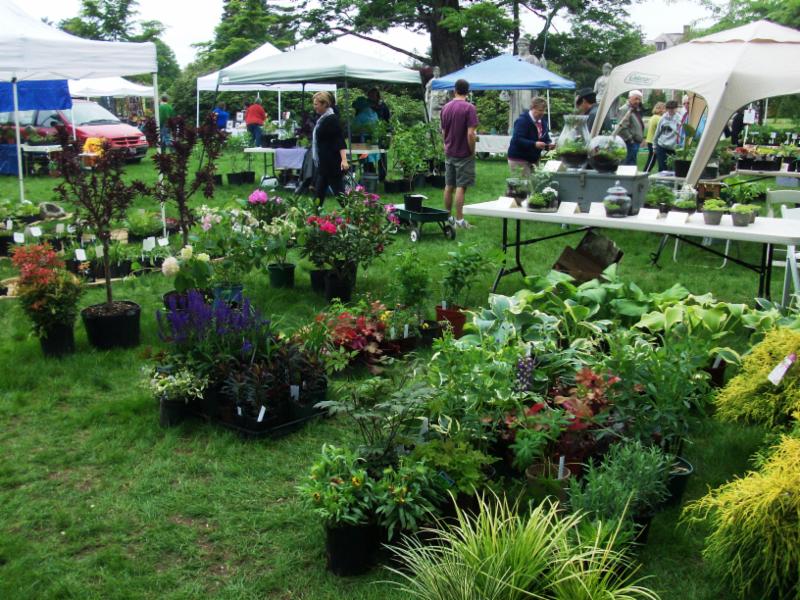
The Gardeners' Fair and Plant Sale at The Gardens at Elm Bank includes everything you need to plan, dig, plant, and enjoy your home garden space.
We have combined with the New England Unit of the Herb Society of America to form a new partnership for this event. We have also partnered with Allandale Farm, Boston's oldest working farm on the Boston/Brookline line. Allandale Farm will feature "Tomatoes Galore" where you can choose sturdy tomato plants of more than 40 varieties, ranging from heirlooms to the ever-popular hybrid beefsteak and everything in between.
The Gardeners' Fair is your opportunity to find rare and unusual perennials, trees and shrubs; ready-to-plant herbs and vegetables; tomato varieties by the dozens; and unique garden tools and accessories. We will also have family garden programs, fun for kids, food, special lectures by the experts and garden tours. For more information, click here.
The New England Unit of the Herb Society activities: Herb Garden tours at 9:00 A.M. and 12 noon; Family-oriented workshops - Fairy Houses at 10:00 A.M.; Herbal Seed Starting at 1:00 P.M
|
 April Hort Hints April Hort Hints
By Betty Sanders
BettyOnGardening.com
|
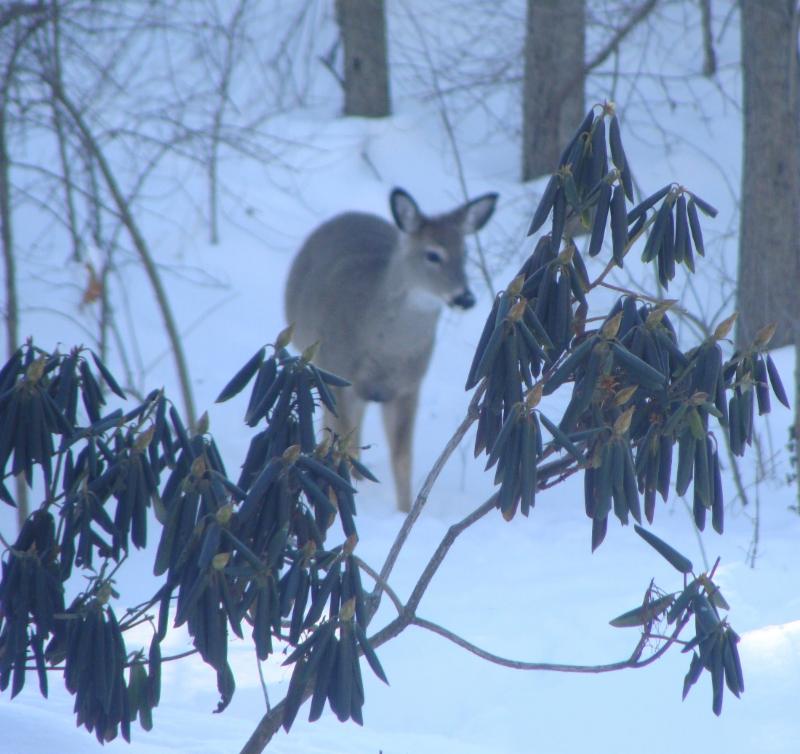
| | Deer will eat the buds off rhododendron |
Another month and the snow is melting-but not fast enough. As anxious as you are to get out there and get going, try to be patient. I look out on the broken branches of several evergreens and (thanks to deer and rabbits) the chewed-down tips of everything from viburnum and hydrangeas to leucothue and redbud trees. My first inclination is to start pruning back these branches to help them recover, but I stay off the lawn and garden beds until they have dried somewhat. When you can walk on the soil without leaving footprints, you can prune those broken and devoured shrubs and trees back to healthy wood. If you have any doubt about whether a branch is dead, give it more time and if you want good advice on how to prune, try The American Horticultural Society's Pruning. The lawn has also had a hard winter. December's extreme cold came before there was any snow cover, placing a lot of stress on all plant roots. The grass has now been covered for nearly three months. When it emerges, give it a chance to get acclimated - think how the sun blinds you after being indoors on a summer day. Do not feed the lawn for two to three weeks after it reappears. When it is firm enough to walk on and before fertilizing, go over it with a spring rake, collecting the twigs, errant leaves and other winter debris while lifting the grass blades. The best thing you can do is put a quarter to half inch of compost over the lawn and allow Mother Nature to do the work. Healthy lawns have billions of fungi, bacteria, and other microscopic organisms that help break down food so it can be used by the roots and keep many of the bad bugs at bay. If you must feed it, use an organic fertilizer. It reacts more slowly than chemical fertilizers but lasts much longer. The traditional multi-step programs used by many homeowners are to put their lawn on an IV of intensive feedings. Instead of strengthening the grass, these programs make your lawn dependent on frequent infusions of chemicals. Stepping away from the widely advertised programs can be difficult, but it will give you and your family a healthier lawn that stands up better to the stress of summer heat and our miserable winters. Spring Bulbs. The late spring this year may mean snowdrops, tulips, crocus, daffodils and hyacinths will all be up at the same time. Make note of 'bare' areas that could use early color. One way to keep track so you can find the spots when it's time to plant in September and October is to mark them with brightly colored golf tees-small enough not to be intrusive, but easy to see when you are looking for them. Non-hardy summer bulbs such as dahlias, cannas and tuberous begonias should be started indoors now. Vegetable gardens. "Plant your peas on St. Pat's Day." Hah! Don't start before the soil is ready. When the soil in your gardens crumbles in your hand it is ready to be worked - and not before. The late start will not mean significantly later crops because the warmer soil, the longer days and stronger sun will make the plants grow faster. If you have raised beds, you can probably start planting as soon as the snow has melted off because the raised-beds are designed to provide great drainage. Stick with cold weather crops at first-peas, spinach, lettuce and members of the cole family such as kale, broccoli and cabbage. While some hardy crops can take cold soil and air temperatures, don't fall for the lure of planting beans, beets or carrots until the soil temperature reaches 60 degrees. Your seeds will just rot in the ground. |
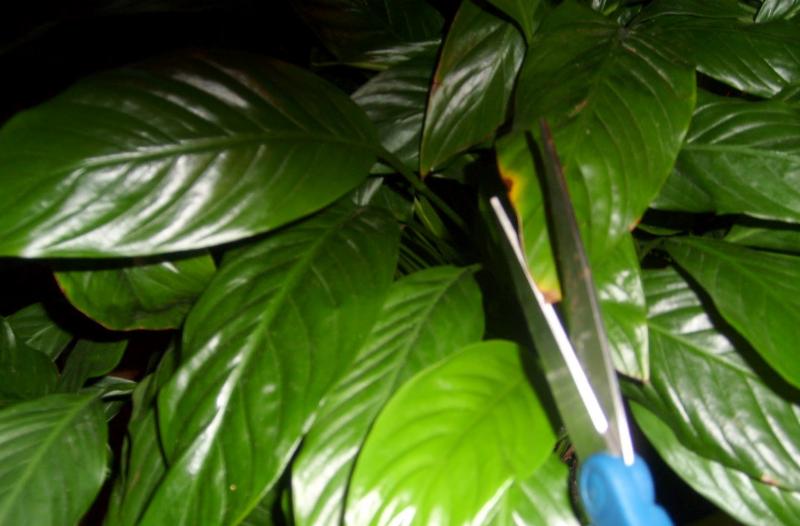
| | Houseplants need to be groomed in April |
Indoors. When the rain or cold keep you inside, use the time to groom and feed your houseplants. They should be receiving regular weak feedings of a liquid plant food ( or a sprinkling of slow release pellets) to help them shake off the winter doldrums. If your plants look leggy or have damaged leaves, now is a good time to prune them back. You can also replant anyone who did not get a new home last year. Soil in a pot wears out and if you want the plants to look good, give them what they need. ---------------------------------------------------------------------------------------------------- You can read more of Betty Sanders' garden tips at www.BettyOnGardening.com |
|
Celebrate Mother's Day - May 10
FREE Admission
 Bring your family for a special day at The Gardens at Elm Bank. Admission is Free to celebrate Mom's special day. Bring a picnic lunch and enjoy the Gardens and Grounds! Bring your family for a special day at The Gardens at Elm Bank. Admission is Free to celebrate Mom's special day. Bring a picnic lunch and enjoy the Gardens and Grounds!
Give the gift that keeps on giving! A Mother's Day gift of a Mass Hort Membership ... enjoy The Gardens at Elm Bank, lectures, and many other great benefits!
Check out the great Mother's Day Membership Offer Below!
|
Earth Day 2015
|
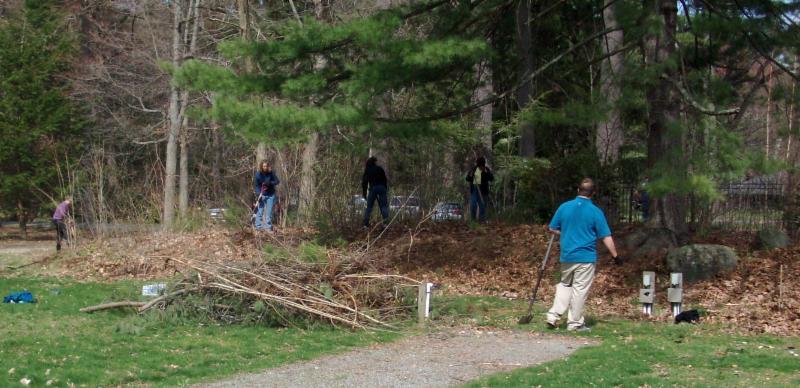
| | Clearing invasives from the site of the Old Treehouse |
Saturday, April 25, 2015 9 am- 12 noon.
Celebrate Earth Day with Mass Hort! Join us for a morning of community and help us get our beautiful gardens and landscapes ready for spring. Volunteers will help Mass Hort staff and garden keepers prepare our twelve gardens for all to enjoy throughout the growing season. Along the way, enjoy the outdoors and nature, learn about plants and gardening, and get some good exercise and meet new friends! Families welcome! We have partnered with the Charles River Watershed Association's Earth Day Cleanup for our cleanup.
Feel free to join us from noon to 1:00 pm for a community potluck!
Venue: Massachusetts Horticultural Society, The Gardens at Elm Bank, 900 Washington Street, Wellesley, MA 02482
Sign Up!
|

A Special Mother's Day Gift Offer!
Treat your Mother or loved one to a Mother's Day Gift of a Massachusetts Horticultural Society membership!
Save $10 off regular membership*
Individual membership: $45 (regularly $55)
Family membership: $80 (regularly $90)
and enter the promo code:
Moms
*Offer valid through May 12, 2015. Offer valid for new or rejoining members only. Offer not valid for renewing members with renewal dates of April 1, 2015 or later.
|
 Additional Membership Benefit
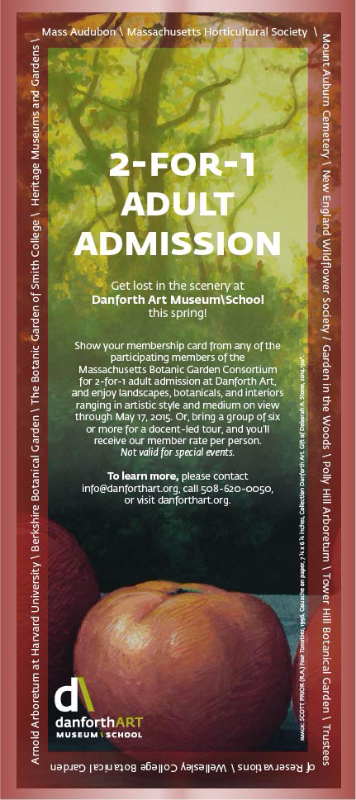
Use Your Mass Hort Membership Card for 2 for 1 Admission to Danforth Art Museum/School
This spring, Danforth Art Museum/School in Framingham, MA invites members of Mass Hort to travel through landscapes and interiors on view in their Spring Exhibitions through May 17, 2015. All members of the partner organizations that make up the Massachusetts Botanic Garden Consortium, including Mass Hort, will receive 2-for-1 admission at Danforth Art Museum OR the discounted member rate for a private, docent-led group tour for a group of 6 or more.
Don't forget to bring your Mass Hort membership card (it's required to redeem the offer) |
Reparing Winter-Damaged Plants
By R. Wayne Mezitt
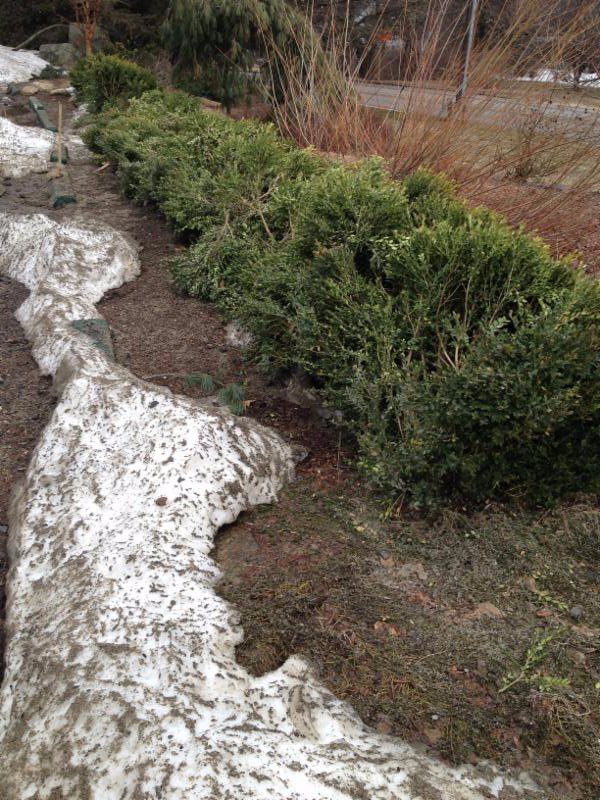
Now with the snow mostly melted, the extent of winter damage in our yards is becoming evident-and for many of us it's not a pretty picture! Here are some remedial suggestions for the various types of plant damage you're likely encountering in your yard.
Discolored foliage on rhododendron, holly, Kalmia and other broadleaf evergreens:
Although wind, sun and salt-damaged evergreen foliage looks unsightly now, new growth by mid-spring will likely restore their appearance, as damaged leaves drop-off or are hidden by new growth. Wait until June to assess recovery before removing branches that look dead now. Avoid fertilizing any winter-damaged plants; adding nutrients to recovering plants can force excessive soft growth, weakening the plant.
Branches crushed and torn on shrubs:
If they are not broken, flexible laid-down branches on many shrubs like boxwood, holly, azalea, yew and juniper may recover: gently pull them back up, holding them in position if needed with twine to coax them to grow back to their desired shape. Cut-off all torn and broken branches below the break. When seriously damaged, the entire shrub may need re-shaping, enabling latent buds to grow and fill-in gaps. Prune or shear to develop a wide "A" shape (not an "I" or "V" shape); this helps develop stronger lower branches, encouraging stiffer structure more resistant to next winter's snow and ice damage. Most damaged shrubs benefit from heavy cut-back, allowing new growth to restore their appearance, albeit smaller than before the injury.
Split branches on trees and large shrubs:
If they are only partially separated, important split branches on horizontally-branched plants like cut-leaf Japanese maple, dogwood and rhododendron may be repairable. Gently pull the split branch to the main trunk, hold temporarily with tape or twine, drill a small hole and insert a bolt, tightening the nut to secure the two sections together. Often it's better to cut-off the split branch and allow the main stem to heal, enabling undamaged branches fill-in the spaces.
Deer-browsed leaves and needles:
Deer-browsed broadleaf evergreens like rhododendron and holly will usually recover with new foliage by late spring. Unfortunately, stripped-off foliage on needled evergreens like arborvitae, yew and hemlock does regrow not as well. If you see no new growth by the end of June, it may
be best to remove those now-bare branches back to the trunk; try under-planting with "face-down" deer-resistant shrubs like Leucothoe, boxwood and Andromeda (Pieris) that help hide the missing lower branches.
Stems and trunks girdled by rodents:
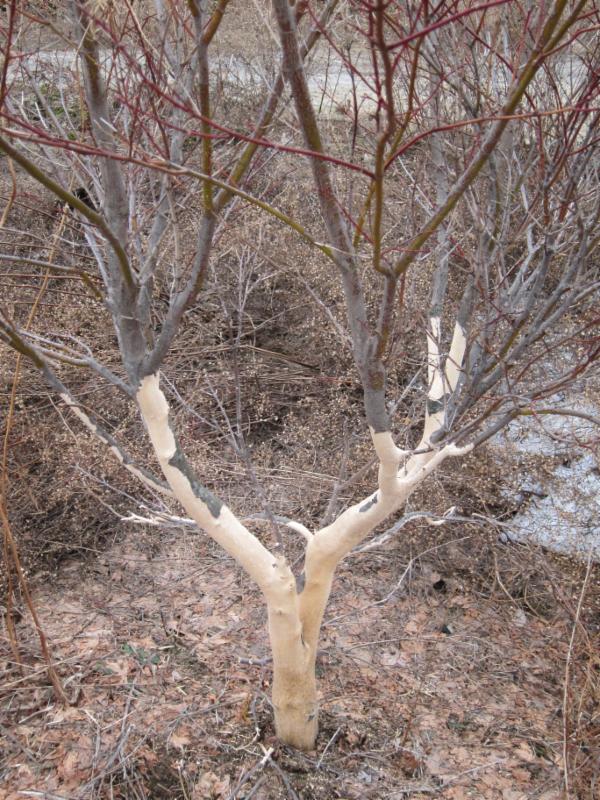
Fruit trees, maples, viburnum, cotoneaster and many other soft-bark trees and shrubs are susceptible to vole- and rabbit-browsing on their stems. Bark slightly gnawed or notched usually heals and recovers naturally without treatment. Any branch girdled more than 2/3's around should be cut off below the damage. Multi-stemmed shrubs that retain some undamaged stems will re-grow, but trees with all trunks girdled will probably not recover. Be aware that even fully-girdled plants may appear normal, blooming and leafing-out well, only showing their true health as their food reserves are exhausted.
In general: Losing plants to winter damage is disappointing and unfortunate. But now is the right time to consult with your local garden center experts for recommendations to protect susceptible plants from next winter's challenges. And lots of exciting new brands of trees and shrubs are now coming on the market this spring; those unexpected gaps in your garden offer a fine opportunity to make some welcome changes and add a new level of interest to your yard.
R. Wayne Mezitt is a 3rd generation nurseryman and a Massachusetts Certified Horticulturist, now chairman of Weston Nurseries of Hopkinton and Chelmsford, MA, and owner of "Hort-Sense", a horticultural advisory business. Wayne currently serves as Trustee chairman for the Massachusetts Horticultural Society at Elm Bank in Wellesley MA.
|
|
|
2015 Mass Hort at the Flower Show

Thank you to the committee chairs, volunteers, staff, and competitors for bringing Amateur Horticulture and Flower Design to the 2015 Boston Flower & Garden Show!
The Competitions
Floral Design Division I: Marisa McCoy, President Garden Club Federation of MA
Chair, Floral Design Division I, Joan Butler
Chair, Floral Design Division II, Jill Malcolm
Amateur Horticulture Competition Chair: Michael Arnum
Miniature Gardens Competition Chairs: Debi Hogan and Warren Leach
Photography Competition Chairs: Christine Paxhia and Chris Wood
Ikebana Display Chair: Joanne Caccavale
Special Thanks to Volunteers and Mass Hort Staff Members
John Forti, Director of Education and Horticulture for his guidance with the exhibit
Amy Rodrigues, Manager of Membership and Visitor Services
Katie Folts, Education Coordinator for the Discovery Guide and Youth experience at the show
Penni Jenkins, Overseer and volunteer, for her help with Am Hort and the membership desk
David Fiske- for forcing plants
Clark Bryan- for handling show logistics in and out
Elvera Howard- for hospitality at the show
Morgan Springer- volunteers
Check out the 2015 Award Winners!
|
|
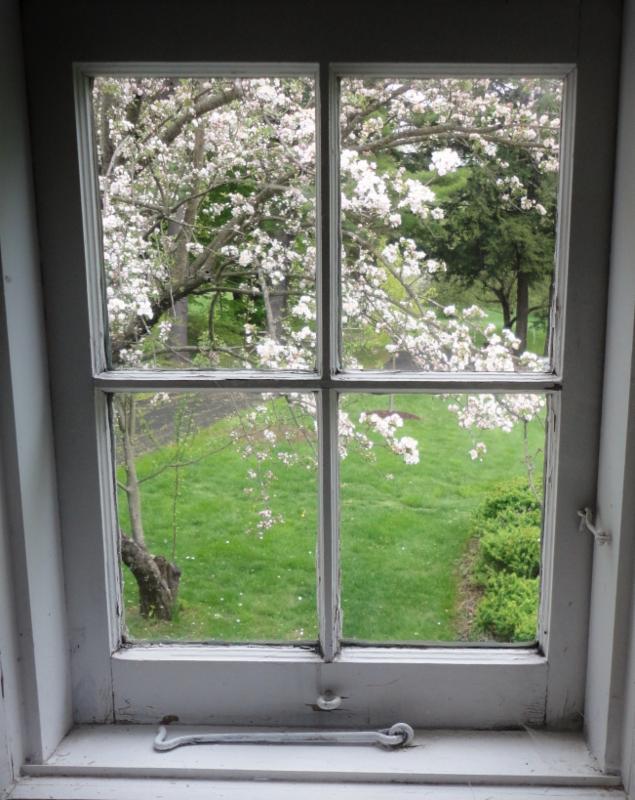
Popular Choice Winners in the Photography Division at the Boston Flower & Garden Show- Mass Hort at the Flower Show.
 |
 Meet our New Director of Development Meet our New Director of Development
The Mass Hort staff has recently welcomed our new Director of Development, Elaine Lawrence, who has brought her love of gardens to Elm Bank. She is sure that, surrounded by so much expertise, she has come to the right place to improve her own gardening skills.
Elaine is looking forward to helping Mass Hort find new opportunities to carry out its mission and believes that the first challenge is to strengthen its infrastructure; that is, to provide the Mass Hort staff with the tools they need to do the best job possible.
Elaine brings 20 years of development experience to Mass Hort - she's eager to learn more about the Society and looks forward to meeting new people with whom to share ideas. Her enthusiasm is contagious, so don't hesitate to contact her at 617-933-4945 or elawrence@Masshort.org.
|
March-April Notes from The Vegetable Garden 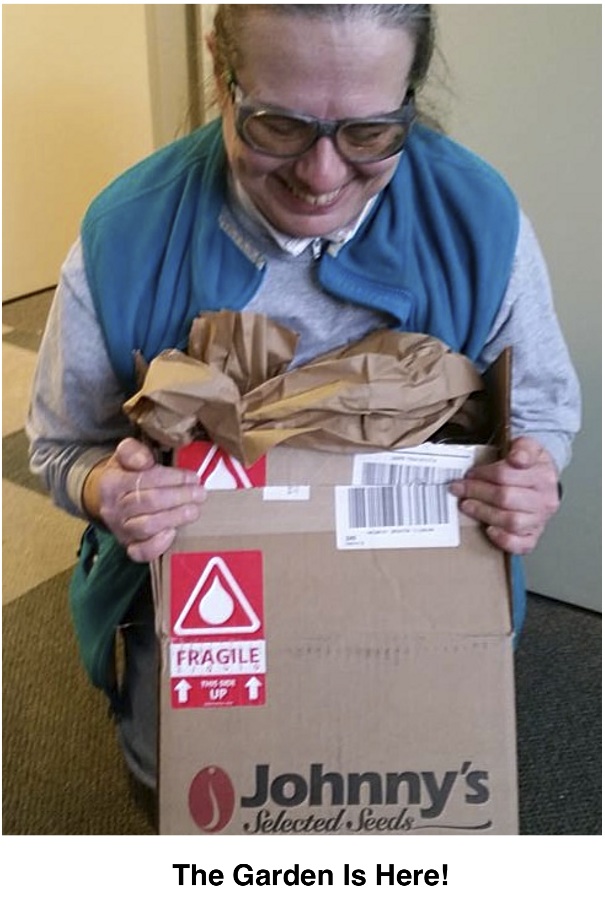
By Susan Hammond
March was such a tease this year! Warm days would give us hope that we might be able to start working outside in the garden - but those few warmer days were followed with more cold and snow. We couldn't even get the garden gate open! But one cold and dreary day became more cheerful when a box from Johnny's Selected Seeds arrived. The garden is here! The day the seeds arrive, the theoretical planning we do behind the scenes takes a giant step towards being a real garden. 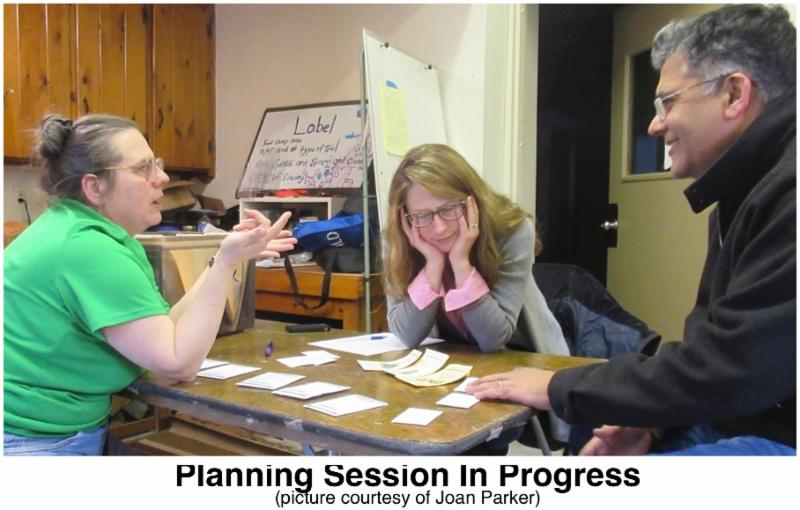 One of the first things we do is sort and organize our seeds (in a plastic box to keep them dry). Then we adjust our seed starting plans based on the weather (both current and long-range forecasts) as well as changes we've made to our planting plans. We decide on what to start, when, and how many of each variety. Some things need a very long lead time (the first things we seeded were alliums, including onions). Others can't be started too soon (like squash). One of the first things we do is sort and organize our seeds (in a plastic box to keep them dry). Then we adjust our seed starting plans based on the weather (both current and long-range forecasts) as well as changes we've made to our planting plans. We decide on what to start, when, and how many of each variety. Some things need a very long lead time (the first things we seeded were alliums, including onions). Others can't be started too soon (like squash). 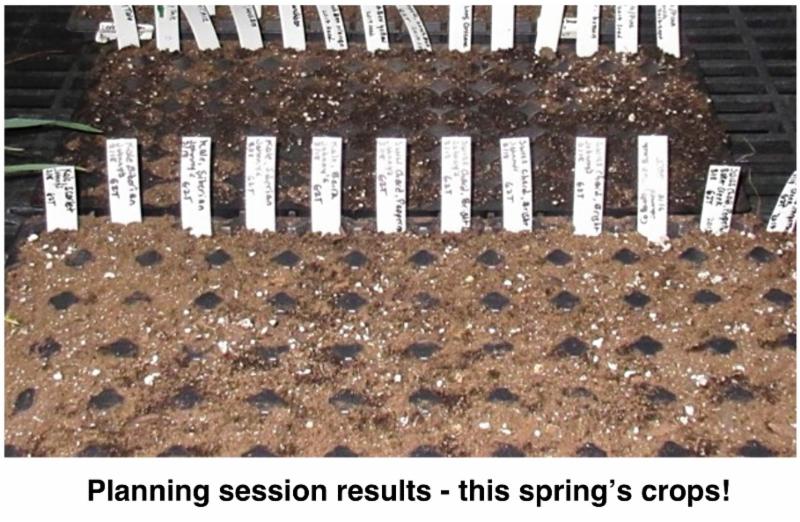 And some things (like spinach) we want to have a steady harvest of, instead of having them all mature at once, so we stagger their start times. We'll be in the greenhouse every week well into May getting our transplants ready. And some things (like spinach) we want to have a steady harvest of, instead of having them all mature at once, so we stagger their start times. We'll be in the greenhouse every week well into May getting our transplants ready.
Now that Mother Nature is cooperating a bit more, we can also start to work outside. As part of Mass Hort's Earth Day events on Saturday, April 25 (rain date the 26th), we will be welcoming volunteers and visitors in the Vegetable Garden. We'll be cleaning up cover crops, preparing beds, and direct-seeding and transplanting early vegetables. We will have experienced Master Gardeners available to teach volunteers what to do, and to answer questions about vegetable gardening. We'll also have a chance for the volunteers to plant something to take home! To sign up as a volunteer for Earth Day at MHS, please go to the Earth Day Signup. Having snow on the ground so late has changed our plans for the Garden To Table Vegetable Garden. It may change your plans for your own vegetable growing, too. Volunteers will learn about some of this during our Earth Day work session. And it will be a key topic during May 15th's "Thursday Night At The Hort" program, "What do I do NOW for my Vegetable Garden?", where we'll give advice on how to get your vegetable garden on track, whether you're a first timer or an experienced gardener. You can sign up for that class at What do I do NOW? Come learn in our garden! |
The Concord Seed Lending Library
By Maureen Horn, Librarian
Mass Hort invited Enid Hart Broasberg and Kitty Smith from the Concord Seed Lending Library to speak at Mass Hort's School Gardens Conference on February 19. Broasberg and Smith presented their steps to establish and maintain a successful seed lending library, which is located in the Concord Free Public Library. With the help and guidance of Concord, Mass Hort is excited to build our own such library.
Seed lending libraries are popping up across the country as places where would-be gardeners and expert gardeners can find free seeds for plants suitable to their region. Ideally, borrowers who take seeds at the start of the growing season will return seeds to the library at the end of the season. Lessons learned in Concord, however, let us know that we will need to regularly re-stock seeds.
To increase the success of their seed lending library, Concord hosts seeds from plants which don't cross-pollinate. These plants include peas, beans, tomatoes and lettuce. The added benefit of these selections is their broad familiarity.
There are several goals of a seed lending library. The first is to ensure plant diversity. For true genetic diversity, one should harvest seed from multiple plants, difficult for the average home gardener, but imagine the possibility for an entire community! For libraries that serve demographic diversity, the Concord staff envisions "Gardens in a Bag", in which borrowers will find ethnically-oriented seeds.
Of course, like all libraries, a seed lending library is a tool to serve a community. Giving seeds and hosting classes introduces many to the world of gardening and to seed saving!
With these goals in mind, Mass Hort looks forward to introducing our own seed library, planned to open in 2016. We hope you will participate!
|
Valuable Resource Materials Donated by the Chairman of Our Board
The Story of a Collector

Besides sharing generously his time and experience, Wayne Mezitt, the Chairman of our Board of Trustees, has enhanced the ability of the Mass Hort Library to inform the public on the science of horticulture. To do this, he donated an almost comprehensive collection of the Proceedings of theInternational Plant Propagators' Society. His collection starts with Volume 2, dated 1952, and ends with the 2013 issue. Because the online version of the Proceedings are exclusively accessible only to current members, and the bound version is not prevalent in many libraries, Wayne hopes that his gift will be welcomed by people who are interested in learning more about specific areas of plant propagation. The volumes contain all the abstracts and papers presented at the conferences held annually in each of the IPPS regions around the world. They represent insights from some of the most qualified horticulturists of the day.
Mr. Mezitt's interest in studying the science of propagation emanates from years of attending the annual eastern meetings with his father Edward V. Mezitt, the longtime director of Weston Nurseries. Because it was impossible for them to go to all the lectures, the Proceedings became an important resource for them. Additionally, knowing the names and contact information about each presenter enabled them to get in touch directly with other members of the professional organization. After his father's death in 1986, Wayne filled in many of the gaps left vacant in Edward's collection. Still missing are #1, 1951; #3, 1953; #4, 1954; #8, 1958; #10, 1960; #12, 1962; #13, 1963; #14, 1964; #42, 1992. He continues to attend IPPS meetings, gathering important information and nurturing relationships. IPPS is a worldwide membership organization of almost 2,000 individuals from academia and business who are professionally associated with the plant production industry, locally, nationally and internationally.
The Library of the Massachusetts Horticultural Society is proud to offer this treasury of knowledge to the community, and it is hoped that someday one of our visitors will appear with a stray volume to make the collection more complete.
|
Book Review

In & Out of Paris: Gardens of Secret Delights
Zahid Sardar/Photographs by Marion Brenner
Gibbs Smith: Layton, UT, 2004
Reviewed by Patrice Todisco
A collaboration between the design editor of the San Francisco Chronicle and a Berkeley-based photographer,In & Out of Paris: Gardens of Secret Delights provides a rare treat:
luminous photography and insightful prose seamlessly integrated and beautifully presented. The result is a literary and visual pleasure that will elevate a visit to Paris to the top of every garden-lover's travel itinerary.
|
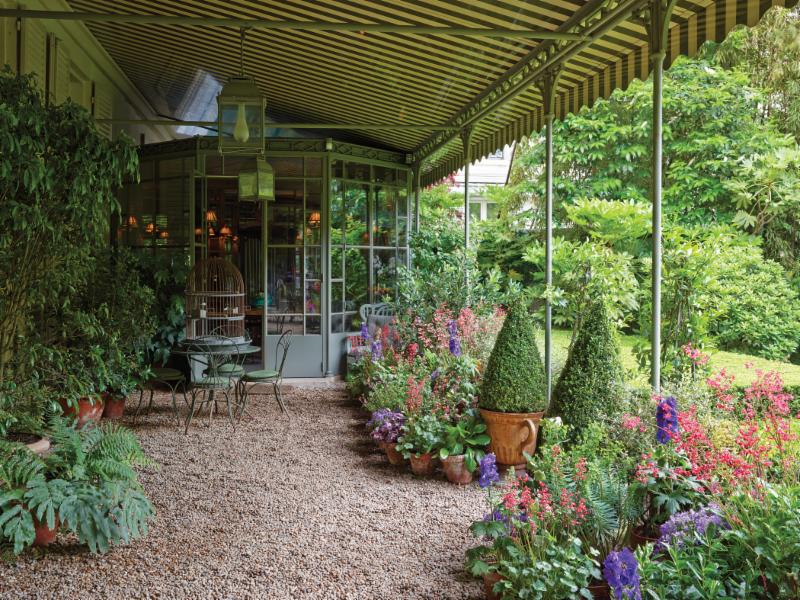
| | Pierre Berge's Artful Hideout |
Comprised of forty-one garden "stories" loosely categorized as garden estates, public parks, and privately owned spaces, In & Out of Paris: Gardens of Secret Delights traces the evolution and adaptation of Paris as a garden city, where contemporary design is infused with historic meaning. The large estates and public parks of the city provide context for its private, intimate spaces, which include courtyards, rooftops, those hidden behind hôtel particulier walls and within suburban locations.
Beginning with AndréLe Nôtre's 100-acre masterpiece Vaux-le-Vicomte and concluding with the interior courtyard and salon de thédesigned by landscape architect Christian Fournet for the hotel Novotel Les Halles, the gardens portrayed within In & Out of Paris: Gardens of Secret Delights inspire inquiry. They are presented from a distinct point of view that is not afraid to frame questions about design, management and maintenance, permanence and impermanence and the relationship between landscapes and gardens.
An introduction provides a concise overview of the history of the greening of Paris beginning with Catherine de Medici's Renaissance influenced Tuileries Palace and Gardens, sited just beyond the walls of the medieval city. The transformation of the city by Baron Haussmann in 1853 into twenty arrondissements where boulevards, squares, public parks and gardens created an environment full of light and air created a "lyrical, magical garden city" which serves as a textbook for cross-pollinating garden ideas at every scale and a model for the city beautiful movement.
It is this spirit of cross-pollination which infuses In & Out of Paris: Gardens of Secret Delights with vibrancy. Père Lachaise Cemetery, described as an "uncommon sculpture park,"is afforded equal stature to Christian Fournet's Miami-esque poolside roof garden. Monet's garden at Giverny, a "painter's box of seasonal surprises"co-exists with Gilles Clément's tropical gardens at the Musée du quai Branly. It's an eclectic mix.
Exquisite full-color photographs abundantly illustrate each of the book's two hundred and sixty one pages. Each is accompanied by descriptive text that includes an identification of the plant species depicted in the image. A resource section includes contact information about individual designers and a bibliography.
The introduction to In & Out of Paris: Gardens of Secret Delights both begins and concludes with a quote from American statesman Thomas Jefferson, who "bedazzled" by Paris on a visit in 1844 noted, "A walk around Paris will provide lessons in history, beauty and the point of life." The city of light continues to bedazzle with parks and gardens at its core.
Patrice Todisco writes about parks, garden and the public realm at www.landscapenotes.com.
Photographs by Marion Brenner from In & Out of Paris Gardens of Secret Delights by Zahid Sardar. Reprinted by permission of Gibbs Smith.
|
Catching up on the Last Half Century
Maureen Horn, Librarian
Part 3: 1960 - 1962 Pride of Purpose: the Society Reaches Out
During the early sixties, the Society experienced volatility in its financial situation. President Oliver Wolcott worried because membership was dropping and regretted that the Flower Show did not produce the profit it merited. Our ownership of Horticulture magazine was a mixed blessing because, even though subscriptions increased, a scheme for promoting its sales turned out to be very expensive.
Arno Nehrling, the Executive Secretary, expressed much concern about the physical space which M. H. S. inhabited. A decaying building should have been expected because Horticultural Hall had been on Massachusetts Avenue, across from Symphony Hall, for 60 years. Even the budget of the Boston Public Schools seemed to have an unfortunate effect on the operations of M. H. S. because a cut in the budget for school gardens resulted in our not having enough exhibits at our Children's Show.
The one happy thought in everyone's mood, though, was the continuing and growing appreciation by the Society's members and the general public for the homey atmosphere of the beautiful building, and the number of meetings held there grew every year. Members also liked to gather to visit gardens together, and there are pictures in the annual reports of crowds experiencing great conviviality. The local people were not insular, though, and the Prize Committee made sure that they distributed their awards to many states and countries.
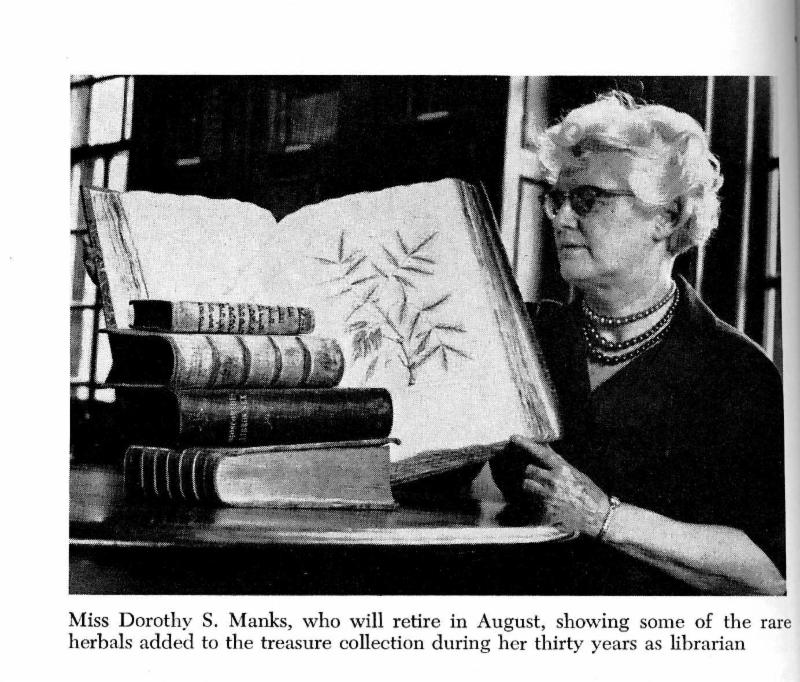
Above all, in the 1960's the Library was a source of pride and prestige. It was generally recognized as the finest horticultural library in the land, and it took pains to send its books out to every state. The reports of the Library Committee give space to urging patrons to call or write to the Library with the promise that books would be promptly mailed to them. The Librarian, Dorothy S. Manks, who joined the Massachusetts Horticultural Society Library in 1929, was nationally renowned for the the classification system she created for botany and horticulture books, and it was used nationwide by similar libraries.
The Library today follows her lead by lending our books throughout the state, using the Interlibrary Loan component of the Massachusetts Library System.
|
Tabula Rasa

by Neal Sanders
Leaflet Contributor
What on earth have I gotten myself into?
Back at our old home, the snow is quickly melting off the lawn and gardens, revealing grass that awaits only a light raking to spring to new life. Daffodils, warmed by the house's foundation, are heading up for a mid-April bloom.
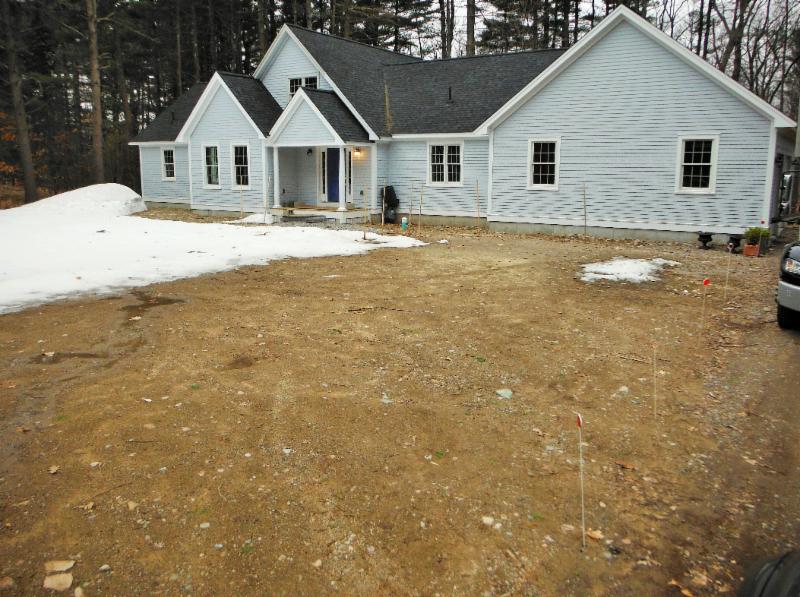
This morning, I gazed out the window of our new home where, also, the snow is receding. But what is revealed is... mud. Nothing but mud. Gray mud that last fall was compressed into the consistency of concrete by trucks, trailers and cranes parked for weeks at a time.
This is the site of our new garden.
Let us backtrack a few months. Last year we found the ideal location for the home we plan to reside in until we are carried out, feet first. It was a wonderful site but sitting on it was a dilapidated house. Around that house was a forest of aging pines, a thicket of invasive barberry and burning bush, plus a lush garden of poisonous black swallowwort.
We had the house torn down and a wide area of trees and undergrowth removed. Betty began planning a low-maintenance garden. Then winter set in and our gardening plans were played in abeyance.
Now, we are ready to begin turning that tabula rasa into a garden, or at least begin gardening when the ground thaws.
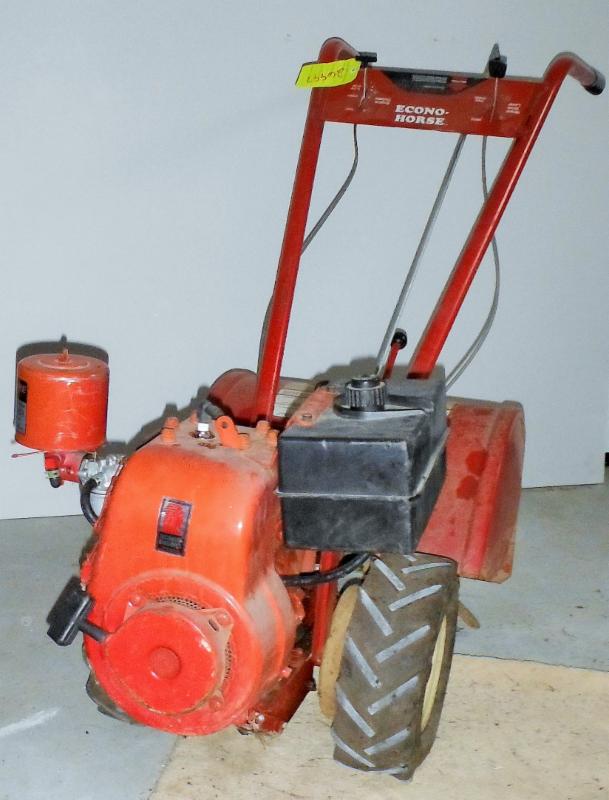
To turn that concrete-like dirt into gardening soil we have a rototiller. AARP just sent it a membership application. We purchased our Troy-Bilt EconoHorse in 1980 and used it happily for ten years. Then we moved and then moved again, taking along our rototiller because it had served us so well and we expected that one day we would use it again. The last time either one of us can definitively remember using it was during the Clinton administration.
Two weeks ago we hauled our rototiller to the place that has kept our snow blower running for a decade and asked whether the EconoHorse could be saved or should it be put down. A group of employees gathered around it and gazed, awestruck that such a machine could still exist and not have been reduced to rust. A technician gave a tentative pull on the engine and said there was hope.
Three days ago our aging rototiller came home, renewed with a host of sparkling new belts, hoses, and other parts, and ready to do its best.
But while the machine is the same, the man behind that TroyBilt is not the same guy who, in 1980, created a 50 by 200 foot garden in a single weekend of sweaty, muscular grit and determination. He is 35 years older and those muscles, while they have exactly atrophied, aren't what they were once upon a time.
And, tilling that dirt is just the first step toward turning it into soil. There needs to be truckloads of compost worked into it plus whatever else a soil test tells us it needs. Then, there are dozens of shrubs to plant, grasses and perennials to place, and paths to create.
Like I wrote at the beginning of this essay, what have I gotten myself into?
We do these things out of love. We also do these things because we want to prove to ourselves that we still possess the stamina to carry out a major project that is long on physical effort. Mostly, we do these things because we want to be able to say that we had a hand in creating something beautiful.
Get ready to pass the Advil.
|
|
|
|
|
|
|