Synod Assembly may seem so far away (June 5 - 7, 2016), yet much planning
has to be done, and some early deadlines exist. One early deadline is submitting
Resolutions and Memorials for consideration by the Synod Council. The
deadline is January 15, 2016. Resolutions and Memorials are formal ways we
can get an assembly of people to consider new ideas or make changes. Most of
us are familiar with motions/resolutions that are made at annual congregation
meetings, local government meetings, service clubs, etc. However, what is a
Memorial, and how does it differ from a Resolution? A memo from Rev. Chris
Boerger, ELCA Office of the Secretary, provides these definitions:
Memorials address broad policy issues and are passed by Synod Assemblies
for consideration by the Churchwide Assembly. Synod Councils are not
authorized to adopt memorials for submission to the Churchwide Assembly. One
of the responsibilities of the Churchwide Assembly, in accordance
with provision 12.21.c, in the Constitution, Bylaws, andContinuing
Resolutions of the Evangelical Lutheran Church in America, is to "receive
and consider proposals from synod assemblies." Once received by the
churchwide organization, they are referred to the Memorials Committee,
which is appointed by the Church Council to review and make
recommendations to the Churchwide Assembly, in accordance with
bylaw 12.51.21. The Memorials Committee meets approximately six to
eight weeks before the Churchwide Assembly.
Resolutions are requests from synods to the Church Council or units or
offices of the churchwide organization. Either Synod Assemblies or Synod
Councils may originate resolutions. Frequently, Synod Councils pass
resolutions between meetings of the Synod Assemblies and forward them
directly to the Church Council for consideration or to the Church Council
Executive Committee if the desired action involves referral to a unit or office
of the churchwide organization. As a practical matter, resolutions have a
more narrow focus than memorials because they are requests for consideration
or action by individual units or offices or the Church Council. Thus, for
example, a request for the Church Council to recommend a parliamentary
rule or action by a unit would be the subject of a resolution, but a request to
change an ELCA policy should be a memorial.
At the synod level, conferences may originate resolutions and submit them
to the Synod Council for consideration by the Synod Assembly. SB/L7.32. of
the synod constitution passed at the 2015 Synod Assembly states, "All resolutions
to be proposed to the Assembly shall be directed to the Synod Council. The
deadline for submitting such resolutions to the Synod Council is two weeks
before its January meeting preceding the Synod Assembly. The Synod Council shall present such resolutions together with its recommendations to the Synod
Assembly. All such resolutions shall be distributed to the voting members of the
Synod Assembly a minimum of 15 days prior to the opening of the Assembly.
Resolutions received by Synod Council after the January deadline, may be
addressed by the Synod Council and/or be directly referred to the Reference
and Counsel Committee at Synod Assembly."
It also is important to note that resolutions and memorials are proposals requesting the specified action - they cannot direct the action to be taken. Chris Boerger's complete memo is posted in the Resources section of the synod website.
If you would like to review the Upstate New York Synod Constitution, it can be found on the Synod website under Resources (here).


 You're invited to attend
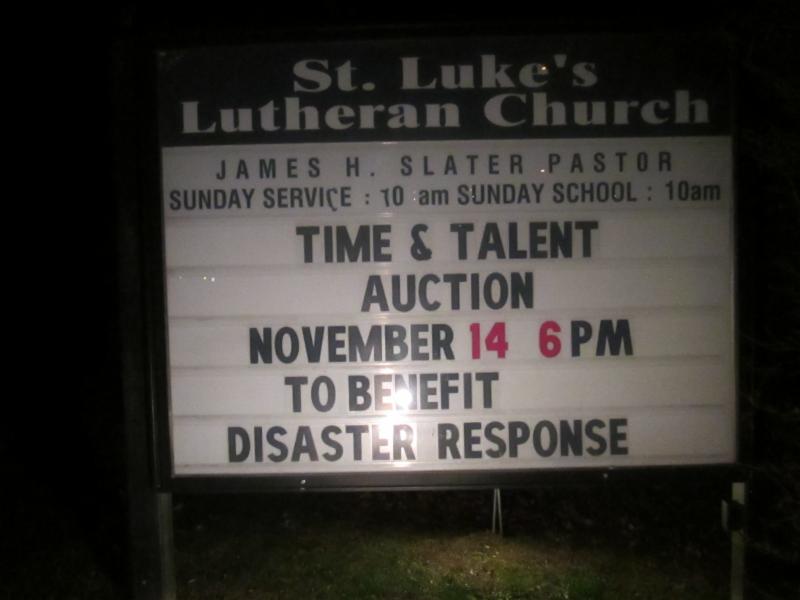 items to bid on at a Time and Talent Auction! Dozens of folks gathered Saturday, November 14 at St. Luke's Lutheran Church, Valatie to not only have a good time but to raise money for Lutheran Disaster Response. This event, which began following Hurricane Katrina, has continued every other year with each event supporting the ministry of some program or organization in need of financial support to carry out God's mission in the community and beyond. This year's event supported Lutheran Disaster Response.
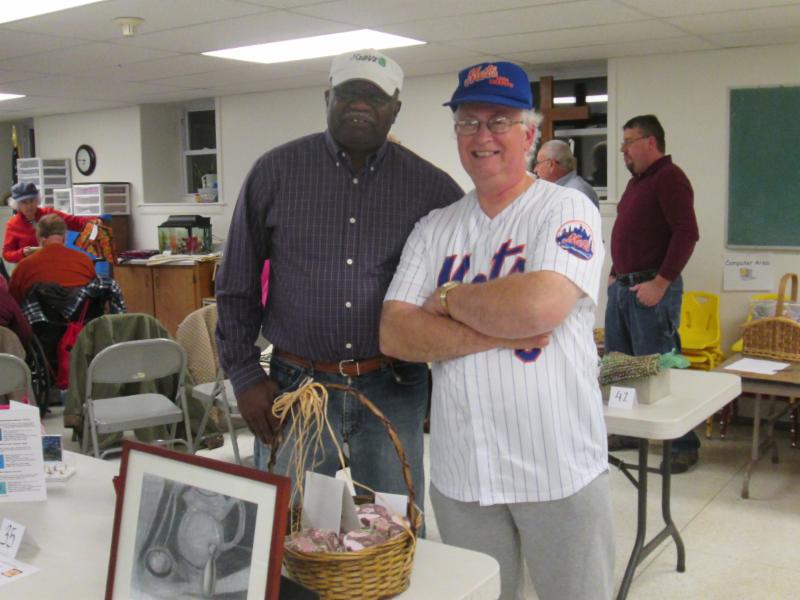 The evening's three auctioneers, including Pastor Jim Slater, kept the bidding going to raise the most funds and thoroughly entertained the audience as well. Living out God's Story through their actions, the members of St. Luke's raised a total of
  IN OUR PRAYERS
 Week of Renewal - "Worship: Beyond Style" -

 Thanks to the enthusiasm of our youth and the generous support of many, ELCA World Hunger's Walk for Water fundraising challenge of $500,000 was met - and now it will be doubled!