The High Art of Horticulture

Geyata Ajilvsgi, one of the
the top plant and butterfly experts in Texas, explains in engaging style how to attract some of the more than fifty beautiful Texas butterfly species to gardens. She includes in-depth butterfly profiles, descriptions of necessary food plants, and adaptable landscape plans and extensive planting options for each of seven state regions.
". . . a must for the butterfly gardener."--Houston Chronicle
". . . the very best book on butterfly gardening! . . . Wherever you live, this book is an essential addition to your library."--American Butterflies
Perennial Garden Color by William C. Welch foreword by Neil Sperry  William C. Welch knew that gardeners in Texas and the South face special problems with climates and growing seasons; he penned this guide to give them the greatest chance at success. His gardening classic includes extensive photos, landscaping ideas, and planting techniques. Over 125 different perennials and more than a hundred varieties of old garden roses are detailed.
A new Texas A&M University Press edition!
". . . the profiled plants . . . remain beautifully illustrated and Welch's gardening observations about them remain unchangeably valid and useful. . . . This book remains an enduring resource."--William Schieck, Texas Gardener's SEEDS
by Chris Wiesinger and William C. Welch
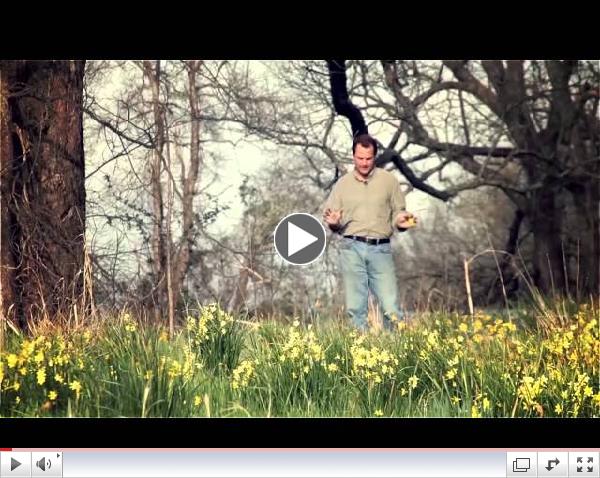
Have you ever wondered why flowers sometimes pop up in the strangest places? What stories do these flowers tell, and why are they important to southern and global horticulture legacy?
Follow Chris Wiesinger as he tracks
down bulbs and digs up history. He teams up with the legendary William C. Welch to deliver advice on how to properly grow b ulbs that have been rescued from obscurity and reintroduced into modern gardening landscapes. Read more.
"Wiesinger makes a living finding pretty things in ravaged places. . . . resilient flowers without patrician connotation that thrive in areas largely lost to the economic revival of the New South. His is the world of old cotton towns, condemned properties, abandoned buildings and houses where torn sofas crest on bowed porch fronts."--New York Times
|
Mexican American Trials and Triumphs
Chicana/o Struggles for Education 
by Gualdalupe San Miguel Jr.
The history of Mexican American educational reform is far deeper and more complex than simply fighting discrimination. Read more.
"Tapping into a massive bibliography of sources . . . , San Miguel documents the strategies Mexican American activists used since the 1960s to challenge entrenched schoolroom practices . . . and to found alternative schools that used innovative methods designed to produce Mexican American success. [This] . . . is a master tome by the recognized authority on Mexican American historical struggles to achieve educational equity."--Arnoldo DeLeón, professor of history, Angelo State University
 Telling Border Life Stories Telling Border Life Stories
Four Mexican American Women Writers
by Donna M. Kabalen de Bicharra
Five autobiographical stories written by four women between the 1920s and the 1990s are presented with forewords by Donna M. Kabalen de Bichara. These remarkable stories capture precious snapshots in time of the little-explored Mexican American female
experience in the early American Southwest. Read more.
"[This collection] . . . would ably fill gaps in Chicano/a literary studies, especially in the sub-field of autobiography and also recovery scholarship of pre-Chicano Movement writers."--Jose F. Aranda Jr., associate professor, Rice University
by Nadia Y. Flores-Yeffal 
This study sets new boundaries in existing social network theories by providing detailed descriptions of social micro- and macrodynamics underlying development and expansion of social networks--
with "trust" as the major component of networking among those who have little, if any, legal protection.
Flores-Yeffal defines the new realities of undocumented migration from Latin America and contributes to the academic discourse on international migration, advancing both the study of social networks of migration and the study of social networks in general.
". . . a brilliant analysis of migrant networks that unpacks the black box of social capital to reveal the interpersonal dynamics that spurred so much Mexican migration to the United States over the past two decades. It is essential reading for anyone wishing to understand immigration in the world today."--Douglas S. Massey, professor of sociology, Woodrow Wilson School of Public and International Affairs, Princeton University, and adjunct professor of sociology, University of Pennsylvania
|
TAMU Press News
|
T. Edgar and Nancy Paup Intern Named
Texas A&M University Press has named senior English major Taylor Phillips as the 2013-2014 T. Edgar and Nancy Paup Marketing Intern. He is the second student to hold the position that was established in 2012 with the support of T. Edgar and Nancy Paup, members of the TAMU Press Advancement Board.
Phillips will work strategically with the marketing team to improve publicity and media outreach. He interned with Children's Book Ireland in Dublin in 2012 and with Digital Humanities, Media, and Culture in 2011.
|

| |
Phillips, member of the Texas A&M University Singing Cadets, poses at Yu Garden in Shanghai
|
|
|
|
|
STAFF PICK of the Month 
This month Marketing Communications & Exhibits Manager Kathryn Krol tells us which book she thinks is a must-read:
I first encountered Anne Frank's diary more than three decades ago, and it sparked a lifelong interest in World War II military and rhetorical history. At this point, a book has to be well written, provide an honest, unique perspective on heavily treated events and topics, and induce me to think deeply about what I believe. Glider Infantryman: Behind Enemy Lines in World War II by Don Rich and Kevin Brooks hits all three of these points with dead-on accuracy.

The straightforward title belies the punch and power behind the book cover. A member of the Screaming Eagles of the 101st Airborne Division, Rich landed at Utah Beach on D-Day and was involved in almost every major offensive from that point forward, including the lambasted Operation Market Garden and the infamous Bastogne. Included throughout are descriptions of camp life, character studies of fellow soldiers (Sergeant Hidalgo is a personal favorite), and honest reflections on emotional and mental states of everyone involved--enemy solders, civilians, and Allied leadership.
I raced through this book because I could not drink it in fast enough. I was (and am) at a loss on how Rich and many of his comrades came out of this war without obviously debilitating psychological damage. Yes, scholars and lay people have theorized for years that without knowing what to expect, a person is better capable of pushing on through the uncertainty ahead. I am not so sure that explains everything, but I am sure of one thing: Rich somehow conveyed a realness and depth I have rarely encountered which, for however briefly, made me understand his experiences as if they were my own. I felt I had a connection to him and to this war--and this experience stuck with me for days (and even weeks) afterward.
In the end, the straightforward title simply reflects the best way to sum up the actions of Don Rich. He was, simply put, a glider infantryman behind enemy lines in Word War II. Wow. Read more.
|
America's Forgotten War? Hardly.
by William Clark Latham Jr. On July 27, 2013, America officially commemorated the 60th anniversary of the Korean War Armistice and formally recognized a dark chapter of American military history. American POWs, methodically brutalized by the enemy for indoctrination and propaganda purposes, returned home only to be labeled as weak-willed, "brainwashed" pawns.  William Clark Latham Jr William Clark Latham Jr. corrects misperceptions and debunks lingering myths from that era through incredibly detailed research to set the record straight. This is an essential book for military history scholars and students! Read more.
"I managed to survive two and one-half years at the hands of that brutal enemy. I have read other books in which the author attempted to describe the conditions and treatment of prisoners of war in Korea, but none compare with the accuracy written in the subject book. . . . I almost felt that I was back in that miserable place. I commend the author for all the research he did in compiling the facts instead of relying and publishing 'hear say' information."--Mr. William K. Norwood, President, Korean War Ex-POW Association
COMING OCTOBER 2013
by Johnny Moore and Judith Fenner Gentry
|
Lives and Times of Notable Texans
by Amy Bacon
Forewords by H. Ross Perot and James R. Reynolds
Houstonian Lawrence M. Ludtke held fast to Classical sculpture during abstract modernism and wound up with commissions for works in the National Battlefield Park at Gettysburg, the Pentagon, and more. Read more.
|
|
by Jane Dunn SibleyA small-town West Texas girl becomes a living legend through philanthropy and championing Texas art and culture. Read more. ". . . a straight shooter who rarely misses her mark and has no shortage of targets. . . . Hers has been a life of civilizing influence. But don't underestimate her refinement: best not to trifle with gals who carry rifles."--Douglas Dempster, Dean of the College of Fine Arts, University of Texas at Austin
|
|
|
|
 |
|



