|
|
|
Capitol Notes
Wisconsin Political and Legislative Update
|
TO: Clients/Friends of Capitol Consultants, Inc./Wimmer & Company, S.C.
FROM: Tony Langenohl
Capitol Consultants, Inc.
& Wimmer Company, S.C.
DATE: February 11, 2013
SUBJECT: Weekly Political & Legislative Update 
|
If you know anyone that would enjoy receiving our weekly updates, please feel free to forward and have them join our mailing list below.
 |
2013-2015 Budget Update- Medicaid
As we get close to the February 20th roll-out of Governor Scott Walker's 2013-2015 Executive Budget, more details are becoming released by the Governor's Office. In the last week, Governor Walker and his office released specific initiatives and hints on where they are going in specific issues areas including: - Medicaid Expansion
- Mental Health
- Economic Development
- Workforce Training
Each of these is discussed in a separate section below, starting with Medicaid: Medicaid: Last summer when the Supreme Court of the United States ruled on the Affordable Care Act, they ruled that a state can refuse to participate in the Medicaid expansion without losing all of its Medicaid funds. The state has the option to continue its current, unexpanded plan. Governor Walker has made known for sometime that his decision on whether to do the Medicaid expansion will be revealed in his budget. As we have gotten closer to that date, groups lobbying for the expansion have made their support known and stepped up their advocacy efforts. Governor Walker took to Facebook this past week to give insight to his thought process on the decision before him. Back to the table of contents
|
2013-2015 Budget: Enhancing & Expanding Services for Individuals with Mental Illness
On Wednesday, Governor Scott Walker announced in an address to the Wisconsin Counties Association at $30 million investment in state taxpayer funds for mental health programs to "enhance and expand services provided by state and local governments to individuals living with mental illness."
Specific provisions that will be included by Governor Walker in the budget are:
- Comprehensive Community Services (CCS): Expands intensive, targeted community-based care for adults and children with severe mental illness. The CCS program delivers enhanced, individualized services helping reduce hospitalizations, improve primary health outcomes, improve relationships, increase meaningful employment, and improve overall life satisfaction.
- Office of Children's Mental Health: Establishes an Office of Children's Mental Health focused on ensuring program policies and services are best meeting the needs of children throughout the state. It will assist agencies in developing and delivering effective services for children. The Office will coordinate initiatives, monitor program performance, and increase integration of services provided to children across all state agencies.
- Coordinated Services Team (CST): Expands CST program statewide and funds CST coordinators on a regional basis to integrate and coordinate community-based care for juveniles in multiple systems of care. Coordinated Services Teams provide wraparound models of care for children with behavioral health issues, as well as their families, when the children are involved in two or more systems of care, including mental health, long-term care, juvenile justice, child welfare, substance abuse, and special education systems.
- Peer-Run Respite Centers: Develops Peer-Run Respite Centers to improve outcomes of individuals in crisis or individuals having difficulty coping with mental illness through services such as peer supports, 24/7 hotlines, wellness activities, respite, and hospital diversion.
- In-Home Counseling for Children: Provides funding to broadly cover in-home counseling services under the Medicaid program. Expanding coverage will allow earlier interventions, particularly for children and families with less acute conditions, and will make it easier for families to access necessary services, resulting in a reduction of out-of-home placements and improved outcomes for children.
- Additional Forensic Units at Mendota Health Institute: Provides funding and positions to increase the capacity of the state forensic treatment units to meet the growing demand for inpatient evaluation and treatment services.
Back to the table of contents
|
2013-2015 Budget: Enhancing Workforce Development
On Sunday, Governor Scott Walker announced a $96 million investment of new state funds, with a total investment of $132 million, in workforce development aimed at equipping workers with the skills they need to find jobs in the modern workforce.
Governor Walker's workforce development plan includes two parts: separate legislation, which will be introduced ahead of the budget, and substantial budget investments and reforms.
"Our goal is to help our state and our workers become among the most prosperous and innovative in the country. My workforce development plan is a multi-faceted approach providing flexible solutions from up-to-date labor market information to getting people on Food Stamps employment training. The plan is designed to help workers get the skills necessary for jobs available across the state today. We will make smart, targeted investments in our UW-System, the Wisconsin Technical College System, and traditional K-12 education to ensure our citizens have the skills needed for the jobs of today and tomorrow," Governor Walker added. "Beyond just traditional educational investments, my proposal provides worker training grants in areas of immediate need, including items like training for healthcare-related jobs in rural and high poverty areas. My workforce development package provides a hand up to those who are able to work-not simply a hand out." - Governor Scott Walker from Press Release
Pre-Budget Package:
Governor Walker will request passage of LRB-1162 in advance of the Budget. LRB-1162 contain provisions that were identified in Tim Sullivan's report, Restoring Wisconsin's Workforce Development, and Competitive Wisconsin's Be Bold 2. LRB-1162 contains funding for:
- Labor Market Information System: Develops a state-of-the-art Labor Market Information System through the Department of Workforce Development (DWD) to track job vacancies and link unemployed workers to openings they are qualified to fill or to training they can complete to become qualified, helping the unemployed return to the workforce faster. In addition, the system will provide high school students and guidance counselors with up to date labor market information helping inform students about career opportunities and the training they would need for currently in-demand jobs.
- Worker Training Grants: Funds $15 million GPR over the biennium for DWD grants to both public and private organizations, such as technical colleges, Workforce Investment Boards, regional economic development organizations, and Wisconsin businesses, providing training to new and incumbent workers. These grants may require some matching funds from businesses requesting the training to ensure businesses, as well as the state, are invested in the outcome of the worker training programs funded. Other states, including Minnesota, Iowa, Indiana, and Texas, currently have state-funded worker training programs; and Wisconsin not having one puts us at a competitive disadvantage.
- Office of Skills Development: Creates the Office of Skills Development at DWD and funds 4.0 full-time positions to administer the worker training grants. With the Wisconsin Economic Development Corporation, the Technical College System, economic development agencies, and businesses, the Office will nimbly and quickly adjust training grants to current and changing workers' skill needs and emerging skill clusters, providing workers with a responsive, flexible, and valuable training resource.
Budget Initiatives:
Among the economic development programs and initiatives funded that will be proposed in Governor Walker's next budget are:
Wisconsin Technical College System (WTCS) Workforce Development Initiatives:
- Increased Aid and Flexibility for Workforce Training: Increasing state aid to technical colleges by $5 million in general aid, as well as giving flexibility over $22 million in existing worker training-related funds. WTCS can use these funds to incentivize training program expansion in areas of high-demand for worker training needs. It also requires performance and results be tracked to allow WTCS to adjust curriculum based on future skills gaps.
- Performance-Based Funding: In addition, the budget will phase in performance funding for all of the state aid given to technical colleges. It will begin at 10% in 2014-15 and would eventually total all $88.5 million general aid through performance by 2020. This would be roughly one-tenth of WTCS school operational budgets. The funding formula would be developed by WTCS with DOA oversight. The formula would be required to have a focus on job placement and programs focused in high demand fields.
Department of Workforce Development Initiatives:
- Apprenticeship Program: Fund the Apprenticeship program with state dollars when federal funds run out in FY14 at $1.8 million. This funding will be ongoing so the Apprenticeship program will not risk losing funding in the future.
- Veterans in Piping: Maintain the Veterans in Piping program with $300,000 state GPR dollars and 1 FTE. The program provides 20 weeks of training to veterans and was formerly funded with WIA dollars and a Veterans Assistance Foundation grant. This funding will be ongoing so the Veterans in Piping program will not risk losing funding in the future.
K-12 Initiatives:
- Explore, Plan, ACT, WorkKeys: Fund $11.5 million over the biennium for the ACT, the WorkKeys (which measures work readiness), and the precursor Explore and Plan tests to help parents and teachers understand which students are ready for college or a career by 11th grade. Using these tests will allow schools to provide these students with opportunities to begin taking AP and other advanced course work, while ensuring 12thgraders who are behind get the remedial education they need to catch up. These tests are vital to measuring student academic growth in high schools for the purposes of state school report cards.
- Readiness Council: Give every child the opportunity to create an academic and career plan based on his or her interests, beginning in 6th grade. These individualized plans, developed with and frequently revised by parents, teachers, and guidance counselors, will help make sure our children are on track to graduate with a diploma and a plan. Approximately $1.1 million will be provided to school districts to fund this effort beginning in the 2014-15 school year.
University of Wisconsin System Initiatives:
- Incentive Grant Program: Invest $20 million to support initiatives increasing economic development, addressing employer needs through development of a skilled workforce, and improving affordability.
- UW Flexible Option: Fund $2 million to support start-up costs to develop additional programs and course offerings in the new UW Flexible Option degree program.
- Core Credit Transfer: Ensure students, who have earned credits in general education courses, get to keep those credits, even if they transfer to another school. Require the UW and Technical Colleges to develop a core set of 30 credits transferrable between all institutions, while giving private and tribal colleges the option to participate as well.
- Wisconsin GI Bill Tuition Remission: Align standards under the Wisconsin G.I. Bill with state veterans benefit programs in other states and eliminate an arbitrary time limit for spouses of veterans, who were disabled or killed in the line of duty, to use educational benefits.
Reforming FoodShare Employment and Training Program (FSET): Invest nearly $17 million GPR and almost $33 million in all funds in worker training for able-bodied adults without dependent children, who receive FoodShare benefits. Federal law requires able-bodied adults without dependent children to meet work or job training requirements as a condition of eligibility for FoodShare benefits. Currently, 46 states, including Wisconsin since 2002, have waivers exempting certain populations from this eligibility requirement. Since 2008, Wisconsin has offered FSET services on a voluntary basis. In August 2012, the department informed the USDA it intends to enforce the work/training requirements for able-bodied adults without dependent children beginning July 2013. Able-bodied adults without dependent children will be required to enroll in employment and worker training programs offered by the Department of Health Services, Department of Children and Families or Department of Workforce Development. If able-bodied adults without dependent children choose not to enroll in these employment programs, they will be subject to federal time limits on nutrition assistance benefits. Participation in employment programs for adults with dependent children, the elderly, and people with disabilities will remain voluntary.
Improving Rural Access to Health Care: Multiple studies identified a growing need for health care professionals, which will only increase as the population ages. Governor Walker's budget investment aims to train health care professionals for these in-demand jobs of the current and future workforce in geographical areas of high need, such as rural and impoverished urban areas. This will provide much-needed jobs and better access to primary health care for Wisconsinites in rural areas.
- Medical College of Wisconsin (MCW):
- Family Medicine Residency: Provide $1.75 in state funding to MCW to expand their family medicine residency by 12 additional slots.
- Create Community Medical Education Program: Invest $7.4 million in GPR bonding for MCW to build two new campuses in the Wausau and Green Bay areas for MCS's new Community Medical Education Program initiative. This unique program will place MCW medical students at the Wausau and Green Bay campuses for all four years of their training, with a goal of 25 graduates per year at each campus.
- University of Wisconsin-Madison Medical School:
- WARM & TRIUMPH Expansion: Provide $3 million to expand the medical school's Wisconsin Academy for Rural Medicine (WARM) & Training in Urban Medicine and Public Health (TRIUMPH) programs. The medical school will also use these funds to establish special scholarships for WARM & TRIUMPH students based on financial need and upgrade technology to allow for increased distance learning opportunities for students. WARM was started 5 years ago with the goal of admitting students who intend to practice rural medicine and, ultimately, helping increase the number of physicians who practice medicine in rural Wisconsin.
- TRIUMPH was started in 2008 with the goal of enrolling students who intend to serve urban populations to reduce health disparities. The program integrates clinical medicine and community and public health in a 3rd and 4thyear curriculum.
Create the Graduate Medical Education Consortium Funding Pool: Invest $4 million for grants to aid rural hospitals in building infrastructure and increasing volume in order for them to obtain national accreditation. The $4 million investment requires a 50/50 match by applicants. Hospitals must be accredited in order to offer medical residencies. This investment will allow rural hospitals to pool their resources and apply for accreditation as a consortium saving them vital time and money, while allowing them to draw medical residents to rural areas in need.
Creation of Medical Residency Grants for High Need Medical Professionals: Invests $1 million to provide grants to hospitals to help offset the high costs of medical residencies in five key areas: family medicine, pediatrics, psychiatry, general surgery, internal medicine.
Marquette Dental School Expansion: Provides over $500,000 for dental education contracts at Marquette to allow for 20 additional dental student slots per year.
Wisconsin Health Information Organization (WHIO): Invests $5 million in WHIO to jumpstart the organization's ability to produce consumer-focused health care cost and quality data. The funding will also support statewide consumer health literacy programs and give providers and insurers access to meaningful data to support quality improvement activities and provider payment reform. This investment will increase the transparency of cost and quality data, allowing individuals and businesses to become educated consumers of health care.
Back to the table of contents
|
|
2013-2015 Budget Update: Economic Development Initiatives
On Thursday, Governor Scott Walker Governor Scott Walker announced key economic development initiatives aimed at improving the business climate and encouraging entrepreneurship and innovation.
"Continually improving our economic environment will foster small business growth and encourage the creation of new businesses. The majority of jobs created in Wisconsin will come from small businesses or employers who are just getting started. The initiatives contained in my budget proposal will support entrepreneurship and innovation." -Governor Scott Walker (press release)
Among the economic development programs and initiatives funded in Governor Walker's next budget are:
Seed Accelerator and Capital Catalyst Programs: Investing nearly $6 million in Seed Accelerator and Capital Catalyst Programs at the Wisconsin Economic Development Corporation. These programs support high-potential entrepreneurs and businesses as they start and grow.
- Seed Accelerator Program: Aimed at increasing the number of startups in the state by providing matching funds to communities and partners to establish business model programs to assist entrepreneurs in taking ideas to company formation. These local entrepreneurship programs will provide participants with tools and guidance to start new businesses, such as mentorship, business planning, and networking with key contacts and potential investors.
- Capital Catalyst Program: Provides access to financing for entrepreneurs who have successfully completed an accelerator program. WEDC has already made investments with local partners through this program, including the Innovation Fund of Western Wisconsin in Eau Claire and the Whitewater Community Development Authority, which was announced earlier this week.
Wisconsin Economic Development Corporation Marketing Program: Providing $10.9 million over the biennium to support WEDC's marketing program promoting Wisconsin as a great place to do business. WEDC marketing focuses on attracting businesses, promoting investment opportunities in Wisconsin, and changing the negative perceptions that may still exist about doing business in Wisconsin. By increasing resources to WEDC for marketing, Wisconsin's investment in this program will make the state more competitive among the economic development marketing programs of our peers in the Midwest.
VETransfer Grant: Providing an additional $500,000 grant to VETransfer through the Department of Veterans Affairs's Veterans Trust Fund. VETransfer is a business accelerator for U.S. Veterans looking to start their own businesses. VETransfer must use at least $300,000 to increase the amount of seed funding available to provide grants to Wisconsin veteran-owned start-ups; VETransfer may use up to $200,000 to support other activities directly supporting the nonprofit's mission.
Economic Development Tax Credit: Providing an additional $75 million in available credits for the Economic Development Tax Credit program. This tax credit is aimed at encouraging businesses to make capital investments, expand and retain jobs, invest in job training, and locate or retain their corporate headquarters in Wisconsin.
Angel Investment Tax Credit: Lifting the cap on this tax credit program focused on encouraging private investment in start-up companies. The budget removes the maximum cap, which is currently set at $47.5 million, but retains the annual limit, effectively allowing this program to continue into the future.
Department of Tourism: In 2011, tourism in Wisconsin had a $16 billion impact, an increase of 8 percent from 2010. Over 95 million people visited the state supporting 181,000 jobs and approximately $1.3 billion in state and local revenue.
- Tourism Marketing: Expanding the Department of Tourism's effective marketing campaign by allowing the department to keep over $1 million in funds previously contained in a budget lapse.
- International Tourism Marketing: Implement strategic marketing plan to grow international travel. The Department will use $100,000 each year to support efforts to attract international visitors to Wisconsin.
- Grant Programs for National Meetings, Conventions, and Sporting Events: Allocating $75,000 per year for grants to programs aimed at attracting national meetings, conventions, and sporting events.
Link to full release
Back to the table of contents |
|
Assembly In Session- Tuesday, February 12th
The Wisconsin State Assembly is scheduled to be in Session on Tuesday, February 12th at 1:00 PM.
Tuesday's complete calendar can be found at this link.
Of note are the following items on the calendar:
- Assembly Joint Resolution 2: AJR2 is a proposed constitutional amendment before the Legislature for second consideration that would establish a transportation fund whose funds could not be used for purposes other than the department's responsibility for planning, promotion, and protection of all transportation systems in the state. If adopted by the Legislature this constitutional amendment be submitted to the voters for consideration in November 2014.
- 2013 Assembly Bill 2: Expands the life of a Tax Incremental Financing District in the City of Marinette until 2018.
- 2013 Assembly Bill 3: Exempts veterinarians from the Prescription Drug Monitoring Program.
Back to the table of contents |
|
Election Update- Wisconsin Supreme Court
Incumbent Supreme Court Justice Pat Roggensack is the first candidate in the Supreme Court race with a television ad up in advance of the February 19th Primary. Roggensack's ad, entitled "Start Someplace" discusses her extensive experience on the bench as both a Supreme Court and Appellate Court judge.
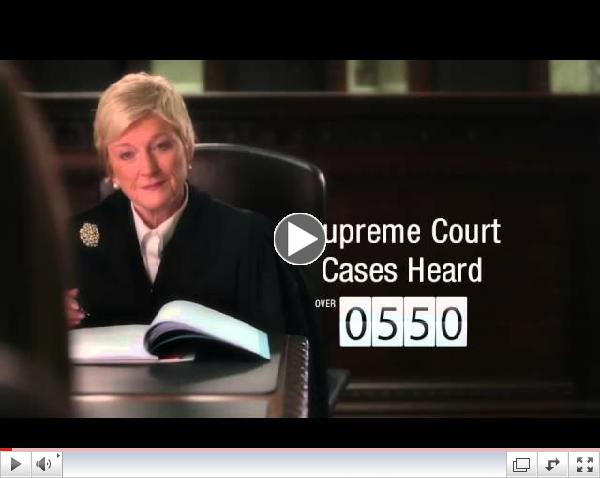 | | Roggensack: Start Someplace |
Supreme Court candidate Ed Fallone, an associate law school professor at Marquette University announced endorsements this week by Congresswoman Gwen Moore (D-Milwaukee), former US Senator Russ Feingold (D-Middleton) and for US Congressman David Obey (D-Wausau). In a press release, Fallone stated:
"It's an honor to have the support of three leaders who have spent their careers Uighting for justice, access, and fairness in government. As a Supreme Court Justice I will always stand up to the special interests and ensure that all Wisconsinites have equal access to our justice system."
Back to the table of contents |
|
The Week Ahead
Monday, February 11th
Fundraiser for Joint Finance Committee Co-Chair Alberta Darling
With our special guest Senate Majority Leader Scott Fitzgerald
5:00 - 6:30 p.m.
The Madison Club
5 East Wilson Street
Madison, WI
Levels of support:
$1000 Event Chair
$500 Event Vice-Chair
$250 Host
$100 Per Person/Supporter
Event Chairs, Vice Chairs and Hosts will be recognized on site
Please make checks payable to: Friends of Alberta Darling
PAC Currently Accepted
Please RSVP to Mary Stitt at 262-268-6859 or via email at marystitt@wi.rr.com
Tuesday, February 12th
Fundraising Reception for State Senator Frank Lasee
Special Guest: Governor Scott WalkerHOST LEVELS FOR THIS EVENT Platinum - $1000, Gold - $500, Silver - $250, Bronze - $125 Special opportunity for Gold and Platinum contributors to meet with Governor in a smaller, more intimate setting, prior to main event 5:00-7:00 PM Drinks and Appetizers Riverside Foods 2520 Wilson Street Two Rivers, WI Suggested Minimum Contribution $40/person PAC Currently Accepted Send Contributions to: Taxpayers for Lasee, PO Box 5403, De Pere, WI 54115 RSVP to 262-880-3316 or amyjoylasee@yahoo.com Wisconsin State Assembly Floor Session1:00 PM Link to CalendarWednesday, February 13th Joint Legislative Council Meeting
8:30 AM Room 411 South
The Council will receive the following special committee reports:
- Special Committee on 911 Communications
- Special Committee on Permanency for Young Children in the Child Welfare System
- Special Committee on Legal Interventions for Persons With Alzheimer's Disease and Related Dementias
- Special Committee on State-Tribal Relations
- Any other business to come before the Council.
Senate Committee on Agriculture, Small Business and Tourism 10:00 AM 201 Southeast Public hearing on the following appointments:
- Badtke, Dennis- Of Rosendale, as a member of the Board of Agriculture, Trade and Consumer Protection, to serve for the term ending May 1, 2019.
- Chwala, Thomas- Of Lake Mills, as a member of the Snowmobile Recreation Council, to serve for the term ending July 1, 2015.
- Erickson, Larry- Of Hurley, as a member of the Snowmobile Recreational Council, to serve for the term ending July 1, 2015.
- Hoffman, David- Of Black River Falls, as a member of the Circus World Museum Foundation, to serve for the term ending at the pleasure of the Governor.
- Mayo, Dale- Of Conover, as a member of the Snowmobile Recreational Council, to serve for the term ending July 1, 2015
- Rupnow, Sue- Of Wausau, as a member of the State Fair Park Board, to serve for the term ending May 1, 2017.
- Van Sant, William- Of Bayfield, as a member of the Wisconsin Historical Society Board of Curators, to serve for the term ending July 1, 2015.
- Van Zeeland, Lee- Of Appleton, as a member of the Snowmobile Recreational Council, to serve for the term ending July 1, 2015.
Assembly Committee on Financial InsitutionsPublic Hearing
10:00 AM 328 Northwest State Capitol Public hearing on the state of Wisconsin's Financial Institutions: Invited testimony only will be heard from:
- Department of Financial Institutions' Secretary Peter J. Bildsten will provide an overview of their role in oversight of Wisconsin's Financial Institutions.
- Michael Semmann, Senior VP and COO of the Wisconsin Bankers Association, Joined by member: Joe Fazio, CEO of Commerce State Bank
- Thomas Liebe, Vice President of Government Affairs for the Wisconsin Credit Union League, Joined by members: Kevin Hauser, President of the Westby Co-op Credit Union Kimberly Youngblood, Senior VP of Focus Credit Union Jack Gill, President of First Community Credit Union
- Daryll J. Lund, President and CEO for the Community Bankers of Wisconsin, joined by member: Paul Hoffmann, President & CEO of Monona State Bank
Assembly Committee on Government Operations and Licensing
Public hearing
10:01 AM
225 Northwest
Public Hearing will begin upon completion of the Informational Hearing.
- Representatives from the Institute for Justice will provide testimony to committee members regarding their expertise and knowledge of state licensing of occupations and the impact they have on the Wisconsin economy.
Senate Bill 2- Relating to: the publication and effective dates of acts. By Senator Grothman.
Senate Committee on Universities & Technical Colleges 12:00 PM
400 Southeast
- Baranowski, Phillip- Of Green Lake, as a member of the Wisconsin Technical College System Board, to serve for the term ending May 1, 2017.
- Hribar, Tracy- Of Franksville, as a member of the Board of Regents of the University of Wisconsin System, to serve for the term ending May 1, 2014.
- Willett, Stephen- Of Phillips, as a member of the Wisconsin Technical College System Board, to serve for the term ending May 1, 2017.
The informational hearing will begin upon adjournment of the public hearing.
- A report on the Special Task Force on UW Restructuring and Operational Flexibilities
Senate Committee on Government Operations, Public Works and Telecommunications
11:00 AM
330 Southwest
Senate Bill 10- Relating to: methods of providing assistance under the Clean Water Fund Program and the Safe Drinking Water Loan Program and projects that are eligible for assistance under the Clean Water Fund Program.
Thursday, February 14th Assembly Committee on Veterans
10:00 AM
417 North (GAR Hall)
The Department of Veterans Affairs will provide an overview of the agency for committee members. This is an informational hearing with invited speakers only. No public testimony will be accepted.
Friday, February 15th Back to the table of contents |
|
Stay Connected on what's going on politically throughout the week

Follow us on Twitter

Like us on Facebook

Archived copies of the Capitol Notes as well as PowerPoint Presentations and other information are always available on our website at CapitolConsultants.net
|
|
|
|
|
|


