|
April is National Sexual Assault Awareness and Prevention Month
Presidential Proclamation

- Click the logo to read President Obama's Proclamation of Sexual Assault Awarness month
 | | President Obama Signs the Violence Against Women Act Reauthorization |
 | | SecDef Sexual Assault Awareness and Prevention |
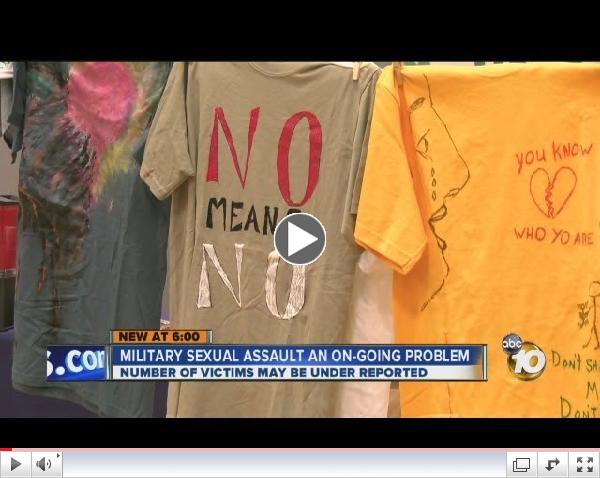 | | Military sexual assault an ongoing problem: Number of victims may be under reported |
Save the Dates:
CA Equine Collaborative for Military and their Families

- Network and build collaboration and community among veterans, military personnel and their families with horses
- May 5, 2013 from 1p-3p at DreamPower Horsemanship, WoodMyst Farms, 7460 Crews Rd, Gilroy, CA
Honoring All Military Women Veterans

- Event will include a Resource Fair with employment and disability information and a luncheon with entertainment and networking opportunities
- May 4,2013, 10am-2:30pm at Sacramento Vet Center 1111 Howe Avenue, Sacramento
- Luncheon requires registration; contact Rebecca Stallworth (916) 366-5453
Shout! 2013

- Free event to celebrate women veterans through art for the ongoing campaign inspired by notion that arts encourage expression and healing
- There is a line-up of veteran artists presenting photography, poetry, paintings, sculpture, comedy, and music
- May 8, 2013, 6pm-9pm at San Francisco Women's Building 3543 18th St, San Francisco 94110
Women's Journey Conference 2013

- Free event for women veterans and women currently serving in the Armed Forces
- Offers speakers that discuss issues effecting women, workshops, uplifting/inspiring entertainment, health consultations, beauty tips and much more
- May 11,2013 at UC Irvine, CA
- Make reservations by contacting 1-877-657-8464
|
|
Veterans Stand Together

- Resource and Mental Wellness Fair with vendors providing housing, employment, education, legal info, kickball tournament, BBQ, refreshments, and children's play area
- May 3, 2013, 10am-2pm, at Sierra College Football Stadium, 5000 Rocklin Rd Rocklin 95677
- For more information contact (916) 660-7470, veterans@sierracollege.edu
Project Hired and Wounded Warrior Workforce Conference

- Veteran career fair with opportunities to network, interview, and gain job support resources from leaders in the community and employers
- May 31, 2013, 10am-2m, at San Jose City Hall Rotunda,
- For more information visit www.projecthired.org
|
|
MST Resources and Information
Senate Armed Services Committee: Sexual Assault in the Military Senate Hearing: March 13,2013
- Watch the Congressional Hearing on sexual assault in the military by clicking the graphic
The Invisible War
- Click the graphic to find out more about the Academy Award Nominee, The Invisible War
Protect Our Defenders
- Click the logo to find out more about their mission and advocacy
- Click the logo to find your local CALCASA crisis support center
- Click logo to find immediate resources

- Click on the logo to find local VA services and information concerning MST

- Click on the logo to find information and resources

- Click the logo to find out more about PTSD and MST
|
|
Interagency Council on Veterans
|

Visit the website of California Department of Veterans Affairs Division for Women at
If you have any suggestions or comments for future article content or have any questions about the current articles and resources provided, please contact juliene.crisostomo@calvet.ca.gov
or (916) 503-8334
CALL FOR PUBLIC COMMENT
The California Research Bureau, CalVet, and the Commission on the Status of Women and Girls are preparing a third Statewide Survey of California Women Veterans for release in the Summer of 2013. The goal of this survey is to help us understand who are our women veterans, how California's women veterans use services, and what the needs are of California's women veterans.
We are seeking public input to help improve this survey. Please review the 2011 Survey questionnaire [link] and email us your feedback of more effective and pertinent questions to womenveterans@calvet.ca.gov no later than May 20, 2013.
For questions, please call [for the Commission's website: Rebecca Blanton at 916-651-5405; for the CSL website: Matthew Buttice, Senior Policy Analyst at 916-653-6972; for the Calvet website: Juliene Crisostomo at (916) 503-8334].
|
|
|
|
|
Women Veterans Roster: Register Now!
|

There is very little data about the unique issues that women veterans experience and contend with when they transition from their service in the military back into civilian life. Historically, the unique needs of women veterans have not been fully addressed or have been folded into the larger veteran population. This is partly due to a lack of substantiating feedback or evidence from women veterans indicating what is most important to them.
 In an effort to better identify and serve the needs of women veterans, a coalition partnership between CalVet, the Commission on the Status of Women and Girls and the California Research Bureau (CRB) was formed in October 2012. The Coalition has since redesigned the Women Veterans Roster in order to identify women veterans in California, maintain contact with them and learn about their unique needs and challenges. In an effort to better identify and serve the needs of women veterans, a coalition partnership between CalVet, the Commission on the Status of Women and Girls and the California Research Bureau (CRB) was formed in October 2012. The Coalition has since redesigned the Women Veterans Roster in order to identify women veterans in California, maintain contact with them and learn about their unique needs and challenges.
Since re-launching the Women Veterans Roster, approximately 1,000 additional women veterans have registered to receive up-to-date information about benefits, services and events that apply to them. By participating in the roster, women veterans will also have the opportunity to network with others throughout California by reading the CalVet Women Veterans Newsletter, participating in monthly statewide phone calls and attending regular events.
Of the 185,000+ women veterans in California, most are unaware of their eligibility for the benefits they have earned because of their service in the Armed Forces. As of April 2013, 1,928 women veterans were registered on the Women Veterans Roster, which represents only 0.01% of this total population.
If you are a California woman veteran, we encourage your participation in the Roster. If you know a California woman veteran, please encourage her to register with us so that we may better serve her needs.
|
|
March 20th Reception:
Women Veterans Make History
|
In celebration of Governor Brown's Proclamation of Women's Military History Week from March 18th-24th, nearly 100 people gathered at the California State Library on March 20th to honor the contributions of women in the Armed Forces. Among the distinguished speakers were Assembly Speaker Pro Tempore Nora Campos, Assembly members and women veterans Susan Talamantes Eggman, Melissa Melendez, and Shannon Grove.
 | |
L-R: Shirley Shaw recipient of the CalVet Trailblazer Award, Deputy Secretary Lindsey Sin, and
Evelyn Lackey recipient of the CalVet Lifetime Achievement Award |
Veterans Shirley Shaw and Evelyn Lackey, both of Sacramento, were awarded for their exemplary service and contributions to the women veteran community.
In recognition of Shirley Shaw's efforts to serve California veterans and for her leadership as a Veterans of Foreign Wars (VFW) member and State Commander, the Department awarded her the CalVet Trailblazer Award. Ms. Shaw paved the way of leadership and true patriotism through her service in the United States Army as a nurse in Vietnam. Her election and efforts as the first female State Commander of the VFW in California and subsequent first female awardee of "All American" status at Post, District, and State levels makes her an outstanding role model for women veterans.
Gail Belmont, Executive Director of Quilts of Honor and fellow U.S. Army Veteran, bestowed a handmade quilt to Shaw in honor and recognition of her service and sacrifices.
Evelyn Lackey was one of the first women to enlist in the Navy's Women Accepted for Volunteer Emergency Service (WAVES) after the attack on Pearl Harbor on December, 7th 1941. Lackey stated, "Back then, women were only allowed to do mostly administrative things. Today, women do everything."
Lackey's efforts and awareness of women veterans issues through her continued membership of WAVES created milestones for future generations to follow and aspire to. Lackey was presented with the Calvet Lifetime Achievement Award for her distinguished and devoted lifelong service to her country and community.
"Nationally and statewide, the women veteran population will continue to grow," said CalVet Secretary, Peter J. Gravett. "Therefore, it is imperative that we remember to recognize and honor their service and contributions, as they often face unique challenges when transitioning out of the military and back into our communities."
The reception also featured a 21 minute version of the documentary, Service - when women come marching home which included special guest and independent filmmaker Marcia Rock, director of Service and special guest and featured woman veteran in the film, Alicia Thompson. The film emphasized the unique barriers and challenges specific to women veterans leaving military service and entering civilian life.
Special guest, Alicia Thompson, was a U.S. Army military police (MP) who was deployed to Afghanistan to conduct security, patrolling, humanitarian aid, and military intelligence collection missions. As an MP, Ms.Thompson often found herself performing different jobs such as a 50cal gunner, driver, and truck commander where she experienced fire fights and was exposed to bomb explosions. During her combat deployment, she witnessed friends die or become severely injured, and now suffers from Post-Traumatic Stress Disorder (PTSD) as a result.
Despite the struggle of remembering friends who died and decisions that were made in order to protect her Army family, Ms. Thompson was grateful for the opportunity to serve her country with people who were strong and supportive of each other. From the film's website, Ms.Thompson said, "I made friends with people that are now family to me, and I hold them near and dear to my heart."
As a result of medical issues sustained while serving, Ms. Thompson separated from the military and is currently working with the U.S. Army and the Department of Veterans Affairs (VA) to accurately appropriate and reconcile her disability rating and medical retirement. Even in the face of difficulties while transitioning into civilian life, she maintains a positive attitude and plans on completing a degree in Psychology. Eventually, Ms.Thompson would like to work for the VA as a PTSD counselor.
Alicia's goal is to destroy barriers soldiers face when seeking help or who feel trapped because they "don't want to talk to someone who has never been there, [and] doesn't understand what it is like." Alicia's background and experience gives her the opportunity to help a large segment of veterans who require the help but feel ostracized by civilians who lack military credibility.
The Women's Military History Week Reception event was organized in partnership with California Department of Veterans Affairs, the California Commission on the Status of Women and Girls and the California Research Bureau and sponsored by Wells Fargo, PG&E and the VetFund Foundation. Additional contributors to the evening included Disabled American Veterans, the California State Military Museum, California NOW, the Moffett Field Historical Society Museum, the California State Library, and the VA Northern California Health Care System. Afterwards, the audience participated in a discussion with Ms.Rock and Ms.Thompson about what issues were prevalent and unique to women veterans and what individuals and organizations can do to support and continue to advocate for them.
|
 | |
L-R: Patricia Jackson-Kelly awarded the CalVet Lifetime Achievemet Award 2012, Secretary Peter Gravett, and Deputy Secretary Lindsey Sin |
What motivated you to join the military?
I vividly remember my Dad, Leroy Credle,World War II Veteran, coming home on leave and looking sharp in his Army uniform. I think this was the beginning of my uniform pride. My joining the Naval Reserves was just to satisfy my adventurous side, however, entering the Air Force at the age of 36 was a different story. My prior marriage had hit some snags and I wanted to leave New York. California was my destination of choice. When the recruiter informed me that Travis Air Force Base was an option, how could I say no?
What changes did you witness in the military over your career? 
The most striking change was during my Army Reserves years. I observed the beginning of the transition of the Reserve Forces diminishing use of the term "week-end warrior". Our mission began to change and we transitioned from paper and didactic training to live mission. In 1986, my Reserve unit went to London, England where we had a 24-hour 3-day mission to provide medical care for active duty soldiers being air evacuated to the States.
Once you left the military, was it easy to access your benefits?
I did not try because I did not know I was eligible for benefits. I learned about veterans benefits during my employment at West L.A. VA Hospital. My primary concern was finding employment. At that time, military personnel were not eligible for unemployment immediately. There was a 4-6 weeks waiting period. It was difficult to locate a job due to dependency on the military to send your references. Having served at three duty stations, you can imagine the difficulty attempting to coordinate references.
|
|
|
|
|
Sexual Assaults in the Military Gain Visibility
|
|
 | |
Survivors of military sexual assault: Kate Weber located at the bottom middle
*Photograph courtesy of K.Weber |
In Fiscal Year 2011, there were 19,000 sexual assaults reported by the Department of Defense. One in three women are raped in the military and 75% of sexual assault cases go unreported. [1]A study by the Institute of Medicine discovered that female veterans who suffered sexual assault in the military were nine times more likely to develop Post-Traumatic Stress Disorder (PTSD) compared to other female veterans.
**Disclaimer: this section contains graphic content. Support services are listed within this newsletter**
"He shoved my skirt up, pushed me against a wall, raped me, and as I tried to escape, the specialist, [rank of E-4], pushed me off a 2- story fire escape. I told several officers and sergeants. No one believed me. No one did anything to help." This was the beginning of Kate Weber's military career at her first base in Germany as a United States Army solider.
The 2012 Oscar nominated documentary The Invisible War, revealed a military culture that consistently turns a blind eye towards sexual assaults in the military and highlights the problems victims face even after leaving the service. The film recently gained widespread attention when it was nominated.
The documentary's provocative messages of a dysfunctional military culture are highlighted in more recent events as well. Lieutenant Colonel James Wilkerson's alleged rape charges in Aviano AB, Italy and the Lackland AFB sex scandal involving military training instructors and basic trainees are some examples. Congress initiated a hearing to address widespread sexual assault on March 13, 2013- the first such hearing in nearly a decade.
"I never wanted to be a feminist, much less an activist," said Kate Weber as she recounted her service in the U.S. Army, her rape by a fellow soldier, and subsequent "fraudulent discharge." She continued, "I don't care that this is a taboo subject. I don't care that I'm making people uncomfortable. I don't know why it's taken others this long to recognize that rape is wrong. Not enough people are speaking up but I'm going to do it for them until there's more of us and positive movement and change happen."
To raise awareness of a culture that appears to have no regard for the claims of MST survivors, The Invisible War discussed a lawsuit filed by Susan L. Burke on behalf of rape survivor and former U.S. Coast Guard member, Kori Cioca and other survivors against former Secretaries of Defense Rumsfield and Gates for fostering an environment that allowed servicemembers to be sexually assaulted. The film claimed that the case was dismissed on the grounds that rape is an occupational hazard in the military.
From The Washington Post, Senator Kirsten Gillibrand stated, "We need to take a close look at our military justice system, and we need to be asking the hard questions, with all options on the table, including moving this issue outside of the chain of command, so we can get closer to a true zero-tolerance reality in the Armed Forces. The case we have all read about at Aviano Air Base is shocking, and the outcome should compel all of us to take the necessary action to ensure that justice is swift and certain, not rare and fleeting." [2]
Many MST survivors agree that taking the chain of command out of the reporting process is key to long-term, effective changes. Protect Our Defenders is an organization that has a massive following of advocates, veterans, service members, and MST survivors who support their mission to "fix the military training, investigation and adjudication systems...that often re-victimize survivors by blaming them while failing to prosecute perpetrators."
The day after her rape, Kate immediately reported it to her supervisor, medical personnel, friends, and co-workers, but found that many discounted what happened to her and stated that the Specialist who raped her "would never do that! He's a good Christian man with a pregnant wife and we've known him for a while. He would never do that!"
During her military service, no matter how many times or ways she tried asking for help, she continued to be the object of ridicule and labeled derogatory terms as the people around her continued to blame and re-victimize her. Kate told as many people as she could about her violent rape and only received quick dismissals, denials, and retaliatory comments and actions that led to her eventual discharge from the U.S. Army.
It is because of her interview with The Invisible War's Director Kirby Dick and Producer Amy Zeiring and appearance in the film, that Kate came to the realization that she could "do more and go farther with my story because they asked the right questions and made me realize that there are some people out there that would understand what I did go through and what I still continue to go through. It was my first enlightened moment."
Kate is a passionate proponent and integral member of Protect Our Defenders and travels nationally to promote awareness, information, advocacy and represents thousands of men and women who cannot speak of their assault or rape. She travels extensively throughout California, and most recently traveled to Joint Base Lewis-McChord (JBLM), WA, to host and facilitate an open and candid discussion about rape in the military during a showing of The Invisible War.
"I care more about rape and awareness than I ever have before because of how healing it has been for not just me, but [for] those who have experienced my exact same situation," Kate stated. "Change comes in numbers and the more that we can come together to tell people our stories, the more they will have to listen and feel not just obligated, but moved to make better changes."
On April 17, 2013, Congresswoman Jackie Speier introduced H.R. 1593, the Sexual Assault Training Oversight and Prevention Act, or the STOP Act, which takes the reporting, oversight, investigation and victim care of sexual assaults out of the hands of the military's normal chain of command and places jurisdiction in the newly created, autonomous Sexual Assault Oversight Office.
"The reality is that women serving in our military have a much greater likelihood of being raped by a fellow service member than being shot by the enemy," states Congresswoman Speier's website. "Our service members deserve a judicial system that relies on the facts of the case, not the whims of its commanders."
 On March 12, 2013, H.R. 1079, Military Judicial Reform Act of 2013, was also introduced by Congresswoman Speier, which would amend the Uniform Code of Justice to eliminate the convening authority from having the ability to modify a jury or judge's findings and sentence. On March 12, 2013, H.R. 1079, Military Judicial Reform Act of 2013, was also introduced by Congresswoman Speier, which would amend the Uniform Code of Justice to eliminate the convening authority from having the ability to modify a jury or judge's findings and sentence.
Another bill that may improve the lives of MST survivors after serving in the military is H.R. 671, Ruth Moore Act of 2013, introduced February 13, 2013 by Congresswoman Chellie Pingree. The bill intends to assist survivors of military sexual assualt in securing their VA benefits. It was named in honor of Ruth Moore who enlisted in the U.S. Navy to serve her country and was raped multiple times by her supervisor within two months. [3]
When she applied for VA disability benefits for PTSD from the rape, she was denied repeatedly. After 23 years of warring with the VA about the legitimacy of her claim, she was awarded only 70% disability, with no retroactive pay.
Like Ruth, Kate had to fight aggressively in order for the VA to acknowledge injuries and mental health issues resulting from her rape.
"I felt like the rape kept happening again and again when I got out of the military because I had to fight hard with the VA to convince them I was raped in the Army," Kate said. "I was incredibly lucky that the [military] medical personnel wrote that I stated I was raped. They didn't do anything to help me at the time. They just ignored me and pushed me out the door, but it's helped me now. If I didn't have that in my records, the VA would have rejected my claim."
Awareness of military sexual assault is only now gaining momentum and has garnered a dedicated following of advocates and MST survivors only now braving the backlash of speaking up. The Department of Defense's 2011 annual fiscal report shows a 4% increase of sexual assault reports.
Kate advocates consistent training and awareness to active duty military and feels that starting there is the first step towards prevention of continued sexual assaults and rapes. After her presentation at JBLM, she was excited and elated for the effects of positive forward movement.
"It was phenomenal that an active duty Army and Air Force base allowed me to speak bluntly and honestly about the epidemic of rape in the military," Kate continued, "I'm thrilled that there are open minds willing to make a dent in such a systematic dysfunction. Hopefully, they will be my stepping stone to training more bases."
__________________________________________________
[1]Department of Defense Sexual Assault Prevention and Response. (2011). Department of Defense Annual Report on Sexual Assault in the Military. Retrieved from http://timemilitary.files.wordpress.com/2012/04/department_of_defense_fiscal_year_2011_annual_report_on_sexual_assault_in_the_military.pdf
[2]Bernard, M. (2013). When will real action be taken to end sexual assault in the military? The Washington Post. Retrieved from http://www.washingtonpost.com/blogs/she-the-people/wp/2013/03/14/when-will-real-action-be-taken-to-end-sexual-assault-in-the-military/?print=1
[3]Congresswoman Pingree, C. (2013). 1st District of Maine Ruth Moore Act. Retrieved from http://pingree.house.gov/index.php?option=com_content&view=article&id=949%3Aruth-moore-act&catid=4%3Alegislation&Itemid=93

"The DOD strongly supports applicable law enforcement and criminal dispositions, as appropriate...[and prefer] complete Unrestricted Reporting of sexual assaults to allow for the provision of victims' services and to pursue accountability. However, Unrestricted Reporting may represent a barrier for victims to access services, when the victim desires no command or law enforcement involvement. Consequently, the DoD recognizes a fundamental need to provide a confidential disclosure vehicle via the Restricted Reporting option."*


*Department of Defense Directive. (2012). Sexual Assault Prevention and Response (SAPR) Program. Number 6495.01. Retrieved from http://www.dtic.mil/whs/directives/corres/pdf/649501p.pdf
|
|
|



